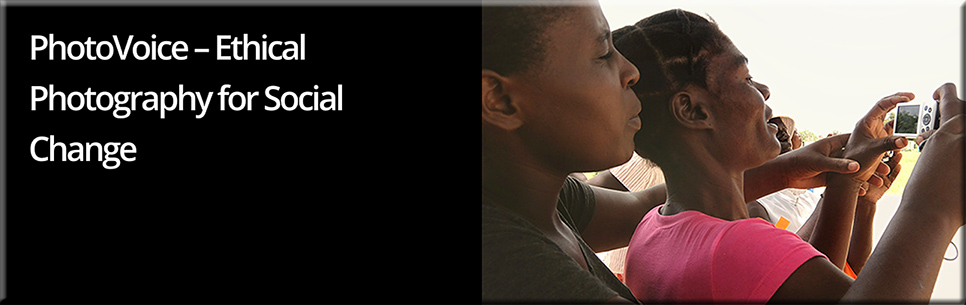
PhotoVoice -- using photography to tell one's story

Photo voice dot org


Why photography?

A photograph is the quickest and easiest way for somebody to document the realities of their circumstances. Most people are familiar with photography to some degree, and it can be picked up relatively quickly by all abilities and ages.

Photography also crosses cultural and linguistic barriers, with its power lying in its dual role as both a form of creative expression and a way to document facts.

It provides an accessible way to describe realities, communicate perspectives, and raise awareness of social and global issues to different audiences.

Its relatively low cost and ease of dissemination encourages sharing, facilitating dialogue and discussion, even for those who have never picked up a camera before.


Addendum on 6/25/20


Majority of minority female lawyers consider leaving law; ABA study explains why — from abajournal.com by Debra Cassens Weiss

Excerpt:

Seventy percent of female minority lawyers report leaving or considering leaving the legal profession, according to an ABA report on the challenges that they face.

The statistic isn’t statistically significant because the researchers couldn’t find enough women of color in longtime practice to conduct the needed analysis, according to a preface to the reportLeft Out and Left Behind: The Hurdles, Hassles, and Heartaches of Achieving Long-Term Legal Careers for Women of Color.

A June 22 ABA press release is here.

“Women of color have the highest rate of attrition from law firms as they continue to face firm cultures where their efforts and contributions are neither sufficiently recognized nor rewarded,” according to the report.

From DSC:
This is discouraging news. Crud.


Stunning minimalist series with warm colors — from fubiz.net by Al Mefer

Stunning minimalist series with warm colors -- by Al Mefer


PowerPoint Live is now generally available — from microsoft.com by Derek Jo

Excerpt:

Earlier this year, we announced that Live Presentations was coming soon, and we are excited to share that it is now generally available on PowerPoint for the web.

When we first announced PowerPoint Live, we saw excitement from both enterprise and education customers around how this feature could be utilized during in-person events—conferences, lecture halls, corporate all hands, town halls, and more. Of course, the world has changed a lot since then. 

We know that as more physical events and meetings take place, PowerPoint Live will prove to be a very useful tool for connecting with your audience and communicating more effectively, which we are excited to show you. However, we also have tips below on how to use this capability now in remote work and learning scenarios.


Credential blockchains could help student mobility. These 4 efforts explore how. — from edsurge.com by Rebecca Koenig

Excerpt:

More than 70 efforts are underway around the world to use blockchain technology in education, and most set their sights on better connecting people with job opportunities, according to a new report published by the American Council on Education.

The report is part of the Education Blockchain Initiative, organized by the American Council on Education and supported by $2 million from the U.S. Department of Education. The initiative aims to study whether and how decentralized digital ledgers can give students and workers more control over their academic and job records and improve the flow of data among schools, colleges and employers, leaders told EdSurge in February.


Why everyone on your team must understand Instructional Design — from learningsolutionsmag.com by Megan MacDonald

Excerpts:

In my decade-long experience on projects of varying and increasing size, there are the key components I think you need to invest in helping your teams and management understand. And here they are:

  • Significance of learning objectives, and in particular the importance of action verbs and how they apply to your project.
  • Learning audience, including existing knowledge, background(s), and even personalities, can impact decisions such as instructor-led versus self-paced, where you need to start, the pace you need to set, and the specific information you need to provide on any given subject.
  • Concepts of cognitive load and scaffolding.
  • Instructional design is not always linear.
  • Finally, there is not a one-size-fits-all solution to programs, courses, or even individual lessons.


COVID-19 Intensifies Need to Tackle Digital Accessibility — from campustechnology.com by By Glenda Sims
More learning content than ever before has migrated online, bringing accessibility concerns to the forefront. Here’s how higher ed institutions are making progress toward equitable access.

Excerpt:

Accessibility lawsuits in education are not new. However, with colleges and universities undertaking their own digital transformations (moving more content and services online), lawsuits targeted at equitable access to physical facilities (like bathrooms) have logically expanded to digital offerings for students relying on assistive technologies to access them. The current COVID-19 crisis is likely to exacerbate this, as more learning content than ever before has migrated online in these unprecedented times. Persons with disabilities will demand nothing less than completely equitable access, particularly when it comes to their safety. While many higher ed institutions still have much to do for their accessibility initiatives, there have been many promising developments…


Are you ready? Self-directed learning is the next wave for L&D — from learningsolutionsmag.com by Bill Brandon

Excerpt:

This article begins an exploration of the other major shift that is already in play and that will continue to affect our work: the phenomenon of self-directed learning. This is a trend that (like distance learning) was already underway before the pandemic, driven by a desire to reduce or eliminate the cost of formal instruction and to keep up with the speed of change itself.

What is self-directed learning?
Let’s use the classic definition from Malcolm Knowles. Self-directed learning is a process “in which individuals take the initiative, with or without the help of others, in diagnosing their learning needs, formulating learning goals, identifying human and material resources for learning, choosing and implementing appropriate learning strategies, and evaluating those learning outcomes.” (See reference at the end of this article.)


Law on trial — What the legal industry can do to defend it — from forbes.com by Mark Cohen

Excerpts (emphasis DSC):

How can the legal industry help to restore the rule of law and public confidence in the legal system?

Some Recommendations
The profession must align with the industry to restore public confidence in the legal system. That means, among other things, that lawyers must recognize—as physicians do—that “it takes a village” to battle a crisis. Here are some recommendations how to do it.

1. Acknowledge the problem
2. Collaborate
3. Focus on the Vast, Underserved Retail Market Segment
4. Embrace Diversity
5. Modernize Legal Education and Training
6 Reimagine Courts
7. Think Globally
8. Use Influence to Create Just Laws and Enforce them Equally


IBM, Amazon, and Microsoft abandon law enforcement face recognition market — from which-50.com by Andrew Birmingham

Excerpt:

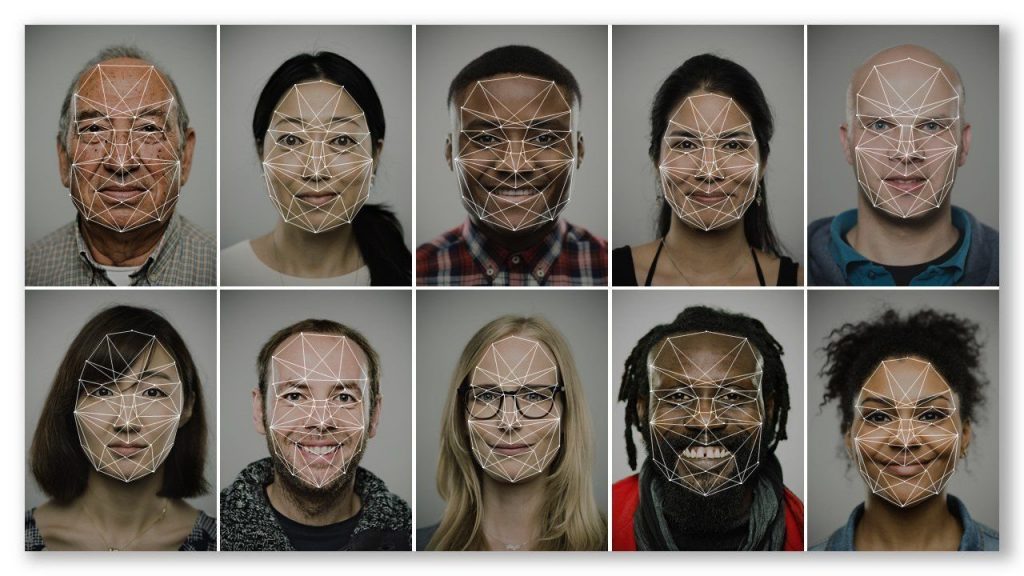
Three global tech giants — IBM, Amazon, and Microsoft — have all announced that they will no longer sell their face recognition technology to police in the USA, though each announcement comes with its own nuance.

The new policy comes in the midst of ongoing national demonstrations in the US about police brutality and more generally the subject of racial inequality in the country under the umbrella of the Black Lives Matter movement.

From DSC:
While I didn’t read the fine print (so I don’t know all of the “nuances” they are referring to) I see this as good news indeed! Well done whomever at those companies paused, and thought…


…just because we can…

just because we can does not mean we should


…doesn’t mean we should.


just because we can does not mean we should

Addendum on 6/18/20:

  • Why Microsoft and Amazon are calling on Congress to regulate facial recognition tech — from finance.yahoo.com by Daniel HowleyExcerpt:
    The technology, which can be used to identify suspects in things like surveillance footage, has faced widespread criticism after studies found it can be biased against women and people of color. And according to at least one expert, there needs to be some form of regulation put in place if these technologies are going to be used by law enforcement agencies.“If these technologies were to be deployed, I think you cannot do it in the absence of legislation,” explained Siddharth Garg, assistant professor of computer science and engineering at NYU Tandon School of Engineering, told Yahoo Finance.
 

Cisco takes a lesson from the coronavirus pandemic with new solutions for remote work and learning — from cnbc.com by Jordan Novet

Key points:

  • Cisco has helped some of its customers set up remote work and education technologies. Now it wants to bring those capabilities to more organizations.
  • While Cisco remains number one in the conferencing software as a service market, Zoom is becoming a bigger force.

Also see:


Updated: Where to Get Free WiFi for Students During COVID-19 — from campustechnology.com by Campus Technology Staff
Refer your college students to these services to help them keep up with school work. 

Excerpt:

To help your institution reach students who may lack broadband connectivity, here’s a list of wireless networking options they may be able to take advantage of. We’ve listed those that are available in more than just a handful of states first.


Diversity, Equity, and Inclusion (DEI) Matters — from by John O’Brien
Higher education, a sector that leads in so many areas, still has much progress to make in leading the way for diversity, equity, and inclusion (DEI).

Excerpts:

Until we reach a point at which those who lead and staff our colleges and universities more closely mirror those we serve, we have real work to do, and it begins with taking a look in that mirror and cultivating organizations that are quipped to serve all students, now and in the future.

Solutions
Ultimately, the cornerstone of efforts to raise awareness, increase diversity, and advance equity is to engender a prevailing sense of inclusivity across our organizations at the highest levels and the furthest corners of our institutions. With this in mind, ACE’s “Moving the Needle” initiative and EDUCAUSE’s “CIO Commitment Statement” both focus on broad buy-in and personal awareness to make a lasting cultural difference.


“How has your school delivered on the promise of equal access and educational excellence, particularly during these challenging times?”

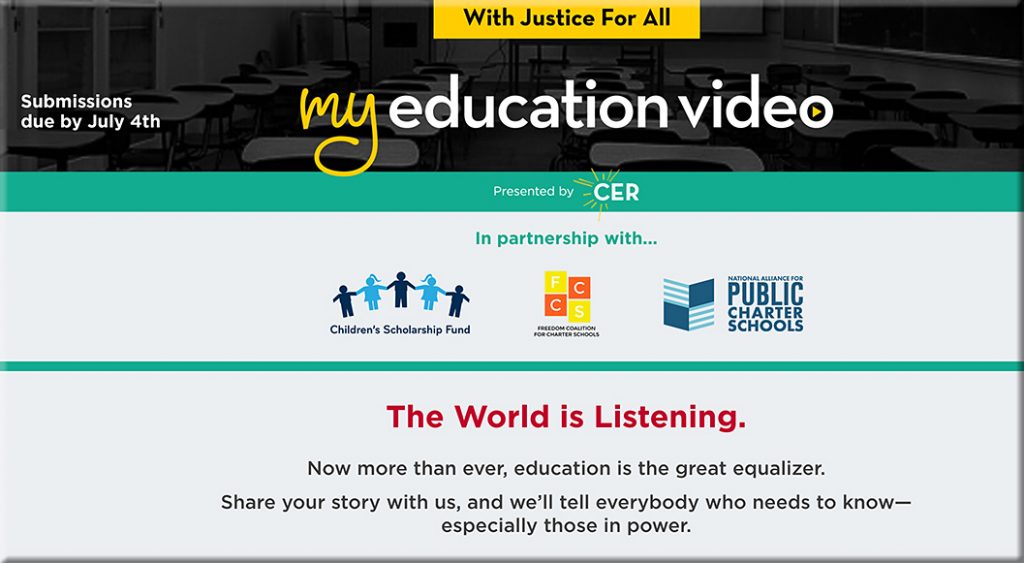
YouTube Contest, “With Justice for All,” Seeks Submissions from Students About the Effect of Covid-19 and Recent Tragedies on Their Educational Experience

Prizes include 11 scholarships for students who best address the question, “How has your school delivered on the promise of equal access and educational excellence, particularly during these challenging times?”

WASHINGTON, D.C. — The Center for Education Reform (CER), in partnership with the Freedom Coalition for Charter Schools, the Children’s Scholarship Fund, and the National Alliance for Public Charter Schools, today launched “With Justice for All,” a national YouTube contest for students.

Over the last few months, students and schools have faced significant challenges from distance learning and national tragedies. Times like these highlight how a great education is the most important asset a student has to effectively change the world.

So CER decided to ask students directly: Has your school delivered on the promise of equal access and educational excellence, particularly during these challenging times? Tell us how well your school did — or didn’t do — in providing you a great education.

“We want you to be able to take charge of your education,” said Jeanne Allen, CER’s founder and chief executive. “We want to assist you in writing the next chapter of your education story. Tell us your story, and we’ll tell everybody who needs to know, especially those in power.”

Videos must be shorter than three minutes, hashtagged with #MyEducationVideo, and submitted to MyEducationVideo.com by 11:59 PM EDT on July 4, 2020. Submissions will be evaluated by a panel of celebrity judges. Awards include 10 $2,500 scholarships — and one $20,000 scholarship — to the high school or college of a student’s choice. Winners will be announced during a live-streamed ceremony (date and time T.B.D.), and their videos may be shown to delegates at both of the 2020 national conventions this summer.

“We’ve designed this contest for students ages 13 and older, because we know it can be hard to get your ideas about education heard when you’re a kid,” said Allen.

For more information, visit MyEducationVideo.com.
https://www.myeducationvideo.com/


Also see:

“If we are not centering equitable student success, we’re gonna be put back decades and decades. And we’re already trying to retrofit.”

 
© 2025 | Daniel Christian