Back-to-School Help for Students Without Internet — from by James K. Willcox
For millions of families, broadband access is a challenge. These resources can help bridge that digital divide.

Excerpt:

“If it wasn’t glaringly clear before, the pandemic has confirmed the vital importance of a broadband internet connection—one that is reliable, affordable, and in some cases, simply available,” says Jonathan Schwantes, senior policy counsel in Consumers Reports’ Washington, D.C., office. “Unfortunately, far too many Americans lack access or are unable to afford broadband.”

A new state-by-state report on America’s K-12 students by Common Sense and Boston Consulting finds that almost 16 million students and 10 percent of teachers lack adequate internet or computing devices at home. Minority households are among the most affected. Though 18 percent of white homes lack broadband, the figure rises to 26 percent for Latinx homes and 30 percent for Black homes. The percentage is even higher among Native American households.

From DSC:
Though this solid article lists some very helpful resources, we have to do much better than this as a nation! It’s not right. 

My thanks to James McQueen for this resource.
 

The novel coronavirus is not a statistic. It’s not an agenda. It’s not a debate. COVID-19 is real enough to rise up and beat me senseless. We need to stop giving it license to do the same to others.

[Bill Plaschke]


With an eye towards the future…what questions should we be asking about learning experience design (#LXD)? [Christian]

From DSC:
Some of the following questions came to my mind recently:

  • In this age of the Coronavirus, how can we think differently about learning experience design (#LXD)?
  • How can *teams* of people come together to reimagine what learning could look like in the future? Who might be some new players at the table? More students? Artists? Actors? More animators? More technicians and people from A/V? Specialists in XR? Corporate trainers coming together with Instructional Designers from higher ed and from K-12? #learningecosystems #future
  • How can we better tighten up the alignment between K-12, higher ed / vocational programs, and the corporate world?
  • How can we make self-directed learning more prevalent (which would release an enormous amount of energy & creativity)? #heutagogy

Maybe those aren’t even the right questions…

If not, what do you think? What questions should we be asking about learning these days?

#LXD #learningecosystems #future #lifelonglearning #onlinelearning #highereducation #K12 #corporatelearning #heutagogy


The main thing we need to remember is that this space no longer serves as an accessory to face-to-face teaching. It is now our main contact point with learners, so it needs to play different roles: communication channel, learning path, interaction platform and community space. Teachers therefore need a certain degree of freedom to design this space in the best way that suits their teaching style and philosophy as well as their course content and learning objectives.

What became obvious in the past months is that when it comes to teaching and learning
 fully online, the learning experience design aspect, including look, feel and logic of the platform from the users’ perspective- be it teachers or students-, are at least as important as the content.

(source)


From the Coronavirus Updates out at The Chronicle of Higher Education

5:33 p.m. Eastern, 8/18/2020
Michigan State Moves Fall Term Online, Asks Students to Stay Home

Michigan State University is taking the fall semester entirely online, reversing its plan to hold some classes in person, the university’s president, Samuel Stanley, announced on Tuesday. Stanley said the university was asking students who had planned to live in residence halls to stay home.

“Given the current status of the virus in our country — particularly what we are seeing at other institutions as they repopulate their campus communities — it has become evident to me that, despite our best efforts and strong planning, it is unlikely we can prevent widespread transmission of Covid-19 between students if our undergraduates return to campus,” Stanley wrote.

The president seemed to be alluding to spikes of Covid-19 at campuses like the Universities of North Carolina at Chapel Hill and Notre Dame, both of which have moved operations online (for the rest of the fall semester in Chapel Hill, temporarily at Notre Dame). —Andy Thomason


Facial Recognition Start-Up Mounts a First Amendment Defense — from nytimes.com by Kashmir Hill
Clearview AI has hired Floyd Abrams, a top lawyer, to help fight claims that selling its data to law enforcement agencies violates privacy laws.

Excerpts:

Litigation against the start-up “has the potential of leading to a major decision about the interrelationship between privacy claims and First Amendment defenses in the 21st century,” Mr. Abrams said in a phone interview. He said the underlying legal questions could one day reach the Supreme Court.

Clearview AI has scraped billions of photos from the internet, including from platforms like LinkedIn and Instagram, and sells access to the resulting database to law enforcement agencies. When an officer uploads a photo or a video image containing a person’s face, the app tries to match the likeness and provides other photos of that person that can be found online.

From DSC:
Many, if not all of us, are now required to be lifelong learners in order to stay marketable. I was struck by that when I read the following excerpt from the above article:

“I’m learning the language,” Mr. Abrams said. “I’ve never used the words ‘facial biometric algorithms’ until this phone call.”


At home, workers seek alternative credentials — from insidehighered.com by Lindsay McKenzie
Interest in alternative online credentials spiked after people started working remotely this spring. Will the surge continue long-term?

Excerpt:

Several leading massive open online course providers, coding bootcamps and business schools offering non-degree credentials reported manyfold increases in web traffic, inquiries and enrollments.


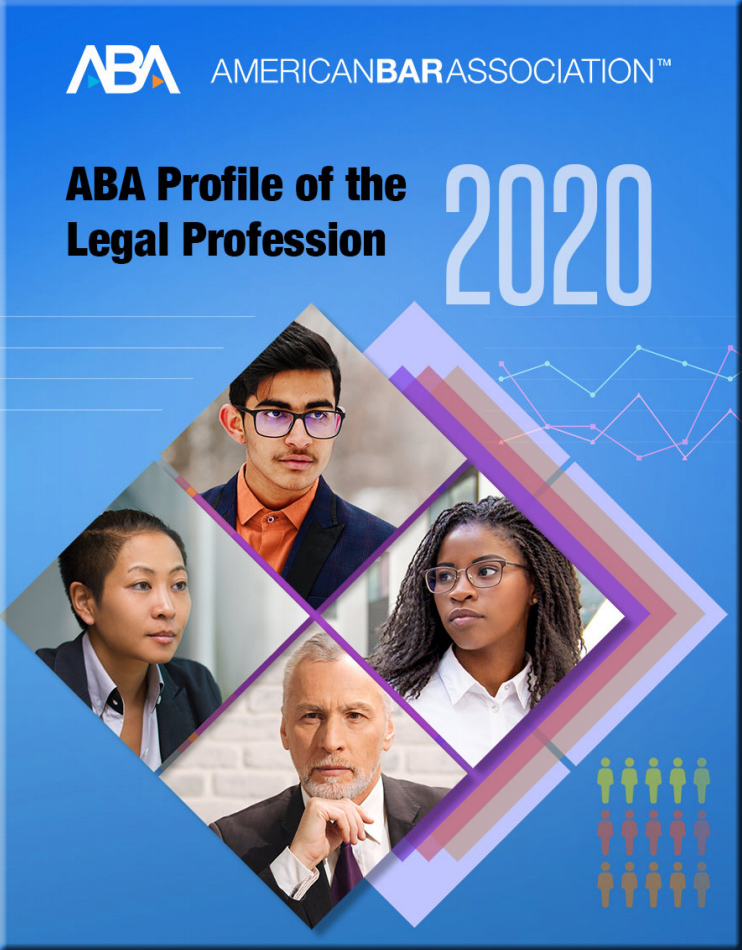
ABA Profile of the Legal Profession for 2020

The report also measures how far we have to go as a profession when it comes to race. For example, just 5% of all lawyers in the U.S. are African American, even though African Americans are 13% of the U.S. population. And Native Americans are severely underrepresented on the federal bench. Only two federal judges are Native American among 1,386 nationwide (that’s one-tenth of 1%), despite the fact that 1.3% of the U.S. population is Native American. There is a lot to digest in this fascinating compilation of statistics and trends.

Now in its second year, the ABA Profile of the Legal Profession is becoming a standard reference for anyone who wants to understand the legal profession — past, present and future.

— Judy Perry Martinez

Also see:


Addendum on 8/27/20…oh yeah…and this one too is along these lines:


Online, personalized learning considered the future for education in wake of pandemic — from purdue.edu

Excerpt:

WEST LAFAYETTE, Ind. — COVID-19 has changed the outlook for education, highlighting the potential for online learning and the need for more personalized learning options for students, according to a Purdue University College of Education professor.

William Watson, associate professor of learning design and technology, said student education levels are more likely to be spread all along the spectrum this school year based on what educational support they received at home.

Using personalized approaches to online instruction allows learning to be based more on each student’s individual strengths, weaknesses, goals and motivations, he said.

“A personalized approach to learning supports student autonomy and the direction of each student’s learning process,” Watson said. “It values a student’s self-direction, motivation and engagement beyond simple knowledge acquisition.”


Big Ten Universities Partner to Offer Free Online Courses — from campustechnology.com by Rhea Kelly

Excerpt:

This fall, students at any of the seven participating Big Ten Academic Alliance universities will have access to free online courses at other Big Ten schools.


James Lang’s Distracted: Why Students Can’t Focus and What You Can Do About It — from tophat.com by Harleen Dhami
Navigating distraction in the virtual classroom starts with curating novel, community-oriented learning activities

Excerpt:

You suggest that how instructors teach is often at odds with how students learn. What’s the disconnect here?
The disconnect is taking for granted that students should pay attention. What we need to think about is how we structure the class in a way that sustains someone’s attention through an extended period of time. We need to think like playwrights. What do they do to maintain attention? They have acts and scenes, there’s an intermission, the action rises and falls. At the beginning of a play, something happens that is designed to intrigue you and get you engaged in the story. I argue in the book that we have to think both like a playwright and like a poet. You have to think like a playwright in terms of the structure. You have to think like a poet in terms of “what’s going to reawaken the attention of my students,” or awaken the attention of my students to this particular content for the day.


Breaking: In Historic Vote, Utah Supreme Court Approves Sweeping Changes in Legal Services Regulation — from legaltechmonitor.com by Bob Ambrogi

Excerpt:

In a historic vote that could set a blueprint for the rest of the country, the Utah Supreme Court has approved the most sweeping changes in a generation to the regulation of law practice and the delivery of legal services.

The vote creates a two-year pilot of a regulatory sandbox — a regulatory body under the oversight of the Supreme Court, to be called the Office of Legal Services Innovation, whose charge would be to license and oversee new forms of legal providers and services.


Reflections on an UnCertain Decade [Susskind & Cohen]

Excerpt:

Richard Susskind and Mark A. Cohen, two of the global legal industry’s most respected names, conducted a series of four live online events titled “The Uncertain Decade.” Each event focused on key industry issues that included: digital transformation and its impact on the legal function, legal education and training, and alternative legal service providers.

 
© 2025 | Daniel Christian