Starting with coining the umbrella term “Justice Tech,” we’re developing a common language, a community of folks working in the space, and formalizing the newly-minted Justice Tech market.
A free online portal launched today in Texas is designed to help lawyers find volunteer opportunities and assist residents of the state find help with their legal needs.
The new portal, Pro Bono Texas, was launched as a partnership between The State Bar of Texas and the justice tech company Paladin. The portal provides volunteer lawyers and law students with a centralized location to search and sign up for pro bono opportunities across the state.
COVID-19 and the resulting increases in virtual care adoption and changes in regulation have permanently altered the healthcare landscape in the US. The demand for virtual care has never been greater. There is a great need for virtual care solutions, particularly those integrating data from devices in meaningful ways. Organizations that do not do this operate at a competitive disadvantage to those who do.
From DSC: If the future of healthcare is telehealth, where might telelegal fit within the legal realm?
What is an encoder? The format that a video camera records content in has to be transcoded so that it can be livestreamed to a destination like Facebook Live, YouTube, Twitch and Periscope. This is accomplished using an encoder software. An encoder optimizes the video feed for the streaming platform. The key to using an encoder is to learn to set-up scenes.
From DSC: It will be interesting to see how learning-related platforms develop in the future. I’m continually on the lookout for innovative ideas across the learning landscapes, especially due to the Learning from the Living [Class] Room vision that I’ve been tracking this last decade. The pieces continue to come together. This might be another piece to that puzzle.
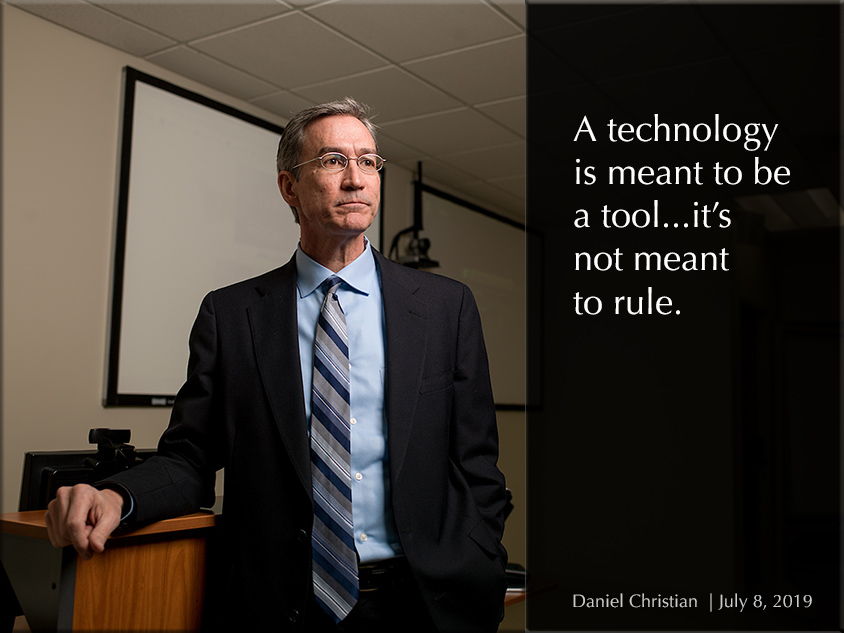
An online-based teaching and learning marketplace — backed up by AI, cloud-based learning profiles, voice-driven interfaces, learning agents, and more. Feeds/streams of content into how to learn about any topic…supporting communities of practice as well as individuals. And people will be key in this platform — technology will serve the people, not the other way around.
8 Finally, brothers and sisters, whatever is true, whatever is noble, whatever is right, whatever is pure, whatever is lovely, whatever is admirable—if anything is excellent or praiseworthy—think about such things.
But what gets lost in the reopening debate is the growing evidence that a significant portion of students and their families are actually happier and learn better outside of traditional schooling.
Excerpt:
Some of the “square-peg” children are the most creative and bright students in their class, but had struggled academically or socially in the traditional classroom. According to informal surveys of parents and teachers, new approaches to learning are benefiting:
Students with special needs, like ADHD or autism, who focus better on learning without disruptions from other kids, and who—when learning from home—can take breaks and calm themselves when needed, not just when the classroom schedule permits.
Students who didn’t speak up or ask questions in regular classrooms for fear of being mocked, but are now able to send private questions to teachers or make written contributions.
Socially-awkward or otherwise different kids who experienced bullying.
Kids who best learn from small-group instruction.
Students who have mastered all the regular class material and are motivated to learn advanced materials and explore on their own.
Students who learn best by hearing about a new idea and then quickly practicing or applying it on their own.
From DSC: One of our daughters needs a team of people around her to help her learn and grow. The one-size-fits-all, the-train-stops-for-no-one type of educational system that she often encountered did not work well for her.
Homeschooling has seen her grow a lot more. She even has her own blog now — and she’s excited about it! She loves reading and writing — and she’s very creative (albeit her writing gets pretty dark at times. But come to think of it…my second-grade teacher thought that my friend Andrew’s and my 38-page book with vampires, witches, and werewolves was pretty morbid too!)
Now, any tenant in Boulder, regardless of means, can get an attorney to represent them in housing court for free. While a handful of other cities like New York and San Francisco offer similar programs, there is no universal right to an attorney in eviction cases.
Justice advocates are hoping that could change. COVID-19, they say, has drawn attention to access to justice issues that have plagued civil proceedings for years. They hope the tragedies of 2020 can fuel reform in 2021.
Six months into the pandemic, millions of Americans had fallen behind on rent. One statistic that civil justice advocates have known for years became apparent — that while 90% of landlords have legal counsel in eviction proceedings, only 10% of tenants do.
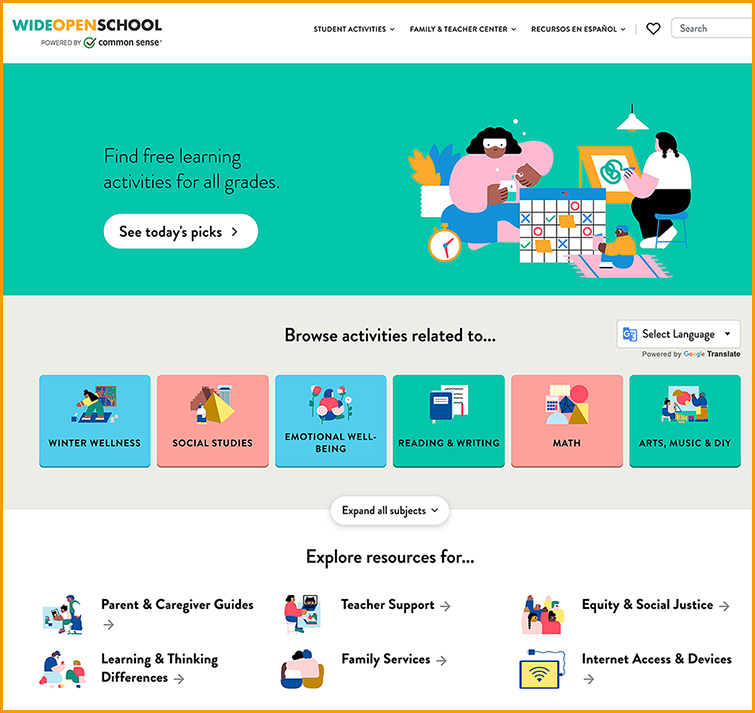
Wide Open School (WOS) is a platform developed by the leading non-profit for kids and families Common Sense media. WOS provides access to a wide range of resources designed specifically to help enhance the quality of distance learning. The work of Wide Open School is a fruit of a partnership with more than 80 leading educational organizations and services including Kahoot, Google, Khan Academy, National Geographic, PBS, Scholastic, Smithsonian, TED Ed, and many more.
Musical Mentors Collaborative Announces Requiem-20 The resulting compendium is a tribute to the pandemic world we live in today
Philadelphia, PA — January 19, 2021 — Musical Mentors Collaborative (“MMC”), which provides free private music instruction and instruments to students who would not otherwise have access, presents Requiem-20, a collaborative, multimedia, multi-genre reflection on the ineffable loss of life in 2020 due to the Coronavirus pandemic. Featuring music by young but brilliant early-career composers, this project offered these artists a chance to help culture make meaning in a time of seeming creative impossibility. Produced in cooperation with Musical Mentors Collaborative and performed by MMC’s Teaching Fellows, this project represents a coalescence, a meeting place for creative artists to express and process the difficulties of this time.
“With the looming loss of millions of lives to Coronavirus, 11 composers and 23 artists have come together to form a musical collaborative work called, Requiem-20, a modern day Requiem in response to Covid-19. During this pandemic and with the lack of so many live performances, composers, especially young composers are feeling that their musical voices are not able to be displayed as normal and are looking for ways to stay connected and be relevant to the world right now.
This is their musical reaction to all the loss that is experienced during this time. A requiem not just for the loss of so many lives, but also for the loss of everyday life as we knew it, the loss of so many things that we had, the loss of getting to do things we love and see the people we love, the loss of so many jobs and livelihoods, the loss of so much continues and is expressed here in this montage and continuous melange of 11 short expressions that is interwoven to formulate Requiem-20,” says Says Daniel Matsukawa, principal bassoon of the Philadelphia Orchestra, professor at the Curtis Institute of Music, and the creator of this project.
Given the continuing loss of so many musicians’ jobs and livelihoods, we hope that the feelings and stories conveyed through Requiem-20 give you faith that artistic expression lives on as robustly as ever. We also hope that this project may prompt other musicians to compose and add to the concept, thus creating their own musical tribute in response to the current pandemic-filled world.
“Musical Mentors Collaborative encourages creativity through connection, and employs the ingenuity of economically displaced musicians to create connections in communities with the least access to music’s undisputed benefits. This project furthers our mission of connecting artists and young people with this crucial resource in this troubled time,” said Teddy Poll, Artistic and Educational Director of MMC. “We are excited to share Requiem-20 and for the public.”
Requiem-20, as well as more detailed information about the piece, can be seen/heard here: www.requiem-20.com.
NHS facilities in England are using tech developed by U.K. firm Everyware and U.S. blockchain organization Hedera Hashgraph.
The aim is to keep a tamper-proof digital record of temperature-sensitive vaccines and pick up on any irregularities in their storage.
Blockchain saw much hype in 2017 as cryptocurrencies like bitcoin skyrocketed, but the buzz around it seems to have died down today.
Addendum on 1/27/21:
Universities use blockchain to streamline student services — from thetechedvocate.org by Matthew Lynch A blockchain is one way in which universities can streamline student services. This article will discuss exactly what a blockchain is and how it can be used to perform this task.
Jeff Bezos’ $2 billion investment to establish a Montessori-inspired network of preschools may be shrugged off by many as the world’s richest man dabbling in another playground. Instead, we should see it for what it is: the early days of Amazon’s foray into public education.
…
It would be easy to think that Amazon’s rapid expansion into industry after industry is just the natural, opportunistic path of a cash-flush company seeking to invest in new, lucrative markets. But Jeff Bezos, himself a graduate of a Montessori preschool, doesn’t think in short-term opportunities.
Yet, the world has had its first taste of the disentanglement of schooling from school buildings. Even though in 20 years we will still have school buildings—much like we still have bookstores—there is little doubt that the future will see more, not less, online instruction and content delivery.
Thanks for dropping by my Learning Ecosystems blog!
My name is Daniel Christian and this blog seeks to cover the teaching and learning environments within the K-12 (including homeschooling, learning pods/micro-schools), collegiate, and corporate training spaces -- whether those environments be face-to-face, blended, hyflex, or 100% online.
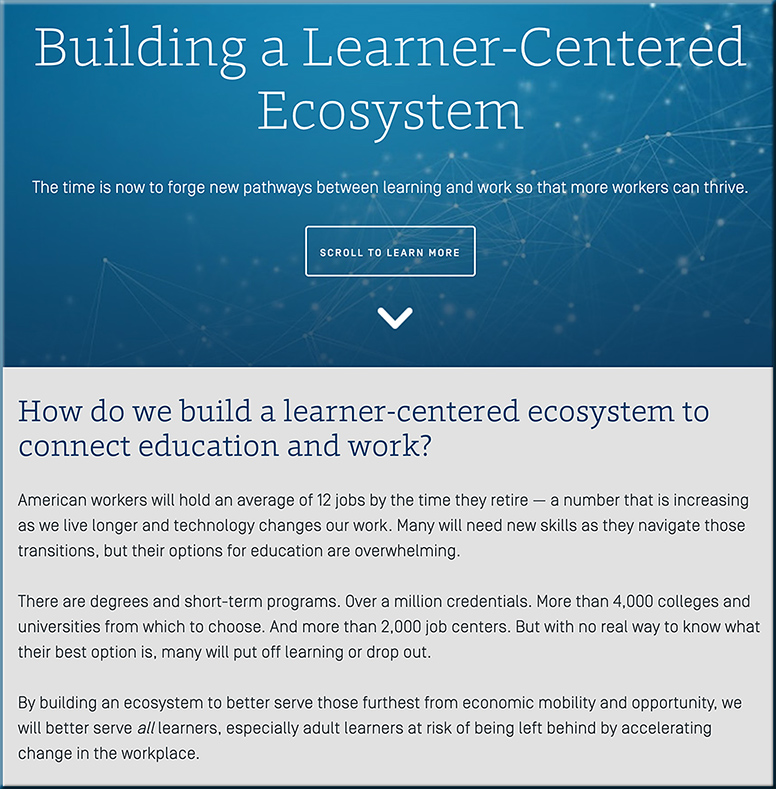
Just as the organizations that we work for have their own learning ecosystems, each of us has our own learning ecosystem. We need to be very intentional about enhancing those learning ecosystems -- as we all need to be lifelong learners in order to remain marketable and employed. It's no longer about running sprints (i.e., getting a 4-year degree or going to a vocational school and then calling it quits), but rather, we are all running marathons now (i.e., we are into lifelong learning these days).