From DSC:
I was reviewing an edition of Dr. Barbara Honeycutt’s Lecture Breakers Weekly, where she wrote:

After an experiential activity, discussion, reading, or lecture, give students time to write the one idea they took away from the experience. What is their one takeaway? What’s the main idea they learned? What do they remember?

This can be written as a reflective blog post or journal entry, or students might post it on a discussion board so they can share their ideas with their colleagues. Or, they can create an audio clip (podcast), video, or drawing to explain their One Takeaway.

From DSC:
This made me think of tools like VoiceThread — where you can leave a voice/audio message, an audio/video-based message, a text-based entry/response, and/or attach other kinds of graphics and files.

That is, a multimedia-based exit ticket. It seems to me that this could work in online- as well as blended-based learning environments.


Addendum on 2/7/21:

How to Edit Live Photos to Make Videos, GIFs & More! — from jonathanwylie.com


10 powerful online feedback (should be called feedforward) techniques — from donaldclarkplanb.blogspot.com by Donald Clark

Excerpt:

The solution is good feedback. Feedback is the lubricating oil of teaching and learning. Feedback accelerates learning. It can therefore reduce the amount of time spent teaching. It motivates and propels learners forward. You need to work hard to keep learners on task, feedback is the spark and stimulus that gets them to the next stage.

Technology can use feedback to propel online learning. We spend so much of our technology time to present linear, media ‘experiences’ that we forget about the locomotive power of feedback. Creating videos, graphics and screeds of text is easy, feedback is personal and hard. Yet there are methods that have emerged from recent technology that make it much easier. We need more focus on technology to deliver feedback as well as media.

There are many forms of feedback; confirmatory, explanatory, consequential, real-time, semantic, media specific, peer-to-peer, reflective, calls to action. It is a powerful aid to learning and should be used to power learners forward.


Here’s the Real Life Use of Every Element on the Periodic Table — from interestingengineering.com by Trevor English
A list to satisfy your curiosities about every element on the periodic table with brief descriptions and real-life applications.

Excerpt:

The elements on the periodic table are everywhere, in fact, they make up everything.

Understanding how to read a periodic table is one thing, but it doesn’t tell you whether the element is useful, what it looks like, or even how it is used.

To answer some of these questions, we have put together this “quick look” guide to help give you an easy to read and navigate resource for some of the uses of every element in the periodic table.

All of the elements of the periodic table are included below and are arranged by the atomic number from 1 to 118.


Amazon plans to retrain millions — from linkedin.com by Jessica Hartogs

Excerpt:

Amazon will reskill 29 million people globally for cloud-computing careers. The company says the programs, which will stem from existing ones as well as newer partnerships with nonprofits and schools, will retrain millions of workers by 2025. According to The Wall Street Journal, the online giant is making the move after the pandemic disrupted millions of careers and is aimed at people not employed with the company, as of yet. While Amazon plans to hire some of these newly trained workers, “the idea is to equip people with the education needed to work in … high-tech positions.”


91 movies and TV shows to stream for Black History Month — from fastcompany.com by Joe Berkowitz
For Black History Month, here’s a streaming guide to historical fiction, biopics, documentaries, and sitcoms, made by and about Black Americans.

91 movies and TV shows to stream for Black History Month


Tutor.com Has Delivered 20 Million Online Tutoring Sessions — with thanks to Jeanne Krier for the resource (of which I present an excerpt below)
Milestone Reached Amid Unprecedented Demand for Company’s Services During COVID

NEW YORK, February 1, 2021 / — Tutor.com ™ , one of the nation’s largest online tutoring companies, has reached an impressive milestone: 20 million one-to-one tutoring sessions—and counting.

Nearly two million of those 20 million sessions were delivered in 2020—a year in which Tutor.com met record-breaking demand for its services. At peak times, Tutor.com was delivering 7,500 tutoring sessions a day. Overall, 2020 saw the highest single-year delivery of services in the company’s 21-year history—an increase of more than 50 percent above the 1.3 million tutoring sessions completed in 2019. Learners also made exceptional use of the platform’s drop-off review services, practice quizzes, video lessons, and test prep from The Princeton Review ® .

“With unprecedented demand for our services, our full team at Tutor.com has risen to the challenge,” said Sandi White, Vice President and General Manager, Tutor.com. “We are mission-driven, and our dedicated tutors and staff work tirelessly to support learners, whenever they need help—24 hours a day, 7 days a week,” said White, adding that Tutor.com responded to outreach from more than 900 additional institutions and businesses seeking partnerships to serve their learning communities.

The extraordinary demand was primarily due to the impact of the coronavirus pandemic. COVID-19–related school closures meant that the nation’s 55 million K–12 students as well as 14 million college students abruptly transitioned to remote, virtual, or hybrid learning last spring—and many have remained that way. As school-at-home and work-at-home became the new normal, the requests for Tutor.com services soared.


What 2021 Means for Learning — from GettingSmart.com

What 2021 Means for Learning from Getting Smart on Vimeo.

Last week we hosted a live conversation to talk about what 2021 has in store for learning, a new set of shared priorities including mutuality and agency and emerging trends and topics that we are excited to explore this year.


8 Higher Education IT Trends to Watch in 2021 — from edtechmagazine.com by Adam Stone
Keep your eye on these trends as higher education prepares for a post-pandemic future.

Excerpt:

1. Get Used to More Advanced Learning Management Systems
At Virginia Tech, the Canvas learning management system (LMS) was critical for coordinating synchronous and asynchronous learning. Such systems will only become more sophisticated moving forward, says Randy Marchany, the university’s IT security officer. “With COVID, instructors have become more video savvy,” he says. “We’re all getting smarter about how we use these tools.”

2. A Rise in Sophisticated Videoconferencing Platforms
Even after the pandemic, educators might continue lecturing over Zoom and other videoconferencing platforms. However, they’ll be doing it in more sophisticated ways. “People will be making these experiences more collaborative, more authentic — with much richer interactions and conversations,” Grajek says. “We are all becoming more experienced consumers, and we will see a lot of innovation in this area.”

From DSC:
Yet another step closer…

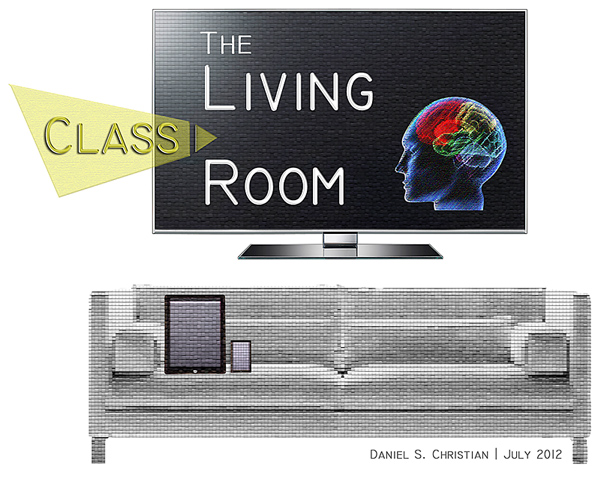
Yet another step closer to the Learning from the Living Class Room vision


Great books to read with your kids in February — from raisinglifelonglearners.com by Colleen Kessler

Great books to read with your kids in February -- from Colleen Kessler


Psalm 86:1-12 — from biblegateway.com

A prayer of David.

Hear me, Lord, and answer me,
    for I am poor and needy.
Guard my life, for I am faithful to you;
    save your servant who trusts in you.
You are my God; have mercy on me, Lord,
    for I call to you all day long.
Bring joy to your servant, Lord,
    for I put my trust in you.

You, Lord, are forgiving and good,
    abounding in love to all who call to you.
Hear my prayer, Lord;
    listen to my cry for mercy.
When I am in distress, I call to you,
    because you answer me.

Among the gods there is none like you, Lord;
    no deeds can compare with yours.
All the nations you have made
    will come and worship before you, Lord;
    they will bring glory to your name.
10 For you are great and do marvelous deeds;
    you alone are God.

11 Teach me your way, Lord,
    that I may rely on your faithfulness;
give me an undivided heart,
    that I may fear your name.
12 I will praise you, Lord my God, with all my heart;
    I will glorify your name forever.


Forever Changed: Education Predictions for 2021 — from thejournal.com by Dian Schaffhauser

Excerpt:

Teachers Will Become Massive Social Media Influencers
Teachers will be subject-matter experts who other teachers feature in video mixtapes and that parents will follow to support their students. Expect teachers to go live in Twitch-style “going live” environments. What can we expect in video?


Meet the 27 startups pioneering the Justice Tech market — from medium.com by Felicity Conrad

Excerpt:

I’ve compiled a public database of Justice Tech startups — I hope it’s a useful resource to build community, transparency, and scale access to justice.

Over the last few years, the legaltech market has blossomed. It’s seen both a meteoric rise in the number of legal tech startups, as well as VC funding of those startups, culminating in over $1B of investment in late 2020. This influx is terrific for modernizing the legal services industry, but sadly hasn’t moved the needle to serve the 5.1 billion people globally who lack access to justice.

Rather than waiting for legaltech to trickle down to low-income individuals, a small (but growing) cohort of entrepreneurs are founding technology startups to tackle the justice gap head-on. These solutions are a new breed of legaltech — instead of focusing on modernizing the existing legal services market (i.e. contracts, practice management, legal research, etc.), their goal is to leverage technology to directly scale legal services to the billions of people underserved by the existing market.


9 BIG Questions Schools Must Answer to Avoid Going “Back to Normal” (*Because “Normal” Wasn’t That Great to Begin With) — from bigquestions.institute

Excerpt from email/e-newsletter (dated 1/27/21)

As we start to emerge from this dark moment, individuals and institutions need to be asking two important questions Given the trauma of the last 12 months, who are we now? And now that so much has changed about the world, who do we want to become?

Reflecting on those questions is especially important for educators. The “old normal” of schools is not coming back, nor should we want it to. Instead, this is an incredible opportunity to reset, to redefine our work.

To that end, we’ve written a new, free ebook9 Questions Schools Must Answer to Avoid Going Back to Normal (*Because Normal Wasn’t That Great to Begin With). Rather than innovate our way forward, Homa and I believe this is a moment to interrogate deeply the foundations of our work with children. That starts with a willingness to answer some big questions upon which we build our collective futures.

Q1: What is Sacred?  

Q2: What is Learning?  

Q3: Where is the Power?  

Q4: Why do we _________? 

Q5: Who is Unheard?  

Q6: Are we Literate? 

Q7: Are we OK?  

Q8: Are we Connected? 

Q9: What’s Next? 

“Real change will require us to leave many of our old ideas about school behind.”

From DSC:
We must figure out better ways to get away from creating game-players to developing curious, passionate learners instead. Even in law schools, points and grades are still used as the currency to get students to do some things. Holy smokes!  That pull/embedded behavior is a strong undercurrent even for adults learning about new things.

Students need to see their faculty members and/or teachers as people who ARE ON THEIR TEAM. Not an adversarial, controlling relationship. But one wherein the teacher or the professor is trying to help that person develop into a better, ___, ___, or ____.

I love the suggestion mentioned in the “Towards a new normal” on page 23 that says…

“Instead of ‘students’ and ‘teachers,’ refer to everyone in the school as ‘learners.'”


#behaviorism #learning #education #educationreform #K12 #lawschools and more.


Learning channels of the future will offer More choice. More control. Daniel Christian


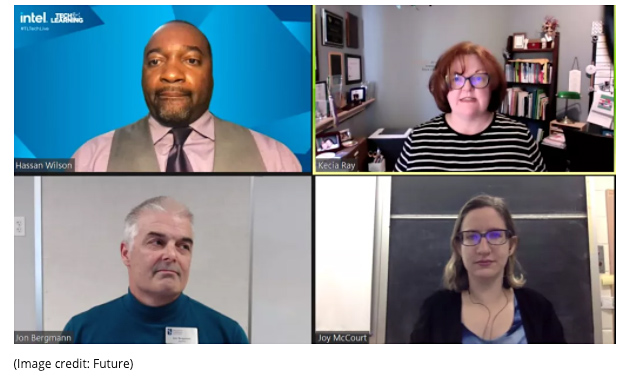
Flipping Virtual Classrooms for More Impact — from techlearning.com by Ray Bendici
Flipping virtual classrooms can help maximize teaching time and resources

Flipping Virtual Classrooms for More Impact

Excerpt:

The mantra of flipped learning is that you can reach every student in every class every day, said Bergman. So if you have less synchronous time, you need to provide more time with your students one-on-one to work on the hard stuff, and flipped mastery learning, in particular, accommodates that.

“Flipped learning teachers have been preparing for the pandemic for the past 10 years,” Bergman said. “It’s really a great way to amplify your reach to teach.”

When the pandemic hit, Bergman and his flipped learning team realized that the most important thing is connections with students and the physical time spent with them. “So what’s the best use of your face-to-face class time?” Bergman said. “I’m going to argue it’s not you standing up and then introducing new content, it’s giving students the new content first and allowing them to apply, analyze, and evaluate it.”


10 Resolutions for Special Education in 2021 — from gettingsmart.com by Karla Phillips-Krivickas

Excerpt:

Include Students with Disabilities in Definitions of Equity
A hallmark of 2020 education policy has been a laser like focus on diversity, equity, and inclusion. Rightfully so, however, references to students that have been historically marginalized or disadvantaged too often do not include students with disabilities.

Action:
Ensure all state initiatives, including those led by non-profit organizations, include students with disabilities in definitions of equity.

 
© 2025 | Daniel Christian