8 Higher Education IT Trends to Watch in 2021 — from edtechmagazine.com by Adam Stone
Keep your eye on these trends as higher education prepares for a post-pandemic future.

Excerpt:

1. Get Used to More Advanced Learning Management Systems
At Virginia Tech, the Canvas learning management system (LMS) was critical for coordinating synchronous and asynchronous learning. Such systems will only become more sophisticated moving forward, says Randy Marchany, the university’s IT security officer. “With COVID, instructors have become more video savvy,” he says. “We’re all getting smarter about how we use these tools.”

2. A Rise in Sophisticated Videoconferencing Platforms
Even after the pandemic, educators might continue lecturing over Zoom and other videoconferencing platforms. However, they’ll be doing it in more sophisticated ways. “People will be making these experiences more collaborative, more authentic — with much richer interactions and conversations,” Grajek says. “We are all becoming more experienced consumers, and we will see a lot of innovation in this area.”

From DSC:
Yet another step closer…
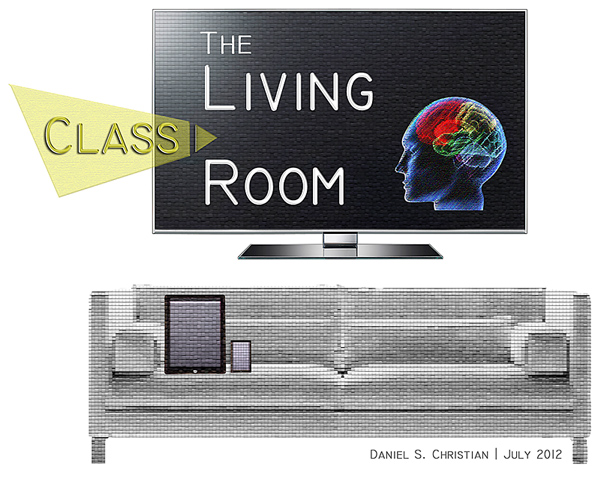
Yet another step closer to the Learning from the Living Class Room vision


Great books to read with your kids in February — from raisinglifelonglearners.com by Colleen Kessler

Great books to read with your kids in February -- from Colleen Kessler


Psalm 86:1-12 — from biblegateway.com

A prayer of David.

Hear me, Lord, and answer me,
    for I am poor and needy.
Guard my life, for I am faithful to you;
    save your servant who trusts in you.
You are my God; have mercy on me, Lord,
    for I call to you all day long.
Bring joy to your servant, Lord,
    for I put my trust in you.

You, Lord, are forgiving and good,
    abounding in love to all who call to you.
Hear my prayer, Lord;
    listen to my cry for mercy.
When I am in distress, I call to you,
    because you answer me.

Among the gods there is none like you, Lord;
    no deeds can compare with yours.
All the nations you have made
    will come and worship before you, Lord;
    they will bring glory to your name.
10 For you are great and do marvelous deeds;
    you alone are God.

11 Teach me your way, Lord,
    that I may rely on your faithfulness;
give me an undivided heart,
    that I may fear your name.
12 I will praise you, Lord my God, with all my heart;
    I will glorify your name forever.


Forever Changed: Education Predictions for 2021 — from thejournal.com by Dian Schaffhauser

Excerpt:

Teachers Will Become Massive Social Media Influencers
Teachers will be subject-matter experts who other teachers feature in video mixtapes and that parents will follow to support their students. Expect teachers to go live in Twitch-style “going live” environments. What can we expect in video?


Meet the 27 startups pioneering the Justice Tech market — from medium.com by Felicity Conrad

Excerpt:

I’ve compiled a public database of Justice Tech startups — I hope it’s a useful resource to build community, transparency, and scale access to justice.

Over the last few years, the legaltech market has blossomed. It’s seen both a meteoric rise in the number of legal tech startups, as well as VC funding of those startups, culminating in over $1B of investment in late 2020. This influx is terrific for modernizing the legal services industry, but sadly hasn’t moved the needle to serve the 5.1 billion people globally who lack access to justice.

Rather than waiting for legaltech to trickle down to low-income individuals, a small (but growing) cohort of entrepreneurs are founding technology startups to tackle the justice gap head-on. These solutions are a new breed of legaltech — instead of focusing on modernizing the existing legal services market (i.e. contracts, practice management, legal research, etc.), their goal is to leverage technology to directly scale legal services to the billions of people underserved by the existing market.


9 BIG Questions Schools Must Answer to Avoid Going “Back to Normal” (*Because “Normal” Wasn’t That Great to Begin With) — from bigquestions.institute

Excerpt from email/e-newsletter (dated 1/27/21)

As we start to emerge from this dark moment, individuals and institutions need to be asking two important questions Given the trauma of the last 12 months, who are we now? And now that so much has changed about the world, who do we want to become?

Reflecting on those questions is especially important for educators. The “old normal” of schools is not coming back, nor should we want it to. Instead, this is an incredible opportunity to reset, to redefine our work.

To that end, we’ve written a new, free ebook9 Questions Schools Must Answer to Avoid Going Back to Normal (*Because Normal Wasn’t That Great to Begin With). Rather than innovate our way forward, Homa and I believe this is a moment to interrogate deeply the foundations of our work with children. That starts with a willingness to answer some big questions upon which we build our collective futures.

Q1: What is Sacred?  

Q2: What is Learning?  

Q3: Where is the Power?  

Q4: Why do we _________? 

Q5: Who is Unheard?  

Q6: Are we Literate? 

Q7: Are we OK?  

Q8: Are we Connected? 

Q9: What’s Next? 

“Real change will require us to leave many of our old ideas about school behind.”

From DSC:
We must figure out better ways to get away from creating game-players to developing curious, passionate learners instead. Even in law schools, points and grades are still used as the currency to get students to do some things. Holy smokes!  That pull/embedded behavior is a strong undercurrent even for adults learning about new things.

Students need to see their faculty members and/or teachers as people who ARE ON THEIR TEAM. Not an adversarial, controlling relationship. But one wherein the teacher or the professor is trying to help that person develop into a better, ___, ___, or ____.

I love the suggestion mentioned in the “Towards a new normal” on page 23 that says…

“Instead of ‘students’ and ‘teachers,’ refer to everyone in the school as ‘learners.'”


#behaviorism #learning #education #educationreform #K12 #lawschools and more.


Learning channels of the future will offer More choice. More control. Daniel Christian


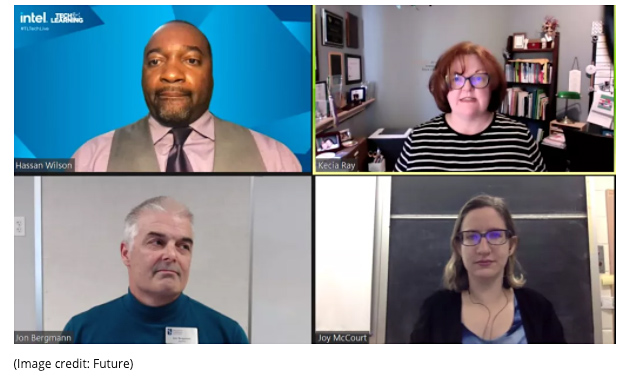
Flipping Virtual Classrooms for More Impact — from techlearning.com by Ray Bendici
Flipping virtual classrooms can help maximize teaching time and resources

Flipping Virtual Classrooms for More Impact

Excerpt:

The mantra of flipped learning is that you can reach every student in every class every day, said Bergman. So if you have less synchronous time, you need to provide more time with your students one-on-one to work on the hard stuff, and flipped mastery learning, in particular, accommodates that.

“Flipped learning teachers have been preparing for the pandemic for the past 10 years,” Bergman said. “It’s really a great way to amplify your reach to teach.”

When the pandemic hit, Bergman and his flipped learning team realized that the most important thing is connections with students and the physical time spent with them. “So what’s the best use of your face-to-face class time?” Bergman said. “I’m going to argue it’s not you standing up and then introducing new content, it’s giving students the new content first and allowing them to apply, analyze, and evaluate it.”


10 Resolutions for Special Education in 2021 — from gettingsmart.com by Karla Phillips-Krivickas

Excerpt:

Include Students with Disabilities in Definitions of Equity
A hallmark of 2020 education policy has been a laser like focus on diversity, equity, and inclusion. Rightfully so, however, references to students that have been historically marginalized or disadvantaged too often do not include students with disabilities.

Action:
Ensure all state initiatives, including those led by non-profit organizations, include students with disabilities in definitions of equity.


Along the lines of technologies’ potential impact on the legal realm — especially Access to Justice (#A2J), see:


Meet the 27 startups pioneering the Justice Tech market — medium.com by Felicity Conrad

Starting with coining the umbrella term “Justice Tech,” we’re developing a common language, a community of folks working in the space, and formalizing the newly-minted Justice Tech market.

Texas Bar and Paladin Partner to Launch Statewide Pro Bono Portal — from lawsitesblog.com by

Excerpt:

A free online portal launched today in Texas is designed to help lawyers find volunteer opportunities and assist residents of the state find help with their legal needs.

The new portal, Pro Bono Texas, was launched as a partnership between The State Bar of Texas and the justice tech company Paladin. The portal provides volunteer lawyers and law students with a centralized location to search and sign up for pro bono opportunities across the state.


The Future of Healthcare is Telehealth — from parksassociates.com

Excerpt:

COVID-19 and the resulting increases in virtual care adoption and changes in regulation have permanently altered the healthcare landscape in the US. The demand for virtual care has never been greater. There is a great need for virtual care solutions, particularly those integrating data from devices in meaningful ways. Organizations that do not do this operate at a competitive disadvantage to those who do.

From DSC:
If the future of healthcare is telehealth, where might telelegal fit within the legal realm?


How to become a livestreaming teacher — from innovatemyschool.com by Bobbie Grennier

Excerpts:

What is an encoder?
The format that a video camera records content in has to be transcoded so that it can be livestreamed to a destination like Facebook Live, YouTube, Twitch and Periscope. This is accomplished using an encoder software. An encoder optimizes the video feed for the streaming platform. The key to using an encoder is to learn to set-up scenes.

From DSC:
It will be interesting to see how learning-related platforms develop in the future. I’m continually on the lookout for innovative ideas across the learning landscapes, especially due to the Learning from the Living [Class] Room vision that I’ve been tracking this last decade. The pieces continue to come together. This might be another piece to that puzzle.

An online-based teaching and learning marketplace — backed up by AI, cloud-based learning profiles, voice-driven interfaces, learning agents, and more. Feeds/streams of content into how to learn about any topic…supporting communities of practice as well as individuals. And people will be key in this platform — technology will serve the people, not the other way around.

Daniel Christian -- A technology is meant to be a tool, it is not meant to rule.


Philippians 4:8 — from biblegateway.com

Finally, brothers and sisters, whatever is true, whatever is noble, whatever is right, whatever is pure, whatever is lovely, whatever is admirable—if anything is excellent or praiseworthy—think about such things.


Don’t force square-peg students back into wrong-shaped holes — from crpe.org by Robin Lake Paul Hill

But what gets lost in the reopening debate is the growing evidence that a significant portion of students and their families are actually happier and learn better outside of traditional schooling.

Excerpt:

Some of the “square-peg” children are the most creative and bright students in their class, but had struggled academically or socially in the traditional classroom. According to informal surveys of parents and teachers, new approaches to learning are benefiting:

  • Students with special needs, like ADHD or autism, who focus better on learning without disruptions from other kids, and who—when learning from home—can take breaks and calm themselves when needed, not just when the classroom schedule permits.
  • Students who didn’t speak up or ask questions in regular classrooms for fear of being mocked, but are now able to send private questions to teachers or make written contributions.
  • Socially-awkward or otherwise different kids who experienced bullying.
  • Kids who best learn from small-group instruction.
  • Students who have mastered all the regular class material and are motivated to learn advanced materials and explore on their own.
  • Students who learn best by hearing about a new idea and then quickly practicing or applying it on their own.

From DSC:
One of our daughters needs a team of people around her to help her learn and grow. The one-size-fits-all, the-train-stops-for-no-one type of educational system that she often encountered did not work well for her.

K-12 education in America is like a quickly-moving train that stops for no one.

Homeschooling has seen her grow a lot more. She even has her own blog now — and she’s excited about it! She loves reading and writing — and she’s very creative (albeit her writing gets pretty dark at times. But come to think of it…my second-grade teacher thought that my friend Andrew’s and my 38-page book with vampires, witches, and werewolves was pretty morbid too!)


© 2025 | Daniel Christian