Hired by an algorithm — from podcasts.apple.com | MIT Technology Review | In Machines We Trust* — also see this article from technologyreview.com

Excerpt:

If you’ve applied for a job lately, it’s all but guaranteed that your application was reviewed by software—in most cases, before a human ever laid eyes on it. In this episode, the first in a four-part investigation into automated hiring practices, we speak with the CEOs of ZipRecruiter and Career Builder, and one of the architects of LinkedIn’s algorithmic job-matching system, to explore how AI is increasingly playing matchmaker between job searchers and employers. But while software helps speed up the process of sifting through the job market, algorithms have a history of biasing the opportunities they present to people by gender, race…and in at least one case, whether you played lacrosse in high school.

We Meet:

  • Mark Girouard, Attorney, Nilan Johnson Lewis
  • Ian Siegel, CEO, ZipRecruiter
  • John Jersin, former Vice President of Product Management, LinkedIn
  • Irina Novoselsky, CEO, CareerBuilder

*From DSC:
In Machines We Trust — Hhhhmmm….hmmmm….I’m not crazy about this title. At all. If you’ve tried to get a job within the last decade, you might know why I say this. While I suppose the algorithms are getting better/more accurate with the passage of time, I still think that a human being can see where a candidate might work or might be able to transfer some skills/competencies from other positions.

I don’t put my trust in machines. I don’t see that perspective changing anytime soon. 
 

Better Questions in the Classroom Lead Students to Think Harder—and Learn Deeper — from edsurge.com by Staci Bradbury and Rebekah Berlin

Excerpt:

The takeaway here is that teachers should ask questions and design tasks that require students to engage in effortful thinking. This “teacher action,” as we like to call it, is one of the ways in which Deans for Impact has operationalized the vast body of research about how people learn in a way that teachers can use.

Also see:

Before providing evidence to support that claim, a quick recap of our organizational journey. Two years ago, we launched the Learning by Scientific Design (LbSD) Network to begin the vital—albeit challenging—work of redesigning how teachers are prepared. This effort is informed by principles of learning science and taking place in what is now a network of 10 educator-preparation programs across the country. More than 70 faculty are working with us to change the arc of experiences that teacher-candidates receive as they prepare to become teachers.


SF Conservatory of Music Uses Networked Audio to Overcome Pandemic Challenges — from avnetwork.com

Excerpt:

To unite the musicians virtually, the school installed a Dante network that runs throughout the facility, into classrooms, offices, practice rooms, and studio spaces, with Focusrite RedNet X2P 2×2 Dante audio interfaces serving as the system’s endpoints. The network was designed and installed by Emeryville, CA-based integration firm Advanced Systems Group (ASG).

Then, it occurred to O’Connell that a Dante network would solve the connectivity challenge, and a call to Groh brought the Focusrite RedNet X2P audio interfaces into the picture. Two RedNet X2P units arrived and were set up on the school’s VLAN as a proof of concept. 


Papercraft Heidelberg Letterpress — from theawesomer.com by Lee Ji-hee
Korean artist Lee Ji-hee created this incredibly intricate papercraft replica of the original Heidelberg Letterpress. She made the sculpture from paper and corrugated cardboard…

Korean artist Lee Ji-hee created this incredibly intricate papercraft replica of the original Heidelberg Letterpress. She made the sculpture from paper and corrugated cardboard.


LawNext: Defining the ‘Future Ready’ Lawyer, with Wolters Kluwer VPs Martin O’Malley and Dean Sonderegger — from legaltechmonitor.com by Bob Ambrogi

Excerpt:

As the legal profession continues to transform and evolve, how can a law firm or legal department be “future ready”? What are the characteristics that define future-ready organizations and foretell their continued success?

Also relevant/see:

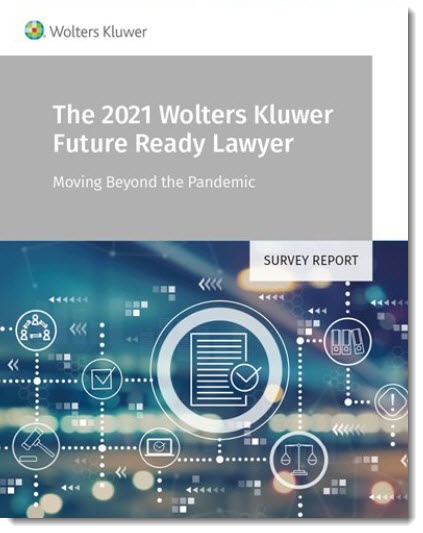
The 2021 Wolters Kluwer Future Ready Lawyer


Developing managers to succeed in the hybrid world of work — from chieflearningofficer.com by Tony Anticole
To manage effectively in a hybrid work environment, managers need the ability to tap into the intrinsic motivators within their teams.

Excerpt:

Two years ago, if someone asked you how performance would be impacted if people started working from home, what would you have said?

This question was explored by Nicholas Bloom years before the COVID-19 pandemic. Across a two-year period, he partnered with a company to study people working from home versus in the office. He found working from home led to a 13 percent boost in performance, which is roughly getting six days of output for five days of work and a decrease in attrition by 50 percent.

Ten years later, the COVID-19 pandemic forced a replication of this study on a global scale and the findings were strikingly similar. Gartner found the percentage of high performers increased as workers’ flexibility increased; 36 percent of employees working regular hours in the office were labeled as high performers, while 55 percent of remote employees with more flexibility were labeled as high performers. That’s the equivalent of transforming an additional one out of five people on your team from an average to high performer.


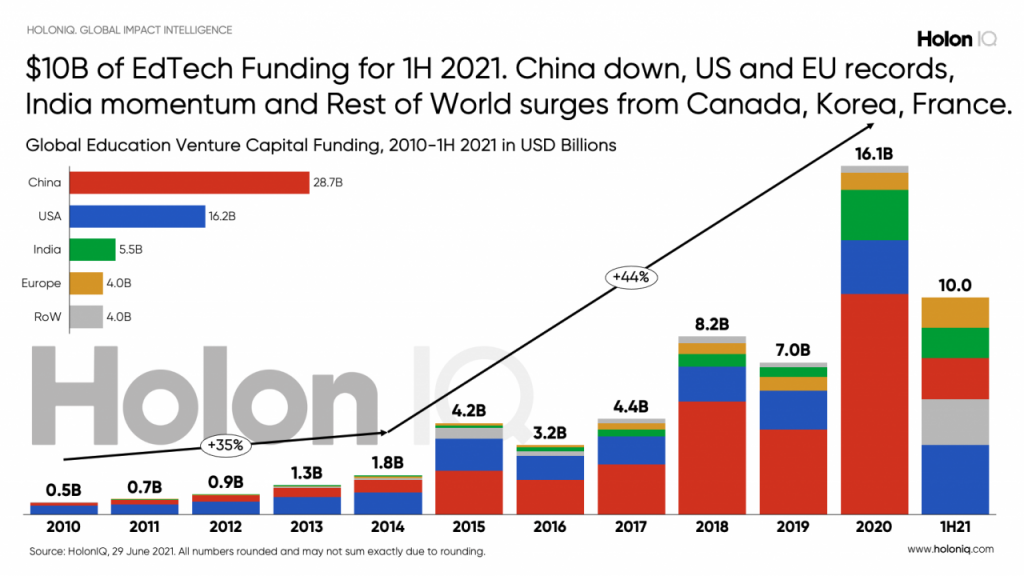
2U, Inc. and edX to Join Together in Industry-Redefining Combination — from transformingdigitaleducation.com

  • 2U to acquire substantially all edX assets, including edX brand, website, and marketplace
  • Together, 2U and edX will reach over 50 million learners, serve more than 230 partners, and offer over 3,500 digital programs on the world’s most comprehensive free-to-degree online education marketplace
  • Proceeds of the transaction will go to a nonprofit led by Harvard and MIT focused on transforming educational outcomes, tackling learning inequities

Other items related to this:


How Morehouse School of Medicine is growing the biotech worker pipeline — from highereddive.com by Chandra Thomas Whitfield
The historically Black institution created summer bridge programs to attract students to a sector in which diversity has long lagged.

College students and recent graduates considering a future in the biotechnology sector have a new way to try it out, thanks to a tuition-free summer program at the Morehouse School of Medicine.


What Are The Four Types of Intellectual Property Rights? — from intelligenthq.com

Excerpt:

Anything created by a person, including intangible concepts and ideas, can be legally protected from theft and reproduction without permission through intellectual property rights laws. To get this protection, you will need to get comprehensive intellectual property services from attorneys specializing in intellectual property cases.


From before the birth of Jesus Christ:

32 “He is not a mere mortal like me that I might answer him,
    that we might confront each other in court.
33 If only there were someone to mediate between us,
    someone to bring us together,
34 someone to remove God’s rod from me,
    so that his terror would frighten me no more.
35 Then I would speak up without fear of him,
    but as it now stands with me, I cannot.

From DSC:
Jesus Christ IS that mediator. Thank you LORD!


Facebook to target Nigerian learners with educational app Sabee, created by its R&D team — from techcrunch.com by Sarah Perez

Excerpt:

Last fall, Facebook announced it was opening an office in Lagos, Nigeria, which would provide the company with a hub in the region and the first office on the continent staffed with a team of engineers. We’ve now spotted one of the first products to emerge from this office: an education-focused mobile app called Sabee, which means “to know” in Nigerian Pidgin. The app aims to connect learners and educators in online communities to make educational opportunities more accessible.


Potential unfulfilled: COVID-19, the rapid adoption of online learning, and what could be unlocked this year — from christenseninstitute.org by Thomas Arnett

Excerpt:

The foundational tenets of conventional instruction hinge on uniformity and compliance. Schools and classrooms, by and large, need students to conform to a common set of requirements in order for cohort-based learning to work. Unfortunately, nearly all students struggle to one degree or another to fit conventional instruction’s norms.

For example, conventional instruction requires students to show up to school ready to learn at times dictated by the school schedule, but for some students, life gets in the way. Conventional instruction moves all students through content at a uniform pace, but not all students master content in the time allotted. And conventional instruction often obliges students to sit and work or sit and listen for large portions of the day, yet some students struggle to sit quietly for extended periods of time. Fortunately, online learning offers the ability to replace many of these systemic rigidities with greater adaptability to students’ needs.

From DSC:
The above excerpt brings the image (below) back to my mind. The image represents our educational systems’ ways of never stopping or slowing down for anyone. They leave the station at such and such a time and then they move at a very face pace for everyone. There’s no stopping them — regardless of whether a student has mastered the content or not.

K-12 education in America is a like a quickly moving train that stops for no one.


No, it doesn’t need to be a Zoom — from wired.com by Chris Stokel-Walker
We’re wasting hours of our lives on inefficient video calls. Here’s how to decide when you should jump on a Zoom – and when not to

Excerpt:

Academic research has pinpointed four reasons why we’re growing sick of video calls. For one thing, we’re engaged in an unnaturally large amount of eye contact, which can prove exhausting, according to Jeremy Bailenson professor at Stanford University and founding director of the Stanford Virtual Human Interaction Lab. We’re also stressed out by being confronted with our own face for hours on end (even if you can’t stop staring at it). Bailenson compares it to be followed around with a mirror all day.

From DSC:
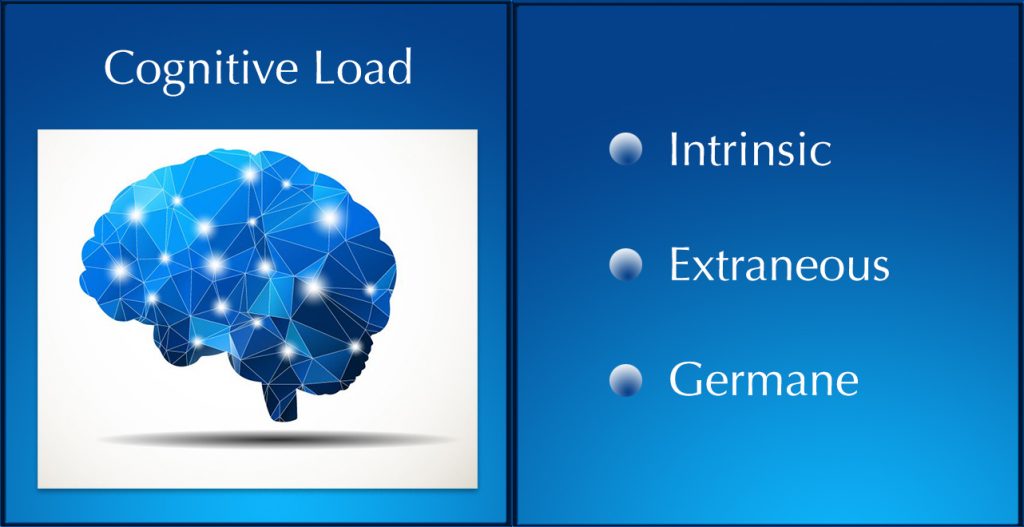
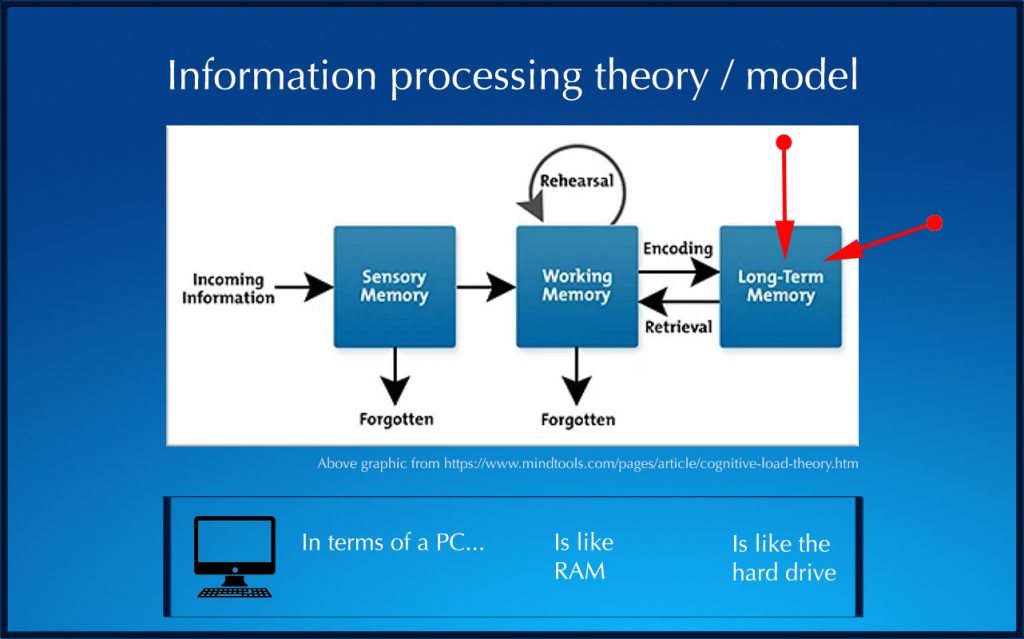
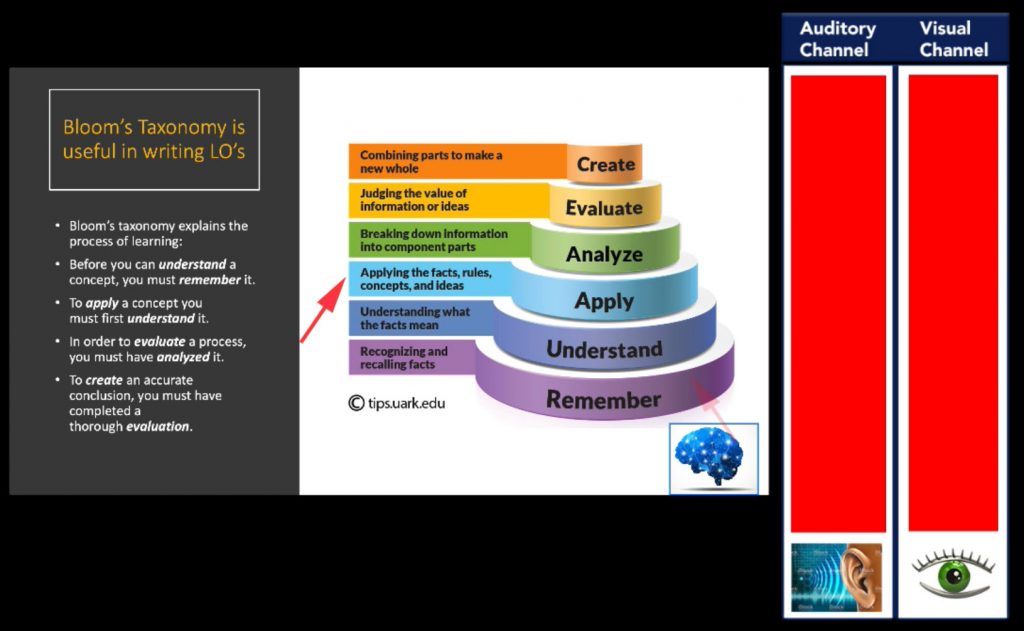
What comes to my mind here is that videoconferencing — and meeting in general — requires mental work — and thus energy. Why? Because, as I mentioned in this posting, we are constantly processing auditory and visual channels. 


What is cognitive load? And why should I care about it?

Transcript here.


From DSC:
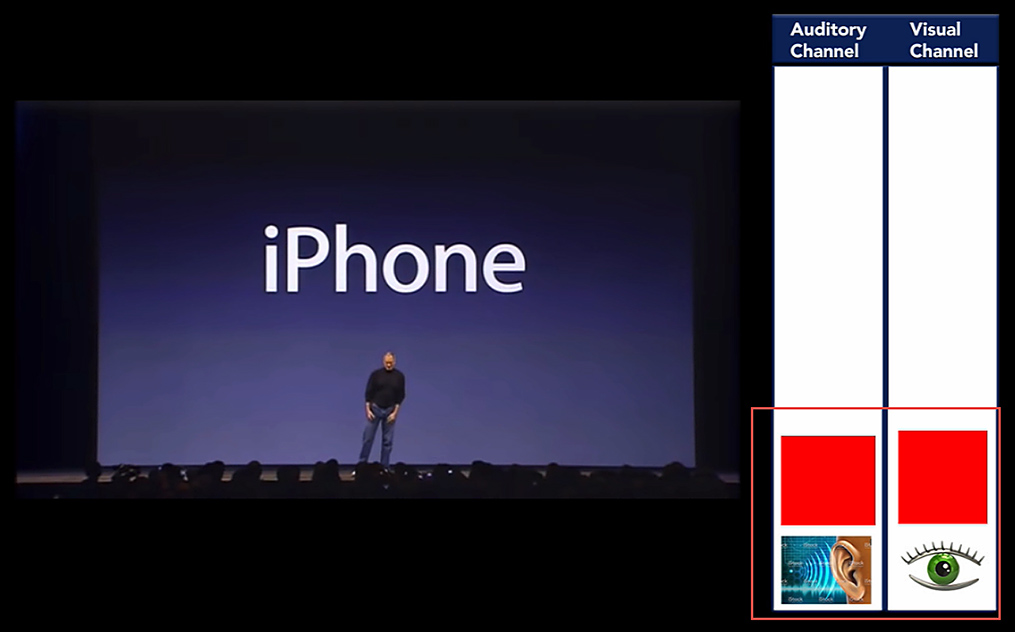
So having to process auditory and visual information hour after hour takes major energy! And some presentations/presenters require a lot more energy than others.

Having to process auditory and visual information hour after hour takes major energy!


watching a presentation by Steve Jobs requires a lot less auditory and visual processing

 
© 2025 | Daniel Christian