UMass Goes Big Online, Launching ‘UMass Global’ — from wgbh.org by Kirk Carapezza; with thanks to Michael Horn for this resource

Excerpt:

The University of Massachusetts system is launching “UMass Global” — a new online college focused solely on adult learners — whose long-term, strategic goals President Marty Meehan listed two years ago in his annual address.

“Addressing the workforce skills gap. Meeting employer demand. Improving economic mobility for Massachusetts residents. And ensuring that the University of Massachusetts continues to thrive for generations to come,” Meehan said.


Colleges Seek Virtual Mental Health Services — from insidehighered.com by Maria Carrasco; with thanks to Ray Schroeder for this resource out on LinkedIn
New digital and telehealth options make it easier for students living off campus — even in a different state — to access their institution’s mental health resources.

Now, as most institutions resume more normal in-person operations, they are leaning on telehealth mental health services to deliver help to students, whether they are on campus or off.

“We’ve seen that a lot of schools are focusing more on their services and making sure that they have an offering for health and well-being such as telehealth and teletherapy,” said Seli Fakorzi, director of mental health operations at TimelyMD, a telehealth provider. “Campuses are now thinking about whether they’re offering enough services that provide virtual and in-person support.”


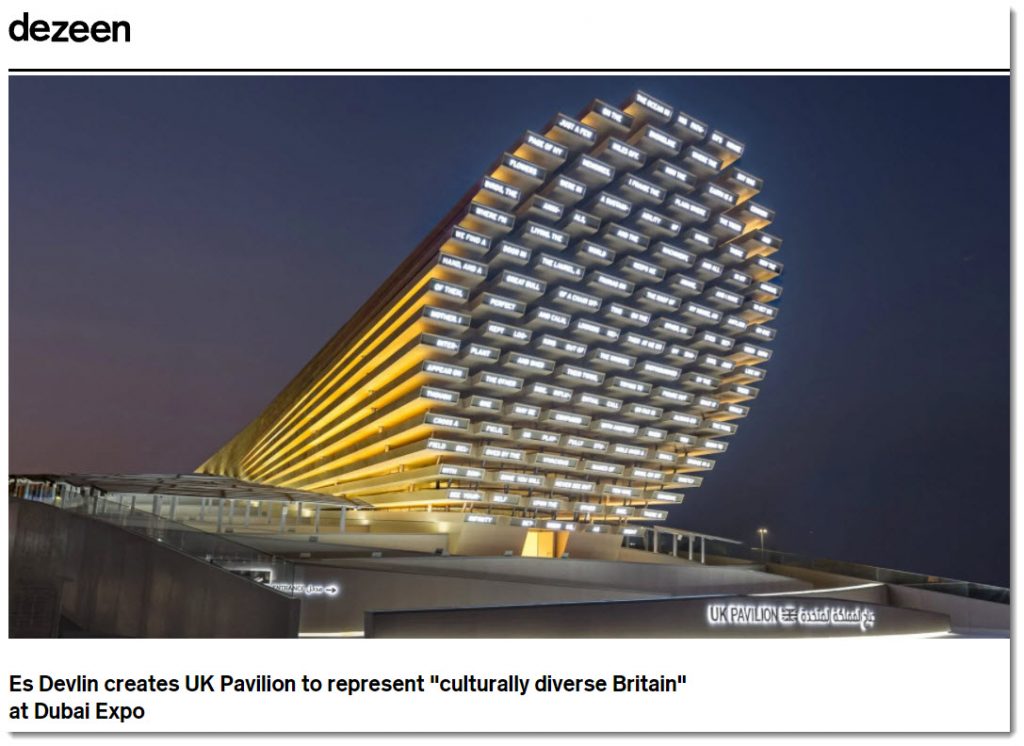
Es Devlin creates UK Pavilion to represent “culturally diverse Britain” at Dubai Expo — from dezeen.com by Tom Ravenscroft

Es Devlin creates UK Pavilion to represent culturally diverse Britain at Dubai Expo

Speaking of buildings and art, see:

Adele Renault’s Beautiful Murals-- from fubiz.net


Resources from “The Science of Learning” — from deansforimpact.org

Excerpt:

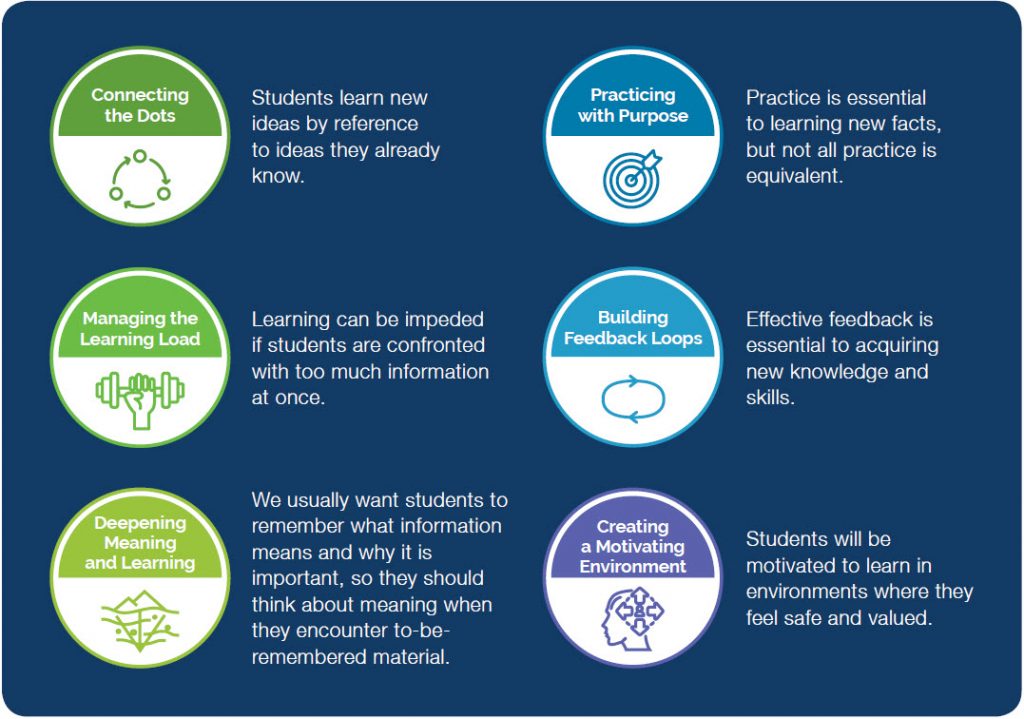
The Science of Learning summarizes existing cognitive-science research on how students learn, and connects it to practical implications for teaching. The report is a resource for teacher-educators, new teachers, and anyone in the education profession who is interested in how learning takes place.

Deans for Impact believes all teacher-candidates should know the cognitive-science principles explored in The Science of Learning. And all educators, including new teachers, should be able to connect those principles to their practical implications for the classroom.

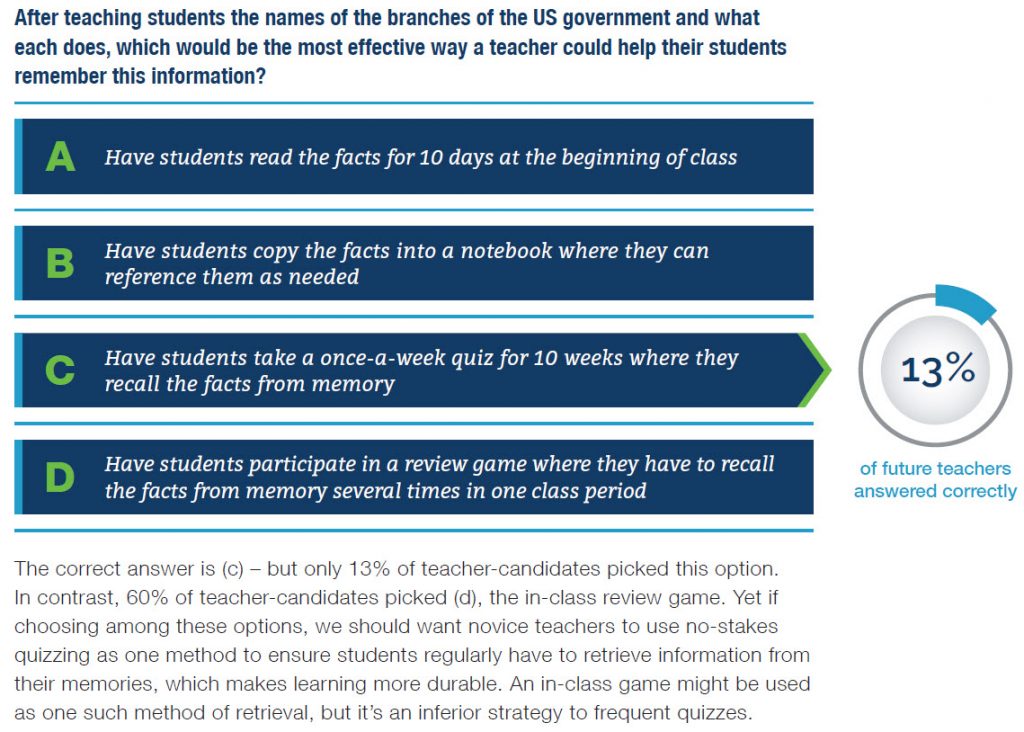
One of those resources is:

Also see:Learning by Scientific Design -- a report from Deans for Impact

The use of regular quizzes is extremely effective in committing something to long-term memory


There are six major takeaways from our first administration of our Learning by Scientific Design assessment:

  1. In general, future teachers are unfamiliar with basic principles of learning science – and they struggle to connect these principles to practice.
  2. Encouragingly, future teachers recognize the critical role that background knowledge plays in learning.
  3. Future teachers struggle to identify effective forms of practice – and they appear to conflate student engagement with learning.
  4. For the most part, teacher-candidates hold beliefs about teaching and learning that align to principles of learning science –- but there are clear areas for improvement.
  5. Teacher-candidate understanding of learning science does not vary based on key categories we might expect.
  6. Teacher-educators in the LbSD Network do better at identifying learning-science principles in practice than just the principles in the abstract.


Why everybody’s hiring but nobody’s getting hired — from vox.com by Rani Molla and Emily Stewart; with thanks to Ryan Craig for this resource
America’s broken hiring system, explained.

Tim Brackney, president and COO of management consulting firm RGP, refers to the current situation as the “great mismatch.” That mismatch refers to a number of things, including desires, experience, and skills. And part of the reason is that the skills necessary for a given job are changing faster than ever, as companies more frequently adopt new software.

“Twenty years ago, if I had 10 years experience as a warehouse manager, the likelihood that my skills would be pretty relevant and it wouldn’t take me that long to get up to speed was pretty good,” Joseph Fuller, a management professor at Harvard Business School and co-author of a recent paper on the disconnect between employers and employees, said. “The shelf life of people’s skills for a lot of decent-paying jobs has been shortening.”

From DSC:
I also think those hiring don’t think people can reinvent themselves. Folks who hire someone (and/or the applicant tracking systems as play) always seem to look for an exact match. There is little vision and/or belief that someone can grow into a position, or to lead differently, or to go in a different but better direction. They reach for their cookie cutters and shove their imaginations and ability to think bigger aside.

Employers could help people by investing in their employees’ growth and development — even if it means they actively help an employee take a right turn. Such an employee could hopefully find a new fit within that organization — if they do, they would likely turn out to be fiercely loyal.

Even if it means offering an employee 1-2 courses a year that they want to learn about — NO STRINGS ATTACHED — the learning culture would get a huge boost!!! Peoples’ love/enjoyment of learning would grow. Morale would improve. People would feel valued.

Let me offer a personal example:

  • My old boss, Mr. Irving Charles Coleman Jr, let me take a Photoshop class while I was working in the IT Department at Kraft Foods’ headquarters. Kraft paid for it, even though it wasn’t directly related to my position at the time. That course ended up changing my life and my future direction. No kidding. Thank you Irv! You’re the best!
 

BlueJeans Video Conferencing Giant to Launch Native Google Glass App for Remote Assistance — from next.reality.news by Adario Strange

Excerpt:

Starting in 2022, Glass Enterprise Edition 2 users will have the option of using a native version of the BlueJeans meeting software.

Like other enterprise AR wearables on the market, the primary use case for the dynamic will be in the realm of remote assistance, in which an expert in a faraway location can see what a Google Glass wearer sees and advise that team member accordingly.

From DSC:
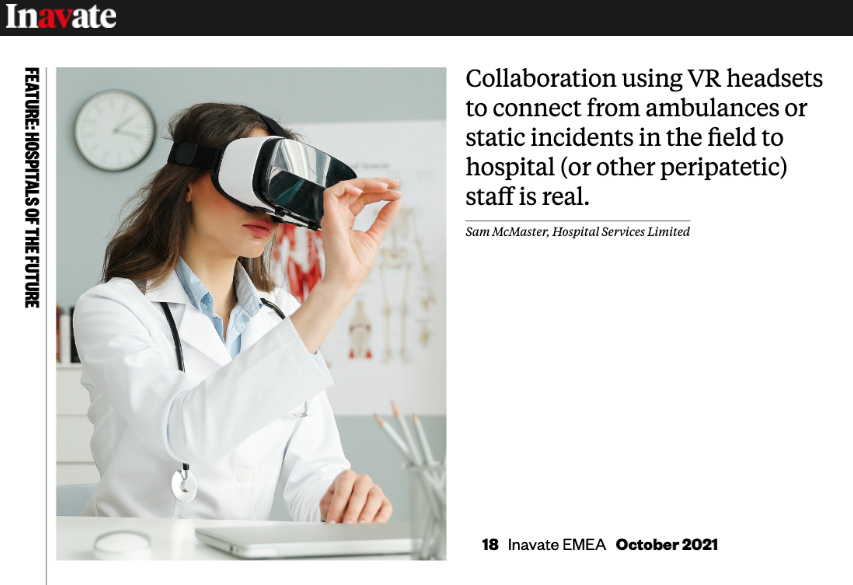
Remote support is also occurring in healthcare. What might “telehealth” morph into?

Remote support is also occurring in healthcare. What might telehealth morph into?


How corporate universities fit into hybrid learning strategies of the future — from chieflearningofficer.com by Andie Burjek
While the onset of the pandemic challenged many organizations’ learning strategies, many companies have learned the true value of their brick-and-mortar facilities.

Excerpt:

Part of what KPMG did to accomplish this was break down its learning programs into component parts, he added. For example, one of their popular audit programs was broken down into parts like readings, coaching sessions, guided practices and more. These are known as “road maps.” The learning organization found that this was an effective way to convert in-person learning and maintain the quality and effectiveness of the learning.

“We will continue to leverage those roadmaps for a more holistic learning experience [and] to deliver on the promise of a blended learning experience,” Muñoz says.

“[Deloitte University] will continue to be an important part of our strategy, but our total mix will change in how we leverage the other modalities going forward,” Dingler says. “It will be a more purposeful, strategic and integrated mix than what they were in the past.”


Can colleges compete with companies like Coursera? — from highereddive.com by Rick Seltzer
Arthur Levine discusses how trends like personalized education are unfolding, what’s driving them, and what can go right or wrong for colleges.

Excerpt:

They say colleges will see their control over the market slip while consumers increase their power. New content producers like companies and museums are entering the postsecondary market. Students will often prioritize personalized education and low prices. Measuring learning by time in seats will transition to outcome-based education. Degrees won’t necessarily be the dominant form of credential anymore as students turn to “just-in-time education” that quickly teaches them the skills for microcredentials they need for the labor market.

For higher education to be successful, you have to have its feet in two worlds. One world is the library, and that’s human heritage. And the other is the street. That’s the real world, what’s happening now. It’s jobs, it’s the workplace.

What happens when we change quickly is we continue as institutions to keep our hold on the library, but we lose traction in the street.

Institutions have to reestablish their traction. They have to prepare students for careers. They have to prepare students for the world…

From DSC:
I also like the part where is says, “So you’ve got to ask yourself, what are they offering that would draw people there? One thing they are offering is 24/7. Another thing that they’re offering is unbundled. Another thing they’re offering is low cost, and that’s very appealing.”


Five Tips for Launching an Online Writing Group — from scholarlyteacher.com by Kristina Rouech,  Betsy VanDeuesen, Holly Hoffman, & Jennifer Majorana — who are all from Central Michigan University

Excerpt:

Making time for writing can be difficult at any stage of your career. Pushing writing aside for grading, lesson planning, meeting with students, and committee work is too easy. However, writing is a necessary part of our careers and has the added benefit of helping us stay current with our practice and knowledge in our field. Lee and Boud (2003) stress that groups should focus on developing peer relationships and writing identity, increasing productivity, and sharing practical writing. Online writing groups can help us accomplish this. With the impact of the COVID-19 pandemic, working online has become a necessity, but it can take time to figure out what works best for you and your writing colleagues. We recommend five tips to help you establish an online writing group that is productive and enjoyable for all participants.


Best Wireless Keyboard and Mouse for Teachers 2021 — from techlearning.com by Luke Edwards
The best wireless keyboard and mouse for teachers can give freedom to move without losing ease of input

The following don’t focus much on Apple’s products, but you can also see:


National Disability Employment Awareness Month 2021 — from dol.gov

Excerpt:

The theme for NDEAM 2021, “America’s Recovery: Powered by Inclusion,” reflects the importance of ensuring that people with disabilities have full access to employment and community involvement during the national recovery from the COVID-19 pandemic.

NDEAM is held each October to commemorate the many and varied contributions of people with disabilities to America’s workplaces and economy. Browse our website for ideas and resources for employers, community organizations, state and local governments, advocacy groups and schools to participate in celebrating NDEAM through events and activities centered around the theme of “America’s Recovery: Powered by Inclusion.”

The 2021 NDEAM poster is available now!


Artist Spotlight: Kohshin Finley

Artist Spotlight: Kohshin Finley — from booooooom.com

Artist Spotlight -- Kohshin Finley


150 learning theorists… 2500 years of learning theory… from Greeks to Geeks! — from onaldclarkplanb.blogspot.com by Donald Clark

Excerpt:

These were written as quick, readable introductions to the many theorists who have shaped the world of learning. For Greeks to Geeks! Note that this is a personal selection, not a definitive list.


Millionaire Mastermind Academy dot org -- for minority women

The Millionaire Mastermind Academy, a nonprofit organization that aims to end poverty through entrepreneurship for minority women worldwide, and American Landmark Apartments, one of the country’s fastest-growing multifamily owner-operators in the country, are teaming up to help minority women entrepreneurs develop career skills in real estate and property management while further diversifying the industry.

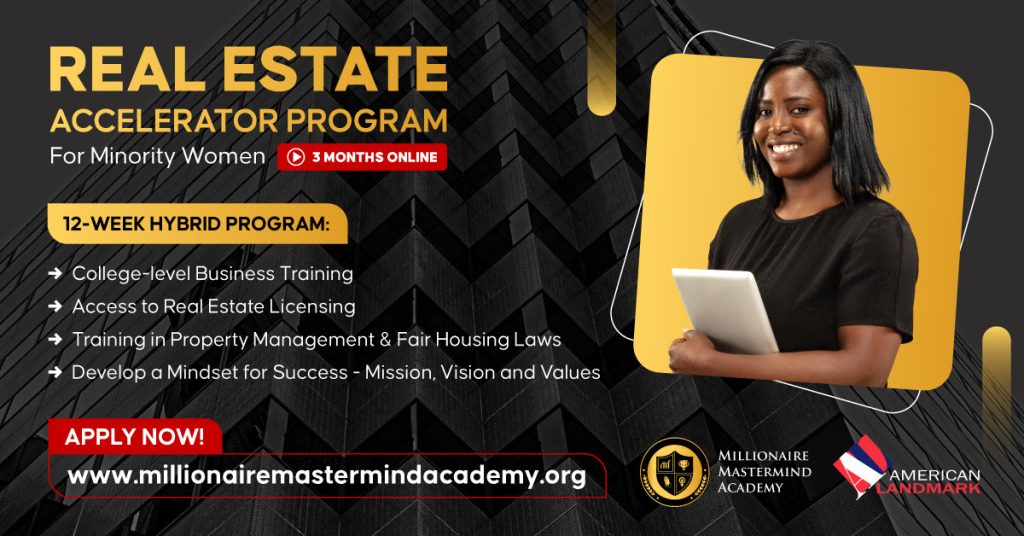
The newly launched Millionaire Mastermind Academy Real Estate Accelerator Program is a 12-week program that equips and empowers minority women to combat poverty by equipping them with sustainable real estate and property management skills and experience. The program includes college-level business training, access to real estate licensing, training in property management and Fair Housing laws, as well as apprenticeship and mentorship opportunities.

Newly launched -- Millionaire Mastermind Academy Real Estate Accelerator Program

Through its application process, Millionaire Mastermind Academy will select approximately 25 qualifying women to participate in the program, which runs from September 28th to December 21st, 2021, and consists of both virtual education and two in-person weekend intensives. The in-person training will be held at the American Landmark Training facility in Tampa, Fla.

 
© 2025 | Daniel Christian