Why school might look a little different these days — from dangerouslyirrelevant.org by Scott McLeod
Autumn morning — from 500px.com by David Dai

Desert Camel by Xiao Yang — from 500px.com

Discover by Reacto Carbon — from 500px.com

On 12/16/2021,
in Adobe, art, business, communities of practice, content development, aggregation, repositories, design, digital audio, digital photography, digital storytelling, digital video, engagement / engaging students, graphics,
by Daniel Christian
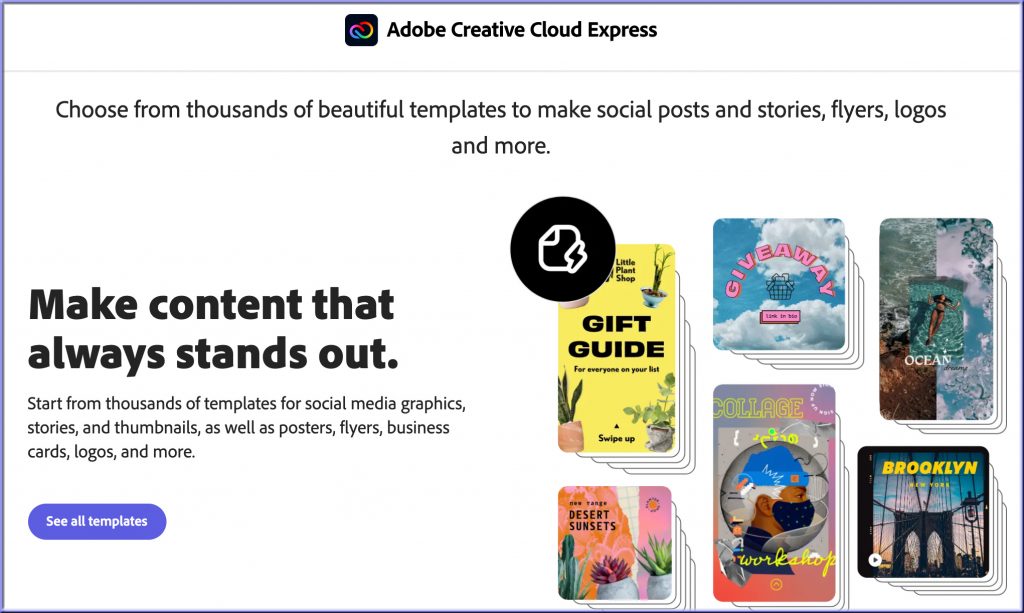
Adobe’s Creative Cloud Express brings content editing to the masses — from protocol.com by Lizzy Lawrence
It’s competing directly with Canva, a template-builder for non-professionals.
Excerpt:
Historically, Adobe’s software was made for the pros. Applications like Photoshop, Illustrator and Premiere Pro all require a paid Creative Cloud subscription and a certain level of expertise. But with Monday’s launch of Creative Cloud Express, Adobe is targeting anyone who might find graphic design useful: small businesses, students and social media influencers.
Also see:
- Introducing Adobe Creative Cloud Express — from adobe.com by Mala Sharma
Also see:
29 Big Ideas that will change our world in 2022 — from linkedin.com by LinkedIn News
Excerpts:
Students skipped out on college in droves during the pandemic: undergraduate enrollment has fallen 7.8% since the fall of 2019. To get students to return to school — or come at all — colleges will need to make their pandemic-era flexible options permanent and adopt new approaches to education.
…
With a demographic cliff coming in the middle of this decade as the number of high-school graduates falls off, providing something different is the only way all but the biggest brand names in higher education will survive. — Jeff Selingo, author of “Who Gets In and Why: A Year Inside College Admissions”
On 12/15/2021,
in game-changing environment, innovation, law schools, Legal operations, legal reform, legal technologies, legislatures / government / legal, telelegal, UK, user experience (UX), vendors, videoconferencing, Virtual courts and law firms,
by Daniel Christian
Virtual law firms see 38% jump in recruitment — from personneltoday.com by Adam McCulloch
Excerpt:
In late 2020, 1,355 lawyers worked for such virtual firms, a number that has risen to 1,875 by autumn of 2021. In 2019, 1,272 worked for such firms.
Also see:
- 8 Ways Lawyers Are Getting Together Online This Year — from jdsupra.com
Run… by Miguel Martins https://t.co/VbKSHQ8ozp #Photography pic.twitter.com/d0dwUyxNji
— #LuxuryTravel (@ZaibatsuPlanet) December 12, 2021
On 12/15/2021,
in Apple, cloud-based computing / apps / other cloud-related, computer science, content development, aggregation, repositories, Google, platforms, productivity / tips and tricks, programming, tools,
by Daniel Christian
The 35 Best Apple and Google Apps of 2021 — from wonderoftech.com by Carolyn Nicander Mohr
Excerpt:
As 2021 draws to a close, Apple and Google have been busy creating their lists of the best apps of the year. These lists may include apps you already have or are familiar with. You may also discover your new favorite must-have app you’ll be eager to share with your friends.
On 12/14/2021,
in art, creativity, digital photography, Emotion, Europe, faith, photography,
by Daniel Christian
Bavarian Church — from 500px by Stefan Thaler

On 12/14/2021,
in 21st century, content development, aggregation, repositories, corporate universities / corporate training, education technology, elearning, emerging technologies, innovation, instructional design, interaction design, interactivity, interface design, training / L&D, user experience (UX), user interface design, vendors, voice recognition / voice enabled interfaces,
by Daniel Christian
ELC 070: Conversation Design for the Voice User Interface — from theelearningcoach.com (ELC) by Connie Malamed
A Conversation with Myra Roldan
Excerpt (emphasis DSC):
Do you wonder what learning experience designers will be doing in the future? I think one area where we will need to upskill is in conversation design. Think of the possibilities that chatbots and voice interfaces will provide for accessing information for learning and for support in the flow of work. In this episode, I speak with Myra Roldan about conversation design for the voice user interface (VUI). We discuss what makes an effective conversation and the technologies for getting started with voice user interface design.
On 12/13/2021,
in 21st century, 24x7x365 access, adult learning, Artificial Intelligence/Agents/LLMs/and Related, Asia, Australia, Blockchain, Canada, career development, change, changing business models, cloud-based computing / apps / other cloud-related, colleges, content development, aggregation, repositories, copyright/ownership/NFTs, corporate / business world, corporate universities / corporate training, credentialing, cryptocurrencies, Daniel S. Christian, digital learning, disruption, education technology, emerging technologies, entrepreneurship, Europe, experimentation, Facebook / Meta Platforms, faculty/staff, future, future of higher education, game-changing environment, global / globalization, higher education, ideas, India, innovation, instructional design, internet, IT in HE, K-12 related, law schools, learner profiles, learning, learning ecosystem, Learning Experience Design, Learning from the Living [Class] Room, learning hubs & pods & microschooling, learning preferences, learning spaces, lifelong learning, Michigan, MOOCs -- Massive Open Online Courses, more voice more choice more control, online learning, online media, skills, society, staying relevant, streams of content, surviving, teachers, teaching & learning, teaching online, tools, training / L&D, UK, United States, vendors, web-based collaboration,
by Daniel Christian
The next age of the internet could suck power away from Big Tech while living on the same backbone as cryptocurrencies. Here’s what to know about Web3. — from businessinsider.com by Katie Canales
Excerpts (emphasis DSC):
- Web3 is the next generation of the internet and will exist on the blockchain.
- It will be decentralized, meaning it won’t be controlled entities like Facebook or Google.
- Twitter, GameStop, Reddit, and VC firm a16z are all putting resources into building Web3.
…
One aspect of the metaverse is that users will hopefully be able to go virtually from platform to platform with one single account — just like we will in Web3.
And NFTs, one-of-a-kind tokens representing your ownership of a virtual good, could be more easily bought and sold with cryptocurrencies within a space like Web3.
From DSC:
How might “Web3” translate into the future of lifelong learning? Here’s one vision/possibility:
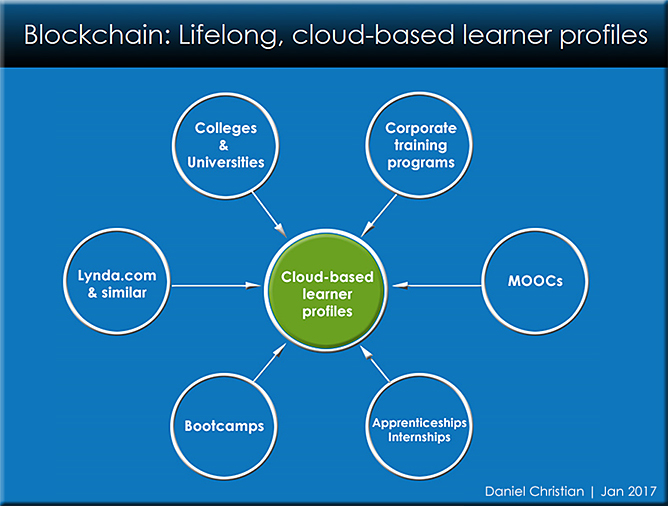
Each person would have a learner profile/account that could seamlessly log into multiple education/training providers’ platforms and services. The results of that learning could be stored in one’s cloud-based learner profile. This type of next-generation learning platform would still need subject matter experts, instructional designers, programmers, and other team members. But the focus would be on building skills — skills that an artificial intelligence-backed interface would demonstrate are currently being requested by the modern workplace. This constantly-being-updated list of skills could then link to the learning-related experiences and resources that people could choose from in order to develop those skills.
The following vision/graphic also comes to my mind: