Web 3.0 vs Metaverse: What’s the difference? — from homo-digitalis.net by Fabian Schmidt

Excerpt:

So what is Web 3.0?

On Twitter, a user asked if someone could explain the term in baby talk. I thought one answer was good:

    • Web 1.0 = Read
    • Web 2.0 = Read/Write
    • Web 3.0 = Read/Write/Own

This is a sufficient simplification to gain an initial understanding. Yet a bit more information is still important.

Let’s get one thing straight right away. As with all things in the making, there is not yet a clear-cut definition of Web 3.0. Tim Berners-Lee, the inventor of the classic web, thinks of the semantic web as the next big step.

Since 2020/2021, there is another idea of Web3, and it is inspired by a new form of technology: Blockchains. At its core is a new wave of decentralization.

Besides decentralization, other key topics related to Web 3.0 include Decentralized Autonomous Organizations (DAO), Non-fungible-tokens (NFT), and Decentralized Finance (DeFi).

The metaverse is a digital world that is meant to feel as real as possible and can represent all concerns of human existence. From leisure to work.

Fabian Schmidt, Homo Digitalis, 2021


Bill Gates: Most Work Meetings Will Happen In The Metaverse In 3 Years — from vrscout.com by Kyle Melnick

Excerpt:

“Within the next two or three years, I predict most virtual meetings will move from 2D camera image grids—which I call the Hollywood Squares model, although I know that probably dates me—to the metaverse, a 3D space with digital avatars,” said Gates in the post. “Both Facebook and Microsoft recently unveiled their visions for this, which gave most people their first view of what it will look like”.


Adidas to enter the metaverse with first NFT products — from dezeen.com by Rima Sabina Aouf

Excerpt:

Adidas has announced its next collection will be a mix of digital and physical items, and will be sold as NFTs produced with collaborators such as Bored Ape Yacht Club.

Titled Into the Metaverse, the collection will comprise virtual wearables that buyers can use in online platforms, but also the physical clothing to match.

It is Adidas’ first collection of NFTs, or non-fungible tokens – essentially, digital collectibles with proven authenticity. NFTs act as a blockchain-based certificate of ownership, allowing pieces to be authenticated, bought and collected.


How Coinbase thinks about the Metaverse — from blog.coinbase.com by Brian Armstrong & Alex Reeve

Excerpt:

Primitive Metaverse platforms are selling virtual land for millions of dollars. Billions more are being invested in Metaverse startups. And Mark Zuckerberg recently renamed his entire company to reflect a focus on building the Metaverse.

Recently, our team put together an internal presentation about the Metaverse, who’s working on it, and how crypto will help make it real. I thought the presentation was well done, so I’m sharing most of the slides here.

Like Matt[hew Ball], we define the Metaverse as:

The future of the internet: A massively-scaled, persistent, interactive, and interoperable real-time platform comprised of interconnected virtual worlds where people can socialize, work, transact, play, and create.

The Metaverse is the distant evolution of Web3. In its most complete form, it will be a series of decentralized, interconnected virtual worlds with a fully functioning economy where people can do just about anything they can do in the physical world.
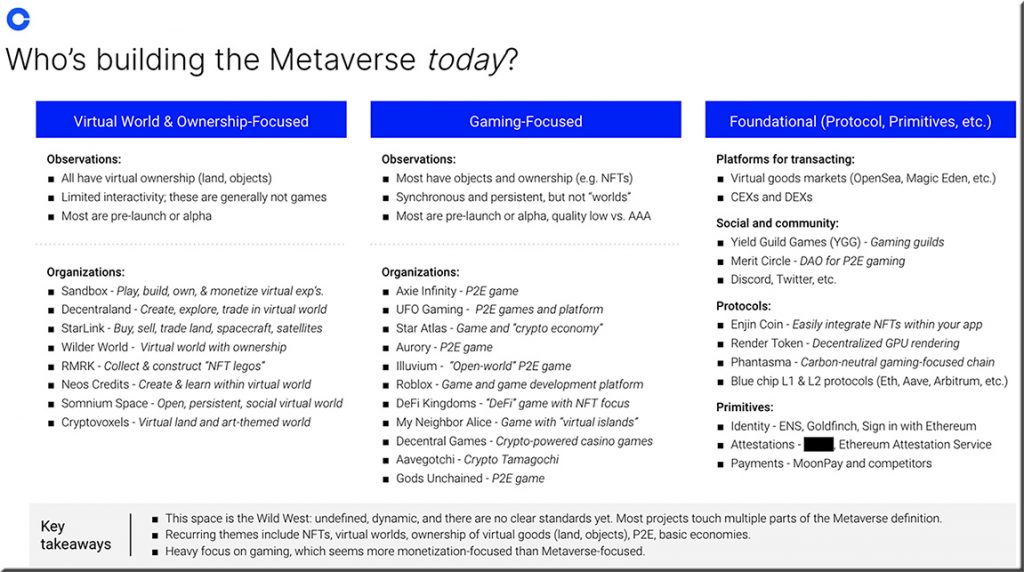

Who is building the Metaverse today?


3 major trends affecting ed tech companies — from highereddive.com by Natalie Schwartz
We reviewed what executives said during their latest earnings calls to better understand patterns in the growing sector.

Excerpts:

Earlier on the call, he said Coursera’s entry-level certificates — which are developed by the likes of Facebook, Google, IBM, Intuit and Salesforce — attracted more than 2 million student enrollments since 2018.

“New entrants to the sector, such as corporations and online education companies, will offer genuine competition to traditional colleges, especially as pricing becomes more of a focus,” analysts wrote in the report. 

Several ed tech companies are seeing returns from efforts to work with companies to train their employees.

Officials at Udemy, a major MOOC platform that went public in October, said during a call with analysts in early December that their work with companies now accounts for 39% of their revenue – up from 23% a year ago.


California Lawmakers Ignore Data in Calls to Restrict the Expansion of Legal Services — from iaals.du.edu

Excerpt:

Earlier this week, two California lawmakers spoke up about these issues. Cheryl Miller, writing for Law.com’s The Recorder, reports: “The chairs of California’s two legislative judiciary committees this week accused the state bar of ‘divert[ing] its attention from its core mission of protecting the public’ by pursuing proposals to allow nonlawyers to offer a limited range of legal services.”

California Supreme Court Justice Tani Cantil-Sakauye called the criticism “not surprising,” and we would agree. After all, it is the same message we’ve heard time and again from opponents to any real, impactful change within the legal profession. And the assumptions underlying that message have been discredited by our organization and many other scholars, researchers, and even regulators in other countries. So it is frustrating just how widespread and misleading opponent claims can be.


Heart of the Forest — from 500px.com

A sunset in the distance, hovering over a forest turned golden


Dezeen’s top 10 Chinese architecture projects of 2021 — from dezeen.com

Set in the dramatic landscape surrounding Mount Tai, this ceremonial hall is topped with a semicircular window that reflects on a pool of water to create a moon-like effect when illuminated.


Guide to Trade School For People with Disabilities — from primeweld.com, with thanks to Sarah Breckon for this resource.

Per Sarah:

The guide includes advice on what people with disabilities should look for in a trade school, common challenges they may face, where to find additional resources, as well as career options in the trades available to people depending on their disability.

Excerpt:

Professionally successful people living with a disability sometimes credit their impairment for boosting their career prospects, because it taught them perseverance and commitment. Others believe that their physical or cognitive differences in certain areas have led them to develop stronger abilities in others.

Choosing a trade school is an opportunity to assess one’s traits and capabilities, and find the right career for applying them.

Jump to a section:


AWS Expands Access to Free Cloud Skills Training on its Mission to Educate 29 Million People by 2025 — from businesswire.com; with thanks to Ryan Craig for the resource
New AWS digital learning experience, technical courses on Amazon.com, expanded access to AWS re/Start, and Amazon’s first dedicated in-person cloud learning center will put cloud skills training into the hands of millions of people

New AWS Global Digital Skills Study finds the need for digital skills training is greater than ever, with 85% of workers feeling they need more technical knowledge than they did pre-pandemic

Excerpt:

SEATTLE–(BUSINESS WIRE)–[On 11/28/21], Amazon Web Services, Inc. (AWS), an Amazon.com, Inc. company (NASDAQ: AMZN), announced four initiatives to empower learners and make it even easier for anyone with a desire to learn to access free cloud computing skills training and unlock new career possibilities in the cloud. The initiatives announced today include the launch of AWS Skill Builder—a new digital learning experience, the addition of AWS courses to the Amazon.com website, the expansion of the AWS re/Start global reskilling program, and the opening of the AWS Skills Center—Amazon’s first dedicated, in-person cloud learning space.


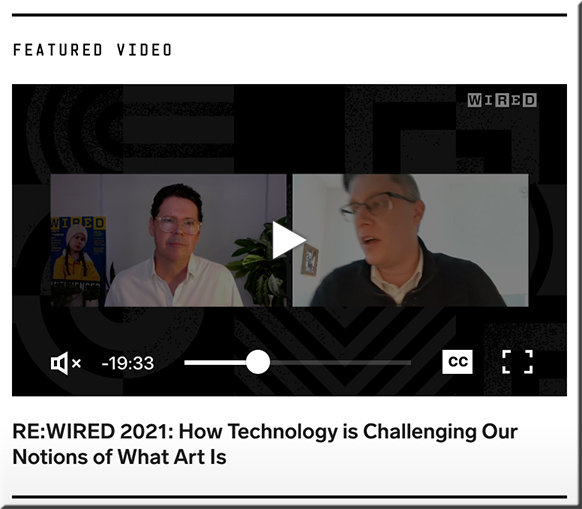
RE:WIRED 2021: Beeple on Art as a Subscription — from wired.com by Greg Williams and Mike Winkelmann
Digital artist Mike Winkelmann, a.k.a. Beeple, shares how his latest piece, “Human One,” will continue to update over time—and what that means for how digital art will be viewed in the future.

From DSC:
The idea was that you buy some digital art — and that art can change at any time. One day, you walk down the stairs, and it looks one way. The next day, things have changed in it. 

NOTE:
I saw a much longer version of the above excerpted video when I was viewing the article at “LaTurbo Avedon Is Way Ahead of the Metaverse.” It looked like this:


Journalism program sees positive changes in move from traditional Journalistic Writing courses to Multimedia Communication Model — from jeadigitalmedia.org by Jason Block

Excerpt:

Change is hard.

Change after 15 years? Now that can be downright painful.

Yet that was the exact situation I was in when my district in suburban Chicago decided that we were doing away with our traditional Journalistic Writing courses and shifting to a Multimedia Communication model. This was a part of our larger mission to create a “career pathway” for prospective journalists in our building and district, and while I was excited about that possibility, it made me itchy to remove both the words “journalism” and “writing” from my course titles.

Without getting into the logistics of the shift — that should definitely not be the purpose of this post, unless my purpose is to put you all to sleep — I can tell you definitively and without hesitation that this has been a blessing in disguise, a journalistic silver lining that has not only invigorating me, but also my program as a whole.

The most notable change has been in my enrollment numbers. Whereas I used to struggle to fill one section of “J1,” I now for the first time in my 18 years at Prospect have two full sections of the Introduction to Multimedia Comm course. With all of us fighting the constant recruiting battle to keep our numbers up, having a broader base of students to appeal to has made that job infinitely easier.


From DSC:
I’m not saying not to go there…but one has to be very careful when dealing with cryptocurrencies. As the items below show, you can mess up…big time.

From DSC:
And that bit about the decimal point is key! I tried to locate an article that I recently read that described how one person lost hundreds of thousands of dollars because he misplaced the decimal in his asking price for a cryptocurrency. It was worth hundreds of thousands of dollars, but he said that his big thumbs got in the way. He mistyped the asking price and hit the Enter key before he recognized his mistake. He sold the cryptocurrency for a fraction of its real value. In that case, one would hope that the buyer would extend some grace and readjust the price. But that didn’t happen in this case. Ouch!


From DSC:
Again, I’m not saying that this area may not represent an enormous new, impactful, prosperous wave to ride. But I need to do a whole lot more learning before I feel comfortable jumping into this ocean.

That said when I read the quote below…I wondered:


Quality Matters > Higher Education News > December 2021

Throughout the year, we — along with members of our amazing community — share resources to help all of us deliver on our online promise. Here are some of the most popular items from 2021 for you to use and share:


AI bots to user data: Is there space for rights in the metaverse? — from news.trust.org by Sonia Elks
In a virtual world populated by digital characters, privacy and property rights face unprecedented challenges, campaigners say

From virtual goods to AI-powered avatars that can be hired out by companies, a fast-growing digital world is pushing ownership and privacy rights into unchartered territory.

NYC Targets Artificial Intelligence Bias in Hiring Under New Law — from news.bloomberglaw.com by Erin Mulvaney

New York City has a new law on the books—one of the boldest measures of its kind in the country—that aims to curb hiring bias that can occur when businesses use artificial intelligence tools to screen out job candidates.

Employers in the city will be banned from using automated employment decision tools to screen job candidates, unless the technology has been subject to a “bias audit” conducted a year before the use of the tool.

‘Innovation Averse’ Law Schools Risk Missing Out on the Legal Industry’s Regulatory Renaissance — from law.com

“If law professors and legal educators and law school administrators aren’t in tune with how the practice of law is changing, not just in terms of how you deliver legal services, but these new areas that are emerging, then we’re doing a great disservice to our students,” said April Dawson, associate dean of Technology and Innovation at North Carolina Central University School of Law, during the “Redesigning Legal” speaker series panel discussion this week.


From DSC:
The following items are from a recent presentation by Zach Abramowitz entitledLegal Disruption: Key Trends to Watch in 2022.” By the way, you can sign up for Zach’s legal newsletter at zachabramowitz.substack.com/


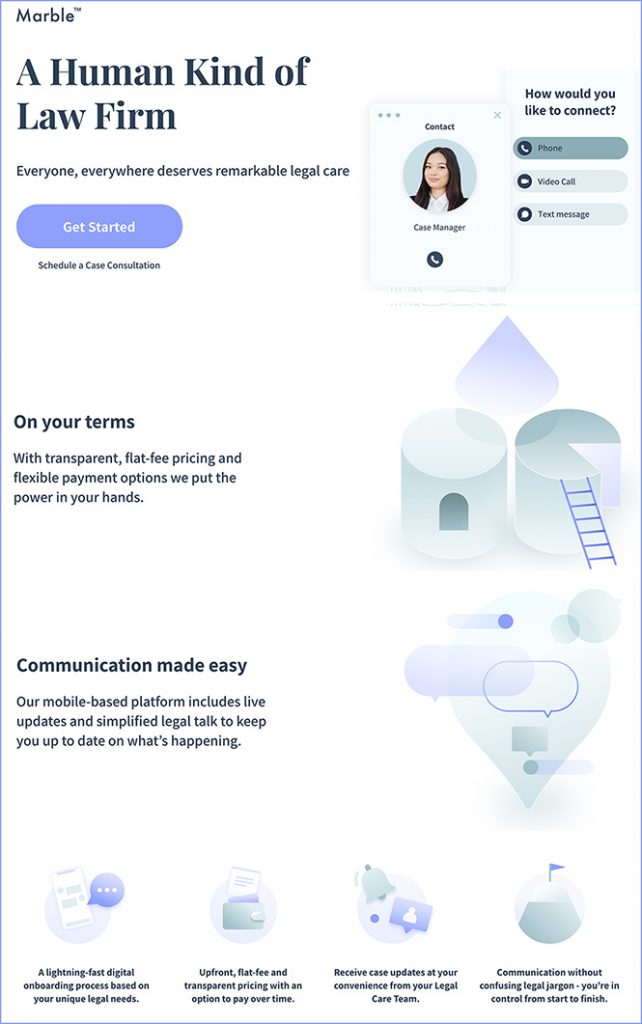
Marble Law


Darrow raises $20 million to uncover corporate legal violations and bring justice to all — from calcalistech.com by Meir Orbach
The Israeli startup is focused on locating violations that have caused damage to millions of people on average – the threshold for a potential class-action lawsuit

Excerpt:

Darrow has developed a machine learning-based platform which discovers legal violations by some of the biggest corporations in the world. Operating chiefly in the U.S., the company is focused on locating violations that have caused damage to millions of people on average – the threshold for a potential class-action lawsuit.


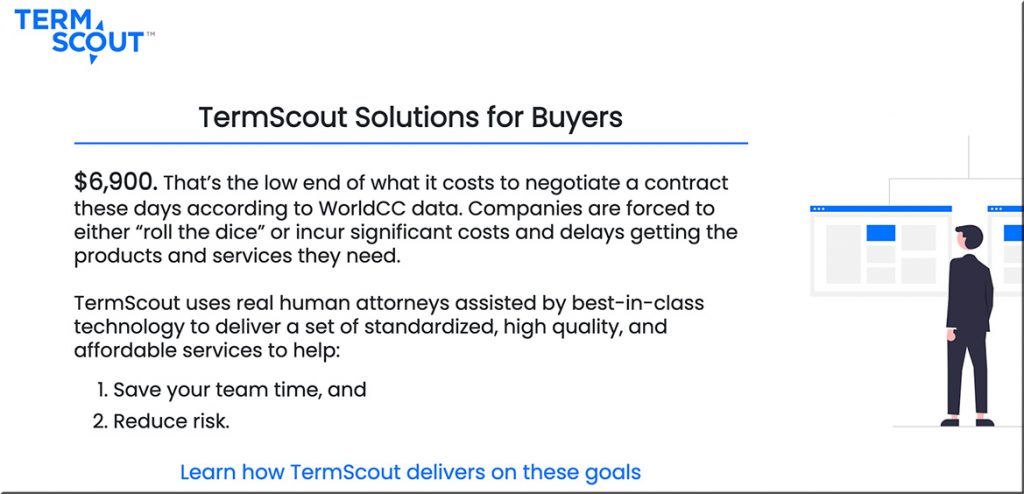
TermScout

Term Scout


Digital Learning Talent In Demand & More 2022 Hiring Trends — from teamedforlearning.com
2022 Hiring Trends in digital learning put job seekers in the driver’s seat. Learn how to use these trends to your advantage in education or corporate L&D.

Excerpt:

Now is an amazing time to look for a job in digital learning. The events of the last few years have boosted the demand for digital learning experts in all areas. That includes corporate L&D, higher ed, K-12, edtech, and commercial e-learning. As more organizations embrace a digital learning model, the demand for talent will continue to grow. The 2022 Hiring Trends in Digital Learning are all headed in one direction: up.

Our work connecting talented digital learning professionals with the organizations that need their skills has given us a sneak peek at the 2022 hiring trends in digital learning. And we’re ready to share those insights with you. Here’s what you need to know if you’re a job seeker in the digital learning industry.


UNC’s $97 Million Plan to Reach Adult Online Learners — from insidehighered.com by Suzanne Smalley
University of North Carolina will create an internal unit to build and manage online programs from the system’s 17 campuses for learners largely ignored by many universities.

Excerpt:

The University of North Carolina system is leveraging $97 million in pandemic recovery funding to launch a nonprofit ed-tech start-up intended to bolster adult online education in a state with a looming need for more skilled workers.

Project Kitty Hawk is named after the North Carolina beach town the Wright brothers returned to repeatedly before achieving their dream of flight, an apt metaphor for an undertaking that UNC leaders herald as a transformative effort to reach the state’s estimated one million working adults who have some college education but no degree.


© 2025 | Daniel Christian