6 higher education lawsuits to watch in 2022 — from highereddive.com by Natalie Schwartz
We’re keeping an eye on cases including a challenge to affirmative action that could reach the Supreme Court and alleged price fixing by wealthy colleges.

Excerpt:

Several major pending lawsuits have the potential to crumble the pillars of long-standing practices in higher education, including whether colleges can consider race in admissions and whether faith-based institutions can be exempt from a federal sex discrimination law.

Another high-profile case accuses top-ranked colleges of colluding to limit financial aid packages, while still another centers on the messy divorce between Liberty University and its former president, Jerry Falwell Jr.

Also see:

A group of former college students is suing 16 top-ranked private nonprofit universities — including Yale University, Georgetown University and the Massachusetts Institute of Technology — alleging they engaged in a price-fixing scheme that favored wealthy applicants and drove up the price of college. 

Those institutions involved in the lawsuit include:

  1. Northwestern University
  2. Yale University
  3. Georgetown University
  4. Massachusetts Institute of Technology
  5. Brown University
  6. California Institute of Technology
  7. University of Chicago
  8. Columbia University
  9. Cornell University
  10. Dartmouth College
  11. Duke University
  12. Emory University
  13. University of Notre Dame
  14. University of Pennsylvania
  15. Rice University
  16. Vanderbilt University


FLEXspace: Building the Resource, Fostering the Community — from campustechnology.com by Mary Grush & Lisa Stephens

Excerpt:

The FLEXspace platform allows users to find and share detailed exemplars for learning space design and is of great value for institutions planning new or updated spaces. FLEXspace has evolved amid a growing community of higher education participating institutions, with the SUNY and California State University systems, Penn State, and Foothill-DeAnza Community College District among its earliest and longest-term supporters. We asked Stephens about current and future developments in the FLEXspace platform and plans for its burgeoning community.

Also see:


Skillsoft to acquire CodeAcademy, a leading platform for learning high-demand technical skills, creating a worldwide community of more than 85 million learners — from skillsoft.com with thanks to Ray Schroeder for this resource out on LinkedIn

Excerpts (emphasis DSC):

Boston – December 22, 2021 – Skillsoft (NYSE: SKIL), a global leader in corporate digital learning, today announced it has entered into a definitive agreement to acquire Codecademy, a leading online learning platform for technical skills, for approximately $525 million in cash and stock.

With the addition of Codecademy’s innovative capabilities, we will create an even more immersive online learning experience. When we combine Skillsoft’s enterprise customer base of more than 12,000 corporate customers and over 46 million learners with Codecademy’s 40 million learners, sophisticated digital marketing capability and influential brand, we expect to unlock significant revenue synergies.”

Expands Immersive Platform with New Ways of Learning. Skillsoft has already assembled an expansive set of learning options, including virtual instructor-led training, coaching, micro videos, audio, books, bootcamps, live events, assessments and badges. Together with Codecademy’s interactive, self-paced courses and hands-on learning, Skillsoft will be able to deliver even more immersive experiences through its AI-driven platform, Percipio.


Elevate Becomes 1st Law Company to Receive ‘ABS License’ in US — from artificiallawyer.com

Excerpt (emphasis DSC):

And here’s some late breaking news, which also is about law company, Elevate. The Arizona Supreme Court has granted law company Elevate an ‘Alternative Business Structure (ABS) license’, making Elevate and its affiliated law firm, ElevateNext, a single entity.

This makes Elevate the first non-lawyer-owned law company, LPO, or ALSP in the United States with an integrated law firm. The ABS-licensed firm uniquely positions Elevate to address customer needs that require some aspect of legal practice along with technology, consulting, or services for ‘run the company’ business operations.

Also see:


eLearning Trends for 2022: What Should You Pick & Why? — from blog.commlabindia.com by Nikhil Bhogaraju

Excerpt:

When it comes to tools, the modern training manager is no longer a newbie, opting for products that are simple to use and fulfill IT requirements.

Training managers need to be hands-on with authoring tools. LXPs (Learning Experience Platforms), and other tools that save time.

Popular eLearning authoring tools for rapid development:

  • Articulate Storyline
  • Adobe Captivate
  • iSpring
 

What’s ahead for AI, VR, NFTs, and more? — from oreilly.com by Mike Loukides
Here are some predictions for tech in 2022.

Excerpt:

Just as we saw new professions and job classifications when the web appeared in the ’90s, we’ll see new professions and services appear as a result of AI—specifically, as a result of natural language processing. We don’t yet know what these new professions will look like or what new skills they’ll require. But they’ll almost certainly involve collaboration between humans and intelligent machines.

Also see:

  • How A.I. is set to evolve in 2022 — from cnbc.com by Sam Shead
    Key Points: 
    * AI can excel at specific narrow tasks such as playing chess but it struggles to do more than one thing well.
    * While AI still has a long way to go before anything like human-level intelligence is achieved, it hasn’t stopped the likes of Google, Facebook and Amazon investing billions of dollars.
 

Fall’s Final Enrollment Count Is In. Colleges Lost More Than 475,000 Students. — from chronicle.com by Audrey Williams June

Excerpt:

New data from the National Student Clearinghouse Research Center provides a somber final tally of total college enrollment in the fall of 2021: It dropped 2.7 percent from a year earlier, a decline of 476,100 students.

Undergraduate enrollment, which was down at every type of institution, slipped by 3.1 percent — or 465,318 students — from the fall of 2020. The total decline among undergraduates since the fall of 2019 — just before the pandemic hit — was more than a million students, the center said.

Addendum on 1/19/22:


3 major trends affecting ed tech companies — from highereddive.com by Natalie Schwartz
We reviewed what executives said during their latest earnings calls to better understand patterns in the growing sector.

“It’s going to be a series of short, discrete skill-building offerings knitted together in a curated or customized manner,” Craig said. “It’s going to be done within enterprises in five years’ time, and that’s going to further reduce the influence of colleges and universities.”


7 Technological Breakthroughs That Might Change the Way We Practice Law In 2022 — from legalscoops.com by Jacob Maslow

The face of legal research is changing through artificial intelligence (AI) implementation. ROSS Intelligence uses IBM Watson to do legal research automatically. This is conducted faster than current legal search engines are doing. AI is also used to create and review contracts a real-time-saver for lawyers.


A Move for ‘Algorithmic Reparation’ Calls for Racial Justice in AI — from wired.com by Khari Johnson
Researchers are encouraging those who work in AI to explicitly consider racism, gender, and other structural inequalities.

Excerpt:

FORMS OF AUTOMATION such as artificial intelligence increasingly inform decisions about who gets hired, is arrested, or receives health care. Examples from around the world articulate that the technology can be used to exclude, control, or oppress people and reinforce historic systems of inequality that predate AI.

“Algorithms are animated by data, data comes from people, people make up society, and society is unequal,” the paper reads. “Algorithms thus arc towards existing patterns of power and privilege, marginalization, and disadvantage.


Resource via @ernperez
at this article/page.

From DSC:

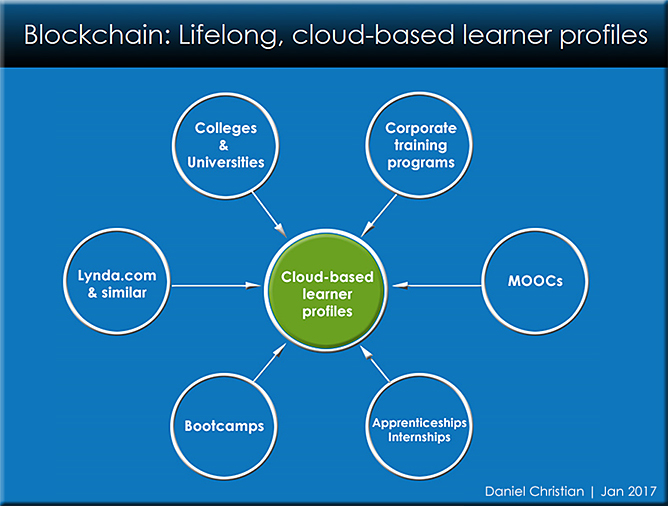
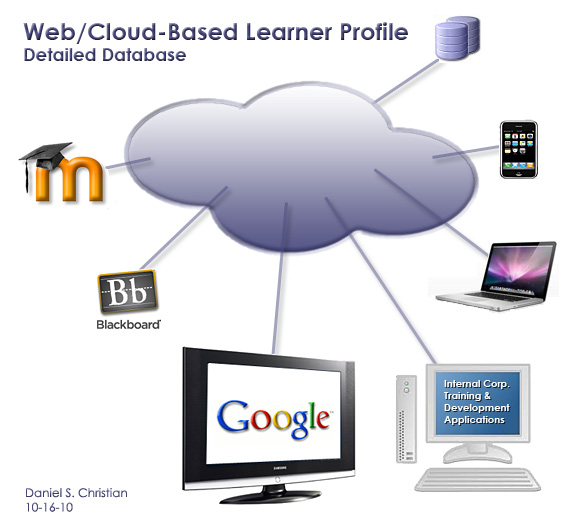
Cloud-based learner profiles are a likely element of our future learning ecosystems


Lawsuit Addressing Failures to Provide Course Materials to College Students with Disabilities May Head to Supreme Court — from accessibility.com by Daphne Wester

Excerpt:

Students with vision disabilities found themselves unable to participate in coursework in the Los Angeles Community College district when, as a rule of practice, necessary course materials like textbooks and syllabi were not provided in Braille or audio formats. Students, along with disability rights organizations, subsequently filed suit against one of the largest community college districts in the country in 2017, and in 2019 the case was decided in favor of the plaintiffs.


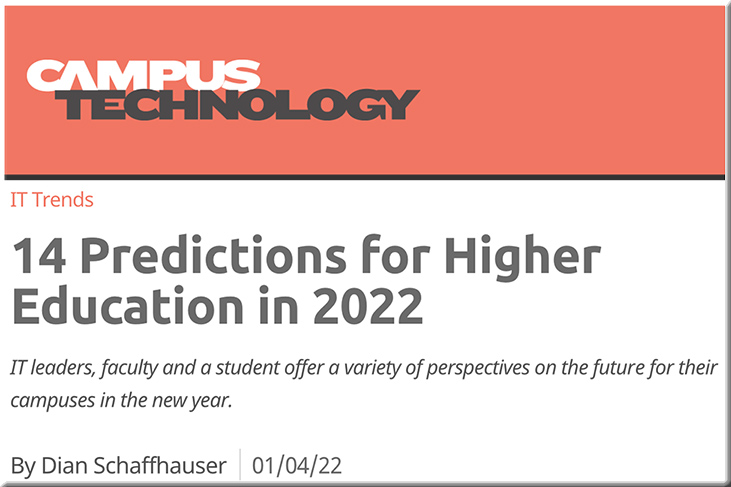
14 Predictions for Higher Education in 2022 [Schaffhauser]

14 Predictions for Higher Education in 2022

14 Predictions for Higher Education in 2022 — from campustechnology.com by Dian Schaffhauser

Excerpt:

Ask people working in higher education what they expect will happen in the new year, and the outlook is filled with visions that build on what we’ve been experiencing on college and university campuses for the last two years: a major focus on learning formats; continued exploitation of new technology; and the use of new digital models that move users “beyond Zoom.” Here we present the collective predictions of 14 IT leaders, instructional folks and a student about what they anticipate seeing in 2022. As one put it, “Let’s go, 2022! We have work to do!”

From DSC:
I’d like to thank Dian Schaffhauser, Rhea Kelly, and Mary Grush for letting me contribute some thoughts to the various conversations that Campus Technology Magazine hosts and/or initiates. I inserted some reflections into the above article and I hope that you’ll take a moment to read my and others’ thoughts out there.

 
© 2025 | Daniel Christian