Thomson Reuters’ Report May Signal Sea Change In Legal Profession — from techlawcrossroads.com by Stephen Embry

Excerpt:

In a nutshell, the Report demonstrates that to thrive post-pandemic and even survive, lawyers will need to better adopt technology, use better workflows, and make sure work is done by right mix and training, and experience. Otherwise, the work that is piling up during the great talent shortage just won’t get done.

More tech, better work process, more remote work, becoming nimble. Bottom line, successful law firms, and lawyers can’t afford business as usual post-pandemic.

Also see:

Thomson Reuters’ Report May Signal Sea Change In Legal Profession


From DSC:
For those who work within higher education, my guess is that this phenomenon/message comes as no surprise. But for those outside of higher ed, can you blame young people — and their families — for giving up on a path because it appears too expensive? 


Perceptions of Affordability — from insidehighered.com by Elizabeth Redden
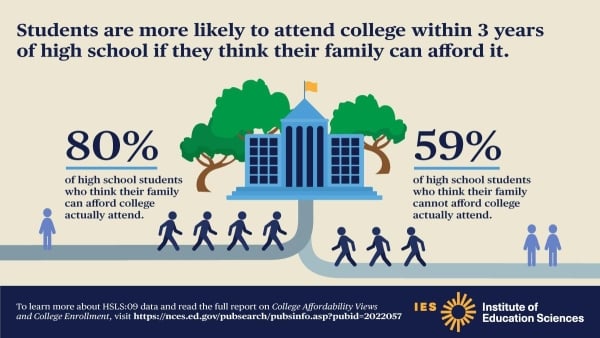
High school juniors who believe they can’t afford higher education are about 20 percentage points less likely to attend college within the first three years after high school than peers who don’t think affordability is a barrier.


Trends Shaping Education in 2022 — from gettingsmart.com by Tom Vander Ark

Key Points:

  • It’s hard to see trends in a crisis.
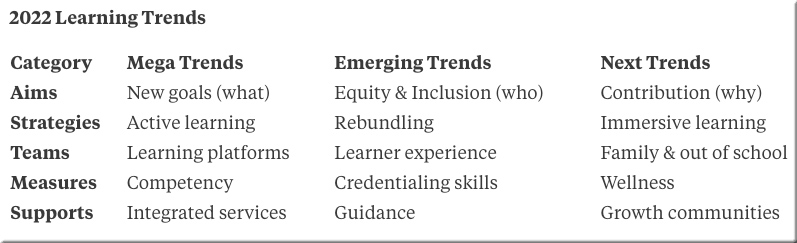
  • Around the edges and behind the scenes three important shifts accelerated: new learning goals, team tools and staffing, and active learning.


2022 Learning Trends


Google Slides here


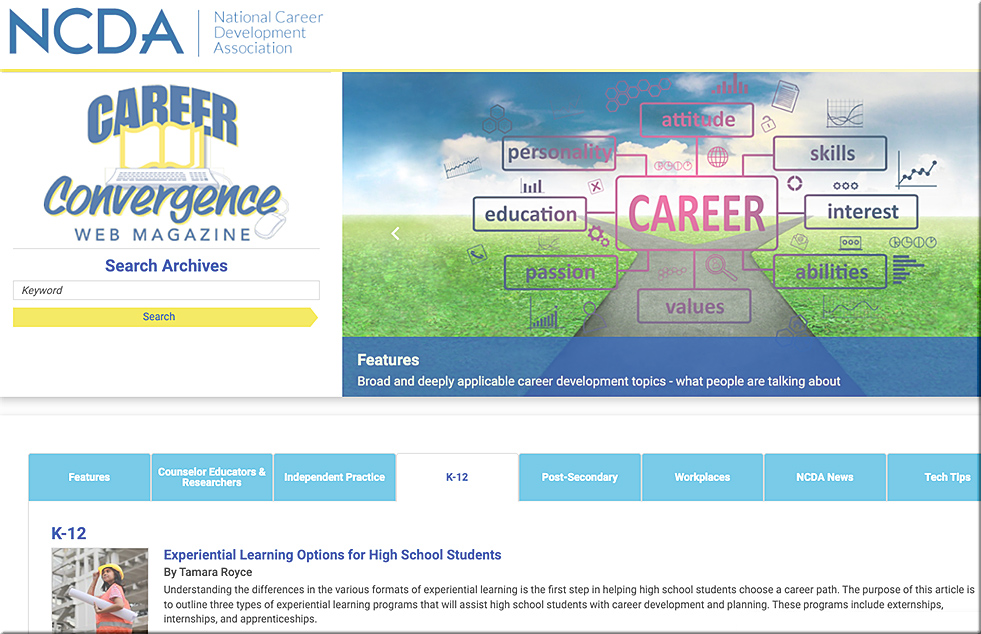
NCDA | Career Convergence - The NCDA's monthly web magazine for career practitioners

NCDA | Career Convergence – The NCDA’s monthly web magazine for career practitioners

From DSC:
I like the continuum that I see here:

  • K-12
  • Postsecondary
  • Workplaces
  • Counselors, Researchers, etc.

We ask students in college, for example, to pay an enormous amount of money at a time when they don’t know what’s all out there. Many don’t know themselves yet (I surely didn’t) and they also don’t know what discipline/area/jobs might be a good fit (again, I surely didn’t). We need more seamless transitions from one chapter/phase to another (and sometimes back again). We need more resources for students to find out what’s out there.

This is why I like services like LinkedIn Learning (which was Lynda.com), MasterClass, MOOCs and the like. A person can spend an hour or two (or even less) to see if that class, topic, etc. is of interest to them.


Isaiah 1:17

Learn to do right; seek justice.
    Defend the oppressed.
Take up the cause of the fatherless;
    plead the case of the widow.

From DSC:
This verse especially caught my eye as we have severe access to justice issues here in the United States.


Inside Higher Ed Acquired by Times Higher Education — from insidehighered.com by Scott Jaschik and Doug Lederman
Our editors Scott Jaschik and Doug Lederman explain how this combination of publishing companies will improve global coverage of postsecondary education and better serve the higher ed community.

Excerpt:

As journalists, we often say that we want to report the news, not be the news. We are making an exception [on 1/10/22] to announce that Inside Higher Ed has been acquired by Times Higher Education (THE), the world’s leading provider of higher education news, data and insights.


Bored Ape Yacht Club NFT theft shows the ease of hacking crypto — from protocol.com by Tomio Geron
The blockchain puts power in the hands of individual crypto owners — which also makes them targets for criminals.

Excerpt:

The story of an art gallery owner who had $2.2 million worth of Bored Ape Yacht Club and other NFTs stolen is just the latest example of crypto theft, illustrating the vulnerability of buyers as a broader set of consumers venture into the field.

With NFTs, the issue has grown in importance as the market has transformed from a niche hobby to an active market filled with speculators and investors.

Todd Kramer of New York’s Ross+Kramer gallery fell victim to a phishing scam in late December, according to a now-deleted tweet. He stored his NFTs using an internet-connected hot wallet — a less secure method — and a thief made off with 15 digital tokens worth $2.2 million.

From DSC:
How’s the legal field doing here? Law enforcement? Governments? The banking systems?


Addendum on 1/17/22:

  • Fortnite Is Back On Apple iOS, for Some Users — from threstreet.com by Tony Owusu
    Beta testers for Fortnite on streaming cloud gaming service GeForce Now will have access to the third-person shooter through Apple’s Safari web browser.


Methods and tools to develop future-ready skills — from blog.neolms.com by Rachelle Dene Poth

Excerpt:

Because of the changes that we experienced in the past year, I believe that it is important to have various options, whether teaching in-person, hybrid, or virtually. Choosing methods like Genius hour or project-based learning, activities such as scavenger hunts or learning stations, or selecting digital tools that promote more interaction with and between students will help foster the development of essential future-ready and SEL skills.

There are many methods and tools to explore, but it’s important to focus on the why behind the choices we make for our students. The use of digital tools promotes collaboration, communication, creativity and many more essential skills while also promoting the power of choice for students to share what they have learned.

More choice. More control.

Also see:

Escape rooms have become very popular as a place teams can go to work out how to get free from the room in which they are “trapped.” It’s like a real-world version of a computer game that makes you work together to solve puzzles to escape from somewhere.

Breakout EDU helps to bring that experience to educators so as to better engage students and help them learn while having fun.


Animation Trends 2022: Experimental and Open-Minded — from graphicmama.com by Al Boicheva

Excerpt:

Just barely kicking off the new year, the Graphic Design trends are already in full power raising the game in all graphic design fields. With a wonderful mix of nostalgia, movement, and open-mindedness, the trends bring more excitement for animation as well. Do you love complex hyper-realistic CGI or do you prefer classic animation on the Lo-Fi end? What about dynamic typography or old school?  Whatever the case, get ready for the Animation trends 2022 because this year is all about going fully experimental.

Get ready for…


Make a commitment to learn, grow, develop and advance in your career — from chieflearningofficer.com by Maria Rodriguez
No matter what you do, what title you hold or what industry you are in, you owe it to yourself to be intentional about your own professional development.

Excerpt:

As a new year begins, create a plan so you can be intentional on how you will spend your time and energy toward your career over the next year. Set your own career goal if you do not have one already, and establish a development plan that includes a list of actions you will take this year to expand and improve your knowledge and skills.  As you plan for your career growth, consider the following…

From DSC:
This is what I mean by the need for each of us to be intentional as we seek to enhance our own, personal learning ecosystems. 


School in the metaverse: How tech and the pandemic are changing online education — from protocol.com by David Pierce
Coursera’s CEO and chief content officer see a future of learning that’s more on-demand, more personalized and more immersive.

Excerpts:

Maggioncalda and Coursera Chief Content Officer Betty Vandenbosch joined the Source Code podcast to talk about the chaotic state of online education, what’s next for corporate training, how softer skills are becoming part of the work curriculum, how learning might work in the metaverse and much more.

“We know, broadly, that learning will become more available, it’ll be more online, and there’ll be a lot more people learning for a lot more of their lives,” said Coursera CEO Jeff Maggioncalda.


The Associated Press is starting its own NFT marketplace for photojournalism — from theverge.com by Mitchell Clark
It’s offering collectors ‘exclusive, historic, and stunning visual content’

Excerpt:

The Associated Press, or AP, has announced that it’s starting a marketplace to sell NFTs of its photojournalists’ work in collaboration with a company called Xooa. It’s billing its foray into NFTs as a way for collectors to “purchase the news agency’s award-winning contemporary and historic photojournalism” and says that the virtual tokens will be released at “broad and inclusive price points” (though it’s hard to tell what types of prices resellers will want on the AP marketplace).

Also see:

Why Samsung built an NFT aggregator into its new TVs — from digitaltrends.com by Phil Nickinson

Excerpt:

Or, perhaps, it’s the idea of an “NFT aggregation platform” being built into the television. It sounds insane — baking something that most people don’t understand, let alone engage in — into a TV. Most of us can’t even describe what a non-fungible token is, let alone tell someone how to go get one. It’s a multi-layered process that’s far more difficult than taking a screenshot of something you saw on Instagram and then sticking it up on your TV.

But that’s also not the point.

“In 2022, Samsung is introducing the world’s first TV screen-based NFT explorer and marketplace aggregator,” reads the press release, “a groundbreaking platform that lets you browse, purchase, and display your favorite art — all in one place.”

 
© 2025 | Daniel Christian