Five Building Blocks in the New Architecture of High Schools — from gettingsmart.com by Tom Vander Ark

Key Points

  • Schools personalizing learning and moving to mastery often use five linked learner experience systems to promote growth on learning goals.
  • Each system has unique learner experiences, feedback protocols, supports and staffing strategies.
  • These systems work independently and together to promote learner-centered growth toward shared outcomes.

Schools personalizing learning and moving to mastery or competency-based learning models often use five linked learner experience systems to promote growth on learning goals: skill-building, projects, immersion, advisory, and out-of-school learning. Each system has unique learner experiences, feedback protocols, supports and staffing strategies. These systems work independently and together to promote learner-centered growth toward shared outcomes (i.e., learner profile or portrait of a graduate).
 

Happy Numbers

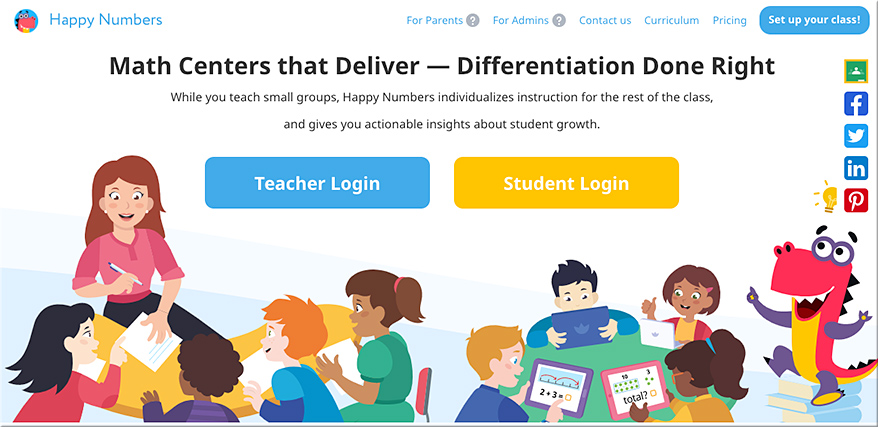
Check out the Happy Numbers site for teaching kids math

What Are The Best Websites For Teaching Math Online? — from teachthought.com by Jennifer Smith

70+ Awesome Websites for Teaching and Learning Math — from weareteachers.com
Learning math can sometimes be a challenge. Especially if you’re doing virtual or distance learning. Math websites to the rescue! We’ve gathered a list of teacher-recommended sites that includes resources, games, freebies, and innovative programs for teaching math. These will help keep students engaged, learning, and having fun.

iknowit.com

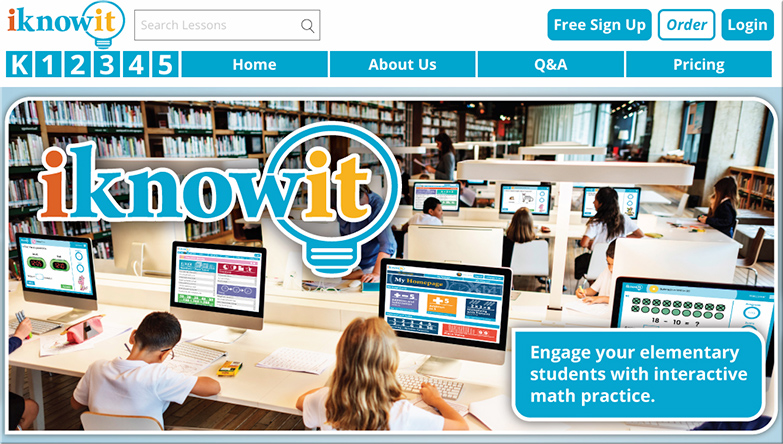
i know it dot com -- engage your elementary students with interactive math practice

Top Websites Ranking for Math in the world — from similarweb.com

Also, check out the public media resources in your state/area/region. For example, here in Michigan:

Check out the public media resources in your state -- Michigan has math as one of their topics on their Learning Channel


Addendum on 1/30/22:

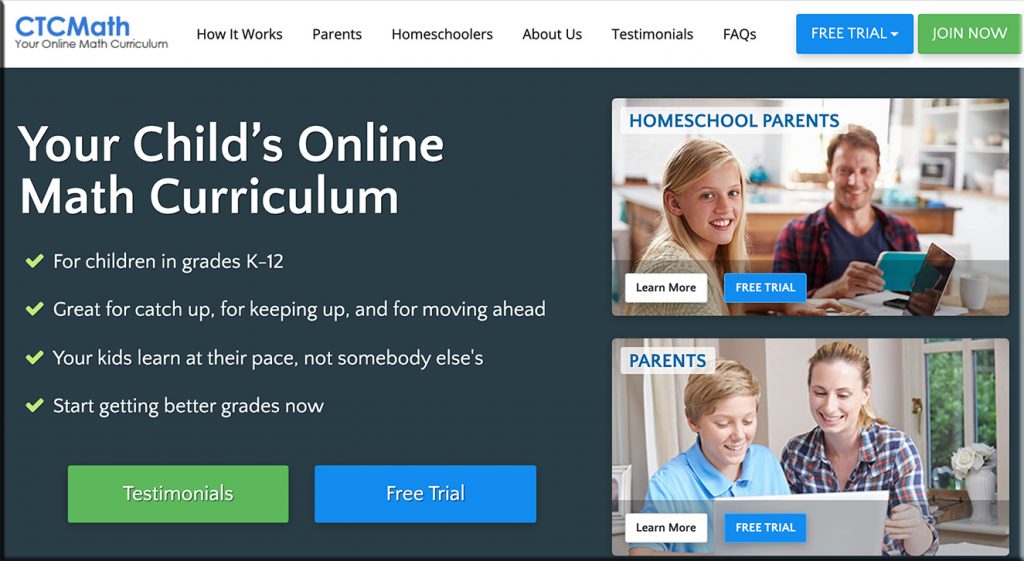
ctcmath.com -- for gifted K through 12ers and homeschoolers


Turn L&D Teams into Performance-Driven Microlearning Masters — learningsolutionsmag.com by Robyn Defelice

Excerpt:

Over several articles, I have pinpointed challenges that many learning and development (L&D) leaders face when integrating microlearning into their organization’s learning ecosystem. These have mainly been strategic and operational in nature, covering topics such as having an agreed-upon purpose for adopting microlearning to ensuring that the L&D department has achieved a learning maturity and agility level that enables them to leverage microlearning.

What still hasn’t been addressed, and what is equally critical to success, relates to your L&D team capabilities and tools.

Addendum on 1/30/22:


Theater companies in the U.K., home to one of the world’s oldest and grandest performing traditions, are increasingly integrating digital technology into interactive theater performances. They’re even getting help from the government to do it, The New York Times reported.

Along these lines, also see:


What Could Web3 Mean for Education? — from edsurge.com by Rebecca Koenig

Excerpts:

It’s an ecosystem that could transform schools—sites for teaching and learning—into marketplaces—sites for buying and selling.

That includes higher education. In the vein of MOOC platforms, Web3 systems could make it easier to “unbundle” college courses from degree programs and universities, enabling individuals to sign up for whatever classes they want and instructors to market their courses to consumers directly, says Vriti Saraf, a former charter school teacher and administrator and Teach for America alumna who founded a startup called k20 Educators.


The 5 Biggest Blockchain Trends In 2022 — from 101blockchains.com by Georgia Weston

Excerpt:

Blockchain is presently one of the most promising technology trends with exciting potential across a wide range of use cases. It is basically a distributed and encrypted variant of a database, which can solve different issues pertaining to online security and trust. While many people associate blockchain with cryptocurrencies like Bitcoin, it has many other uses in supply chain management, safeguards against identity theft, logistics, and implementation of digital smart contracts.

Therefore, many tech enthusiasts wonder about finding the top blockchain trends for the next year to identify how the technology would evolve further. What will be the new use cases of blockchain? Will we notice a massive ripple effect for the blockchain future in 2022 with a new technological advancement? The following discussion tries to find some reliable answers to these questions by reflecting on the top trends in blockchain for 2022.


IAALS Panel Stresses Need for Funding, ‘Mavericks’ in Legal Education Innovation — from legaltechmonitor.com by Maddie Hosack

“Make sure you stay in touch with what’s going on in the legal community. Join organizations—your state bar organizations, national organizations. You can be involved, and then you need to demand more of your law schools. So when you see something that’s going on in the community, in real life, you take that back to your law school administrators, take it back to your law professors, take it back to your clinicians and demand more.” 


A Crash Course in TAR: What Do You Really Need to Know? — from iltanet.org by Rachel McAdams, Andrew Lyons, and Kayode Okubanjo

Excerpt:

When embarking on a new project, the question of whether or not to use TAR is often near the top of the list, and most large projects won’t go ahead without some element of TAR to speed along the review. However, for those new to discovery or those not involved heavily in the technology of discovery, it can be difficult to work out exactly what is being proposed, or the difference between types of methods. This article will give a brief introduction of TAR and lay out the basics of what you really need to know to start taking advantage of TAR.


Do I Need to Write Podcast Transcripts for Accessibility? — from boia.org

Put simply, if you’re planning on hosting podcasts on your website, you should also provide transcripts. Below, we’ll explain why text alternatives for audio-only content are helpful — and provide some best practices for creating and publishing.

Other tips to keep in mind:

  • Transcripts should include descriptions of significant sounds that might help readers understand your content. For example, if your podcast contains sound effects or musical cues that affect the context, include them in your text.
  • Some people might search for the word “transcript” right away, so clearly label your scripts on your website to help users find them.
  • Provide links to your transcripts in the RSS feed that delivers your podcast. Include the links when promoting your show on social media.
  • For longer podcast transcripts, consider adding subheadings and semantic HTML markup to make your content more readable.
  • If your podcast pages include a media player, make sure the player’s controls are accessible. Users should be able to start and stop playback with a keyboard alone. For more guidance, read the W3C’s recommendations for media players.
 

2022 puts workers in the driving seat  — from adigaskell.org

Excerpt:

With skills shortages common across the world in the wake of the so-called “Great Resignation”, it is perhaps no surprise that recruitment firm Monster’s latest Future of Work Report highlights the strong state of recruiting, with practically every one of the 3,000 HR and hiring professionals surveyed saying they’re planning to hire in the year ahead.

“The 2022 hiring outlook is up, and much improved from last year,” the authors say. “In fact, 93% of employers plan to hire this year – including 51% to replace or backfill staff, and 41% who plan to hire for new positions.”

What is increasingly clear is that job seekers are largely in the driving seat, even if many don’t always realize it. Monster argues that this is an ideal opportunity for workers to find a role that really fits them rather than settle for second best.


Discovery Education Introduces Free Augmented Reality App for Students and Educators — from thejournal.com by Kristal Kuykendall
Sandbox AR Lets Users Create Virtual Worlds or Augment Their Own — All Linked to Real World Knowledge

Excerpt:

Once a user has their Sandbox AR scene built to their satisfaction, they can take photos or record a video walkthrough with their own voiceover, to introduce their classmates or their teacher to what they created or what they learned, for example.

To help educators leverage the power of AR wherever learning takes place, Discovery Education has made the Sandbox AR iPad app available for free in the Apple App Store.

See a demo here.


The biggest tech trends of 2022, according to over 40 experts — from fastcompany.com by Mark Sullivan
Startup founders, Big Tech execs, VCs, and tech scholars offer their predictions on how Web3, the metaverse, and other emerging ideas will shape the next year.

We asked startup founders, Big Tech execs, VCs, scholars, and other experts to speculate on the coming year within their field of interest. Altogether, we collected more than 40 predictions about 2022. Together, they offer a smart composite look at the things we’re likely to be talking about by this time next year.


From DSC:
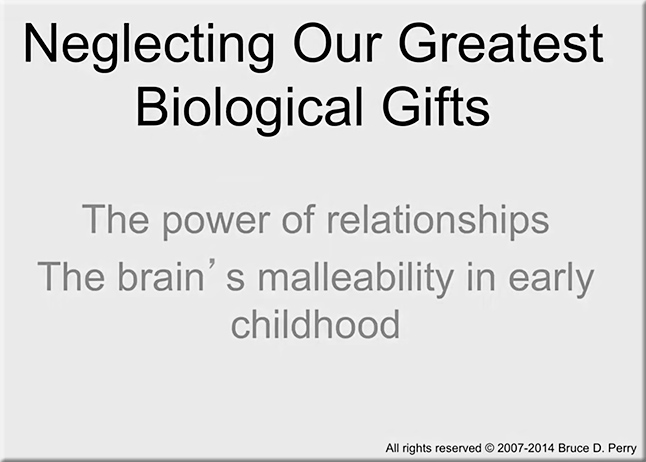
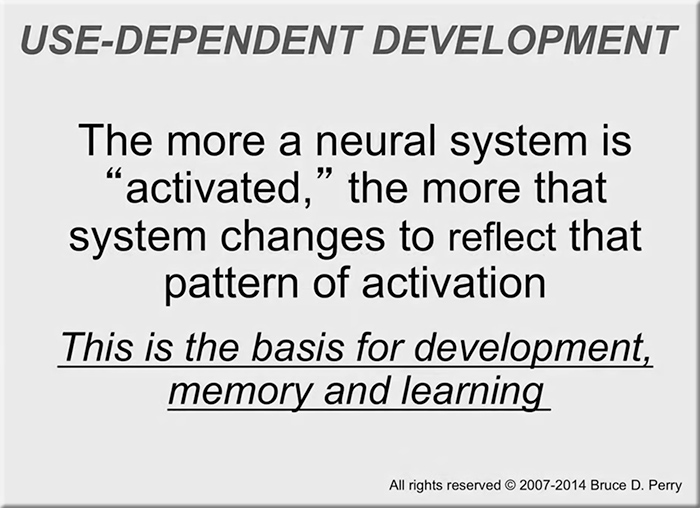
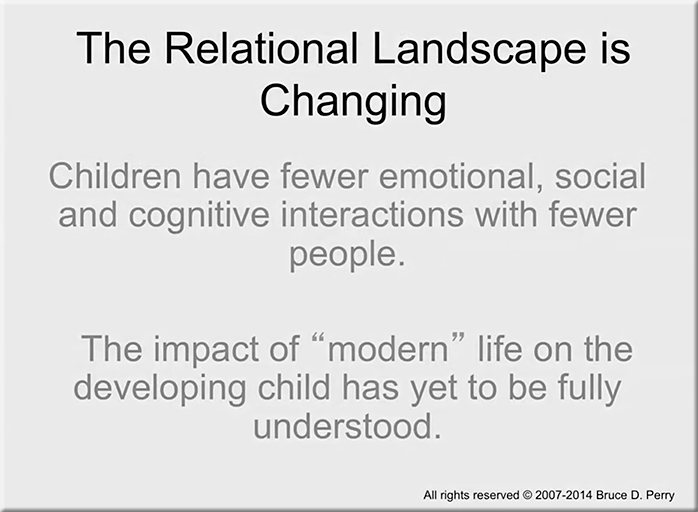
One of my sisters is a Professor of Psychology and she highly recommended that I check out the work of Dr. Bruce D. Perry. Below is an example video that was recorded on October 25, 2014 as part of the 25th Anniversary Chicago Humanities Festival, Journeys. I included some excerpted slides in this posting to give you a flavor of portions of this talk.

Description (emphasis DSC):

Each of us takes the same journey from birth to consciousness—but none of us recalls it. This early stage of life is crucial; Sigmund Freud famously obsessed over it, as do millions of parents every day. What goes on cognitively during that time, and what can parents—and other adults—do to further promote infant well-being? Join renowned psychiatrist Bruce D. Perry, recipient of the 2014 Dolores Kohl Education Prize, for this discussion of early-childhood brain development and its long-term importance.

Social & Emotional Development in Early Childhood [CC]


Shorter Training, Better Skills: Three Predictions For The Future Of Career And Technical Education — from forbes.com by Jeremy Wheaton; with thanks to Ryan Craig for this resource

But in the face of an entrenched and growing skills gap, young people are increasingly questioning the status quo and looking for shorter, less expensive, more direct-to-career options.

Excerpts:

Here [is the first of] three predictions for how the rest of the 2020s will continue to be defined by career education:

  1. The four-year degree will no longer be seen as the default postsecondary education option.
 

From DSC:
How can we better get the word out to our learners regarding how they can maximize their Return On Investment (ROI) from their studying time and efforts?

Two ideas come to mind here:

  1. Place learning-related tips directly into our banners within our CMS’s and LMS’s
    and/or
  2. Link our banners to some other web pages/resources that provide such best practices and tips for our learners 

Let's put best practices on studying directly within our LMSs banners!

Or we could link to resources regarding best practices in studying!

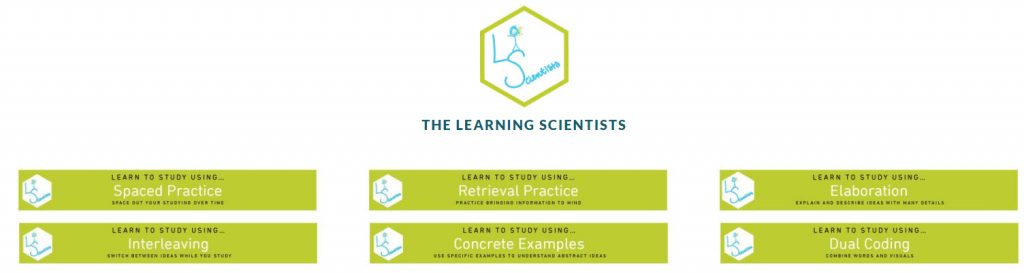
Along these lines, we should have 11″x17″ (or larger) posters like this plastered in every hallway of every learning space out there:

We should plaster these types of posters throughout our learning spaces!!!


Some would also add:

  • Active learning
  • Flipping the classroom
  • Providing individualized feedback
  • Metacognition (which was referenced in the first graphic above in regards to identifying gaps in one’s knowledge)
 
© 2025 | Daniel Christian