This new organization wants to accredit career education — from highereddive.com by Rick Seltzer
The Workforce Talent Educators Association will focus its quality assurance on outcomes, says its chief accreditation officer and managing director.

Excerpt:

A new nonprofit organization, the Workforce Talent Educators Association, is attempting to use the accreditation model to push for strong career education programs and degrees — and to serve as a stamp of quality for them.

That’s no easy task. The career education space is filled with a range of traditional college degrees as well as other options like certificate programs, stackable credentials, badges and apprenticeships. Plus, data on student outcomes for programs in the space can be confusing, lagging and limited.

Also from highereddive.com see:


The Wild World of NFTs — from legaltalknetwork.com by Dennis Kennedy & Tom Mighell

Description of podcast:

What are non-fungible tokens, and why should you care? Dennis & Tom break down the definition of these unique digital objects (art, video, and much more) and outline the issues surrounding their current hype and value in the real world. NFTs have the potential to engage a surprising variety of legal angles, so lawyers in any area of the law need an understanding of this new trend in virtual property.

Later on, the guys chat about the established tradition of tech announcements and whether they are still necessary or useful for consumers.


Who Does Your College Think Its Peers Are? — from chronicle.com by Jacquelyn Elias

Excerpt:

Each year, universities choose their peer institutions when reporting their data to the U.S. Department of Education’s Integrated Postsecondary Education Data System, or Ipeds. In return, they receive a customized report that compares their performance to that of their selected peers on various measures, like enrollment, graduation rates, and average staff salaries.

The Chronicle compiled the peer institutions for nearly 1,500 institutions from the 2020-21 year. Explore to see whom your college considers to be its peers — and who thinks your college is its peer.


Technology Trends for 2022 — from oreilly.com
What O’Reilly Learning Platform Usage Tells Us About Where the Industry Is Headed

Excerpt:

It’s been a year since our last report on the O’Reilly learning platform. Last year we cautioned against a “horse race” view of technology. That caution is worth remembering: focus on the horse race and the flashy news and you’ll miss the real stories. While new technologies may appear on the scene suddenly, the long, slow process of making things that work rarely attracts as much attention. We start with an explosion of fantastic achievements that seem like science fiction—imagine, GPT-3 can write stories!—but that burst of activity is followed by the process of putting that science fiction into production, of turning it into real products that work reliably, consistently, and fairly. AI is making that transition now; we can see it in our data. But what other transitions are in progress? What developments represent new ways of thinking, and what do those ways of thinking mean? What are the bigger changes shaping the future of software development and software architecture? This report is about those transitions.

O’Reilly Answers
We’re very excited about O’Reilly Answers, the newest product on the platform. Answers is an intelligent search that takes users directly to relevant content, whether that’s a paragraph from a book, a snippet of a video, or a block of code that answers a question. Rather than searching for an appropriate book or video and skimming through it, you can ask a specific question like “How do you flatten a list of lists in Python?” (a question I’ve asked several times). 


Also see:


Over Half of Students Surveyed See Coding Skills as Vital But Over a Third Lack Learning Access — from thejournal.com by Kristal Kuykendall

Excerpt:

A new survey by KX shows that over half of U.S. students ages 16–23 believe coding skills are as important as foreign language skills for future career prospects, yet more than a third say they lack educational access to coding programs


“The Swimming Pool” by Artist Fernando Bittar


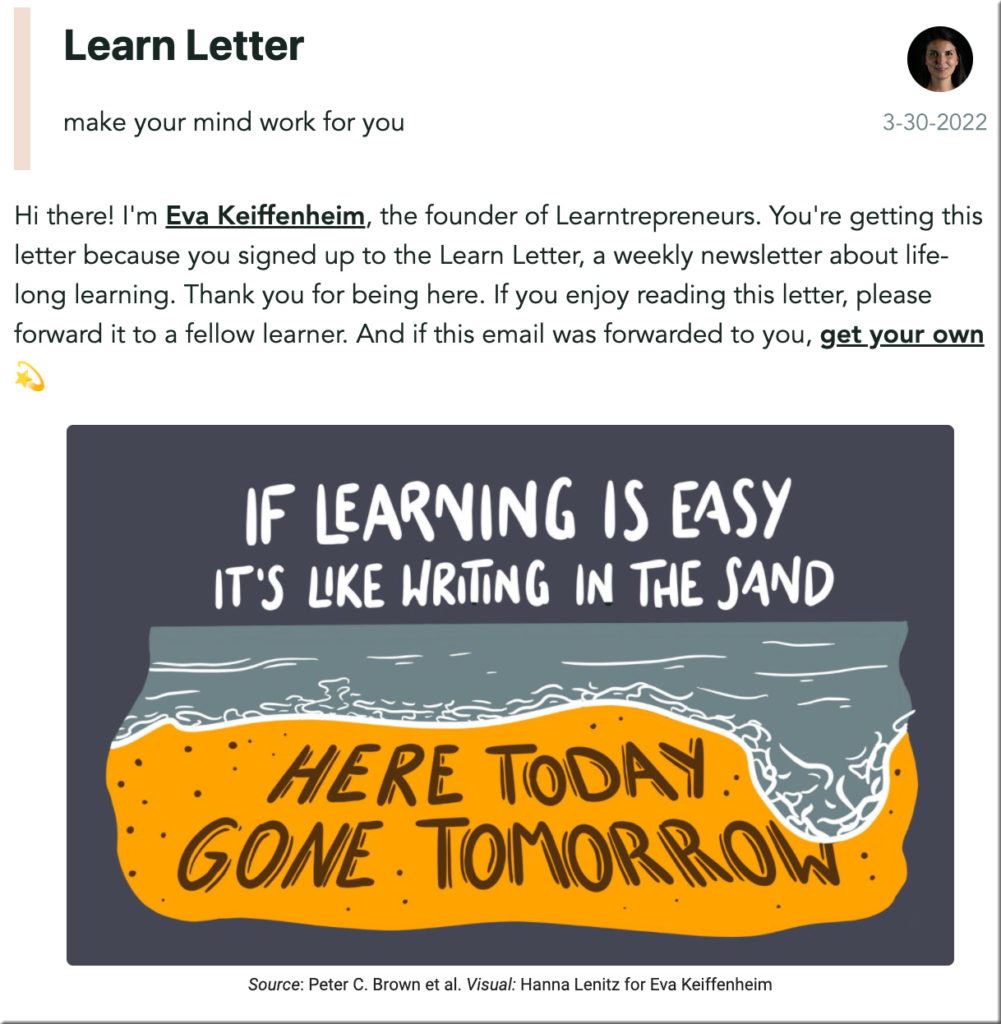
If learning is easy, it's here today and gone tomorrow...like footprints in the sand on a beach

Excerpt:

While studying I misjudged the depth of my knowledge. I confused familiarity with knowing.

When you passively consume information like reading books or watching courses and things start to make sense we often tell ourselves: “Oh, easy. I understand this. Got it.”

But it’s wrong to think you can access something from your memory if you can recognize it.


Isaiah 53:3-4 — from biblegateway.com

3 He was despised and rejected by mankind,
a man of suffering, and familiar with pain.
Like one from whom people hide their faces
he was despised, and we held him in low esteem.

4 Surely he took up our pain
and bore our suffering,
yet we considered him punished by God,
stricken by him, and afflicted.


Now we just need a “Likewise TV” for learning-related resources! [Christian]

Likewise TV Brings Curation to Streaming — from lifewire.com by Cesar Aroldo-Cadenas
And it’s available on iOS, Android, and some smart TVs

All your streaming services in one place. One search. One watchlist. Socially powered recommendations.

Entertainment startup Likewise has launched a new recommendations hub that pulls from all the different streaming platforms to give you personalized picks.

Likewise TV is a streaming hub powered by machine learning, people from the Likewise community, and other streaming services. The service aims to do away with mindlessly scrolling through a menu, looking for something to watch, or jumping from one app to another by providing a single location for recommendations.

Note that Likewise TV is purely an aggregator.


Also see:
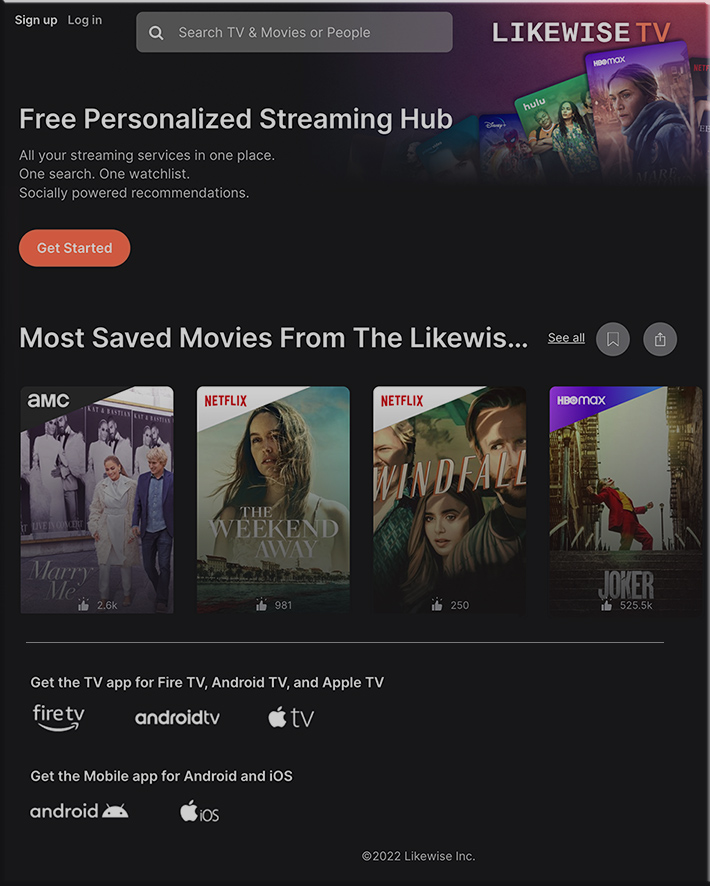
Likewise TV -- All your streaming services in one place. One search. One watchlist. Socially powered recommendations.


From DSC:
Now we need this type of AI-based recommendation engine, aggregator, and service for learning-related resources!

I realize that we have a long ways to go here — as a friend/former colleague of mine just reminded me that these recommendation engines often miss the mark. I’m just hoping that a recommendation engine like this could ingest our cloud-based learner profiles and our current goals and then present some promising learning-related possibilities for us. Especially if the following graphic is or will be the case in the future:
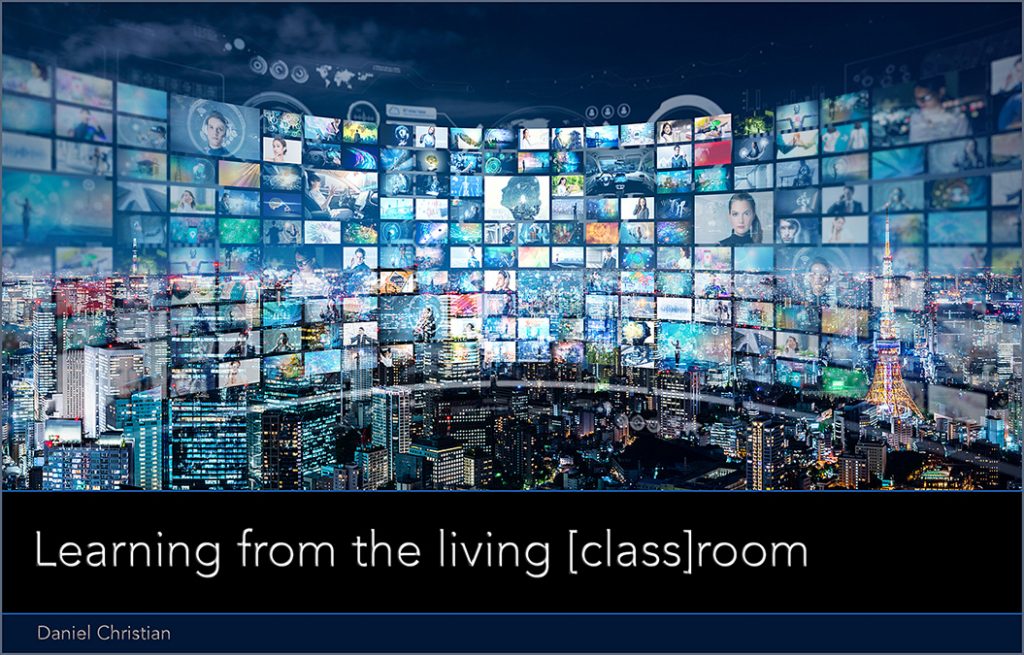

Learning from the living class room


Also relevant/see:

From DSC:
Some interesting/noteworthy features:

  • “The 32- inch display has Wi-Fi capabilities to supports multiple streaming services, can stream smartphone content, and comes with a removable SlimFit Cam.”
  • The M8 has Wi-Fi connectivity for its native streaming apps so you won’t have to connect to a computer to watch something on Netflix. And its Far Field Voice mic can be used w/ the Always On feature to control devices like Amazon Alexa with your voice, even if the monitor is off.
  • “You can also connect devices to the monitor via the SmartThings Hub, which can be tracked with the official SmartThings app.”

I wonder how what we call the TV (or television) will continue to morph in the future.


Addendum on 3/31/22 from DSC:
Perhaps people will co-create their learning playlists…as is now possible with Spotify’s “Blend” feature:

Today’s Blend update allows you to share your personal Spotify playlists with your entire group chat—up to 10 users. You can manually invite these friends and family members to join you from in the app, then Spotify will create a playlist for you all to listen to using a mixture of everyone’s music preferences. Spotify will also create a special share card that everyone in the group can use to save and share the created playlist in the future.


Announcing the 2022 AI Index Report — from hai.stanford.edu by Stanford University

Excerpt/description:

Welcome to the Fifth Edition of the AI Index

The AI Index is an independent initiative at the Stanford Institute for Human-Centered Artificial Intelligence (HAI), led by the AI Index Steering Committee, an interdisciplinary group of experts from across academia and industry. The annual report trackscollatesdistills, and visualizes data relating to artificial intelligence, enabling decision-makers to take meaningful action to advance AI responsibly and ethically with humans in mind.

The 2022 AI Index report measures and evaluates the rapid rate of AI advancement from research and development to technical performance and ethics, the economy and education, AI policy and governance, and more. The latest edition includes data from a broad set of academic, private, and non-profit organizations as well as more self-collected data and original analysis than any previous editions.

Also relevant/see:

  • Andrew Ng predicts the next 10 years in AI — from venturebeat.com by George Anadiotis
  • Nvidia’s latest AI wizardry turns 2D photos into 3D scenes in milliseconds — from thenextweb.com by Thomas Macaulay
    The Polaroid of the future?
    Nvidia events are renowned for mixing technical bravado with splashes of showmanship — and this year’s GTC conference was no exception. The company ended a week that introduced a new enterprise GPU and an Arm-based “superchip” with a trademark flashy demo. Some 75 years after the world’s first instant photo captured the 3D world in a 2D picture…

Nvidia believes Instant NeRF could generate virtual worlds, capture video conferences in 3D, and reconstruct scenes for 3D maps.


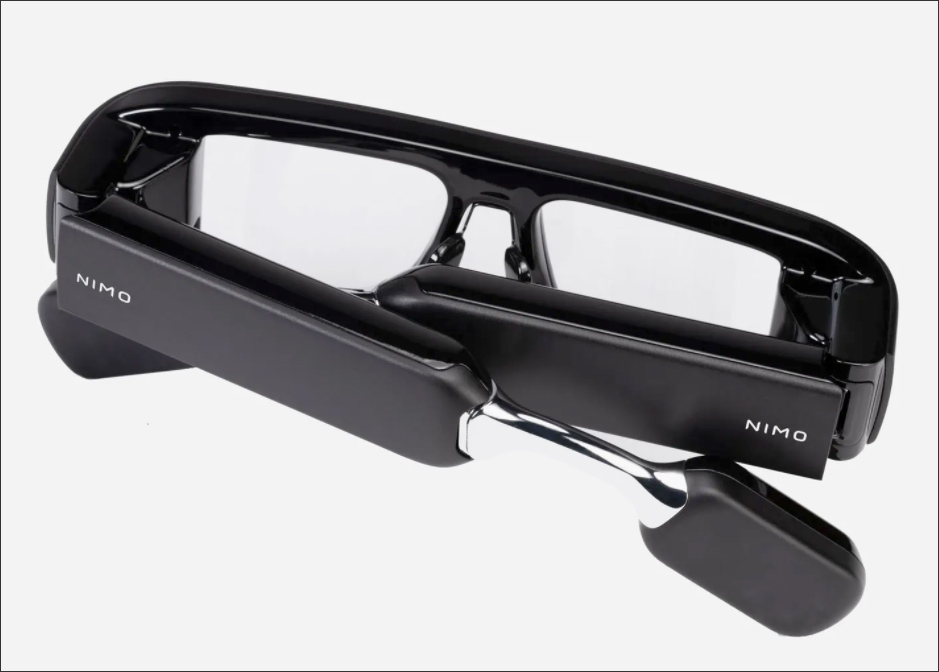
These Smart Glasses Want to Replace Your Laptop — from wired.com by Julian Chokkattu
Nimo is a mini-computer that sits on your head and gives you six virtual screens to work with when you’re away from your desk.

These Smart Glasses from Nimo Want to Replace Your Laptop


Intel plans to pump $100M into Ohio and US higher ed — from highereddive.com by Jeremy Bauer-Wolf

Dive Brief:

  • Technology giant Intel will provide $50 million in grants to Ohio colleges over the next decade, and it will spend another $50 million for development of STEM curricula at other two- and four-year institutions across the U.S.
  • The latter investment will be matched by the U.S. National Science Foundation, which is giving $50 million for research and curriculum initiatives. The entire pot of money will help establish semiconductor manufacturing education at institutions nationwide.
  • State leaders and the company are touting the funding as an opportunity to bolster workforce development amid a national worker shortage in the science, technology, engineering and math fields.
 

Guiding Young People Not to Colleges or Careers — But to Good Lives — from edsurge.com by Rebecca Koenig

Excerpts:

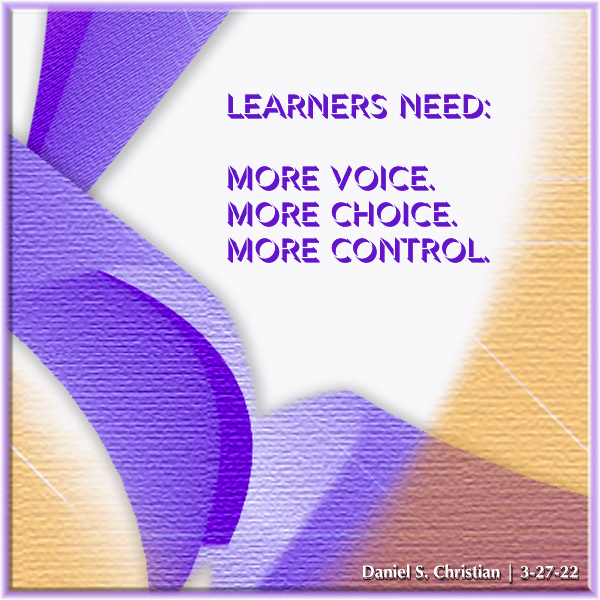
“We should not be designing programs and interventions without the direct input of young people,” says Allison Gerber, director of employment, education and training at the Annie E. Casey Foundation, a philanthropy based in Baltimore that makes grants to expand education and skills-training for youth and adults. “The more engagement and ownership young people have in the entire thing, the more likely it will meet their needs, they’ll want to stay, feel a sense of belonging, and it will be attractive to them and their peers.”

Along the way, you’ll meet teenagers:
dealing with STRESS, seeking INDEPENDENCE, searching for job SATISFACTION, engaging in EXPLORATION, honing their LEADERSHIP skills, dreaming of HELPING OTHERS, worrying about MAKING MISTAKES, craving STABILITY, and AIMING HIGHER to make their families proud.


© 2025 | Daniel Christian