Airbnb’s design for employees to live and work anywhere — from news.airbnb.com; with thanks to Tom Barrett for this resource

Excerpt:

Airbnb is in the business of human connection above all else, and we believe that the most meaningful connections happen in person. Zoom is great for maintaining relationships, but it’s not the best way to deepen them. Additionally, some creative work and collaboration is best done when you’re in the same room. I’d like working at Airbnb to feel like you’re working at one of the most creative places on Earth, and this will only happen with some in-person collaboration time.

The right solution should combine the best of the digital world and the best of the physical world. It should have the efficiency of Zoom, while providing the meaningful human connection that only happens when people come together. We have a solution that we think combines the best of both worlds.

We’ve designed a way for you to live and work anywhere—while collaborating in a highly coordinated way, and experiencing the in-person connection that makes Airbnb special. Our design has five key features…

Now, a thought exercise on that item from Tom Barrett:

While you are there, extend the thought experiment and imagine the new policy for a school, college or university.

  1. You can work from home or the office
  2. You can move anywhere in the country you work in, and your compensation won’t change
  3. You have the flexibility to travel and work around the world
  4. We’ll meet up regularly for team gatherings, off-sites, and social events
  5. We’ll continue to work in a highly coordinated way

From DSC:
As a reflection on this thought experiment, this graphic comes to my mind again. Teachers, professors, trainers, staff, and students can be anywhere in the world:

Learning from the living class room


Technology for HyFlex Classrooms: Major Considerations — from hyflexlearning.org by Brian Beatty

Excerpts:

This post describes four aspects of classroom technology that are very important to address when developing a HyFlex approach that can be effective at scale.

The classroom technology needs can be organized into four areas:

  1. two-way audio stream (connection),
  2. incoming video presentation of remote learners
  3. outgoing video presentation of classroom and learners
  4. interactive technology to support interaction, engagement, and formative assessment

Also re: hyflex teaching — where some students are physically present and some are coming into the class remotely– see:

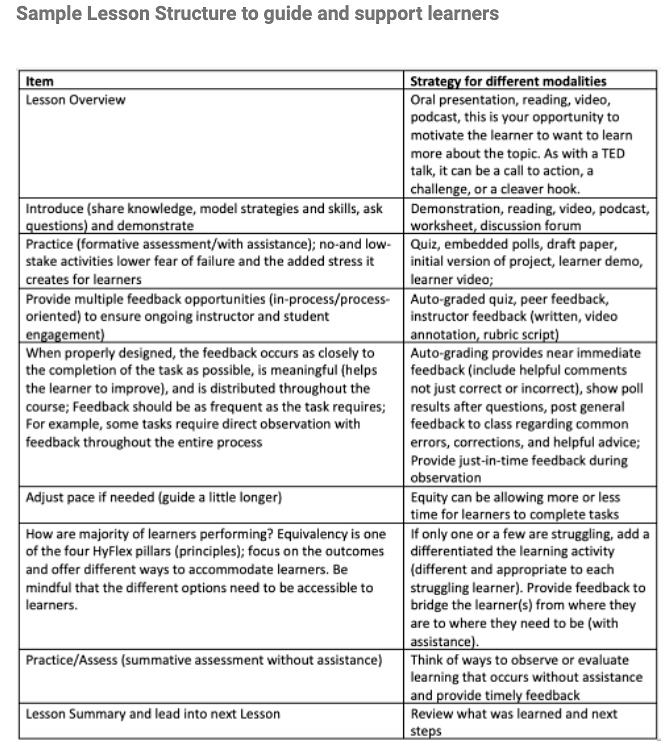
Part I – Motivating Learners by Building Efficacy (Confidence) through Scaffolding and Support— from hyflexlearning.org by Jeanne Samuel

Excerpts:

HyFlex delivery may be new to many learners. Therefore, it is important to provide them with the supports they need to be successful. Regardless of the delivery mode, learners are motivated by success and by instructor presence. In part one of this topic post, we will write about how instructor support and feedback (a form of guidance) can motivate learners and build learner confidence.

PART II- Feedback for Improving Student Success and Satisfaction — from hyflexlearning.org by Jeanne Samuel

Excerpt:

In part 1 of this post, we focused on how feedback and support promote learner confidence. Learner confidence can lead to improved learner retention, progression, and success regardless of the class delivery mode. In part 2, we focus on feedback strategies.


The rise of tech ethicists shows how the industry is changing — from protocol.com by Veronica Irwin
Though the job titles are new, the ways to attract new talent are virtually the same.

Excerpt:

In 2022, “responsible tech” is a career path. Job titles range from “trust and safety officer” to “policy lead.” And several organizations and academic institutions are engaged in ecosystem-mapping projects to define which academic programs best prepare students to work in the field, how the jobs are described and what companies are pursuing ethical tech in earnest.

“There’s a lot of appetite for this, especially as the public has become very aware of highly publicized problems with technology,” Tweed, now the program director for All Tech is Human, said. “I see that continuing to grow for the foreseeable future.”

Speaking of careers, here’s another item:


Radar trends to watch: May 2022 — from oreilly.com
Developments in Web3, Security, Biology, and More

Excerpt:

April was the month for large language models. There was one announcement after another; most new models were larger than the previous ones, several claimed to be significantly more energy efficient.


100 Universities established an OPM, Bootcamp or Pathways partnership in Q1 2022 — from holoniq.com
Bootcamps are directing more resources B2B and B2G, OPMs are growing existing partnerships further and evolving their technology and healthcare programs.

Excerpt:

Higher Education, like the broader economy, is awkwardly emerging from an almost exclusively digital, isolated and stimulus fuelled environment into… well it’s not clear yet. University Partnerships continued to be established at pace through Q1 2022, albeit at a much slower rate than through 2021.


Also relevant/see:

College contracts with OPMs need better oversight, watchdog says — from highereddive.com by Natalie Schwartz

Excerpt from Dive Brief:

  • The U.S. Department of Education should strengthen oversight of colleges’ relationships with companies that help them launch and build online programs, according to a new report from the U.S. Government Accountability Office, an auditing agency for Congress.

Addendum on 5/11/22:


OPINION: It may be time to rethink the emphasis on taking calculus in high school — from hechingerreport.org by Veronica Anderson
An argument for opening other paths that could be more relevant to students

Excerpt:

Based on data from surveys and interviews, “A New Calculus for College Admissions” reveals how deep-seated preferences for calculus weigh heavily in decisions about who gets admitted to college.

Yet does it make sense for calculus to have such an influential role in college admission when so few college majors actually require the course? There are other ways for high school students to gain the quantitative reasoning skills that will prepare them for the rigors of college and the workplace.

It’s time to reconsider the dominance of calculus.

From DSC:
I wholeheartedly agree. And along these lines, I think it would be far more beneficial to students to have classes on topics such:

  • How do I do my taxes?
  • What legal things do I need to know about (i.e., wills, trusts, civil law-related items, other)?
  • How can I get and stay healthy?


China is about to regulate AI—and the world is watching — from wired.com by Jennifer Conrad
Sweeping rules will cover algorithms that set prices, control search results, recommend videos, and filter content.

Excerpt:

Some provisions aim to address complaints about online services. Under the rules, for instance, companies will be prohibited from using personal characteristics to offer users different prices for a product; they also will be required to notify users, and allow them to opt out, when algorithms are used to make recommendations.

Companies that violate the rules could face fines, be barred from enrolling new users, have their business licenses pulled, or see their websites or apps shut down.

Some elements of the new regulations may prove difficult or impossible to enforce. It can be technically challenging to police the behavior of an algorithm that is continually changing due to new input, for instance.


A Turning Point for Prison Education — from chronicle.com by Taylor Swaak
With reinstatement of Pell Grants imminent, the programs weigh technology’s long-term role.

Excerpts:

Incarcerated people who participate in postsecondary-education programs are 48 percent less likely to return to prison, according to a 2018 study from the RAND Corporation.

Three colleges that The Chronicle spoke with are in varying stages of adding technology to their prison-ed programs.

Addendum on 5/11/22:

It was a proud, and somewhat routine commencement ceremony for Calvin University on Monday, May 9, though held in the confines of a state prison.

Calvin University and Calvin Theological Seminary joined the Michigan Department of Corrections Monday to host the graduation ceremony for Calvin Prison Initiative (CPI) students at the state’s Richard A. Handlon Correctional Facility in Ionia.

Addendums on 5/16/22:


From DSC:
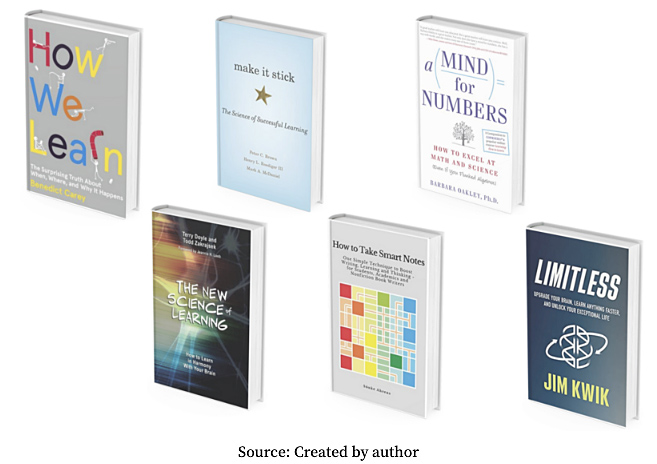
For the last few years, I’ve been thinking that we need to make learning science-related information more accessible to students, teachers, professors, trainers, and employees — no matter what level they are at.

One idea on how to do this — besides putting posters up in the hallways, libraries, classrooms, conference rooms, cafeterias, etc. — is that we could put a How best to study/learn link in all of the global navigation bars and/or course navigation bars out there in organizations’ course management systems and learning management systems. Learners of all ages could have 24 x 7 x 365, easy, instant access as to how to be more productive as they study and learn about new things.

For example, they could select that link in their CMS/LMS to access information on:

  • Retrieval practice
  • Spacing
  • Interleaving
  • Metacognition
  • Elaboration
  • The Growth Mindset
  • Accessibility-related tools / assistive technologies
  • Links to further resources re: learning science and learning theories

What do you think? If we started this in K12, kept it up in higher ed and vocational programs, and took the idea into the corporate world, valuable information could be relayed and absorbed. This is the kind of information that is highly beneficial these days — as all of us need to be lifelong learners now.


Homework hotline gives K-12 students support for tricky assignments — from k12dive.com by Kara Arundel
College students offer free, on-demand help as younger students recover from pandemic-related setbacks or aim to get ahead.

Excerpt:

The college student-run resource saw an uptick in demand during the pandemic, and even though nearly all K-12 schools are now back to full-time, in-person learning, the calls to the hotline keep coming, said Gabriela Gamiz, founding Homework Hotline staff member and the college’s director of community engagement.


Coursera launches skills training academy for colleges and companies — from highereddive.com by Natalie Schwartz
Experts say the move could help the company strengthen its focus on selling courses to colleges rather than consumers.

Excerpts:

Coursera, like other popular MOOC platforms, has made its name by bringing online classes to the masses. But lately, the company has been expanding efforts to provide these offerings to colleges and employers rather than solely to consumers.

The company doubled down on that strategy Wednesday, when it announced the launch of a career training academy that enables users to earn entry-level certificates from companies like Meta and IBM in fields such as data analytics, social media marketing and user experience design. Institutions — including colleges, businesses and government organizations — can sign up to make the platform available to their students or employees.

The move signals a shift in strategy for the company. While Coursera is still focused on delivering courses directly to consumers, it’s also been building out its offerings to colleges and employers. This business segment includes Coursera for Campus, which allows colleges to use the platform’s content in their classes. 


From DSC:
For those who think MOOCs have come and gone:

Coursera has been using academic content created by universities for years to build its audience, amassing some 97 million users by the end of last year, according to its latest earnings report. 


Addendum on 5/11/22:


A Podcast Listening Strategy for Learning — from learntrepreneurs.com by Eva Keiffenheim
Three steps to make the most of your podcast time

Excerpt (emphasis DSC):

Use apps that help you remember more
You won’t remember much from a podcast if you only listen to it. Your brain needs repetition and elaboration to make new knowledge stick.

Unlike books, you can’t highlight audio?—?or can you?

I listen to my podcasts while biking or walking. Hence, an extremely uncomfortable situation to open a notepad or Roam Research whenever I hear an interesting idea.

But two applications have transformed how I listen to podcasts: Snipd and Airr. Both are audio highlighting tools.


The Key Idea All Great Books on Learning Have in Common — from learntrepreneurs.com by Eva Keiffenheim
And how you can implement the powerful way to learn.
.

teaching in public is the principle all great books on learning agree on


From DSC:
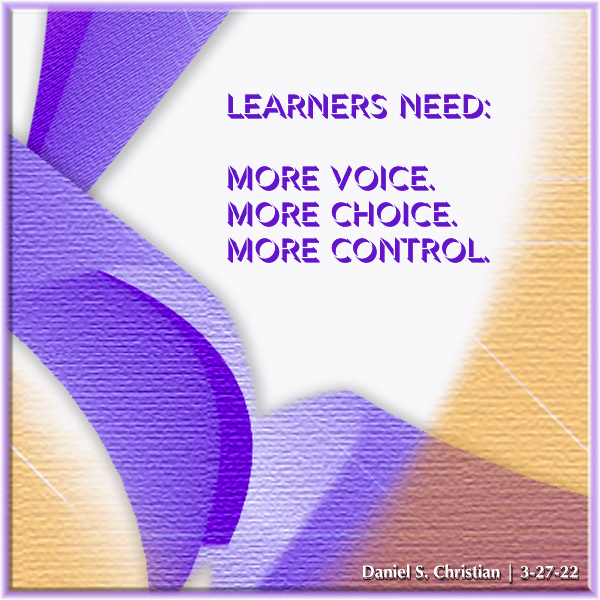
The resource below (from The Chronicle of Higher Education) is one of the best, most useful articles I’ve read in a long time. It’s full of innovative and/or powerful ideas. I like the part about seeking to give students “more voice, more choice, more control.”

Learners need: More voice. More choice. More control. -- this image was created by Daniel Christian


5 No-Cost or Low-Cost Ways to Improve Your Campus — from chronicle.com by Richard J. Light and Allison Jegla
Change doesn’t have to be expensive. It’s often sparked by a simple suggestion and a leader willing to give it a try.

Excerpts (emphasis DSC):

No. 1: Reward innovative teaching. Lynne Schofield, a professor of statistics at Swarthmore College, has fundamentally changed the way her students learn basic and intermediate statistics. She lectures and assigns problem sets but she also teams up with local Philadelphia organizations such as food banks and blood-donation centers to give students an opportunity to solve real-world problems using their classroom knowledge. The organizations benefit from data and analysis that they may not have had time or bandwidth to collect themselves, and the students see the practical application of what they might ordinarily have perceived as a dry subject.

No. 2: Solicit ideas from students.
They met with a dean and proposed a public event called, “10 Big Ideas, 10 Professors, 10 Minutes Each.”

When the dean agreed, the students took the lead on selecting and inviting professors to each present the “most exciting new idea” in their academic field, in less than 10 minutes.


From DSC:
After seeing the item below, I thought, “Hmmm…traditional institutions of higher education better look out if alternatives continue to gain momentum.” Perhaps it’s wise to double down on efforts to gather feedback from students, families, parents, businesses, and other stakeholders in the workplace regarding what they want and need — vs. what the faculty members of institution ABC want to teach.


A Third of U.S. College Students Consider Withdrawing — from news.gallup.com by Stephanie Marken

Excerpt:

Editor’s Note: The research below was conducted in partnership between the Lumina Foundation and Gallup.

About a third (32%) of currently enrolled students pursuing a bachelor’s degree report they have considered withdrawing from their program for a semester or more in the past six months. A slightly higher percentage of students pursuing their associate degree, 41%, report they have considered stopping out in the past six months. These are similar to 2020 levels when 33% of bachelor’s degree students reported they had considered stopping out and 38% of associate degree students said the same.

 
© 2025 | Daniel Christian