From DSC:
After thanking Diana for the posting, I replied:

Not to be negative here, but this visual strikes me as something that our “one-size-fits-all” K12 learning ecosystems sometimes do here in the U.S.


Only 37% of Lawyers are Satisfied with their Firm’s Technology — from artificiallawyer.com

Excerpt:

A new survey has found that only 36.7% of lawyers are satisfied with the tech tools on offer at their firms, and with only 37.1% saying that they had used a new product at their law firm in the last six months. So, they’re not too happy with what they’ve got, while most firms are not bringing in anything much that is new either.


Mat Rotenberg, CEO of Dashboard Legal, the company that conducted the survey, told Artificial Lawyer that a key factor here is the retention of talent, i.e. that underinvesting in tech that removed drudgery would inevitably contribute to lawyer attrition.

‘This survey raises the question of whether firms are doing what they can to retain top talent. It appears that partners are not asking associates what they want to make their lives better.’

He noted that the survey data also showed that although lawyers were not that pleased with what was on offer, they did indeed value tech solutions and believed they could help.


The state of teaching and learning in K12 — from Instructure

What began as an unplanned shift to remote learning two years ago has grown into a movement—a transformation, really—that has given way to a more measured approach to intentionally designed digital learning. The adoption of new educational technologies and instructional strategies has evolved teaching and learning as we know it at an unprecedented pace.

The state of teaching and learning in K12

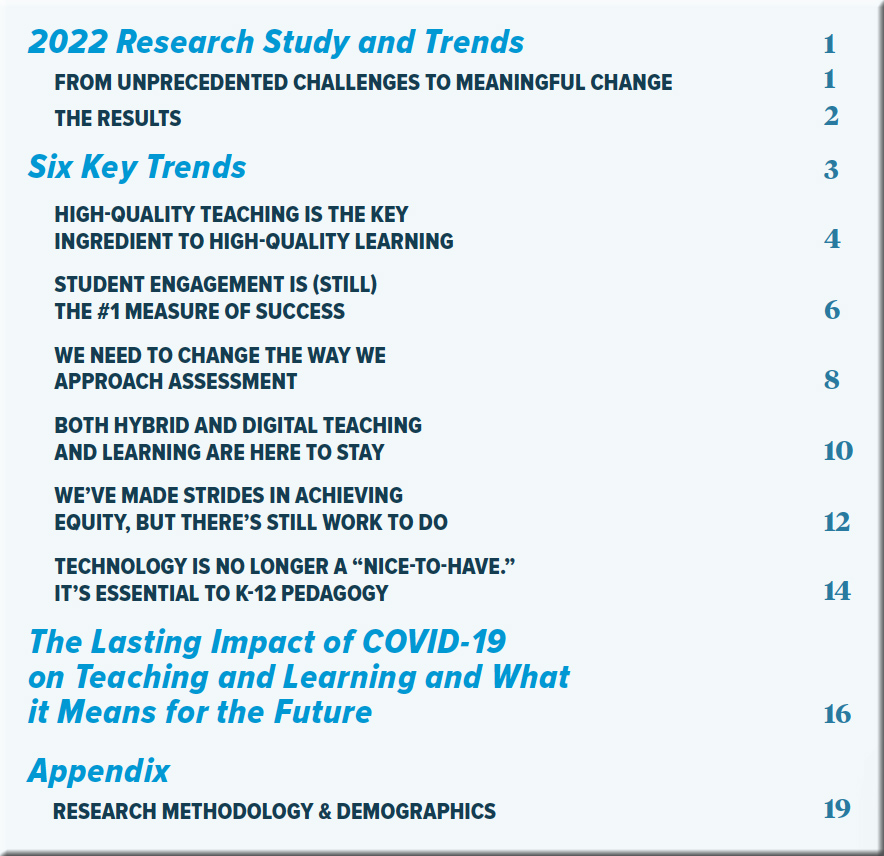
TOC for the state of teaching and learning in K12


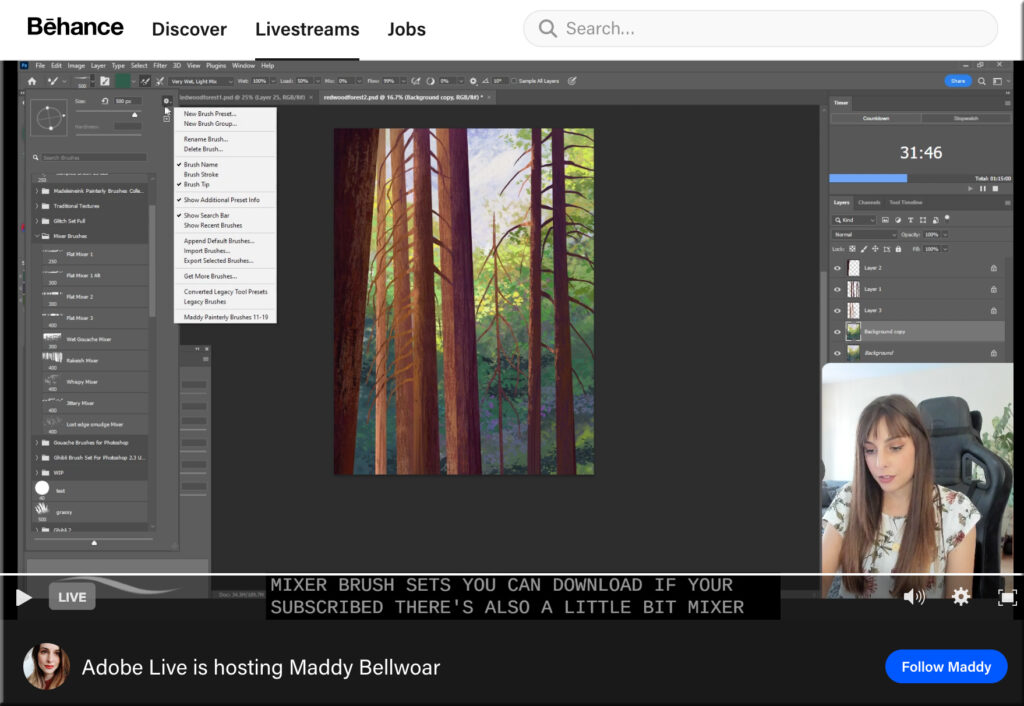
Screenshot of Adobe Live -- is Adobe Live a type of component of our future learning ecosystems?

From DSC:
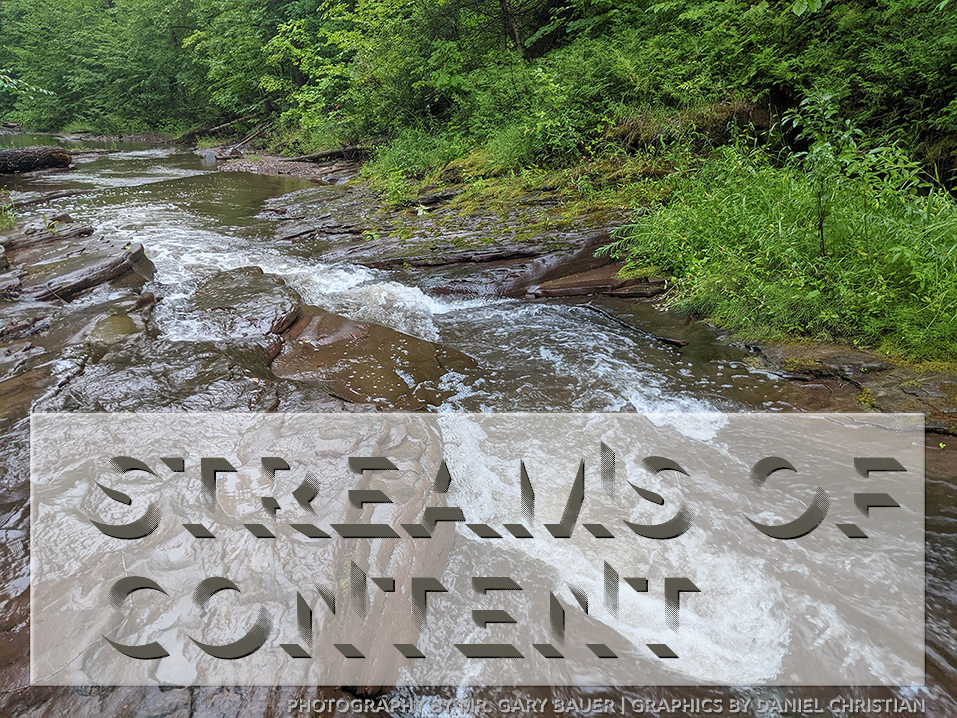
It seems to me that this is one of the types of learning experiences that we will have in the future — i.e., where you can tap into a variety of live/virtual streams of content whereby you can peer over the shoulder of experts using products and/or services.

streams of content are ever flowing by -- we need to tap into them and contribute to them


AI Plus VR at Purdue University Global — from er.educause.edu by Abbey Elliott, Michele McMahon, Jerrica Sheridan, and Gregory Dobbin
Adding artificial intelligence to virtual reality provides nursing students with realistic, immersive learning experiences that prepare them to treat patients from diverse backgrounds.

Excerpt:

Adding artificial intelligence (AI) to immersive VR simulations can deepen the learning by enabling patient interactions that reflect a variety of patient demographics and circumstances, adjusting patient responses based on students’ questions and actions. In this way, the immersive learning activities become richer, with the goal of providing unique experiences that can help students make a successful transition from student to provider in the workforce. The use of AI and immersive learning techniques augments learning experiences and reinforces concepts presented in both didactic and clinical courses and coursework. The urgency of the pandemic prompted the development of a vision of such learning that would be sustainable beyond the pandemic as a tool for education on a relevant and scalable platform.


Speaking of emerging technologies and education/learning, also see:

NVIDIA's new AI magic turns 2d photos into 3D graphics

Best virtual tours of Ireland


How Many Job Openings Are There in Public Schools? — from edweek.org by Maya Riser-Kositsky

Excerpt:

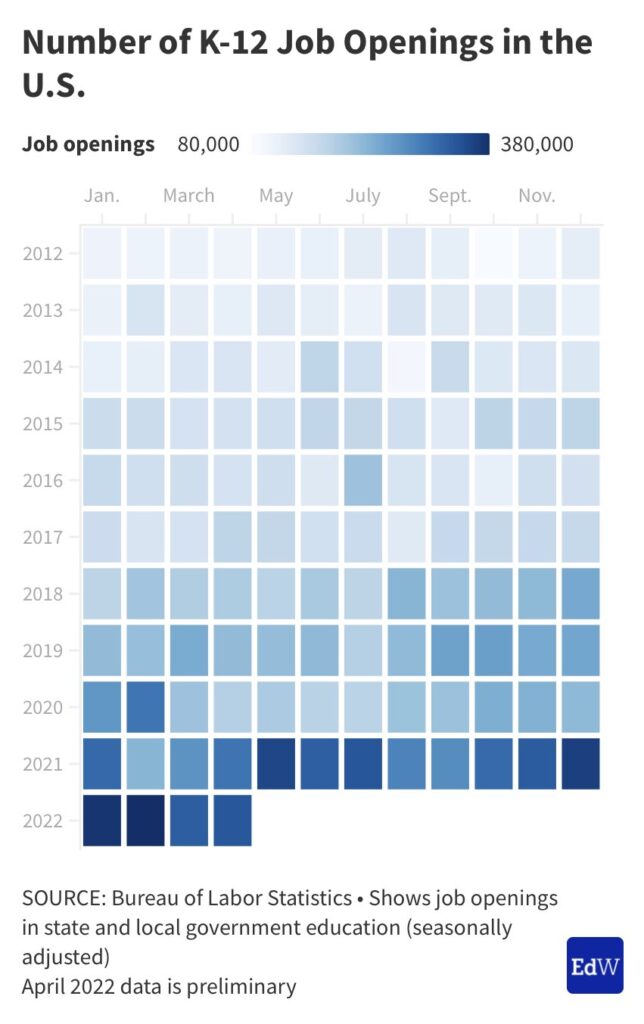
While teacher shortages have been reported in different regions and different teaching subjects on and off for years, a very large number of open positions in school jobs overall have been reported in recent months.

According to Bureau of Labor Statistics data on the state and local government education sector, in February 2022 there were 380,000 open jobs in schools, the highest number of openings in the past decade.


The Number of Job Openings in Public Schools


Addendums on 7/3/22:


Adobe—yes, Adobe—has one of the best free video-makers out there — from by Jeremy Caplan
Spark Video is best for beginners or those looking for something quick and easy.

Excerpt:

Adobe’s professional software has long struck me as unnecessarily clunky and complex. Adobe Premiere, Illustrator, Photoshop and other such apps are powerful, but daunting for beginners to learn.

So I was surprised to discover that Adobe Spark Video is one of the best free apps for making a quick slideshow-style video.


From DSC:
For those of you college students who are trying to determine what you enjoy doing, I wanted to pass some items along that may be helpful if you are interested in game development, film, and/or TV-related production.

Some friends recommended knowing how to use the following tools, but I realize one could dive very deep with these tools:


Excerpt from Unity.com
.
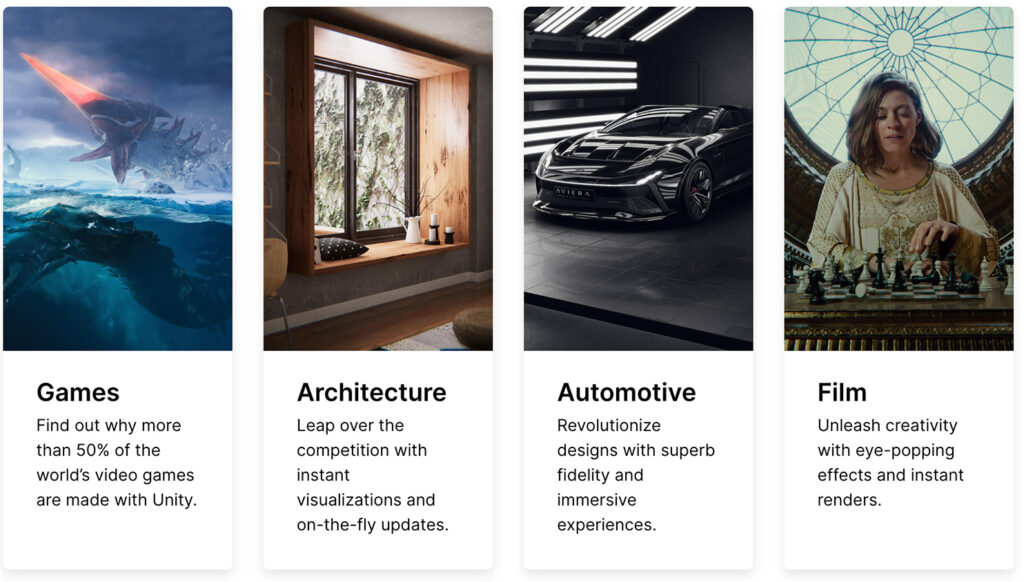
Unity can be used for games, in architecture, in automotive, and in film

Additional tip:

  • Stay within what your budget can provide. Making a film about five students on campus is doable. Making a Star Wars-type movie isn’t — unless you are making a spoof or presenting a knowingly-bad movie.

I just wanted to pass these items along.


Also relevant/see:


Addendums on 7/3/22:


From DSC:
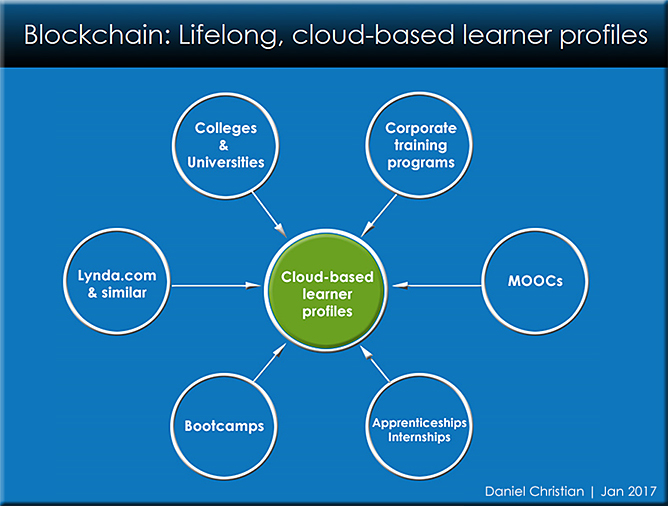
An AI-backed platform will constantly search all job postings and present the most desired skills in the marketplace and then how to get those skills. The providers will be individuals, organizations, training providers, traditional institutions of higher education, vendors and more.

Depending upon what happens with blockchain — and if a much more energy-efficient/environmentally-friendly solution can be implemented — blockchain may be a part of that equation.


Meet the metaverse: Creating real value in a virtual world — from mckinsey.com with Eric Hazan and Lareina Yee

Excerpt (emphasis DSC):

Welcome to the metaverse. Now, where exactly are we? Imagine for a moment the next iteration of the internet, seamlessly combining our physical and digital lives. It’s many things: a gaming platform, a virtual retail spot, a training tool, an advertising channel, a digital classroom, a gateway to entirely new virtual experiences. While the metaverse continues to be defined, its potential to unleash the next wave of digital disruption is clear. In the first five months of 2022, more than $120 billion have been invested in building out metaverse technology and infrastructure. That’s more than double the $57 billion invested in all of 2021.

How would you define the metaverse?
Lareina: What’s exciting is that the metaverse, like the internet, is the next platform on which we can work, live, connect, and collaborate. It’s going to be an immersive virtual environment that connects different worlds and communities. There are going to be creators and alternative currencies that you can buy and sell things with. It will have a lot of the components of Web3 and gaming and AR, but it will be much larger.

Also relevant/see:


Also relevant/see:


5 Questions Every Digital Learning Job Seeker Should Answer — from teamedforlearning.com
These questions help you find a job that fits your skills, work style, and career goals. Answer these before you start your digital learning jobs search.

Excerpt:

There are five questions you should ask yourself before you start looking for a job in digital learning. These aren’t your standard questions about salary and daily tasks. Instead, we’re focusing on what you need to know about yourself before you seek out a new role. The answers will help you find a job that’s the right fit for your skills, work style, and career goals.

Remember, when you’re looking for a job, you’re not just trying to find an organization that wants you to work for them. You’re also looking for a work environment that can help you advance your career and meet your needs. So, grab a notebook or open up a blank document and start brainstorming your answers to these questions.


Changing the narrative on degree requirements — from workshift.opencampusmedia.org by Paul Fain; with thanks to Ryan Craig (I believe) for this resource
An ad campaign from Opportunity@Work and the Ad Council will call on employers to drop the “paper ceiling” and hire more skilled workers without four-year degrees.

Excerpt:

A new national advertising campaign will seek to influence employers to look beyond the four-year degree in hiring, with the message that a “paper ceiling” holds back half the U.S. workforce.

The ads from Opportunity@Work and the Ad Council are slated to start running in September. With slick production and some big corporate partners, including Walmart and Google, the campaign is designed to nudge hiring managers across the country to make good on the growing number of pledges from company C-suites, state capitals, and the White House to drop barriers for skilled job seekers who lack bachelor’s degrees.

This group of more than 70M Americans includes community college graduates, experienced workers, veterans of the U.S. military, and completers of job training programs or alternatives to college, according to the nonprofit Opportunity@Work. The ads will celebrate these workers, which the group says are skilled through alternative routes (STARs).


Also relevant, see:

Americans support student loan forgiveness, but would rather rein in college costs — from npr.org by Cory Turner; with thanks to Bryan Alexander for posting this on LinkedIn

Excerpt (emphasis DSC):

Erasing old debts vs. fixing the system
In one of the poll’s most unexpected findings, respondents were asked to choose which sentence they agreed with more:

    1. “The government should prioritize making college more affordable for current and future students”
    2. “The government should prioritize forgiving some debt for those with existing student loans”

A whopping 82% said the government’s priority should be making college more affordable for current and future students. Just 16% believed forgiving student debts should take priority.

What that tells me is that, while student loan forgiveness for some is seen as a good proposal and a short-term fix, where we actually need to go from here is true, systematic change,” Newall says.


Top Sites for Educator Professional Development — from techlearning.com by Diana Restifo
These professional development sites for education will help teachers refresh and update their practice

Excerpt:

The learning never stops for teachers. Even if continuing education were not required by law, educators would still strive toward deepening their subject knowledge, keeping up with the latest research, sharpening their classroom skills, and learning to use education technology tools.

The following professional development sites for education will help teachers refresh and update their practice, connect with fellow educators and, in some cases, earn continuing education credits. All provide substantial free or modestly priced content.


And for you higher ed folks, see the Tweet below; my thanks to Becky Supiano for this resource out at The Chronicle of Higher Education


The Future of Education | By Futurist Gerd Leonhard | A Video for EduCanada — from futuristgerd.com

Per Gerd:

Recently, I was invited by the Embassy of Canada in Switzerland to create this special presentation and promotional video discussing the Future of Education and to explore how Canada might be leading the way. Here are some of the key points I spoke about in the video. Watch the whole thing here: the Future of Education.


…because by 2030, I believe, the traditional way of learning — just in case — you know storing, downloading information will be replaced by learning just in time, on-demand, learning to learn, unlearning, relearning, and the importance of being the right person. Character skills, personality skills, traits, they may very well rival the value of having the right degree.

If you learn like a robot…you’ll never have a job to begin with.

Gerd Leonhard


Also relevant/see:

The Next 10 Years: Rethinking Work and Revolutionising Education (Gerd Leonhard’s keynote in Riga) — from futuristgerd.com


© 2025 | Daniel Christian