4 Ways Classroom Design Impacts Executive Functioning — from edutopia.org by Andrew Ayers and Amelia Glauber
Effective classroom design can help elementary students develop skills like organization and task initiation.Excerpt:

Executive functions are process skills that allow us to successfully complete tasks. In any given classroom, there will be a wide range of students with a variety of executive functioning skill levels. These skills include working memory, task initiation, organization, metacognition, inhibition, planning and prioritizing, time management, emotional control, sustained attention, flexibility, and goal-directed persistence.

Also relevant/see:

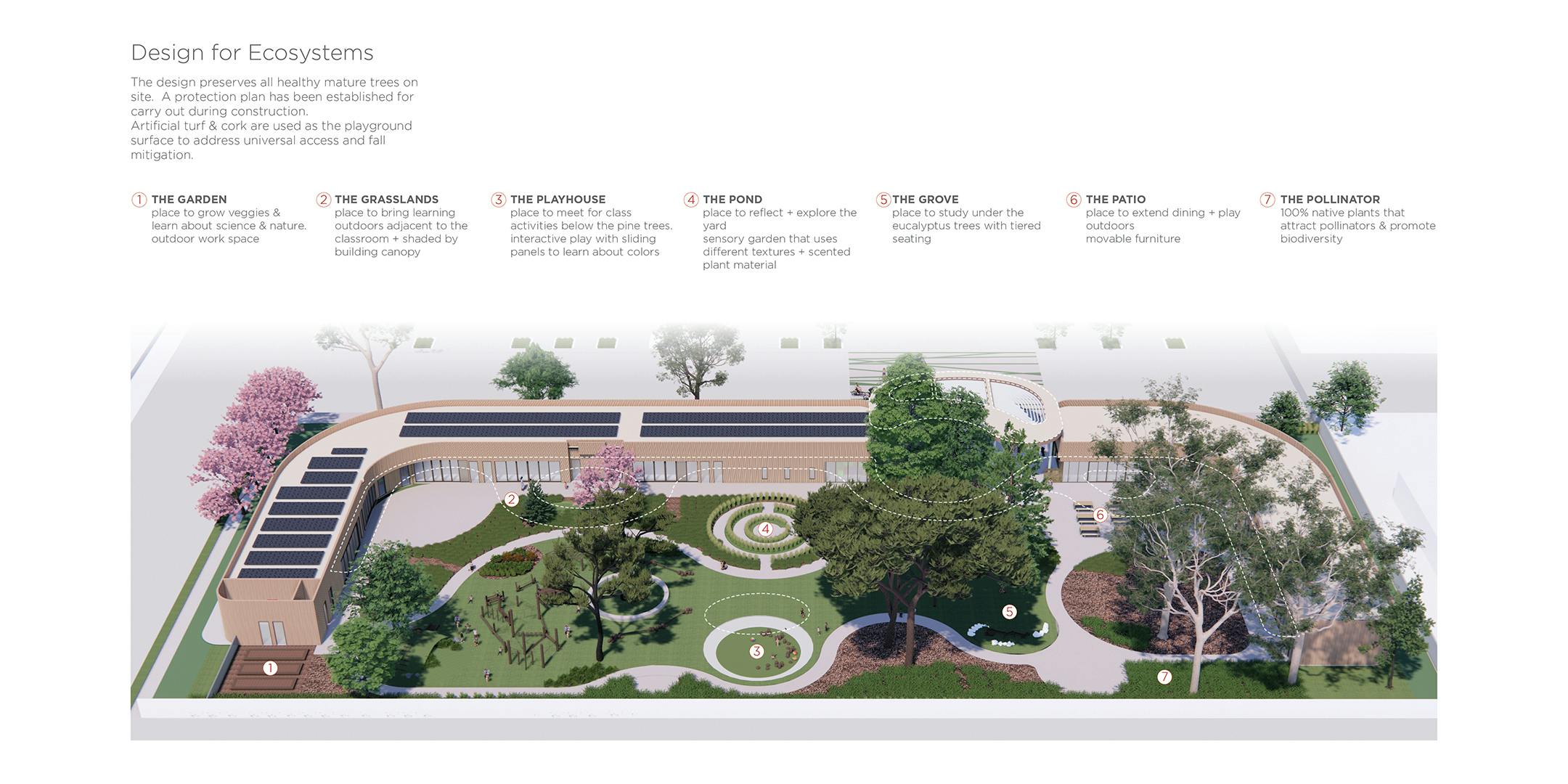
Designing Classrooms Fit for Early Learners — from edsurge.com by Ozzie Tapia
With deliberate design, learning environments can promote independence, discovery and creativity for early learners.

Excerpt:

Working closely with districts has helped us hone these five strategies, which emphasize how the facility itself can play an active role in the teaching dynamic. When applied effectively, a facility—and the learning spaces inside and around it—becomes a tool for discovery and creative play, which is essential for learners at these early stages of development.
From DSC:
Along the lines of PreK-12th grade learning spaces, I’d like to see more innovations in regards to providing places within classrooms (or within a given facility at least) where students can go who want to/need to block out the cacophony of sites and sounds that may be occurring — in order to help them focus.


7 Technologies that are Changing Healthcare — from digitalsalutem.com by João Bocas

In this article we are going to talk about the seven technologies that are changing healthcare:

  1. Artificial Intelligence
  2. Blockchain
  3. Virtual Reality
  4. Robots
  5. Mapping technologies
  6. Big Data
  7. Neurotechnology

This startup 3D prints tiny homes from recyclable plastics — from interestingengineering.com by Nergis Firtina; with thanks to Laura Goodrich for this resource

A 3D printed house by Azure

Satellite Billboards Are a Dystopian Future We Don’t Need — from gizmodo.com by George Dvorsky; with thanks to Laura Goodrich for this resource
Brightly lit ads in orbit are technologically and economically viable, say Russian scientists. But can we not?

Artist’s conception of a cubesat ad showing the Olympic rings. Image: Shamil Biktimirov/Skoltech

South Korea to Provide Blockchain-based Digital Identities to Citizens by 2024 — from blockchain.news by Annie Li; with thanks to Laura Goodrich for this resource

Excerpt:

South Korea plans to provide digital identities encrypted by blockchain with smartphones to citizens in 2024 to facilitate its economic development., Bloomberg reported Monday.

The South Korean government stated that with the expansion of the digital economy, the ID embedded in the smartphone is an indispensable emerging technology to support the development of data.

From DSC:
Interesting to see blockchain show up in the first item above on healthcare and also on this item coming out of South Korea for digital identities.

The Bruce Willis Deepfake Is Everyone’s Problem — from wired.com by Will Bedingfield; with thanks to Stephen Downes for this resource
There’s a fight brewing over how Hollywood stars can protect their identities. But it’s not just actors who should be paying attention.

Excerpts:

Yet the question of “who owns Bruce Willis,” as Levy put it, isn’t only a concern for the Hollywood star and his representatives. It concerns actors unions across the world, fighting against contracts that exploit their members’ naivety about AI. And, for some experts, it’s a question that implicates everyone, portending a wilder, dystopian future—one in which identities are bought, sold, and seized.

“This is relevant not just to AI contracts [for synthetic performances], but any contract involving rights to one’s likeness and voice,” says Danielle S. Van Lier, assistant general counsel, intellectual property and contracts at SAG-AFTRA. “We have been seeing contracts that now include ‘simulation rights’ to performers’ images, voices, and performances. These contract terms are buried deep in the boilerplate of performance agreements in traditional media.”


Addendum on 10/26/22:


From DSC:
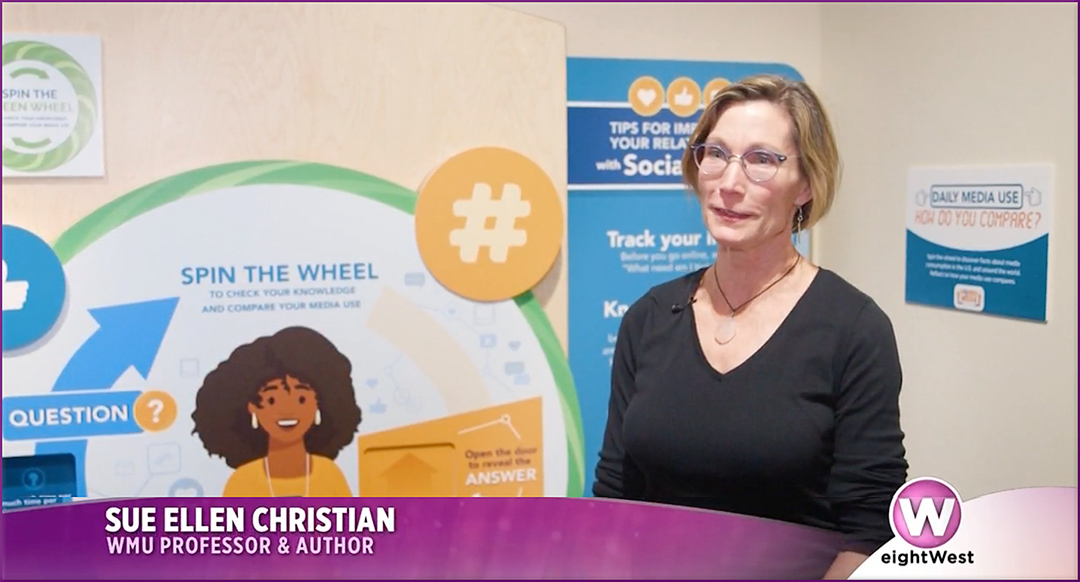
I’m very proud of our sister Sue Ellen — who worked hard to bring this idea/vision/exhibit to reality.

Sue Ellen Christian


Kalamazoo Valley Museum explores media & its messages — from woodtv.com by Jessica Jurczak

Excerpt:

GRAND RAPIDS, Mich. (WOOD) – We are constantly on the lookout for fun ideas that also involve learning and one of our go-to spots is the Kalamazoo Valley Museum! There’s a big exhibition there now called “Wonder Media: Ask the Questions!” As we all know, we’re bombarded everyday with messages from all types of media: TV, movies, social media and this exhibit encourages us to stop and evaluate some of those messages. The Kalamazoo Valley Museum also has a planetarium, and vast science and history galleries and today, we’re taking you inside!


Great leaders ask great questions: Here are 3 steps to up your questioning game. — from bigthink.com by Christopher J. Frank, Oded Netzer, and Paul F. Magnone; with thanks to Roberto Ferraro for this resource
Questioning isn’t just a way to get the right answer — it’s also a means for sustaining relationships and creative thinking.

Excerpt:

Building an inquisitive team
One of the best LinkedIn profiles starts with “I am insatiably curious.” What would it take to build a team of insatiably curious, truly inquisitive people? Building an inquisitive culture involves a combination of what and how. The what is a combination of the types of questions previously outlined, and the how is the environment you create. Great leaders create great cultures. There are three basic steps to building an inquisitive culture:

  1. Start with an open-ended question.
  2. Respond, don’t react. Embrace silence.
  3. Ask a stream of questions.

Also relevant/see:


Addendum on 10/29/22:

Innovation starts with the quality of your questions — from edte.ch by Tom Barrett
In the final publication of the October throughline we explore how to build a culture of innovation one question at a time.

Snapshot
A quick synthesis of this issue to share

  • Innovation starts with the quality of your questions. Asking the right questions leads to new possibilities and innovative solutions.
  • We are often drawn to ideas because we want to fix problems; starting with an idea feels safe and more fun than starting with a problem.
  • If we want an innovative culture in our teams, we need to start with questions instead of ideas.
  • Trust and psychological safety create the culture for collective negative capability, which John Keats coined as “the ability to live with ambiguity and uncertainty.”
  • Commit to action by being aware of your need for certainty, make space for ambiguity and uncertainty in development work, and build trust by encouraging questions.


“Eight Artworks” by Artist Kohshin Finley


Many, Lord my God,
    are the wonders you have done,
    the things you planned for us.
None can compare with you;
    were I to speak and tell of your deeds,
    they would be too many to declare.

22 Plans fail for lack of counsel,
    but with many advisers they succeed.

23 A person finds joy in giving an apt reply—
    and how good is a timely word!


Deloitte State of AI Report 2022 calls out underachievers — from venturebeat.com by Sharon Goldman

Excerpt:

Deloitte released the fifth edition of its State of AI in the Enterprise research report today, which surveyed more than 2,600 global executives on how businesses and industries are deploying and scaling artificial intelligence (AI) projects.

Most notably, the Deloitte report found that while AI continues to move tantalizingly closer to the core of the enterprise – 94% of business leaders agree that AI is critical to success over the next five years – for some, outcomes seem to be lagging.

What is a surprise, she added, is how quickly the AI landscape is changing – to the point that what began as an every-other-year Deloitte report is now created annually. 

From DSC:
I’m reminded of some graphics here…


Also relevant/see:

‘State of AI in the Enterprise’ Fifth Edition Uncovers Four Key Actions to Maximize AI Value — from deloitte.com
Research reveals the key actions leaders can take to accelerate AI outcomes

Key takeaways

For Deloitte’s “State of AI in the Enterprise,” Fifth Edition, we surveyed 2,620 global business leaders representing six industry areas and dozens of sectors. Key findings include:

  • Ninety-four percent of business leaders surveyed agree that AI is critical to success over the next five years.
  • Seventy-nine percent of leaders say they have fully deployed three or more AI applications, compared to 62% last year.
  • There was a 29% increase in the number of respondents self-identifying as “underachievers,” suggesting that many organizations are struggling to achieve meaningful AI outcomes.
  • Top challenges associated with scaling according to respondents are managing AI-related risk (50%), lack of executive commitment (50%), lack of maintenance and post launch support (50%).
 

Threats uncovered: QR code exploits offer personal and business risks — from technative.io by Len Noe

Excerpts:

Cyber attackers have quickly caught onto QR codes as a social vulnerability and attacks using them as the vector are on the rise.

It’s clear we intuitively trust QR codes, even though this trust is poorly founded. To get a clearer picture of exactly how QR codes could present a threat, I did some digging. Through research, I discovered a variety of ways QR codes can be used maliciously, to steal not only personal information but provide a solid base of information from which to attack an organisation.


Returning Joy to Teaching & Learning — from gettingsmart.com by Trace Pickering

Key Points

  • Too many school-based reform efforts continue to have educators implicitly standing with the standards against the students.
  • Pivot your perspective for a moment to the opposite.
  • What does a school where its educators stand with the students against the standards look like?

From DSC:
My hunch is that we need to cut — or significantly weaken the ties — between the state legislative bodies out there and our public school systems. We shouldn’t let people who know little to nothing about teaching and learning make decisions about how and what to teach students. Let those on the front lines — ie., the teachers and local school system leaders/staff — collaborate with the community on those items.


With Google’s latest push, a blending of industry and higher ed — from workshift.opencampusmedia.org by Elyse Ashburn
Google’s new industry specializations were co-built by its experts and faculty at four top universities—part of a larger push to combine forces with higher education to drive economic mobility.

Excerpt:

Google is making a bigger push into higher education, partnering with name-brand universities to offer more advanced credentials that build on its signature Career Certificates program. The four new industry specializations—for fields like construction management and financial analysis—were co-designed by Google’s technical experts and university faculty with subject matter expertise.

The specializations are open to anybody on Coursera’s platform, and typically cost several hundred dollars to complete.

It’s a blending of industry and academic expertise—with an eye toward helping more Americans get high-demand jobs—that Gevelber calls a tipping point for higher education.


How Wayne Brady ‘Yes, Ands’ His Way to Success — from inc.com by Ben Sherry
At the Inc. 5000 Conference & Gala in Phoenix, the legendary performer shares how the art of improvisational comedy can help business owners innovate.

Essentially, “Yes, and” is a process of accepting what your “scene partner” in an improv comedy sketch has said and then expanding on that line of thinking to come up with a new, original idea on the spot. Instead of shutting down suggestions from peers or potential business partners, Brady says, you should look for ways to build on others’ ideas. The resulting camaraderie can help you and your partner create a potentially breakthrough idea together in real time.

The “Yes, and” attitude, says Brady, “means saying, ‘I like what you’re doing. Now let me put my own sauce on it, and we’ll see what happens.'” In order to effectively improvise, you need to actively listen to people, the same way improvisational comedians listen closely to their “scene partner,” and identify an idea that you can make even better. Next, you should encourage your “partner” to continue this process, so both parties are actively responsible for creating the new idea.


How Might Engineering Education Transition From In-Person To Hybrid and Online Modalities? — from insidehighered.com by Joshua Kim
Three questions for Rick Hill, professor of mechanical engineering at the University of Detroit Mercy.

Excerpts:

Tools I use in my classroom, including MATLAB and Simulink, are key to recreating the in-person lab experience and giving engineering students access to the same equipment as engineers in the field. Students can gain experience analyzing data, developing algorithms and creating models. They’re developing skills in the design of systems with multidomain models, simulation and deployment without the need for code.

Virtual labs allow an instructor to easily introduce “experiments” into nonlab classes, either in the middle of a lecture or in homework. I do this with live scripts and simulation models. It saves me and the students the time of having to set up and debug the lab hardware and saves the cost and space of the physical laboratory while providing a very quick and controlled environment for doing experiments.


It’s time to modernize workplace development programs — from chieflearningofficer.com by Jason Mundy

Excerpts:

So, what exactly do employers need to do to improve L&D? Incorporate individualized microlearning into workforce development.

Microlearning-based L&D is used to solve key business objectives and is useful for many types of employee education, such as compliance training, on-the-job skills and administrative responsibilities. Microlearning programs can be tailored to individuals and administered in a way that is not disruptive to employees. Through modern microlearning solutions, it’s also possible to implement scenario-based learning and gamification, both of which increase employee engagement.

From DSC:
After reading this article, some questions come to my mind:

  • Who decides what’s next on the training regime for an employee?
  • Is it a team of people doing that for each position? The employee, the supervisor, two levels up supervisor(s), L&D, other? 
  • And/or is it tapping into streams of content created by former people who have done that exact job?

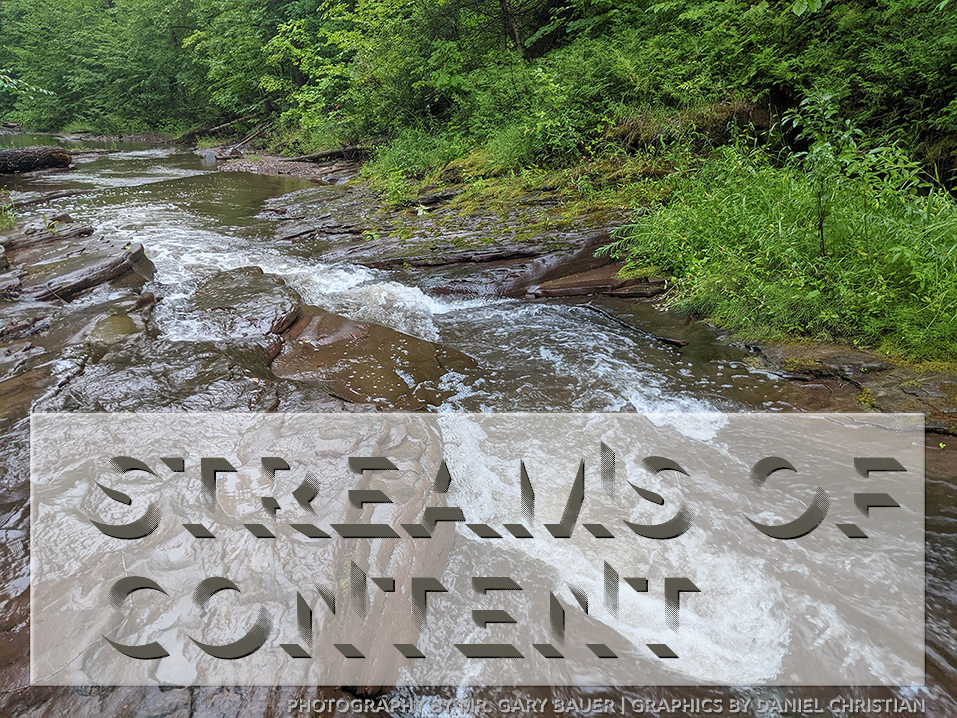
streams of content are ever flowing by -- we need to tap into them and contribute to them

  • For each position, is it possible to capture a knowledgebase containing which topics, learning modules/courses, blogs, websites, people to follow on social media, or other resources?
  • Is there a community of practice for each position?
  • How and who keeps these knowledgebases pruned and up-to-date? 

Hmmm…thanks for letting me think out loud with you.


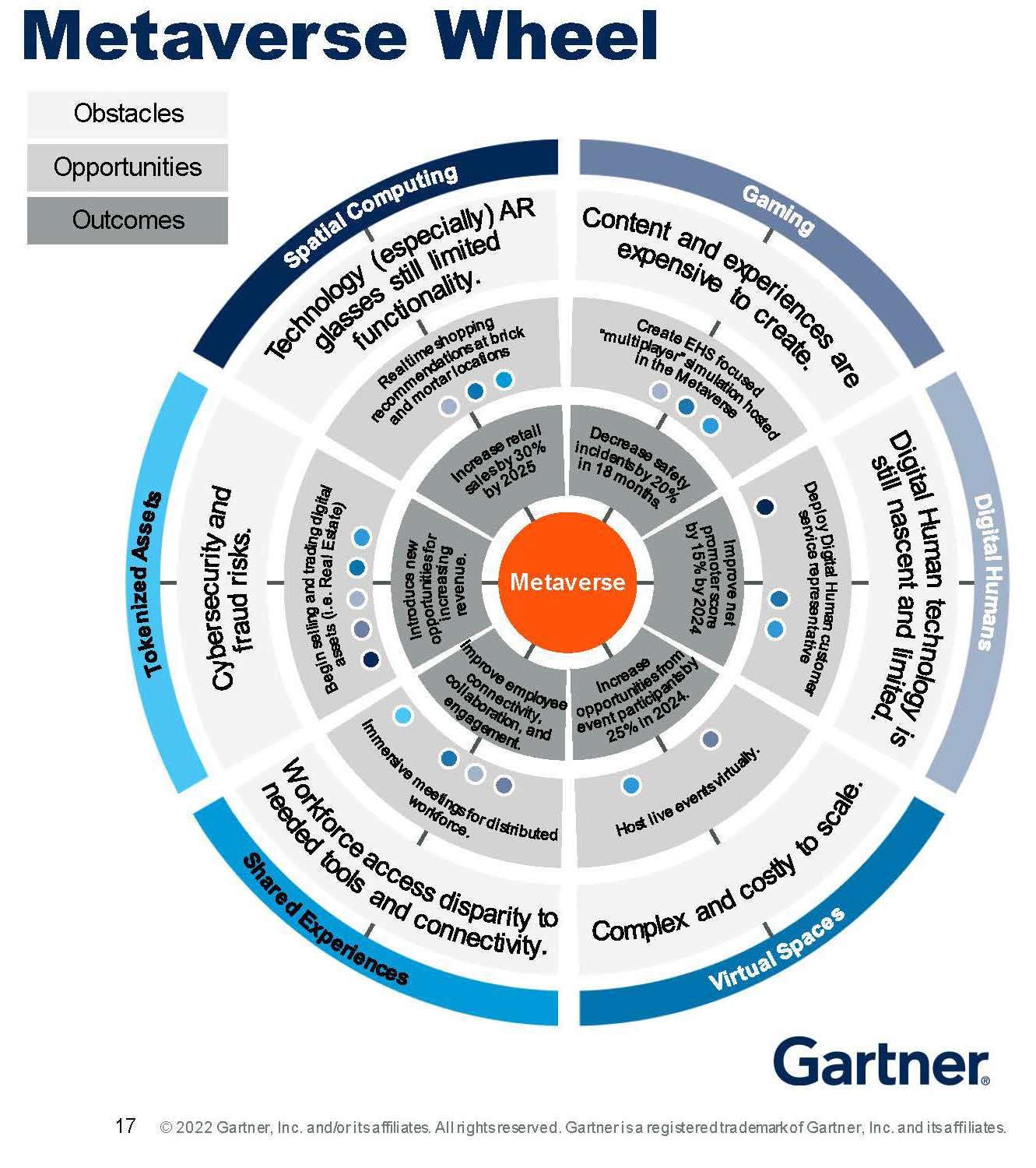
6 trends are driving the use of #metaverse tech today. These trends and technologies will continue to drive its use over the next 3 to 5 years:

1. Gaming
2. Digital Humans
3. Virtual Spaces
4. Shared Experiences
5. Tokenized Assets
6. Spatial Computing
#GartnerSYM

.

“Despite all of the hype, the adoption of #metaverse tech is nascent and fragmented.” 

.

Also relevant/see:

According to Apple CEO Tim Cook, the Next Internet Revolution Is Not the Metaverse. It’s This — from inc.com by Nick Hobson
The metaverse is just too wacky and weird to be the next big thing. Tim Cook is betting on AR.

Excerpts:

While he might know a thing or two about radical tech, to him it’s unconvincing that the average person sufficiently understands the concept of the metaverse enough to meaningfully incorporate it into their daily life.

The metaverse is just too wacky and weird.

And, according to science, he might be on to something.

 
© 2025 | Daniel Christian