These are the most important AI trends, according to top AI experts — from nexxworks.com
Somewhat in the shadow of the (often) overhyped metaverse and Web3 paradigms, AI seems to be developing at great speed. That’s why we asked a group of top AI experts in our network to describe what they think are the most important trends, evolutions and areas of interest of the moment in that domain.

Excerpt:

All of them have different backgrounds and areas of expertise, but some patterns still emerged in their stories, several of them mentioning ethics, the impact on the climate (both positively and negatively), the danger of overhyping, the need for transparency and explainability, interdisciplinary collaborations, robots and the many challenges that still need to be overcome.

But let’s see what they have to say, shall we?

Also relevant/see:

AI IS REVOLUTIONIZING EVERY FIELD AND SCIENCE IS NO EXCEPTION — from dataconomy.com by KEREM GÜLEN

Table of Contents

  • Artificial intelligence in science
    • Artificial intelligence in science: Biology
    • Artificial intelligence in science: Physics
    • Artificial intelligence in science: Chemistry
  • AI in science and research
    • How is AI used in scientific research?
      • Protein structures can be predicted using genetic data
      • Recognizing how climate change affects cities and regions
      • Analyzing astronomical data
  • AI in science examples
    • Interpreting social history with archival data
    • Using satellite images to aid in conservation
    • Understanding complex organic chemistry
  • Conclusion

Also relevant/see:

  • How ‘Responsible AI’ Is Ethically Shaping Our Future — from learningsolutionsmag.com by Markus Bernhardt
    Excerpt:
    The PwC 2022 AI Business Survey finds that “AI success is becoming the rule, not the exception,” and, according to PwC US, published in the 2021 AI Predictions & 2021 Responsible AI Insights Report, “Responsible AI is the leading priority among industry leaders for AI applications in 2021, with emphasis on improving privacy, explainability, bias detection, and governance.”
  • Why you need an AI ethics committee — from enterprisersproject.com by Reid Blackman (requires providing email address to get the article)
 

National Apprenticeship Week [November 14-20, 2022] — from apprenticeship.gov

Excerpt:

What is National Apprenticeship Week?
NAW is a nationwide celebration where industry, labor, equity, workforce, education, and government leaders host events to showcase the successes and value of Registered Apprenticeship for re-building our economy, advancing racial and gender equity, and supporting underserved communities. NAW is an opportunity to highlight how Registered Apprenticeship, a proven and industry-driven training model, provides a critical talent pipeline that can help to address some of our nation’s pressing workforce challenges such as rebuilding our country’s infrastructure, addressing critical supply chain demands, supporting a clean energy workforce, modernizing our cybersecurity response, and responding to care economy issues.

Also relevant/see:

  • Understanding New Collar Apprenticeships — from workshift.opencampusmedia.org; requires you to complete a form to get the guide
    Apprenticeships aren’t what they used to be. Long a pathway into the trades, apprenticeships now are also preparing Americans for new-collar jobs in fields from healthcare to tech. And governments and companies are putting big money into modernizing, diversifying, and growing the system—hoping to change the face of apprenticeships. This guide takes a look at this evolving landscape.
 

Taking stock as the world population hits 8 billion — from mckinsey.com

Excerpt:

November 13, 2022 Projections show the global population will surpass 8 billion people on November 15, and in 2023, India is expected to surpass China to become the world’s most populous nation. It was only 11 years ago that the world reached the last billion; these milestones generate considerations of resource allocation, food security, climate change, and more. Already, one in nine people can’t get enough to eat every day, even while 33 to 40 percent of our food is lost or wasted each year, according to research from senior partners Clarisse Magnin and Björn Timelin. As we continue to grow, how can we support an unprecedented population while raising the quality of life for all? Explore our insights to learn more about how to avoid a food crisis, common misconceptions around global migration, the future of an aging population, and more.

Also see:

EIEIO’s e-newsletter of 11/13/22  where it says:

This week on Tuesday, it’s projected that a baby will be born somewhere on Planet Earth that brings the population to 8 billion people. Notably, the global population reached 7 billion people just eleven years ago. When I was born, in 1962, there was 3 billion people, and the United States had a population of 180 million versus roughly 335 million today.

.

What we know from Nobel Laureate Economist James Heckman out of the University of Chicago is that $1 invested in early childhood education produces a $7 return in economic gain. Moreover, while investment in education produces a compelling return at all stages, the earlier you invest in education, the higher the return.


The Law Of The Metaverse — from forbes.com by Charles Lew

Excerpts:

As the metaverse becomes a fully realized, interoperable and persistent platform, the need for a codified and clearly defined system of applicable laws will be tremendous.

The applicability and sufficiency of existing intellectual property laws are being tested as we speak in the metaverse. Heavyweight companies such as Walmart, Hermès, Nike and Roblox are all actively seeking judicial determinations as to their respective trademark rights in the metaverse.

Also relevant/see:

Virtual rights for virtual goods? — from lexology.com

Excerpt:

Why does this matter to you?
If you buy a music album and receive a digital file, is this a purchase of digital goods? What if you listen to the same album on a streaming service? If you buy virtual sneakers for your metaverse avatar, is this a purchase of digital goods or just a part of the service provided by the metaverse operator? As purchasing habits increasingly move online or into the digital space, and especially with the rise in popularity of “metaverses”, the need for clarity and regulation in this area will become more and more apparent.

Brick by Brick: Understanding IP Rights in Metaverse Buildings — from mayerbrown.com

Building a virtual world often involves just that—buildings. But developers of metaverse properties may not know which legal rights are at issue. Can a virtual world incorporate a rendition of a real-life building without infringing on the rights of real-life property owners? Does the architect, owner, or user of a brick-and-mortar building have any rights to assert against a twin building in the metaverse? How does the developer of a virtual building take the building from one virtual world to another?

The answer depends on—and may vary based on—who is asserting the rights, whether copyrights or trademarks are at issue, and whether any of these rights have been assigned to another party.

These questions all remain unsettled in the context of the metaverse, so developers should proceed with caution until courts put their own stake in the ground on these issues.


Also relevant/see:


Want to work in climatetech? Here’s how to get started — from canarymedia.com by Mike Munsell; with thanks to Jill Bender at Terawatt for this resource
Canary highlights top resources, recruiters and communities to help you land your dream job in renewable energy, cleantech or climate.

Excerpt:

Here are the climatetech-specific recruiters on my radar:


Top Language Translation AI To Watch in 2022 — from aitimejournal.com by Cameron Schoppa

Excerpt:

In this article, we will discuss some of the most prominent and up-and-coming companies that provide these automated solutions that break down the language barrier.


Addendum on 11/17/22:

  • The State of Multilingual AI — from ruder.io
    This post takes a closer look at the state of multilingual AI. How multilingual are current models in NLP, computer vision, and speech? What are the main recent contributions in this area? What challenges remain and how we can we address them?


An obituary for education—or not? — from brookings.edu by Kathy Hirsh-Pasek, Jennifer M. Zosh, Roberta Michnick Golinkoff, Elias Blinkoff, and Molly Scott

Excerpt:

MAKING SCHOOLS WORK
The science of learning offers a blueprint of how children in our future can and will succeed. For the last three decades, researchers made enormous progress in understanding how human brains learn. If we can teach in a way that capitalizes on these findings—if we can apply the science to the classrooms—we will have evidence-based ways of helping children grow the suite of skills that will make them successful in today’s classrooms and the workplaces of tomorrow. Our Brookings report, A New Path to Educational Reform and our book Making Schools Work: Bringing the Science of Learning to Joyful Classroom Practice, detail how this research in the science of learning can offer a scalable, evidenced based path to re-invigorating and re-imagining education for our time.

Children learn when they are active, not passive observers of what is taught. Children learn when they are engaged in the material and not distracted, when the information is meaningfully connected to their knowledge in ways that are culturally responsive. They learn best in social contexts, when there are strong teacher-student and peer relationships, when the information is iteratively presented multiple times in slightly different ways, and when the learning is joyful. Yes, it is possible to have joyful teaching that affords deeper learning. When we teach in ways that the brain learns, the learning “sticks” and generalizes to new problems and new solutions.


The Digital Divide 2.0: Navigating Digital Equity and Health Equity in Education — from edsurge.com by Mordecai I. Brownlee

Excerpt:

Luckily, we don’t have to do this work alone. Mainstream awareness of the access gap is growing, which has encouraged corporations like AT&T and Comcast and organizations like United Way to respond by creating employee and community campaigns to bring forth solutions.

Such awareness has also inspired a surge in federal, state and local governments discussing solutions and infrastructure upgrades. For example, nationally, the Affordable Connectivity Program is an FCC benefit program aimed at providing affordable broadband access for work, school, health care and more. It is important to note that participants must meet the Federal Poverty Guidelines eligibility standards to receive such benefits.

Also relevant/see:

Can Colleges Reach Beyond Campus to Foster ‘Digital Equity’ in Communities? — from edsurge.com by Rebecca Koenig

Excerpt (emphasis DSC):

So his organization is working with the city of Orangeburg and Claflin University to extend the university’s broadband out into the surrounding community at affordable rates. And because research from McKinsey suggests that more than 80 percent of HBCUs are located in “broadband deserts,” it’s a strategy that may work elsewhere in the country, too.

“That makes HBCUs and other minority-serving institutions, and universities more broadly, really interesting and powerful partners in bridging the digital divide,” Ben-Avie said.


Teaching: Flipping a Class Helps — but Not for the Reason You’d Think — from the Teaching newsletter out at The Chronicle of Higher Education by Beckie Supiano

Excerpt:

The authors propose a different model of flipping that gives their paper its title, “Fail, Flip, Fix, and Feed — Rethinking Flipped Learning: A Review of Meta-Analyses and a Subsequent Meta-Analysis.”

Their model:

  • Fail: Give students a chance to try solving problems. They won’t have all the information needed to arrive at the solution, but the attempt activates their prior learning and primes them for the coming content.
  • Flip: Deliver the content ahead of class, perhaps in a video lecture.
  • Fix: During class time, a traditional lecture can deepen understanding and correct misperceptions.
  • Feed: Formative assessment lets students check their level of understanding.

I find this paper interesting for a number of reasons. It ties into a challenge I’d like to dig into in the future: the gap that can exist between a teaching approach as described in research literature and as applied in the classroom.

From DSC:
Though I haven’t read this analysis (please accept my apology here), I would hope that it would also mention one of the key benefits of the flipped classroom approach — giving students more control over the pacing of the content. Students can stop, fast-forward, rewind, and pause the content as necessary. This is very helpful for all students, but especially for students who don’t have English as their primary language.

I like this approach because if students fail to solve the problem at first, they will likely be listening more/very carefully as to how to solve it:

Drawing on related research, we proposed a more specific model for flipping, “Fail, Flip, Fix, and Feed” whereby students are asked to first engage in generating solutions to novel problems even if they fail to generate the correct solutions, before receiving instructions.

Plus, students will begin to recall/activate their prior knowledge on a subject in order to try to solve the problem. That retrieval practice in and of itself can be helpful.


The Shrinking of Higher Ed — A Special Report from The Chronicle of Higher Education
A special report on the implications of the enrollment contraction.

Excerpt:

Nearly 1.3 million students have disappeared from American colleges since the Covid-19 pandemic began. That enrollment contraction comes at a precarious moment for the sector. Inflation is driving up costs and straining budgets, stock-market volatility is putting downward pressure on endowment returns, and federal stimulus funds are running out. Why is the enrollment crunch happening now? How are colleges responding? What might turn things around? Those are the questions fueling this special report.

A Public Regional on the Edge — from chronicle.com by Eric Kelderman
New Jersey City University’s plan to grow its way out of financial trouble backfired. What went wrong?

Excerpts:

NJCU’s story is a cautionary tale for similar institutions — small public regional colleges with ambitions to expand in a crowded higher-education market. While its real-estate dealings have drawn unfavorable scrutiny, the university was responding to challenges that face its peers, in northern New Jersey and around the country: increased competition for a declining number of high-school graduates.

Public regional universities, like NJCU, enroll about 40 percent of all college students nationally, and a far larger percentage of minority, low-income, and first-generation students than better-known flagships and top research universities do.

But a lack of state support, limited ability to attract students from outside the region, and sparse fund raising have made the university vulnerable to economic downturns and demographic shifts that have led to fewer high-school graduates, especially in the Northeast and upper Midwest.

Linked to in the above article was this article:

Declining enrollment has Western Michigan University on budgetary tightrope — from mlive.com by Julie Mack

Excerpts:

KALAMAZOO, MI — Western Michigan University has 17,835 students this fall, its lowest enrollment since the 1960s.

The number is down 6% from last fall. Down 27% from a decade ago, when the fall headcount was 24,598. Down 41% from 20 years ago, when WMU’s fall count peaked at 29,732.

And thanks to a declining birthrate and a shrinking percentage of new high school graduates enrolling in college, that downward enrollment trend is likely to continue indefinitely.

Rather, “what COVID did was force our hand after years of pressure created by declining enrollment and demographic trends that suggest declines will continue for the next decade,” she said. “So while COVID brought our financial situation into sharp relief, the budget cut was a measure taken to relieve pressure created over many, many years.”


A relevant addendum here:

Avoiding the Trap of Too Little Too Late — from tytonpartners.com by Trace Urdan; with thanks to Ryan Craig for this resource

Excerpt:

The challenges facing higher education are well understood: a demographic cliff of traditional-aged applicants, a declining proportion of full-pay families, and a growing skepticism of the value of (ever-more) expensive post-secondary degrees with resulting student consumerism. Add to this rapidly rising technological complexity, deferred maintenance on deteriorating physical assets, escalating administrative costs associated with student services and supports, and a burgeoning array of college substitutes, and the challenges are clear. The combination of lower tuition revenue and higher costs points toward an inevitable sector consolidation. And while many college administrators will readily acknowledge this point in the abstract, few will consider that it might apply to them.


ABA advances proposal to end LSAT requirements — from highereddive.com by Jeremy Bauer-Wolf

Dive Brief:

  • An American Bar Association governing body will vote next week whether to ax a requirement that ABA-accredited law schools use an entrance exam, like the Law School Admission Test, or LSAT, eroding the assessment’s long-standing influence in admissions.
  • A key ABA committee, the Strategic Review Committee, on Friday recommended the association end admissions test requirements.
  • If the governing board votes Nov. 18 to repeal assessment mandates, the ABA House of Delegates will be in line to finalize the new policy at its February meeting.
 

From Teaching to Tech – Q&A With Joanna Cappuccilli — from devlinpeck.com by Devlin Peck and Joanna Cappuccilli
Would you like to transition out of the classroom and into a corporate instructional design role?

Excerpt:

In this Q&A session, we talk with Joanna Cappuccilli about how she transitioned from full-time teacher to full-time curriculum developer at Amazon Web Services, as well as the steps she took to get there.

Joanna and I discuss how developing a portfolio, networking effectively, and preparing extensively for interviews led to her successfully landing a tech role.


A student debt study unravels the American Dream ideal that college will propel you to the middle class — from fortune.com by Bytrey Williams with thanks to Ray Schroeder for this resource out on LinkedIn


Excerpts:

Looking at a cohort of borrowers from 2009, the report highlights that 50% of undergraduate debtors hadn’t repaid their loans. Across different types of loans, borrowers owed between 50% to 110% of their original loan 10 years after repayment began.

A college degree is undoing the American Dream
Getting a college degree has long been heralded as a staple to the American Dream, viewed as the path to wealth that will eventually buy a house in suburbs with a white picket fence. But the Jain Institute report shows that’s no longer the case.


Artist Spotlights: Shingo Yamazaki & Alberto Ortega

Artist Spotlight: Shingo Yamazaki — from booooooom.com


Artist Spotlight: Alberto Ortega — from booooooom.com


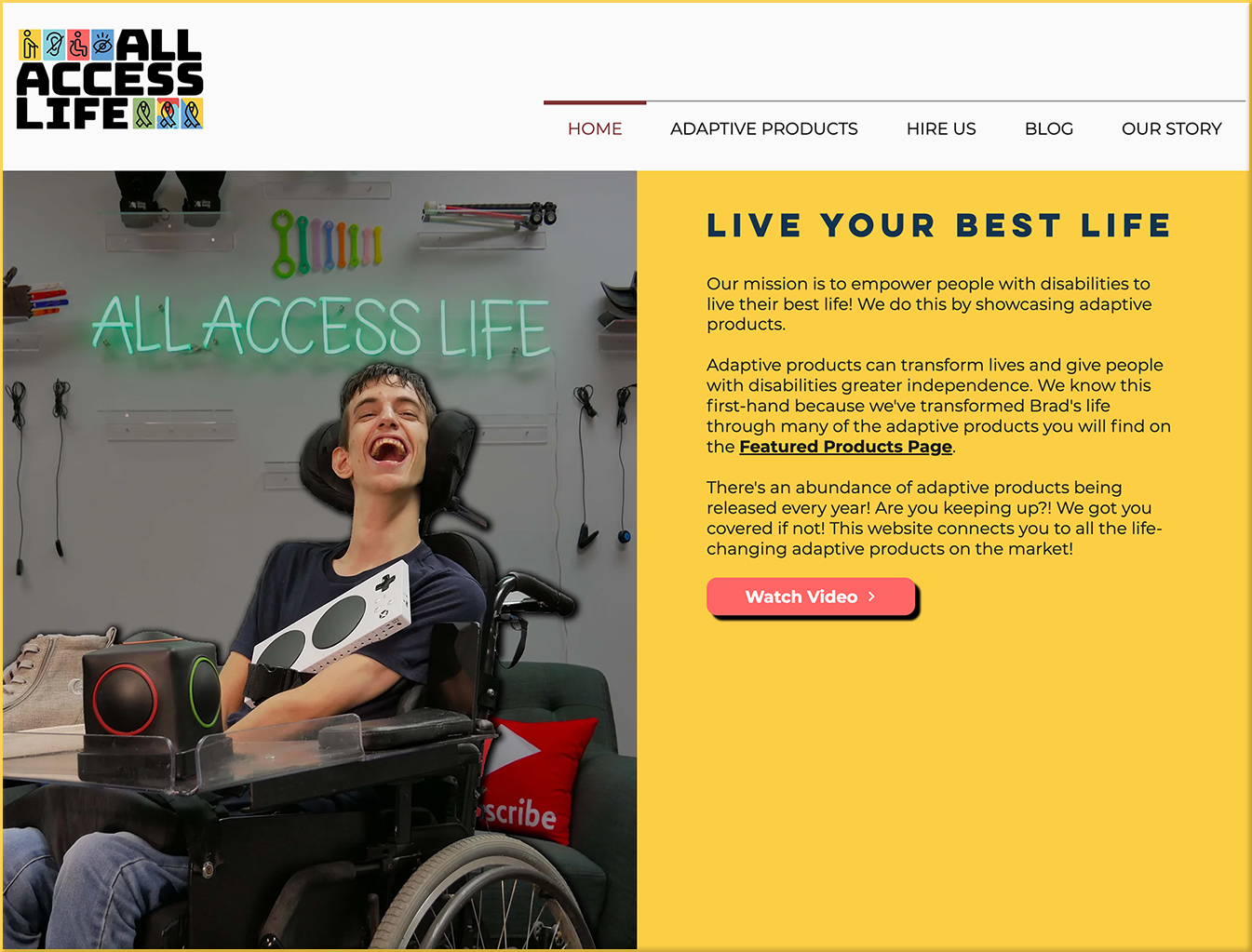
Our mission is to empower people with disabilities to live their best life! We do this by showcasing adaptive products.

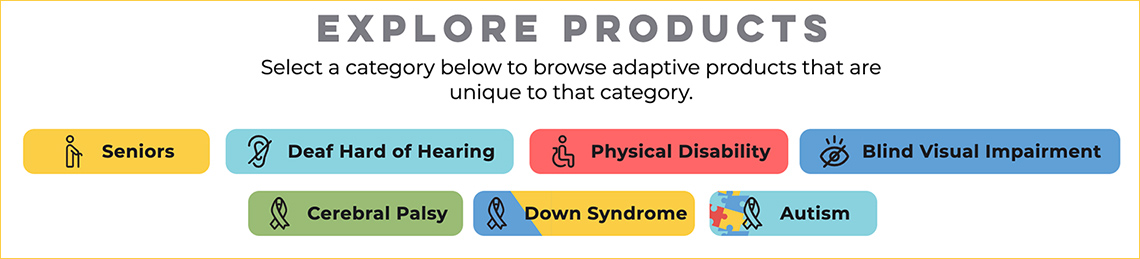
The product categories out at allaccesslife.org


Addendum on 11/14/22:

clusiv.io — as mentioned at The Accelerator at WGU Labs Invests in Platform for the Blind or Visually Impaired

Clusiv is an online learning platform for the blind and visually impaired that teaches occupational training, technology skills, and educational courses to empower employment. We help remove barriers to successful employment by teaching the skills you need to be equipped for the modern workforce.


© 2025 | Daniel Christian