According to recent statistics, 18% of undergraduate and 12% of graduate students have temporary, relapsing, or long-term disabilities. Students might have noticeable disabilities, but many disorders are “hidden.” Luckily, modern colleges have many resources that allow people with disabilities to attend classes and thrive in their academic life. This guide will focus on the advice that can help students with disabilities successfully navigate their higher education.
The $330 billion corporate training market is enormous, fragmented, and complex. For years it was dominated by Learning Management Systems (LMS) and content providers, each pioneered in the early 2000s. These systems served well, but the needs of employees and organizations moved ahead.
Today companies want not only a place to find and administer learning, they want a “Learning Platform” that creates mastery. And this market, that of “Learning Delivery Platforms,” is far more complex than you think. Let me put it straight: video-based chapter by chapter courses don’t teach you much. Companies want a solution that is expert-led, engaging, includes assignments and coaching, and connects employees to experts and peers.
Well there’s a new breed of platforms focused in this area, and I call them Capability Academy systems.
These are platforms explicitly to bring together expert teachers, AI-enabled collaboration, assignments, and coaching to drive mastery. They can train thousands of people in small cohorts, offering hands-on support for technical or PowerSkills topics. And the results are striking: these vendors achieve 90% completion rates and netPromoter scores above 60 (far above traditional content libraries).
The guide is packed with tools that can meet so many of your needs as a teacher, and many of them are already well established and widely used. But every January, we like to choose six that we think deserve a little extra attention. Most are not actually brand-new to the world, but each one has something special about it. So here we go!
6 Google Scholar Tips From Its Co-Creator— from techlearning.com by Erik Ofgang Google Scholar can be a great tool for teachers and their students. Here’s how to get the most out of it.
Excerpt:
Anurag Acharya co-created Google Scholar in 2004. The Google engineer and former professor of computer science at the University of California at Santa Barbara was inspired to create the free search tool after being frustrated by being unable to access research articles as a student at the Kharagpur campus of the Indian Institute of Technology.
Today, Acharya is head of Google Scholar and an authority on how the scholarly search engine can best be used by teachers and their students. He offers these tips and best practices for teachers to use and share with their students.
Teaching: A Path to L&D aims to provide free guidance to teachers looking to move into the world of Learning and Development, specifically Instructional Design. Check out our website at www.teachlearndev.org for free coaching, webinars, and resources to help you on your journey!
If we want to make higher education truly equitable and produce the learning outcomes that we claim to seek, then we must confront painful truths no matter how uncomfortable they make us.
Preaching to, and Challenging, the Liberal Arts Choir — from insidehighered.com by Doug Lederman In a conversation with presidents of small private colleges, tech company executives praise graduates’ leadership and critical thinking ability but say they need to develop skills for a first job, too.
Excerpt:
In that more competitive landscape, Ferrick and others said, colleges should think in terms of “both-and”—delivering a four-year degree grounded in the liberal arts that remains the best preparation for a lifetime career, yes, but also building into their curricula more practical digital and other skills that can help graduates compete for a first job.
A higher-ed credential system that’s ‘not all about degrees.’ Holly Zanville has a clear goal for the Credential as You Go initiative she co-leads: Shift the entire “degree-centric” model of postsecondary education to make it easier for people to develop skills and knowledge in shorter chunks while recognizing “meaningful learning along the way.”
Whatever you think of its prospects, you can hardly fault the effort for a lack of ambition.
Ideally, students will layer incremental credentials over a lifetime of learning.
The credentials market for degree and non-degree programs is… complex.
A recent report from the non-profit Credential Engine identified 1,076,358 different credentials – from specialized certificates to bachelor’s degrees to PhDs.
Credential Engine started producing these reports in 2018. Back then there were “just” 334,114 credentials. In the last four years, the number of certifications has more than trebled. And from 2021 to 2022, there’s been a 38% increase in providers issuing certificates.
.
When you eyeball the largest higher ed institutions by enrollment comparing 2012 to today, it’s pretty clear that online degrees have driven – essentially – ALL of the growth.
Based on reader request after yesterday’s post, I’d like to share another view of largest US higher education institutions, this one ranked by total enrollment with color coding of distance education (DE) type. This chart combines undergrad and grad student enrollments.
Fifty percent of college students cited their own mental health struggles as their top stressor going into 2023, according to a survey of 1,200 students nationwide conducted by the virtual health services provider TimelyMD. Thirty-nine percent of respondents said they were most concerned about their personal finances, and 37 percent named academics, while mass shootings and inflation were each cited by 35 percent.
14 Technology Predictions for Higher Education in 2023 — from campustechnology.com by Rhea Kelly How will technologies and practices like artificial intelligence, predictive analytics, digital transformation, and change management impact colleges and universities this year? Here’s what the experts told us.
Excerpt:
In an open call on LinkedIn, we asked higher education and ed tech industry leaders to forecast the most important trends to watch in the coming year. Their responses reflect both the challenges on the horizon — persistent cyber attacks, the disruptive force of emerging technologies, failures in project management — as well as the opportunities that technology brings to better serve students and support the institutional mission. Here are 14 predictions to help steer your technology efforts in 2023.
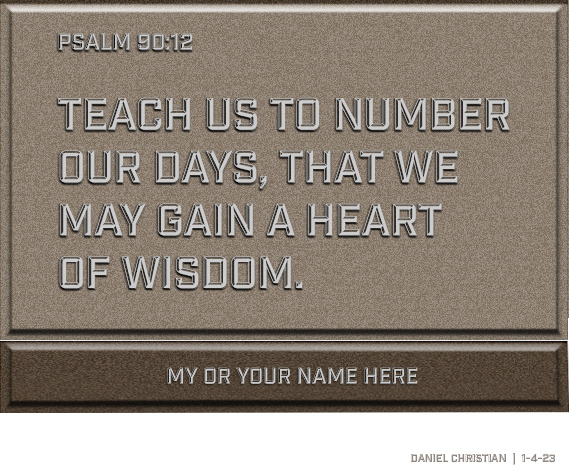
From DSC: One of my favorite memories as a kid was going to see a local performance of Charles Dickens’ “The Christmas Carol.” I loved seeing the transformation of Ebenezer Scrooge. And one of the events that changed Ebenezer was seeing his own name on the gravestone.
There’s been something about this verse that has clung to my heart and my mind. As dealing with time can already put heat in my kitchen, I have to handle this verse with some care.
The use of digital tools that help to connect students with real-world learning opportunities will expand global awareness and transform the learning experience.
Here are 12 digital tools to consider using in 2023.
StoryJumper is a digital storytelling platform that gives students so many ways to share their learning. Students can choose different characters, props, and background scenes and even add audio to the books that they create. StoryJumper helps educators promote student choice, and spark curiosity and creativity as they design their stories. There are also libraries full of books to explore. Books can also be shared with classmates and families.
Here’s the list of sources: https://t.co/fJd4rh8kLy. The larger resource area at https://t.co/bN7CReGIEC has sample ChatGPT essays, strategies for mitigating harm, and questions for teachers to ask as well as a listserv.
— Anna Mills, amills@mastodon.oeru.org, she/her (@EnglishOER) January 11, 2023
Microsoft is reportedly eyeing a $10 billion investment in OpenAI, the startup that created the viral chatbot ChatGPT, and is planning to integrate it into Office products and Bing search.The tech giant has already invested at least $1 billion into OpenAI. Some of these features might be rolling out as early as March, according to The Information.
This is a big deal. If successful, it will bring powerful AI tools to the masses.So what would ChatGPT-powered Microsoft products look like? We asked Microsoft and OpenAI. Neither was willing to answer our questions on how they plan to integrate AI-powered products into Microsoft’s tools, even though work must be well underway to do so. However, we do know enough to make some informed, intelligent guesses. Hint: it’s probably good news if, like me, you find creating PowerPoint presentations and answering emails boring.
I have maintained for several years, including a book ‘AI for Learning’, that AI is the technology of the age and will change everything. This is unfolding as we speak but it is interesting to ask who the winners are likely to be.
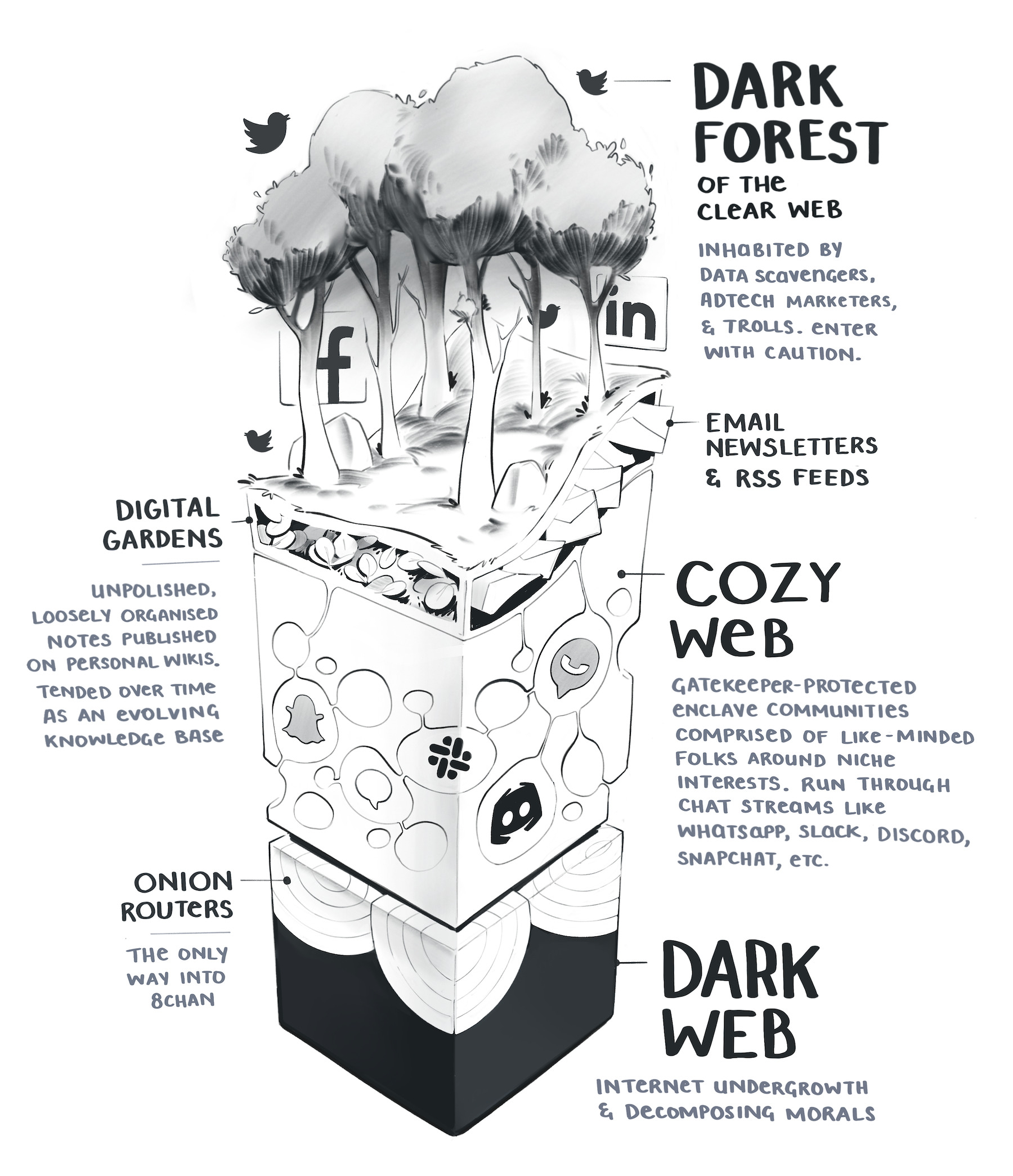
People who have heard of GPT-3 / ChatGPT, and are vaguely following the advances in machine learning, large language models, and image generators. Also people who care about making the web a flourishing social and intellectual space.
That dark forest is about to expand. Large Language Models (LLMs) that can instantly generate coherent swaths of human-like text have just joined the party.
It is in this uncertain climate that Hassabis agrees to a rare interview, to issue a stark warning about his growing concerns. “I would advocate not moving fast and breaking things.”
…
“When it comes to very powerful technologies—and obviously AI is going to be one of the most powerful ever—we need to be careful,” he says. “Not everybody is thinking about those things. It’s like experimentalists, many of whom don’t realize they’re holding dangerous material.” Worse still, Hassabis points out, we are the guinea pigs.
Demis Hassabis
Excerpt (emphasis DSC):
Hassabis says these efforts are just the beginning. He and his colleagues have been working toward a much grander ambition: creating artificial general intelligence, or AGI, by building machines that can think, learn, and be set to solve humanity’s toughest problems.Today’s AI is narrow, brittle, and often not very intelligent at all. But AGI, Hassabis believes, will be an “epoch-defining” technology—like the harnessing of electricity—that will change the very fabric of human life. If he’s right, it could earn him a place in history that would relegate the namesakes of his meeting rooms to mere footnotes.
But with AI’s promise also comes peril.In recent months, researchers building an AI system to design new drugs revealed that their tool could be easily repurposed to make deadly new chemicals. A separate AI model trained to spew out toxic hate speech went viral, exemplifying the risk to vulnerable communities online. And inside AI labs around the world, policy experts were grappling with near-term questions like what to do when an AI has the potential to be commandeered by rogue states to mount widespread hacking campaigns or infer state-level nuclear secrets.
Headteachers and university lecturers have expressed concerns that ChatGPT, which can provide convincing human-sounding answers to exam questions, could spark a wave of cheating in homework and exam coursework.
Now, the bot’s makers, San Francisco-based OpenAI, are trying to counter the risk by “watermarking” the bot’s output and making plagiarism easier to spot.
Students need now, more than ever, to understand how to navigate a world in which artificial intelligence is increasingly woven into everyday life. It’s a world that they, ultimately, will shape.
We hail from two professional fields that have an outsize interest in this debate. Joanne is a veteran journalist and editor deeply concerned about the potential for plagiarism and misinformation. Rebecca is a public health expert focused on artificial intelligence, who champions equitable adoption of new technologies.
We are also mother and daughter. Our dinner-table conversations have become a microcosm of the argument around ChatGPT, weighing its very real dangers against its equally real promise. Yet we both firmly believe that a blanket ban is a missed opportunity.
ChatGPT: Threat or Menace? — from insidehighered.com by Steven Mintz Are fears about generative AI warranted?
The rapid pace of change is driven by a “perfect storm” of factors, including the falling cost of computing power, the rise of data-driven decision-making, and the increasing availability of new technologies. “The speed of current breakthroughs has no historical precedent,”concluded Andrew Doxsey, co-founder of Libra Incentix, in an interview. “Unlike previous technological revolutions, the Fourth Industrial Revolution is evolving exponentially rather than linearly. Furthermore, it disrupts almost every industry worldwide.”
An updated version of the AI chatbot ChatGPT was recently released to the public.
I got the chatbot to write cover letters for real jobs and asked hiring managers what they thought.
The managers said they would’ve given me a call but that the letters lacked personality.
.
I mentor a young lad with poor literacy skills who is starting a landscaping business. He struggles to communicate with clients in a professional manner.
I created a GPT3-powered Gmail account to which he sends a message. It responds with the text to send to the client. pic.twitter.com/nlFX9Yx6wR
Utilizing the same master shell between multiple faculty is a great way to ensure students have the same experience regardless of who is facilitating the course. When developing and facilitating the course, you may want to consider the following areas within the course design and adjust elements to meet your personal preferences. You’ll want to review the following pages of the course and ensure the elements are tailored to meet your expectations and needs.
Are you concerned about the quality of your recorded videos for your online courses? The Course Video Scoring Rubric below provides you with additional guidance on how to improve the quality of your online course multimedia content.
The rubric is divided into four criteria: Content, Audio, Visuals (Camera), and Visuals (Screen Capture). Each of those criteria contain multiple standards for which you can review your existing content. These specific standards are graded on a scale of 0-2 points, for a total of 26 points.
Download the Video Scoring Rubric to begin analyzing the video content in your courses! For more information on creating quality video in your online course, check out our on-demand webinar Recording Video for Your Online Course.
Learning how to learn is the meta-skill that accelerates everything else you do.
Once you understand the fundamentals of learning science, you can save hours every time you learn something new. You become more strategic in approaching new subjects and skills instead of relying on often ineffective learning methods many pick up in school. …
Below are key insights I’ve learned about how we learn. Every single one will help you understand how your brain learns. By doing so, you’ll make better decisions on your journey to wisdom.
SAN MARCOS, Texas — Live lecture classes are back at most colleges after COVID-19 disruptions, but student engagement often hasn’t returned to normal.
In the past year, colleges have seen a rise in students skipping lectures, and some reports indicate that students are more prone to staring at TikTok or other distractions on their smartphones and laptops during lecture class.
To see what teaching is like on campus these days, I visited Texas State University in October and sat in on three large lecture classes in different subjects.
ChatGPT Advice Academics Can Use Now — from insidehighered.com by Susan D’Agostino To harness the potential and avert the risks of OpenAI’s new chat bot, academics should think a few years out, invite students into the conversation and—most of all—experiment, not panic.
Excerpt:
Faculty members and administrators are now reckoning in real time with how—not if—ChatGPT will impact teaching and learning. Inside Higher Ed caught up with 11 academics to ask how to harness the potential and avert the risks of this game-changing technology. The following edited, condensed advice suggests that higher ed professionals should think a few years out, invite students into the conversation and—most of all—experiment, not panic.
Next, consider the tools relative to your course. What are the cognitive tasks students need to perform without AI assistance? When should students rely on AI assistance? Where can an AI aid facilitate a better outcome? Are there efficiencies in grading that can be gained? Are new rubrics and assignment descriptions needed? Will you add an AI writing code of conduct to your syllabus? Do these changes require structural shifts in timetabling, class size or number of teaching assistants?
From DSC: Faculty members, librarians, academic support staff, instructional designers, and more are going to have to be given some time to maneuver through this new environment. Don’t expect them to instantly have answers. No one does. Or rather, let me say, no one should claim that they have all of the answers.
In the latter part of 2022 and continuing into the new year, multiple challenges have emerged to threaten law firm profitability, including falling demand and productivity, rising expenses, changing client preferences, and economic turmoil.
Indeed, one key metric — profits-per-equity partner (PPEP) — is down for the first time since 2009, which occurred during the last global financial crisis.
Teaching: A Path to L&D aims to provide free guidance to teachers looking to move into the world of Learning and Development, specifically Instructional Design. Check out our website at www.teachlearndev.org for free coaching, webinars, and resources to help you on your journey!
And if you want to freelance to begin making the shift, see:
Freelance Income Projection: Free Template— from christytuckerlearning.com by Christy Tucker As a freelancer or consultant, your income can vary widely from month to month. Use this free template to project your freelance income.
A few weeks ago, I stumbled across a powerful 4-minute lesson on filmmaking where, Casey Neistat, a YouTube personality, filmmaker, and co-founder of the multimedia company, Beme, said: “The grind is not glamorous.”
It isn’t anything new or something others haven’t said before. But these five words say more than their worth when it comes to understanding and managing expectations around building expertise.
When I first came across the title “Instructional Designer” while looking for alternative career options, I was just as confused as anybody would be hearing about our job for the first time. I remember asking questions like: What does an Instructional Designer do? Why is it called Instructional Design? Wouldn’t a title such as Learning Experience Designer or Training Content Developer suit them better? How are their skill sets different from curriculum developers like teachers’? etc.
This month we are discussing autism and aging. Many older adults in AANE’s community were children in the 1950s, 60s and 70s when the diagnosis of autism as we understand it today didn’t exist. Some were misdiagnosed with conditions like childhood schizophrenia, but many were just harmfully labeled as odd or having behavior problems. Because of the lack of awareness and understanding about autism, many have come to their diagnosis, or self-understanding, in their fifties, sixties, seventies and beyond, often after many years of being misunderstood or not fitting in at school, work, or socially. The stories they tell about feeling relief to have an explanation for their experience and finally…finally feeling like they belong warms my heart.
AI to help realize your dream career The Unschooler mentor helps you understand what you need to do to achieve your dream career. You can select one of six broad areas of expertise: science, people, tech, info, art, and business. The platform will then ask questions related to your future career.
It also has some other useful features. Unschooler keeps track of your skills by adding them to a skill map that’s unique to you.You can also ask it to expand on the information it has already given you. This is done by selecting the text and clicking one of four buttons: more, example, how to, explain, and a question mark icon that defines the selected text. There’s also a mobile app that analyzes text from pictures and explains tasks or concepts.
From DSC: This integration of AI is part of the vision that I’ve been tracking at:
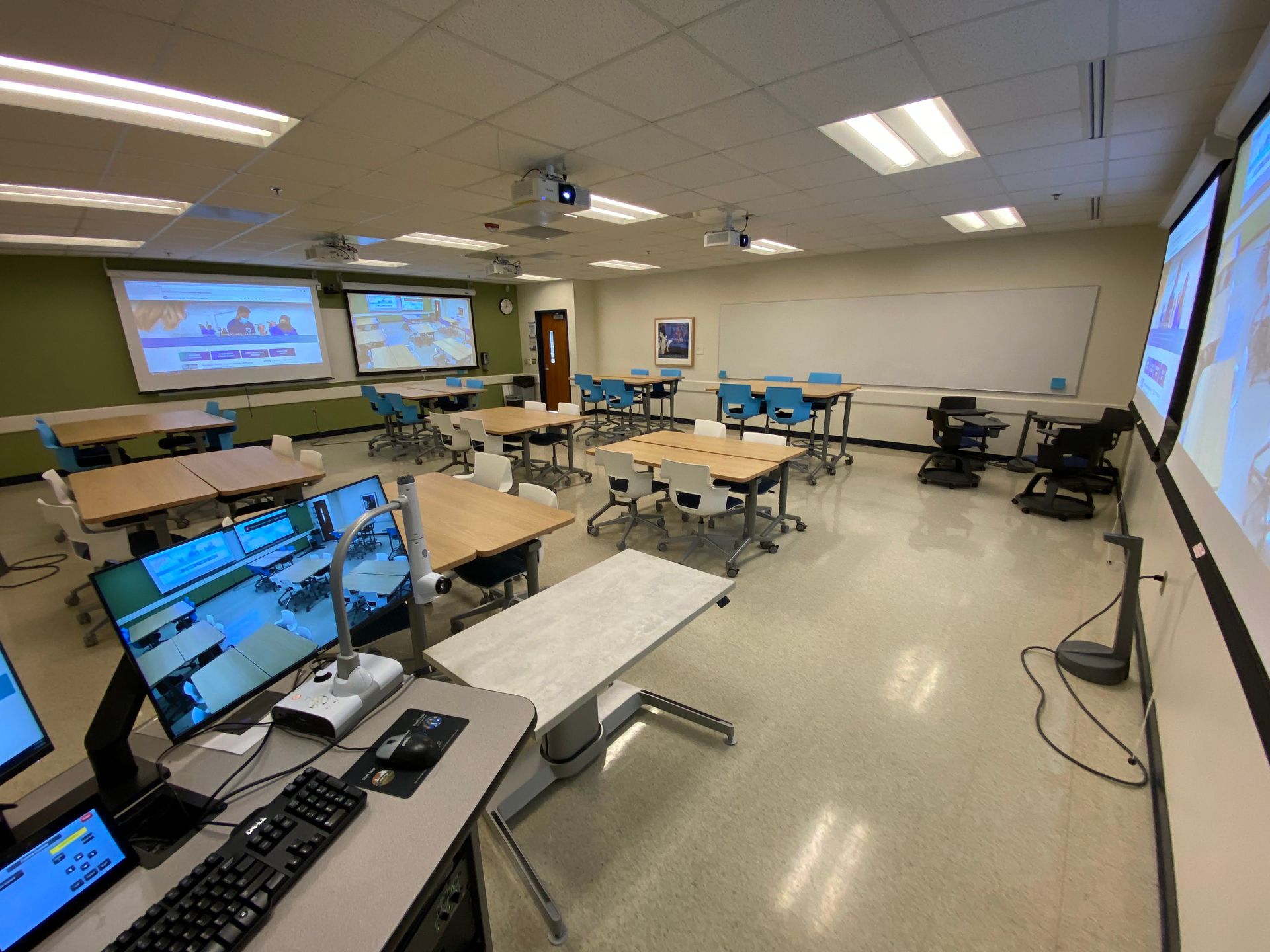
The idea that the space in which you do something, affects the thing you do is the basic premise behind active learning classrooms (ALCs).
…
The biggest message I get from this study is that in order to have success with active learning classrooms, you can’t just build them — they have to be introduced as part of an ecosystem that touches almost all parts of the daily function of a university: faculty teaching, faculty development and support, facilities, and the Registrar’s Office to name a few. Without that ecosystem before you build an ALC, it seems hard to have success with students after it’s built. You’re more likely to have an expensive showcase that looks good but ultimately does not fulfill its main purpose: Promoting and amplifying active learning, and moving the culture of a campus toward active engagement in the classroom.
From DSC: Thank you Robert for your article/posting here! And thank you for being one of the few faculty members who:
Regularly share information out on LinkedIn, Twitter, and your blog (something that is all too rare for faculty members throughout higher education)
Took a sabbatical to go work at a company that designs and develops numerous options for implementing active learning setups throughout the worlds of higher education, K12 education, and the corporate world as well. You are taking your skills to help contribute to the corporate world, while learning things out in the corporate world, and then taking these learnings back into the world of higher education.
This presupposes something controversial: That the institution will take a stand on the issue that there is a preferred way to teach, namely active learning, and that the institution will be moving toward making active learning the default pedagogy at the institution. Putting this stake in the ground, and then investing not only in facilities but in professional development and faculty incentives to make it happen, again calls for vigorous, sustained leadership — at the top, and especially by the teaching/learning center director.
12 And God said, “This is the sign of the covenant I am making between me and you and every living creature with you, a covenant for all generations to come:13 I have set my rainbow in the clouds, and it will be the sign of the covenant between me and the earth.14 Whenever I bring clouds over the earth and the rainbow appears in the clouds,15 I will remember my covenant between me and you and all living creatures of every kind. Never again will the waters become a flood to destroy all life.16 Whenever the rainbow appears in the clouds, I will see it and remember the everlasting covenant between God and all living creatures of every kind on the earth.” .
Thanks for dropping by my Learning Ecosystems blog!
My name is Daniel Christian and this blog seeks to cover the teaching and learning environments within the K-12 (including homeschooling, learning pods/micro-schools), collegiate, and corporate training spaces -- whether those environments be face-to-face, blended, hyflex, or 100% online.
Just as the organizations that we work for have their own learning ecosystems, each of us has our own learning ecosystem. We need to be very intentional about enhancing those learning ecosystems -- as we all need to be lifelong learners in order to remain marketable and employed. It's no longer about running sprints (i.e., getting a 4-year degree or going to a vocational school and then calling it quits), but rather, we are all running marathons now (i.e., we are into lifelong learning these days).