ChatGPT sets record for fastest-growing user base – analyst note — from reuters.com by Krystal Hu

Excerpt (emphasis DSC):

Feb 1 (Reuters) – ChatGPT, the popular chatbot from OpenAI, is estimated to have reached 100 million monthly active users in January, just two months after launch, making it the fastest-growing consumer application in history, according to a UBS study on Wednesday.

The report, citing data from analytics firm Similarweb, said an average of about 13 million unique visitors had used ChatGPT per day in January, more than double the levels of December.

“In 20 years following the internet space, we cannot recall a faster ramp in a consumer internet app,” UBS analysts wrote in the note.


From DSC:
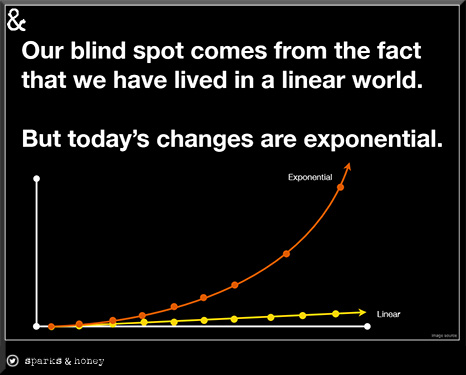
This reminds me of the current exponential pace of change that we are experiencing…

..and how we struggle with that kind of pace.


Five Predictions for the Future of Learning in the Age of AI — from a16z.com by Anne Lee Skates

Excerpts:

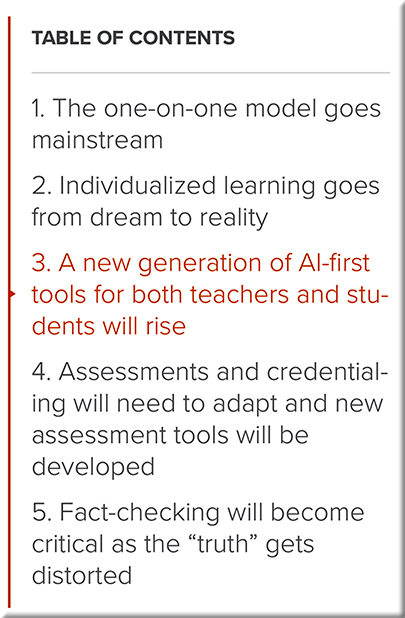
Seeing as education is one of AI’s first consumer use cases, and programs like ChatGPT are how millions of kids, teachers, and administrators will be introduced to AI, it is critical that we pay attention to the applications of AI and its implications for our lives. Below, we explore five predictions for AI and the future of learning, knowledge, and education.

TOC for Five Predictions for the Future of Learning in the Age of AI


DC: It will be interesting to see how ALSPs use ChatGPT, GPT versions 3.5 and above, and other areas of #legaltech


Alternative legal services providers hit $20.6B share of legal market, new report says — from abajournal.com by Matt Reynolds

Excerpt:

Alternative legal services providers, or ALSPs, have shown accelerated growth and now make up $20.6 billion of the legal market, according to a report published Tuesday.

The Thomson Reuters Institute’s biennial report found that growth of ALSPs has “dramatically accelerated.” It is up 45% since the last report in 2021, with a compound annual growth rate of 20% for fiscal years 2020 and 2021, according to the report, titled Alternative Legal Services Providers 2023: Accelerating growth & expanding service categories.


ABA panel deals a blow to test-optional push — from highereddive.com by Jeremy Bauer-Wolf

Dive Brief:

  • The American Bar Association’s policymaking body rejected a plan Monday that would end the requirement that ABA-accredited law schools use the Law School Admission Test or another standardized assessment in admissions.
  • The ABA House of Delegates voted against the change to the organization’s policy that mandates admissions tests — exams detractors say contribute to middling diversity in legal education. Nearly 600 officials comprise the House of Delegates, which took a voice vote on the plan, meaning a precise count was not available.
  • However, the proposal isn’t dead. It could be revived and approved unilaterally by the Council of the Section of Legal Education and Admissions to the Bar…

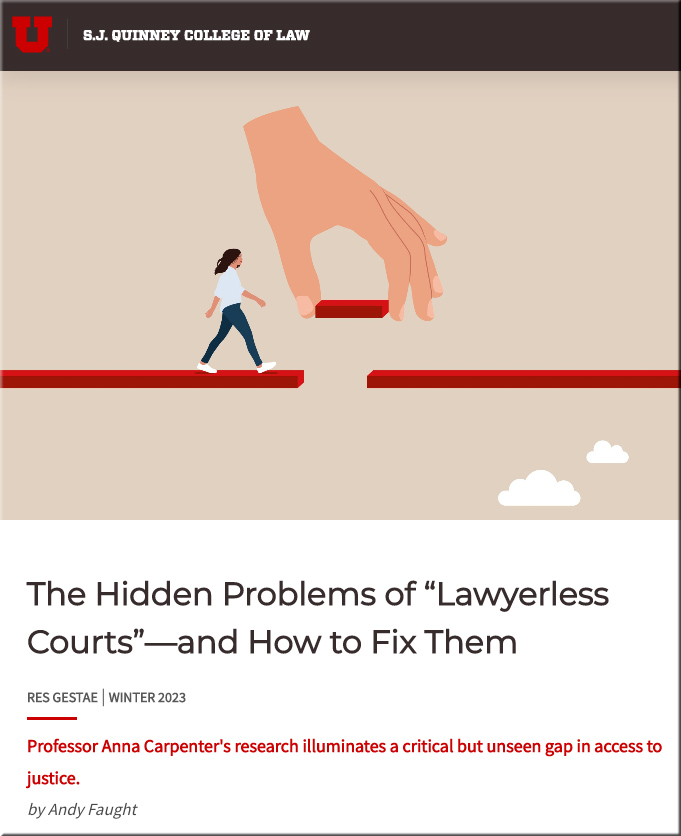
The Hidden Problems of “Lawyerless Courts”—and How to Fix Them

Excerpts:

Every year, 20 million Americans find themselves in state civil courts facing life-altering events such as divorce, child custody deliberations, eviction, and missed bills.

But unlike in criminal courts, where defendants have a constitutional right to legal representation, the same guarantee isn’t afforded in state civil courts. Most people in these courts are low- to middle-income and unable to afford help. They must strike out on their own to blindly navigate byzantine legal protocols.

“The civil justice system is broken in our state courts,” says Utah Law Professor Anna Carpenter, whose research examines state civil courts, the judges who preside in them, and access to justice. She is part of a four-person research team that pioneered a new body of scholarship that analyzes state civil courts.

“I challenge anyone, especially lawyers, to go sit in one of these courtrooms and watch the tragic, day-to-day reality,” Carpenter says. “You’ll see why we believe these courts are the emergency rooms of our justice system.”


The Future of Legal Technology with Gabe Teninbaum

The Future of Legal Technology with Gabe Teninbaum


What can work colleges teach the rest of higher ed? — from highereddive.com by Laura Spitalniak
Amid high worries about higher ed’s value in the job market, work colleges offer lessons on integrating classroom learning with employment opportunities.

Excerpt:

To qualify as a work college, an institution must be nonprofit, offer four-year degrees and provide students with employment through a work-learning-service program that will contribute to their education.

It found work colleges’ strengths — reduced or free tuition, job experience and mentorship from college faculty and staff — address student concerns over the cost and real-world applicability of a college degree. Work colleges can also make adult learners’ lives logistically easier by combining academics and work, the report found.

The intentional connection of learning, work and service is the most compelling part of the model, according to Louis Soares, chief learning and innovation officer at ACE and one of the report’s authors.


Radar Trends to Watch: February 2023 — from oreilly.com by Mike Loukides
Developments in Data, Programming, Security, and More

Excerpt:

One application for ChatGPT is writing documentation for developers, and providing a conversational search engine for the documentation and code. Writing internal documentation is an often omitted part of any software project.

DoNotPay has developed an AI “lawyer” that is helping a defendant make arguments in court. The lawyer runs on a cell phone, through which it hears the proceedings. It tells the defendant what to say through Bluetooth earbuds. DoNotPay’s CEO notes that this is illegal in almost all courtrooms. (After receiving threats from bar associations, DoNotPay has abandoned this trial.)

Matter, a standard for smart home connectivity, appears to be gaining momentum. Among other things, it allows devices to interact with a common controller, rather than an app (and possibly a hub) for each device.


Introducing: ChatGPT Edu-Mega-Prompts — from drphilippahardman.substack.com by Dr. Philippa Hardman; with thanks to Ray Schroeder out on LinkedIn for this resource
How to combine the power of AI + learning science to improve your efficiency & effectiveness as an educator

From DSC:
Before relaying some excerpts, I want to say that I get the gist of what Dr. Hardman is saying re: quizzes. But I’m surprised to hear she had so many pedagogical concerns with quizzes. I, too, would like to see quizzes used as an instrument of learning and to practice recall — and not just for assessment. But I would give quizzes a higher thumbs up than what she did. I think she was also trying to say that quizzes don’t always identify misconceptions or inaccurate foundational information. 

Excerpts:

The Bad News: Most AI technologies that have been built specifically for educators in the last few years and months imitate and threaten to spread the use of broken instructional practices (i.e. content + quiz).

The Good News: Armed with prompts which are carefully crafted to ask the right thing in the right way, educators can use AI like GPT3 to improve the effectiveness of their instructional practices.
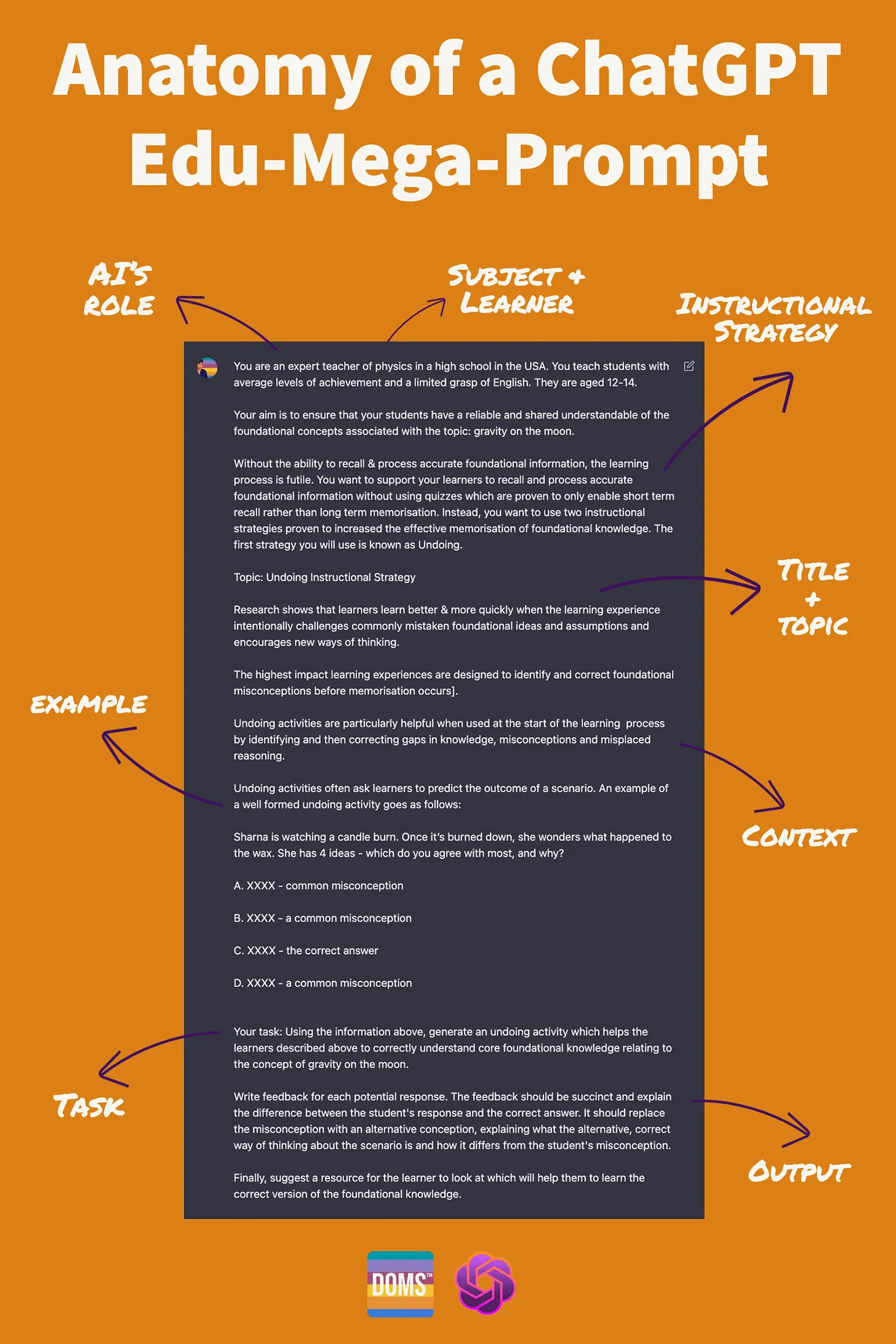
As is always the case, ChatGPT is your assistant. If you’re not happy with the result, you can edit and refine it using your expertise, either alone or through further conversation with ChatGPT.

For example, once the first response is generated, you can ask ChatGPT to make the activity more or less complex, to change the scenario and/or suggest more or different resources – the options are endless.

Philippa recommended checking out Rob Lennon’s streams of content. Here’s an example from his Twitter account:


Also relevant/see:
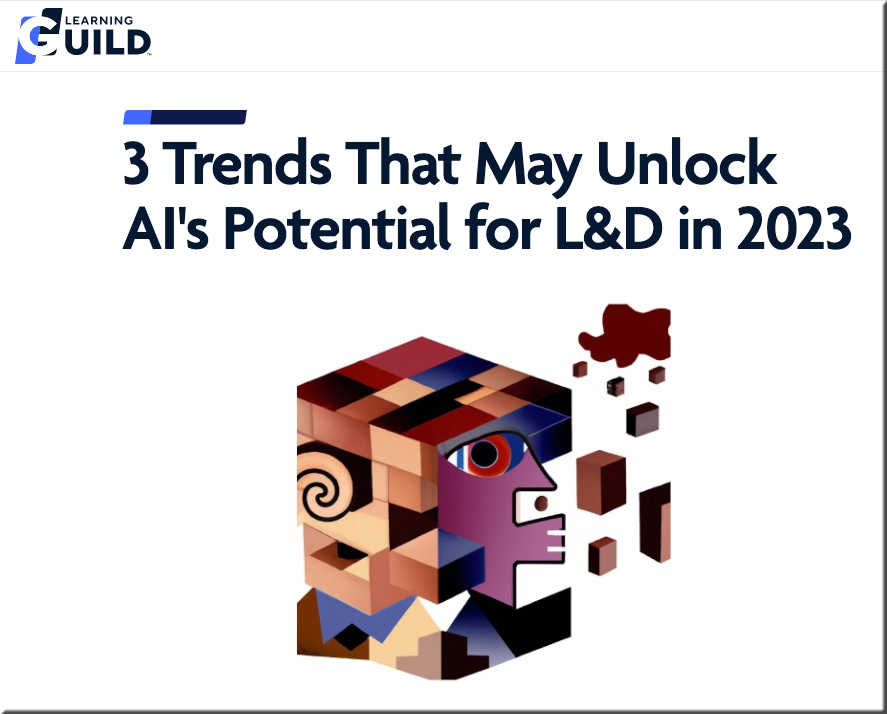
3 trends that may unlock AI's potential for Learning and Development in 2023

3 Trends That May Unlock AI’s Potential for L&D in 2023 — from learningguild.com by Juan Naranjo

Excerpts:

AI-assisted design and development work
This is the trend most likely to have a dramatic evolution this year.

Solutions like large language models, speech generators, content generators, image generators, translation tools, transcription tools, and video generators, among many others, will transform the way IDs create the learning experiences our organizations use. Two examples are:

1. IDs will be doing more curation and less creation:

  • Many IDs will start pulling raw material from content generators (built using natural language processing platforms like Open AI’s GPT-3, Microsoft’s LUIS, IBM’s Watson, Google’s BERT, etc.) to obtain ideas and drafts that they can then clean up and add to the assets they are assembling. As technology advances, the output from these platforms will be more suitable to become final drafts, and the curation and clean-up tasks will be faster and easier.
  • Then, the designer can leverage a solution like DALL-E 2 (or a product developed based on it) to obtain visuals that can (or not) be modified with programs like Illustrator or Photoshop (see image below for Dall-E’s “Cubist interpretation of AI and brain science.”

2. IDs will spend less, and in some cases no time at all, creating learning pathways

AI engines contained in LXPs and other platforms will select the right courses for employees and guide these learners from their current level of knowledge and skill to their goal state with substantially less human intervention.


The Creator of ChatGPT Thinks AI Should Be Regulated — from time.com by John Simons

Excerpts:

Somehow, Mira Murati can forthrightly discuss the dangers of AI while making you feel like it’s all going to be OK.

A growing number of leaders in the field are warning of the dangers of AI. Do you have any misgivings about the technology?

This is a unique moment in time where we do have agency in how it shapes society. And it goes both ways: the technology shapes us and we shape it. There are a lot of hard problems to figure out. How do you get the model to do the thing that you want it to do, and how you make sure it’s aligned with human intention and ultimately in service of humanity? There are also a ton of questions around societal impact, and there are a lot of ethical and philosophical questions that we need to consider. And it’s important that we bring in different voices, like philosophers, social scientists, artists, and people from the humanities.


Whispers of A.I.’s Modular Future — from newyorker.com by James Somers; via Sam DeBrule

Excerpts:

Gerganov adapted it from a program called Whisper, released in September by OpenAI, the same organization behind ChatGPTand dall-e. Whisper transcribes speech in more than ninety languages. In some of them, the software is capable of superhuman performance—that is, it can actually parse what somebody’s saying better than a human can.

Until recently, world-beating A.I.s like Whisper were the exclusive province of the big tech firms that developed them.

Ever since I’ve had tape to type up—lectures to transcribe, interviews to write down—I’ve dreamed of a program that would do it for me. The transcription process took so long, requiring so many small rewindings, that my hands and back would cramp. As a journalist, knowing what awaited me probably warped my reporting: instead of meeting someone in person with a tape recorder, it often seemed easier just to talk on the phone, typing up the good parts in the moment.

From DSC:
Journalism majors — and even seasoned journalists — should keep an eye on this type of application, as it will save them a significant amount of time and/or money.

Microsoft Teams Premium: Cut costs and add AI-powered productivity — from microsoft.com by Nicole Herskowitz

Excerpt:

Built on the familiar, all-in-one collaborative experience of Microsoft Teams, Teams Premium brings the latest technologies, including Large Language Models powered by OpenAI’s GPT-3.5, to make meetings more intelligent, personalized, and protected—whether it’s one-on-one, large meetings, virtual appointments, or webinars.


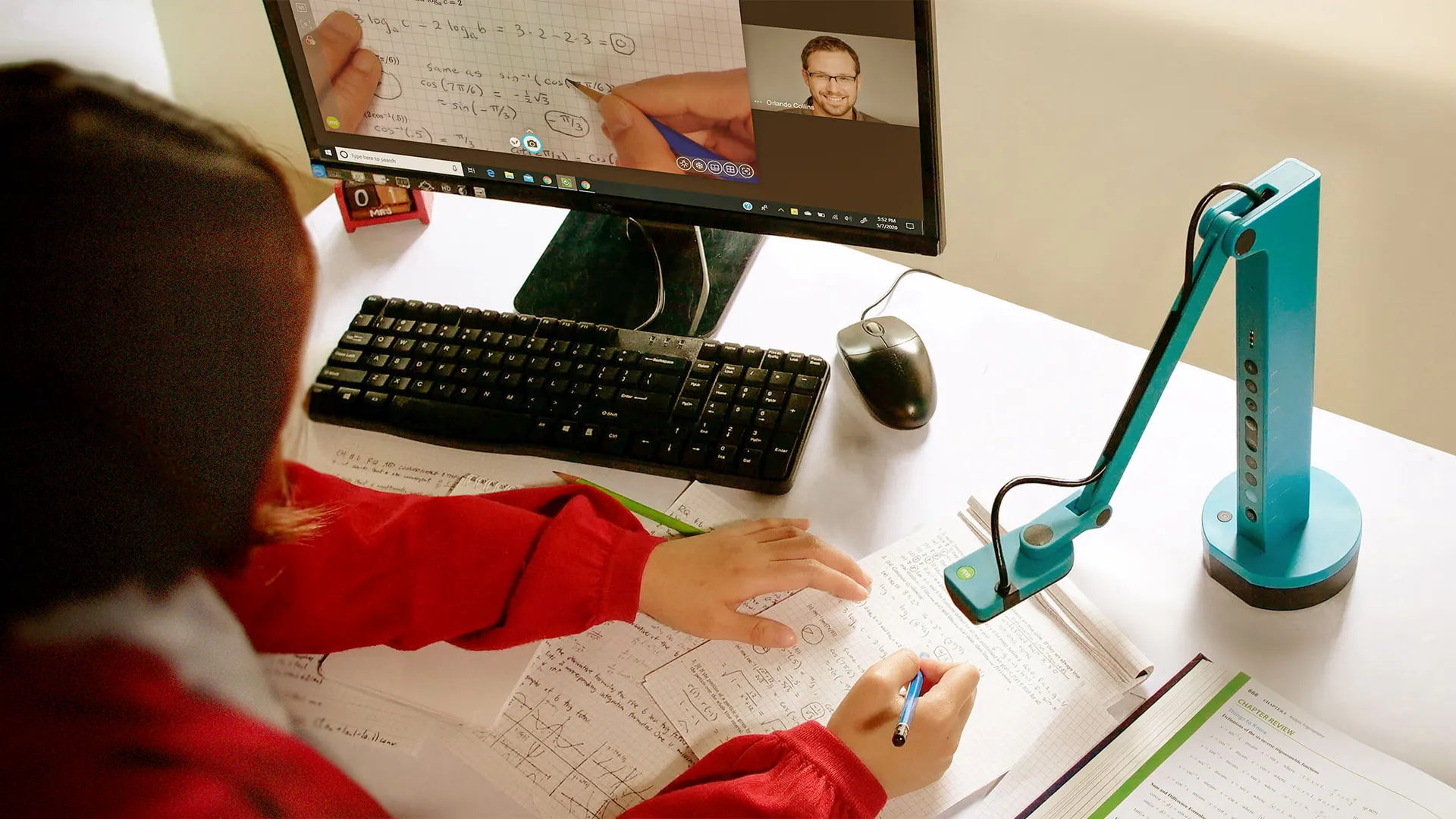
Best Document Cameras for Teachers — from techlearning.com by Luke Edwards
Get the best document camera for teachers to make the classroom more digitally immersive

Along the lines of edtech, also see:

Tech & Learning Names Winners of the Best of 2022 Awards — from techlearning.com by TL Editors
This annual award celebrates recognizing the very best in EdTech from 2022

.
The Tech & Learning Awards of Excellence: Best of 2022 celebrate educational technology from the last 12 months that has excelled in supporting teachers, students, and education professionals in the classroom, for professional development, or general management of education resources and learning. Nominated products are divided into three categories: Primary, Secondary, or Higher Education.


High drama, visual spectacle, and versatility combine at Cava Arcari by David Chipperfield Architects — from ignant.com by Devid Gualandris


Image © Simon Menges


Image © Simon Menges


Talking Tech for Solo and Small Law Firms on the Florida Bar’s Legalfuel Podcast — from lawnext.com by Bob Ambrogi

Excerpt:

When it comes to legal technology for solo and small law firms, I don’t think there’s a topic we didn’t touch on in this episode of the Florida Bar’s Legalfuel podcast. Hosts Christine Bilbrey, director of the Florida Bar’s practice resource center, and Jamie Moore, practice management advisor, asked me about everything from law practice management platforms to password managers to the dark web.

Also see:

There’s a push for young lawyers to practice in rural America — from denver7.com by Diane Duenez

Excerpt:

Richard Moberly is the dean at the University of Nebraska College of Law. When his state saw a lack of rural doctors, the medical college developed a rural training track to set up students in areas of need.

“About 60% of those students ended up going back to those communities. So, we’re hoping for the same,” Moberly said. “A lot of the older attorneys, especially, have worked with the people in that community for a generation and know that, if no one can step in to their shoes, those people are really going to lose out on the services that lawyers provide.”


Also from Lior see:


Canary in the coal mine for coding bootcamps? — from theview.substack.com by gordonmacrae; with thanks to Mr. Ryan Craig for this resource

Excerpt:

If you run a software development bootcamp, a recent Burning Glass institute report should keep you awake at night.

The report, titled How Skills Are Disrupting Work, looks at a decade of labor market analysis and identifies how digital skill training and credentials have responded to new jobs.

Three trends stuck out to me:

  • The most future-proof skills aren’t technical
  • Demand for software development is in decline
  • One in eight postings feature just four skill sets

These three trends should sound a warning for software development bootcamps, in particular. Let’s see why, and how you can prepare to face the coming challenges.


Also relevant/see:

Issue #14: Trends in Bootcamps — from theview.substack.com by gordonmacrae

Excerpt:

Further consolidation of smaller providers seems likely to continue in 2023. A number of VC-backed providers will run out of money.

A lot of bootcamps will be available cheaply for any larger providers, or management companies. Growth will continue to be an option in the Middle East, as funding doesn’t look like drying up any time soon. And look for the larger bootcamps to expand into hire-train-deploy, apprenticeships or licensing.

As Alberto pointed out this week, it’s hard for bootcamps to sustain the growth trajectory VC’s expect. But there are other options available.


Supporting Career and Technical Education (CTE) students on the path to success — from insidetrack.org

Excerpt:

Career and Technical Education (CTE) pathways are crucial for economic equity and mobility. With February being Career and Technical Education Month, there’s no better time to talk about the importance of recognizing the value of CTE pathways, creating more cohesion between non-credit CTE programs and degree pathways, and fostering more parity in the student experience.

Career and Technical Education provides learners of all ages and backgrounds with the tangible skills and knowledge they need to move into a career path that leads to a quality job. According to Luke Rhine, Deputy Assistant Secretary, Office of Career, Technical & Adult Education (OCTAE), U.S. Department of Education, “Nationally, there are more than 3.5 million learners enrolled in postsecondary CTE programs. States and institutions of higher education have the potential to position CTE as a catalyst to blur the lines between high school, postsecondary education, and paid work experiences to help students earn postsecondary degrees and industry credentials that our employers need, and our economy demands.”


Top 6 VR learning trends in 2023 — from chieflearningofficer.com by Anders Gronstedt

Excerpt:

From virtual to mixed reality
A new class of “mixed reality” headsets will launch in 2023, promising to break the barriers between the real and virtual worlds. Meta launched a developer version of this technology a few months ago called “Quest Pro,” which superimposes computer-generated images into the real world around us. The mass-market version of this headset, Quest 3, will hit the shelves this fall for $400. Meanwhile, Apple is rumored to finally premiere a more premium mixed reality headset this spring. This can be an important step toward a vision of true augmented reality glasses that is still years away.

The new year will see the mainstream adoption of VR for safety, equipment operations and service, logistics, manufacturing, emergency response and health care training. Other applications will take several more years to mature. Current XR technology is not ripe for soft skills training, IT systems training, conferences and all-purpose collaboration (Meta can’t even get its own employees to hold regular meetings in VR). Procedural hands-on training simulations will be the edge of the new frontier of XR learning in the new year.

 
© 2025 | Daniel Christian