Promoting Student Agency in Learning — from rdene915.com by Rachelle Dené Poth

Excerpts (emphasis DSC):

In many conversations, teachers are starting to shift from what has been a focus on “learning loss” and instead focus on reflecting on the skills that students gained by learning in different yet challenging ways. Some skills such as digital citizenship, how to collaborate and build relationships when not in the classroom together, and essential technology skills. Teachers learned a lot about themselves and the importance of reflecting on their practice. We learned in new ways and now, we have to continue to provide more authentic and meaningful learning experiences for all students.

From DSC:
I couldn’t agree more. There was a different type of learning going on during the pandemic. And that type of learning will be very helpful as our students live the rest of their days in an increasingly Volatile, Uncertain, Complex, and Ambiguous (VOCA) world. That kind of learning wasn’t assessed in our normal standardized tests. It may not have shown up in official transcripts. But it will come in handy in the real world.

When students experience learning that is meaningful, purposeful, and relevant to their lives, it boosts student engagement and amplifies their learning potential, to better prepare students for their future careers.

— Rachelle Dené Poth


‘ChatGPT Already Outperforms a lot of Junior Lawyers’: An Interview With Richard Susskind — from law.com by Laura Beveridge
For the last 20 years, the U.K. author and academic has been predicting that technology will revolutionise the legal industry. With the buzz around generative AI, will his hypothesis now be proven true?

Excerpts:

For this generation of lawyers, their mission and legacy ought to be to build the systems that replace our old ways of working, he said. Moreover, Susskind identified new work for lawyers, such as legal process analyst or legal data scientist, emerging from technological advancement.

“These are the people who will be building the systems that will be solving people’s legal problems in the future.

“The question I ask is: imagine when the underpinning large language model is GPT 8.5.”

Blue J Legal co-founder Benjamin Alarie on how AI is powering a new generation of legal tech — from canadianlawyermag.com by Tim Wilbur

Excerpts:

We founded Blue J with the idea that we should be able to bring absolute clarity to the law everywhere and on demand. The name that we give to this idea is the legal singularity. I have a book with assistant professor Abdi Aidid called The Legal Singularity coming out soon on this idea.

The book paints the picture of where we think the law will go in the next several decades. Our intuition was not widely shared when we started the book and Blue J.

Since last November, though, many lawyers and journalists have been able to play with ChatGPT and other large language models. They suddenly understand what we have been excited about for the last eight years.

Neat Trick/Tip to Add To Your Bag! — from iltanet.org by Brian Balistreri

Excerpt:

If you need instant transcription of a Audio File, Word Online now allows you to upload a file, and it will transcribe, mark speaker changes, and provide time marks. You can use video files, just make sure they are small or office will kick you out.

Generative AI Is Coming For the Lawyers — from wired.com by Chris Stoken-Walker
Large law firms are using a tool made by OpenAI to research and write legal documents. What could go wrong?

Excerpts:

The rise of AI and its potential to disrupt the legal industry has been forecast multiple times before. But the rise of the latest wave of generative AI tools, with ChatGPT at its forefront, has those within the industry more convinced than ever.

“I think it is the beginning of a paradigm shift,” says Wakeling. “I think this technology is very suitable for the legal industry.”

The technology, which uses large datasets to learn to generate pictures or text that appear natural, could be a good fit for the legal industry, which relies heavily on standardized documents and precedents.

“Legal applications such as contract, conveyancing, or license generation are actually a relatively safe area in which to employ ChatGPT and its cousins,” says Lilian Edwards, professor of law, innovation, and society at Newcastle University. “Automated legal document generation has been a growth area for decades, even in rule-based tech days, because law firms can draw on large amounts of highly standardized templates and precedent banks to scaffold document generation, making the results far more predictable than with most free text outputs.”

But the problems with current generations of generative AI have already started to show.


Joshua 1:9 — from biblegateway.com

Have I not commanded you? Be strong and courageous. Do not be afraid; do not be discouraged, for the Lord your God will be with you wherever you go.”

From DSC:
For me, “being with you” isn’t enough — at least in the sense of how I’ve historically thought about that phrase. As the years went by, I needed the LORD to be ACTIVELY with me. Taking action, not just watching. Participating, not just observing. 

The older I’ve gotten, the more I realize that the LORD is very active in my/our lives. In fact, I think that if we knew the extent of His activities, our minds would likely be blown. 

That doesn’t address all of the “but why?” questions I and others have. But I appreciate the LORD being active. I need Him to be active. And I think that He expects me to be active in return — to make use of the talents/gifts that He gave to me. These days, I’m trying to figure out what that next chapter looks like for my family and me.


Industry insight: Blockchaining to track current and potential employees’ skills — from chieflearningofficer.com by Tanya Boyd

Excerpts:

A learner who is aware of their unique strengths and development needs, as well as their preferred approach for gaining new skills, is often able to find the learning opportunities that they need more effectively and efficiently.

A global language for skills
While we might be tempted to focus within, looking for ways to address our own company’s talent challenges in isolation, this common concern invites a more global solution. We would all be better off if we could build a global language for skills. It’s at least one step toward achieving global processes for evaluating and developing them.

The top three challenges with skills and skill-based practices, as cited by McKinsey’s 2021 state of hiring survey, are: the ability to validate skills, sourcing job seekers with the right skills and scaling this approach.

Having a validated “chain” of skills for an employee helps not only in the selection process, but also as L&D departments seek to personalize learning. Blockchain creates a more valid approach to personalizing learning based on each employee’s competencies and skills gathered across their career, rather than just the skills they are demonstrating in their current organization and role.


As Colleges Focus on Quality in Online Learning, Advocates Ask: What About In-Person Courses? — from chronicle.com by Taylor Swaak

Excerpt (emphasis DSC):

As colleges’ online catalogs grow, so too has the push to develop standards of quality for those courses. But are in-person classes getting the same attention?

If you ask many online-education advocates, the answer is “no.” And the solution, many say, is for colleges to adopt standards and policies that set consistent expectations for quality across all courses, whether they’re remote or in a classroom.

While decades of research and the pandemic-spurred expansion of online learning have helped demystify it, and build confidence in its efficacy, these advocates say the misconception lingers that remote education is inherently lower in quality than instruction in the classroom. And that stigma, they say, puts a magnifying glass to online ed, while largely leaving in-person classes to business as usual.

The focus instead, Simunich said, should be on a big-picture question: Is this a high-quality learning experience for students?

From DSC:
These are great points. I find them to have been very true.

Reflections of a College Adjunct After 31 Years — from insidehighered.com by Stephen Werner
We’ve proven over and over that there’s enough work to give many of us full-time positions, writes Stephen Werner, but things are moving in the opposite direction.

Four Pieces of Advice (emphasis DSC)
In closing, I offer the following recommendations:

  • See the big picture. We adjuncts are workers in the gig economy. We are part of the new normal where so many jobs are on-demand, temporary work, with few or no benefits and no long-term security. Even with our M.A.s and Ph.D.s, we have much in common with workers at all levels, including the lowest-skilled workers.
  • Make a serious effort to meet and talk to other adjuncts.
  • Unionize! Organize with your fellow adjuncts! 
  • Start saving for retirement.

The fact is that college and universities are totally dependent on us. They know it. We adjuncts need to act like we know it, too. We need to overcome our isolation and work together to have a voice.

How Mega-Universities Manage to Teach Hundreds of Thousands of Students — from edsurge.com by Robert Ubell (Columnist)

Excerpt:

One key difference at SNHU is how it hires faculty, relying on an academic army of about 8,000 adjuncts who earn $2,000 per semester for teaching an undergrad course and $2,500 for a grad course. Reliance on adjuncts, especially in online instruction, is a national trend. Today, gig faculty occupy about three-quarters of all U.S. college instructors. But Southern New Hampshire and other online operations depend even more on contingent labor than most of their traditional peers.

For colleges to depend entirely on an Uber-style instructional workforce may be financially prudent, but I argue it’s academically risky, with little continuity and no permanent faculty. It’s also exploitative, with instructors ending up in precarious work arrangements without living wages and benefits.

First Person: Why college matters for people serving extreme sentences — from opencampusmedia.org by Rahsaan “New York” Thomas

Excerpt:

For incarcerated people, the quality or success of a college program is often measured by recidivism rates. By that standard, Mount Tamalpais, formerly the Prison University Project, is a success. Its students had a recidivism rate of 17 percent compared to the 65 percent recidivism rate for the California Department of Corrections and Rehabilitation as a whole, according to a 2011 program evaluation.

Personally, I see education as the key to my success from behind bars. After getting sentenced to a term beyond my life expectancy I needed a path to redemption in the eyes of my mother, my sons, and society that didn’t involve going home. I came up with becoming a writer because my voice was the one part of me that was still free.


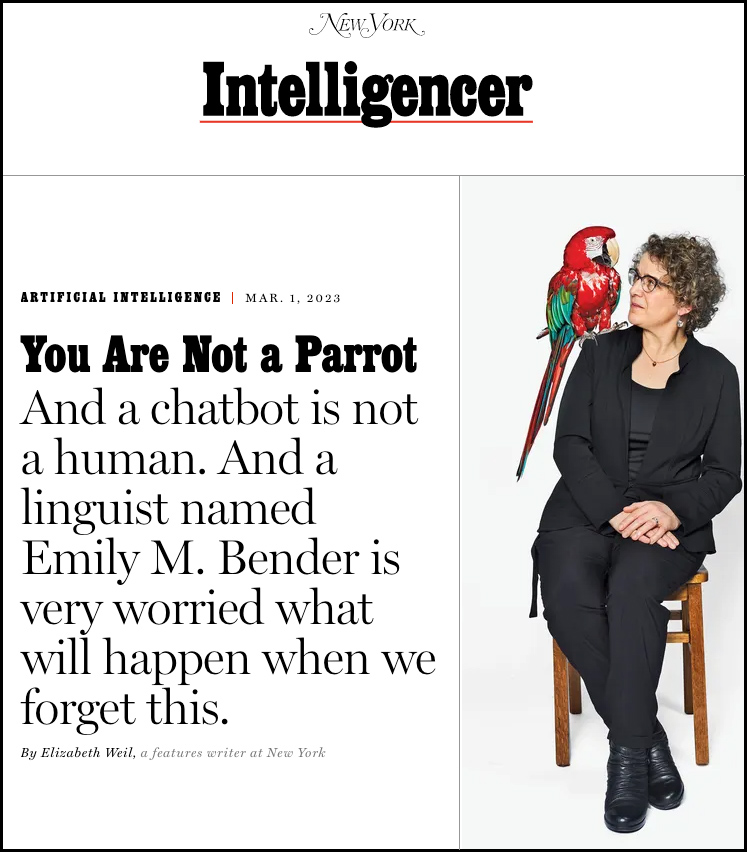
You are not a parrot — from nymag.com by Elizabeth Weil and Emily M. Bender

You Are Not a Parrot. And a chatbot is not a human. And a linguist named Emily M. Bender is very worried what will happen when we forget this.

Excerpts:

A handful of companies control what PricewaterhouseCoopers called a “$15.7 trillion game changer of an industry.” Those companies employ or finance the work of a huge chunk of the academics who understand how to make LLMs. This leaves few people with the expertise and authority to say, “Wait, why are these companies blurring the distinction between what is human and what’s a language model? Is this what we want?”

Bender knows she’s no match for a trillion-dollar game changer slouching to life. But she’s out there trying. Others are trying too. LLMs are tools made by specific people — people who stand to accumulate huge amounts of money and power, people enamored with the idea of the singularity. The project threatens to blow up what is human in a species sense. But it’s not about humility. It’s not about all of us. It’s not about becoming a humble creation among the world’s others. It’s about some of us — let’s be honest — becoming a superspecies. This is the darkness that awaits when we lose a firm boundary around the idea that humans, all of us, are equally worthy as is.


From DSC:
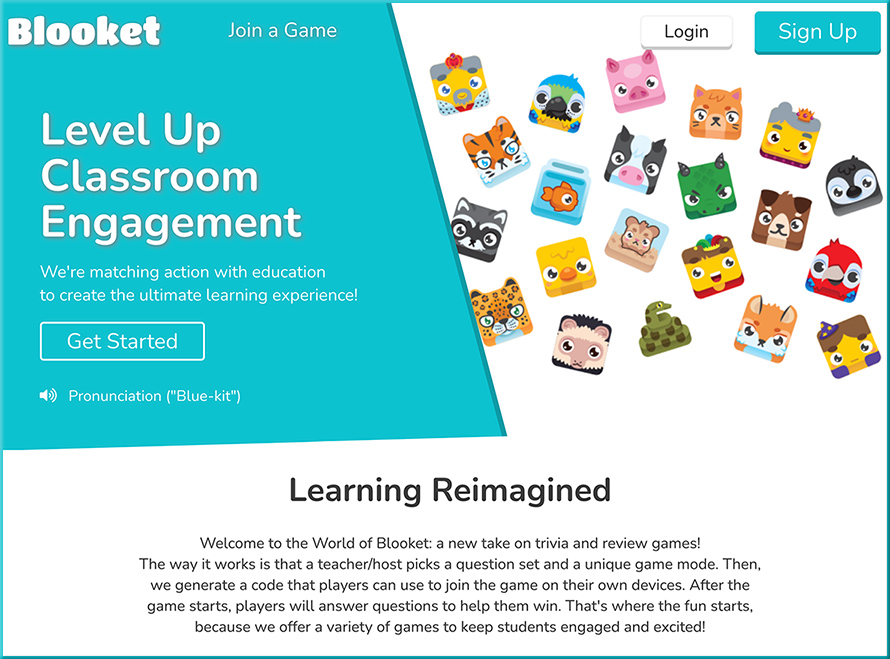
I’m told by a reliable source (i.e., our oldest daughter, who is now a third-grade teacher) that Blooket is an effective, highly-engaging tool! She said students find these online-based games to be fun. She said it’s competitive, so you may want to make a note of that as well.

Level up classroom engagement with Blooket -- online-based games that are fun and engaging for younger students


Introducing Q-Chat, the world’s first AI tutor built with OpenAI’s ChatGPT — from quizlet.com by Lex Bayer

Excerpt:

Modeled on research demonstrating that the most effective form of learning is one-on-one tutoring1, Q-Chat offers students the experience of interacting with a personal AI tutor in an effective and conversational way. Whether they’re learning French vocabulary or Roman History, Q-Chat engages students with adaptive questions based on relevant study materials delivered through a fun chat experience. Pulling from Quizlet’s massive educational content library and using the question-based Socratic method to promote active learning, Q-Chat has the ability to test a student’s knowledge of educational content, ask in-depth questions to get at underlying concepts, test reading comprehension, help students learn a language and encourage students on healthy learning habits.

Quizlet's Q-Chat -- choose a study prompt to be quizzed on the material, to deepen your understanding or to learn through a story.


Are High Schools Preparing Students for the Future? — from xqsuperschool.org; with thanks to Marisa Sergnese out on LinkedIn for this resource

Excerpt:

High school is the last stop before students enter the real world of college, career, and adult life. It’s where adolescents are supposed to develop both academically and socially, so they’ll graduate prepared for all the future has to offer. But does it?

Along with students, educators, families, and employers across the country, we at XQ believe it’s time to rethink high school to ensure that it does. We invited our readers to weigh in and here is what they told us:

Out of more than 300 participants polled, the vast majority—93 percent—said they didn’t think high schools are fully preparing students to succeed in the future.

That’s a dramatically high percentage—and it lines up with current research. A study from the Hechinger Report reveals that the vast majority of the nation’s two- and four-year colleges report enrolling students who are unprepared for college-level work. Furthermore, the National Center for Education Statistics reports that up to 65 percent of community college students take at least one remedial course.


How ChatGPT is going to change the future of work and our approach to education — from livemint.com

From DSC: 
I thought that the article made a good point when it asserted:

The pace of technological advancement is booming aggressively and conversations around ChatGPT snatching away jobs are becoming more and more frequent. The future of work is definitely going to change and that makes it clear that the approach toward education is also demanding a big shift.

A report from Dell suggests that 85% of jobs that will be around in 2030 do not exist yet. The fact becomes important as it showcases that the jobs are not going to vanish, they will just change and most of the jobs by 2030 will be new.

The Future of Human Agency — from pewresearch.org by Janna Anderson and Lee Rainie

Excerpt:

Thus the question: What is the future of human agency? Pew Research Center and Elon University’s Imagining the Internet Center asked experts to share their insights on this; 540 technology innovators, developers, business and policy leaders, researchers, academics and activists responded. Specifically, they were asked:

By 2035, will smart machines, bots and systems powered by artificial intelligence be designed to allow humans to easily be in control of most tech-aided decision-making that is relevant to their lives?

The results of this nonscientific canvassing:

    • 56% of these experts agreed with the statement that by 2035 smart machines, bots and systems will not be designed to allow humans to easily be in control of most tech-aided decision-making.
    • 44% said they agreed with the statement that by 2035 smart machines, bots and systems will be designed to allow humans to easily be in control of most tech-aided decision-making.

What are the things humans really want agency over? When will they be comfortable turning to AI to help them make decisions? And under what circumstances will they be willing to outsource decisions altogether to digital systems?

The next big threat to AI might already be lurking on the web — from zdnet.com by Danny Palmer; via Sam DeBrule
Artificial intelligence experts warn attacks against datasets used to train machine-learning tools are worryingly cheap and could have major consequences.

Excerpts:

Data poisoning occurs when attackers tamper with the training data used to create deep-learning models. This action means it’s possible to affect the decisions that the AI makes in a way that is hard to track.

By secretly altering the source information used to train machine-learning algorithms, data-poisoning attacks have the potential to be extremely powerful because the AI will be learning from incorrect data and could make ‘wrong’ decisions that have significant consequences.

Why AI Won’t Cause Unemployment — from pmarca.substack.com by Marc Andreessen

Excerpt:

Normally I would make the standard arguments against technologically-driven unemployment — see good summaries by Henry Hazlitt (chapter 7) and Frédéric Bastiat (his metaphor directly relevant to AI). And I will come back and make those arguments soon. But I don’t even think the standand arguments are needed, since another problem will block the progress of AI across most of the economy first.

Which is: AI is already illegal for most of the economy, and will be for virtually all of the economy.

How do I know that? Because technology is already illegal in most of the economy, and that is becoming steadily more true over time.

How do I know that? Because:


From DSC:
And for me, it boils down to an inconvenient truth: What’s the state of our hearts and minds?

AI, ChatGPT, Large Language Models (LLMs), and the like are tools. How we use such tools varies upon what’s going on in our hearts and minds. A fork can be used to eat food. It can also be used as a weapon. I don’t mean to be so blunt, but I can’t think of another way to say it right now.

  • Do we care about one another…really?
  • Has capitalism gone astray?
  • Have our hearts, our thinking, and/or our mindsets gone astray?
  • Do the products we create help or hurt others? It seems like too many times our perspective is, “We will sell whatever they will buy, regardless of its impact on others — as long as it makes us money and gives us the standard of living that we want.” Perhaps we could poll some former executives from Philip Morris on this topic.
  • Or we will develop this new technology because we can develop this new technology. Who gives a rat’s tail about the ramifications of it?


Leaders who practice foresight stay ahead of the innovation curve — from tfsx.com

Excerpt (emphasis DSC):

According to famed futurist Richard Slaughter, foresight (also known as futures thinking or futuring) is “the ability to create and maintain a high-quality, coherent and functional forward view, and to use the insights arising in useful organizational ways.”2 In other words, foresight is a way to examine the paths the future might take, using qualitative and quantitative metrics, and then use the insights gained from this analysis to navigate our uncertain and changing world with purpose.

“The art and science of futuring is fast becoming a necessary skill, where we read signals, see trends and ruthlessly test our own assumptions…Like the ability to make a budget or think critically, it’s a skill that anyone who has to make long-range decisions should, and can, acquire.”3

From DSC:
The development of these futuring skills needs to begin in K-12 and continue into vocational programs as well as in college.


Also relevant/see:

The future isn’t what it used to be: Here’s how strategic foresight can help — from weforum.org

Excerpt (emphasis DSC):

  • Three-quarters (75%) of organizations are not prepared for the pace of change in and around their industry.
  • Across sectors, we all need to rethink how we operate to both survive and thrive in the future.
  • Foresight can help individuals and organizations be more future prepared, innovative and agile.

The exponential pace of change


The Surging World of Work [Gusky]

The Surging World of Work — from gettingsmart.com by Norton Gusky

Key Points

  • World of Work (WoW) is a career initiative that started in the Cajon Valley Union School District, San Diego CA.
  • There are now districts across the United States who are using this model to prepare students in K-12 for their future directions.

Excerpt:

Philip Martell, the Superintendent of River Valley looks at the WoW movement from a Workforce Development perspective. According to Mr. Martell, Superintendent of River Valley, “The WoW framework makes a difference for learners because it cultivates career development and paths to gainful employment K-12.  WoW gives our River Valley students exposure to career options at an early age. Students have the opportunity to learn about careers, receive hands-on experiences, meet professionals, and practice skills needed for that career. The goal is for our River Valley students to have a personalized career experience. We currently use the WoW/Beable framework along with the RIASEC model which allows students to explore different careers to see what their interests are so that we can build career opportunities within their learning path K-12.”


Mixed media online project serves as inspiration for student journalists — from jeadigitalmedia.org by Michelle Balmeo

Excerpt:

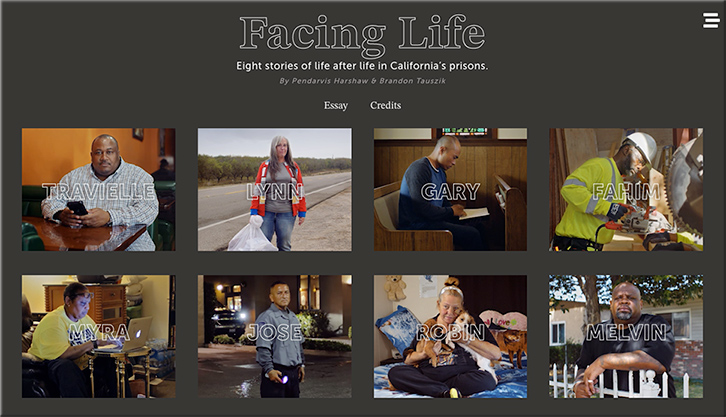
If you’re on the hunt for inspiration, go check out Facing Life: Eight stories of life after life in California’s prisons.

This project, created by Pendarvis Harshaw and Brandon Tauszik, has so many wonderful and original storytelling components, it’s the perfect model for student journalists looking for ways to tell important stories online.

Facing Life -- eight stories of life after life in California's prisons


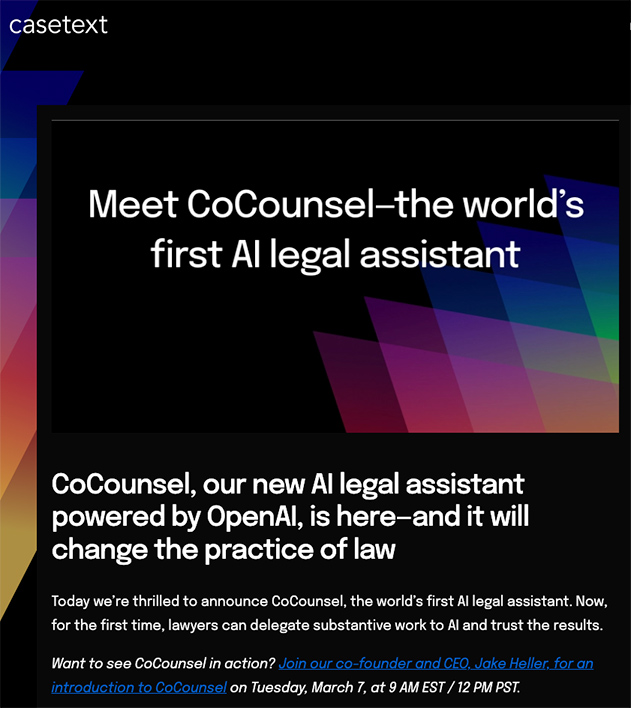
Meet CoCounsel — “the world’s first AI legal assistant” — from casetext.com

Excerpt:

As we shared in our official press release, we’ve been collaborating with OpenAI to build CoCounsel on their latest, most advanced large language model. It was a natural fit between our two teams. OpenAI, the world leader in generative AI, selected Casetext to create a product powered by its technology that was suitable for professional use by lawyers. Our experience leading legal tech since 2013 and applying large language models to the law for over five years made us an ideal choice.

Meet CoCounsel -- the world's first AI legal assistant -- from casetext

From DSC:
I look forward to seeing more vendors and products getting into the legaltech space — ones that use AI and other technologies to make significant progress on the access to justice issues that we have here in the United States.


Using Stories to Support Mathematical Thinking in Young Students — from edutopia.org by Kathleen Crawford-McKinney and Asli Özgün-Koca
Children’s books often contain valuable lessons that can help young students begin to think like mathematicians.

Excerpt:

Many students and teachers view math as a subject for numbers and computation, instead of one that benefits from discussion and interpretation. Based on our experience as children’s literature and mathematics teacher-educators, we’ve found that providing the context to mathematical problems through literature supports students’ learning—children’s books can be used to integrate math and literacy and to provide context for math.

Also from edutopia.org, see:

Things Professional Writers Do That Students Should Too — by Andrew Boryga
Everyone gets stumped when they begin a new writing project—even the professionals. Here are some strategies the world’s best writers use to push past the doldrums and generate higher-quality writing.

Excerpt:

Asking students to read aloud, while focusing on things like tone, sentence structure, and cadence, is a simple, effective, and researched-backed way to improve their writing—particularly during the revision stage.

That insight got us thinking about other easy strategies—used by real pros—that students can also employ to improve their writing.

The Power of a Compliment — by Scott Wisniewski
A project that invites students to anonymously compliment their classmates and teachers has improved the culture at one high school.

Excerpt:

A small act of kindness can change the complexion of someone’s day. Giving someone a compliment, telling them how much they mean to you, or just sharing words of encouragement can change a person’s overall outlook.

 
© 2025 | Daniel Christian