Fostering sustainable learning ecosystems — from linkedin.com by Patrick Blessinger

Excerpt (emphasis DSC):

Learning ecosystems
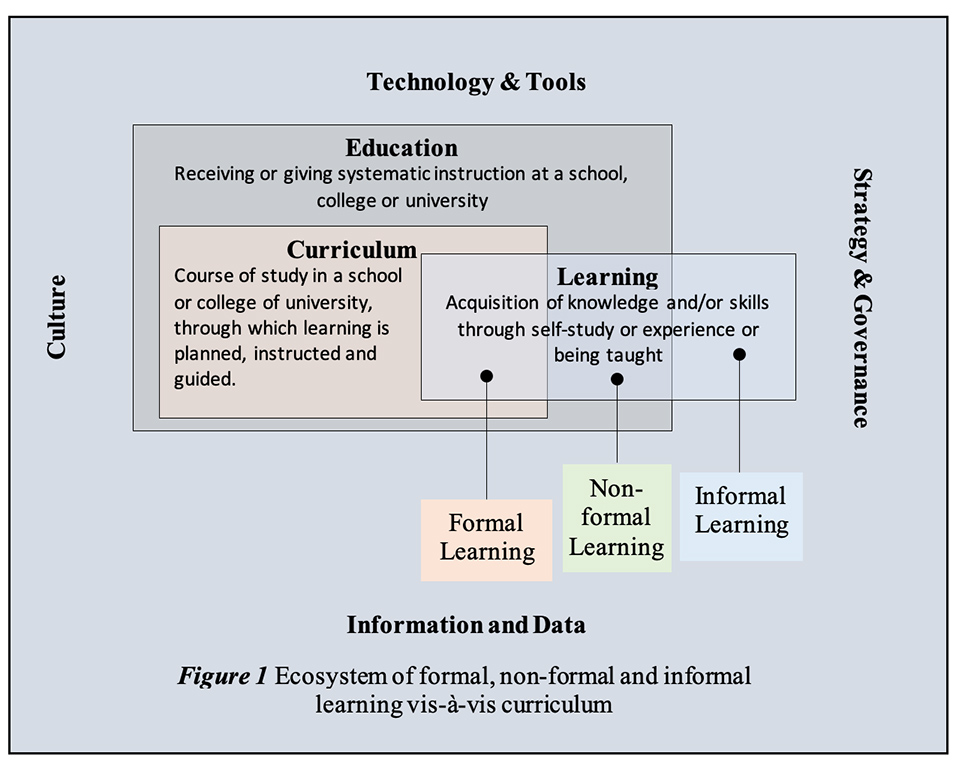
As today’s global knowledge society becomes increasingly interconnected and begins to morph into a global learning society, it is likely that formal, nonformal, and informal learning will become increasingly interconnected. For instance, there has been an explosion of new self-directed e-learning platforms such as Khan Academy, Open Courseware, and YouTube, among others, that help educate billions of people around the world.

A learning ecosystem includes all the elements that contribute to a learner’s overall learning experience. The components of a learning ecosystem are numerous, including people, technology platforms, knowledge bases, culture, governance, strategy, and other internal and external elements that have an impact on learning. Therefore, moving forward, it is crucial to integrate learning across formal, nonformal, and informal learning processes and activities in a more strategic way.

Learning ecosystems -- formal, informal, and nonformal sources of learning will become more tightly integrated in the future


What’s It Like to Leave the Classroom for a Job in Edtech? — from edsurge.com by Nadia Tamez-Robledo

Excerpt:

Our recent analysis of teacher representation in edtech leadership revealed that former educators held a variety of top roles in the companies we sampled, heading teams that handled pedagogy, curriculum, product, marketing and sales.

Former educators told us they had moved on to become UX designers, part of sales teams and founders of their own edtech companies.

Transitioning to edtech would have been much harder about five years ago, she believes, because there weren’t as many resources available to help teachers get started. Now job seekers can turn to podcasts or TikTok’s #transitioningteachers community for advice on approaching the edtech job search.


Deuteronomy 7:9 — from biblegateway.com

Know therefore that the Lord your God is God; he is the faithful God, keeping his covenant of love to a thousand generations of those who love him and keep his commandments.

Leviticus 19:35-36 NIV — from bible.com

Do not use dishonest standards when measuring length, weight or quantity. Use honest scales and honest weights, an honest ephah and an honest hin. I am the LORD your God, who brought you out of Egypt.


Working To Incorporate Legal Technology Into Your Practice Isn’t Just A Great Business Move – It’s Required — from abovethelaw.com by Chris Williams

Excerpt:

According to Model Rule 1.1 of the ABA Model Rules of Professional Conduct: “A lawyer shall provide competent representation to a client. Competent representation requires the legal knowledge, skill, thoroughness and preparation reasonably necessary for the representation.”

In 2012, the ABA House of Delegates voted to amend Comment 8 to Model Rule 1.1 to include explicit guidance on lawyers’ use of technology.

If Model Rule 1.1 isn’t enough of a motivator to dip your feet in legal tech, maybe paying off that mortgage is. As an extra bit of motivation, it may benefit you to pin the ABA House of Delegate’s call to action on your motivation board.

Also relevant/see:

While courts still use fax machines, law firms are using AI to tailor arguments for judges — from cbc.ca by Robyn Schleihauf

Excerpt (emphasis DSC):

What is different with AI is the scale by which this knowledge is aggregated. While a lawyer who has been before a judge three or four times may have formed some opinions about them, these opinions are based on anecdotal evidence. AI can read the judge’s entire history of decision-making and spit out an argument based on what it finds. 

The common law has always used precedents, but what is being used here is different — it’s figuring out how a judge likes an argument to be framed, what language they like using, and feeding it back to them.

And because the legal system builds on itself — with judges using prior cases to determine how a decision should be made in the case before them — these AI-assisted arguments from lawyers could have the effect of further entrenching a judge’s biases in the case law, as the judge’s words are repeated verbatim in more and more decisions. This is particularly true if judges are unaware of their own biases.

Cutting through the noise: The impact of GPT/large language models (and what it means for legal tech vendors) — from legaltechnology.com by Caroline Hill

Excerpts:

Given that we have spent time over the past few years telling people not to get to overestimate the capability of AI, is this the real deal?

“Yeah, I think it’s the real thing because if you look at why legal technologies have not had the adoption rate historically, language has always been the problem,” Katz said. “Language has been hard for machines historically to work with, and language is core to law. Every road leads to a document, essentially.”

Katz says: “There are two types of things here. They would call general models GPT one through four, and then there’s domain models, so a legal specific large language model.

“What we’re going to see are large-ish, albeit not the largest model that’s heavily domain tailored is going to beat a general model in the same way that a really smart person can’t beat a super specialist. That’s where the value creation and the next generation of legal technology is going to live.”

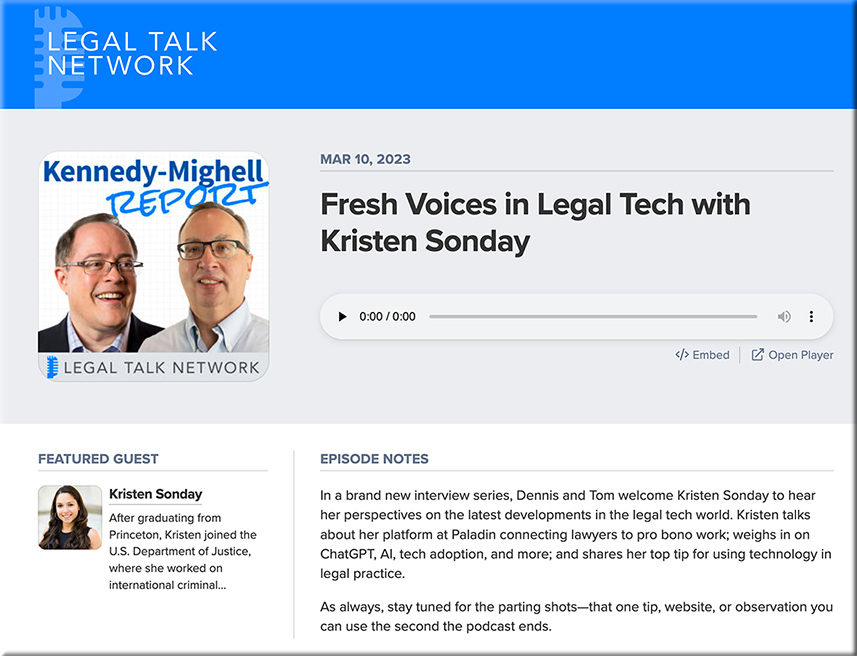
Fresh Voices in Legal Tech with Kristen Sonday — from legaltalknetwork.com by Dennis Kennedy and Tom Mighell with Kristen Sonday

In a brand new interview series, Dennis and Tom welcome Kristen Sonday to hear her perspectives on the latest developments in the legal tech world.


5 Ideas To Incorporate AI In Your eLearning Course — from elearningindustry.com by Christopher Pappas

Summary: 

Artificial Intelligence is now taking the world of learning by storm. Here are 5 ways you can successfully incorporate AI in online learning.

Let’s say you’re training sales reps on handling different customer personalities. You can use this technology to diversify your branching scenarios so that trainees can also speak and not only type. This way, not only will the training become more realistic, but you’ll also be able to assess and work on additional elements, such as tone of voice, volume, speech tempo, etc.


Transfers From Community College Continue to Fall — from insidehighered.com by Sara Weissman
Despite the decline in transfers, a new report also says six-year college completion rates among transfer students improved.

Excerpt:

Transfers between community colleges and four-year institutions continued to drop last fall, an ongoing trend since the onset of the COVID-19 pandemic, according to a new report from the National Student Clearinghouse Research Center. But the report also contains some good news, including that six-year college completion rates among transfer students improved, despite the disruptive nature of the pandemic.

“Upward transfer has continued to decline pretty steadily at this point in every year since the pandemic,” Shapiro said during a media briefing Wednesday. “This suggests that baccalaureate attainment is beginning to appear increasingly out of reach for community college students,” particularly for students enrolled in urban and suburban community colleges, which saw steeper declines in transfers to universities than community colleges in towns or rural areas.


These 20 jobs are the most “exposed” to AI, ChatGPT, researchers say — from cbsnews-com.cdn.ampproject.org

Excerpt:

New research examining the effects of language modeling AI like ChatGPT on different occupations and industries finds that certain jobs, like telemarketers and teachers, are more “exposed” to the technology than others, such as psychologists and counselors.

Also relevant/see:

Must read: the 100 most cited AI papers in 2022  — from zeta-alpha.com by Sergi Castella i Sapé; with titles, citation counts, and affiliations.

How will Language Modelers like ChatGPT Affect Occupations and Industries? — from papers.ssrn.com by Edward W. Felten, Manav Raj, and  Robert Seamans


An inside look at a 5th grade classroom using ChatGPT — from abcnews.go.com
Kentucky teacher Donnie Piercey uses ChatGPT with his fifth frade students.

Excerpt:

“Like every other educator, I had that concern. Is this something that students are only going to use to cheat? So I started to think about like, ‘OK, what role is AI — artificial intelligence — going to play in the classroom?'” Piercey, the 2021 Kentucky Teacher of the Year, told “Good Morning America.” “And the more that I thought about it, I realized that there’s a lot more good that can come about through AI as opposed to negative things that can come in the classroom.”


The Librarian: Can we prompt ChatGPT to generate reliable references? — from drphilippahardman.substack.com by Dr. Philippa Hardman

Lessons Learned

  • Always assume that ChatGPT is wrong until you prove otherwise.
  • Validate everything (and require your students to validate everything too).
  • Google Scholar is a great tool for validating ChatGPT outputs rapidly.
  • The prompt works better when you provide a subject area, e.g. visual anthropology, and then a sub-topic, e.g. film making.
  • Ignore ChatGPT’s links – validate by searching for titles & authors, not URLs.
  • Use intentional repetition, e.g. of Google Scholar, to focus ChatGPT’s attention.
  • Be aware: ChatGPT’s outputs end at 2021. You need to fill in the blanks since then.
 

13 Formative Assessments That Inspire Creativity — from edutopia.org by Paige Tutt
Sometimes mixing in formative assessments that go a step beyond exit slips and low-stakes quizzes can inject some fun—and creativity—into learning.

Excerpt:

Quick checks for understanding aren’t new, of course, but when time allows, occasionally injecting an element of creativity into formative assessments can deliver unexpected benefits. For example—regardless of a student’s artistic talent—research suggests that drawing the information they’re learning can increase student recall by nearly double. And when kids are encouraged to tap into their imagination to show what they know, they tend to ask more innovative questions of themselves, brainstorm fresh solutions to problems, and synthesize material in original and surprising ways.

Here are 13 formative assessment strategies that lean into creativity—inspired by the work of several Edutopia contributors, and from Finley’s handy list of quick checks for understanding.

Also see:

Is This Elementary School Near Pittsburgh the Future of Education? — from smithsonianmag.com by Kellie B. Gormly; with thanks to Tom Vander Ark out on Twitter for this resource
Ehrman Crest Elementary and Middle School is an innovative blend of children’s museum and classroom

A winding ramp curls up the center of the school. Laura Peters/CannonDesign

Excerpt (emphasis DSC):

At Seneca Valley’s Ehrman Crest Elementary and Middle School, K-6 students are benefiting from an unusual collaboration. School leaders, architects and the Children’s Museum of Pittsburgh teamed up on the $63 million project, which opened in August 2022 after 790 construction days. With a student capacity of 1,400, the 200,000-square-foot facility takes a novel approach, forgoing the traditional school design for the playful, interactive, colorful elements of a children’s museum. Time magazine declared it one of the “Best Inventions of 2022.”

Matilda McQuaid, acting curatorial director at Cooper Hewitt, Smithsonian Design Museum in New York City, says this is the first time she has heard of a museum collaborating with a school to create a new environment from the ground up.

From DSC:
I love this collaboration — a children’s museum and a school district! — and the energy and creativity throughout this learning space!

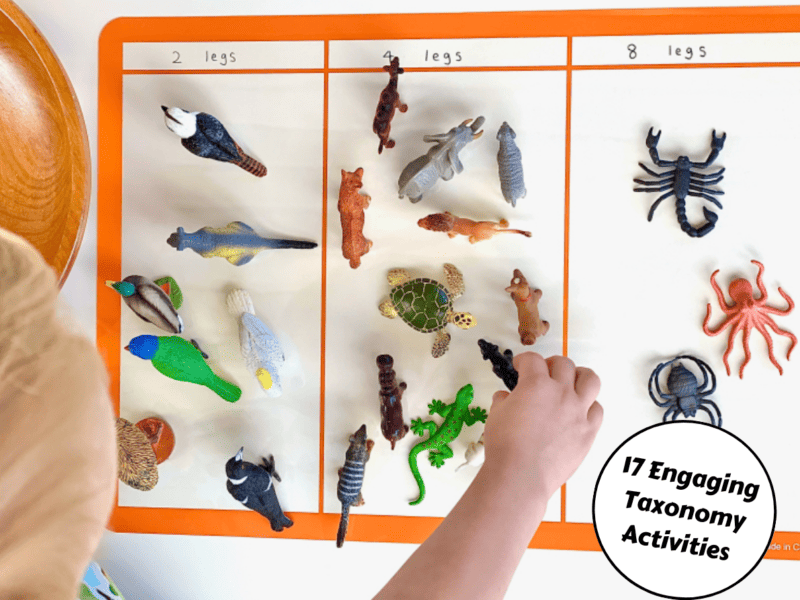
17 Engaging Taxonomy Activities — from teachingexpertise.com

17 Engaging Taxonomy Activities

Students Need More Exercise. Here’s How to Add Activity Without Disrupting Learning — from edweek.org by Sarah D. Sparks

5 Ways to Inspire a Love for Learning in Students — from edweek.org by Elizabeth Heubeck


ChatGPT is Everywhere — from chronicle.com by Beth McMurtrie
Love it or hate it, academics can’t ignore the already pervasive technology.

Excerpt:

Many academics see these tools as a danger to authentic learning, fearing that students will take shortcuts to avoid the difficulty of coming up with original ideas, organizing their thoughts, or demonstrating their knowledge. Ask ChatGPT to write a few paragraphs, for example, on how Jean Piaget’s theories on childhood development apply to our age of anxiety and it can do that.

Other professors are enthusiastic, or at least intrigued, by the possibility of incorporating generative AI into academic life. Those same tools can help students — and professors — brainstorm, kick-start an essay, explain a confusing idea, and smooth out awkward first drafts. Equally important, these faculty members argue, is their responsibility to prepare students for a world in which these technologies will be incorporated into everyday life, helping to produce everything from a professional email to a legal contract.

“Artificial-intelligence tools present the greatest creative disruption to learning that we’ve seen in my lifetime.”

Sarah Eaton, associate professor of education at the University of Calgary


Artificial intelligence and academic integrity, post-plagiarism — from universityworldnews.com Sarah Elaine Eaton; with thanks to Robert Gibson out on LinkedIn for the resource

Excerpt:

The use of artificial intelligence tools does not automatically constitute academic dishonesty. It depends how the tools are used. For example, apps such as ChatGPT can be used to help reluctant writers generate a rough draft that they can then revise and update.

Used in this way, the technology can help students learn. The text can also be used to help students learn the skills of fact-checking and critical thinking, since the outputs from ChatGPT often contain factual errors.

When students use tools or other people to complete homework on their behalf, that is considered a form of academic dishonesty because the students are no longer learning the material themselves. The key point is that it is the students, and not the technology, that is to blame when students choose to have someone – or something – do their homework for them.

There is a difference between using technology to help students learn or to help them cheat. The same technology can be used for both purposes.

From DSC:
These couple of sentences…

In the age of post-plagiarism, humans use artificial intelligence apps to enhance and elevate creative outputs as a normal part of everyday life. We will soon be unable to detect where the human written text ends and where the robot writing begins, as the outputs of both become intertwined and indistinguishable.

…reminded me of what’s been happening within the filmmaking world for years (i.e., such as in Star Wars, Jurrasic Park, and many others). It’s often hard to tell what’s real and what’s been generated by a computer.
 

What Can A.I. Art Teach Us About the Real Thing? — from newyorker.com by Adam Gopnik; with thanks to Mrs. Julie Bender for this resource
The range and ease of pictorial invention offered by A.I. image generation are startling.

Excerpts:

The dall-e 2 system, by setting images free from neat, argumentative intentions, reducing them to responses to “prompts,” reminds us that pictures exist in a different world of meaning from prose.

And the power of images lies less in their arguments than in their ambiguities. That’s why the images that dall-e 2 makes are far more interesting than the texts that A.I. chatbots make. To be persuasive, a text demands a point; in contrast, looking at pictures, we can be fascinated by atmospheres and uncertainties.

One of the things that thinking machines have traditionally done is sharpen our thoughts about our own thinking.

And, so, “A Havanese at six pm on an East Coast beach in the style of a Winslow Homer watercolor”:

A Havanese at six pm on an East Coast beach in the style of a Winslow Homer watercolor
Art work by DALL-E 2 / Courtesy OpenAI

It is, as simple appreciation used to say, almost like being there, almost like her being there. Our means in art are mixed, but our motives are nearly always memorial. We want to keep time from passing and our loves alive. The mechanical collision of kinds first startles our eyes and then softens our hearts. It’s the secret system of art.


FBI, Pentagon helped research facial recognition for street cameras, drones — from washingtonpost.com by Drew Harwell
Internal documents released in response to a lawsuit show the government was deeply involved in pushing for face-scanning technology that could be used for mass surveillance

Excerpt:

The FBI and the Defense Department were actively involved in research and development of facial recognition software that they hoped could be used to identify people from video footage captured by street cameras and flying drones, according to thousands of pages of internal documents that provide new details about the government’s ambitions to build out a powerful tool for advanced surveillance.

From DSC:
This doesn’t surprise me. But it’s yet another example of opaqueness involving technology. And who knows to what levels our Department of Defense has taken things with AI, drones, and robotics.


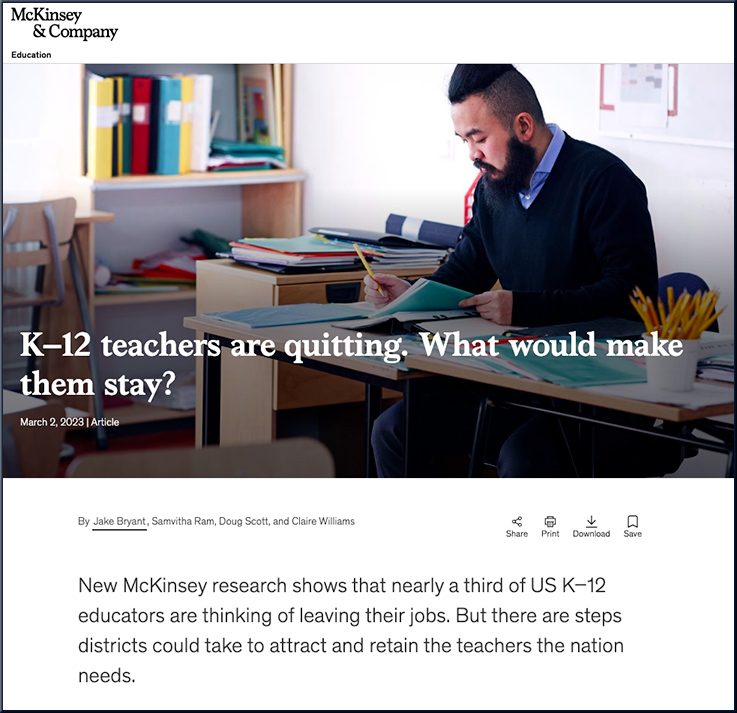
K–12 teachers are quitting. What would make them stay? — by McKinsey & Company

K-12 teachers are quitting. What would make them stay? A teacher sits behind his desk, grading papers.

Excerpts:

When school districts can’t attract and retain enough teachers, students suffer. And the COVID-19 pandemic has only compounded the nation’s education talent challenges. To improve our understanding of what makes K–12 teachers want to stay, leave, or return to their jobs, McKinsey surveyed more than 1,800 US educators, school leaders, and school mental health professionals at the end of the 2021–22 school year (see sidebar “About the research”). Approximately one-third of respondents said they planned to leave their role before the next school year began. That equates to roughly 900,000 teachers across the nation. Our research also revealed that this pending turnover could further exacerbate inequality, hampering efforts to create more resilient and equitable K–12 education systems.2 While this stated intention to leave has historically not panned out, it suggests an unhealthiness to the profession that administrators should be mindful of.

Teachers who are thinking of leaving cite compensation, unreasonable expectations, and an inability to protect their well-being as top motivators.

 
© 2025 | Daniel Christian