How Easy Is It/Will It Be to Use AI to Design a Course? — from wallyboston.com by Wally Boston

Excerpt:

Last week I received a text message from a friend to check out a March 29th Campus Technology article about French AI startup, Nolej. Nolej (pronounced “Knowledge”) has developed an OpenAI-based instructional content generator for educators called NolejAI.

Access to NolejAI is through a browser. Users can upload video, audio, text documents, or a website url. NolejAI will generate an interactive micro-learning package which is a standalone digital lesson including content transcript, summaries, a glossary of terms, flashcards, and quizzes. All the lesson materials generated is based upon the uploaded materials.


From DSC:
I wonder if this will turn out to be the case:

I am sure it’s only a matter of time before NolejAI or another product becomes capable of generating a standard three credit hour college course. Whether that is six months or two years, it’s likely sooner than we think.


Also relevant/see:

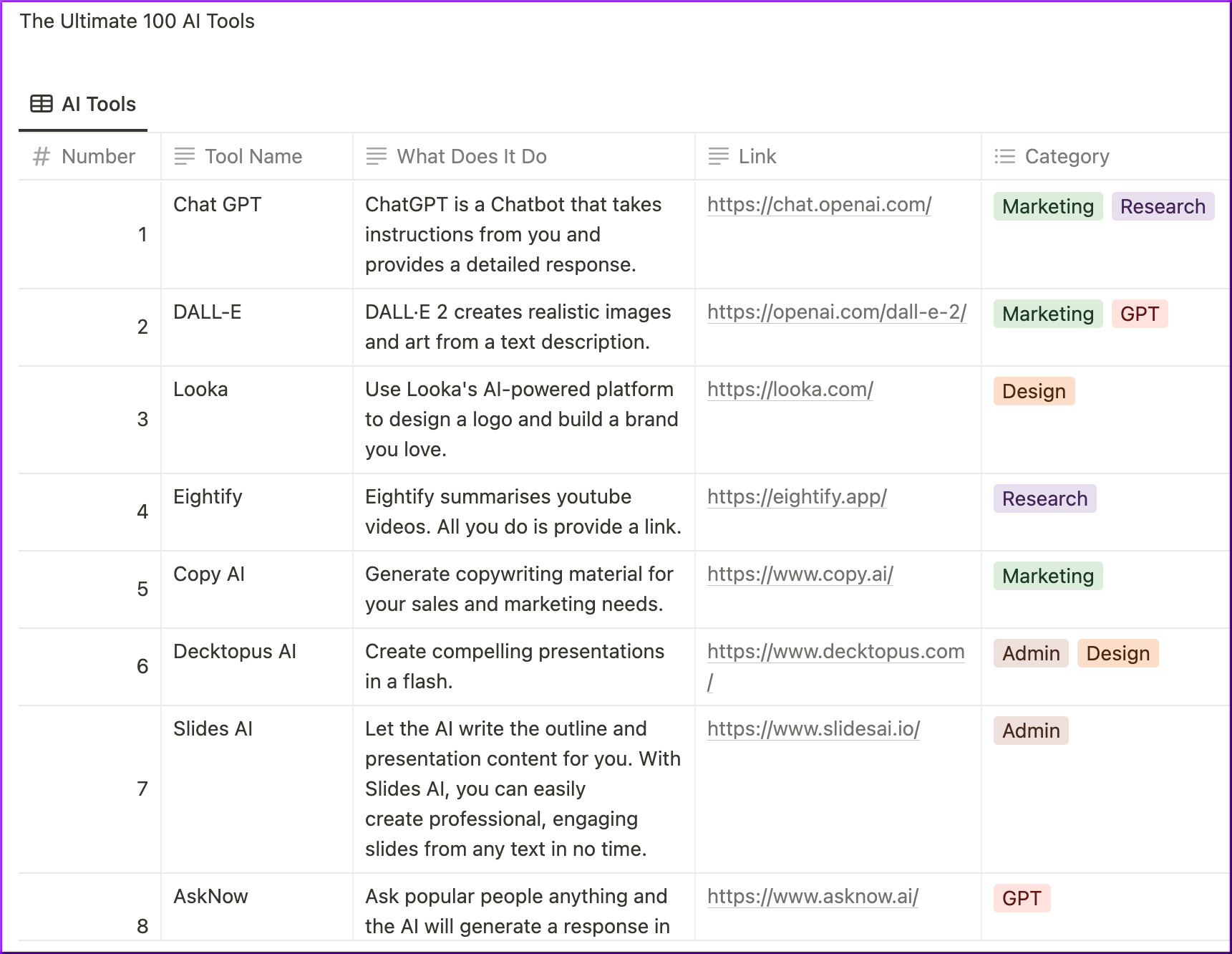
The Ultimate 100 AI Tools

The Ultimate 100 AI Tools -- as of 4-12-23


From DSC:
Before we get to Scott Belsky’s article, here’s an interesting/related item from Tobi Lutke:


Our World Shaken, Not Stirred: Synthetic entertainment, hybrid social experiences, syncing ourselves with apps, and more. — from implications.com by Scott Belsky
Things will get weird. And exciting.

Excerpts:

Recent advances in technology will stir shake the pot of culture and our day-to-day experiences. Examples? A new era of synthetic entertainment will emerge, online social dynamics will become “hybrid experiences” where AI personas are equal players, and we will sync ourselves with applications as opposed to using applications.

A new era of synthetic entertainment will emerge as the world’s video archives – as well as actors’ bodies and voices – will be used to train models. Expect sequels made without actor participation, a new era of ai-outfitted creative economy participants, a deluge of imaginative media that would have been cost prohibitive, and copyright wars and legislation.

Unauthorized sequels, spin-offs, some amazing stuff, and a legal dumpster fire: Now lets shift beyond Hollywood to the fast-growing long tail of prosumer-made entertainment. This is where entirely new genres of entertainment will emerge including the unauthorized sequels and spinoffs that I expect we will start seeing.


Also relevant/see:

Digital storytelling with generative AI: notes on the appearance of #AICinema — from bryanalexander.org by Bryan Alexander

Excerpt:

This is how I viewed a fascinating article about the so-called #AICinema movement.  Benj Edwards describes this nascent current and interviews one of its practitioners, Julie Wieland.  It’s a great example of people creating small stories using tech – in this case, generative AI, specifically the image creator Midjourney.

Bryan links to:

Artists astound with AI-generated film stills from a parallel universe — from arstechnica.com by Benj Edwards
A Q&A with “synthographer” Julie Wieland on the #aicinema movement.

An AI-generated image from an #aicinema still series called Vinyl Vengeance by Julie Wieland, created using Midjourney.


From DSC:
How will text-to-video impact the Learning and Development world? Teaching and learning? Those people communicating within communities of practice? Those creating presentations and/or offering webinars?

Hmmm…should be interesting!


1 Peter 2:24

“He himself bore our sins” in his body on the cross, so that we might die to sins and live for righteousness; “by his wounds you have been healed.”
 

The Future of Teaching is Here — from samchaltain.substack.com by Sam Chaltain

Excerpts (emphasis DSC):

It’s not sexy, but I feel like Sal Khan’s recent video introducing his Academy’s GPT-fueled AI tutor augurs the future of the teaching profession — and not just at Khan Academy.

The tutor is already fully capable of offering personalized feedback, hints and suggestions for just about any topic for which there are already clearly established answers — from solving math equations with parentheses to digesting John Locke’s political philosophy.

But now we’ve entered a new chapter — dare I say, a Technological Singularity (20 years early) — one in which Chat-GPT in particular, and the daily flood of AI tools more generally, has changed the nature of the teacher/student relationship even more irrevocably than before.

As a result, from this day forward, the job of a teacher REALLY needs to stop being about transmission.

So what should it start being instead?

In which case, the future of teaching is not about transmission, but it is about the other trans- words: transmedia exploration, transdisciplinary weaving, transcultural understanding, and, yes, personal and societal transformation.


ChatGPT is the hottest new job skill that can help you get hired, according to HR experts — from cnbc.com by Morgan Smith

Excerpt:

The hottest new job qualification could be how well you work with a chatbot.

ChatGPT is the latest in-demand job skill companies are hiring for, according to recent research from the career site Resume Builder.

Since its public unveiling in late 2022, ChatGPT has been quickly adopted by companies like Microsoft and Slack which are incorporating the chatbot into their products or using it to work more efficiently.

“Hiring managers care less about whether or not you use ChatGPT, what’s more important is what you can accomplish with it,” says Juan Pablo Gonzalez, a senior client partner at the global consulting firm Korn Ferry. 


How to Create Compelling Writing Assignments in a ChatGPT Age — from chronicle.com by James M. Lang
A recent book offers a road map to new kinds of assignments to inspire your students to write.

Excerpt:

A few days after I returned from the conference, I received a book in the mail that affirmed my newfound sense that 2023 has the potential to usher in an age of creative thinking about teaching and writing: Jessica Singer Early’s Next Generation Genres: Teaching Writing for Civic and Academic Engagement. Although her book doesn’t directly address ChatGPT, it offers exactly the kind of innovative ideas we need as we wrestle — or dance — with the implications of artificial intelligence for college teaching.

Clearly Jessica Singer Early has joined the leaning-into camp, seeing artificial intelligence as another invitation to reinvent ourselves in the classroom — just as she encourages readers to do in Next Generation Genres, and as this teacher plans to do in the fall.


AI and art: how recent court cases are stretching copyright principles — from theartnewspaper.com by Hetty Gleave and Eddie Powell
Two specialists from a leading London law firm analyse the issues raised in recent lawsuits relating to the use of artwork images by tech companies in order to “train” their artificial intelligence tools

Excerpt:

The tension between the opportunities presented by new technology and the need for artists to be able to control the use of their own works and derive revenue from them is all too familiar. Inevitably, cases and/or legislation will draw an artificial line between what is fair and what is not.

Getty Images is suing Stability in both the USA and the UK for the alleged use of millions of pictures from Getty’s library to train Stable Diffusion. In the USA, Getty is reportedly claiming damages of $2 trillion!


Who Will Be the Academic Prompt Engineering Experts? — from wallyboston.com by Wally Boston

Excerpts:

As I mentioned in a post a month ago, prompt engineering is the term of art for prompting a generative AI tool like ChatGPT-4 to produce an answer to a question, analysis of a problem, or an essay about a particular topic.

It’s ironic that the “experts” providing prompt engineering courses are not academics. I happen to believe that there are academics mastering prompt engineering as I write this.

Last week, I wrote about generative AI tools that could be used to decrease the instructional design time required to build a college course. I also wrote an article about Villanova University professor Noah Barsky’s opinion piece suggesting that all MBA curriculums should be rewritten to teach their students how to utilize AI tools in their professions. Business schools with outdated curriculums will not prepare their graduates for businesses expecting them to be able to master state of the art AI tools.


Also relevant/see:

From DSC:
Read that again…

“In June, when students are finishing up their classes, they may be punished by their instructors for using AI as a writing tool. But in July, when they’re out on the job market, they can be punished by their employers or potential employers for not knowing how to use AI as a writing tool.”


Also relevant/see:

11 Tips to Take Your ChatGPT Prompts to the Next Level — from wired.com by David Nield
Sure, anyone can use OpenAI’s chatbot. But with smart engineering, you can get way more interesting results.

Excerpts:

You don’t have to do all the typing yourself when it comes to ChatGPT. Copy and paste is your friend, and there’s no problem with pasting in text from other sources.

Another way to improve the responses you get from ChatGPT is to give it some data to work with before you ask your question.

Your answers can be seriously improved if you give ChatGPT some ingredients to work with before asking for a response.


Fastcase, vLex merger accelerates investment into legal AI — from reuters.com by Sara Merken

Excerpts (emphasis DSC):

(Reuters) – As artificial intelligence pushes deeper into the legal industry, Fastcase and vLex are merging in a deal the legal research companies said [on 4/4/23] will speed up the creation of AI tools for lawyers.

The merger creates a law library that is “the biggest legal data corpus ever assembled,” the companies said. The new company will have more than one billion legal documents from more than 100 countries, including judicial opinions, statutes, regulations, briefs, pleadings and legal news articles, they said.


Also see:

In Major Legal Tech Deal, vLex and Fastcase Merge, Creating A Global Legal Research Company, Backed By Oakley Capital and Bain Capital — from lawnext.com by Bob Ambrogi

Excerpt:

In a deal that will reshape the legal research and legal technology landscape on a global basis and threaten the longstanding “Wexis” legal research duopoly, the companies vLex and Fastcase today announced that they have merged into a single entity that they say will have the world’s largest subscriber base of lawyers and law firms and a legal research library of more than 1 billion documents from more than 100 countries.


Speaking about the legal realm and innovations, also see:

On LawNext: 15 Years, 15 Lessons: Clio Founder Jack Newton On What He’s Learned About Building a Successful Company — from lawnext.com by Bob Ambrogi and Jack Newton

Excerpt:

As Clio marks its 15th anniversary in 2023, Newton sat down with me to share 15 lessons he has learned along the way regarding what makes a successful company and a successful leader. He also reminisces about the early days of starting Clio and his early successes and challenges. Notably, he and Gauvreau founded Clio in the middle of the Great Recession, and one of the lessons he shares in this episode is his belief that a recession is a great time to build a company.

For anyone who has founded or is thinking of founding a legal tech startup, this episode is a must-listen. Even for those who are not tech founders, but law firm founders, many of Newton’s lessons apply.


A museum without screens: The Media Museum of Sound and Vision in Hilversum — from inavateonthenet.net

Excerpt:

Re-opened to the public last month after five years of planning and two-and-a-half years of renovations, The Media Museum of Sound and Vision in Hilversum in the Netherlands, is an immersive experience exploring modern media. It’s become a museum that continuously adapts to the actions of its visitors in order to reflect the ever-changing face of media culture.

How we consume media is revealed in five zones in the building: Share, Inform, Sell, Tell and Play. The Media Museum includes more than 50 interactives, with hundreds of hours of AV material and objects from history. The experience uses facial recognition and the user’s own smartphone to make it a personalised museum journey for everyone.


A portion of the Media Museum in Hilversum, the Netherlands
Photo from Mike Bink

From DSC:
Wow! There is some serious AV work and creativity in the Media Museum of Sound and Vision!


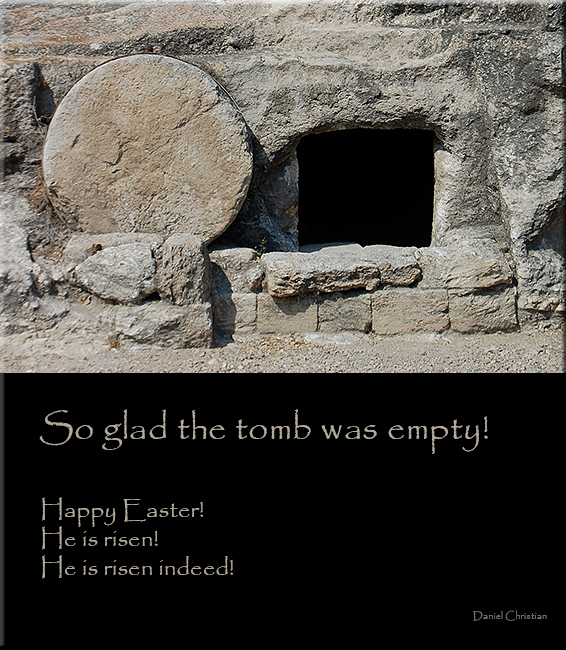
To those who celebrate it: Happy Easter to you! He is risen! He is risen indeed!


© 2025 | Daniel Christian