From DSC: Don’t rule out tvOS for some powerful learning experiences / new affordances. The convergence of the television, the telephone, and the computer continues…and is now coming into your home. Trainers, faculty members, teachers, developers, and others will want to keep an eye on this space. The opportunities are enormous, especially as second screen-based apps and new forms of human computer interfaces (HCI) unfold.
The following items come to my mind:
Online-based communities of practice. Virtual reality, virtual tutoring. Intelligent systems. Artificial intelligence. Global learning. 24×7, lifelong learning. Career development. Flipping the classroom. Homeschooling. Learning hubs. Online learning. Virtual schools. Webinars on steroids.
With the reach of these powerful technologies (that continue to develop), I would recommend trying to stay informed on what’s happening in the world of tvOS-based apps in the future. Towards that end, below are some items that might help.
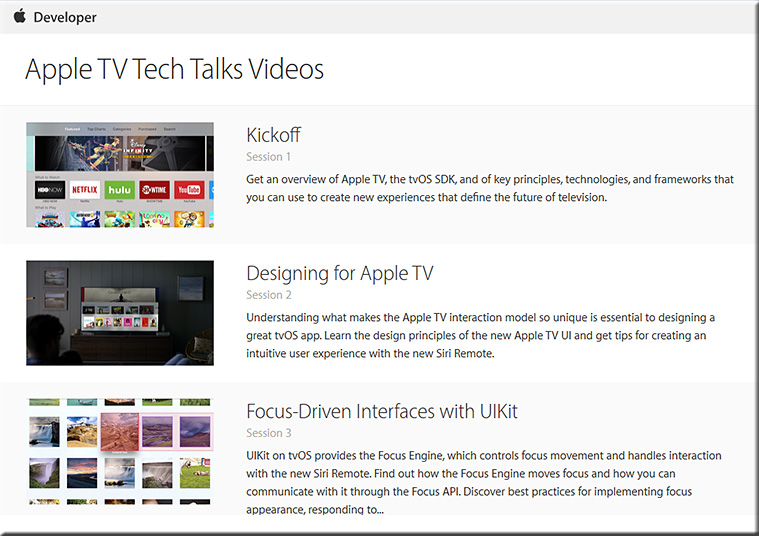
Apple on Wednesday released to developers a series of videos focusing on Apple TV and its tvOS operating system, offering a detailed look at the underlying SDK, resources and best practices associated with coding for the platform.
Apple Adds Multiple New App Categories to tvOS App Store — from macrumors.com by Juli Clover Excerpt:
[On 2/25/16] Apple updated the tvOS App Store to add several new app categories to make it easier for Apple TV 4 owners to find content on their devices. As outlined by AfterPad, a site that showcases Apple TV apps, the new categories are rolling out to Apple TV users and may not be available to everyone just yet. Some users may only see the new categories under Purchased Apps until the rollout is complete.
I’ll admit I’m a bit biased here since I’m a filmmaker by trade, but I truly believe the process of planning and making videos can offer tremendous learning opportunities for students of almost any age. Not only is the idea of telling stories with video really engaging for many kids, filmmaking is ripe with opportunities to connect to almost every academic subject area. As the technology to shoot and edit films becomes more ubiquitous, where is a teacher with no experience in video production to begin? I’ve shared some resources below to help you and your students get started on making blockbusters of your own.
A New Jersey workshop on instructional design gave attendees the opportunity to learn about instructional designers’ roles at different institutions and brainstorm good ideas, tips and tricks, important contributions to the field, and how to overcome shared challenges.
Instructional technologists and video production coordinators also are involved in the instructional design process, helping faculty learn how to use instructional tools.
A major challenge for instructional designers is faculty resistance to new pedagogies and deliveries — not just to hybrid and online courses.
Institutional acknowledgement of skill acquisition in their professional development can lead faculty to place a higher value on technology integration in teaching and learning.
…
What Instructional Designers Do
Instructional designers take on a variety of roles. They can be course development focused or technology focused. They can be facilitators, mentors, trainers, collaborators, reviewers, and mediators, and more likely some combination of those. They often have different roles to fill in addition to instructional design: they may supervise computer labs, have responsibility for classroom technology, and/or oversee video production facilities.
The instructional designers who attended the NJEDge.Net Instructional Design Symposium are involved in:
Providing both pedagogical and technology training, sometimes simultaneously and sometimes separately
Moving courses between learning management systems
Creating new online courses or transitioning face-to-face courses to online formats
Producing video and other multimedia
Supporting a variety of software that faculty want to use to create their courses or
Training faculty to teach more effectively using technology
Supporting students using LMSs
Ensuring that courses meet federal requirements for accessibility
Lobbying for funding for faculty who are taking time to create online courses
Creating challenging assessments to minimize cheating
…
Instructional technologists and video production coordinators also are involved in the instructional design process. They help faculty learn how to use instructional tools such as lecture capture, synchronous meetings, asynchronous discussions, collaborative document writing, group work, clickers, learning management systems, video production, and video editing.
The instructional designers found that it made a difference in terms of trust and respect accorded them when they sat on the academic side of the house. (Nonetheless, the majority of instructional designers at the symposium report to the IT side and ultimately (usually) to the financial/administrative side, despite their preference for the academic side.)
A prediction from DSC: Those institutions who develop and use internal teams of specialists will be the winners in the future.
Below are some of the forces that will reward those institutions who pursue such a strategy in order to design, create, and provide their offerings/services include:
The rise of personalized/adaptive learning (data mining, learning analytics are also included in this bullet point)
The increased use of artificial intelligence and the development of intelligent systems/assistants/tutoring
Higher ed’s need to scale and reduce the going rates/prices of obtaining degrees — yet maintaining quality
Rapid technological changes and an ever increasing amount to know as instructional technologists (this is also true with videographers, multimedia developers, copyright experts, and other members of the team)
New discoveries and advances w/in the various disciplines — which require faculty members’ focus to stay on top of their disciplines
The changing expectations of students, and how they prefer to learn
The rise of alternatives to institutions of traditional higher education who, from their very start, develop and use internal teams of specialists (all the more relevant if these alternative organizations obtain the financial backing of the Federal Government)
The trick is how such teams should actually operate so as not to become bottlenecks in keeping the curricula relevant and up-to-date. After all, it takes time and resources to effectively design, create, and deliver blended and/or online courses.
The immersive potential of virtual reality has Silicon Valley’s finest pouring vast sums of money into headsets and other whizzy innovations.
Google, Apple and Samsung are betting that these sci-fi concepts will become a staple of everyday life, with potential uses in gaming, advertising, marketing and increasingly, education.
The hype surrounding VR and the more complex augmented reality, is not lost on universities and business schools, who are eyeing its early pioneers and conducting secretive trials of head-mounted VR displays.
Four of the world’s top-ranked schools have told BusinessBecause they are exploring VR in tie-ups with Oculus, Samsung, and Google, as they place bets on the next big innovation in online learning.
How Google is reimagining books — from fastcodesign.com by Meg Miller
“Editions at Play” sees designers and authors working simultaneously to build a new type of e-book from the ground up.
Excerpt:
The first sign that Reif Larsen’s Entrances & Exits is not a typical e-book comes at the table of contents, which is just a list of chapters titled “Location Unknown.” Click on one of them, and you’ll be transported to a location (unknown) inside Google Street View, facing a door. Choose to enter the house and that’s where the narrative, a sort of choose-your-own-adventure string of vignettes, begins. As the book’s description reads, it’s a “Borgeian love story” that “seamlessly spans the globe” and it represents a fresh approach to the book publishing industry.
Larsen’s book is one of the inaugural titles from Editions at Play, a joint e-books publishing venture between Google Creative Lab Sydney and the design-driven publishing house Visual Editions, which launched this week. With the mission of reimagining what an e-book can be, Editions at Play brings together the author, developers, and designers to work simultaneously on building a story from the ground up. They are the opposite of the usual physical-turned-digital-books; rather, they’re books that “cannot be printed.”
From DSC: Interesting to note the use of teams of specialists here…
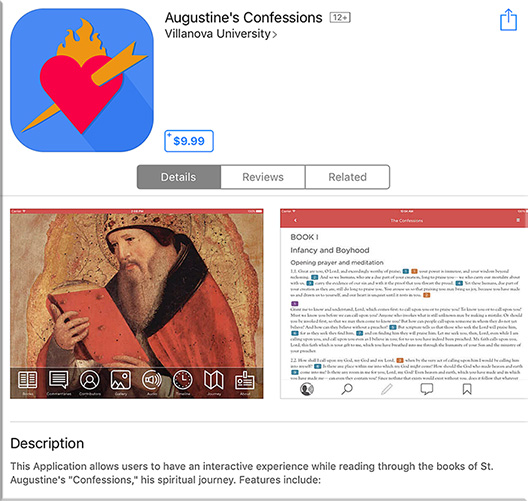
Interactive app brings 4th-century thinker to life— from campustechnology.com by Toni Fuhrman At Villanova University, a student-developed app version of Augustine’s Confessions brings contemporary vitality and relevance to a classic 4th-century work.
Excerpt:
Augustine of Hippo, who lived from A.D. 354 to 430, might be surprised to find his Confessions in circulation today, including a number of e-book versions. Still widely read, popular in great books programs and studied in university classes, The Confessions of St. Augustine is autobiography and confession, spiritual quest and emotional journey.
One of the most recent electronic versions of the Confessions is an interactive app developed at Villanova University (PA), the nation’s only Augustinian Catholic University. Released three months ago on Augustine’s birthday (Nov. 13), the Confessions app is required for all freshmen as part of a “foundation” course. Available for both Apple and Android devices, the app includes the 13 books of the Confessions, authoritative commentaries, photo gallery, timeline, map and text-highlighted audio, as well as search, note-taking, annotation and bookmark options.
“What better way to reflect on and update this struggle than for today’s students to use technology to bring the text to life through visual, audio and analytical components?”
From DSC: Love the idea. Love the use of teams — including students — to produce this app!
Completely realistic holograms, that will be generated when you pass a sensor, are coming to the high street.
Some will be used to advertise, others will have the ability to interact with you, and show you information. In shops, when you find a shirt you like, the technology is now here to bring up a virtual clothes rail showing you that same shirt in a variety of colours, and even tell you which ones are in stock, all using the same jaw-dropping imaging we have previously only experienced wearing 3D glasses at the cinema.
Holograms, augmented reality – which superimposes technology over the real world – and virtual reality (VR), its totally immersive counterpart, are tipped to be the hot trends in retail next year. Pioneers of the technology are set to find increasingly entertaining, useful and commercially viable ways of using it to tempt people into bricks-and-mortar stores, and fight back against the rise of online shopping.
WaveOptics’ technology could bring physical objects, such as books, to life in new ways
Completely realistic holograms, that will be generated when you pass a sensor, are coming to the high street.
From DSC: What might our learning spaces offer us in the not-too-distant future when:
Sensors are built into most of our wearable devices?
Our BYOD-based devices serve as beacons that use machine-to-machine communications?
When artificial intelligence (AI) gets integrated into our learning spaces?
When the Internet of Things (IoT) trend continues to pick up steam?
Below are a few thoughts/ideas on what might be possible.
A faculty member walks into a learning space, the sensors/beacons communicate with each other, and the sections of lights are turned down to certain levels while the main display is turned on and goes to a certain site (the latter part occurred because the beacons had already authenticated the professor and had logged him or her into the appropriate systems in the background). Personalized settings per faculty member.
A student walks over to Makerspace #1 and receives a hologram that relays some 30,000-foot level instructions on what the initial problem to be solved is about. This has been done using the student’s web-based learner profile — whereby the sensors/beacons communicate who the student is as well as some basic information about what that particular student is interested in. The problem presented takes these things into consideration. (Think IBM Watson, with the focus being able to be directed towards each student.) The student’s interest is piqued, the problem gets their attention, and the stage is set for longer lasting learning. Personalized experiences per student that tap into their passions and their curiosities.
The ramifications of the Internet of Things (IoT) will likely involve the classroom at some point. At least I hope they do. Granted, the security concerns are there, but the IoT wave likely won’t be stopped by security-related concerns. Vendors will find ways to address them, hackers will counter-punch, and the security-related wars will simply move/expand to new ground. But the wave won’t be stopped.
So when we talk about “classrooms of the future,” let’s think bigger than we have been thinking.
The IoT has major implications for our everyday lives at home, as well as in medicine, retail, offices, factories, worksites, cities, or any structure or facility where people meet and interact.
…
The first application for meetings is the facility where you meet: doors, carpet, lighting, can all be connected to the Internet through sensors. You can begin to track where people are going, but it’s much more granular.
…
Potentially you can walk into a meeting space, it knows it’s you, it knows what you like, so your experience can be customized and personalized.
…
Right now beacons are fairly dumb, but Google and Apple are working on frameworks, building operating systems, that allow beacons to talk to each other.
Addendum on 1/14/16:
Huddle Space Products & Trends for 2016— from avnetwork.com by Cindy Davis Excerpt:
“The concept is that you should be able to walk into these rooms, and instead of being left with a black display, maybe a cable on the table, or maybe nothing, and not know what’s going on; what if when you walked into the room, the display was on, and it showed you what meeting room it was, who had the meeting room scheduled, and is it free, can just walk in and I use it, or maybe I am in the wrong room? Let’s put the relevant information up there, and let’s also put up the information on how to connect. Although there’s an HDMI cable at the table, here’s the wireless information to connect.
It’s a vision that involves a multitude of technologies — technologies and trends that we continue to see being developed and ones that could easily converge in the not-too-distant future to offer us some powerful opportunities for lifelong learning!
Consider that in won’t be very long before a learner will be able to reinvent himself/herself throughout their lifetime, for a very affordable price — while taking ala carte courses from some of the best professors, trainers, leaders, and experts throughout the world, all from the comfort of their living room. (Not to mention tapping into streams of content that will be available on such platforms.)
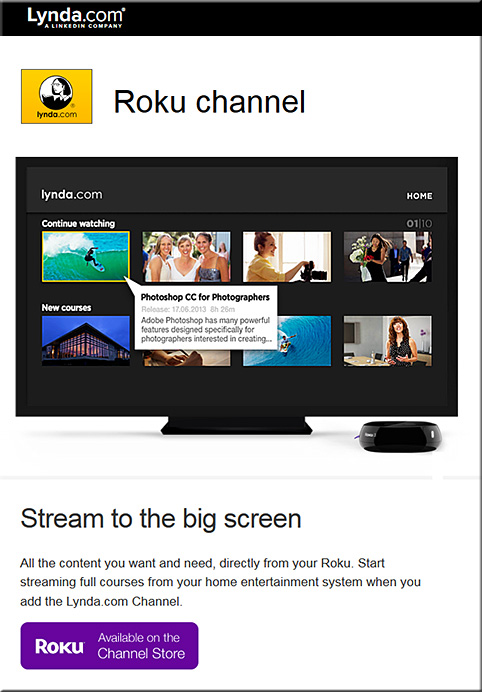
So when I noticed that Lynda.com now has a Roku channel for the big screen, it got my attention.
Lets add a few more pieces to the puzzle, given that some other relevant trends are developing quite nicely:
tvOS-based apps are now possible — and already there are over 2600 of them and it’s only been a month or so since Apple made this new platform available to the masses
Now, let’s add the ability to take courses online via a virtual reality interface — globally, at any time; VR is poised to have some big years in 2016 and 2017!
Lynda.com and LinkedIn.com’s fairly recent merger and their developing capabilities to offer micro-credentials, badges, and competency-based education (CBE) — while keeping track of the courses that a learner has taken
The need for lifelong learning is now a requirement, as we need to continually reinvent ourselves — especially given the increasing pace of change and as complete industries are impacted (broadsided), almost overnight
Big data, algorithms, and artificial intelligence (AI) continue to pick up steam; for example, consider the cognitive computing capabilities being developed in IBM’s Watson — which should be able to deliver personalized digital playlists and likely some level of intelligent tutoring as well
Courses could be offered at a fraction of the cost, as MOOC-sized classes could distribute the costs over a greater # of people and back end systems could help grade/assess the students’ work; plus the corporate world continues to use MOOCs to cost-effectively train their employees across the globe (MOOCs would thrive on such a tvOS-based platform, whereby students could watch lectures, demonstrations, and simulations on the big screen and then communicate with each other via their second screens*)
As the trends of machine-to-machine communications (M2M) and the Internet of Things (IoT) pick up, relevant courses/modules will likely be instantly presented to people to learn about a particular topic or task. For example, I purchased a crib and I want to know how to put it together. The chip in the crib communicates to my Smart TV or to my augmented reality glasses/headset, and then a system loads up some multimedia-based training/instructions on how to put it together.
Streams of content continue to be developed and offered — via blogs, via channels like Periscope and Meerkat, via social media-based channels, and via other channels — and these streams of multimedia-based content should prove to be highly useful to individual learners as well as for communities of practice
Anyway, these next few years will be packed with change — the pace of which will likely take us by surprise. We need to keep our eyes upward and outward — peering into the horizons rather than looking downwards — doing so should reduce the chance of us getting broadsided!
*It’s also possible that AR and VR will create
a future whereby we only need 1 “screen”
Addendum: After I wrote/published the item above…it was interesting to then see the item below:
MUNICH, Dec. 15, 2015 /PRNewswire/ — IBM (NYSE: IBM) today announced the opening of its global headquarters for Watson Internet of Things (IoT), launching a series of new offerings, capabilities and ecosystem partners designed to extend the power of cognitive computing to the billions of connected devices, sensors and systems that comprise the IoT. These new offerings will be available through the IBM Watson IoT Cloud, the company’s global platform for IoT business and developers.
7 trends that will revolutionize online learning — from ecampusnews.com by Andrew Barbour A look at new tools and new opportunities to create an instructional experience that is not only different, but better, taking online learning in mainstream higher ed to the next level.
Excerpt:
eCampus News looks at seven trends that have the potential to remake the world of online learning.
Blended Learning Is the Sweet Spot
Video Is King
Interactivity, Not Talking Heads
Mobile Is a Must
Identity Verification and Cheating
Auto-grading
Open, Intuitive Platforms
From DSC: I appreciated their thoughts re: adding interactivity to videos. A team-based approach may be helpful here.
8 characteristics of good online video — from ecampusnews.com by Meris Stansbury Instructor-led video is a must in online learning, but not all videos are successes. Here are eight tips to help educators create effective online videos for their courses.
Excerpt:
According to a report published in the MERLOT Journal of Online Learning and Teaching, instructor-generated video can have a positive influence on student satisfaction with, and engagement in, online courses. But not all videos are created equal.
Research conducted by the American Academy of Neurology also reveals that “watching videos helps boost brain plasticity,” or the ability of the brain to undergo physical changes at any age. Learners who were trained to perform a particular task through videos performed better than those who learned through images and text, the researchers found—and they concluded that video has a “higher impact on the brain.”
However, researchers emphasize that the format of the video, its platform, and the subject are all variables in the video’s effectiveness.
“Creating interesting, professional videos does take some planning and technical skill,” says eLearn Magazine. “There’s also a fear of perceived high cost. But none of these barriers are insurmountable. By employing … tips to know when to use it, how to maximize its effectiveness, and how to keep costs reasonable, you can make video a key part of your next online course.”
Here are eight tips to help educators create videos for their online courses…
From DSC: A quick reflection here. Frame rates, compression, having the right equipment and recording facilities, how best to frame a shot, knowing about proper lighting and placement of microphones, and more…hmmm…and we expect the faculty member to know/do all this as well as keep up with their knowledgeabase of their particular discipline? Not likely in many cases. Time’s too limited — even if all of the required gifts and/or interest levels were there (which is asking a lot).
This is why I’m big onusing TEAMS of specialists.Depending upon the quality of your products/services that your organization is willing to accept, flipping the classroom or using video in online-based learning requires a team of specialists.
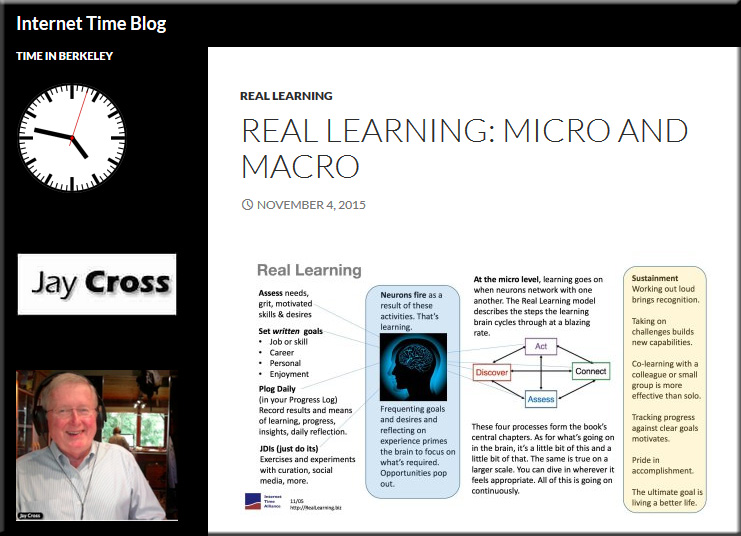
From DSC: The world of learning lost a great contributor last Friday when Jay Cross passed away.
To me, Jay modeled lifelong learning — not only helping others to learn and to grow, but also seeking to do those very things himself. For example, he was constantly trying out new tools, experimenting with them, learning about them, and then taking what works and discarding the rest. He’d pick up a new web-based collaboration tool, make a recording, and then move onto something else.
He was a founding member of a great, collaborative team in theInternet Time Alliance, where members included Jay, Jane Hart, Harold Jarche, Charles Jennings, Clark Quinn, and Paul Simbeck-Hampson.
One area of all of our learning ecosystems involves informal learning, something that Jay stressed and had a tremendous influence on. More recently, he tackled theThe Real Learning Projectwhich “aims to help millions of people learn to learn, increase their intelligence, and realize their life goals.”
We’re thrilled to announce that Coursera content will now be available onApple TV.
Since our beginning, one of our primary goals has been to make learning more accessible for everyone. Our mobile platform brought an on-demand learning experience to people’s busy, on-the-go lifestyles, and now, we’re extending availability to your home. Regardless of where in the world you are located, you’ll now be able to learn from top university professors and renowned experts without the expense of travel or tuition.
TV availability isn’t only a first for Coursera—it marks Apple TV’s first ever introduction of online learning to its platform. Everything you can do online at Coursera, you’ll now be able to do from the comfort of your own living room:browse our entire catalogue of courses, peruse new topics, and watch videos from some of the top academic and industry experts.
From DSC: Coursera takes us one step closed to a very powerful learning platform — one that in the future will provide a great deal of intelligence behind the scenes. It’s likely that we will be using personalized, adaptable, digital learning playlists while enjoying some serious levels of interactivity…while also making use of web-based learner profiles (the data from which will either be hosted at places like LinkedIn.com or will be fed into employers’ and universities’ competency-based databases). The application development for tvOS should pick up greatly, especially if the collaboration capabilities are there.
For example, can you imagine marrying the functionalities that Bluescape provides with the reach, flexibility, convenience, and affordances that are unfolding with the new Apple TV?
Truly, some mind-blowing possibilities are developing. In the not too distant future, lifelong learning won’t ever be the same again (not to mention project-related work).
This is why I’m big on the development and use of team of specialists — as an organization may have
a harder time competing in the future without one.
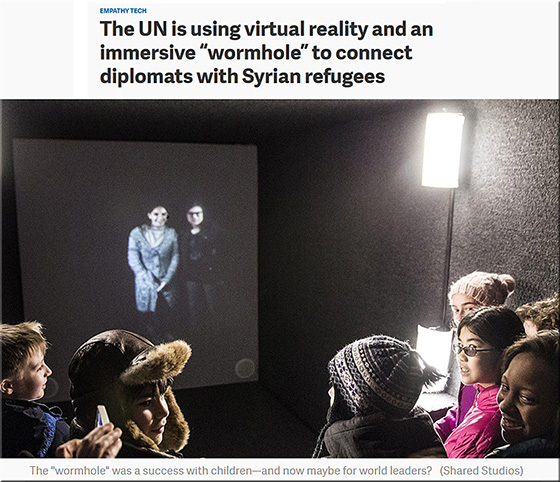
On their way to this month’s 70th United Nation’s General Assembly, the organization’s annual high-level meeting in New York, diplomats and world leaders will pass by a makeshift glass structure—both a glossy multi-media hub, and a gateway to an entirely different world.
The hub uses virtual reality to allow the UN attendees to see Jordan’s Zaatari camp for Syrian refugees through the eyes of a little girl. And, by using an immersive video portal, which will launch later this week, they will have the opportunity to have face-to-face conversations with residents of the camp.
The effort aims to put a human face on the high-level deliberations about the refugee crisis, which will likely dominate many conversations at the United Nations General Assembly (UNGA). UN Secretary General Ban Ki-Moon has called on the meeting to be “one of compassion, prevention and, above all, action.”
From DSC: VR-based apps have a great deal of potential to develop and practice greater empathy. See these related postings:
When it comes to virtual reality, the University of Maryland, Baltimore County is going for full immersion.
Armed with funding from the National Science Foundation, the university is set to build a virtual reality “environment” that’s designed to help researchers from different fields. It’s called PI2.
In the 15-by-20-foot room, stepping into virtual reality won’t necessarily require goggles.
A visualization wall at the University of Illinois at Chicago’s Electronic Visualization Lab.
UMBC officials say their project will be similar to this.(Photo courtesy of Planar)
Now you’re ready to turn your class into an immersive game, and everything you need is right here. With the help of these resources, you can develop your own gameful class, cook up a transmedia project, design a pervasive game or create your very own [Augmented Reality Game] ARG. Games aside, these links are useful for all types of creative learning projects. In most cases, what is on offer is free and/or web based, so only your imagination will be taxed.
If augmented reality could be a shared experience, it could change the way we will use the technology.
Something along these lines is currently in development at a Microsoft laboratory run by Jaron Lanier, one of the pioneers of VR since the 1980s through his company VPL Research. The project, called Comradre, allows multiple users to share virtual- and augmented-reality experiences, reports MIT Technology Review.
Because virtual reality takes place in a fully digital environment, it is not hugely difficult to put multiple users into the same virtual instance at the same time, wirelessly synced across multiple headsets.
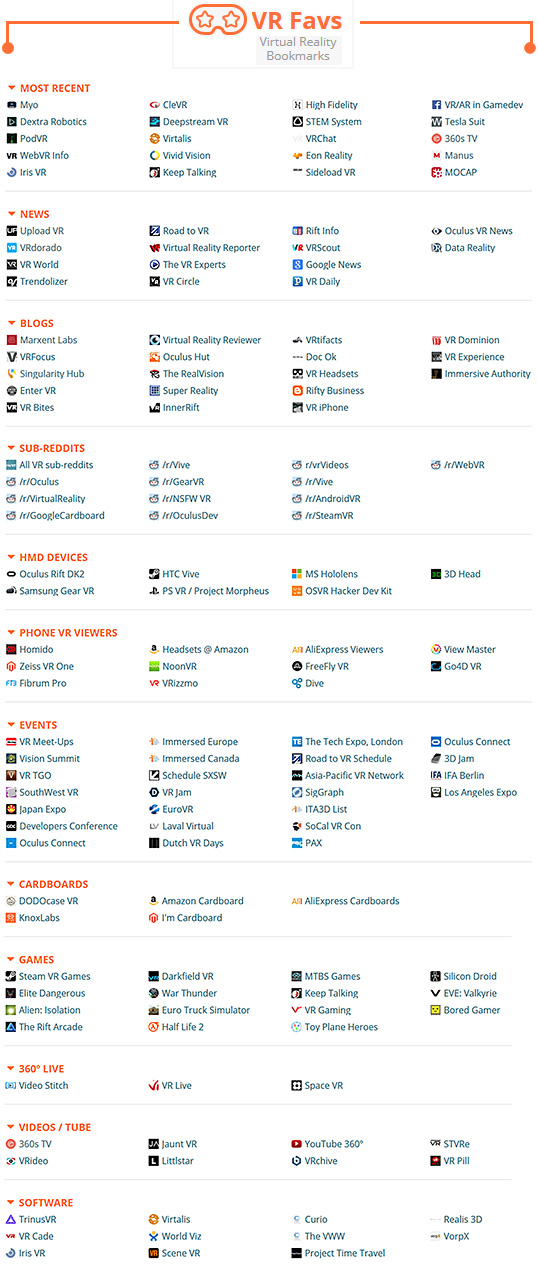
vrfavs.com— some serious VR-related resources for you. Note: There are some NSFW items on there; so this is not for kids.
Together, virtual reality and augmented reality are expected to generate about $150 billion in revenue by the year 2020.
Of that staggering sum, according to data released today by Manatt Digital Media, $120 billion is likely to come from sales of augmented reality—with the lion’s share comprised of hardware, commerce, data, voice services, and film and TV projects—and $30 billion from virtual reality, mainly from games and hardware.
The report suggests that the major VR and AR areas that will be generating revenue fall into one of three categories: Content (gaming, film and TV, health care, education, and social); hardware and distribution (headsets, input devices like handheld controllers, graphics cards, video capture technologies, and online marketplaces); and software platforms and delivery services (content creation tools, capture, production, and delivery software, video game engines, analytics, file hosting and compression tools, and B2B and enterprise uses).
Talking about augmented reality technology in teaching and learning the first thing that comes to mind is this wonderful app called Aurasma. Since its release a few years ago, Aurasma gained so much in popularity and several teachers have already embraced it within their classrooms. For those of you who are not yet familiar with how Aurasma works and how to use in it in your class, this handy guide from Apple in Education is a great resource to start with.
The Oculus Touch virtual reality (VR) controllers finally have their first full videogames. A handful of titles were confirmed to support the kit back at the Oculus Connect 2 developer conference in September. But still one of the most impressive showcases of what these position-tracked devices can do exists in Oculus VR’s original tech demo, Toybox. [On 10/13/15], Oculus VR itself has released a new video that shows off what players are able to do within the software.
Much like sketching the first few lines on a blank canvas, the earliest prototypes of a VR project is an exciting time for fun and experimentation. Concepts evolve, interactions are created and discarded, and the demo begins to take shape.Competing with other 3D Jammers around the globe, Swedish game studio Pancake Storm has shared their #3DJam progress on Twitter, with some interesting twists and turns along the way. Pancake Storm started as a secondary school project for Samuel Andresen and Gabriel Löfqvist, who want to break into the world of VR development with their project, tentatively dubbed Wheel Smith and the Willchair.
Recently I learned about a new feature called Virtual Field Trips. In a partnership with 360 Cities, NearPod now gives teachers and students the opportunity to view pristine locations like the Taj Mahal, the Golden Gate Bridge, and The Great Wall of China. You can view famous architecture, famous artifacts, and even different planets! Virtual Field Trips are a great addition to any classroom.
Western University of Health Sciences in Pomona, Calif., has opened a first-of-its-kind virtual reality learning center that’s been designed to allow students from every program—dentistry, osteopathic medicine, veterinary medicine, physical therapy, and nursing—to learn through VR.
The Virtual Reality Learning Center currently houses four different VR technologies: the two zSpace displays, the Anatomage Virtual Dissection Table, the Oculus Rift, and Stanford anatomical models on iPad.
Robert W. Hasel, D.D.S., associate dean of simulation, immersion & digital learning at Western, says VR gives anatomical science teachers the ability to view and interact with anatomy in a way never before experienced. The virtual dissection table allows students to rotate the human body in 360 degrees, take it apart, identify specific structures, study individual systems, look at multiple views at the same time, take a trip inside the body, and look at holograms.
——————————————
——————————————
Addendum on 10/20/15:
Can Virtual Reality Replace the Cadaver Lab?— from centerdigitaled.com by Justine Brown Colleges are starting to use virtual reality platforms to augment or replace cadaver labs, saving universities hundreds of thousands of dollars.
A typical day at Altschool, the Bay Area-based school system that raised $100 million in venture capital in May, is anything but typical.
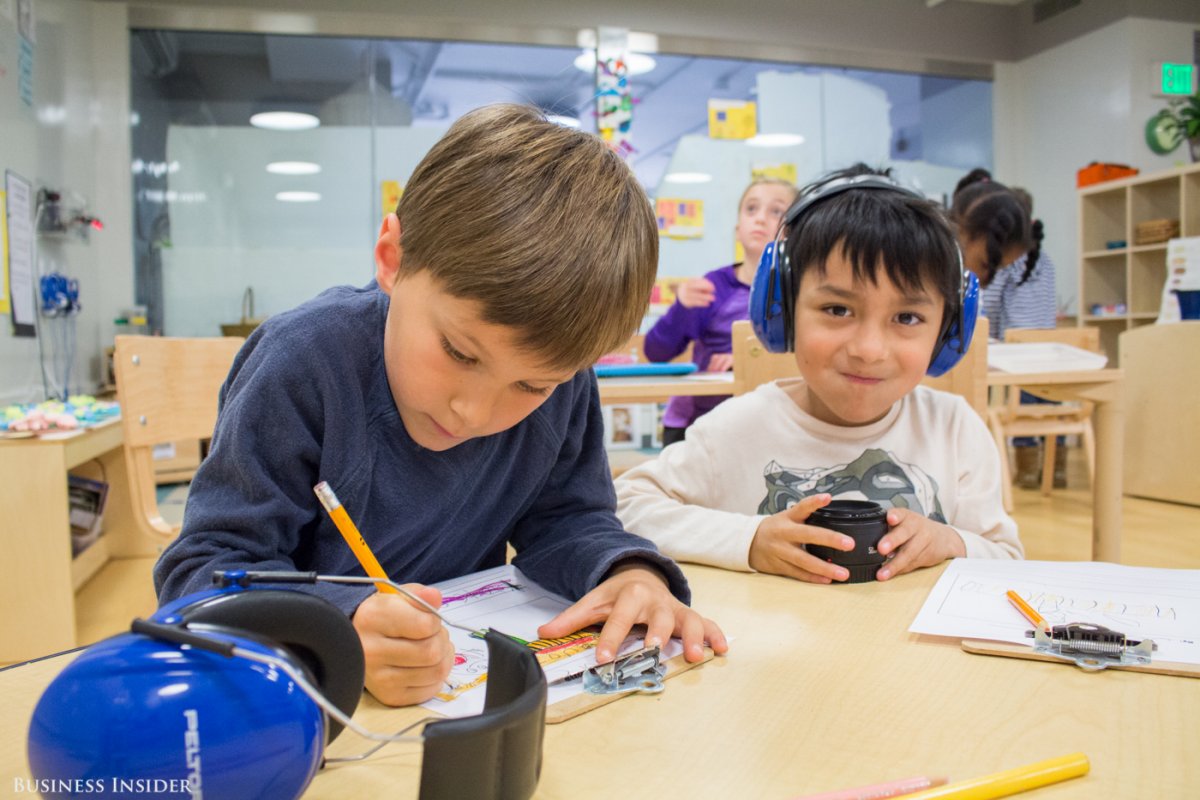
Kids take attendance on an iPad, complete a “playlist” of activities, and learn 3D modeling software to design a playhouse for the class pet.
Founder and CEO Max Ventilla previously helmed the personalization team at Google, where he helped build Google+ and other products that make the internet feel more personal.
His latest venture aims to transform the outdated, early-1900s model of elementary education for the digital age.
In May, we spent the day at AltSchool‘s Fort Mason location in San Francisco to see its revolutionary teaching style in action.
From DSC: Is there anything here that public schools would find attractive and/or could implement?
AltSchool divides students between the ages of 4 and 14 into three groups: lower elementary, upper elementary, and middle school. There are no traditional grade levels.
A typical day at AltSchool begins with attendance. As kids arrive, they sign in to the school’s attendance app on a dedicated iPad.
The attendance app is one of a dozen or so tech tools developed by the school’s 50-person product team, which includes former employees of Apple, Uber, Zynga, and Ventilla’s alma mater, Google.
The PLP is the foundation of the AltSchool experience. Teachers collaborate with families and students to design a set of goals for the learner based on the student’s interests, passions, strengths, and weaknesses.
Each child receives a weekly “playlist” of individual and group activities that are aimed at achieving those goals.This student is writing an entry for his blog on coin collecting.
Teachers pick activities for their students by creating items in their playlists or searching the My.AltSchool library to find items that other teachers have made.
This 8-year-old demonstrates a game of Pac-Man using MaKey MaKey — a simple circuit board that transforms everyday objects into touchable user interfaces …he attaches alligator clips to four mounds of clay and tapes one clip to himself. When he taps the clay and completes the circuit, the computer interprets the input as arrow key actions.
This streamlined instruction time frees up the teacher to walk around the classroom and interact face-to-face with students.
The lower elementary students spend the morning knocking a shared item off their playlists: “writing the news.” These guys are chronicling a recent trip to the park.
Many of the younger kids wear headphones during playlist time to drown out distractions.
Technology isn’t necessary to complete all activities, but it is used to document students’ work. This student takes a picture of her news clipping using an iPad and uploads the image to her playlist.
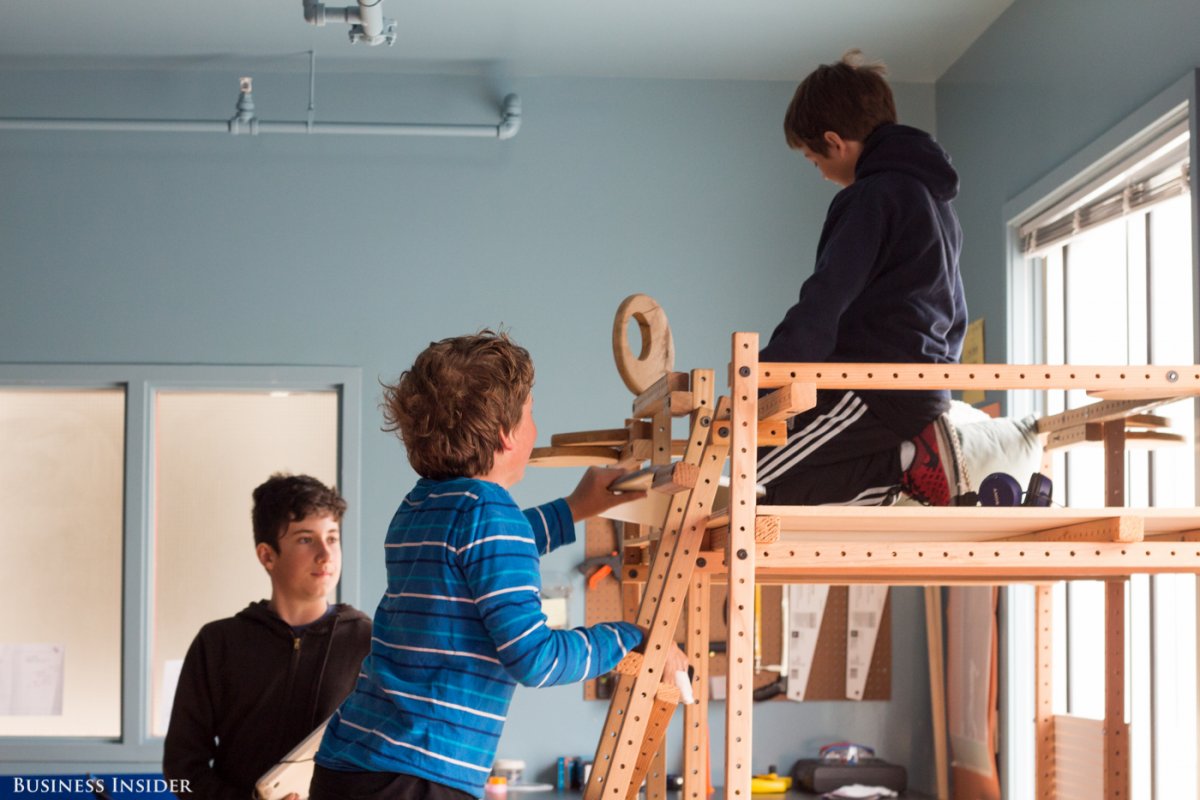
The classroom, like the tech, fosters AltSchool’s individualized learning approach. Students sprawl across the room on carpets, beanbags, and even lofts of their own construction.
Classrooms are treated like stations, rather than designated areas for particular grade levels, and students move from room to room throughout the day. It’s especially important for micro-schools to maximize space so that a four-room schoolhouse doesn’t feel cramped
Craft and cleaning supplies are stored where the smaller kids can reach them, giving them a sense of agency.
After lunch and PE in the nearby park, students put aside their playlists and work on more integrated group projects.
The middle-school students were tasked with a classroom redesign. This 11-year-old, who was wearing an Iron Man T-shirt, built a parkour course. He’s writing a parent permission slip on his Google Chromebook now.
His classmate learned from online tutorials how to use the 3D-modeling software SketchUp, and she designed an urban-garden-inspired seating area for the unused deck on the second floor. There’s an obstacle course inside the benches for a class rabbit to tunnel through.
Another student, who wants to be a veterinarian, lawyer, writer, and manga comic-book writer, grew an indoor tea garden. She says she loves how the assignments “bend to your ability.”
If Silicon Valley’s favorite elementary school has its way, personalization will remain king.
Harvard Business School‘s HBX digital learning initiative today launched a virtual classroom designed to reproduce the intimacy and synchronous interaction of the case method in a digital environment. With HBX Live, students from around the world can log in concurrently to participate in an interactive discussion in real time, guided by an HBS professor.
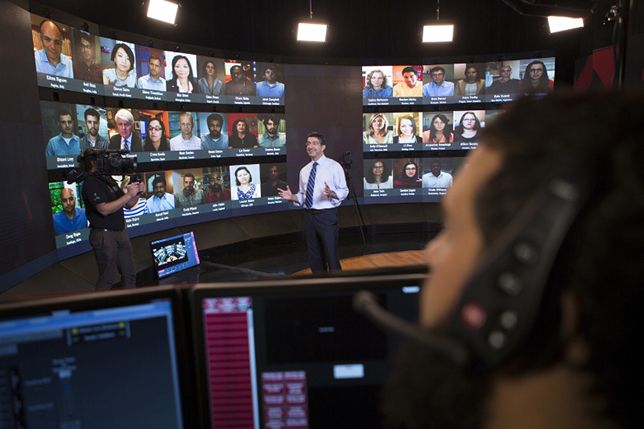
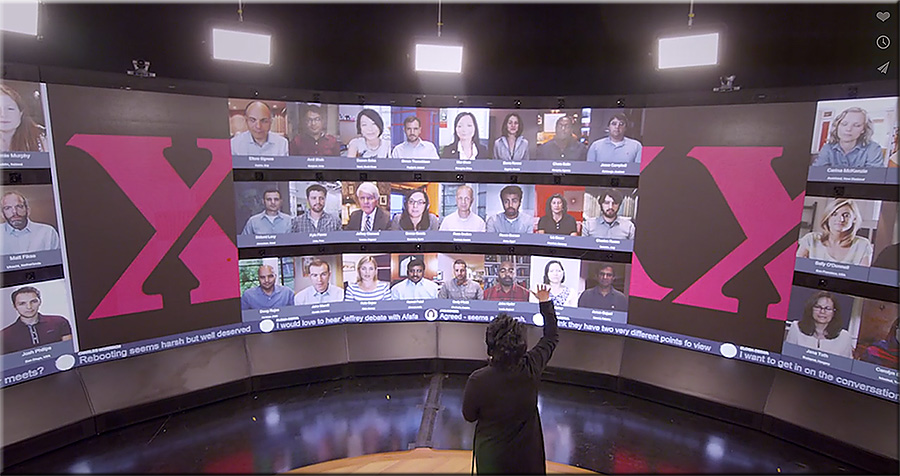
Built to mimic the amphitheater-style seating of an HBS classroom, the HBX Live Studio features a high-resolution video wall that can display up to 60 participants. Additional students can audit sessions via an observer model. An array of stationary and roaming cameras capture the action, allowing viewers to see both the professor and fellow students.
HBX Live’s virtual amphitheater (PRNewsFoto/Harvard Business School)
Convenience. I don’t have to travel to another city, state, country. That type of convenience and flexibility is the basis of why many learners take online-based courses in the first place.
Global — learning from people of different cultures, races, backgrounds, life experiences.
The opportunities are there to increase one‘s cultural awareness.
HBX Live is innovative; in fact, Harvard is upping it’s innovation game yet again — showing a firm grasp/display of understanding that they realize that the landscape of higher education is changing and that institutions of traditional higher education need to adapt.
Harvard is willing to experiment and to identify new ways to leverage technologies — taking advantage of the affordances that various technologies offer.
Anand, meantime, faces the images of 60 students portrayed on a curved screen in front of him, a high-resolution video wall composed of more than 6.2 million pixels that mimics the amphitheater-style seating of a class HBS tiered classroom





![The Living [Class] Room -- by Daniel Christian -- July 2012 -- a second device used in conjunction with a Smart/Connected TV](http://danielschristian.com/learning-ecosystems/wp-content/uploads/2012/07/The-Living-Class-Room-Daniel-S-Christian-July-2012.jpg)