The case for a next generation learning platform [Grush & Christian]


The case for a next generation learning platform — from campustechnology.com by Mary Grush & Daniel Christian

Excerpt (emphasis DSC):

Grush: Then what are some of the implications you could draw from metrics like that one?

Christian: As we consider all the investment in those emerging technologies, the question many are beginning to ask is, “How will these technologies impact jobs and the makeup of our workforce in the future?”

While there are many thoughts and questions regarding the cumulative impact these technologies will have on our future workforce (e.g., “How many jobs will be displaced?”), the consensus seems to be that there will be massive change.

Whether our jobs are completely displaced or if we will be working alongside robots, chatbots, workbots, or some other forms of AI-backed personal assistants, all of us will need to become lifelong learners — to be constantly reinventing ourselves. This assertion is also made in the aforementioned study from McKinsey: “AI promises benefits, but also poses urgent challenges that cut across firms, developers, government, and workers. The workforce needs to be re-skilled to exploit AI rather than compete with it…”


A side note from DSC:
I began working on this vision prior to 2010…but I didn’t officially document it until 2012.
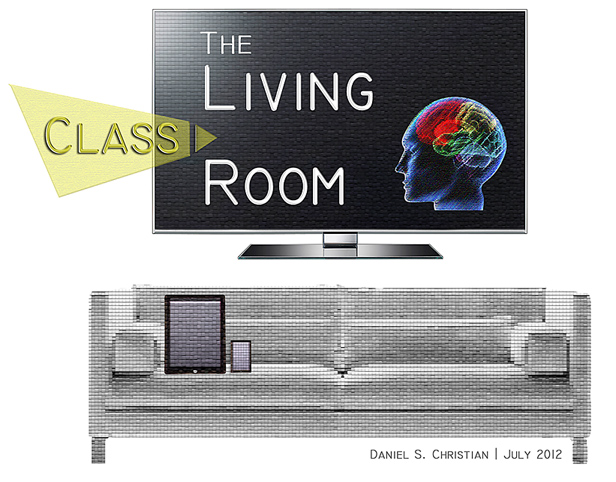
 

The Living [Class] Room -- by Daniel Christian -- July 2012 -- a second device used in conjunction with a Smart/Connected TV


Learning from the Living [Class] Room:

A global, powerful, next generation learning platform


What does the vision entail?

  • A new, global, collaborative learning platform that offers more choice, more control to learners of all ages – 24×7 – and could become the organization that futurist Thomas Frey discusses here with Business Insider:

“I’ve been predicting that by 2030 the largest company on the internet is going to be an education-based company that we haven’t heard of yet,” Frey, the senior futurist at the DaVinci Institute think tank, tells Business Insider.

  • A learner-centered platform that is enabled by – and reliant upon – human beings but is backed up by a powerful suite of technologies that work together in order to help people reinvent themselves quickly, conveniently, and extremely cost-effectively
  • A customizable learning environment that will offer up-to-date streams of regularly curated content (i.e., microlearning) as well as engaging learning experiences
  • Along these lines, a lifelong learner can opt to receive an RSS feed on a particular topic until they master that concept; periodic quizzes (i.e., spaced repetition) determines that mastery. Once mastered, the system will ask the learner whether they still want to receive that particular stream of content or not.
  • A Netflix-like interface to peruse and select plugins to extend the functionality of the core product
  • An AI-backed system of analyzing employment trends and opportunities will highlight those courses and streams of content that will help someone obtain the most in-demand skills
  • A system that tracks learning and, via Blockchain-based technologies, feeds all completed learning modules/courses into learners’ web-based learner profiles
  • A learning platform that provides customized, personalized recommendation lists – based upon the learner’s goals
  • A platform that delivers customized, personalized learning within a self-directed course (meant for those content creators who want to deliver more sophisticated courses/modules while moving people through the relevant Zones of Proximal Development)
  • Notifications and/or inspirational quotes will be available upon request to help provide motivation, encouragement, and accountability – helping learners establish habits of continual, lifelong-based learning
  • (Potentially) An online-based marketplace, matching learners with teachers, professors, and other such Subject Matter Experts (SMEs)
  • (Potentially) Direct access to popular job search sites
  • (Potentially) Direct access to resources that describe what other companies do/provide and descriptions of any particular company’s culture (as described by current and former employees and freelancers)
  • (Potentially) Integration with one-on-one tutoring services

Further details here >>


Addendum from DSC (regarding the resource mentioned below):
Note the voice recognition/control mechanisms on Westinghouse’s new product — also note the integration of Amazon’s Alexa into a “TV.”


Westinghouse’s Alexa-equipped Fire TV Edition smart TVs are now available — from theverge.com by Chaim Gartenberg


The key selling point, of course, is the built-in Amazon Fire TV, which is controlled with the bundled Voice Remote and features Amazon’s Alexa assistant.



Finally…also see:

  • NASA unveils a skill for Amazon’s Alexa that lets you ask questions about Mars — from geekwire.com by Kevin Lisota
  • Holographic storytelling — from jwtintelligence.com
    The stories of Holocaust survivors are brought to life with the help of interactive 3D technologies.
    New Dimensions in Testimony is a new way of preserving history for future generations. The project brings to life the stories of Holocaust survivors with 3D video, revealing raw first-hand accounts that are more interactive than learning through a history book.  Holocaust survivor Pinchas Gutter, the first subject of the project, was filmed answering over 1000 questions, generating approximately 25 hours of footage. By incorporating natural language processing from the USC Institute for Creative Technologies (ICT), people are able to ask Gutter’s projected image questions that trigger relevant responses.



Historical virtual reality application makes ‘time travel’ a reality — from haptic.al by Deniz Ergürel
‘Virtual Time Binoculars’ provides a unique window into the city of Edinburgh around the time of the birth of Mary Queen of Scots.

Excerpt:

A new application called ‘Virtual Time Binoculars’, allows historians to explore the old Edinburgh city in entirely new and exciting ways.

Launched by a group of academics from the University of St. Andrews, the app brings the original views of streets, marketplaces and churches as they may have been in the 16th century.

Created by the University of St Andrews’s spinout company Smart History, Virtual Time Binoculars: Edinburgh 1544 provides a unique window into the capital around the time of the birth of Mary Queen of Scots.

Also see:
the Virtual Time Binoculars website.


Also see:

Virtual reality app highlights Penn State campus landmarks — from centredaily.com by Leon Valsechi

Excerpt:

The Penn State University Park campus is ornamented by senior class gifts that date back to the late 1800s and a team of Penn State researchers has developed a mobile virtual reality app that highlights some of the more popular landmarks.

Through the lens of a virtual reality headset, users are instantly transported to University Park, where they can visit some of the campus’s most recognizable relics. The trip is made possible by ChoroPhronesis, a research team operating within the Department of Geography that focuses on immersive virtual reality.


Now Everyone Really Can Code Thanks to Apple’s New College Course — from trendintech.com by Amanda Porter


AI will make forging anything entirely too easy — from wired.com by Greg Allen

Excerpt:

Today, when people see a video of a politician taking a bribe, a soldier perpetrating a war crime, or a celebrity starring in a sex tape, viewers can safely assume that the depicted events have actually occurred, provided, of course, that the video is of a certain quality and not obviously edited.

But that world of truth—where seeing is believing—is about to be upended by artificial intelligence technologies.

We have grown comfortable with a future in which analytics, big data, and machine learning help us to monitor reality and discern the truth. Far less attention has been paid to how these technologies can also help us to lie. Audio and video forgery capabilities are making astounding progress, thanks to a boost from AI. In the future, realistic-looking and -sounding fakes will constantly confront people. Awash in audio, video, images, and documents, many real but some fake, people will struggle to know whom and what to trust.


Also referenced in the above article:


Some upcoming events from EDUCAUSE


EDUCAUSE is offering a variety of online webinars exploring key topics within the future of higher ed in the coming months:

  • 7/27/17 Webinar – Navigate Your Career with Effective Communication
  • 8/7/17 Webinar – Student Success Analytics in the Next Generation Learning Environment
  • 8/9/17 Online event – Using Metrics to Bolster Your Higher Education Information Security Program
  • 8/16, 8/23, 8/30 ELI Course – Designing a Comprehensive Support and Faculty Development Program for Active and Collaborative Learning Spaces
    • ^ All live content is recorded and may be viewed asynchronously at your convenience. See course agenda for live session dates.


Augmented reality ‘is virtually unlimited’ for Apple — from theaustralian.com.au by Chris Griffith

Excerpt:

Apple’s entry into augmented reality is gathering pace at an amazing rate, says one of its vice-presidents visiting Australia.

In an interview with The Australian yesterday, Apple vice-president of product marketing Greg “Joz” Joswiak said the enthusiasm of Apple’s development community building aug­mented reality (AR) applications had been “unbelievable”.

“They’ve built everything from virtual tape measures (to) ballerinas made out of wood dancing on floors. It’s absolutely incredible what people are doing in so little time.”


He said in the commercial space, AR applications would evolve for shopping, furniture placement, education, training and services.


Also see:

Excerpt:
Imagine being surrounded by a world of ghosts, things that aren’t there unless you look hard enough, and in the right way. With augmented reality technology, that’s possible—and museums are using it to their advantage. With augmented reality, museums are superimposing ther virtual world right over what’s actually in front of you, bringing exhibits and artifacts to life in new ways.

These five spots are great examples of how augmented reality is enhancing the museum experience.


Also see:


EdTech magazine covers the latest news and discussions, live from ISTE 2017 in San Antonio, Texas.


ISTE 2017: 6 New Products Unveiled on the Show Floor — from edtechmagazine.com by Jena Passut
New offerings from big tech companies highlight this year’s megaconference in San Antonio.

Excerpt:

With more than 18,000 attendees and plenty of press coverage, the annual ISTE’s 2017 Conference & Expo has become a prime place for vendors to launch new products and announce updates. This year is no different. Check out some of the latest offerings announced at the 2017 event, and then head over to EdTech’s coverage page to read and see more news from ISTE.


Also see:


Augmented Reality in Education — from graduatedegrees.online.njit.edu

Excerpt:

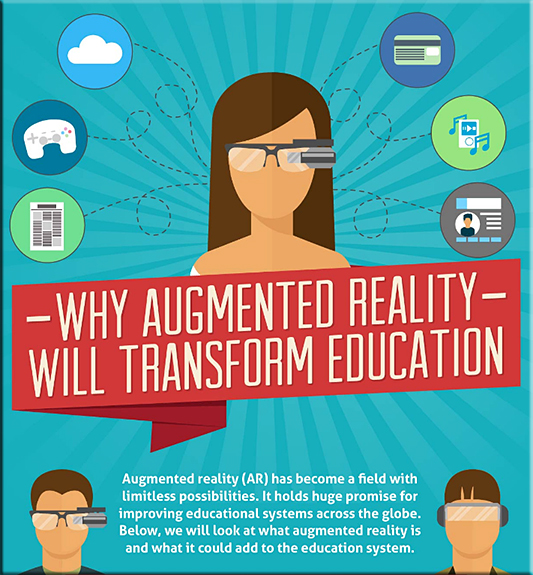
Augmented reality has become a field with limitless possibilities. It holds huge promise for improving educational systems across the globe. In the last 2 to 3 years, augmented reality (AR) has grown into a technology that is set to revolutionize numerous sectors, most importantly education. To learn more, check out the infographic created by the New Jersey Institute of Technology’s Online Masters in Computer Science program.


Accenture and Microsoft Create Blockchain Prototype for Identity — from which-50.com

Excerpt:

Accenture and Microsoft have created a prototype based on blockchain technology with the aim of creating a digital identity for 1.1 billion people around the world who don’t have a formal ID.

Approximately one-sixth of the world’s population cannot participate in cultural, political, economic and social life because they lack the most basic information: documented proof of their existence.

Establishing identity is critical to accessing a wide range of activities, including education, healthcare, voting, banking, mobile communications, housing, and family and childcare benefits.

The ID prototype, which builds on Accenture’s capabilities in blockchain and its experience developing and deploying large-scale biometric systems, runs on Microsoft Azure’s cloud platform.

Accenture and Microsoft demonstrated the prototype this week at the ID2020 Summit at the UN.


Virtual Reality Coursework Provides Rich Training Ground — from edtechmagazine.com by Dave Doucette
Colleges embrace VR to develop students’ technical skills and expand their experiences.

Excerpt:

IDC forecasts that global sales of VR headsets will jump to 61 million by 2020, up from 10.1 million in 2016. As adoption ramps up, demand for applications will be fast on its heels, and professionals trained in all aspects of VR will be in hot demand. Institutions across the country are stepping up to help students get ready.
…
VR also expands the realm of possibility for students interested in creativity and problem solving. Colleges are already offering courses dedicated to VR technology, in which students create films, interactive games, campus tours and even customized projects for real-world clients. As one educator has noted, VR amounts to a new art form: both a new way to tell stories and an entirely new professional field.


Top trends from InfoComm 2017 — from inavateonthenet.net
AV over IP and huddle rooms are two key takeaways from InfoComm as Paul Milligan wraps up the 2017 show.


From DSC:
After reading the item below, I wondered:

Should technical communicators, trainers, and help desk personnel get trained on how to design and develop “workbots?”


Forget chatbots — you should create a workbot instead — from venturebeat.com by Oren Ariel; with thanks to Thomas Frey for his tweet on this

Excerpts (emphasis DSC):

But what about employee-to-company interaction through bots? Chatbots designed for the work environment, or workbots, could become the next step function in work productivity.
…
Workbots could be the cure for what’s often called “app fatigue.”

They work within the corporate messenger environment (such as Jabber, Skype for Business, Slack, and others) and respond to commands and questions in natural language, whether typed or dictated. They have access to all the corporate information needed to get the job done and can perform complex tasks across multiple systems. The workbot knows what tasks are executed in which back-end system, so the user doesn’t have to know. Because bots rely on natural language processing (NLP) — the ability of humans to interact with computers using free-form language — workbots can help an employee get to the starting point quickly and without any training, in the same way a search engine would, and then help guide the user through the task in a step-by-step fashion.

Chat is no longer just about communication, it’s about bringing the user information.


When AI can transcribe everything — from theatlantic.com by Greg Noone
Tech companies are rapidly developing tools to save people from the drudgery of typing out conversations—and the impact could be profound.

Excerpt:

Despite the recent emergence of browser-based transcription aids, transcription’s an area of drudgery in the modern Western economy where machines can’t quite squeeze human beings out of the equation. That is until last year, when Microsoft built one that could.

Automatic speech recognition, or ASR, is an area that has gripped the firm’s chief speech scientist, Xuedong Huang, since he entered a doctoral program at Scotland’s Edinburgh University. “I’d just left China,” he says, remembering the difficulty he had in using his undergraduate knowledge of the American English to parse the Scottish brogue of his lecturers. “I wished every lecturer and every professor, when they talked in the classroom, could have subtitles.”
…
“That’s the thing with transcription technology in general,” says Prenger. “Once the accuracy gets above a certain bar, everyone will probably start doing their transcriptions that way, at least for the first several rounds.” He predicts that, ultimately, automated transcription tools will increase both the supply of and the demand for transcripts. “There could be a virtuous circle where more people expect more of their audio that they produce to be transcribed, because it’s now cheaper and easier to get things transcribed quickly. And so, it becomes the standard to transcribe everything.”


What a future, powerful, global learning platform will look & act like [Christian]


Learning from the Living [Class] Room:
A vision for a global, powerful, next generation learning platform

By Daniel Christian

NOTE: Having recently lost my Senior Instructional Designer position due to a staff reduction program, I am looking to help build such a platform as this. So if you are working on such a platform or know of someone who is, please let me know: danielchristian55@gmail.com.

I want to help people reinvent themselves quickly, efficiently, and cost-effectively — while providing more choice, more control to lifelong learners. This will become critically important as artificial intelligence, robotics, algorithms, and automation continue to impact the workplace.


The Living [Class] Room -- by Daniel Christian -- July 2012 -- a second device used in conjunction with a Smart/Connected TV


Learning from the Living [Class] Room:
A global, powerful, next generation learning platform


What does the vision entail?

  • A new, global, collaborative learning platform that offers more choice, more control to learners of all ages – 24×7 – and could become the organization that futurist Thomas Frey discusses here with Business Insider:

“I’ve been predicting that by 2030 the largest company on the internet is going to be an education-based company that we haven’t heard of yet,” Frey, the senior futurist at the DaVinci Institute think tank, tells Business Insider.

  • A learner-centered platform that is enabled by – and reliant upon – human beings but is backed up by a powerful suite of technologies that work together in order to help people reinvent themselves quickly, conveniently, and extremely cost-effectively
  • An AI-backed system of analyzing employment trends and opportunities will highlight those courses and “streams of content” that will help someone obtain the most in-demand skills
  • A system that tracks learning and, via Blockchain-based technologies, feeds all completed learning modules/courses into learners’ web-based learner profiles
  • A learning platform that provides customized, personalized recommendation lists – based upon the learner’s goals
  • A platform that delivers customized, personalized learning within a self-directed course (meant for those content creators who want to deliver more sophisticated courses/modules while moving people through the relevant Zones of Proximal Development)
  • Notifications and/or inspirational quotes will be available upon request to help provide motivation, encouragement, and accountability – helping learners establish habits of continual, lifelong-based learning
  • (Potentially) An online-based marketplace, matching learners with teachers, professors, and other such Subject Matter Experts (SMEs)
  • (Potentially) Direct access to popular job search sites
  • (Potentially) Direct access to resources that describe what other companies do/provide and descriptions of any particular company’s culture (as described by current and former employees and freelancers)

Further details:
While basic courses will be accessible via mobile devices, the optimal learning experience will leverage two or more displays/devices. So while smaller smartphones, laptops, and/or desktop workstations will be used to communicate synchronously or asynchronously with other learners, the larger displays will deliver an excellent learning environment for times when there is:

  • A Subject Matter Expert (SME) giving a talk or making a presentation on any given topic
  • A need to display multiple things going on at once, such as:
  • The SME(s)
  • An application or multiple applications that the SME(s) are using
  • Content/resources that learners are submitting in real-time (think Bluescape, T1V, Prysm, other)
  • The ability to annotate on top of the application(s) and point to things w/in the app(s)
  • Media being used to support the presentation such as pictures, graphics, graphs, videos, simulations, animations, audio, links to other resources, GPS coordinates for an app such as Google Earth, other
  • Other attendees (think Google Hangouts, Skype, Polycom, or other videoconferencing tools)
  • An (optional) representation of the Personal Assistant (such as today’s Alexa, Siri, M, Google Assistant, etc.) that’s being employed via the use of Artificial Intelligence (AI)

This new learning platform will also feature:

  • Voice-based commands to drive the system (via Natural Language Processing (NLP))
  • Language translation (using techs similar to what’s being used in Translate One2One, an earpiece powered by IBM Watson)
  • Speech-to-text capabilities for use w/ chatbots, messaging, inserting discussion board postings
  • Text-to-speech capabilities as an assistive technology and also for everyone to be able to be mobile while listening to what’s been typed
  • Chatbots
    • For learning how to use the system
    • For asking questions of – and addressing any issues with – the organization owning the system (credentials, payments, obtaining technical support, etc.)
    • For asking questions within a course
  • As many profiles as needed per household
  • (Optional) Machine-to-machine-based communications to automatically launch the correct profile when the system is initiated (from one’s smartphone, laptop, workstation, and/or tablet to a receiver for the system)
  • (Optional) Voice recognition to efficiently launch the desired profile
  • (Optional) Facial recognition to efficiently launch the desired profile
  • (Optional) Upon system launch, to immediately return to where the learner previously left off
  • The capability of the webcam to recognize objects and bring up relevant resources for that object
  • A built in RSS feed aggregator – or a similar technology – to enable learners to tap into the relevant “streams of content” that are constantly flowing by them
  • Social media dashboards/portals – providing quick access to multiple sources of content and whereby learners can contribute their own “streams of content”

In the future, new forms of Human Computer Interaction (HCI) such as Augmented Reality (AR), Virtual Reality (VR), and Mixed Reality (MR) will be integrated into this new learning environment – providing entirely new means of collaborating with one another.

Likely players:

  • Amazon – personal assistance via Alexa
  • Apple – personal assistance via Siri
  • Google – personal assistance via Google Assistant; language translation
  • Facebook — personal assistance via M
  • Microsoft – personal assistance via Cortana; language translation
  • IBM Watson – cognitive computing; language translation
  • Polycom – videoconferencing
  • Blackboard – videoconferencing, application sharing, chat, interactive whiteboard
  • T1V, Prsym, and/or Bluescape – submitting content to a digital canvas/workspace
  • Samsung, Sharp, LCD, and others – for large displays with integrated microphones, speakers, webcams, etc.
  • Feedly – RSS aggregator
  • _________ – for providing backchannels
  • _________ – for tools to create videocasts and interactive videos
  • _________ – for blogs, wikis, podcasts, journals
  • _________ – for quizzes/assessments
  • _________ – for discussion boards/forums
  • _________ – for creating AR, MR, and/or VR-based content


© 2025 | Daniel Christian