Temperament-Inclusive Pedagogy: Helping Introverted and Extraverted Students Thrive in a Changing Educational Landscape — from onlinelearningconsortium.org by Mary R. Fry

Excerpt (emphasis DSC):

So how do we take these different approaches to learning into account and foster a classroom environment that is more inclusive of the needs of both extraverts and introverts? Let’s first distinguish between how extraverts and introverts most prefer to learn, and then discuss ways to meet the needs of both. Extraverts tend to learn through active and social engagement with the material (group work, interactive learning experiences, performing and discussing). Verbalizing typically helps extraverts to think through their ideas and to foster new ones. They often think quickly on their feet and welcome working in large groups. It can be challenging for extraverts to generate ideas in isolation (talking through ideas is often needed) and thus working on solitary projects and writing can be challenging.

In contrast, introverts thrive with solitary/independent work and typically need this time to sort through what they are learning before they can formulate their thoughts and articulate their perspectives. Introverted learners often dislike group work (or at least the group sizes and structures that are often used in the classroom (more on this in a moment)) and find their voice drowned out in synchronous discussions as they don’t typically think as fast as their extroverted counterparts and don’t often speak until they feel they have something carefully thought out to share. Introverted learners are often quite content, and can remain attentive, through longer lectures and presentations and prefer engaging with the material in a more interactive way only after a pause or break.

From DSC:
Could/would a next-generation learning platform that has some Artificial Intelligence (AI) features baked into it — working in conjunction with a cloud-based learner profile — be of assistance here?

That is, maybe a learner could self-select the type of learning that they are: introverted or extroverted. Or perhaps they could use a sliding scaled to mix learning activities up to a certain degree. Or perhaps if one wasn’t sure of their preferences, they could ask the AI-backed system to scan for how much time they spent doing learning activities X, Y, and Z versus learning activities A, B, and C…then AI could offer up activities that meet a learner’s preferences.

(By the way, I love the idea of the “think-ink-pair-share” — to address both extroverted and introverted learners. This can be done digitally/virtually as well as in a face-to-face setting.)

All of this would further assist in helping build an enjoyment of learning. And wouldn’t that be nice? Now that we all need to learn for 40, 50, 60, 70, or even 80 years of our lives?

The 60-Year Curriculum: A Strategic Response to a Crisis


Virtual Reality: Realizing the Power of Experience, Excursion and Immersion in the Classroom — from nytimes.com
A framework for teaching with New York Times 360 V.R. videos, plus eight lesson plans for STEM and the humanities.

A Guide for Using NYT VR With Students

  • Getting Started With V.R. in the Classroom
  • Lesson 1: A Mission to Pluto
  • Lesson 2: Meet Three Children Displaced by War and Persecution
  • Lesson 3: Four Antarctic Expeditions
  • Lesson 4: Time Travel Through Olympic History
  • Lesson 5: Decode the Secret Language of Dolphins and Whales
  • Lesson 6: Memorials and Justice
  • Lesson 7: The World’s Biggest Physics Experiment
  • Lesson 8: Journey to the Hottest Place on Earth


From DSC:
In our future learning experiences, I wonder what taking a break might look and sound like…? That is, we’re going along learning something from/with others (virtually/digitally) and then the teacher, professor, Subject Matter Expert (SME), trainer, or whoever says to take a break. What could happen then?

In the online/digital/virtual-based realm, that could mean that you have the option to set your “break” setting to bring up Spotify, or Vimeo, or YouTube, or Pandora, some VR-based app, other. The lights in your “learning space” could dim and the music could come on. Or you reach for a VR headset and watch a sunset or position yourself by a picturesque brook. Or your favorite podcast/vodcast picks up where you left off.

Hmmm…should be some interesting innovation and affordances along these lines.


The State of AI in Higher Education — from campustechnology.com by Dian Schaffhauser
Both industry and higher ed experts see opportunities and risk, hype and reality with AI for teaching and learning.

Excerpts:

Kurt VanLehn, the chair for effective education in STEM in the School of Computing, Informatics and Decision Systems Engineering at Arizona State University, knows how challenging it can be people to come up with examples of effective AI in education. Why? “Because learning is complicated.”

Nuno Fernandes, president and CEO of Ilumno, an ed tech company in Latin America, isn’t ready to count adaptive learning out yet, if only because adaptivity has worked in other industries, such as social platforms like Netflix and Amazon, to identify what could work best for the user, based on previous activities and preferred formats of curriculum.

As Ilumno’s Fernandes asserted, AI won’t “substitute for faculty in any of our lifetimes. What it will do is give us tools to work better and to complement what is being done by humans.”

From DSC:
The article is a very balanced one. On one hand, it urges caution and points out that learning is messy and complex. On the other hand, it points out some beneficial applications of AI that already exist in language learning and in matching alumni with students for mentorship-related reasons.

From my perspective, I think AI-based systems will be used to help us scan job descriptions to see what the marketplace needs and is calling for. Such a system would be a major step forward in at least pointing out the existing hiring trends, needed skillsets, job openings, and more — and to do so in REAL-TIME!

Colleges, universities, and alternatives to traditional higher education could use this information to be far more responsive to the needs of the workplace. Then, such systems could match what the workplace needs with courses, microlearning-based feeds, apprenticeships, and other sources of learning that would help people learn those in-demand skills.

That in and of itself is HUGE. Again, HUGE. Given the need for people to reinvent themselves — and to do so quickly and affordably — that is incredibly beneficial.

Also, I do think there will be cloud-based learner profiles…data that each of us control and say who has access to it. Credentials will be stored there, for example. AI-based systems can scan such profiles and our desired career goals and suggest possible matches.

We can change our career goals. We don’t have to be locked into a particular track or tracks. We can reinvent ourselves. In fact, many of us will have to.


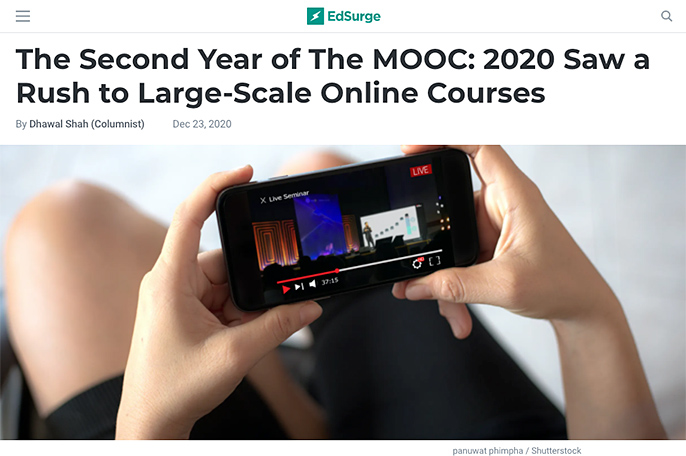
Many students complain that online-based learning doesn’t engage them. Well, check this idea out! [Christian]


From DSC…by the way, another title for this blog could have been:

WIN-WIN situations all around! The Theatre Departments out there could collaborate with other depts/disciplines to develop highly engaging, digitally-based learning experiences! 


The future of drama and the theatre — as well as opera, symphonies, and more — will likely include a significant virtual/digital component to them. While it’s too early to say that theatre needs to completely reinvent itself and move “the stage” completely online, below is an idea that creates a variety of WIN-WIN situations for actors, actresses, stage designers, digital audio/video editors, fine artists, graphic designers, programmers, writers, journalists, web designers, and many others as well — including the relevant faculty members!

A new world of creative, engaging, active learning could open up if those involved with the Theatre Department could work collaboratively with students/faculty members from other disciplines. And in the end, the learning experiences and content developed would be highly engaging — and perhaps even profitable for the institutions themselves!

A WIN-WIN situation all around! The Theatre Department could collaborate with other depts/disciplines to develop highly engaging learning experiences!

[DC: I only slightly edited the above image from the Theatre Department at WMU]


Though the integration of acting with online-based learning materials is not a new idea, this post encourages a far more significant interdisciplinary collaboration between the Theatre Department and other departments/disciplines.

Consider a “Dealing with Bias in Journalism” type of topic, per a class in the Digital Media and Journalism Major.

  • Students from the Theatre Department work collaboratively with the students from the most appropriate class(es?) from the Communications Department to write the script, as per the faculty members’ 30,000-foot instructions (not 1000-foot level/detailed instructions)
  • Writing the script would entail skills involved with research, collaboration, persuasion, creativity, communication, writing, and more
  • The Theatre students would ultimately act out the script — backed up by those learning about sound design, stage design, lighting design, costume design, etc.
  • Example scene: A woman is sitting around the kitchen table, eating breakfast and reading a posting — aloud — from a website that includes some serious bias in it that offends the reader. She threatens to cancel her subscription, contact the editor, and more. She calls out to her partner why she’s so mad about the article. 
  • Perhaps there could be two or more before/after scenes, given some changes in the way the article was written.
  • Once the scenes were shot, the digital video editors, programmers, web designers, and more could take that material and work with the faculty members to integrate those materials into an engaging, interactive, branching type of learning experience. 
  • From there, the finished product would be deployed by the relevant faculty members.

Scenes from WMU's Theatre Department

[DC: Above images from the Theatre Department at WMU]


Colleges and universities could share content with each other and/or charge others for their products/content/learning experiences. In the future, I could easily see a marketplace for buying and selling such engaging content. This could create a needed new source of revenue — especially given that those large auditoriums and theaters are likely not bringing in as much revenue as they typically do. 

Colleges and universities could also try to reach out to local acting groups to get them involved and continue to create feeders into the world of work.

Other tags/categories could include:

  • MOOCs
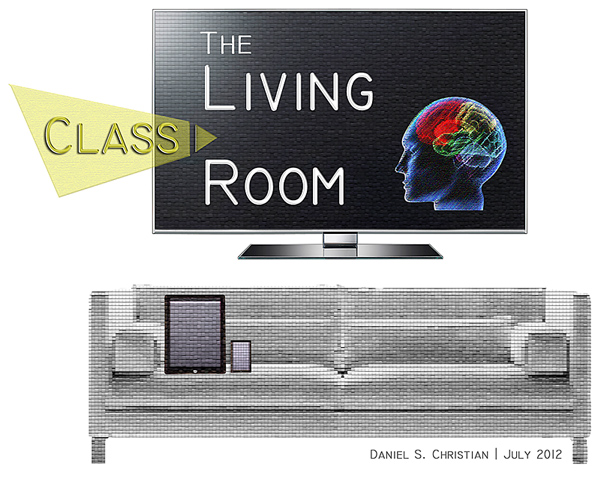
  • Learning from the Living[Class]Room
  • Multimedia / digital literacy — tools from Adobe, Apple, and others.
  • Passions, participation, engagement, attention.
  • XR: Creating immersive, Virtual Reality (VR)-based experiences
  • Learning Experience Design
  • Interaction Design
  • Interface Design
  • …and more

Also see:

What improv taught me about failure: As a teacher and academic — from scholarlyteacher.com by Katharine Hubbard

what improv taught me about failure -as a teacher and academic

In improv, the only way to “fail” is to overthink and not have fun, which reframed what failure was on a grand scale and made me start looking at academia through the same lens. What I learned about failure through improv comes back to those same two core concepts: have fun and stop overthinking.

Students are more engaged when the professor is having fun with the materials (Keller, Hoy, Goetz, & Frenzel, 2016), and teaching is more enjoyable when we are having fun ourselves.


From DSC:
Who needs to be discussing/debating “The Social Dilemma” movie? Whether one agrees with the perspectives put forth therein or not, the discussion boards out there should be lighting up in the undergraduate areas of Computer Science (especially Programming), Engineering, Business, Economics, Mathematics, Statistics, Philosophy, Religion, Political Science, Sociology, and perhaps other disciplines as well. 

To those starting out the relevant careers here…just because we can, doesn’t mean we should. Ask yourself not whether something CAN be developed, but *whether it SHOULD be developed* and what the potential implications of a technology/invention/etc. might be. I’m not aiming to take a position here. Rather, I’m trying to promote some serious reflection for those developing our new, emerging technologies and our new products/services out there.

Who needs to be discussing/debating The Social Dilemna movie?


From DSC:
Put yourself in the place of the conscientious/thorough learner. If you come into a course on Canvas & see Quizzes, Assignments, Discussion Boards, as well as other items listed on the Course Navigation Bar — in addition to the Modules selection — you might find yourself going to check many of those selections Every. Single. Day.

Graphically speaking:

Let's stop the FOMO and make it easy to find the content and the to-do's

(DSC purchased this image from Getty Images)

From DSC:
By the way, this is why RSS feeds and feed aggregators were implemented. Have updates/content flow to the person, instead of the person wasting time trying to find what’s been updated on 100+ websites.


Livestreamed Chemistry Labs Keep Learning Real — Mistakes, Spills and All — from campustechnology.com by Dian Schaffhauser

Excerpt:

To keep students engaged, the synchronous sessions include small-group breakout sessions and on-the-spot activities like having students name compounds; balance chemical equations; predict the outcomes of experiments; and calculate masses, amounts and concentrations for the chemicals used.


[Re: online-based learning] The Ford Model T from 1910 didn’t start out looking like a Maserati Gran Turismo from 2021! [Christian]

From DSC:
Per Wikipedia, this is a 1910 Model T that was photographed in Salt Lake City:

The Ford Model T didn't start out looking like a Maserati from 2021!


This is what online/virtual learning looks like further down the road. Our journey has just begun.

From DSC:
The Ford Model T didn’t start out looking like a Maserati Gran Turismo from 2021! Inventions take time to develop…to be improved…for new and further innovations and experiments to take place.

Thinking of this in terms of online-based learning, please don’t think we’ve reached the end of the road for online-based learning. 

The truth is, we’ve barely begun our journey.


Two last thoughts here


1 ) It took *teams* of people to get us to the point of producing a Maserati like this. It will take *teams* of people to produce the Maserati of online-based learning.

2) In terms of online-based learning, it’s hard to say how close to the Maserati that we have come because I/we don’t know how far things will go. But this I do know: We have come a looooonnnnnggggg ways from the late 1990s! If that’s what happened in the last 20 years — with many denying the value of online-based learning — what might the next 5, 10, or 20 years look like when further interest, needs, investments, etc. are added? Then add to all of that the momentum from emerging technologies like 5G, Augmented Reality, Mixed Reality, Virtual Reality, Artificial Intelligence, bots, algorithms, and more!


From DSC:
To drive the point home, here’s an addendum on late 9/29/20:

Mercedes-Benz Shares Video of Avatar Electric Car Prototype


From DSC: What if each learner/ person/ student could have a lifelong, cloud-based “tribute” site? [Christian]


From DSC: What if each learner/person/student could have a lifelong, cloud-based “tribute” site?

What if you could hire a career coach to sift through the tributes to find common themes?


From DSC:
I recently asked friends and family to help me celebrate a significant birthday for my wife by creating a tribute for her — using a service called Tribute.co. It was a fun, meaningful, relational experience — it opened the doors to some great communications.

Check out tribute.co -- what if each learner could have a lifelong, cloud-based tribute?

Here’s a video that describes what a Tribute is (from the company of that same name).

So I put out potential suggestions for what I hoped that we could relay to my wife, and people contributed their videos. Then a person at Tribute edited the videos to come up with a highlight reel. They also presented to my wife all of the videos, not just the highlight reel.

That got me to wonder, “What if each learner had a cloud-based, lifelong tribute site that parents, guardians, grandparents, teachers, coaches, musical directors, pastors, friends, and others could leave encouraging and instructive messages on? Or when they note something that might be of use later on in terms of career selection, they could “jot it down.” For example:

  • [First-grade teacher] “I noticed Anne that when we did the art projects, you were enthralled with any sort of creative endeavor or project. We almost lost you in another world!”
  • [Family member] “Tony, I’ve noticed ____. Here’s something to consider for your future pathways. Would you be interested in exploring _____ — such as if we signed you up for some lessons in that area?”
  • [Eight grade teacher] “Eloise, I saw that your engagement level skyrocket when we studied ____, especially when you did the project on ___.”
  • [Basketball coach] “Chan, I appreciated your hard work in practice today. Keep up the good work and you will be a super player! You are fast, strong, and seem to have a competitive spirit about you. Consider making a workout chart and charting out the workouts that you do each day. Monitor your progress over time. As of today, here are some apps to do just that: ___.
  • [Pastor] “So glad Amanda that you were able to join us on our youth group visit to ___. I appreciated your end-of-the-day reflections on the experiences of the day. I also appreciated your hard work helping others.”
  • [Friend] “It was great horsing around on Garageband with you today Zach. I look forward to diving into iMovie next with you. Let’s create a movie for each other. You seem to have a very creative side to you.”
  • [High school CS Teacher] “Keep up the good work programming Jeremy! I hope that you will consider going into some type of job that uses critical thinking, mathematics, problem-solving — perhaps it will be programming, perhaps it will be engineering, or something else.”
  • [College professor/advisor] “You mentioned that you hate college to me the last two times we met. You don’t seem happy studying ___. Have you considered ____?”
  • [Tennis coach] Remember to bend those knees…get low. Keep your eyes on the seams of the ball.”

The idea behind such a service would be to offer encouragement, feedback, (if carefully put) constructive criticism, a message that “I’m on your team”…and/or…”Here’s what I see in you.”


Additional functionality/options


  • Contributors:
    • Like Twitter imposes a limit on characters, there could be options to impose a time limit on the length of a video, ability to add more than one video, and/or set a limit on how many videos someone can upload
    • If submitting a written piece, the option would be there to limit the number of characters and/or the word count.
  • From learners themselves (to their own tribute)
    • No time limit, no word count or character limit
    • Would act like a multimedia-based diary/journal of learning
    • Option to select whether might be worth re-listening to for career selection purposes.


© 2025 | Daniel Christian