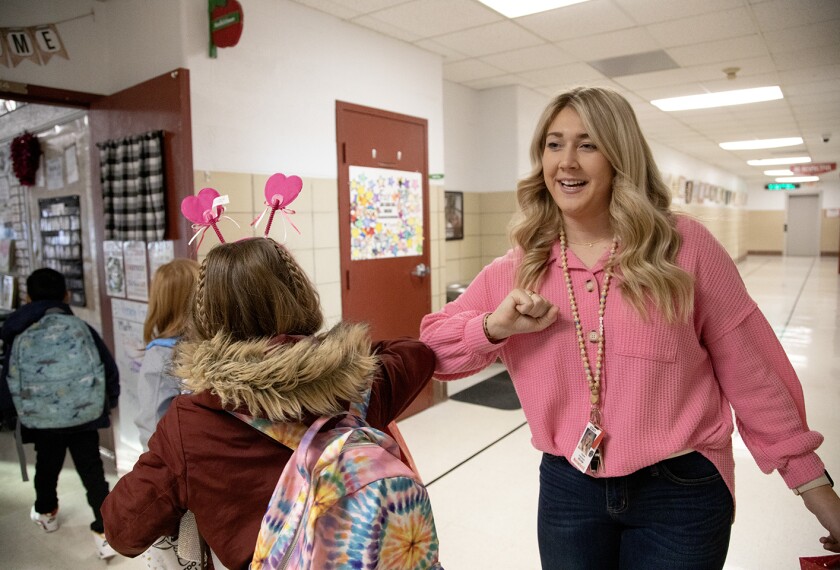
Second grade teacher Kaylee Hutcheson greets her students as they enter their classroom to start their day at Hawthorne Elementary School in Mexico, Mo., on Feb. 14, 2024. |Lisa Krantz for Education Week
Teachers, what if someone told you that engaging in a daily classroom ritual with your students that takes less than five minutes and requires little to no training could improve your students’ mood and behavior immediately, make them more likely to engage in learning, and maybe even elevate your own teaching skills?
Yes, it sounds like a gimmick. But it’s not.
It’s a simple practice that involves greeting each student individually as they walk through the classroom door.
Dave told me that he couldn’t have made Borrowing Time without AI—it’s an expensive project that traditional Hollywood studios would never bankroll. But after Dave’s short went viral, major production houses approached him to make it a full-length movie. I think this is an excellent example of how AI is changing the art of filmmaking, and I came out of this interview convinced that we are on the brink of a new creative age.
We dive deep into the world of AI tools for image and video generation, discussing how aspiring filmmakers can use them to validate their ideas, and potentially even secure funding if they get traction. Dave walks me through how he has integrated AI into his movie-making process, and as we talk, we make a short film featuring Nicolas Cage using a haunted roulette ball to resurrect his dead movie career, live on the show.
People want purpose and meaning in their lives. They want their lives to count. To matter.
People want to work for an organization that is concretely making the world a better place in which to live.
People want to buy from businesses that are making a positive contribution to the world.
Both love and hate are powerful. But let’s choose to go forward with love.
Parents, grandparents, and/or other guardians of critically-ill children carry enormous, hidden burdens. Let’s try to notice those burdens and help them out.
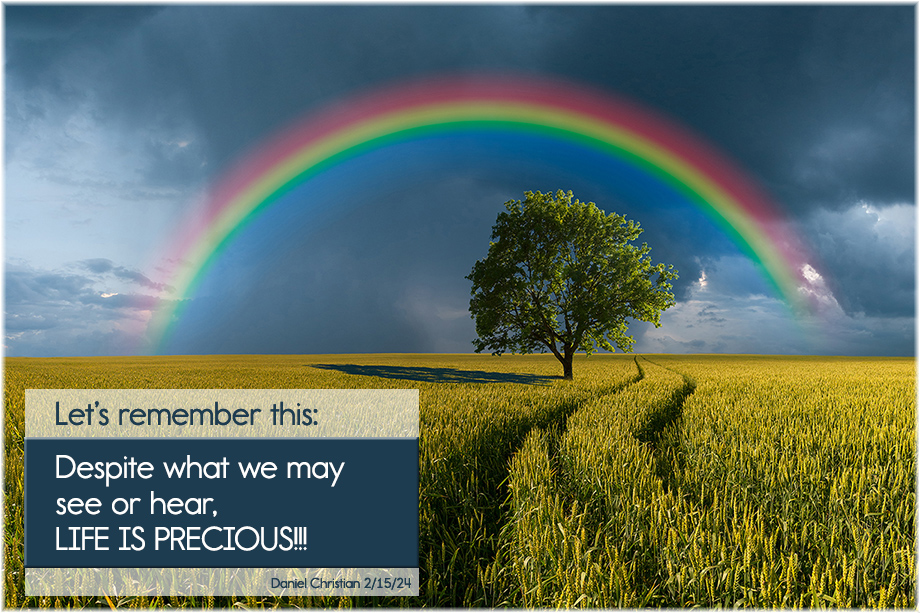
Life is precious.
From DSC: Recently, a group from our church went to serve down at theGive Kids the World Village, in Kissimee, Florida. I wanted to relay the specialness of this place and say a few words about the Founder of the Give Kids the World Village: a man by the name of Henri Landwirth. Over the last few weeks in the Orlando area, the Holy Spirit helped me to think about the power of a vision, as both Walt Disney and Henri Landwirth were visionaries.
But first, it’s important to note that Henri survived FIVE concentration camps during WWII. He had no name there. He was known only as B4343.
Henri:
Was in concentration camps from ages 13-18
He lost both of his parents to acts of mass murder
Henri survived FIVE YEARS of hunger, torture, and horrendous conditions
He faced what looked like certain death several times
Yet as I was reading the book entitled “Love & Hate”, I kept wondering if I was seeing the fingerprints of God on Henri’s life.
After the war, Henri went in search of former Nazis, for whom he was filled with hatred. And while I don’t have time to relay the fateful day that changed Henri’s perspective and his life, the bottom line was that he didn’t want to become like his former captors the Nazis. Surprisingly and amazingly, he chose love, not hate.
Fast forward to Henri’s coming to America, working very hard, and climbing up the ladder of the Holiday Inn organization.
Then fast forward even further to the time Henri was looking for a location to build his vision. Quoting from page 139:
Henri took his checkbook and began looking for a location for Give Kids the World Village. He found it almost immediately in Kissimmee. When Henry looked at the lot, he could already see the Village there. Where others might have seen rows of burned orange trees and wetlands, Henri saw villages, a place for kids to fish, and a castle. “I could see it all,” Henri says, “as if my dream had already come to life.”
A few last notable things about the Give Kids the World Village:
According to the book by Bill Halamandaris, the Village was built with ZERO CONTRACTS and NO ADVERTISEMENTS from those who helped create the village! This is underheard of for $60+ million worth of facilities and the millions of dollars’ worth of donated services.
The Village has thousands of volunteers and it takes 160 volunteers per day to keep it running
Since 1986, Give Kids The World Village has welcomed more than 188,000 families from all 50 states and 77 countries.
So I want to leave you with the idea that we were witnesses of – and participants in – the tremendous power of a vision.
Our collection of 25 engaging music activities includes activities for kids from preschool through to middle school. Have a look at this carefully selected list and pick out a few ideas to try out with your class and get the most out of your next music session!
The EdResearch for Action Overview Series summarizes the research on key topics to provide K-12 education decision makers and advocates with an evidence base to ground discussions about how to best serve students. Authors – leading experts from across the field of education research – are charged with highlighting key findings from research that provide concrete, strategic insight on persistent challenges sourced from district and state leaders.
Central Question
What evidence-based practices can schools and districts implement to identify and support students experiencing homelessness?
From DSC: The recent drama over at OpenAI reminds me of how important a few individuals are in influencing the lives of millions of people.
We have reached an agreement in principle for Sam Altman to return to OpenAI as CEO with a new initial board of Bret Taylor (Chair), Larry Summers, and Adam D’Angelo.
We are collaborating to figure out the details. Thank you so much for your patience through this.
The C-Suites (i.e., the Chief Executive Officers, Chief Financial Officers, Chief Operating Officers, and the like) of companies like OpenAI, Alphabet (Google), Meta (Facebook), Microsoft, Netflix, NVIDIA, Amazon, Apple, and a handful of others have enormous power. Why? Because of the enormous power and reach of the technologies that they create, market, and provide.
We need to be praying for the hearts of those in the C-Suites of these powerful vendors — as well as for their Boards.
LORD, grant them wisdom and help mold their hearts and perspectives so that they truly care about others. May their decisions not be based on making money alone…or doing something just because they can.
What happens in their hearts and minds DOES and WILL continue to impact the rest of us. And we’re talking about real ramifications here. This isn’t pie-in-the-sky thinking or ideas. This is for real. With real consequences. If you doubt that, go ask the families of those whose sons and daughters took their own lives due to what happened out on social media platforms. Disclosure: I use LinkedIn and Twitter quite a bit. I’m not bashing these platforms per se. But my point is that there are real impacts due to a variety of technologies. What goes on in the hearts and minds of the leaders of these tech companies matters.
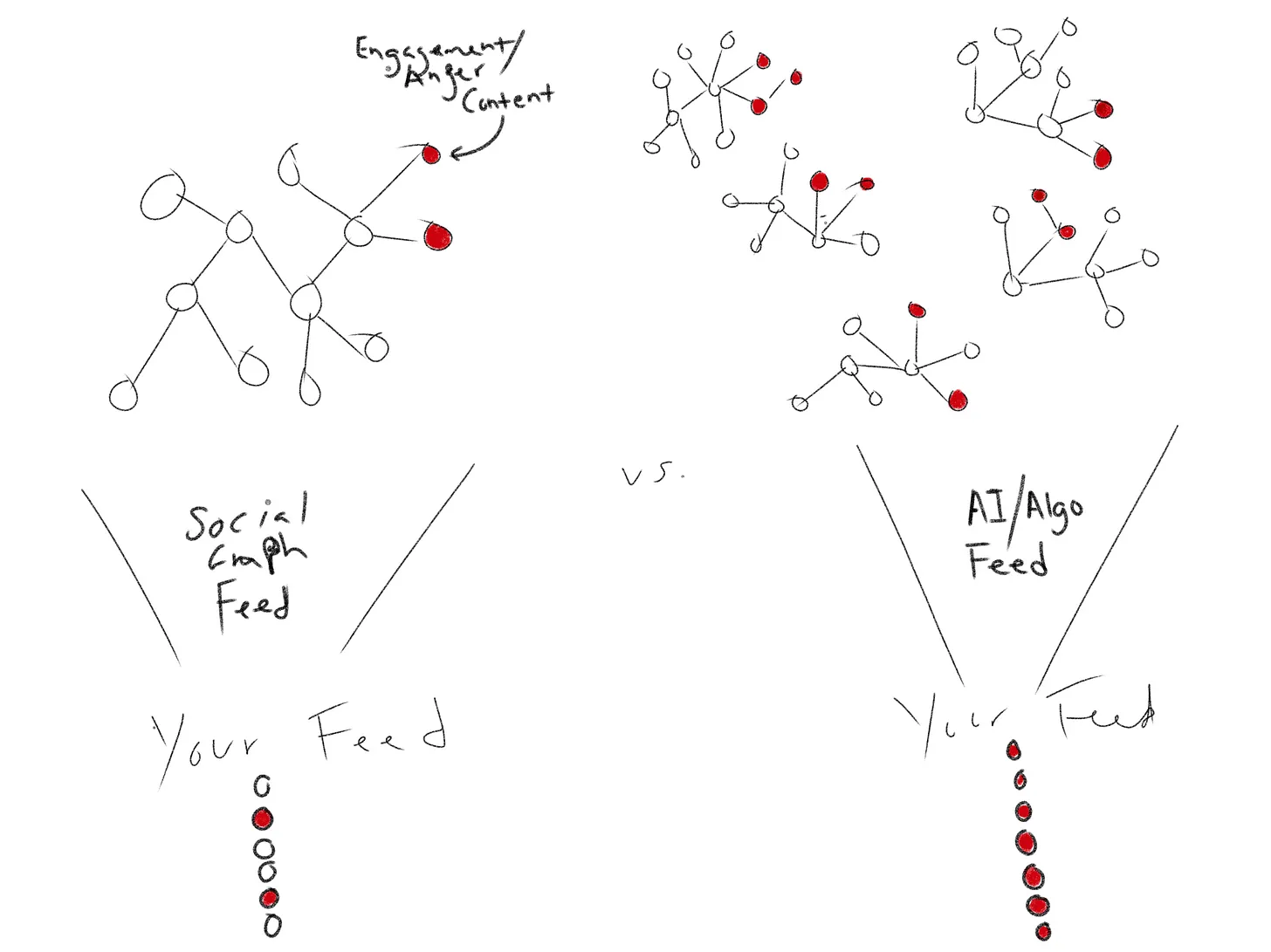
No doubt, technology influences us in many ways we don’t fully understand. But one area where valid concerns run rampant is the attention-seeking algorithmspowering the news and media we consume on modern platforms that efficiently polarize people. Perhaps we’ll call it The Law of Anger Expansion: When people are angry in the age of algorithms, they become MORE angry and LESS discriminate about who and what they are angry at.
… Algorithms that optimize for grabbing attention, thanks to AI, ultimately drive polarization.
…
The AI learns quickly that a rational or “both sides” view is less likely to sustain your attention (so you won’t get many of those, which drives the sensation that more of the world agrees with you). But the rage-inducing stuff keeps us swiping.
Our feeds are being sourced in ways that dramatically change the content we’re exposed to.
And then these algorithms expand on these ultimately destructive emotions – “If you’re afraid of this, maybe you should also be afraid of this” or “If you hate those people, maybe you should also hate these people.”
…
How do we know when we’ve been polarized? This is the most important question of the day.
…
Whatever is inflaming you is likely an algorithm-driven expansion of anger and an imbalance of context.
Summary: Whether you’re just entering the workforce, starting a new job, or transitioning into people management, kindness can be a valuable attribute that speaks volumes about your character, commitment, and long-term value. Here are a few simple routines you can integrate into your everyday work life that will spread kindness and help create a culture of kindness at your organization.
Practice radical self-care. The best way to be a valuable, thoughtful team member is to be disciplined about your own wellness — your physical, emotional, and mental well-being.
Do your job. Start with the basics by showing up on time and doing your job to the best of your ability. This is where your self-care practice comes into play — you can’t do your best work without taking care of yourself first.
Reach out to others with intention. Make plans to meet virtually or, even better, in person with your colleagues. Ask about their pets, their recent move, or their family. Most importantly, practice active listening.
Recognize and acknowledge people. Authentic, thoughtful interactions show that you’re thinking about the other person and reflecting on their unique attributes and value, which can cement social connections.
Be conscientious with your feedback. Being kind means offering feedback for the betterment of the person receiving it and the overall success of your company.
“When anxiety is high and morale is low, kindness isn’t a luxury — it’s a necessity. With mass layoffs, economic uncertainty, and geopolitical tensions, kindness is needed now more than ever, especially at work.”
Crosstown High is a learner-centered public charter school that engages students in meaningful, project-based work and authentic relationships that will prepare them to be self-directed, lifelong learners. We are located inside Crosstown Concourse, a landmark adaptive reuse development project in the heart of Memphis.
If you’re short on ideas, here are a few things you might compliment them on:
Relationships and rapport with students:
Decision-making:
Clarity and delivery:
Classroom management and logistics:
Lesson planning:
Design:
So this is my ask of you as an administrator: Choose 10 teachers on your staff and make it a goal to give each of them one piece of specific, positive feedback this week. For some, you might only need to think about what you’ve noticed during your past observations of them. For others, you might need to arrange a short classroom visit — make sure the teacher knows ahead of time that you will ONLY be looking for things to compliment them on. Even better would be to ask them to choose a time when they’re doing something they think you’d like to see.
In doing research for my Ph.D. program, I sought out the perspectives of five teachers through informal conversations about how schools have improved since the pandemic. Four themes emerged.
From DSC: To add another positive to the COVID-19 picture…
Just like COVID-19 did more for the advancement of online learning within our learning ecosystems than 20+ years of online learning development, COVID-19 may have done more to move our younger learners along the flexibility route that will serve them well in their futures. That is, with today’s exponential pace of change, we all need to be more agile and flexible — and be able to reinvent ourselves along the way. The type of learning that our K-12ers went through during COVID-19 may have been the most helpful thing yet for their future success and career development. They will need to pivot, adapt, and take right turn after right turn.
ChatGPT can now see, hear, and speak. Rolling out over next two weeks, Plus users will be able to have voice conversations with ChatGPT (iOS & Android) and to include images in conversations (all platforms). https://t.co/uNZjgbR5Bmpic.twitter.com/paG0hMshXb
For the IBC 2023 conference, Adobe announced new AI and 3D features to Creative Cloud video tools, including Premiere Pro Enhance Speech for faster dialog cleanup, and filler word detection and removal in Text-Based Editing. There’s also new AI-based rotoscoping and a true 3D workspace in the After Effects beta, as well as new camera-to-cloud integrations and advanced storage options in Frame.io.
Though not really about AI, you might also be interested in this posting:
The Airt AI Generator app makes it easy to create art on your iPad. You can pick an art style and a model to make your artwork. It’s simple enough for anyone to use, but it doesn’t have many options for customizing your art.
Even with these limitations, it’s a good starting point for people who want to try making art with AI. Here are the good and bad points we found.
Pros:
User-Friendly: The app is simple and easy to use, making it accessible for users of all skill levels.
Cons:
Limited Advanced Features: The app lacks options for customization, such as altering image ratios, seeds, and other settings.
Although there is no replacement for getting your hands dirty with finger paints, technology can offer many ways for students to be creative when making art. In addition to creativity, technology can also allow students to explore and learn about art in new and engaging ways.
Some of the best free digital art tools are those from Google that help educators and students with teaching, learning, exploring, and creating art. The wide range of tools and activities available provide nearly infinite possibilities.
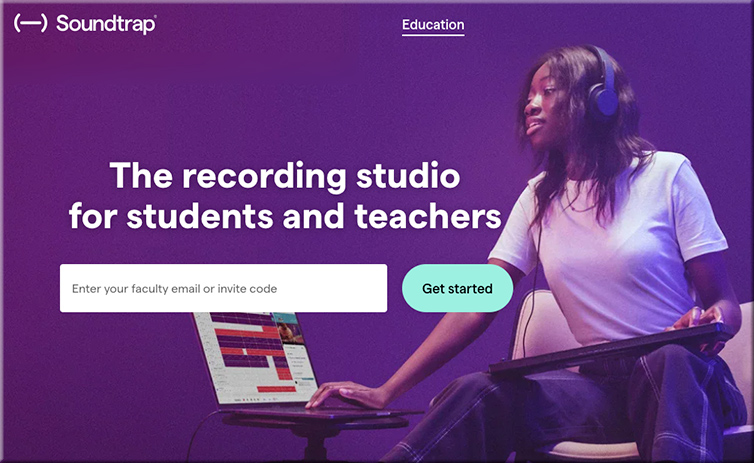
Soundtrap: How To Use it to Teach — from techlearning.com by Luke Edwards Soundtrap is the recording studio for students and teachers that could help in class and beyond
Soundtrap is a music production tool that is designed for use in education. That means a full-on mixing and sound production studio experience, but one that is accessible for students grade six and up.
Since this is relatively simple to use and is available in app as well as web formats, it is highly accessible for both in-class and personal devices.
This tool offers a way to spark creativity in students and a method to help experiment with music that can inspire those new to this world, or enable more experienced students to create complex and explorative music.
Also relevant/see:
BREAKING: YouTube announced a suite of AI tools for creators! From a dedicated video editing app and AI language dubbing to AI video generation and ideation. Here’s the TL;DR:
1. AI Video with Dream Screen – Visually transport yourself anywhere by typing a prompt. This new… pic.twitter.com/fCPSc87IKq
The idea was simple: ask sixty community leaders to fan across the city’s public schools, follow in the footsteps of its youngest citizens, and report back on what they saw.
Fifty-nine said yes. What they found, Pickering says, “were kids with dead eyes. Kids not engaged. And kids who knew that school was a game – and the game was rigged.”
So the Billy Madison team used its findings to design a prospective high school that would actually produce what its participants said they wanted to see:
Let kids pursue their passions. Give them real work to do. And get them out of the school building, and in the community.
This thought-provoking discussion delves into the topic of system replacement in education. Is school transformation possible without replacing the existing education system? Joining [Michael] to discuss the question are Thomas Arnett of the Christensen Institute and Kelly Young of Education Reimagined.
In an educational landscape that constantly seeks marginal improvements, [Michael’s] guests speak to the importance of embracing new value networks that support innovative approaches to learning. They bring to light the issue of programs that remain niche solutions, rather than robust, learner-centered alternatives. In exploring the concept of value networks, [Michael’s] guests challenge the notion of transforming individual schools or districts alone. They argue for the creation of a new value network to truly revolutionize the education system. Of course, they admit that achieving this is no small feat, as it requires a paradigm shift in mindset and a careful balance between innovation and existing structures. In this conversation, we wrestle with the full implications of their findings and more.
From DSC: This reminds me of the importance of TrimTab Groups who invent or test out something new apart from the mothership.
The 2023 GEM Report on technology and education explores these debates, examining education challenges to which appropriate use of technology can offer solutions (access, equity and inclusion; quality; technology advancement; system management), while recognizing that many solutions proposed may also be detrimental.
The report also explores three system-wide conditions (access to technology, governance regulation, and teacher preparation) that need to be met for any technology in education to reach its full potential.
Bloom Academy is the first and only self-directed learning center in Las Vegas – microschooling as true, nontraditional and permissionless education alternative. 5 Questions with Microschool Founders Sarah & Yamila.https://t.co/RvxtwGXvkZ
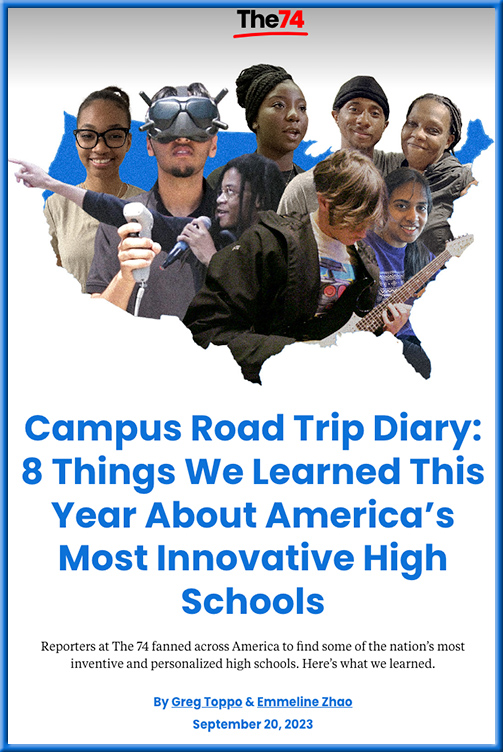
Since last spring, journalists at The 74 have been crossing the U.S. as part of our 2023 High School Road Trip. It has embraced both emerging and established high school models, taking us to 13 schools from Rhode Island to California, Arizona to South Carolina, and in between.
It has brought us face-to-face with innovation, with programs that promote everything from nursing to aerospace to maritime-themed careers.
At each school, educators seem to be asking one key question: What if we could start over and try something totally new?
What we’ve found represents just a small sample of the incredible diversity that U.S. high schools now offer, but we’re noticing a few striking similarities that educators in these schools, free to experiment with new models, now share. Here are the top eight: .
What does it take to empower parents and decentralize schooling? Why is a diversity of school models important to parents? Are we at a tipping point? .
Several meta-analyses, which summarize the evidence from many studies, have found higher achievement when students take quizzes instead of, say, reviewing notes or rereading a book chapter. “There’s decades and decades of research showing that taking practice tests will actually improve your learning,” said David Shanks, a professor of psychology and deputy dean of the Faculty of Brain Sciences at University College London.
Still, many students get overwhelmed during tests. Shanks and a team of four researchers wanted to find out whether quizzes exacerbate test anxiety. The team collected 24 studies that measured students’ test anxiety and found that, on average, practice tests and quizzes not only improved academic achievement, but also ended up reducing test anxiety. Their meta-analysis was published in Educational Psychology Review in August 2023.
The End of Scantron Tests— from theatlantic.com by Matteo Wong Machine-graded bubble sheets are the defining feature of American schools. Today’s kindergartners may never have to fill one out.
There are several possible reasons why pretesting worked in this study.
Students paid more attention to the pretested material during the lecture.
The pretest activated prior knowledge (some of them are clearly doing a lot of prework), and allowed them to encode the new information more deeply.
They were doing a lot of studying of the pretested information outside of class.
There are some great spaced retrieval effects going on. That is, students saw the material before lecture, they took a quiz on it during the pretest, then later they reviewed or quizzed themselves on that same material again during self-study.
A new planetarium project in the UK has the potential to revolutionise education and entertainment. Reece Webb reports.
Many integrators will work on a career defining project, and for Amir Khosh, a new, one-of-a-kind planetarium project nestled in the heart of Nottinghamshire, UK, has sat at the centre of his world.
A project more than five years in the making, ST Engineering Antycip will be part of the large-scale developmemt that is the Sherwood Observatory, which aims to drive education enrichment and visitor attraction in marginalised communities.