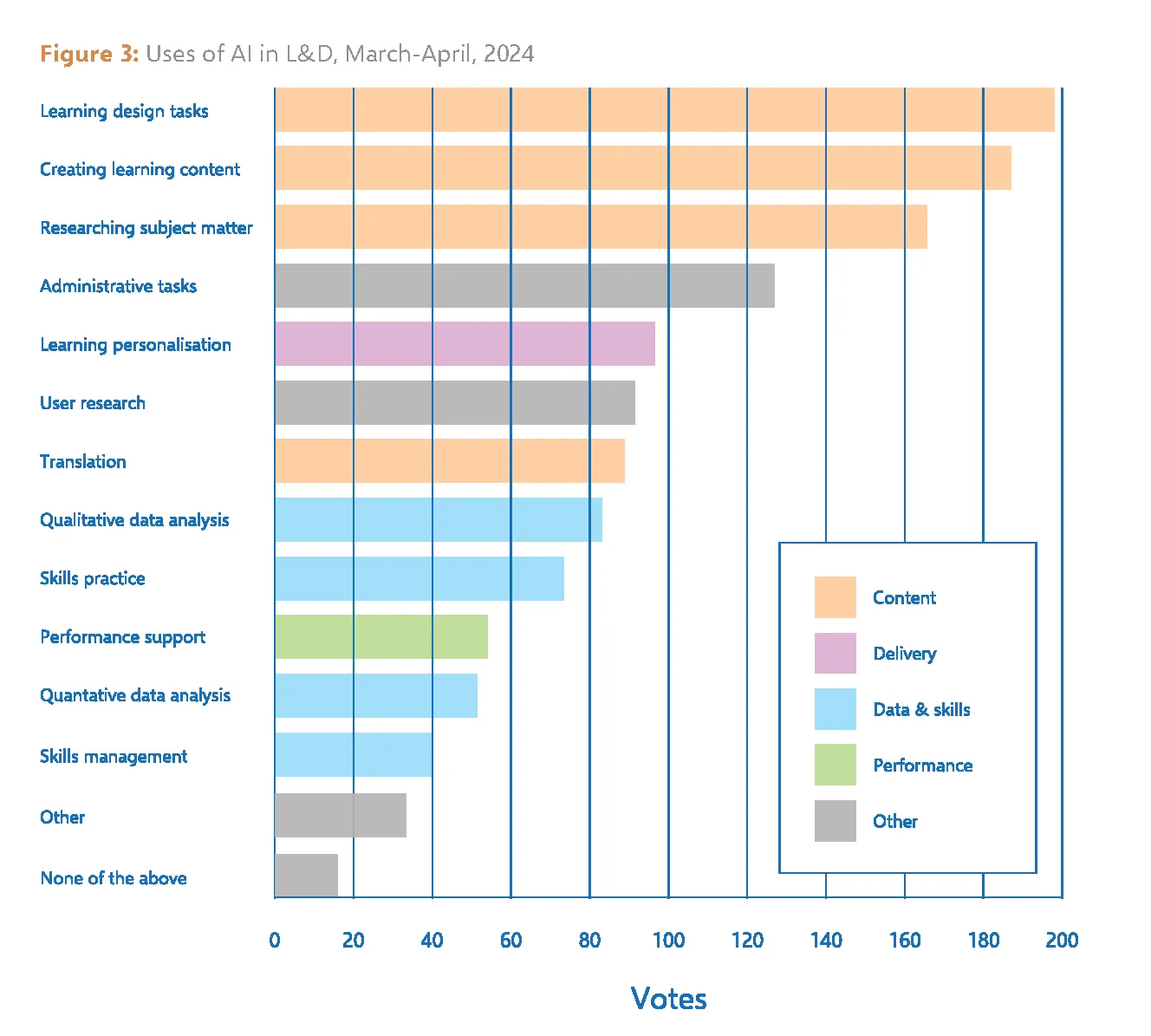
AI Is Unavoidable, Not Inevitable — from marcwatkins.substack.com by Marc Watkins

I had the privilege of moderating a discussion between Josh Eyler and Robert Cummings about the future of AI in education at the University of Mississippi’s recent AI Winter Institute for Teachers. I work alongside both in faculty development here at the University of Mississippi. Josh’s position on AI sparked a great deal of debate on social media:

To make my position clear about the current AI in education discourse I want to highlight several things under an umbrella of “it’s very complicated.”

Most importantly, we all deserve some grace here. Dealing with generative AI in education isn’t something any of us asked for. It isn’t normal. It isn’t fixable by purchasing a tool or telling faculty to simply ‘prefer not to’ use AI. It is and will remain unavoidable for virtually every discipline taught at our institutions.

If one good thing happens because of generative AI let it be that it helps us clearly see how truly complicated our existing relationships with machines are now. As painful as this moment is, it might be what we need to help prepare us for a future where machines that mimic reasoning and human emotion refuse to be ignored.


“AI tutoring shows stunning results.”
See below article.


From chalkboards to chatbots: Transforming learning in Nigeria, one prompt at a time — from blogs.worldbank.org by Martín E. De Simone, Federico Tiberti, Wuraola Mosuro, Federico Manolio, Maria Barron, and Eliot Dikoru

Learning gains were striking
The learning improvements were striking—about 0.3 standard deviations. To put this into perspective, this is equivalent to nearly two years of typical learning in just six weeks. When we compared these results to a database of education interventions studied through randomized controlled trials in the developing world, our program outperformed 80% of them, including some of the most cost-effective strategies like structured pedagogy and teaching at the right level. This achievement is particularly remarkable given the short duration of the program and the likelihood that our evaluation design underestimated the true impact.

Our evaluation demonstrates the transformative potential of generative AI in classrooms, especially in developing contexts. To our knowledge, this is the first study to assess the impact of generative AI as a virtual tutor in such settings, building on promising evidence from other contexts and formats; for example, on AI in coding classes, AI and learning in one school in Turkey, teaching math with AI (an example through WhatsApp in Ghana), and AI as a homework tutor.

Comments on this article from The Rundown AI:

Why it matters: This represents one of the first rigorous studies showing major real-world impacts in a developing nation. The key appears to be using AI as a complement to teachers rather than a replacement — and results suggest that AI tutoring could help address the global learning crisis, particularly in regions with teacher shortages.


Other items re: AI in our learning ecosystems:

  • Will AI revolutionise marking? — from timeshighereducation.com by Rohim Mohammed
    Artificial intelligence has the potential to improve speed, consistency and detail in feedback for educators grading students’ assignments, writes Rohim Mohammed. Here he lists the pros and cons based on his experience
  • Marty the Robot: Your Classroom’s AI Companion — from rdene915.com by Dr. Rachelle Dené Poth
  • Generative Artificial Intelligence: Cautiously Recognizing Educational Opportunities — from scholarlyteacher.com by Todd Zakrajsek, University of North Carolina at Chapel Hill
  • Personal AI — from michelleweise.substack.com by Dr. Michelle Weise
    “Personalized” Doesn’t Have To Be a Buzzword
    Today, however, is a different kind of moment. GenAI is now rapidly evolving to the point where we may be able to imagine a new way forward. We can begin to imagine solutions truly tailored for each of us as individuals, our own personal AI (pAI). pAI could unify various silos of information to construct far richer and more holistic and dynamic views of ourselves as long-life learners. A pAI could become our own personal career navigator, skills coach, and storytelling agent. Three particular areas emerge when we think about tapping into the richness of our own data:

    • Personalized Learning Pathways & Dynamic Skill Assessment: …
    • Storytelling for Employers:…
    • Ongoing Mentorship and Feedback: …
  • Speak — a language learning app — via The Neuron


AI educators are coming to this school – and it’s part of a trend — from techradar.com by Eric Hal Schwartz
Two hours of lessons, zero teachers

  • An Arizona charter school will use AI instead of human teachers for two hours a day on academic lessons.
  • The AI will customize lessons in real-time to match each student’s needs.
  • The company has only tested this idea at private schools before but claims it hugely increases student academic success.

One school in Arizona is trying out a new educational model built around AI and a two-hour school day. When Arizona’s Unbound Academy opens, the only teachers will be artificial intelligence algorithms in a perfect utopia or dystopia, depending on your point of view.


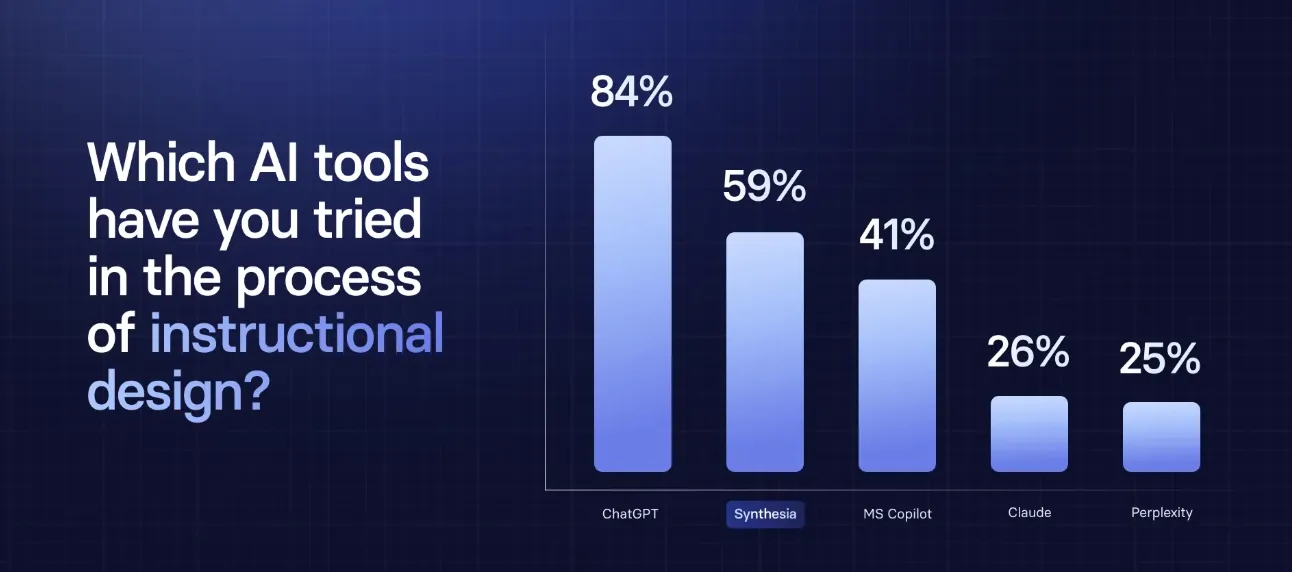
AI in Instructional Design: reflections on 2024 & predictions for 2025 — from drphilippahardman.substack.com by Dr. Philippa Hardman
Aka, four new year’s resolutions for the AI-savvy instructional designer.


Debating About AI: A Free Comprehensive Guide to the Issues — from stefanbauschard.substack.com by Stefan Bauschard

In order to encourage and facilitate debate on key controversies related to AI, I put together this free 130+ page guide to the main arguments and ideas related to the controversies.


Universities need to step up their AGI game — from futureofbeinghuman.com by Andrew Maynard
As Sam Altman and others push toward a future where AI changes everything, universities need to decide if they’re going to be leaders or bystanders in helping society navigate advanced AI transitions

And because of this, I think there’s a unique opportunity for universities (research universities in particular) to up their game and play a leadership role in navigating the coming advanced AI transition.

Of course, there are already a number of respected university-based initiatives that are working on parts of the challenge. Stanford HAI (Human-centered Artificial Intelligence) is one that stands out, as does the Leverhulm Center for the Future of Intelligence at the University of Cambridge, and the Center for Governance of AI at the University of Oxford. But these and other initiatives are barely scratching the surface of what is needed to help successfully navigate advanced AI transitions.

If universities are to be leaders rather than bystanders in ensuring human flourishing in an age of AI, there’s an urgent need for bolder and more creative forward-looking initiatives that support research, teaching, thought leadership, and knowledge mobilization, at the intersection of advanced AI and all aspects of what it means to thrive and grow as a species.


How AI Is Changing Education: The Year’s Top 5 Stories — from edweek.org by Alyson Klein

Ever since a new revolutionary version of chat ChatGPT became operable in late 2022, educators have faced several complex challenges as they learn how to navigate artificial intelligence systems.

Education Week produced a significant amount of coverage in 2024 exploring these and other critical questions involving the understanding and use of AI.

Here are the five most popular stories that Education Week published in 2024 about AI in schools.


What’s next with AI in higher education? — from msn.com by Science X Staff

Dr. Lodge said there are five key areas the higher education sector needs to address to adapt to the use of AI:

1. Teach ‘people’ skills as well as tech skills
2. Help all students use new tech
3. Prepare students for the jobs of the future
4. Learn to make sense of complex information
5. Universities to lead the tech change


5 Ways Teachers Can Use NotebookLM Today — from classtechtips.com by Dr. Monica Burns


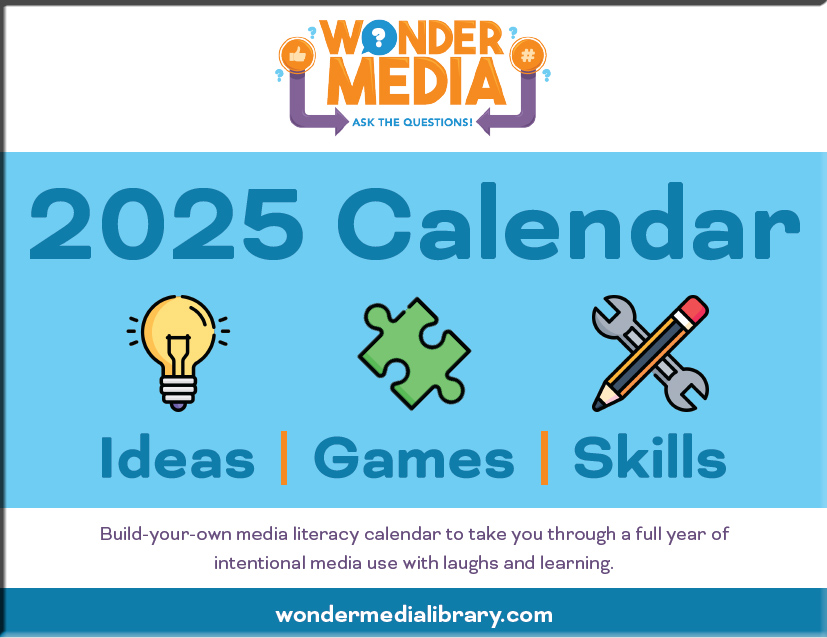
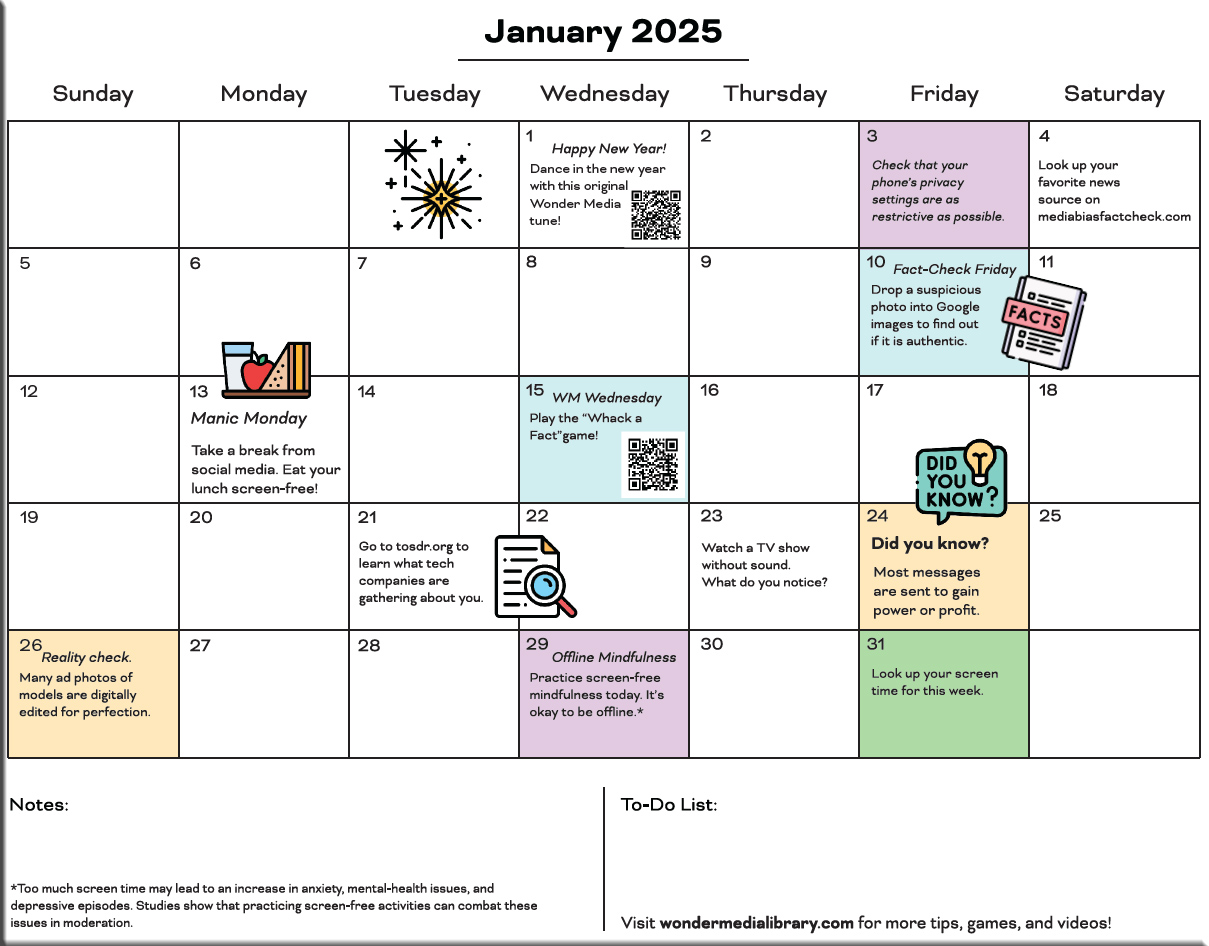
Introducing the 2025 Wonder Media Calendar for tweens, teens, and their families/households. Designed by Sue Ellen Christian and her students in her Global Media Literacy class (in the fall 2024 semester at Western Michigan University), the calendar’s purpose is to help people create a new year filled with skills and smart decisions about their media use. This calendar is part of the ongoing Wonder Media Library.com project that includes videos, lesson plans, games, songs and more. The website is funded by a generous grant from the Institute of Museum and Library Services, in partnership with Western Michigan University and the Library of Michigan.


Side Hustles for Educators — from drlukehobson.com by Luke Hobson

Anyway, let’s say you work in education, and you want to start a side hustle. What are your options? I’ve seen folks take a few different approaches with this so, let’s go over a few options:

  • Adjunct Positions…
  • Presentations and Workshops…
  • Consulting and Client Work…
  • Digital Courses and Coaching…
 

Episode 302: A Practical Roadmap for AI in K-12 Education with Mike Kentz & Nick Potkalitsky, PhD

In this episode of My EdTech Life, I had the pleasure of interviewing Mike Kentz and Nick Potkalitsky, PhD, to discuss their new book, AI in Education: The K-12 Roadmap to Teacher-Led Transformation. We dive into the transformative power of AI in education, exploring its potential for personalization, its impact on traditional teaching practices, and the critical need for teacher-driven experimentation.


Striking a Balance: Navigating the Ethical Dilemmas of AI in Higher Education — from er.educause.edu by Katalin Wargo and Brier Anderson
Navigating the complexities of artificial intelligence (AI) while upholding ethical standards requires a balanced approach that considers the benefits and risks of AI adoption.

As artificial intelligence (AI) continues to transform the world—including higher education—the need for responsible use has never been more critical. While AI holds immense potential to enhance teaching and learning, ethical considerations around social inequity, environmental concerns, and dehumanization continue to emerge. College and university centers for teaching and learning (CTLs), tasked with supporting faculty in best instructional practices, face growing pressure to take a balanced approach to adopting new technologies. This challenge is compounded by an unpredictable and rapidly evolving landscape. New AI tools surface almost daily. With each new tool, the educational possibilities and challenges increase exponentially. Keeping up is virtually impossible for CTLs, which historically have been institutional hubs for innovation. In fact, as of this writing, the There’s an AI for That website indicates that there are 23,208 AIs for 15,636 tasks for 4,875 jobs—with all three numbers increasing daily.

To support college and university faculty and, by extension, learners in navigating the complexities of AI integration while upholding ethical standards, CTLs must prioritize a balanced approach that considers the benefits and risks of AI adoption. Teaching and learning professionals need to expand their resources and support pathways beyond those solely targeting how to leverage AI or mitigate academic integrity violations. They need to make a concerted effort to promote critical AI literacy, grapple with issues of social inequity, examine the environmental impact of AI technologies, and promote human-centered design principles.1


5 Free AI Tools For Learning & Exploration — from whytryai.com by Daniel Nest
Have fun exploring new topics with these interactive sites.

We’re truly spoiled for choice when it comes to AI learning tools.

In principle, any free LLM can become an endlessly patient tutor or an interactive course-maker.

If that’s not enough, tools like NotebookLM’s “Audio Overviews” and ElevenLabs’ GenFM can turn practically any material into a breezy podcast.

But what if you’re looking to explore new topics in a way that’s more interactive than vanilla chatbots and more open-ended than source-grounded NotebookLM?

Well, then you might want to give one of these free-to-try learning tools a go.


Where to start with AI agents: An introduction for COOs — from fortune.com by Ganesh Ayyar

Picture your enterprise as a living ecosystem, where surging market demand instantly informs staffing decisions, where a new vendor’s onboarding optimizes your emissions metrics, where rising customer engagement reveals product opportunities. Now imagine if your systems could see these connections too! This is the promise of AI agents — an intelligent network that thinks, learns, and works across your entire enterprise.

Today, organizations operate in artificial silos. Tomorrow, they could be fluid and responsive. The transformation has already begun. The question is: will your company lead it?

The journey to agent-enabled operations starts with clarity on business objectives. Leaders should begin by mapping their business’s critical processes. The most pressing opportunities often lie where cross-functional handoffs create friction or where high-value activities are slowed by system fragmentation. These pain points become the natural starting points for your agent deployment strategy.


Create podcasts in minutes — from elevenlabs.io by Eleven Labs
Now anyone can be a podcast producer


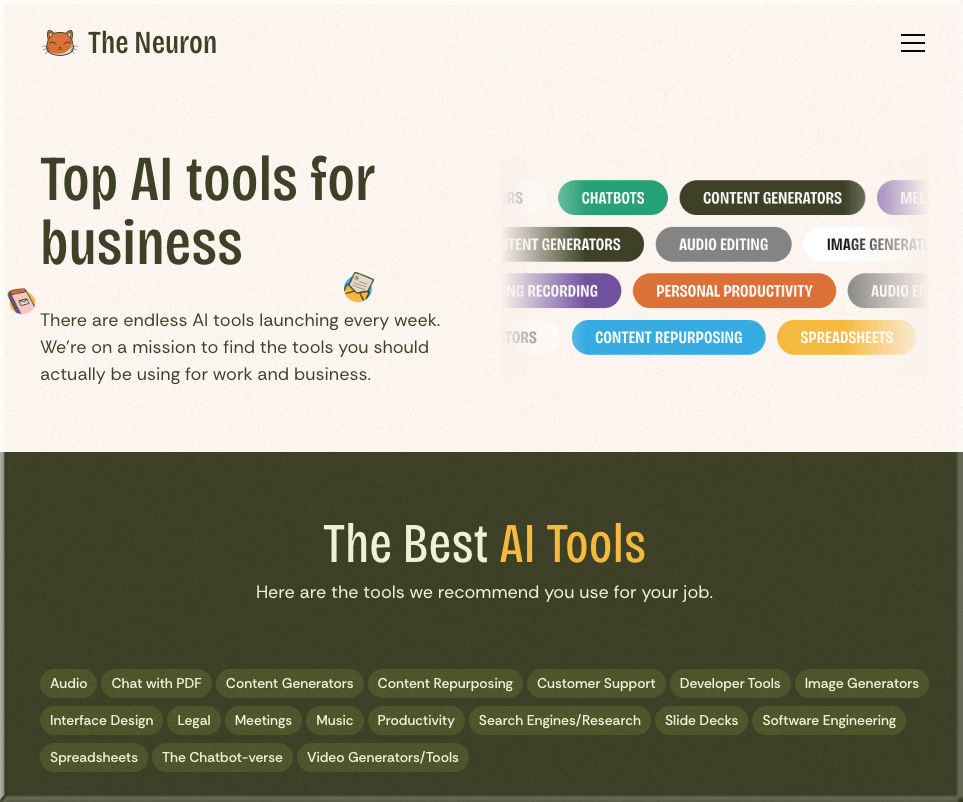
Top AI tools for business — from theneuron.ai


This week in AI: 3D from images, video tools, and more — from heatherbcooper.substack.com by Heather Cooper
From 3D worlds to consistent characters, explore this week’s AI trends

Another busy AI news week, so I organized it into categories:

  • Image to 3D
  • AI Video
  • AI Image Models & Tools
  • AI Assistants / LLMs
  • AI Creative Workflow: Luma AI Boards

Want to speak Italian? Microsoft AI can make it sound like you do. — this is a gifted article from The Washington Post;
A new AI-powered interpreter is expected to simulate speakers’ voices in different languages during Microsoft Teams meetings.

Artificial intelligence has already proved that it can sound like a human, impersonate individuals and even produce recordings of someone speaking different languages. Now, a new feature from Microsoft will allow video meeting attendees to hear speakers “talk” in a different language with help from AI.


What Is Agentic AI?  — from blogs.nvidia.com by Erik Pounds
Agentic AI uses sophisticated reasoning and iterative planning to autonomously solve complex, multi-step problems.

The next frontier of artificial intelligence is agentic AI, which uses sophisticated reasoning and iterative planning to autonomously solve complex, multi-step problems. And it’s set to enhance productivity and operations across industries.

Agentic AI systems ingest vast amounts of data from multiple sources to independently analyze challenges, develop strategies and execute tasks like supply chain optimization, cybersecurity vulnerability analysis and helping doctors with time-consuming tasks.


Focus on School-to-Home Resources for the Holidays

Focus on School-to-Home Resources for the Holidays — from classtechtips.com by Monica Burns

As the holiday season approaches, families might reach out to educators looking for resources to support learning over school break. By leveraging high-quality, vetted resources, you can ensure that the school-to-home connection stays strong, even during winter break. Today on the blog, I’m excited to share some resources for the holidays from the team at Ask, Listen, Learn.


Also see:

Tech-Savvy Approaches for a Differentiated Classroom with Dr. Clare Kilbane and Dr. Natalie Milman – Easy EdTech Podcast 296

Tech-Savvy Approaches for a Differentiated Classroom with Dr. Clare Kilbane and Dr. Natalie Milman – Easy EdTech Podcast 296

In this episode, educational leaders and fellow ASCD authors Dr. Clare Kilbane and Dr. Natalie Milman share expert strategies for using EdTech to personalize learning. Explore insights from their book, Using Technology in a Differentiated Classroom, and discover practical tips to thoughtfully integrate digital tools and support diverse learners. If you’re ready to elevate all students’ learning journeys, this episode is a must-listen!


Also see:

Lesson planning resource -- short, engaging videos for students

Lesson planning resource — short, engaging videos for students
This post is sponsored by ClickView. All opinions are my own.

Where do you go to find engaging, high-quality content for your lesson plans? Searching for short videos for students might feel like a time consuming task. As a classroom teacher there were plenty of times when I knew watching a video clip would help students better understand a concept, but I couldn’t always find the right videos to share with them. ClickView is a platform with video resources curated just for K-12 educators.

Today on the blog we’ll take a look at ClickView, a video platform for K-12 schools designed to make lesson planning easier. Whether you’re introducing a new topic or diving deeper into a complex unit, ClickView’s range of videos and innovative features can transform the way you teach.


How to use NotebookLM for personalized knowledge synthesis — from ai-supremacy.com by Michael Spencer and Alex McFarland
Two powerful workflows that unlock everything else. Intro: Golden Age of AI Tools and AI agent frameworks begins in 2025.

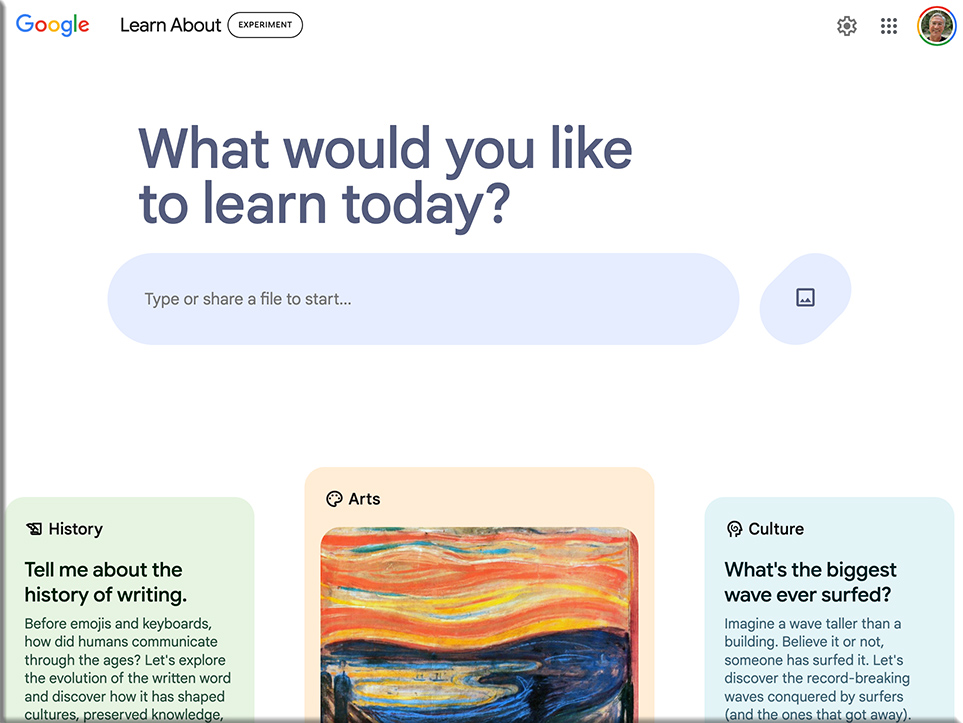
What is Google Learn about?
Google’s new AI tool, Learn About, is designed as a conversational learning companion that adapts to individual learning needs and curiosity. It allows users to explore various topics by entering questions, uploading images or documents, or selecting from curated topics. The tool aims to provide personalized responses tailored to the user’s knowledge level, making it user-friendly and engaging for learners of all ages.

Is Generative AI leading to a new take on Educational technology? It certainly appears promising heading into 2025.

The Learn About tool utilizes the LearnLM AI model, which is grounded in educational research and focuses on how people learn. Google insists that unlike traditional chatbots, it emphasizes interactive and visual elements in its responses, enhancing the educational experience. For instance, when asked about complex topics like the size of the universe, Learn About not only provides factual information but also includes related content, vocabulary building tools, and contextual explanations to deepen understanding.


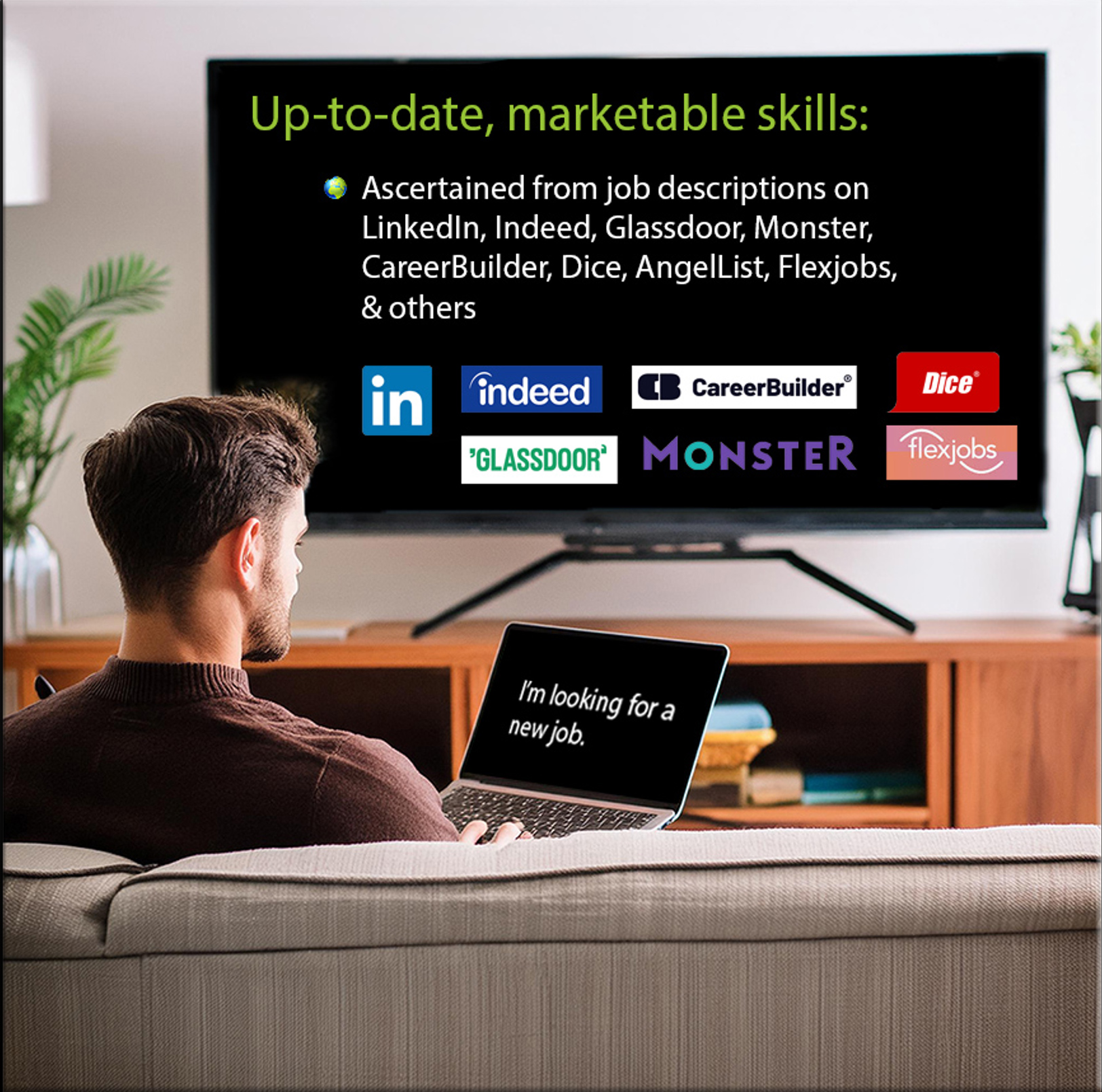
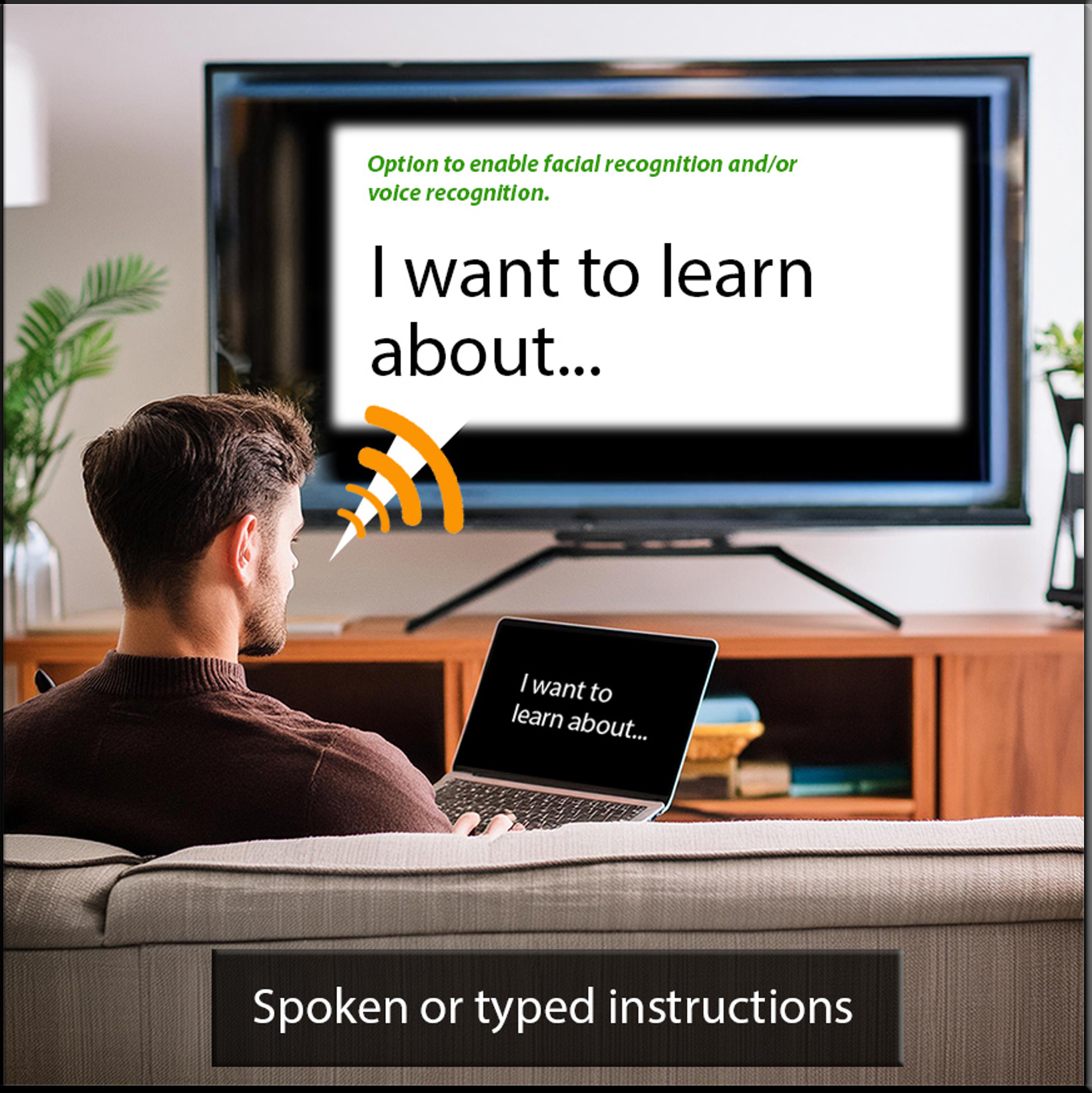
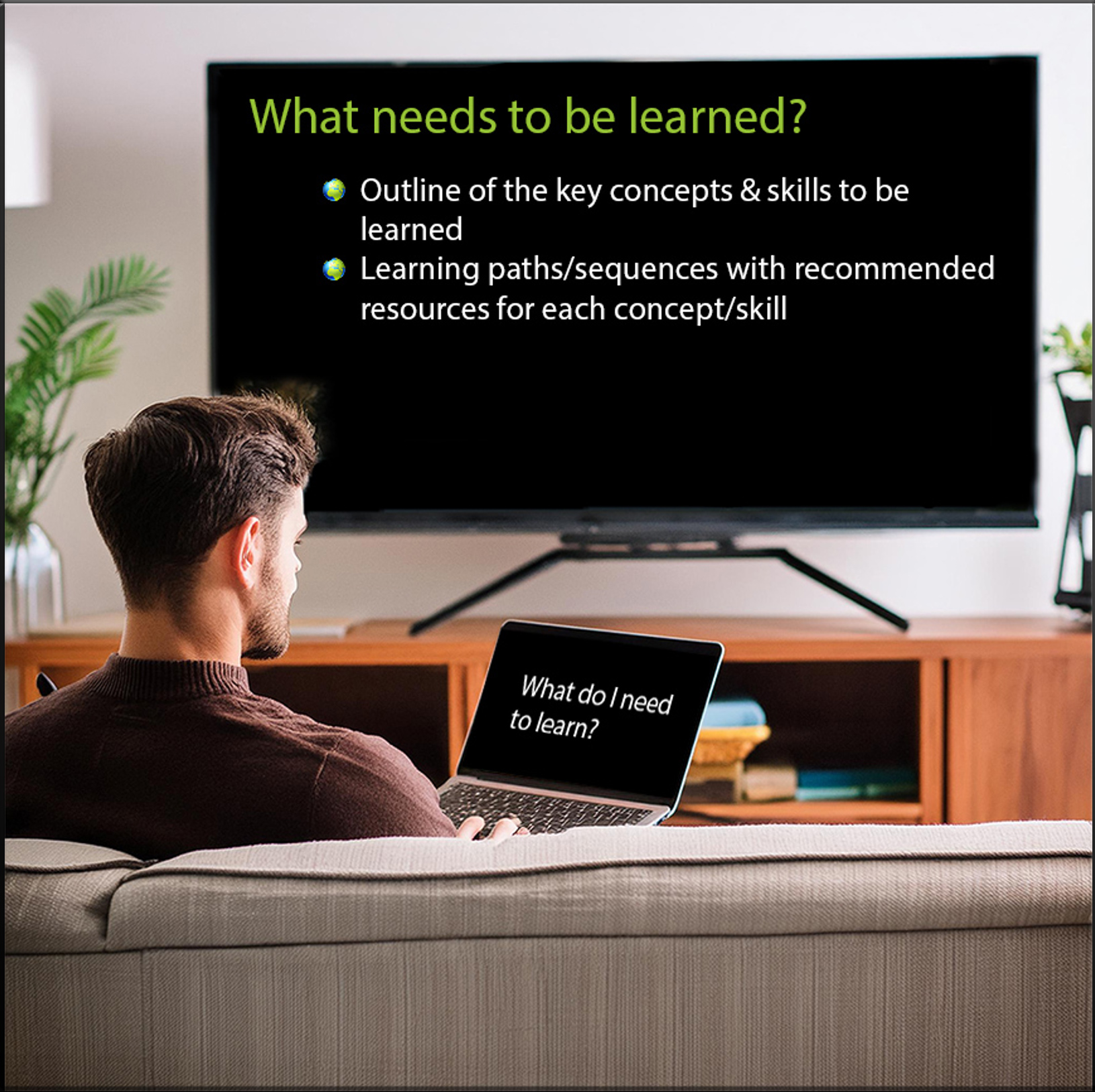
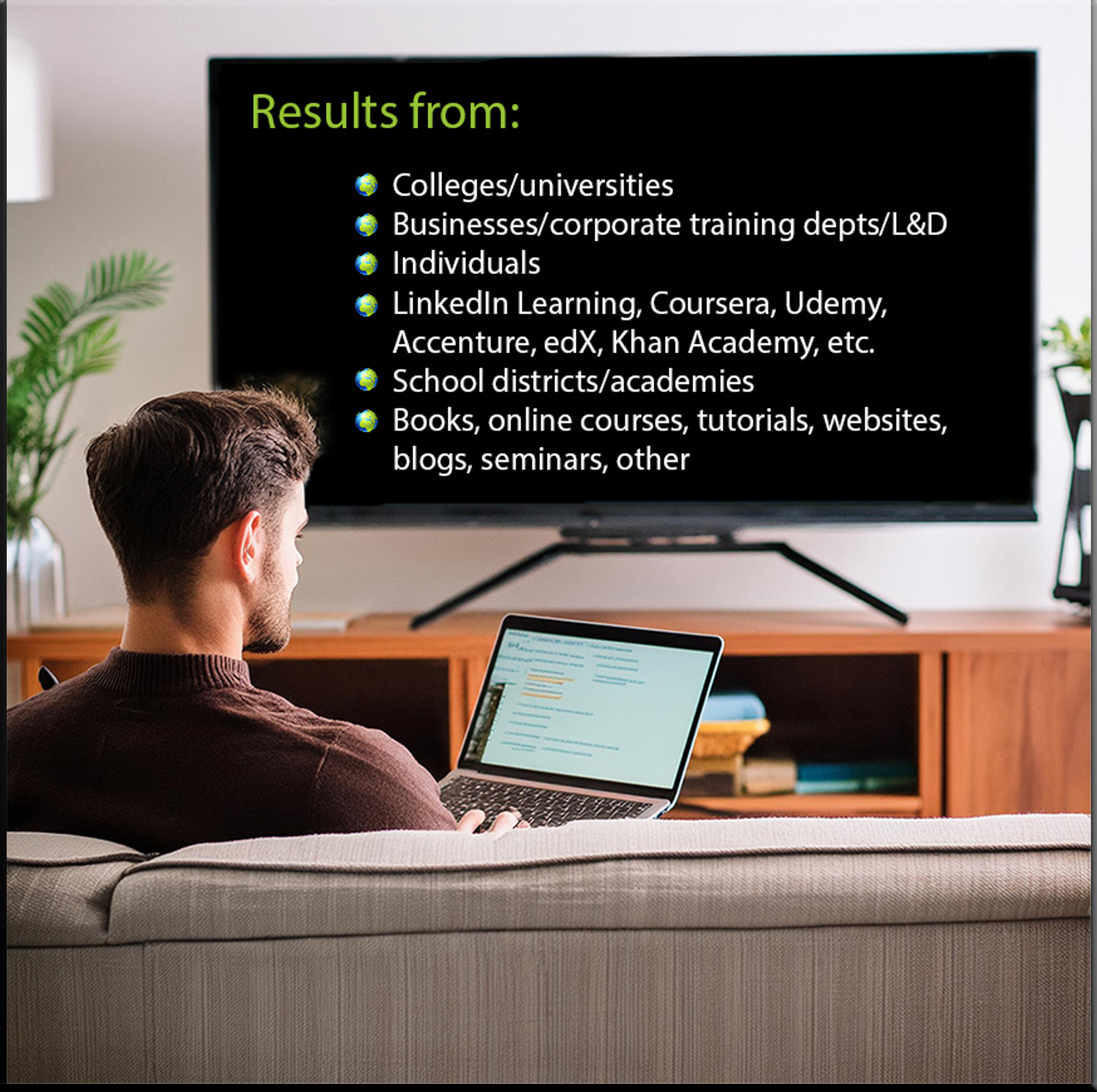
What DICE does in this posting will be available 24x7x365 in the future [Christian]

From DSC:
First of all, when you look at the following posting:


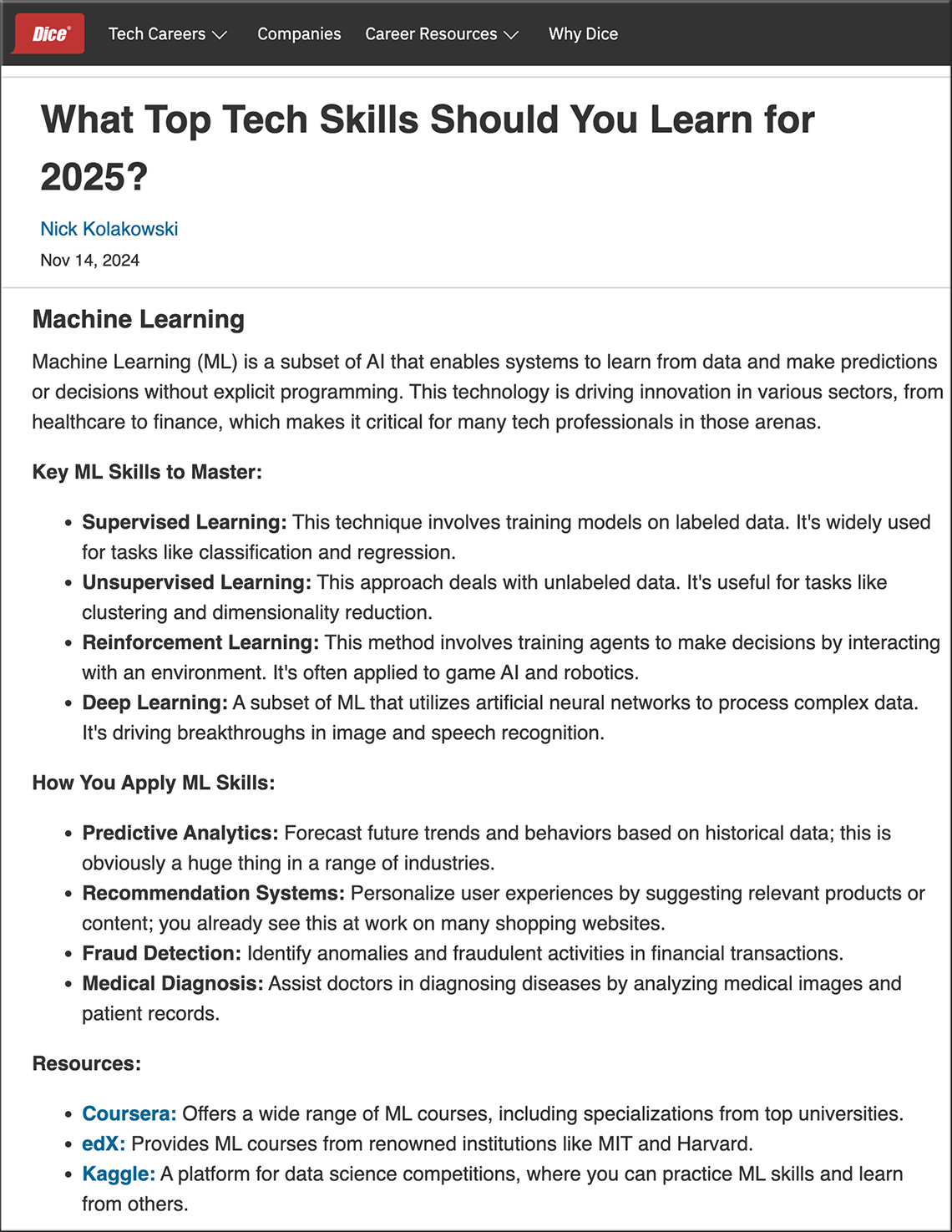
What Top Tech Skills Should You Learn for 2025? — from dice.com by Nick Kolakowski


…you will see that they outline which skills you should consider mastering in 2025 if you want to stay on top of the latest career opportunities. They then list more information about the skills, how you apply the skills, and WHERE to get those skills.

I assert that in the future, people will be able to see this information on a 24x7x365 basis.

  • Which jobs are in demand?
  • What skills do I need to do those jobs?
  • WHERE do I get/develop those skills?


And that last part (about the WHERE do I develop those skills) will pull from many different institutions, people, companies, etc.

BUT PEOPLE are the key! Oftentimes, we need to — and prefer to — learn with others!


“The Value of Doing Things: What AI Agents Mean for Teachers” — from nickpotkalitsky.substack.com by guest author Jason Gulya, Professor of English and Applied Media at Berkeley College in New York City

AI Agents make me nervous. Really nervous.

I wish they didn’t.

I wish I could write that the last two years have made me more confident, more self-assured that AI is here to augment workers rather than replace them.

But I can’t.

I wish I could write that I know where schools and colleges will end up. I wish I could say that AI Agents will help us get where we need to be.

But I can’t.

At this point, today, I’m at a loss. I’m not sure where the rise of AI agents will take us, in terms of how we work and learn. I’m in the question-asking part of my journey. I have few answers.

So, let’s talk about where (I think) AI Agents will take education. And who knows? Maybe as I write I’ll come up with something more concrete.

It’s worth a shot, right?

From DSC: 
I completely agree with Jason’s following assertion:

A good portion of AI advancement will come down to employee replacement. And AI Agents push companies towards that. 

THAT’s where/what the ROI will be for corporations. They will make their investments up in the headcount area, and likely in other areas as well (product design, marketing campaigns, engineering-related items, and more). But how much time it takes to get there is a big question mark.

One last quote here…it’s too good not to include:

Behind these questions lies a more abstract, more philosophical one: what is the relationship between thinking and doing in a world of AI Agents and other kinds of automation?


How Good are Claude, ChatGPT & Gemini at Instructional Design? — from drphilippahardman.substack.com by Dr Philippa Hardman
A test of AI’s Instruction Design skills in theory & in practice

By examining models across three AI families—Claude, ChatGPT, and Gemini—I’ve started to identify each model’s strengths, limitations, and typical pitfalls.

Spoiler: my findings underscore that until we have specialised, fine-tuned AI copilots for instructional design, we should be cautious about relying on general-purpose models and ensure expert oversight in all ID tasks.


From DSC — I’m going to (have Nick) say this again:
I simply asked my students to use AI to brainstorm their own learning objectives. No restrictions. No predetermined pathways. Just pure exploration. The results? Astonishing.

Students began mapping out research directions I’d never considered. They created dialogue spaces with AI that looked more like intellectual partnerships than simple query-response patterns. 


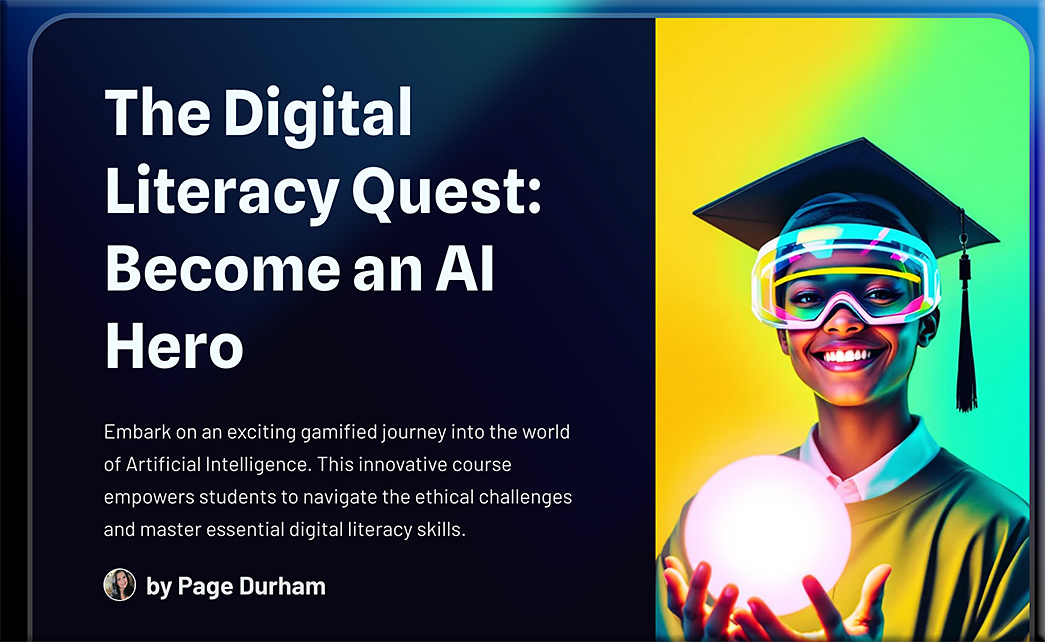
The Digital Literacy Quest: Become an AI Hero — from gamma.app

From DSC:
I have not gone through all of these online-based materials, but I like what they are trying to get at:

  • Confidence with AI
    Students gain practical skills and confidence in using AI tools effectively.
  • Ethical Navigation
    Learn to navigate the ethical landscape of AI with integrity and responsibility. Make informed decisions about AI usage.
  • Mastering Essential Skills
    Develop critical thinking and problem-solving skills in the context of AI.


Expanding access to the Gemini app for teen students in education — from workspaceupdates.googleblog.com

Google Workspace for Education admins can now turn on the Gemini app with added data protection as an additional service for their teen users (ages 13+ or the applicable age in your country) in the following languages and countries. With added data protection, chats are not reviewed by human reviewers or otherwise used to improve AI models. The Gemini app will be a core service in the coming weeks for Education Standard and Plus users, including teens,


5 Essential Questions Educators Have About AI  — from edsurge.com by Annie Ning

Recently, I spoke with several teachers regarding their primary questions and reflections on using AI in teaching and learning. Their thought-provoking responses challenge us to consider not only what AI can do but what it means for meaningful and equitable learning environments. Keeping in mind these reflections, we can better understand how we move forward toward meaningful AI integration in education.


FrontierMath: A Benchmark for Evaluating Advanced Mathematical Reasoning in AI — from epoch.ai
FrontierMath presents hundreds of unpublished, expert-level mathematics problems that specialists spend days solving. It offers an ongoing measure of AI complex mathematical reasoning progress.

We’re introducing FrontierMath, a benchmark of hundreds of original, expert-crafted mathematics problems designed to evaluate advanced reasoning capabilities in AI systems. These problems span major branches of modern mathematics—from computational number theory to abstract algebraic geometry—and typically require hours or days for expert mathematicians to solve.


Rising demand for AI courses in UK universities shows 453% growth as students adapt to an AI-driven job market — from edtechinnovationhub.com

The demand for artificial intelligence courses in UK universities has surged dramatically over the past five years, with enrollments increasing by 453%, according to a recent study by Currys, a UK tech retailer.

The study, which analyzed UK university admissions data and surveyed current students and recent graduates, reveals how the growing influence of AI is shaping students’ educational choices and career paths.

This growth reflects the broader trend of AI integration across industries, creating new opportunities while transforming traditional roles. With AI’s influence on career prospects rising, students and graduates are increasingly drawn to AI-related courses to stay competitive in a rapidly changing job market.


AI Tutors Double Rates of Learning in Less Learning Time — by drphilippahardman.substack.com Dr. Philippa Hardman
Inside Harvard’s new groundbreaking study

Conclusion
This Harvard study provides robust evidence that AI tutoring, when thoughtfully designed, can significantly enhance learning outcomes. The combination of doubled learning gains, increased engagement, and reduced time to competency suggests we’re seeing just the beginning of AI’s potential in education and that its potential is significant.

If this data is anything to go by, and if we – as humans – are open and willing to acting on it, it’s possible AI will have a significant and for some deeply positive impact on how we design and deliver learning experiences.

That said, as we look forward, the question shouldn’t just be, “how AI can enhance current educational methods?”, but also “how it might AI transform the very nature of learning itself?”. With continued research and careful implementation, we could be moving toward an era of education that’s more effective but also more accessible than ever before.


Three Quick Examples of Teaching with and about Generative AI — from derekbruff.org Derek Bruff

  • Text-to-Podcast.
  • Assigning Students to Groups.
  • AI Acceptable Use Scale.

Also from Derek’s blog, see:


From Mike Sharples on LinkedIn: 


ChatGPT’s free voice wizard — from wondertools.substack.com by Jeremy Caplan
How and why to try the new Advanced Voice Mode

7 surprisingly practical ways to use voice AI
Opening up ChatGPT’s Advanced Voice Mode (AVM) is like conjuring a tutor eager to help with whatever simple — or crazy — query you throw at it. Talking is more fluid and engaging than typing, especially if you’re out and about. It’s not a substitute for human expertise, but AVM provides valuable machine intelligence.

  • Get a virtual museum tour. …
  • Chat with historical figures….
  • Practice languages. …
  • Explore books. …
  • Others…


Though not AI-related, this is along the lines of edtech:


…which links to:


Are ChatGPT, Claude & NotebookLM *Really* Disrupting Education? — from drphilippahardman.substack.com
Evaluating Gen AI’s *real* impact on human learning

The TLDR here is that, as useful as popular AI tools are for learners, as things stand they only enable us to take the very first steps on what is a long and complex journey of learning.

AI tools like ChatGPT 4o, Claude 3.5 & NotebookLM can help to give us access to information but (for now at least) the real work of learning remains in our – the humans’ – hands.


To which Anna Mills had a solid comment:

It might make a lot of sense to regulate generated audio to require some kind of watermark and/or metadata. Instructors who teach online and assign voice recordings, we need to recognize that these are now very easy and free to auto-generate. In some cases we are assigning this to discourage students from using AI to just autogenerate text responses, but audio is not immune.


Articulate AI & the “Buttonification” of Instructional Design — from drphilippahardman.substack.com by Dr. Philippa Hardman
A new trend in AI-UX, and its implications for Instructional Design

1. Using AI to Scale Exceptional Instructional Design Practice
Imagine a bonification system that doesn’t just automate tasks, but scales best practices in instructional design:

  • Evidence-Based Design Button…
  • Learner-Centered Objectives Generator…
    Engagement Optimiser…

2. Surfacing AI’s Instructional Design Thinking
Instead of hiding AI’s decision-making process, what if we built an AI system which invites instructional designers to probe, question, and learn from an expert trained AI?

  • Explain This Design…
  • Show Me Alternatives…
  • Challenge My Assumptions…
  • Learning Science Insights…

By reimagining the role of AI in this way, we would…


Recapping OpenAI’s Education Forum — from marcwatkins.substack.com by Marc Watkins

OpenAI’s Education Forum was eye-opening for a number of reasons, but the one that stood out the most was Leah Belsky acknowledging what many of us in education had known for nearly two years—the majority of the active weekly users of ChatGPT are students. OpenAI has internal analytics that track upticks in usage during the fall and then drops off in the spring. Later that evening, OpenAI’s new CFO, Sarah Friar, further drove the point home with an anecdote about usage in the Philippines jumping nearly 90% at the start of the school year.

I had hoped to gain greater insight into OpenAI’s business model and how it related to education, but the Forum left me with more questions than answers. What app has the majority of users active 8 to 9 months out of the year and dormant for the holidays and summer breaks? What business model gives away free access and only converts 1 out of every 20-25 users to paid users? These were the initial thoughts that I hoped the Forum would address. But those questions, along with some deeper and arguably more critical ones, were skimmed over to drive home the main message of the Forum—Universities have to rapidly adopt AI and become AI-enabled institutions.


Off-Loading in the Age of Generative AI — from insidehighered.com by James DeVaney

As we embrace these technologies, we must also consider the experiences we need to discover and maintain our connections—and our humanity. In a world increasingly shaped by AI, I find myself asking: What are the experiences that define us, and how do they influence the relationships we build, both professionally and personally?

This concept of “off-loading” has become central to my thinking. In simple terms, off-loading is the act of delegating tasks to AI that we would otherwise do ourselves. As AI systems advance, we’re increasingly confronted with a question: Which tasks should we off-load to AI?

 
© 2025 | Daniel Christian