11 Ed Tech Trends to Watch in 2017 — from campustechnology.com by Rhea Kelly — with Susan Aldridge, Gerard Au, myself, Marci Powell, & Phil Ventimiglia Five higher ed leaders analyze the hottest trends in education technology this year.
From DSC: I greatly enjoyed this project and appreciated being able to work with Rhea, Susan, Gerard, Marci, and Phil.
From DSC: The following article reminded me of a vision that I’ve had for the last few years…
How to Build a Production Studio for Online Courses— from campustechnology.com by Dian Schaffhauser At the College of Business at the University of Illinois, video operations don’t come in one size. Here’s how the institution is handling studio setup for MOOCs, online courses, guest speakers and more.
Though I’m a huge fan of online learning, why only build a production studio that’s meant to support online courses only? Let’s take it a step further and design a space that can address the content development for online learning as well as for blended learning — which can include the flipped classroom type of approach.
To do so, colleges and universities need to build something akin to what the National University of Singapore has done. I would like to see institutions create large enough facilities in order to house multiple types of recording studios in each one of them. Each facility would feature:
One room that has a lightboard and a mobile whiteboard in it — let the faculty member choose which surface that they want to use
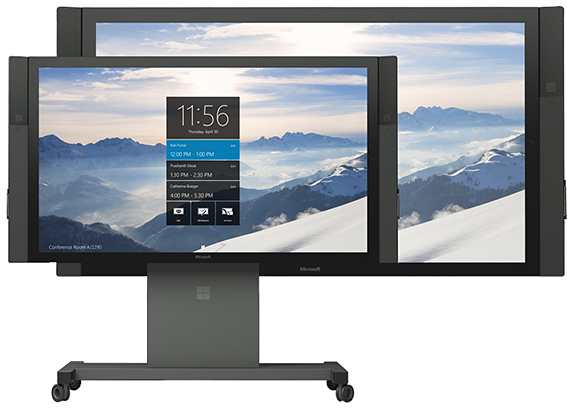
Another room that has a Microsoft Surface Hub or a similar interactive, multitouch device
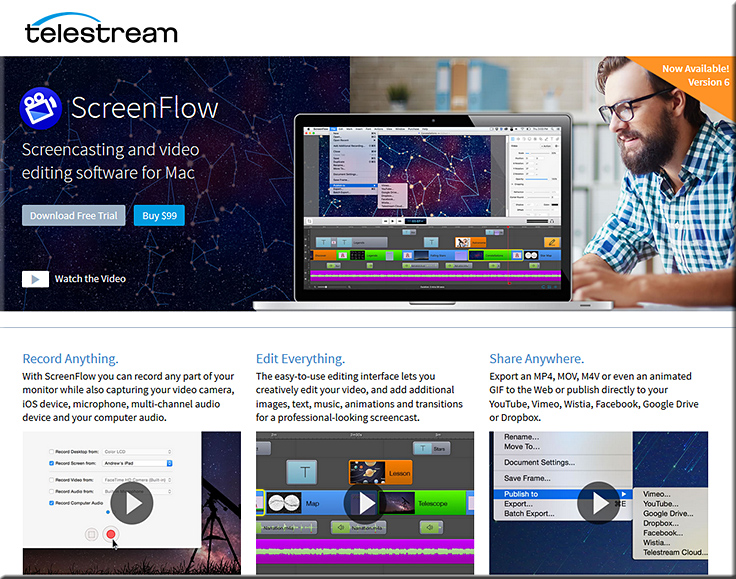
A recording booth with a nice, powerful, large iMac that has ScreenFlow on it. The booth would also include a nice, professional microphone, a pop filter, sound absorbing acoustical panels, and more. Blackboard Collaborate could be used here as well…especially with the Application Sharing feature turned on and/or just showing one’s PowerPoint slides — with or without the video of the faculty member…whatever they prefer.
Another recording booth with a PC and Adobe Captivate, Camtasia Studio, Screencast-O-Matic, or similar tools. The booth would also include a nice, professional microphone, a pop filter, sound absorbing acoustical panels, and more. Blackboard Collaborate could be used here as well…especially with the Application Sharing feature turned on and/or just showing one’s PowerPoint slides — with or without the video of the faculty member…whatever they prefer.
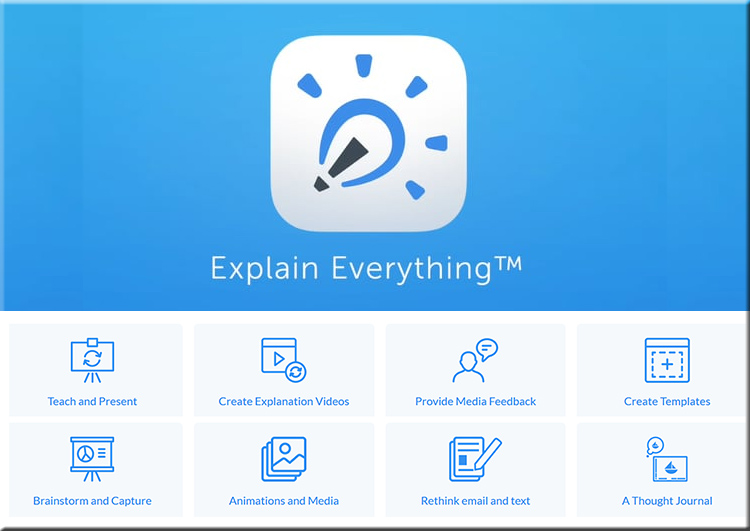
Another recording booth with an iPad tablet and apps loaded on it such asExplain Everything:
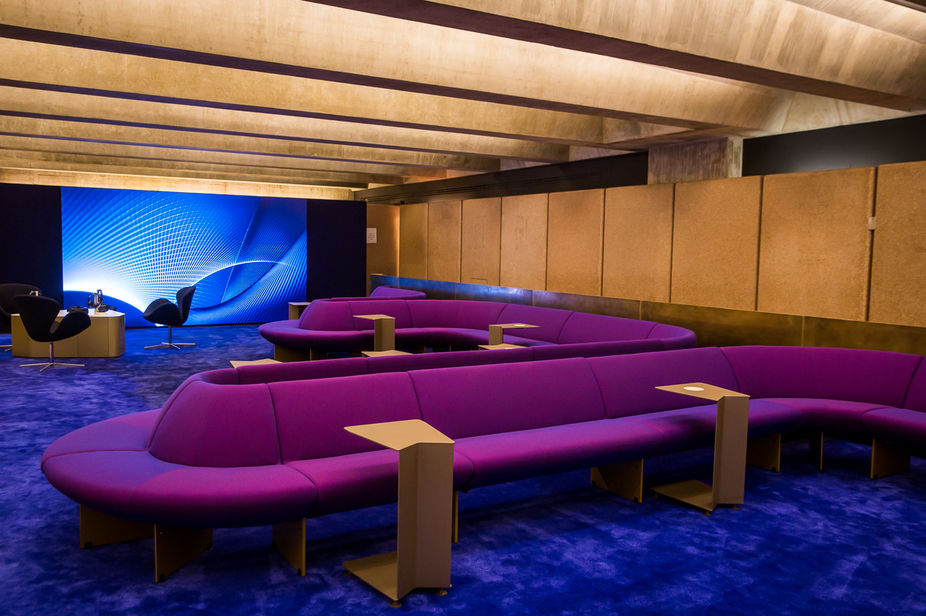
A large recording studio that is similar to what’s described inthe article— a room that incorporates a full-width green screen, with video monitors, a tablet, a podium, several cameras, high-end mics and more. Or, if the budget allows for it, a really high end broadcasting/recording studiolike what Harvard Business school is using:
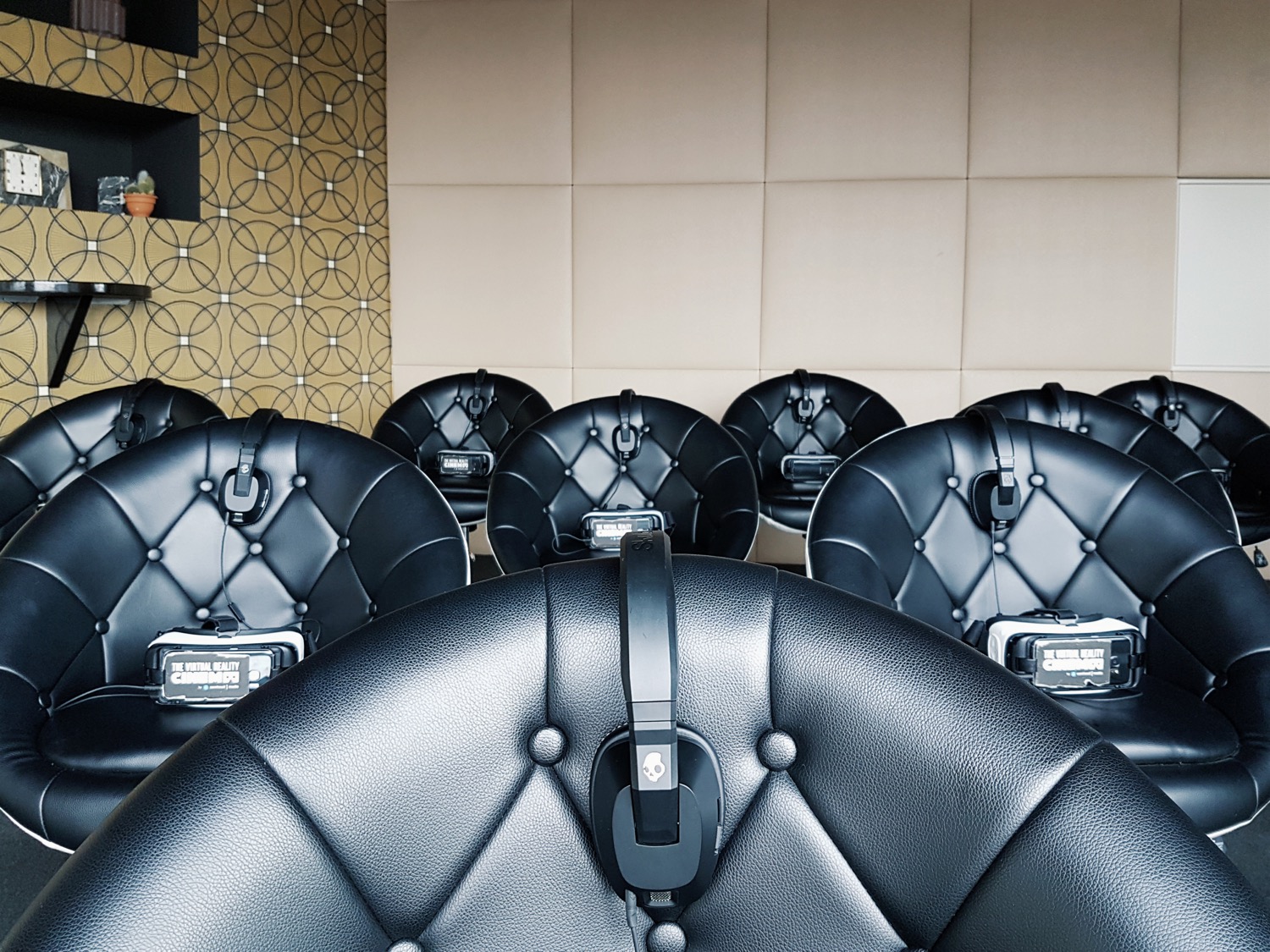
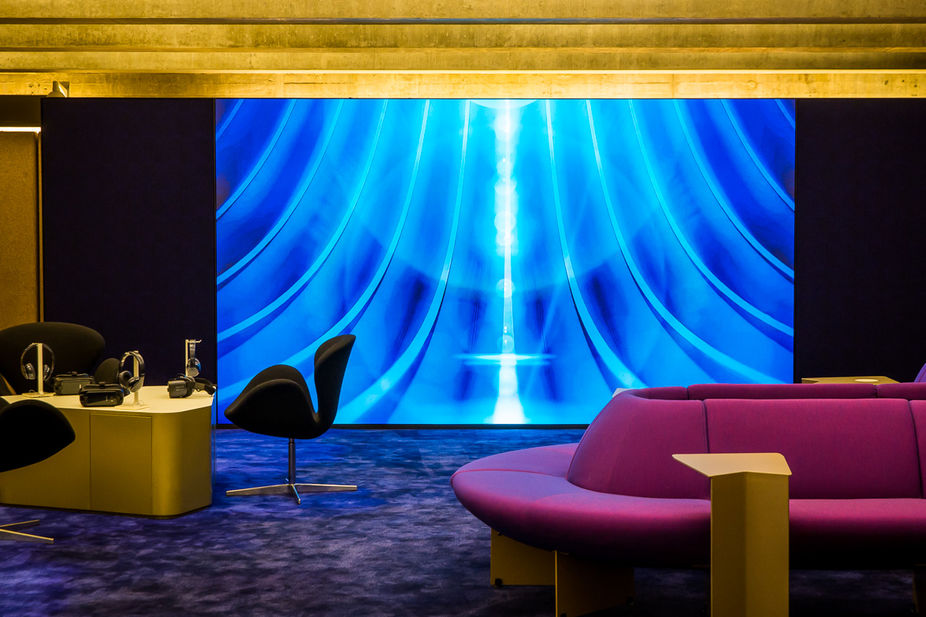
The Lounge, enabled by Samsung on November 8, 2016 in Sydney, Australia. (Photo by Anna Kucera)
The Lounge, enabled by Samsung on November 8, 2016 in Sydney, Australia. (Photo by Anna Kucera)
Also see:
The Lounge enabled by Samsung Open day and night, The Lounge enabled by Samsung is a new place in the heart of the Opera House where people can sit and enjoy art and culture through the latest technology. The most recent in a series of future-facing projects enabled by Sydney Opera House’s Principal Partner, Samsung, the new visitor lounge features stylish, comfortable seating, as well as interactive displays and exclusive digital content, including:
The Sails – a virtual-reality experience of what it’s like to stand atop the sails of Australia’s most famous building, brought to you via Samsung Gear VR;
Digital artwork – a specially commissioned video exploration of the Opera House and its stories, produced by creative director Sam Doust. The artwork has been themed to match the time of day and is the first deployment of Samsung’s latest Smart LED Display panel technology in Australia; and
Google Cultural Institute – available to view on Samsung Galaxy View and Galaxy Tab S2 tablets, the digital collection features 50 online exhibits that tell the story of the Opera House’s past, present and future through rare archival photography, celebrated performances, early architectural drawings and other historical documents, little-known interviews and Street View imagery.
From DSC: When I turned on the TV the other day, our local news station was playing a piece re: the closing of several stores in Michigan, some within our area. Some of the national retail stores/chains mentioned were:
Macy’s
Macy’s closing 100 stores, including 4 in Michigan Excerpt:
Four Macy’s stores in Michigan are permanently closing in a series of company cuts expected to cost 6,200 jobs. Macy’s announced 68 of the 100 stores it plans to shutter Wednesday, according to CNBC. On the list is the Macy’s at Lakeview Square Mall in Battle Creek. CNBC reports the store opened in 1983 and employs 51 associates. Also on the chopping block is the Macy’s in Lansing, Westland and the Eastland Center in Harper Woods. All four Michigan stores are slated to close by the end of 2017.
Sears and Kmart closing 150 stores — from money.cnn.com by Paul La Monica Sears is shutting down 150 more stores, yet another sign of how tough it is for former kings of the retail industry to compete in a world now dominated by Amazon. .
Sears
Internet is the new anchor: Woodland Mall Sears closing Big box and anchor stores a vanishing species in West Michigan Excerpt: Despite the best economy in a decade and a nearly 4 percent increase in consumer spending this holiday, the kind of retailers that used to be the draws for shopping malls and plazas are feeling the continuing impact of the internet. The most notable recent victim of the trend is the Sears that has served as an anchor store at Woodland Mall for decades. “We hear rumors every week about what’s going on, but we don’t want to hear that — we’re working there, we don’t want to hear that kind of thing. We didn’t think that was going to happen to us. We were doing pretty good,” said 52-year-old Marty Kruizenga, who worked at the Sears Automotive at Woodland Mall. He was told Wednesday morning his store was closing. .
The Limited
The Limited just shut all of its stores — from money.cnn.com by Jackie Wattles Excerpt (emphasis DSC): American malls just got emptier. The Limited, a once-popular women’s clothing brand that offers casual attire and workwear, no longer has any storefronts. On Saturday [1/7/17], a message on the store’s website read, “We’re sad to say that all The Limited stores nationwide have officially closed their doors. But this isn’t goodbye.” The website will still be up and running and will continue to ship nationwide, the company said. …
The Limited is among a long list of brick-and-mortar retailers that once thrived in malls and strip shopping centers — but are now suffering at the hands of digital commerce giants like Amazon (AMZN, Tech30) and fast fashion stores such as H&M and Forever 21. .
And another chain that I don’t recall…
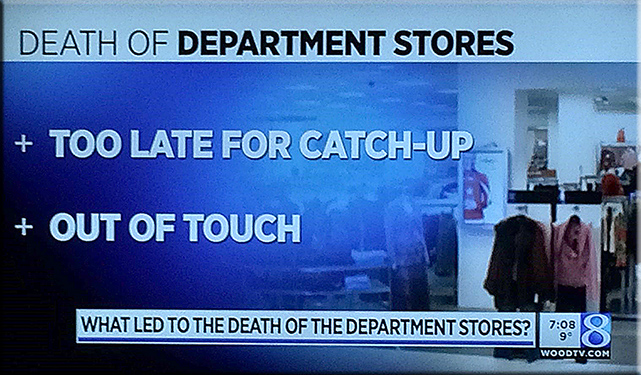
Here’s a snapshot I took of the television screen at the end of their piece:
The warnings were there but people didn’t want to address them:
Amazon is taking an increasing share of the US apparel market, according to Morgan Stanley.
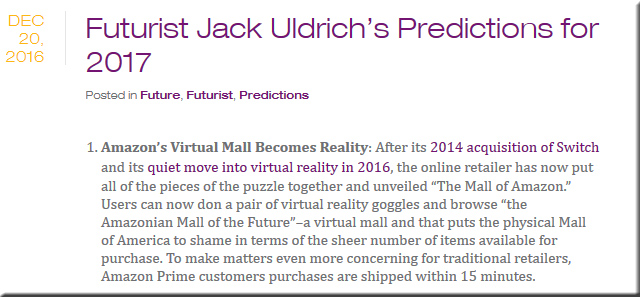
Also regarding Amazon, see this interesting prediction from Jack Uldrich:
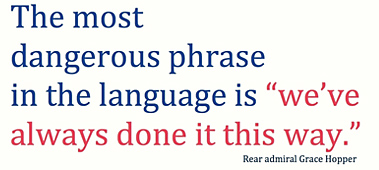
Are Department Stores Dead? Not yet. But they could kill themselves, under the weight of “we’ve always done it this way”.Tweaks in omni-channel strategy aren’t going to be enough to address the fundamental issues at department stores. Not with the way these trends are heading.
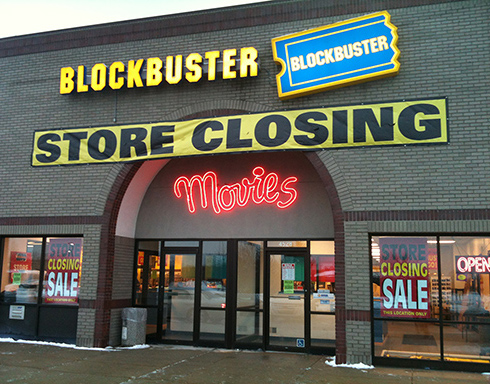
Along the lines of the above items, many of us can remember the Blockbuster stores closing in our areas not that long ago — having been blown out of the water by Netflix.
Although there are several lines of thought that could be pursued here (one of which might be to discuss the loss of jobs, especially to our students, as many of them work within retail)… some of the key questions that come to my mind are:
Could this closing of many brick and mortar-based facilities happen within higher education? .
With the advent of artificial intelligence and cognitive computing, will the innovations that take place on the Internet blow away what’s happening in the face-to-face (F2F) classrooms? As Thomas Frey asserts,by 2030, will the largest company on the internet be an education-based company that we haven’t heard of yet?
(NOTE: “Frey doesn’t go so far as to argue education bots will replace traditional schooling outright. He sees them more as a supplement, perhaps as a kind of tutor.”) .
Or, because people enjoy learning together in a F2F environment, will F2F classrooms augment what they are doing with what’s available online/digitally? .
Will the discussion not revolve around online vs F2F, but rather will the topic at hand be more focused on how innovative/responsive one’s institution is?
(Editor’s Note: Change is difficult. This is especially true in organizations that have heretofore been immune to the broader forces of disruption–such as institutions of higher learning. To shake presidents, administrators, and faculty out of their stupor I have drafted the following fictional press release. I encourage all university and college presidents and their boards to read it and then discuss how they can–and must–adapt in order to remain competitive in the future.)
PRESS RELEASE (Fictional Scenario: For Internal Discussion Only)
(Note: All links in the press release highlight real advances in the field of higher education).
State College to Close at End of 2021-2022 Academic Year
Washington, DC – December 16, 2021 — State College, one of the country’s leading public universities, has decided to cease academic operations at the end of the 2021-22 school year.
Last comment from DSC: I don’t post this to be a fear monger. Rather, I post it to have those of us working with higher education take some time to reflect on this situation — because we need to be far more responsive to change than we are being. Given the increasingly rapid pace of change occurring in our world today, people will have to continue to reinvent themselves. But the difference in the near future will be in the number of times people have to reinvent themselves and how quickly they need to do it. They won’t be able to take 2-4 years off to do it.
Let’s not get blown out of the water by some alternative. Let’s respond while we still have the chance. Let’s be in touch with the changing landscapes and needs out there.
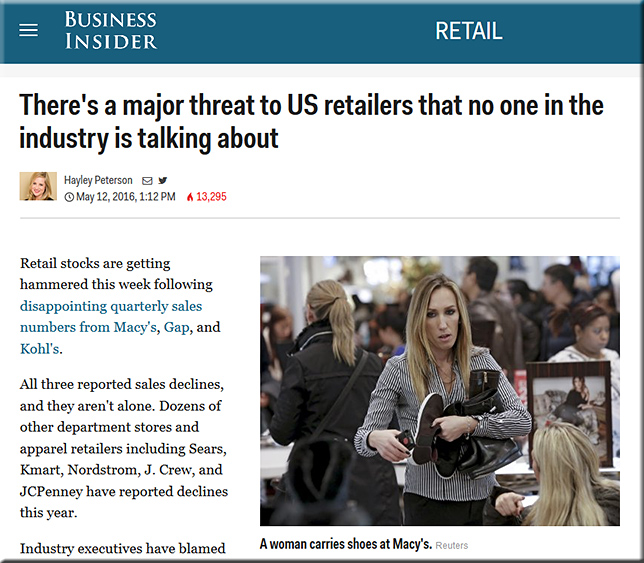
Ominous prediction says JCPenney could close 30% of its stores within 2 years— from businessinsider.com by Hayley Peterson Excerpt:
JCPenney could close up to 30% of its stores, or roughly 300 of its more than 1,000 locations, within the next two years, according to a Cowen & Co. report. The department-store chain has largely avoided mass store closings in recent years, but the rise of e-commerce is now forcing the company to reassess its store base, Cowen & Co. analyst Oliver Chen told Business Insider following a meeting with JCPenney management. .
Colleges need to adapt to meet the changing demographics and needs of students, rather than expect them to conform to a tradition-loving system.
“Unless we become more nimble in our approach and more scalable in our solutions, we will miss out on an opportunity to embrace and serve the majority of students who will need higher education and postsecondary learning,” says the report. Later it underscores that “higher education has never mattered so much to those who seek it. It drives social mobility, energizes our economy, and underpins our democracy.”
WHEN education fails to keep pace with technology, the result is inequality. Without the skills to stay useful as innovations arrive, workers suffer—and if enough of them fall behind, society starts to fall apart. That fundamental insight seized reformers in the Industrial Revolution, heralding state-funded universal schooling. Later, automation in factories and offices called forth a surge in college graduates. The combination of education and innovation, spread over decades, led to a remarkable flowering of prosperity.
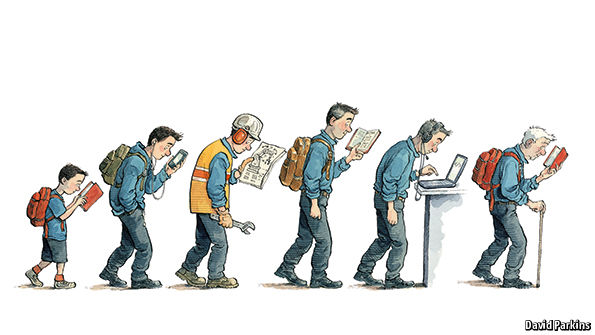
Today robotics and artificial intelligence call for another education revolution. This time, however, working lives are so lengthy and so fast-changing that simply cramming more schooling in at the start is not enough. People must also be able to acquire new skills throughout their careers.
Don’t discount the game-changing power of the morphing “TV” when coupled with artificial intelligence (AI), natural language processing (NLP), and blockchain-based technologies!
When I saw the article below, I couldn’t help but wonder what (we currently know of as) “TVs” will morph into and what functionalities they will be able to provide to us in the not-too-distant future…?
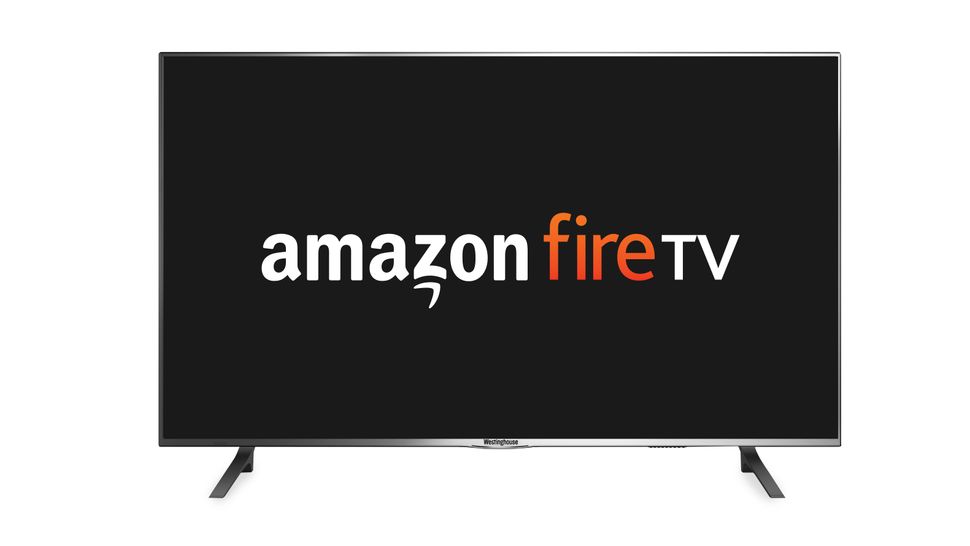
For example, the article mentions that Seiki, Westinghouse, and Element will be offering TVs that can not only access Alexa — a personal assistant from Amazon which uses artificial intelligence — but will also be able to provide access to over 7,000 apps and games via the Amazon Fire TV Store.
Some of the questions that come to my mind:
Why can’t there be more educationally-related games and apps available on this type of platform?
Why can’t the results of the assessments taken on these apps get fed into cloud-based learner profiles that capture one’s lifelong learning? (#blockchain)
When will potential employers start asking for access to such web-based learner profiles?
Will tvOS and similar operating systems expand to provide blockchain-based technologies as well as the types of functionality we get from our current set of CMSs/LMSs?
Will this type of setup become a major outlet for competency-based education as well as for corporate training-related programs?
Will augmented reality (AR), virtual reality (VR), and mixed reality (MR) capabilities come with our near future “TVs”?
Will virtual tutoring be one of the available apps/channels?
Will the microphone and the wide angle, HD camera on the “TV” be able to be disconnected from the Internet for security reasons? (i.e., to be sure no hacker is eavesdropping in on their private lives)
The TVs will not only have access to Alexa via a microphone-equipped remote but, more importantly, will have access to the over 7,000 apps and games available on the Amazon Fire TV Store – a huge boon considering that most of these Smart TVs usually include, at max, a few dozen apps.
“I’ve been predicting that by 2030 the largest company on the internet is going to be an education-based company that we haven’t heard of yet,” Frey, the senior futurist at the DaVinci Institute think tank, tells Business Insider.
EdSurge profiles the growth of massive online open courses in 2016, which attracted more than 58 million students in over 700 colleges and universities last year.
The top three MOOC providers — Coursera, Udacity and EdX — collectively grossed more than $100 million last year, as much of the content provided on these platforms shifted from free to paywall guarded materials.
Many MOOCs have moved to offering credentialing programs or nanodegree offerings to increase their value in industrial marketplaces.
In parallel with gaming, VR is expanding into many other areas, including these:
Healthcare Surgical Theater is working with UCLA, New York University, the Mayo Clinic and other major medical centers to use VR to help surgeons prepare for difficult operations. Virtual 3D models are constructed from MRIs, CAT scans and/or ultrasounds.
Mental health
Meditation promotes mental health by reducing stress and anxiety.
Education Unimersiv is focusing on historical sites, creating a series of VR tours for the Colosseum, Acropolis, Parthenon, Stonehenge, Titanic, etc. These tours allow each site to be explored as it existed when it was built. Additional locations’ virtual sites and attractions will undoubtedly be added in the near future. The British Museum offered a Virtual Reality Weekend in August 2015. Visitors were able to explore a Bronze Age roundhouse with a flickering fire and changing levels of light while they “handled” Bronze Age relics. The American Museum of Natural History allows students anywhere in the world to take virtual tours of selected museum exhibits, and other museums will soon follow.
Training
Virtual reality is an excellent tool when the task is dangerous or the equipment involved is expensive.
Crime reconstruction
Architecture
Collaboration Virtual reality, augmented reality and mixed reality will form the basis for the next set of collaboration tools.
However, we see very little experienced-based learning in all levels of education today. Traditional learning consists of little more than oration through lectures and textbooks (and their digital equivalents). Experience-based learning is often very difficult to facilitate in the classroom. Whether it be a field trip in elementary school, or simulation exercises in med school, it can be tedious, costly and time consuming.
…
Where VR is really winning in education is in subject matter retention. The first of several surveys that we’ve done was based on a VR field trip through the circulatory system with high-school age children. We saw an increase of nearly 80% in subject matter retention from a group that used VR, compared against a control group that was provided the same subject matter via text and image. (I’ll expand on the details of this experiment, and some research initiatives we’re working on in another blog post).
The old phrase of ‘needing to see it to believe it’ is a powerful mantra across all aspects of residential design. Architecture, interior design and property development are all highly visual trades that require buy-in from both those working on the project and the client. As such, making sure everyone is sold on a coherent vision is vital to ensure that everything goes smoothly and no one is left dissatisfied when the project is completed.
It’s a way for educators to bring their students to places that would be out of reach otherwise. Google Expeditions, the VR mode of Google Street View and Nearpod’s virtual field trips are among the most popular experiences teachers explore with their students. “Some of our students have never really left the bubbles of their own town”, says Jaime Donally, creator of the #ARVRinEDU chat on Twitter. “Virtual reality is a relatively inexpensive way to show them the world.”
In the video below, a facilities manager is using a mobile device to scan a QR code on a wall, behind which is a critical piece of HVAC equipment. With one scan, we can view data on the asset’s performance and health, location data for the asset. This data is being pulled by the IoT Platform from the asset itself, TRIRIGA, and any other useful sources.
Excerpt:
But the best experiences, VR acolytes agree, are still yet to come. Resh Sidhu leads VR development for Framestore, the high-end visual effects house that won an Oscar for the movie Gravity, and has since expanded into creating VR content. With hardware finally delivering on its promise, she believes it is now up to creatives to explore the possibilities.
There’s so much more to VR than just gaming. Which is probably why HTC has been exploring entirely new ways to bring VR to art, education and culture — starting with museums around the world.
HTC recently collaborated with TIME-LIFE on “Remembering Pearl Harbor,” a VR experience commemorating the 75th anniversary of the attack with exhibitions at the Intrepid Sea, Air and Space Museum in New York City and the Newsuem in Washington D.C. Last month, Vive also collaborated with the Royal Academy of Arts in London on the world’s first 3-D printed VR art exhibit.
Now HTC Vive has revealed the launch of a new VR center at La Geode, part of Paris’ Science and Industry Museum, as well as a partnership with the Nobel Museum for a first-of-its-kind VR exhibit showcasing the contributions of Nobel laureates.
From DSC: Recently, my neighbor graciously gave us his old Honda snowblower, as he was getting a new one. He wondered if we had a use for it. As I’m definitely not getting any younger and I’m not Howard Hughes, I said, “Sure thing! That would be great — it would save my back big time! Thank you!” (Though the image below is not mine, it might as well be…as both are quite old now.)
Anyway…when I recently ran out of gas, I would have loved to be able to take out my iPhone, hold it up to this particular Honda snowblower and ask an app to tell me if this particular Honda snowblower takes a mixture of gas and oil, or does it have a separate container for the oil? (It wasn’t immediately clear where to put the oil in, so I’m figuring it’s a mix.)
But what I would have liked to have happen was:
I launched an app on my iPhone that featured machine learning-based capabilities
The app would have scanned the snowblower and identified which make/model it was and proceeded to tell me whether it needed a gas/oil mix (or not)
If there was a separate place to pour in the oil, the app would have asked me if I wanted to learn how to put oil in the snowblower. Upon me saying yes, it would then have proceeded to display an augmented reality-based training video — showing me where the oil was to be put in and what type of oil to use (links to local providers would also come in handy…offering nice revenue streams for advertisers and suppliers alike).
So several technologies would have to be involved here…but those techs are already here. We just need to pull them together in order to provide this type of useful functionality!
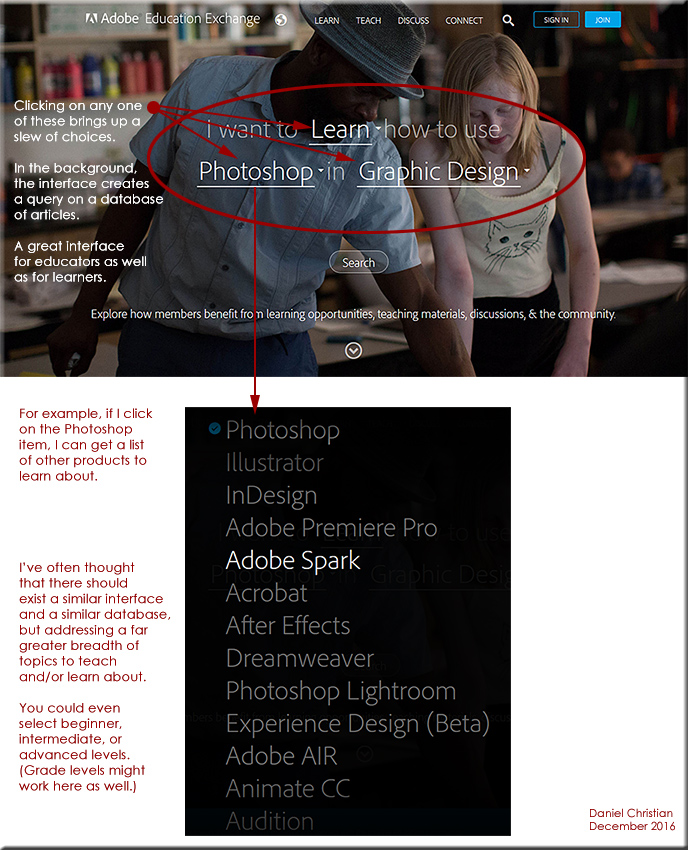
From DSC: After seeing the sharp interface out atAdobe (see image below), I’ve often thought that there should exist a similar interface and a similar database for educators, trainers, and learners to use — but the database would address a far greater breadth of topics to teach and/or learn about. You could even select beginner, intermediate, or advanced levels (grade levels might work here as well).
Perhaps this is where artificial intelligence will come in…not sure.
“Every child is a genius in his or her own way. VR can be the key to awakening the genius inside.”
This is the closing line of a new research study currently making its way out of China. Conducted by Beijing Bluefocus E-Commerce Co., Ltd and Beijing iBokan Wisdom Mobile Internet Technology Training Institution, the study takes a detailed look at the different ways virtual reality can make public education more effective.
“Compared with traditional education, VR-based education is of obvious advantage in theoretical knowledge teaching as well as practical skills training. In theoretical knowledge teaching, it boasts the ability to make abstract problems concrete, and theoretical thinking well-supported. In practical skills training, it helps sharpen students’ operational skills, provides an immersive learning experience, and enhances students’ sense of involvement in class, making learning more fun, more secure, and more active,” the study states.
CALIFORNIA — Acer Starbreeze, Google, HTC VIVE, Facebook’s Oculus, Samsung, and Sony Interactive Entertainment [on 12/7/16] announced the creation of a non-profit organization of international headset manufacturers to promote the growth of the global virtual reality (VR) industry. The Global Virtual Reality Association (GVRA) will develop and share best practices for industry and foster dialogue between public and private stakeholders around the world.
The goal of the Global Virtual Reality Association is to promote responsible development and adoption of VR globally. The association’s members will develop and share best practices, conduct research, and bring the international VR community together as the technology progresses. The group will also serve as a resource for consumers, policymakers, and industry interested in VR.
VR has the potential to be the next great computing platform, improving sectors ranging from education to healthcare, and contribute significantly to the global economy. Through research, international engagement, and the development of best practices, the founding companies of the Global Virtual Reality Association will work to unlock and maximize VR’s potential and ensure those gains are shared as broadly around the world as possible.
Occipital announced today that it is launching a mixed reality platform built upon its depth-sensing technologies called Bridge. The headset is available for $399 and starts shipping in March; eager developers can get their hands on an Explorer Edition for $499, which starts shipping next week.
From DSC: While I hope that early innovators in the AR/VR/MR space thrive, I do wonder what will happen if and when Apple puts out their rendition/version of a new form of Human Computer Interaction (or forms) — such as integrating AR-capabilities directly into their next iPhone.
Enterprise augmented reality applications ready for prime time — from internetofthingsagenda.techtarget.com by Beth Stackpole Pokémon Go may have put AR on the map, but the technology is now being leveraged for enterprise applications in areas like marketing, maintenance and field service.
Excerpt:
Unlike virtual reality, which creates an immersive, computer-generated environment, the less familiar augmented reality, or AR, technology superimposes computer-generated images and overlays information on a user’s real-world view. This computer-generated sensory data — which could include elements such as sound, graphics, GPS data, video or 3D models — bridges the digital and physical worlds. For an enterprise, the applications are boundless, arming workers walking the warehouse or selling on the shop floor, for example, with essential information that can improve productivity, streamline customer interactions and deliver optimized maintenance in the field.
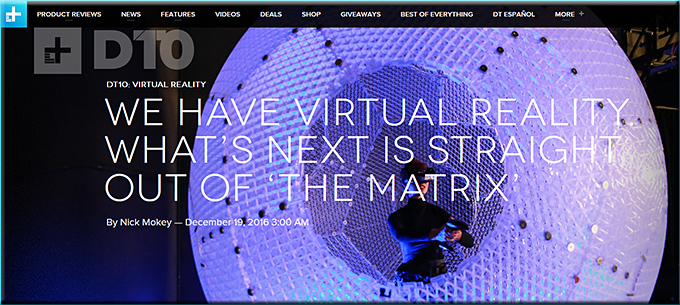
2016 is fast drawing to a close. And while many will be glad to see the back of it, for those of us who work and play with Virtual Reality, it has been a most exciting year.
By the time the bells ring out signalling the start of a new year, the total number of VR users will exceed 43 million. This is a market on the move, projected to be worth $30bn by 2020. If it’s to meet that valuation, then we believe 2017 will be an incredibly important year in the lifecycle of VR hardware and software development.
VR will be enjoyed by an increasingly mainstream audience very soon, and here we take a quick look at some of the trends we expect to develop over the next 12 months for that to happen.
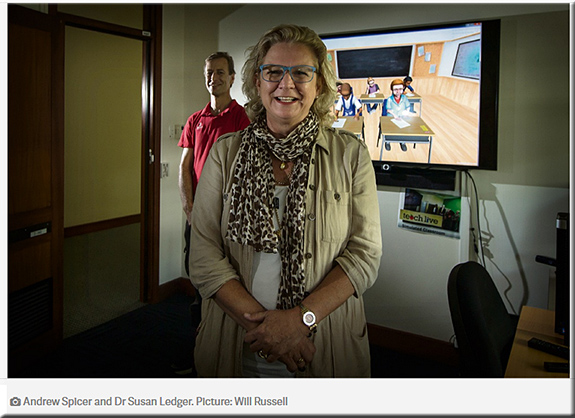
IN an Australian first, education students will be able hone their skills without stepping foot in a classroom. Murdoch University has hosted a pilot trial of TeachLivE, a virtual reality environment for teachers in training.
The student avatars are able to disrupt the class in a range of ways that teachers may encounter such as pulling out mobile phones or losing their pen during class.
8 Cutting Edge Virtual Reality Job Opportunities— from appreal-vr.com by Yariv Levski Today we’re highlighting the top 8 job opportunities in VR to give you a current scope of the Virtual Reality job market.
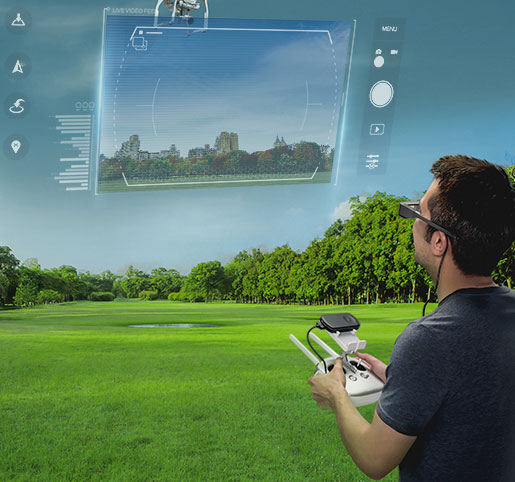
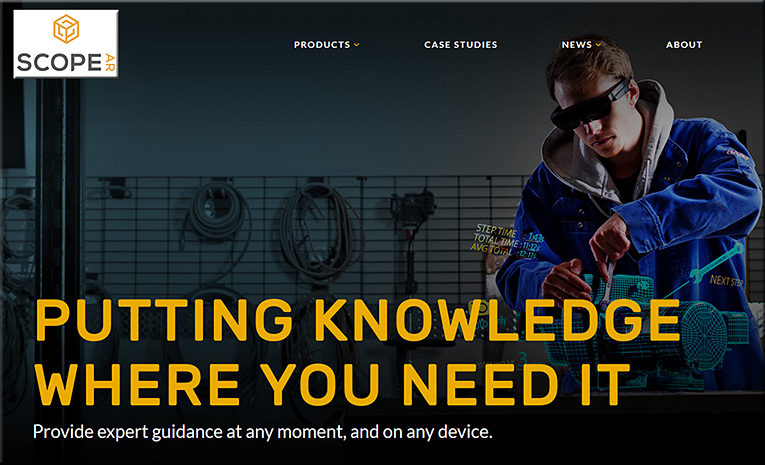
The Epson Moverio BT-300, to give the smart glasses their full name, are wearable technology – lightweight, comfortable see-through glasses – that allow you to see digital data, and have a first person view (FPV) experience: all while seeing the real world at the same time. The applications are almost endless.
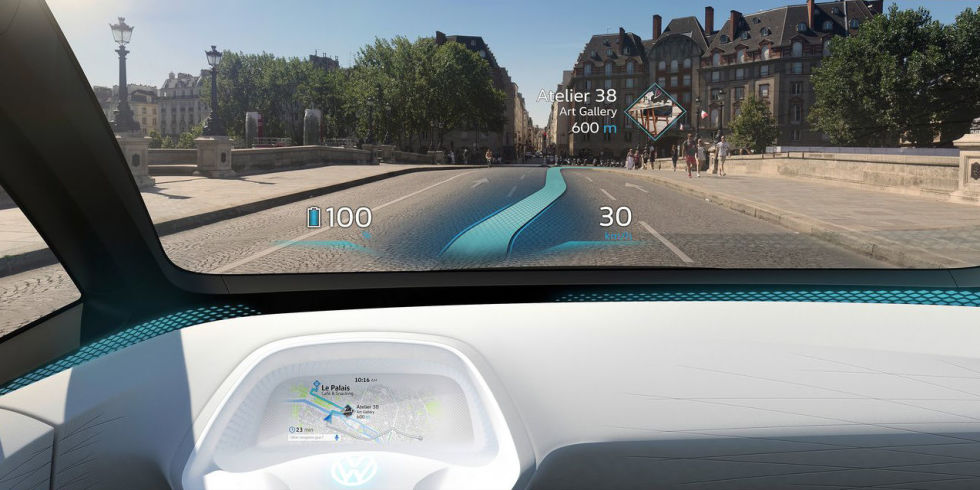
Volkswagen’s pivot away from diesel cars to electric vehicles is still a work in progress, but some details about its coming I.D. electric car — unveiled in Paris earlier this year — are starting to come to light. Much of the news is about an innovative augmented reality heads-up display Volkswagen plans to offer in its electric vehicles. Klaus Bischoff, head of the VW brand, says the I.D. electric car will completely reinvent vehicle instrumentation systems when it is launched at the end of the decade.
For decades, numerous research centers and academics around the world have been working the potential of virtual reality technology. Countless research projects undertaken in these centers are an important indicator that everything from health care to real estate can experience disruption in a few years.
…
Virtual Human Interaction Lab — Stanford University
Virtual Reality Applications Center — Iowa State University
Institute for Creative Technologies—USC
Medical Virtual Reality — USC
The Imaging Media Research Center — Korea Institute of Science and Technology
Virtual Reality & Immersive Visualization Group — RWTH Aachen University
Center For Simulations & Virtual Environments Research — UCIT
Duke immersive Virtual Environment —Duke University
Experimental Virtual Environments (EVENT) Lab for Neuroscience and Technology — Barcelona University
Immersive Media Technology Experiences (IMTE) — Norwegian University of Technology
Human Interface Technology Laboratory — University of Washington
Augmented Reality (AR) dwelled quietly in the shadow of VR until earlier this year, when a certain app propelled it into the mainstream. Now, AR is a household term and can hold its own with advanced virtual technologies. The AR industry is predicted to hit global revenues of $90 billion by 2020, not just matching VR but overtaking it by a large margin. Of course, a lot of this turnover will be generated by applications in the entertainment industry. VR was primarily created by gamers for gamers, but AR began as a visionary idea that would change the way that humanity interacted with the world around them. The first applications of augmented reality were actually geared towards improving human performance in the workplace… But there’s far, far more to be explored.
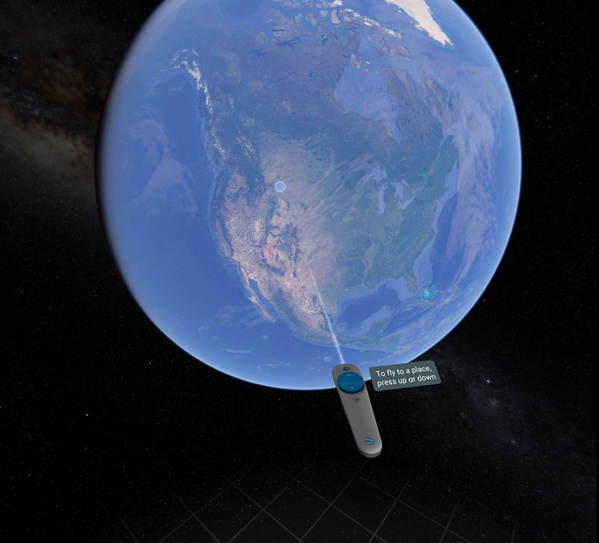
I stood at the peak of Mount Rainier, the tallest mountain in Washington state. The sounds of wind whipped past my ears, and mountains and valleys filled a seemingly endless horizon in every direction. I’d never seen anything like it—until I grabbed the sun.
Using my HTC Vive virtual reality wand, I reached into the heavens in order to spin the Earth along its normal rotational axis, until I set the horizon on fire with a sunset. I breathed deeply at the sight, then spun our planet just a little more, until I filled the sky with a heaping helping of the Milky Way Galaxy.
Virtual reality has exposed me to some pretty incredible experiences, but I’ve grown ever so jaded in the past few years of testing consumer-grade headsets. Google Earth VR, however, has dropped my jaw anew. This, more than any other game or app for SteamVR’s “room scale” system, makes me want to call every friend and loved one I know and tell them to come over, put on a headset, and warp anywhere on Earth that they please.
In VR architecture, the difference between real and unreal is fluid and, to a large extent, unimportant. What is important, and potentially revolutionary, is VR’s ability to draw designers and their clients into a visceral world of dimension, scale, and feeling, removing the unfortunate schism between a built environment that exists in three dimensions and a visualization of it that has until now existed in two.
Many of the VR projects in Architecture are focused on the final stages of design process, basically for selling a house to a client. Thomas sees the real potential in the early stages: when the main decisions need to be made. VR is so good for this, as it helps for non professionals to understand and grasp the concepts of architecture very intuitively. And this is what we talked mostly about.
A proposed benefit of virtual reality is that it could one day eliminate the need to move our fleshy bodies around the world for business meetings and work engagements. Instead, we’ll be meeting up with colleagues and associates in virtual spaces. While this would be great news for the environment and business people sick of airports, it would be troubling news for airlines.
Imagine during one of your future trials that jurors in your courtroom are provided with virtual reality headsets, which allow them to view the accident site or crime scene digitally and walk around or be guided through a 3D world to examine vital details of the scene.
How can such an evidentiary presentation be accomplished? A system is being developed whereby investigators use a robot system inspired by NASA’s Curiosity Mars rover using 3D imaging and panoramic videography equipment to record virtual reality video of the scene.6 The captured 360° immersive video and photographs of the scene would allow recreation of a VR experience with video and pictures of the original scene from every angle. Admissibility of this evidence would require a showing that the VR simulation fairly and accurately depicts what it represents. If a judge permits presentation of the evidence after its accuracy is established, jurors receiving the evidence could turn their heads and view various aspects of the scene by looking up, down, and around, and zooming in and out.
Unlike an animation or edited video initially created to demonstrate one party’s point of view, the purpose of this type of evidence would be to gather data and objectively preserve the scene without staging or tampering. Even further, this approach would allow investigators to revisit scenes as they existed during the initial forensic examination and give jurors a vivid rendition of the site as it existed when the events occurred.
The theme running throughout most of this year’s WinHEC keynote in Shenzhen, China was mixed reality. Microsoft’s Alex Kipman continues to be a great spokesperson and evangelist for the new medium, and it is apparent that Microsoft is going in deep, if not all in, on this version of the future. I, for one, as a mixed reality or bust developer, am very glad to see it.
As part of the presentation, Microsoft presented a video (see below) that shows the various forms of mixed reality. The video starts with a few virtual objects in the room with a person, transitions into the same room with a virtual person, then becomes a full virtual reality experience with Windows Holographic.
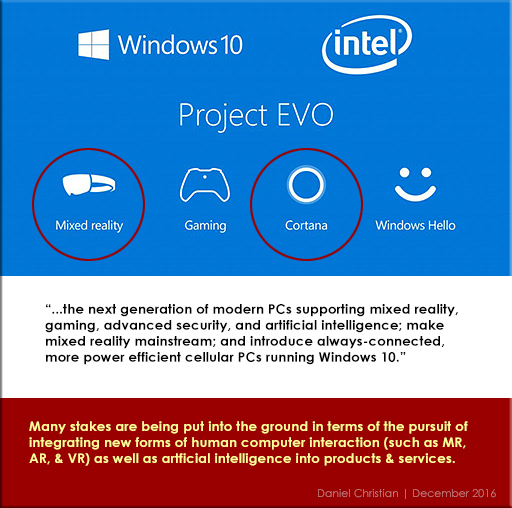
Today, we’re at the Windows Hardware Engineering Community event (WinHEC) in Shenzhen, China –where our OEM partners have created more than 300 Windows devices shipping in 75 countries generating more than 8 billion RMB in revenue for Shenzhen partners. We continue this journey with Intel, Qualcomm and hardware engineering creators from around the world. Together, we will build the next generation of modern PCs supporting mixed reality, gaming, advanced security, and artificial intelligence; make mixed reality mainstream; and introduce always-connected, more power efficient cellular PCs running Windows 10.
Nearly 140 private companies working to advance artificial intelligence technologies have been acquired since 2011, with over 40 acquisitions taking place in 2016 alone. Corporate giants like Google, IBM, Yahoo, Intel, Apple and Salesforce, are competing in the race to acquire private AI companies, with Samsung emerging as a new entrant in October with its acquisition of startup Viv Labs, which is developing a Siri-like AI assistant, and GE making 2 AI acquisitions in November.
From DSC: In the future, I’d like to see holograms provide stunning visual centerpieces for the entrance ways into libraries, or in our classrooms, or in our art galleries, recital halls, and more. The object(s), person(s), scene(s) could change into something else, providing a visually engaging experience that sets a tone for that space, time, and/or event.
Eventually, perhaps these types of technologies/setups will even be a way to display artwork within our homes and apartments.
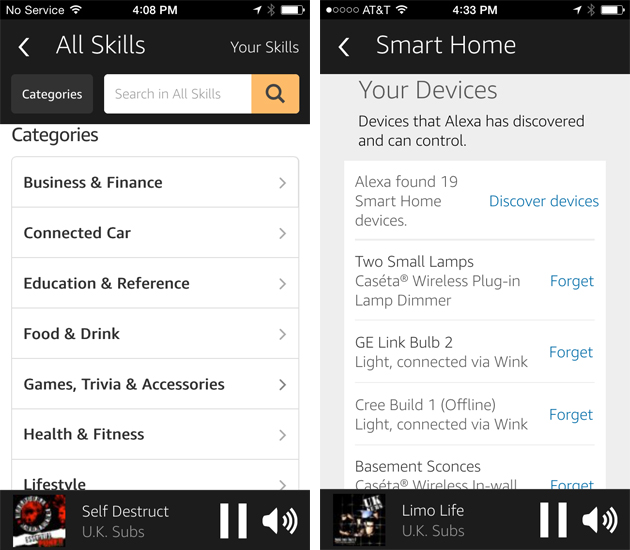
From DSC: When I saw the article below, I couldn’t help but wonder…what are the teaching & learning-related ramifications when new “skills” are constantly being added to devices like Amazon’s Alexa?
What does it mean for:
Students / learners
Faculty members
Teachers
Trainers
Instructional Designers
Interaction Designers
User Experience Designers
Curriculum Developers
…and others?
Will the capabilities found in Alexa simply come bundled as a part of the “connected/smart TV’s” of the future? Hmm….
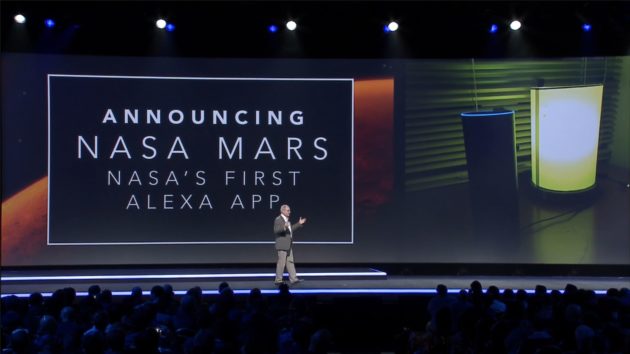
Amazon’s Alexa has gained many skills over the past year, such as being able to read tweets or deliver election results and fantasy football scores. Starting on Wednesday, you’ll be able to ask Alexa about Mars.
The new skill for the voice-controlled speaker comes courtesy of NASA’s Jet Propulsion Laboratory. It’s the first Alexa app from the space agency.
Tom Soderstrom, the chief technology officer at NASA’s Jet Propulsion Laboratory was on hand at the AWS re:invent conference in Las Vegas tonight to make the announcement.
Amazon today announced three new artificial intelligence-related toolkits for developers building apps on Amazon Web Services
At the company’s AWS re:invent conference in Las Vegas, Amazon showed how developers can use three new services — Amazon Lex, Amazon Polly, Amazon Rekognition — to build artificial intelligence features into apps for platforms like Slack, Facebook Messenger, ZenDesk, and others.
The idea is to let developers utilize the machine learning algorithms and technology that Amazon has already created for its own processes and services like Alexa.Instead of developing their own AI software, AWS customers can simply use an API call or the AWS Management Console to incorporate AI features into their own apps.
AWS Announces Three New Amazon AI Services Amazon Lex, the technology that powers Amazon Alexa, enables any developer to build rich, conversational user experiences for web, mobile, and connected device apps; preview starts today
Amazon Polly transforms text into lifelike speech, enabling apps to talk with 47 lifelike voices in 24 languages
Amazon Rekognition makes it easy to add image analysis to applications, using powerful deep learning-based image and face recognition
Capital One, Motorola Solutions, SmugMug, American Heart Association, NASA, HubSpot, Redfin, Ohio Health, DuoLingo, Royal National Institute of Blind People, LingApps, GoAnimate, and Coursera are among the many customers using these Amazon AI Services
Excerpt:
SEATTLE–(BUSINESS WIRE)–Nov. 30, 2016– Today at AWS re:Invent, Amazon Web Services, Inc. (AWS), an Amazon.com company (NASDAQ: AMZN), announced three Artificial Intelligence (AI) services that make it easy for any developer to build apps that can understand natural language, turn text into lifelike speech, have conversations using voice or text, analyze images, and recognize faces, objects, and scenes. Amazon Lex, Amazon Polly, and Amazon Rekognition are based on the same proven, highly scalable Amazon technology built by the thousands of deep learning and machine learning experts across the company. Amazon AI services all provide high-quality, high-accuracy AI capabilities that are scalable and cost-effective. Amazon AI services are fully managed services so there are no deep learning algorithms to build, no machine learning models to train, and no up-front commitments or infrastructure investments required. This frees developers to focus on defining and building an entirely new generation of apps that can see, hear, speak, understand, and interact with the world around them.
The headlines for Pokémon GO were initially shocking, but by now they’re familiar: as many as 21 million active daily users, 700,000 downloads per day, $5.7 million in-app purchases per day, $200 million earned as of August. Analysts anticipate the game will garner several billion dollars in ad revenue over the next year. By almost any measure, Pokémon GO is huge.
The technologies behind the game, augmented and virtual reality (AVR), are huge too. Many financial analysts expect the technology to generate $150 billion over the next three years, outpacing even smartphones with unprecedented growth, much of it in entertainment. But AVR is not only about entertainment. In August 2015, Teegan Lexcen was born in Florida with only half a heart and needed surgery. With current cardiac imaging software insufficient to assist with such a delicate operation on an infant, surgeons at Nicklaus Children’s Hospital in Miami turned to 3D imaging software and a $20 Google Cardboard VR set. They used a cellphone to peer into the baby’s heart, saw exactly how to improve her situation and performed the successful surgery in December 2015.
“I could see the whole heart. I could see the chest wall,” Dr. Redmond Burke told Today. “I could see all the things I was worried about in creating an operation.”
Texas Tech University Health Sciences Center in Lubbock and San Diego State University are both part of a Pearson mixed reality pilot aimed at leveraging mixed reality to solve challenges in nursing education.
…
At Bryn Mawr College, a women’s liberal arts college in Pennsylvania, faculty, students, and staff are exploring various educational applications for the HoloLens mixed reality devices. They are testing Skype for HoloLens to connect students with tutors in Pearson’s 24/7 online tutoring service, Smarthinking.
…
At Canberra Grammar School in Australia, Pearson is working with teachers in a variety of disciplines to develop holograms for use in their classrooms. The University of Canberra is partnering with Pearson to provide support for the project and evaluate the impact these holograms have on teaching and learning.
As fantastic as technologies like augmented and mixed reality may be, experiencing them, much less creating them, requires a sizable investment, financially speaking. It is just beyond the reach of consumers as well as your garage-type indie developer. AR and VR startup Zappar, however, wants to smash that perception. With ZapBox, you can grab a kit for less than a triple-A video game to start your journey towards mixed reality fun and fame. It’s Magic Leap meets Google Cardboard. Or as Zappar itself says, making Magic Leap, magic cheap!
From DSC: If we had more beacons on our campus (a Christian liberal arts college), I could see where we could offer a variety of things in new ways:
For example, we might use beacons around the main walkways of our campus where, when we approach these beacons, pieces of advice or teaching could appear on an app on our mobile devices. Examples could include:
Micro-tips on prayer from John Calvin, Martin Luther, or Augustine (i.e., 1 or 2 small tips at a time; could change every day or every week)
Or, for a current, campus-wide Bible study, the app could show a question for that week’s study; you could reflect on that question as you’re walking around
Or, for musical events…when one walks by the Covenant Fine Arts Center, one could get that week’s schedule of performances or what’s currently showing in the Art Gallery
Peaces of scripture, with links to Biblegateway.com or other sites
Further information re: what’s being displayed on posters within the hallways — works that might be done by faculty members and/or by students
Etc.
A person could turn the app’s notifications on or off at any time. The app would encourage greater exercise; i.e., the more you walk around, the more tips you get.
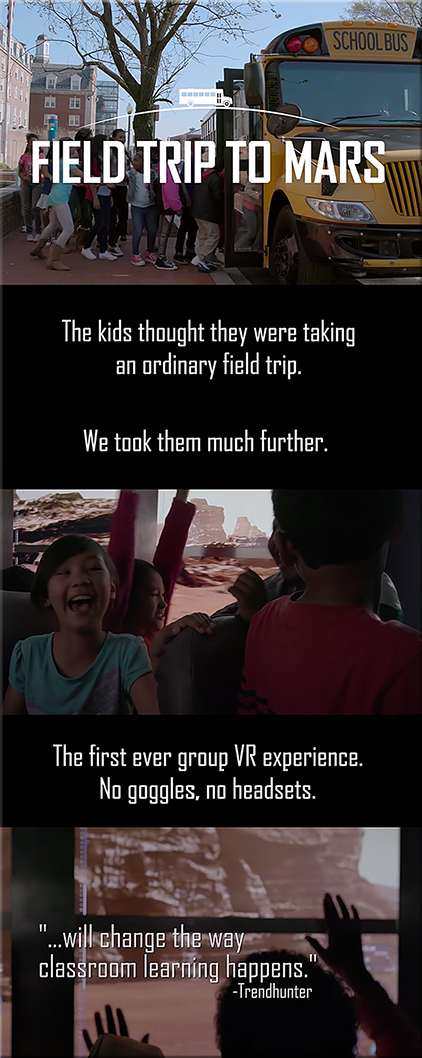
A school bus, virtual reality, & an out-of-this-world journey — from goodmenproject.com “Field Trip To Mars” is the barrier-shattering outcome of an ambitious mission to give a busload of people the same, Virtual Reality experience – going to Mars.
Excerpt:
Inspiration was Lockheed‘s goal when it asked its creative resources, led by McCann, to create the world’s first mobile group Virtual Reality experience. As one creator notes, VR now is essentially a private, isolating experience. But wouldn’t it be cool to give a busload of people the same, simultaneous VR experience? And then – just to make it really challenging – put the whole thing on wheels?
“Field Trip To Mars” is the barrier-shattering outcome of this ambitious mission.
From DSC: This is incredible! Very well done. The visual experience tracks the corresponding speeds of the bus and even turns of the bus.
The United States Department of Education (ED) has formally kicked off a new competition designed to encourage the development of virtual and augmented reality concepts for education.
Dubbed the EdSim Challenge, the competition is aimed squarely at developing students’ career and technical skills — it’s funded through the Carl D. Perkins Career and Technical Education Act of 2006 — and calls on developers and ed tech organizations to develop concepts for “computer-generated virtual and augmented reality educational experiences that combine existing and future technologies with skill-building content and assessment. Collaboration is encouraged among the developer community to make aspects of simulations available through open source licenses and low-cost shareable components. ED is most interested in simulations that pair the engagement of commercial games with educational content that transfers academic, technical, and employability skills.”
Virtual reality boosts students’ results— from raconteur.net by Edwin Smith Virtual and augmented reality can enable teaching and training in situations which would otherwise be too hazardous, costly or even impossible in the real world
Excerpt:
More recently, though, the concept described in Aristotle’s Nicomachean Ethics has been bolstered by further scientific evidence. Last year, a University of Chicago study found that students who physically experience scientific concepts, such as the angular momentum acting on a bicycle wheel spinning on an axel that they’re holding, understand them more deeply and also achieve significantly improved scores in tests.
Virtual and augmented reality are shaking up sectors — from raconteur.net by Sophie Charara Both virtual and augmented reality have huge potential to leap from visual entertainment to transform the industrial and service sectors
Microsoft might not have envisioned its HoloLens headset as a war helmet, but that’s not stopping Ukrainian company LimpidArmor from experimenting. Defence Blog reports that LimpidArmor has started testing military equipment that includes a helmet with Microsoft’s HoloLens headset integrated into it.
The helmet is designed for tank commanders to use alongside a Circular Review System (CRS) of cameras located on the sides of armored vehicles. Microsoft’s HoloLens gathers feeds from the cameras outside to display them in the headset as a full 360-degree view. The system even includes automatic target tracking, and the ability to highlight enemy and allied soldiers and positions.
Bring your VR to work— from itproportal.com by Timo Elliott, Josh Waddell 4 hours ago With all the hype, there’s surprisingly little discussion of the latent business value which VR and AR offer.
Excerpt:
With all the hype, there’s surprisingly little discussion of the latent business value which VR and AR offer — and that’s a blind spot that companies and CIOs can’t afford to have. It hasn’t been that long since consumer demand for the iPhone and iPad forced companies, grumbling all the way, into finding business cases for them. Gartner has said that the next five to ten years will bring “transparently immersive experiences” to the workplace. They believe this will introduce “more transparency between people, businesses, and things” and help make technology “more adaptive, contextual, and fluid.”
If digitally enhanced reality generates even half as much consumer enthusiasm as smartphones and tablets, you can expect to see a new wave of consumerisation of IT as employees who have embraced VR and AR at home insist on bringing it to the workplace. This wave of consumerisation could have an even greater impact than the last one. Rather than risk being blindsided for a second time, organisations would be well advised to take a proactive approach and be ready with potential business uses for VR and AR technologies by the time they invade the enterprise.
In Gartner’s latest emerging technologies hype cycle, Virtual Reality is already on the Slope of Enlightenment, with Augmented Reality following closely.
One place where students are literally immersed in VR is at Carnegie Mellon University’s Entertainment Technology Center (ETC). ETC offers a two-year Master of Entertainment Technology program (MET) launched in 1998 and cofounded by the late Randy Pausch, author of “The Last Lecture.”
MET starts with an intense boot camp called the “immersion semester” in which students take a Building Virtual Worlds (BVW) course, a leadership course, along with courses in improvisational acting, and visual storytelling. Pioneered by Pausch, BVW challenges students in small teams to create virtual reality worlds quickly over a period of two weeks, culminating in a presentation festival every December.
Apple patents augmented reality mapping system for iPhone — from appleinsider.com by Mikey Campbell Apple on Tuesday was granted a patent detailing an augmented reality mapping system that harnesses iPhone hardware to overlay visual enhancements onto live video, lending credence to recent rumors suggesting the company plans to implement an iOS-based AR strategy in the near future.
Virtual reality is a combination of life-like images, effects and sounds that creates an imaginary world in front of our eyes.
But what if we could also imitate more complex sensations like the feeling of falling rain, a beating heart or a cat walking? What if we could distinguish, between a light sprinkle and a heavy downpour in a virtual experience?
Disney Research?—?a network of research laboratories supporting The Walt Disney Company, has announced the development of a 360-degree virtual reality application offering a library of feel effects and full body sensations.
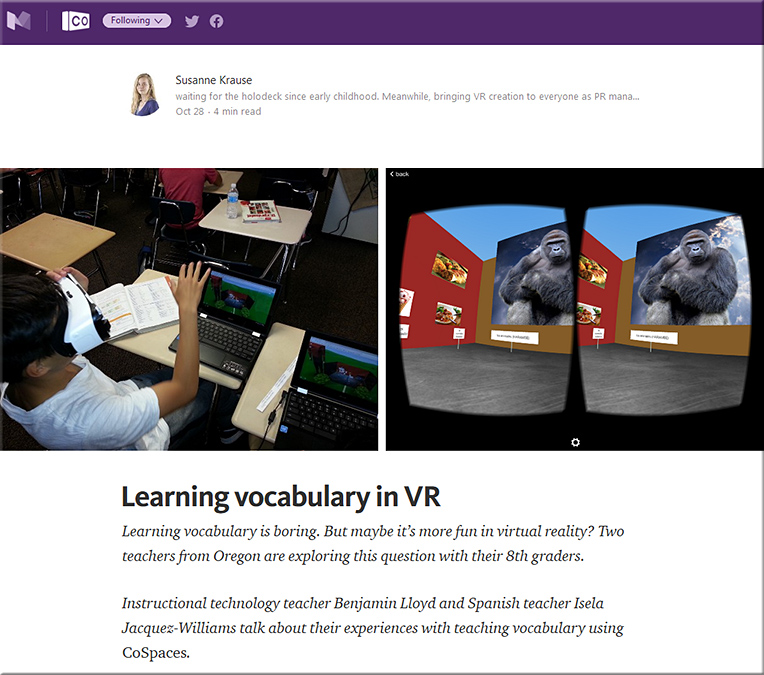
Literature class meets virtual reality — from blog.cospaces.io by Susanne Krause Not every student finds it easy to let a novel come to life in their imagination. Could virtual reality help? Tiffany Capers gave it a try: She let her 7th graders build settings from Lois Lowry’s “The Giver” with CoSpaces and explore them in virtual reality. And: they loved it.
After generations of peering into a microscope to examine cells, scientists could simply stroll straight through one.
Calling his project the “stuff of science fiction,” director of the 3D Visualisation Aesthetics Lab at the University of New South Wales (UNSW) John McGhee is letting people come face-to-face with a breast cancer cell.
In contrast, VR has been described as the “ultimate empathy machine.” It gives us a way to virtually put us in someone else’s shoes and experience the world the way they do.
This isn’t meant to be an exhaustive list, but if I missed something major, please tell me and I’ll add it. Also, please reach out if you’re working on anything cool in this space à sarah(at)accomplice(dot)co.
Hand and finger tracking, gesture interfaces, and grip simulation:









![The Living [Class] Room -- by Daniel Christian -- July 2012 -- a second device used in conjunction with a Smart/Connected TV](http://danielschristian.com/learning-ecosystems/wp-content/uploads/2012/07/The-Living-Class-Room-Daniel-S-Christian-July-2012.jpg)