Where teachers can find free audiobooks for their students — from thetechedvocate.org by Matthew Lynch

Excerpt (emphasis DSC):

Audiobooks are fantastic ways to bring stories to life in your classroom and keep students engaged. Reading Rockets explains, “Audiobooks have traditionally been used in schools by teachers of second-language learners, learning-disabled students, and struggling readers or nonreaders. In many cases, audiobooks have proven successful in providing a way for these students to access literature and enjoy books.” However, educators have found that audiobooks benefit all students!

Unfortunately, audiobooks are pricey, so you should not expect your students to have them at home. You should also not plan on spending large amounts of money to build your audiobook collection for your classroom. For instance, the widely popular Audible site for downloadable audiobooks is a subscription-based service, but it only allows you to choose one book per month. Instead, take advantage of the wealth of free audiobooks available for teachers and students.


Amazon CEO Jeff Bezos’ personal AV tech controls the future of AV and doesn’t even realize it — from ravepubs.com by Gary Kayye

Excerpt:

But it dawned on me today that the future of our very own AV market may not be in the hands of any new product, new technology or even an AV company at all. In fact, there’s likely one AV guy (or girl) out there, today, that controls the future of AV for all of us, but doesn’t even know it, yet.

I’m talking about Jeff Bezos’ personal AV technician. Yes, that Jeff Bezos — the one who started Amazon.

Follow my logic.

The Amazon Alexa is AMAZING. Probably the most amazing thing since Apple’s iPhone. And, maybe even more so. The iPhone was revolutionary as it was a handheld phone, an email client, notes taker, voice recorder, calendar, to-do list, wrist watch and flashlight — all in one. It replaced like 10 things I was using every single day. And I didn’t even mention the camera!

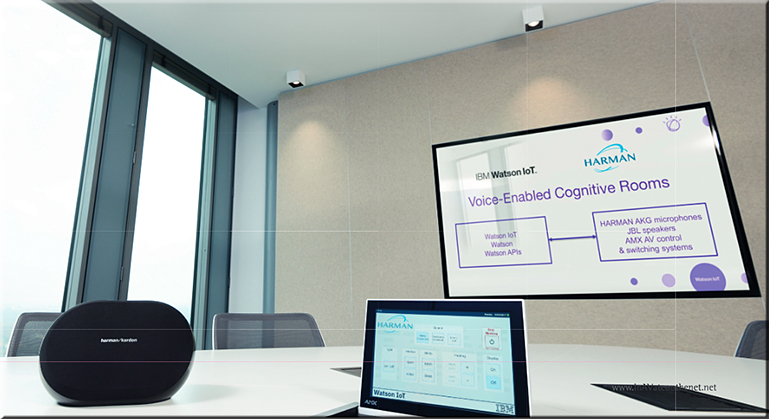
Alexa seamlessly and simply connects to nearly everything you want to connect it to. And, it’s updated weekly — yes, weekly — with behind-the-scenes Friday-afternoon firmware and software upgrades. So, just when you think Alexa doesn’t do something you want it to do, she can — you just have to wait until an upcoming Friday — as someone will add that functionality. And, at any time, you can add Alexa SKILLS to yours and have third-party control of your Lutron lighting system, your shades and blinds, your HVAC, your TV, your DVR, your CableTV box, your SONOS, your home security system, your cameras and even your washer and dryer (yes, I have that functionality — even though I can’t find a use for it yet). It can even call people, play any radio station in the world, play movie previews, play Jeopardy!, play Sirius/XM radio — I mean, it can do nearly anything. It’s squarely aimed at the average consumer or home application — all to simplify your life.

But it could EASILY be upgraded to control everything. I mean everything. Projectors, digital signage networks, AV-over-IP systems, scalers, switchers, audio systems, commercial-grade lighting systems, rooms, buildings, etc. — you get the idea.


From DSC:
By the way, I wouldn’t be so sure that Bezos doesn’t realize this; there’s very little that gets by that guy.


Also see:

Crestron to Ship AirBoard Whiteboarding Solution — from ravepubs.com by Sara Abrons

Excerpt:

Crestron will soon be shipping the Crestron AirBoard PoE electronic whiteboard technology. Crestron AirBoard enables viewing of electronic whiteboard content on any display device, thereby solving the problem of meeting participants — remote participants, especially — not being able to see the whiteboard unless they’re seated with a direct line of sight.

With Crestron AirBoard, annotations can be saved and then posted, emailed, or texted to either a central web page (education applications) or to invited participants (corporate applications). Meeting participants simply choose “whiteboard” as a source on the in-room Crestron TSW or Crestron Mercury touch screen to start the session. When “end meeting” is selected, the user is prompted to save and send the file.


From DSC:
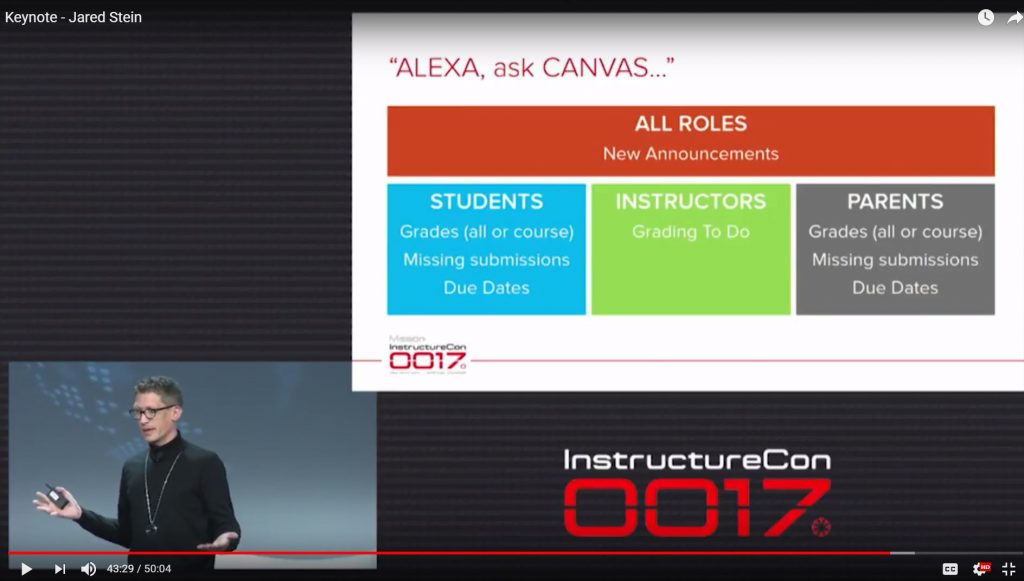
Check out the 2 items below regarding the use of voice as it pertains to using virtual assistants: 1 involves healthcare and the other involves education (Canvas).


1) Using Alexa to go get information from Canvas:

“Alexa Ask Canvas…”

Example questions as a student:

  • What grades am I getting in my courses?
  • What am I missing?

Example question as a teacher:

  • How many submissions do I need to grade?

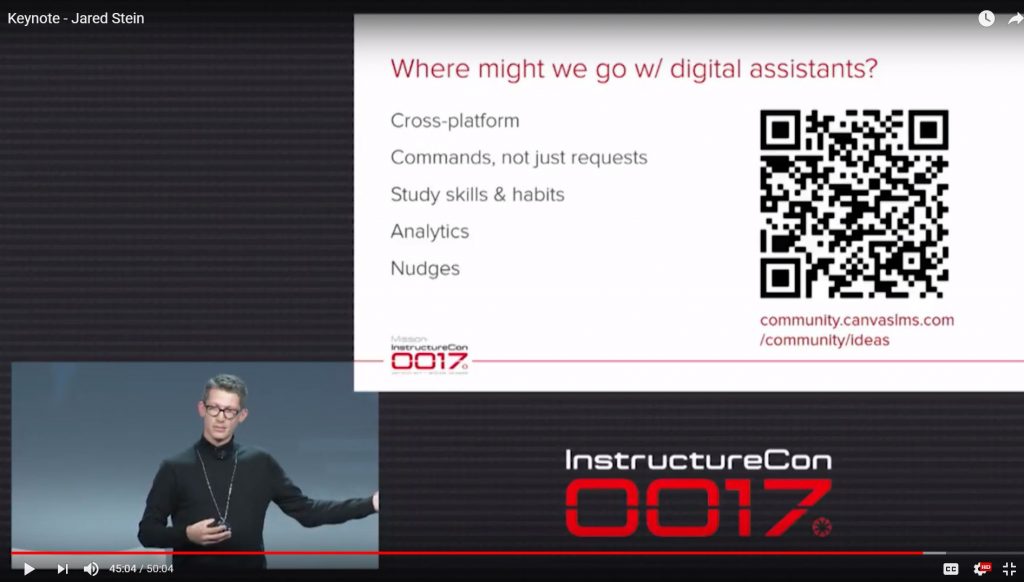
See the section on asking Alexa questions…roughly between http://www.youtube.com/watch?v=e-30ixK63zE &t=38m18s through http://www.youtube.com/watch?v=e-30ixK63zE &t=46m42s


2) Why voice assistants are gaining traction in healthcare — from samsungnext.com by Pragati Verma

Excerpt (emphasis DSC):

The majority of intelligent voice assistant platforms today are built around smart speakers, such as the Amazon Echo and Google Home. But that might change soon, as several specialized devices focused on the health market are slated to be released this year.

One example is ElliQ, an elder care assistant robot from Samsung NEXT portfolio company Intuition Robotics. Powered by AI cognitive technology, it encourages an active and engaged lifestyle. Aimed at older adults aging in place, it can recognizing their activity level and suggest activities, while also making it easier to connect with loved ones.

Pillo is an example of another such device. It is a robot that combines machine learning, facial recognition, video conferencing, and automation to work as a personal health assistant. It can dispense vitamins and medication, answer health and wellness questions in a conversational manner, securely sync with a smartphone and wearables, and allow users to video conference with health care professionals.

“It is much more than a smart speaker. It is HIPAA compliant and it recognizes the user; acknowledges them and delivers care plans,” said Rogers, whose company created the voice interface for the platform.

Orbita is now working with toSense’s remote monitoring necklace to track vitals and cardiac fluids as a way to help physicians monitor patients remotely. Many more seem to be on their way.

“Be prepared for several more devices like these to hit the market soon,” Rogers predicted.


From DSC:

I see the piece about Canvas and Alexa as a great example of where a piece of our future learning ecosystems are heading towards — in fact, it’s been a piece of my Learning from the Living [Class] Room vision for a while now. The use of voice recognition/NLP is only picking up steam; look for more of this kind of functionality in the future. 


The Living [Class] Room -- by Daniel Christian -- July 2012 -- a second device used in conjunction with a Smart/Connected TV


AWS unveils ‘Transcribe’ and ‘Translate’ machine learning services — from business-standard.com

Excerpts:

  • Amazon “Transcribe” provides grammatically correct transcriptions of audio files to allow audio data to be analyzed, indexed and searched.
  • Amazon “Translate” provides natural sounding language translation in both real-time and batch scenarios.


Google’s ‘secret’ smart city on Toronto’s waterfront sparks row — from bbc.com by Robin Levinson-King BBC News, Toronto

Excerpt:

The project was commissioned by the publically funded organisation Waterfront Toronto, who put out calls last spring for proposals to revitalise the 12-acre industrial neighbourhood of Quayside along Toronto’s waterfront.

Prime Minister Justin Trudeau flew down to announce the agreement with Sidewalk Labs, which is owned by Google’s parent company Alphabet, last October, and the project has received international attention for being one of the first smart-cities designed from the ground up.

But five months later, few people have actually seen the full agreement between Sidewalk and Waterfront Toronto.

As council’s representative on Waterfront Toronto’s board, Mr Minnan-Wong is the only elected official to actually see the legal agreement in full. Not even the mayor knows what the city has signed on for.

“We got very little notice. We were essentially told ‘here’s the agreement, the prime minister’s coming to make the announcement,'” he said.

“Very little time to read, very little time to absorb.”

Now, his hands are tied – he is legally not allowed to comment on the contents of the sealed deal, but he has been vocal about his belief it should be made public.

“Do I have concerns about the content of that agreement? Yes,” he said.

“What is it that is being hidden, why does it have to be secret?”

From DSC:
Google needs to be very careful here. Increasingly so these days, our trust in them (and other large tech companies) is at stake.


Addendum on 4/16/18 with thanks to Uros Kovacevic for this resource:
Human lives saved by robotic replacements — from injuryclaimcoach.com

Excerpt:

For academics and average workers alike, the prospect of automation provokes concern and controversy. As the American workplace continues to mechanize, some experts see harsh implications for employment, including the loss of 73 million jobs by 2030. Others maintain more optimism about the fate of the global economy, contending technological advances could grow worldwide GDP by more than $1.1 trillion in the next 10 to 15 years. Whatever we make of these predictions, there’s no question automation will shape the economic future of the nation – and the world.

But while these fiscal considerations are important, automation may positively affect an even more essential concern: human life. Every day, thousands of Americans risk injury or death simply by going to work in dangerous conditions. If robots replaced them, could hundreds of lives be saved in the years to come?

In this project, we studied how many fatal injuries could be averted if dangerous occupations were automated. To do so, we analyzed which fields are most deadly and the likelihood of their automation according to expert predictions. To see how automation could save Americans’ lives, keep reading.

Also related to this item is :
How AI is improving the landscape of work  — from forbes.com by Laurence Bradford

Excerpts:

There have been a lot of sci-fi stories written about artificial intelligence. But now that it’s actually becoming a reality, how is it really affecting the world? Let’s take a look at the current state of AI and some of the things it’s doing for modern society.

  • Creating New Technology Jobs
  • Using Machine Learning To Eliminate Busywork
  • Preventing Workplace Injuries With Automation
  • Reducing Human Error With Smart Algorithms

From DSC:
This is clearly a pro-AI piece. Not all uses of AI are beneficial, but this article mentions several use cases where AI can make positive contributions to society.


It’s About Augmented Intelligence, not Artificial Intelligence — from informationweek.com
The adoption of AI applications isn’t about replacing workers but helping workers do their jobs better.


From DSC:
This article is also a pro-AI piece. But again, not all uses of AI are beneficial. We need to be aware of — and involved in — what is happening with AI.


Investing in an Automated Future — from clomedia.com by Mariel Tishma
Employers recognize that technological advances like AI and automation will require employees with new skills. Why are so few investing in the necessary learning?


Six ingredients for the successful virtual classroom — from clive-shepherd.blogspot.com by Clive Shepherd

Excerpts:

1. Hook your learners in
2. Use radio techniques to engage with sound
3. Illuminate your ideas with imagery
4. Put your ideas into context using demonstrations, examples, cases and stories
5. Take advantage of the fact you’re live – get interactive

If you’re not going to interact with your audience, there’s absolutely no point in running a live session. If you want to present a large body of content, why not do this in advance in text, as a video or a podcast? Reserve a live session for things you cannot do any other way. Virtual classrooms provide lots of possibilities for interactivity, so use them constantly.

6. Bridge to the next step


2018 TECH TRENDS REPORT — from the Future Today Institute
Emerging technology trends that will influence business, government, education, media and society in the coming year.

Description:

The Future Today Institute’s 11th annual Tech Trends Report identifies 235 tantalizing advancements in emerging technologies—artificial intelligence, biotech, autonomous robots, green energy and space travel—that will begin to enter the mainstream and fundamentally disrupt business, geopolitics and everyday life around the world. Our annual report has garnered more than six million cumulative views, and this edition is our largest to date.

Helping organizations see change early and calculate the impact of new trends is why we publish our annual Emerging Tech Trends Report, which focuses on mid- to late-stage emerging technologies that are on a growth trajectory.

In this edition of the FTI Tech Trends Report, we’ve included several new features and sections:

  • a list and map of the world’s smartest cities
  • a calendar of events that will shape technology this year
  • detailed near-future scenarios for several of the technologies
  • a new framework to help organizations decide when to take action on trends
  • an interactive table of contents, which will allow you to more easily navigate the report from the bookmarks bar in your PDF reader


01 How does this trend impact our industry and all of its parts?
02 How might global events — politics, climate change, economic shifts – impact this trend, and as a result, our organization?
03 What are the second, third, fourth, and fifth-order implications of this trend as it evolves, both in our organization and our industry?
04 What are the consequences if our organization fails to take action on this trend?
05 Does this trend signal emerging disruption to our traditional business practices and cherished beliefs?
06 Does this trend indicate a future disruption to the established roles and responsibilities within our organization? If so, how do we reverse-engineer that disruption and deal with it in the present day?
07 How are the organizations in adjacent spaces addressing this trend? What can we learn from their failures and best practices?
08 How will the wants, needs and expectations of our consumers/ constituents change as a result of this trend?
09 Where does this trend create potential new partners or collaborators for us?
10 How does this trend inspire us to think about the future of our organization?


From DSC:
Why aren’t we further along with lecture recording within K-12 classrooms?

That is, I as a parent — or much better yet, our kids themselves who are still in K-12 — should be able to go online and access whatever talks/lectures/presentations were given on a particular day. When our daughter is sick and misses several days, wouldn’t it be great for her to be able to go out and see what she missed? Even if we had the time and/or the energy to do so (which we don’t), my wife and I can’t present this content to her very well. We would likely explain things differently — and perhaps incorrectly — thus, potentially muddying the waters and causing more confusion for our daughter.

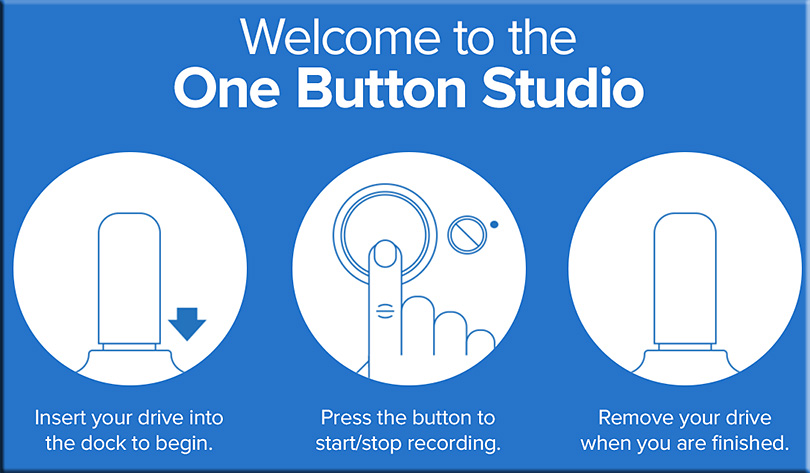
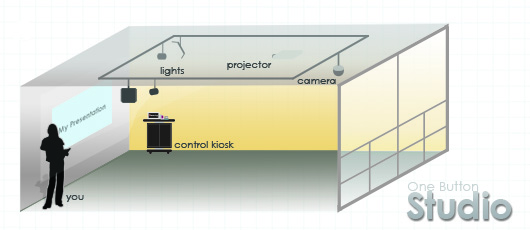
There should be entry level recording studios — such as the One Button Studio from Penn State University — in each K-12 school for teachers to record their presentations. At the end of each day, the teacher could put a checkbox next to what he/she was able to cover that day. (No rushing intended here — as education is enough of a run-away train often times!) That material would then be made visible/available on that day as links on an online-based calendar. Administrators should pay teachers extra money in the summer times to record these presentations.

Also, students could use these studios to practice their presentation and communication skills. The process is quick and easy:


I’d like to see an option — ideally via a brief voice-driven Q&A at the start of each session — that would ask the person where they wanted to put the recording when it was done: To a thumb drive, to a previously assigned storage area out on the cloud/Internet, or to both destinations?

Providing automatically generated close captioning would be a great feature here as well, especially for English as a Second Language (ESL) students.


From DSC:
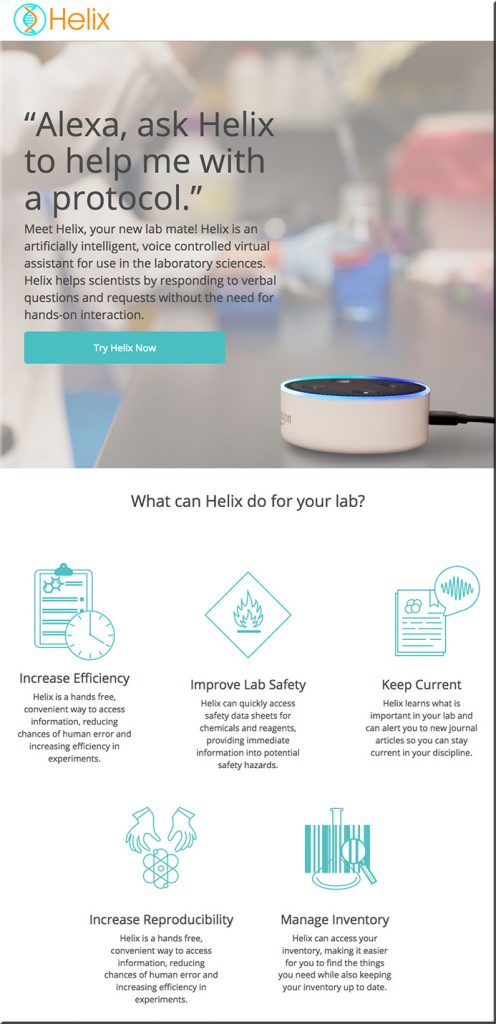
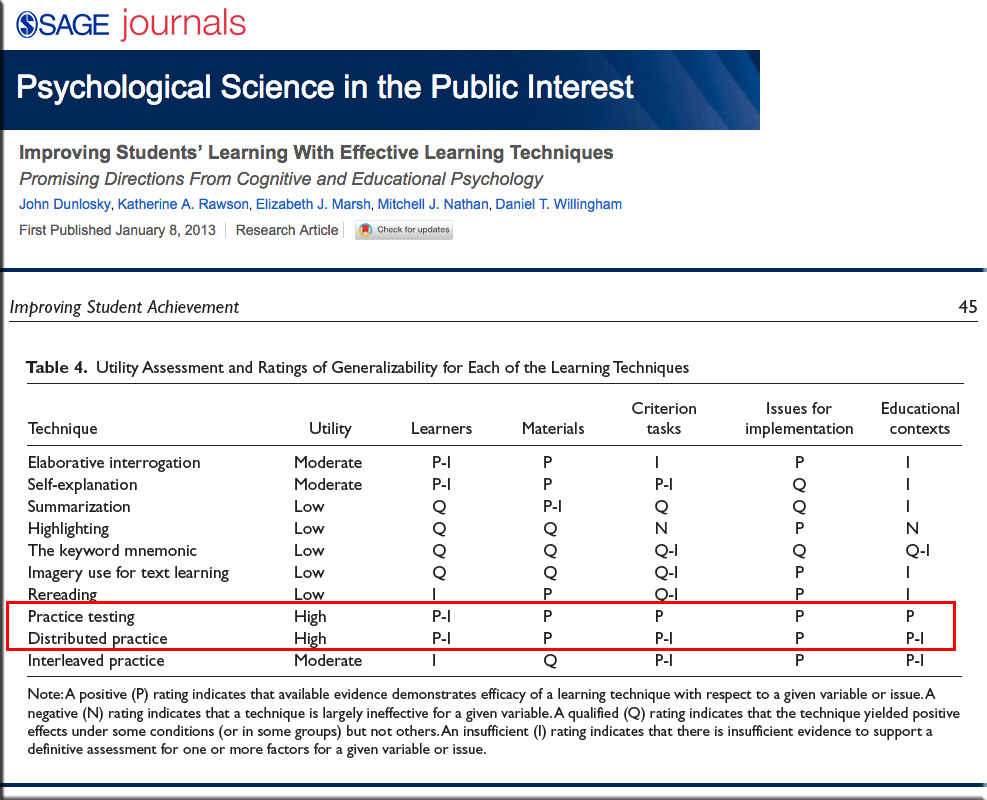
After seeing the article entitled, “Scientists Are Turning Alexa into an Automated Lab Helper,” I began to wonder…might Alexa be a tool to periodically schedule & provide practice tests & distributed practice on content? In the future, will there be “learning bots” that a learner can employ to do such self-testing and/or distributed practice?


From page 45 of the PDF available here:


Might Alexa be a tool to periodically schedule/provide practice tests & distributed practice on content?


Fake videos are on the rise. As they become more realistic, seeing shouldn’t always be believing — from latimes.com by David Pierson Fe

Excerpts:

It’s not hard to imagine a world in which social media is awash with doctored videos targeting ordinary people to exact revenge, extort or to simply troll.

In that scenario, where Twitter and Facebook are algorithmically flooded with hoaxes, no one could fully believe what they see. Truth, already diminished by Russia’s misinformation campaign and President Trump’s proclivity to label uncomplimentary journalism “fake news,” would be more subjective than ever.

The danger there is not just believing hoaxes, but also dismissing what’s real.

The consequences could be devastating for the notion of evidentiary video, long considered the paradigm of proof given the sophistication required to manipulate it.

“This goes far beyond ‘fake news’ because you are dealing with a medium, video, that we traditionally put a tremendous amount of weight on and trust in,” said David Ryan Polgar, a writer and self-described tech ethicist.


From DSC:
Though I’m typically pro-technology, this is truly disturbing. There are certainly downsides to technology as well as upsides — but it’s how we use a technology that can make the real difference. Again, this is truly disturbing.


“Rise of the machines” — from January 2018 edition of InAVate magazine
AI is generating lots of buzz in other verticals, but what can AV learn from those? Tim Kridel reports.


From DSC:
Learning spaces are relevant as well in the discussion of AI and AV-related items.


Also in their January 2018 edition, see
an incredibly detailed project at the London Business School.

Excerpt:

A full-width frosted glass panel sits on the desk surface, above it fixed in the ceiling is a Wolfvision VZ-C12 visualiser. This means the teaching staff can write on the (wipeclean) surface and the text appears directly on two 94-in screens behind them, using Christie short-throw laser 4,000 lumens projectors. When the lecturer is finished or has filled up the screen with text, the image can be saved on the intranet or via USB. Simply wipe with a cloth and start again. Not only is the technology inventive, but it allows the teaching staff to remain in face-to-face contact with the students at all times, instead of students having to stare at the back of the lecturer’s head whilst they write.


Also relevant, see:


From DSC:
While I haven’t gone through all of these videos/modules/practice problems, I find the idea of using music to teach math very intriguing. So I wanted to pass this information along in case it helps some students (and teachers) out there!

You might find some (or all) of this a bit corny, but some kids out there might find this style much more interesting and engaging. It might better help get and maintain their attentions. It might help them better remember some of these concepts.

I’m posting these resources/links on my blog here because of such students. If such an approach helps them connect with the material, I say, “Good deal!”  Such an approach might suit their preferences quite well.

In fact, perhaps teachers could have their students design and produce these sorts of videos themselves! Talk about active learning/project based learning! Such a cross-disciplinary, team-based approach would involve students with interests and developing skills involving:

  • Digital video editing
  • Digital audio editing
  • Music
  • Drama/acting
  • Script writing
  • Instructional design


Per Matt Wolf, Managing Director at Tylerbarnettpr.com:

Singing math tutor, Huzefa Kapedia, has launched a new musically-based SAT Math Video Course that is sure to bring a smile to faces.

From crooning about the quadratic formula to rapping about slope intercept form, Huzefa introduces the only math SAT course to teach difficult concepts through the power of song.

Additionally, he provides 700 practice problems (all frequency-based), each with its own video explanation.

And…it actually works. Huzefa is not only helping kids score big on their SATs; he is also making the whole math studying thing pretty darn enjoyable.


Problem Solved: Scalar Learning Proves Any Person Can Be a Math Person
Online and In-Person Tutoring Platform Introduces Modern Mathematics for Today’s Student

Scalar Learning introduces an innovative online and in-person tutoring platform that enables individuals of all ages and backgrounds with the skills and confidence needed to master mathematics. Founded by software engineer and former patent attorney Huzefa Kapadia, Scalar Learning offers a variety of online courses, private tutoring sessions with specialized educators, and entertaining (and effective) math music videos geared at breathing new life into the outdated tutoring model.

“With Scalar Learning, I wanted to reinvent the tutoring concept for the modern world,” said Kapadia. “Everything I have designed and built is a product of my experience tutoring over 2,500 hours and teaching classrooms of both sixth and second grade math students. By blending vibrant and engaging video tutorials, high quality music videos to convey difficult formulas and concepts, and highly personalized and energetic one-on-one environments, we are able to engage our students on multiple levels. Too many people label themselves as ‘not a math person;’ my goal is to prove to them and the world that there is no such thing. Any person can become a math whiz with the right encouragement and training.”

Scalar Learning offers students a multi-tiered approach to mathematics, designed to engage at every level:

  • Online video courses, in subjects ranging from multiplication mastery to SAT prep, impart vital math concepts in an easy-to-digest and entertaining format.
  • One-on-one tutoring sessions with passionate educators can be arranged in-person, via Skype, or as a combination of the two, offering a welcomed flexibility to the traditional tutoring model.
  • A library of fun and highly entertaining free math music videos help reinforce important mathematical concepts through song, making it easier for students to remember complex formulas and explanations.

“Mathematics has always been my passion, which is why after years as an attorney, I made the career shift to education,” says Kapadia. “Having worked as a teacher and tutor at both private and public schools, I soon noticed how many students had a mental block when it came to math. They would admit defeat far too early simply because they were intimidated. Scalar Learning was born as a means to dismantle that premature defeat. Our system is proof that there is no such thing as being ‘bad at math.’ With the proper tools, practice, and guidance, any person can not only ‘get it,’ but they can also enjoy it.”

For more information, please visit http://scalarlearning.com.


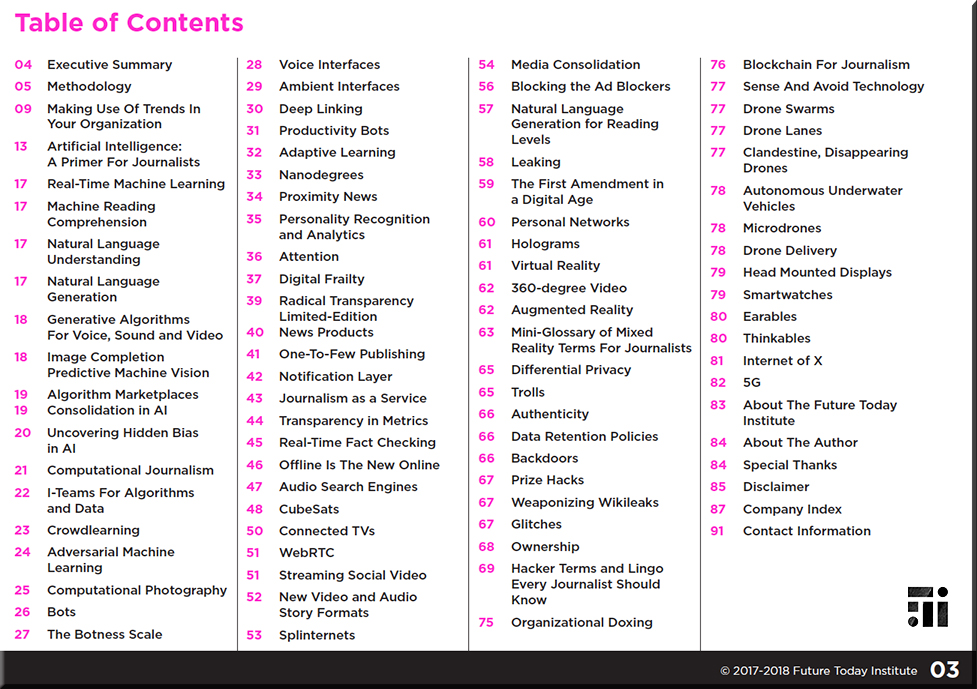
2018 Tech Trends for Journalism & Media Report + the 2017 Tech Trends Annual Report that I missed from the Future Today Institute


2018 Tech Trends For Journalism Report — from the Future Today Institute

Key Takeaways

  • 2018 marks the beginning of the end of smartphones in the world’s largest economies. What’s coming next are conversational interfaces with zero-UIs. This will radically change the media landscape, and now is the best time to start thinking through future scenarios.
  • In 2018, a critical mass of emerging technologies will converge finding advanced uses beyond initial testing and applied research. That’s a signal worth paying attention to. News organizations should devote attention to emerging trends in voice interfaces, the decentralization of content, mixed reality, new types of search, and hardware (such as CubeSats and smart cameras).
  • Journalists need to understand what artificial intelligence is, what it is not, and what it means for the future of news. AI research has advanced enough that it is now a core component of our work at FTI. You will see the AI ecosystem represented in many of the trends in this report, and it is vitally important that all decision-makers within news organizations familiarize themselves with the current and emerging AI landscapes. We have included an AI Primer For Journalists in our Trend Report this year to aid in that effort.
  • Decentralization emerged as a key theme for 2018. Among the companies and organizations FTI covers, we discovered a new emphasis on restricted peer-to-peer networks to detect harassment, share resources and connect with sources. There is also a push by some democratic governments around the world to divide internet access and to restrict certain content, effectively creating dozens of “splinternets.”
  • Consolidation is also a key theme for 2018. News brands, broadcast spectrum, and artificial intelligence startups will continue to be merged with and acquired by relatively few corporations. Pending legislation and policy in the U.S., E.U. and in parts of Asia could further concentrate the power among a small cadre of information and technology organizations in the year ahead.
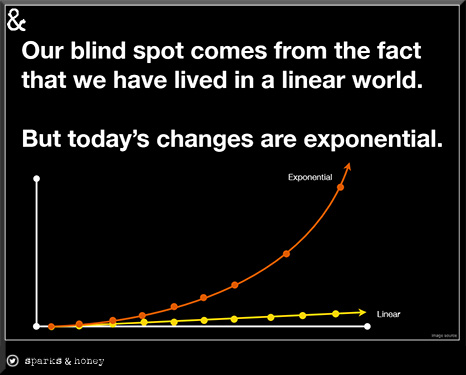
  • To understand the future of news, you must pay attention to the future of many industries and research areas in the coming year. When journalists think about the future, they should broaden the usual scope to consider developments from myriad other fields also participating in the knowledge economy. Technology begets technology. We are witnessing an explosion in slow motion.

Those in the news ecosystem should factor the trends in this report into their strategic thinking for the coming year, and adjust their planning, operations and business models accordingly.


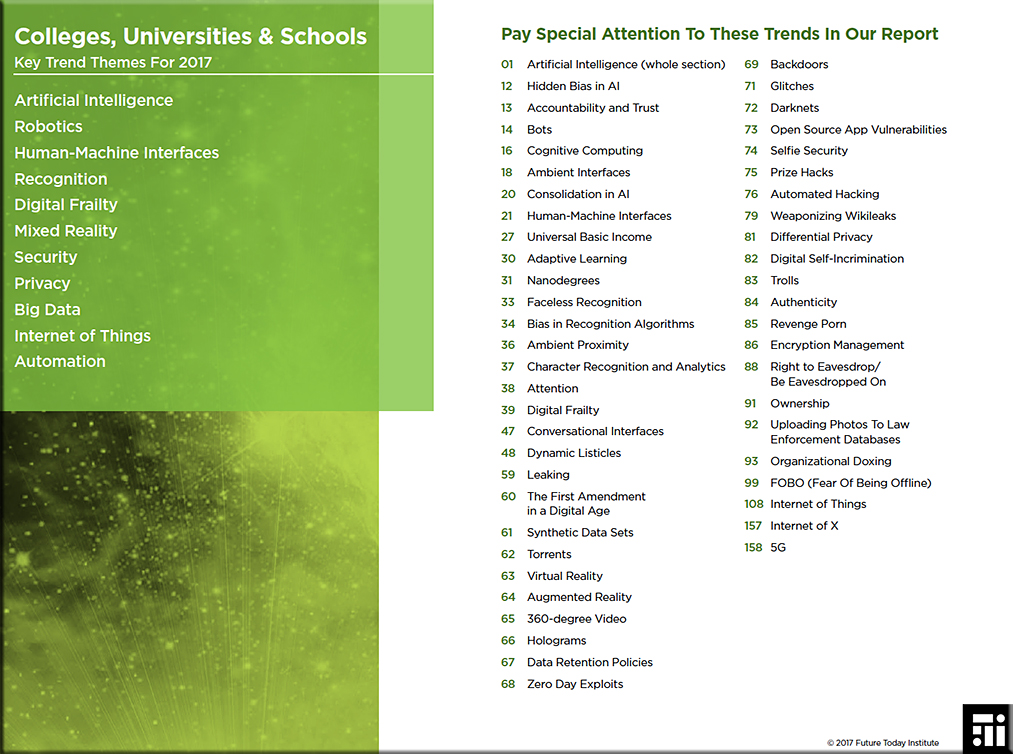
2017 Tech Trends Annual Report — from the Future Today Institute; this is the first I’ve seen this solid report

Excerpts:

This year’s report has 159 trends.
This is mostly due to the fact that 2016 was the year that many areas of science and technology finally started to converge. As a result we’re seeing a sort of slow-motion explosion––we will undoubtedly look back on the last part of this decade as a pivotal moment in our history on this planet.

Our 2017 Trend Report reveals strategic opportunities and challenges for your organization in the coming year. The Future Today Institute’s annual Trend Report prepares leaders and organizations for the year ahead, so that you are better positioned to see emerging technology and adjust your strategy accordingly. Use our report to identify near-future business disruption and competitive threats while simultaneously finding new collaborators and partners. Most importantly, use our report as a jumping off point for deeper strategic planning.


Also see:

Emerging eLearning Tools and Platforms Improve Results — from learningsolutionsmag.com

  • Augmented and virtual reality offer ways to immerse learners in experiences that can aid training in processes and procedures, provide realistic simulations to deepen empathy and build communication skills, or provide in-the-workflow support for skilled technicians performing complex procedures.
  • Badges and other digital credentials provide new ways to assess and validate employees’ skills and mark their eLearning achievements, even if their learning takes place informally or outside of the corporate framework.
  • Chatbots are proving an excellent tool for spaced learning, review of course materials, guiding new hires through onboarding, and supporting new managers with coaching and tips.
  • Content curation enables L&D professionals to provide information and educational materials from trusted sources that can deepen learners’ knowledge and help them build skills.
  • eBooks, a relative newcomer to the eLearning arena, offer rich features for portable on-demand content that learners can explore, review, and revisit as needed.
  • Interactive videos provide branching scenarios, quiz learners on newly introduced concepts and terms, offer prompts for small-group discussions, and do much more to engage learners.
  • Podcasts can turn drive time into productive time, allowing learners to enjoy a story built around eLearning content.
  • Smartphone apps, available wherever learners take their phones or tablets, can be designed to offer product support, info for sales personnel, up-to-date information for repair technicians, and games and drills for teaching and reviewing content; the possibilities are limited only by designers’ imagination.
  • Social platforms like Slack, Yammer, or Instagram facilitate collaboration, sharing of ideas, networking, and social learning. Adopting social learning platforms encourages learners to develop their skills and contribute to their communities of practice, whether inside their companies or more broadly.
  • xAPI turns any experience into a learning experience. Adding xAPI capability to any suitable tool or platform means you can record learner activity and progress in a learning record store (LRS) and track it.


DevLearn Attendees Learn How to ‘Think Like a Futurist’ — from learningsolutionsmag.com

Excerpt:

How does all of this relate to eLearning? Again, Webb anticipated the question. Her response gave hope to some—and terrified others. She presented three possible future scenarios:

  • Everyone in the learning arena learns to recognize weak signals; they work with technologists to refine artificial intelligence to instill values. Future machines learn not only to identify correct and incorrect answers; they also learn right and wrong. Webb said that she gives this optimistic scenario a 25 percent chance of occurring.
  • Everyone present is inspired by her talk but they, and the rest of the learning world, do nothing. Artificial intelligence continues to develop as it has in the past, learning to identify correct answers but lacking values. Webb’s prediction is that this pragmatic optimistic scenario has a 50 percent chance of occurring.
  • Learning and artificial intelligence continue to develop on separate tracks. Future artificial intelligence and machine learning projects incorporate real biases that affect what and how people learn and how knowledge is transferred. Webb said that she gives this catastrophic scenario a 25 percent chance of occurring.

In an attempt to end on a strong positive note, Webb said that “the future hasn’t happened yet—we think” and encouraged attendees to take action. “To build the future of learning that you want, listen to weak signals now.”


The era of easily faked, AI-generated photos is quickly emerging — from qz.com by Dave Gershgorn

Excerpt (emphasis DSC):

Until this month, it seemed that GAN-generated images [where GAN stands for “generative adversarial networks”] that could fool a human viewer were years off. But last week research released by Nvidia, a manufacturer of graphics processing units that has cornered the market on deep learning hardware, shows that this method can now be used to generate high-resolution, believable images of celebrities, scenery, and objects. GAN-created images are also already being sold as replacements for fashion photographers—a startup called Mad Street Den told Quartz earlier this month it’s working with North American retailers to replace clothing images on websites with generated images.


From DSC:
So AI can now generate realistic photos (i.e., image creation/manipulation). And then there’s Adobe’s VoCo Project, a sort of a Photoshop for audio manipulation plus other related technologies out there:


So I guess it’s like the first article concludes:

The era of easily-faked photos is quickly emerging—much as it did when Photoshop became widely prevalent—so it’s a good time to remember we shouldn’t trust everything we see.

…and perhaps we’ll need to add, “we shouldn’t trust everything we hear either.” But how will the average person with average tools know the real deal? The concept of watermarking visuals/audio may be increasingly involved. From the ending of bbc.com article:

For its part, Adobe has talked of its customers using Voco to fix podcast and audio book recordings without having to rebook presenters or voiceover artists.

But a spokeswoman stressed that this did not mean its release was imminent.

“[It] may or may not be released as a product or product feature,” she told the BBC.

“No ship date has been announced.”

In the meantime, Adobe said it was researching ways to detect use of its software.

“Think about watermarking detection,” Mr Jin said at the demo, referring to a method used to hide identifiers in images and other media.


But again, we see that technology often races ahead. “Look at what we can do!”  But then the rest of society — such as developing laws, policies, questions about whether we should roll out such technologies, etc. — needs time to catch up. Morals and ethics do come into play here — as trust levels are most assuredly at stake.

Another relevant article/topic/example of this is listed below. (Though I’m not trying to say that we shouldn’t pursue self-driving cars. Rather, the topic serves as another example of technologies racing ahead while it takes a while for the rest of us/society to catch up with them).


Faculty Predict Virtual/Augmented/Mixed Reality Will Be Key to Ed Tech in 10 Years — from campustechnology.com by Rhea Kelly
Faculty in our 2017 Teaching with Technology Survey believe tech will play a positive role in the future of higher education — but some technologies will be more important than others.

Excerpt:

What technologies do faculty think will be important in education over the next decade? The most popular answer to that question by far was virtual/augmented/mixed reality, garnering 81 percent of responses (it topped the list last year as well). Mobile devices and apps, 3D modeling/scanning/printing, adaptive/personalized learning and video/streaming all rounded out the top five.


From DSC:
Great to see several of these items made the list. I would also add:

  • The use of Natural Language Processing (NLP) to allow more voice-enabled and voice-driven applications
  • Learning agents/bots (for example, a learning-related bot could go find out the top 50-100 jobs that employers are hiring for and present a list of potential digital playlists from a variety of providers that would help potential employees be able to do the work in those positions)
  • Blockchain and the use of web-based learner profiles
  • Artificial Intelligence / cognitive computing (which could be argued is already mentioned in the item re: adaptive, personalized learning)
  • Moving towards providing up-to-date streams of content (for purposes of lifelong learning and microlearning)

 Finally, it was great to see #9 on the list as I, too, believe that a next gen learning platform is needed:


The Living [Class] Room -- by Daniel Christian -- July 2012 -- a second device used in conjunction with a Smart/Connected TV


1,600 donated Echo Dots say hello to Arizona State engineering students — from by Corinne Lestch; with thanks to eduwire for their posting on this
ASU says the voice-controlled Amazon devices aren’t just for campus questions — they’re preparing students for future technologies, too.

Excerpt:

ASU students have set up Echo Dots, a hands-free, voice-controlled device the size of a hockey puck, in engineering residence halls.

Students can ask questions about topics ranging from the weather to campus sporting events to library hours to exam schedules.

“We’re continuing to add content as we’re learning what students want to learn about,” Rome said. “So there’s this feedback loop of what students want, and we monitor what questions are being asked.”

Amazon donated about 1,600 Dots to engineering students at ASU, so the technology belongs to the students, not to the school. The students can choose to use them or not, said John German, director for media relations and research communications.

“We have the largest engineering school in the country, and one of the things we’re trying to do is teach students the most advanced technology, the kinds of technology that are going to make them competitive in the job market when they get their degrees,” German said. “And voice technology is a field that’s growing. It’s going to play a role in the future.”


“Voice is becoming the new mobile of 10 years ago,” Rome said. “We’ve decided to be an early adopter of this technology.”

“There’s going to come some day when students can interact [with ASU’s student portal] via webpage or microphone on their mobile phones,” he said. “We think that’s inevitable.”


© 2025 | Daniel Christian