OER Adoptions on the Rise — from insidehighered.com by Lindsay McKenzie
The number of faculty members choosing open educational resources over traditional textbooks has nearly doubled in the last year, but awareness over all remains low.

Excerpt:

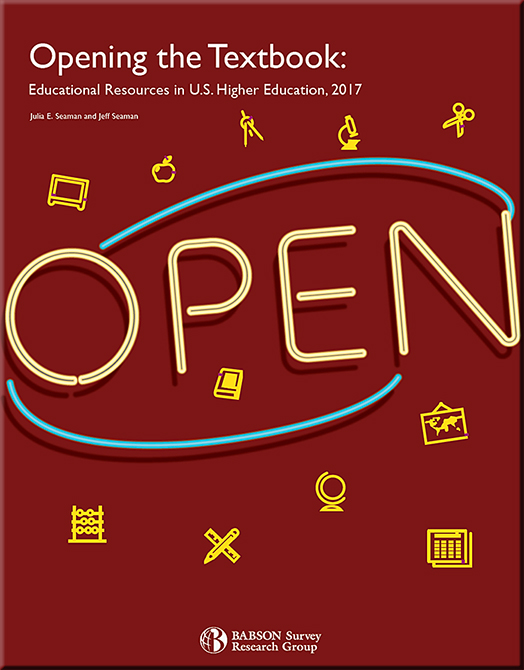
More and more instructors are choosing open educational resources over traditional textbooks, a survey of more than 2,700 faculty members reveals.

The “Opening the Textbook” survey, published by the Babson Survey Research Group today, reports that the number of faculty members at two- and four-year institutions using OER as textbooks has nearly doubled in the last year — from 5 percent in 2015-16 to 9 percent in 2016-17.

Awareness of OER — openly licensed and freely accessible teaching and learning materials — has also increased. Twenty-nine percent of faculty described themselves as “aware” or “very aware” of OER this year, up from 25 percent last year and 20 percent the year before. The proportion that reported they had never heard of OER fell from 66 percent in 2014-15 to 56 percent this year.

But while increases in adoption and awareness have been significant, Jeff Seaman, co-director of the Babson Survey Research Group, points out that over all, awareness of OER is still low. He noted that many faculty members also continue to report significant barriers to wider adoption of OER, particularly finding and evaluating the quality of materials.


Also see:


From DSC:
Regarding the article below…why did it take Udacity needing to team up with Infosys to offer this type of program and curriculum? Where are the programs in institutions of traditional higher education on this?  Are similar programs being developed? If so, how quickly will they come to market? I sure hope that such program development is in progress..and perhaps it is. But the article below goes to show us that alternatives to traditional higher education seem to be more responsive to the new, exponential pace of change that we now find ourselves in.

We have to pick up the pace! To do this, we need to identify any obstacles to our institutions adapting to this new pace of change — and then address them immediately. I see our current methods of accreditation as one of the areas that we need to address. We’ve got to get solid programs to market much faster!

And for those folks in higher ed who say change isn’t happening rapidly — that it’s all a bunch of hype — you likely still have a job. But you need to go talk with some people who don’t, or who’ve had their jobs recently impacted big time. Here are some suggestions of folks to talk with:

  • Taxi drivers who were impacted by Lyft and by Uber these last 5-10 years; they may still have their jobs, if they’re lucky. But they’ve been impacted big time…and are likely driving for Lyft and/or Uber as well as their former employers; they’re likely to have less bargaining power than they used to as the supply of drivers has skyrocketed. (By the way, the very existence of such organizations couldn’t have happened without the smartphone and mobile-related technologies/telecommunications.)
  • Current managers and former employees at hotels/motels about the impacts on their industry by AirBnB over a similar time frame
  • Hiring managers at law firms who’ve cut back on hiring entry-level lawyers…work that’s increasingly being done by software (example)
  • Employees who worked at brick and mortar retailers who have been crushed by Amazon.com’s online-based presence (in not that long of time, by the way). For example, below is what our local Sears store looks like these days…go find an employee who used to work at Sears or a Sears automotive-related store:

 

This is what our local Sears store looks like today

This picture is for those who say there is no disruption.
You call
this hype?!


The above example list — that’s admittedly woefully incomplete — doesn’t include the folks displaced by technology over the last several decades, such as:

  • Former bank tellers who lost their jobs to ATMs
  • Checkout clerks at the grocery stores who lost their jobs to self-service stations
  • Check-in agents at the airports who lost their jobs to self-service stations
  • Etc., etc., etc.

Institutions of traditional higher education
need to pick up the pace — big time!


Infosys and Udacity team up to train 500 engineers in autonomous technologies — from by Leah Brown
Infosys’ COO Ravi Kumar explains how these individuals can apply what they learn to other industries.

Excerpt (emphasis DSC):

Infosys, a global technology consulting firm, recently partnered with online learning platform Udacity to create a connected service that provides training for autonomous vehicles, and other services for B2B providers of autonomous vehicles.

TechRepublic’s Dan Patterson met with Infosys’ COO Ravi Kumar to discuss how autonomous technology can help create new industries.

Autonomous technology is going to be an emerging technology of the future, Kumar said. So Infosys and Udacity came together and developed a plan to train 500 engineers on autonomous technologies, and teach them how to apply it to other industries.


Per Wikipedia:
Udacity is a for-profit educational organization founded by Sebastian Thrun, David Stavens, and Mike Sokolsky offering massive open online courses (MOOCs). According to Thrun, the origin of the name Udacity comes from the company’s desire to be “audacious for you, the student.” While it originally focused on offering university-style courses, it now focuses more on vocational courses for professionals.


But times are changing. Artificial intelligence (AI) and robotics are facilitating the automation of a growing number of “doing” tasks. Today’s AI-enabled, information-rich tools are increasingly able to handle jobs that in the past have been exclusively done by people—think tax returns, language translations, accounting, even some kinds of surgery. These shifts will produce massive disruptions to employment and hold enormous implications for you as a business leader. (mckinsey.com)


Nearly all prospective students want a tech-savvy institution — from campustechnology.com by Joshua Bolkan

Excerpt:

Nearly nine in 10 college students — 87 percent — said it was important to them that the institutions they applied for were technologically savvy, according to a new survey from ed tech provider Ellucian.

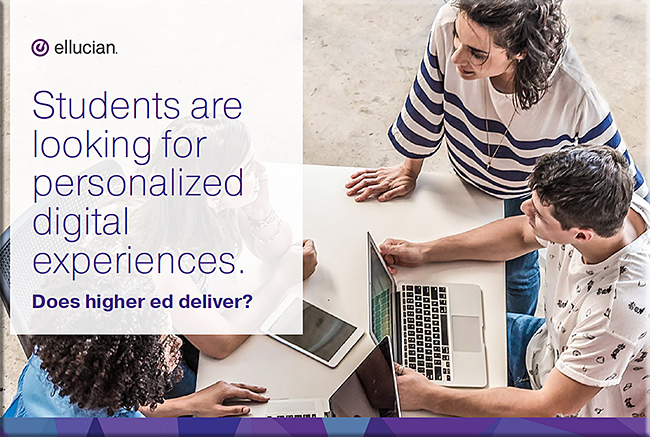
The report, “Students Are Looking for Personalized Digital Experiences: Do Colleges Deliver?” is based on responses of 1,000 students, including 265 from two-year institutions and 735 from four-year schools, who were invited to take the survey online via email.

More than half of students surveyed, 58 percent, said that of all the companies and institutions they engage with, their college is the one least likely to have personalized their experience.


Also see:


From DSC:
With our students using Uber, Lyft, AirBnB, and other such personalized services from Amazon.com and others, expectations are now being impacted. That is, what they expect in terms of their learning experiences are being influenced from other areas of their every day lives. This impacts credibility, which impacts enrollments.

As Ellucian asserts:


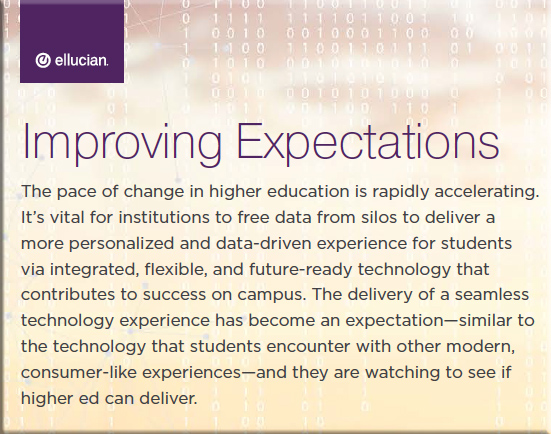
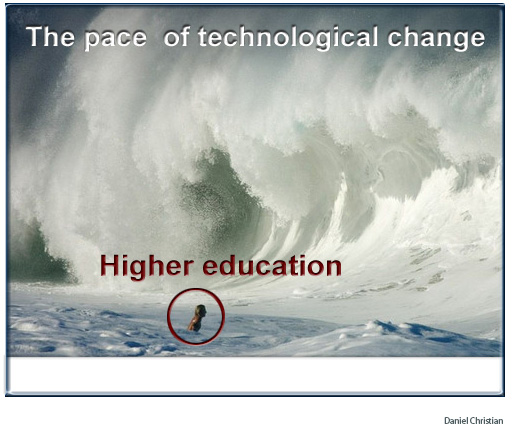
For those who would minimize or outright discard the impacts that technologies have on higher education, or the impacts of — and relevance of — technologies within higher education, how are you going to deal with this tidal wave?


From Daniel S. Christian


MIT Pilots Digital Diplomas Based on Bitcoin’s Blockchain — from campustechnology.com by Joshua Bolkan

Excerpt:

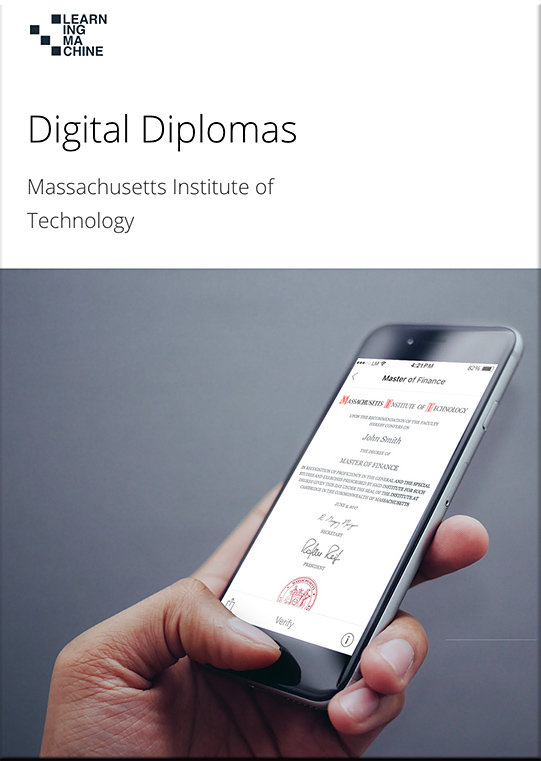
The Massachusetts Institute of Technology has begun offering some students the option to receive digital diplomas through an app, in addition to a traditional paper degree.

Based on Bitcoin’s blockchain technology and integrated with the school’s identity provider, the new diplomas are the result of a partnership between MIT and Learning Machine, a local software company. The electronic credentials were rolled out over the summer and offered to 111 students as part of a pilot program.


Also see:


From DSC:
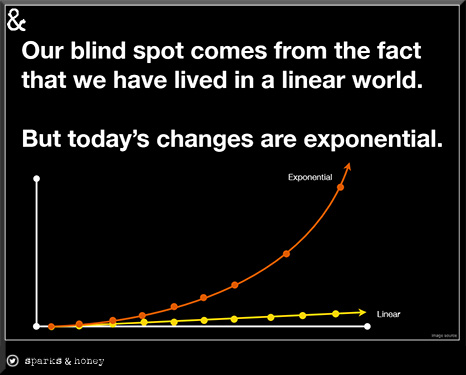
In Part I, I looked at the new, exponential pace of change that colleges, community colleges and universities now need to deal with – observing the enormous changes that are starting to occur throughout numerous societies around the globe. If we were to plot out the rate of change, we would see that we are no longer on a slow, steady, incremental type of linear pathway; but, instead, we would observe that we are now on an exponential trajectory (as the below graphic from sparks & honey very nicely illustrates).


How should colleges and universities deal with this new, exponential pace of change?

1) I suggest that you ensure that someone in your institution is lifting their gaze and peering out into the horizons, to see what’s coming down the pike. That person – or more ideally, persons – should also be looking around them, noticing what’s going on within the current landscapes of higher education. Regardless of how your institution tackles this task, given that we are currently moving at an incredibly fast pace, this trend analysis is very important. The results from this analysis should immediately be integrated into your strategic plan. Don’t wait 3-5 years to integrate these new findings into your plan. The new, exponential pace of change is going to reward those organizations who are nimble and responsive.

2) I recommend that you look at what programs you are offering and consider if you should be developing additional programs such as those that deal with:

  • Artificial Intelligence (Natural Language Processing, deep learning, machine learning, bots)
  • New forms of Human Computer Interaction such as Augmented Reality, Virtual Reality, and Mixed Reality
  • User Experience Design, User Interface Design, and/or Interaction Design
  • Big data, data science, working with data
  • The Internet of Things, machine-to-machine communications, sensors, beacons, etc.
  • Blockchain-based technologies/systems
  • The digital transformation of business
  • Freelancing / owning your own business / entrepreneurship (see this article for the massive changes happening now!)
  • …and more

3) If you are not already doing so, I recommend that you immediately move to offer a robust lineup of online-based programs. Why do I say this? Because:

  • Without them, your institution may pay a heavy price due to its diminishing credibility. Your enrollments could decline if learners (and their families) don’t think they will get solid jobs coming out of your institution. If the public perceives you as a dinosaur/out of touch with what the workplace requires, your enrollment/admissions groups may find meeting their quotas will get a lot harder as the years go on. You need to be sending some cars down the online/digital/virtual learning tracks. (Don’t get me wrong. We still need the liberal arts. However, even those institutions who offer liberal arts lineups will still need to have a healthy offering of online-based programs.)
  • Online-based learning methods can expand the reach of your faculty members while offering chances for individuals throughout the globe to learn from you, and you from them
  • Online-based learning programs can increase your enrollments, create new revenue streams, and develop/reach new markets
  • Online-based learning programs have been proven to offer the same learning gains – and sometimes better learning results than – what’s being achieved in face-to-face based classrooms
  • The majority of pedagogically-related innovations are occurring within the online/digital/virtual realm, and you will want to have built the prior experience, expertise, and foundations in order to leverage and benefit from them
  • Faculty take their learning/experiences from offering online-based courses back into their face-to-face courses
  • Due to the increasing price of obtaining a degree, students often need to work to help get them (at least part of the way) through school; thus, flexibility is becoming increasingly important and necessary for students
  • An increasing number of individuals within the K-12 world as well as the corporate world are learning via online-based means. This is true within higher education as well, as, according to a recent report from Digital Learning Compass states that “the number of higher education students taking at least one distance education course in 2015 now tops six million, about 30% of all enrollments.”
  • Families are looking very closely at their return on investments being made within the world of higher education. They want to see that their learners are being prepared for the ever-changing future that they will encounter. If people in the workforce often learn online, then current students should be getting practice in that area of their learning ecosystems as well.
  • As the (mostly) online-based Amazon.com is thriving and retail institutions such as Sears continue to close, people are in the process of forming more generalized expectations that could easily cross over into the realm of higher education. By the way, here’s how our local Sears building is looking these days…or what’s left of it.


4) I recommend that you move towards offering more opportunities for lifelong learning, as learners need to constantly add to their skillsets and knowledge base in order to remain marketable in today’s workforce. This is where adults greatly appreciate – and need – the greater flexibility offered by online-based means of learning. I’m not just talking about graduate programs or continuing studies types of programs here. Rather, I’m hoping that we can move towards providing streams of up-to-date content that learners can subscribe to at any time (and can drop their subscription to at any time). As a relevant side note here, keep your eyes on blockchain-based technologies here.

5) Consider the role of consortia and pooling resources. How might that fit into your strategic plan?

6) Consider why bootcamps continue to come onto the landscape.  What are traditional institutions of higher education missing here?

7) And lastly, if one doesn’t already exist, form a small, nimble, innovative group within your organization — what I call a TrimTab Group — to help identify what will and won’t work for your institution.


For a long, successful career, LinkedIn says nothing beats a liberal arts major — from qz.com by Dan Kopf and Amy Wang

Excerpt:

“There is a real concern that these labor-market-oriented degrees that focus on specific technical skills are not as durable,” says Guy Berger, a LinkedIn economist and one of the researchers who worked on the report. Berger believes that “cross-functional skills” like management and analytical know-how are more adaptable across a range of work environments. As technology changes the nature of work across nearly every industry, it’s important to have a wide range of such talents, rather than a narrow subset applied only to a particular sector that may not look the same in the near future (or, indeed, exist at all).


Google’s jobs AI service hits private beta, now works in 100 languages — from venturebeat.com by Blair Hanley Frank

Excerpt:

Google today announced the beta release of its Cloud Job Discovery service, which uses artificial intelligence to help customers connect job vacancies with the people who can fill them.

Formerly known as the Cloud Jobs API, the system is designed to take information about open positions and help job seekers take better advantage of it. For example, Cloud Job Discovery can take a plain language query and help translate that to the specific jargon employers use to describe their positions, something that can be hard for potential employees to navigate.

As part of this beta release, Google announced that Cloud Job Discovery is now designed to work with applicant-tracking systems and staffing agencies, in addition to job boards and career site providers like CareerBuilder.

It also now works in 100 languages. While the service is still primarily aimed at customers in the U.S., some of Google’s existing clients need support for multiple languages. In the future, the company plans to expand the Cloud Job Discovery service internationally, so investing in language support now makes sense going forward.


From DSC:
Now tie this type of job discovery feature into a next generation learning platform, helping people identify which skills they need to get jobs in their local area(s). Provide a list of courses/modules/RSS feeds to get them started. Allow folks to subscribe to constant streams of content and unsubscribe to them at any time as well.


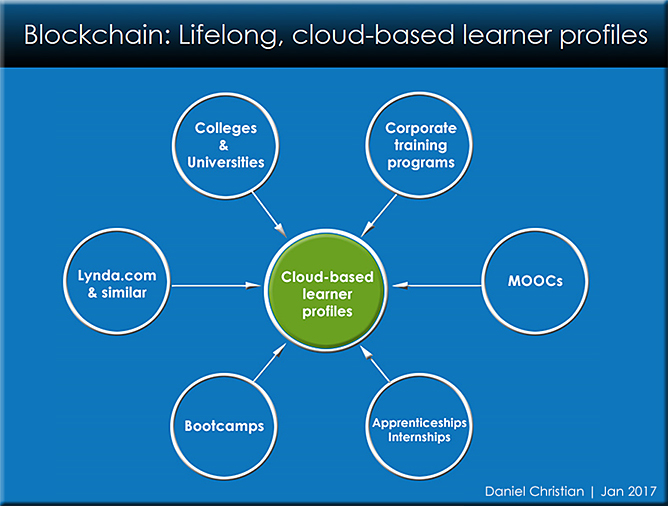
We MUST move to lifelong, constant learning via means that are highly accessible, available 24×7, and extremely cost effective. Blockchain-based technologies will feed web-based learner profiles, which each of us will determine who can write to our learning profile and who can review it as well.


The Living [Class] Room -- by Daniel Christian -- July 2012 -- a second device used in conjunction with a Smart/Connected TV


Addendum on 9/29/17:


  • Facebook partners with ZipRecruiter and more aggregators as it ramps up in jobs — from techcrunch.com by Ingrid Lunden
    Excerpt:
    Facebook has made no secret of its wish to do more in the online recruitment market — encroaching on territory today dominated by LinkedIn, the leader in tapping social networking graphs to boost job-hunting. Today, Facebook is taking the next step in that process.
    Facebook will now integrate with ZipRecruiter — an aggregator that allows those looking to fill jobs to post ads to many traditional job boards, as well as sites like LinkedIn, Google and Twitter — to boost the number of job ads available on its platform targeting its 2 billion monthly active users.
    The move follows Facebook launching its first job ads earlier this year, and later appearing to be interested in augmenting that with more career-focused features, such as a platform to connect people looking for mentors with those looking to offer mentorship.


Udacity adds a new ‘Intro to Self-Driving Cars’ Nanodegree — from techcrunch.com by Darrell Etherington

Excerpt:

You likely won’t be surprised when I tell you that building a self-driving car is difficult and complex. Udacity has tried to help address that difficulty with flexible, online education for self-driving engineers through its Self-Driving Cars Nanodegree program, and now it’s expanding its offerings with a new Intro to Self-Driving Cars Nanodegree being introduced at TechCrunch Disrupt SF 2017 that’s designed to help funnel more talent into the intermediate-level course, and from there into the workforce, where demand is incredibly strong and growing.

Udacity’s Nanodegrees are designed from the start to help democratize education in areas of tech where there’s a strong appetite from the employer side, and not nearly enough talent to go around. But what the company found with its self-driving material was that it was actually quite advanced compared to the skill level of interested students, so it set out to create a kind of fundamentals introductory program to help make sure more could enter the main course with a better foundation.

Also new to this program, and again in the spirit of increasing access to education for these very high demand skills, Udacity is teaming up with Lyft, which will be providing 400 full scholarships (covering the total $800 value) for the Intro program. Applications for those open today, too.


From DSC:
The article below caused me to reflect on the idea of using Income Share Agreements (ISAs) as a way for students to get through college these days. Although I appreciate that others are trying to help students get through college — an admirable goal for sure and one that I wholeheartedly share — I don’t like the means/method being proposed here. Why? Because I’m concerned that ISAs don’t offer any incentives for colleges and universities to lower their prices in the first place. The burden of debt is just spread out into the future. In fact, one could easily imagine the costs of obtaining a degree to continue to increase, because the immediate impact of the debt isn’t felt right now…it’s spread out over one’s future. The problem becomes invisible again, making it once again easy for those working within higher education to ignore.

So I hope this method doesn’t take off (as I understand it); instead, I hope that we can figure out better ways to reduce the price of obtaining a degree. Technology should be of use here.


Students Get Tuition Aid for a Piece of Their Future — from wsj.com by Jillian Berman
Income share agreements seem poised to take off, as costs and debt loads rise

Excerpt:

To help pay for ever-growing college costs, more students may soon be trying a new approach: selling rights to their future earnings.

Long discussed in college policy and financing circles, income share agreements, or ISAs, are poised to become more mainstream. A handful of backers currently exist that in effect have invested in college students’ futures by advancing them thousands of dollars in tuition money to bridge gaps in financing when student loans don’t quite meet all of their expenses.

Under the terms of a typical ISA, students agree to pay a percentage of their future earnings for a predetermined period in exchange for help up front with their tuition. Now, more students may have the opportunity to enter such deals, as lawmakers in Congress are working on possible ground rules for the agreements.


Under the Hood: Learning Design Behind Georgia Tech’s Degrees at Scale — from evolllution.com by Shabana Figueroa and Yakut Gazi

Excerpt:

Rolling out the MM program in May and the degree program in August meant design coordination and creation of eight new online courses in less than a year. We needed a new approach that employed strategies for efficiency and effectiveness.

The Learning Design Team
GTPE’s learning design team partners with faculty members to develop their online courses from start to end, providing the heavy lifting for course production. A director of learning design oversees both the instructional design and production aspects of the course production across the entire program. This cross-functional team approach eliminates the silos created by independent instructional design and studio production teams, which in turn, minimizes hand-off points, decreases friction among teams, allows for long-term thinking that leads to smarter course design and development decisions, provides fluidity of talent and roles within the team, and fuels productivity.

…the paradigm shift to a learner-focused, team-based approach to course production and delivery, and collaboration of campus partners and groups…


From DSC:
Note the use of a team-based approach here. I think that the team-based approach will be the most beneficial to the world at large. Those teams will be able to deliver a high-quality learning experience, with high production values and carefully planned/crafted instructional designs. 


Also see:

Learning How to Learn: Anatomy of a good MOOC — from linkedin.com by Bill Ferster

Excerpts:

Barbara Oakley’s MOOC, Learning How to Learn [2] is the exception to this trend. It is well-produced, informative, and fully embraces the new medium. With over 2 million registered students and completion rates of over 20% [3], (the average MOOC completion rate is 5%), Learning How to Learn is clearly resonating with its audience.

The question is why is it so popular? Intrigued, I enrolled the short MOOC to understand why it was so popular, and what lessons it might have for other MOOC authors to make their offerings more effective their “filmed plays.”

Oakley has clearly bucked the overall MOOC trend and has made good use of the inexpensive technologies with well-lit scenes that are clearly edited and make use of the green screen overlay technologies found in her Adobe Premiere video editor. She used a large teleprompter to ensure a fluid delivery of her message and high-quality audio.

Learning to Learn is effective because Oakley put a significant amount of effort making it effective. Good content, coupled with high production values, and sound pedagogy take time to produce and clearly pays off in the final product.


Report: Student loan debt reaches $1.4 trillion — from campustechnology.com by Joshua Bolkan

Excerpt:

Student loan debt in the United States has grown 149 percent over the last decade to reach $1.4 trillion, according to a new report from Experian. Over the same period, the average student loan debt per person went up 62 percent.

Held by 13.4 percent of Americans, student loan debt is the fastest growing debt segment and the largest non-household debt. But, counter-intuitively, fewer people make late payments on this type of debt than on other loans. In fact, the percentage of late payments on student debt has decreased 10.1 percent since 2009.

Other key findings of the report include…


From DSC:
The thing that makes this soooo difficult is that faculty members, staff, and members of administrations often don’t see this crushing development. It’s invisible to many of them! The growing, heavy gorillas on the backs of our graduates aren’t seen on campus. Students graduate and move on. But the realities and implications of those debts can be felt for decades!

Several major events in our graduates lives are likely to be increasingly postponed, such as:

  • Starting a family
  • Purchasing a new home
  • Investing in — or saving for — their retirement

The current models and methods of higher education must change! Prices MUST come down. If the traditional institutions of higher education don’t change, don’t be surprised when the alternatives keep picking up steam and eventually — and majorly — disrupt higher education.

This is a social justice issue for me.


First wholly online state university in U.S. — from virtuallyinspired.org by Susan Aldridge and Marci Powell
Colorado State University Global Campus takes non-traditional approach

Excerpt:

A university that is light and limber, with excellent quality…that is an apt description for the first 100% fully online, independently accredited, public university in the United States. Open universities around the world should take notice of Colorado State University Global Campus’s innovative approach. What they are doing is a game changer.

Created by the Colorado State University System Board of Governors in 2007, CSU-Global Campus is focused on facilitating adult success in a global marketplace through career-relevant education including bachelor’s degree completion and master’s degree programs.

All courses are 100% online and designed for working adults. With accelerated 8-week courses and monthly starts, CSU Global Campus attracts a wide audience. The same affordable tuition rate applies to all students regardless of where they live. For those outside of the state of Colorado, this is great relief. Their Tuition Guarantee program means that the rate remains the same from the day a student first enrolls through the day they graduate.


From DSC:
Funny how I was just reflecting on the gaps that the bootcamps seem to be addressing. My hats off to Colorado State University’s Global Campus for their visionary, innovative approach.

Not taking any risks is the biggest risk of all these days.

NOTE: They went from 200 students — and almost closing their doors — to a current enrollment of close to 20,000 students! Seems their risk was calculated — and paid off big time!

Thanks Marci and Susan for your work and for posting this item.


From DSC:
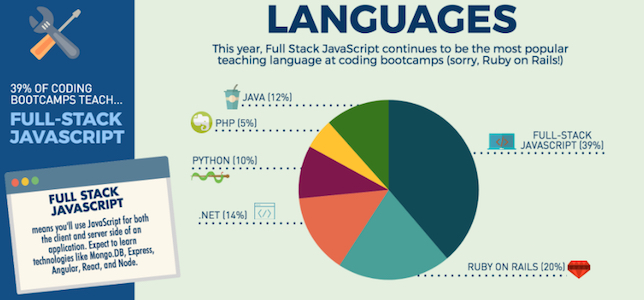
According to the article below, bootcamps appear to be filling several (perceived and/or real) gaps. Quoting from the article:

Why are students enrolling in coding bootcamps? One reason may be the adaptability of these accelerated computer science programs, where students are taught web and mobile development skills that align with industry demands. Programs are offered in-person or online, providing students with flexible learning options. The payoff is decent too: At a typical coding bootcamp, Course Report estimates average tuition is $11,400 for about 14 weeks of instruction, from which the majority students complete on-time and find relevant jobs.

Cost.

Time.

Responsiveness to industry demands.

Greater flexibility.

These are some of the things for traditional institutions of higher education to grapple with, and I would argue the sooner, the better — before this trend finds its legs and gains even more traction/momentum.

For example, in your own mind/thinking…how long do you think it will take bootcamps to begin offering programs that help learners develop content for augmented reality (AR), virtual reality (VR), and mixed reality (MR) — as compared to programs coming out of institutions of traditional higher education?

Whatever your answers are in regards to the reasons for that time difference are likely the exact sort of things institutions need to be working on. For me, at least one of the answers has to do with our current accreditation systems. Other reasons come to my mind as well, but I don’t have time to go there right now.


Study: 1 Coding Bootcamp Graduate for Every 3.5 University Grads — from campustechnology.com by Sri Ravipati

Excerpt:

The five-year coding bootcamp industry estimated at $266 million is rapidly expanding, according to a new market study from Course Report.

The study counted 94 full-time coding bootcamps across the United States and Canada (with programs in 74 U.S. cities). Compared to 2012, there will be 10 times as many graduates this year — or roughly one coding bootcamp graduate for every 3.5 graduates from a traditional university or college. Course Report estimates that 22,814 developers will graduate from coding bootcamps this year — an increase from 15,048 graduates last year.


Artificial intelligence will transform universities. Here’s how. — from weforum.org by Mark Dodgson & David Gann

Excerpt:

The most innovative AI breakthroughs, and the companies that promote them – such as DeepMind, Magic Pony, Aysadi, Wolfram Alpha and Improbable – have their origins in universities. Now AI will transform universities.

We believe AI is a new scientific infrastructure for research and learning that universities will need to embrace and lead, otherwise they will become increasingly irrelevant and eventually redundant.

Through their own brilliant discoveries, universities have sown the seeds of their own disruption. How they respond to this AI revolution will profoundly reshape science, innovation, education – and society itself.

As AI gets more powerful, it will not only combine knowledge and data as instructed, but will search for combinations autonomously. It can also assist collaboration between universities and external parties, such as between medical research and clinical practice in the health sector.

The implications of AI for university research extend beyond science and technology.

When it comes to AI in teaching and learning, many of the more routine academic tasks (and least rewarding for lecturers), such as grading assignments, can be automated. Chatbots, intelligent agents using natural language, are being developed by universities such as the Technical University of Berlin; these will answer questions from students to help plan their course of studies.

Virtual assistants can tutor and guide more personalized learning. As part of its Open Learning Initiative (OLI), Carnegie Mellon University has been working on AI-based cognitive tutors for a number of years. It found that its OLI statistics course, run with minimal instructor contact, resulted in comparable learning outcomes for students with fewer hours of study. In one course at the Georgia Institute of Technology, students could not tell the difference between feedback from a human being and a bot.


Also see:

Digital audio assistants in teaching and learning — from blog.blackboard.com by Szymon Machajewski

Excerpts:

I built an Amazon Alexa skill called Introduction to Computing Flashcards. In using the skill, or Amazon Alexa app, students are able to listen to Alexa and then answer questions. Alexa helps students prepare for an exam by speaking definitions and then waiting for their identification. In addition to quizzing the student, Alexa is also keeping track of the correct answers. If a student answers five questions correctly, Alexa shares a game code, which is worth class experience points in the course gamification My Game app.

Certainly, exam preparation apps are one way to use digital assistants in education. As development and publishing of Amazon Alexa skills becomes easier, faculty will be able to produce such skills just as easily as they now create PowerPoints. Given the basic code available through Amazon tutorials, it takes 20 minutes to create a new exam preparation app. Basic voice experience Amazon Alexa skills can take as much as five minutes to complete.

Universities can publish their campus news through the Alexa Flash Briefing. This type of a skill can publish news, success stories, and other events associated with the campus.

If you are a faculty member, how can you develop your first Amazon Alexa skill? You can use any of the tutorials already available. You can also participate in an Amazon Alexa classroom training provided by Alexa Dev Days. It is possible that schools or maker spaces near you offer in-person developer sessions. You can use meetup.com to track these opportunities.


The Benefits of an Innovative Culture at Smaller Colleges — from evolllution.com with Shane Garrison | Vice President of Enrollment, Campbellsville University
Smaller institutions are under more pressure than ever to innovate or collapse—weathering the storm is simply no longer an option for most institutions. This requires leaders and staff across the institution to have a creative mindset, and be willing to experiment and evolve.

Excerpt:

There is the reality that if you don’t diversify, if you fail to be creative, if you fail to try new things, you’re on the verge of folding. In Kentucky, two faith-based colleges folded within a span of about three years, and I think that created an urgency to avoid that fate. We have to be willing to try, create and experiment to survive, and that means doing things that we’ve never done before.

Evo: How can an innovative and experiment-focused culture help smaller institutions overcome some of those obstacles?

SG: I think you have to be willing to experiment for short periods of time with strategies that do not fit inside the traditional bubble. For example, for us, our online presence has been fairly strong for about 12 years. However, we had to experiment with placing a good number of full four-year bachelor’s degree programs online, something our university had never done. We had associate programs, we had graduate programs but we had to add bachelor programs online. We did it for three or four years in the experimental phase and noticed these were actually strong and it was building a beautiful pathway between our associate two-year programs and the four-year programs and continuing into graduate programs.

We are experimenting now with an international recruiting partnership and giving it two to three years to see what happens. It has been very successful thus far. This model has created a culture where we can experiment.


© 2025 | Daniel Christian