Google Glass wasn’t a failure. It raised crucial concerns. — from wired.com by Rose Eveleth

Excerpts:

So when Google ultimately retired Glass, it was in reaction to an important act of line drawing. It was an admission of defeat not by design, but by culture.

These kinds of skirmishes on the front lines of surveillance might seem inconsequential — but they can not only change the behavior of tech giants like Google, they can also change how we’re protected under the law. Each time we invite another device into our lives, we open up a legal conversation over how that device’s capabilities change our right to privacy. To understand why, we have to get wonky for a bit, but it’s worth it, I promise.


But where many people see Google Glass as a cautionary tale about tech adoption failure, I see a wild success. Not for Google of course, but for the rest of us. Google Glass is a story about human beings setting boundaries and pushing back against surveillance…


IN THE UNITED States, the laws that dictate when you can and cannot record someone have a several layers. But most of these laws were written when smartphones and digital home assistants weren’t even a glimmer in Google’s eye. As a result, they are mostly concerned with issues of government surveillance, not individuals surveilling each other or companies surveilling their customers. Which means that as cameras and microphones creep further into our everyday lives, there are more and more legal gray zones.


From DSC:
We need to be aware of the emerging technologies around us. Just because we can, doesn’t mean we should. People need to be aware of — and involved with — which emerging technologies get rolled out (or not) and/or which features are beneficial to roll out (or not).

One of the things that’s beginning to alarm me these days is how the United States has turned over the keys to the Maserati — i.e., think an expensive, powerful thing — to youth who lack the life experiences to know how to handle such power and, often, the proper respect for such power. Many of these youthful members of our society don’t own the responsibility for the positive and negative influences and impacts that such powerful technologies can have.

If you owned the car below, would you turn the keys of this ~$137,000+ car over to your 16-25 year old? Yet that’s what America has been doing for years. And, in some areas, we’re now paying the price.
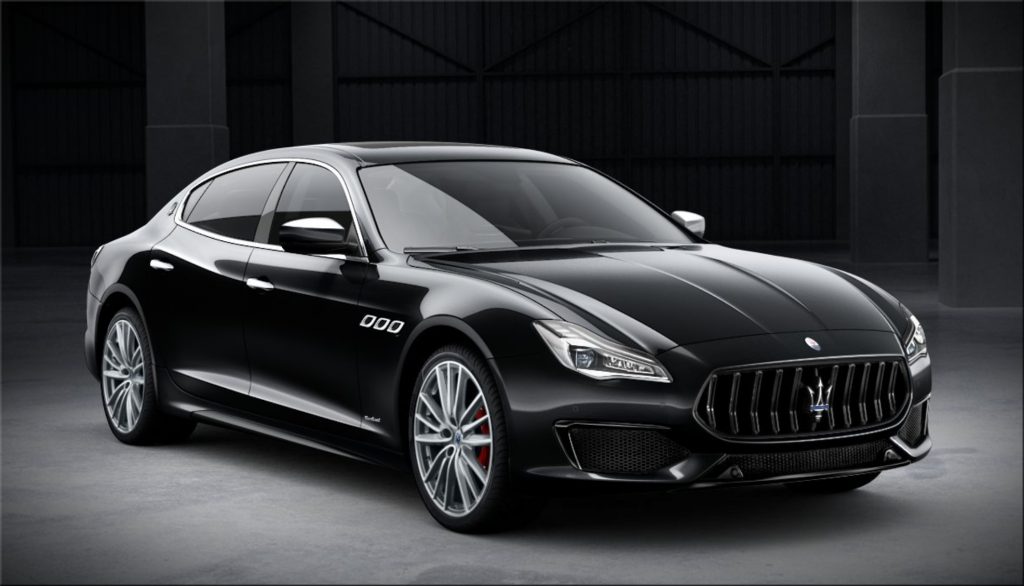
 

If you owned this $137,000+ car, would you turn the keys of it over to your 16-25 year old?!


The corporate world continues to discard the hard-earned experience that age brings…as they shove older people out of the workforce. (I hesitate to use the word wisdom…but in some cases, that’s also relevant/involved here.) Then we, as a society, sit back and wonder how did we get to this place?

Even technologists and programmers in their 20’s and 30’s are beginning to step back and ask…WHY did we develop this application or that feature? Was it — is it — good for society? Is it beneficial? Or should it be tabled or revised into something else?

Below is but one example — though I don’t mean to pick on Microsoft, as they likely have more older workers than the Facebooks, Googles, or Amazons of the world. I fully realize that all of these companies have some older employees. But the youth-oriented culture in American today has almost become an obsession — and not just in the tech world. Turn on the TV, check out the new releases on Netflix, go see a movie in a theater, listen to the radio, cast but a glance at the magazines in the check out lines, etc. and you’ll instantly know what I mean.

In the workplace, there appears to be a bias against older employees as being less innovative or tech-savvy — such a perspective is often completely incorrect. Go check out LinkedIn for items re: age discrimination…it’s a very real thing. But many of us over the age of 30 know this to be true if we’ve lost a job in the last decade or two and have tried to get a job that involves technology.

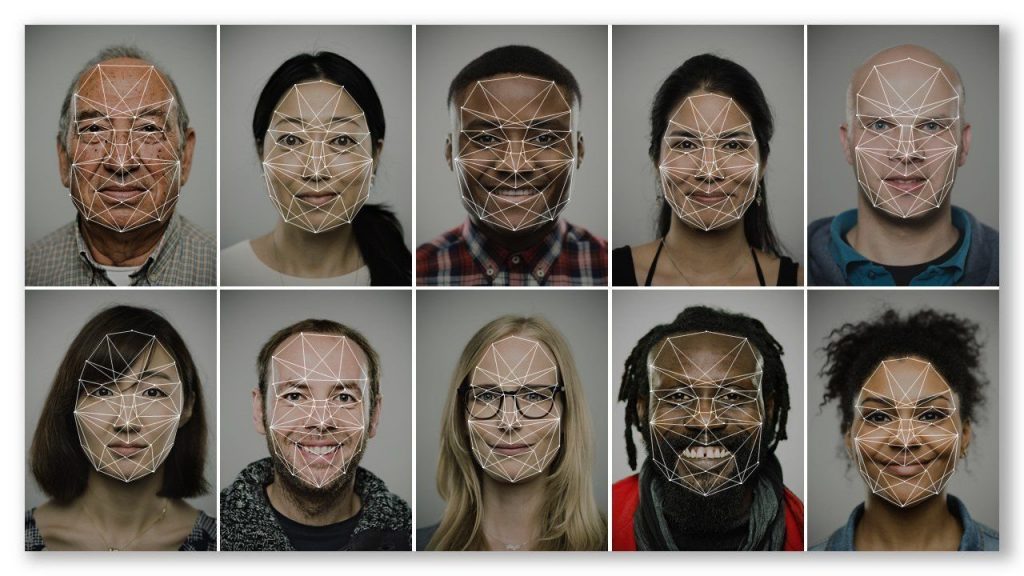
Microsoft argues facial-recognition tech could violate your rights — from finance.yahoo.com by Rob Pegoraro

Excerpt (emphasis DSC):

On Thursday, the American Civil Liberties Union provided a good reason for us to think carefully about the evolution of facial-recognition technology. In a study, the group used Amazon’s (AMZN) Rekognition service to compare portraits of members of Congress to 25,000 arrest mugshots. The result: 28 members were mistakenly matched with 28 suspects.

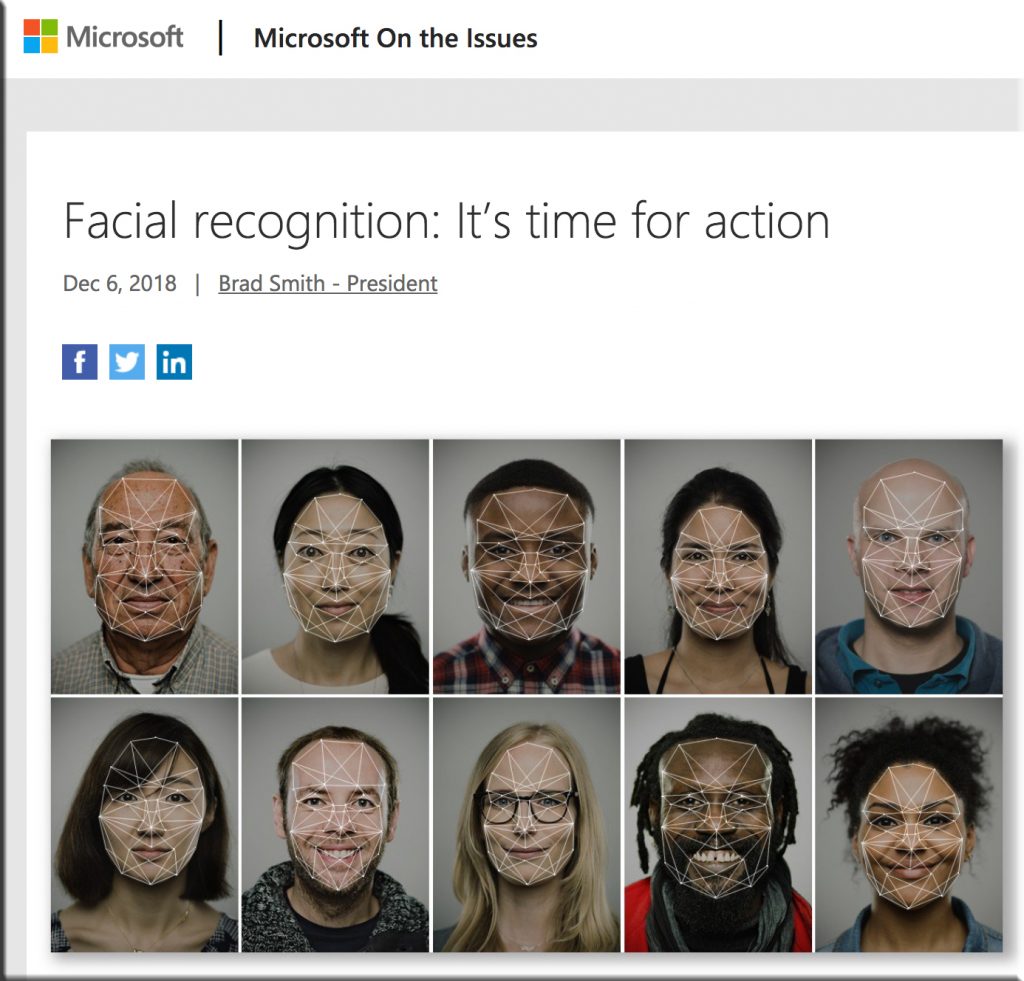
The ACLU isn’t the only group raising the alarm about the technology. Earlier this month, Microsoft (MSFT) president Brad Smith posted an unusual plea on the company’s blog asking that the development of facial-recognition systems not be left up to tech companies.

Saying that the tech “raises issues that go to the heart of fundamental human rights protections like privacy and freedom of expression,” Smith called for “a government initiative to regulate the proper use of facial recognition technology, informed first by a bipartisan and expert commission.”

But we may not get new laws anytime soon.

 

just because we can does not mean we should


Just because we can…


just because we can does not mean we should


Addendum on 12/27/18: — also related/see:

‘We’ve hit an inflection point’: Big Tech failed big-time in 2018 — from finance.yahoo.com by JP Mangalindan

Excerpt (emphasis DSC):

2018 will be remembered as the year the public’s big soft-hearted love affair with Big Tech came to a screeching halt.

For years, lawmakers and the public let massive companies like Facebook, Google, and Amazon run largely unchecked. Billions of people handed them their data — photos, locations, and other status-rich updates — with little scrutiny or question. Then came revelations around several high-profile data breaches from Facebook: a back-to-back series of rude awakenings that taught casual web-surfing, smartphone-toting citizens that uploading their data into the digital ether could have consequences. Google reignited the conversation around sexual harassment, spurring thousands of employees to walk out, while Facebook reminded some corners of the U.S. that racial bias, even in supposedly egalitarian Silicon Valley, remained alive and well. And Amazon courted well over 200 U.S. cities in its gaudy and protracted search for a second headquarters.

“I think 2018 was the year that people really called tech companies on the carpet about the way that they’ve been behaving conducting their business,” explained Susan Etlinger, an analyst at the San Francisco-based Altimeter Group. “We’ve hit an inflection point where people no longer feel comfortable with the ways businesses are conducting themselves. At the same time, we’re also at a point, historically, where there’s just so much more willingness to call out businesses and institutions on bigotry, racism, sexism and other kinds of bias.”


The public’s love affair with Facebook hit its first major rough patch in 2016 when Russian trolls attempted to meddle with the 2016 U.S. presidential election using the social media platform. But it was the Cambridge Analytica controversy that may go down in internet history as the start of a series of back-to-back, bruising controversies for the social network, which for years, served as the Silicon Valley poster child of the nouveau American Dream. 


Hey bot, what’s next in line in chatbot technology? — from blog.engati.com by Imtiaz Bellary

Excerpts:

Scenario 1: Are bots the new apps?
Scenario 2: Bot conversations that make sense
Scenario 3: Can bots increase employee throughput?
Scenario 4: Let voice take over!


Voice as an input medium is catching up with an increasing number of folks adopting Amazon Echo and other digital assistants for their daily chores. Can we expect bots to gauge your mood and provide personalised experience as compared to a standard response? In regulated scenarios, voice acts as an authentication mechanism for the bot to pursue actions. Voice as an input adds sophistication and ease to do tasks quickly, thereby increasing user experience.


AI Now Report 2018 | December 2018  — from ainowinstitute.org

Meredith Whittaker , AI Now Institute, New York University, Google Open Research
Kate Crawford , AI Now Institute, New York University, Microsoft Research
Roel Dobbe , AI Now Institute, New York University
Genevieve Fried , AI Now Institute, New York University
Elizabeth Kaziunas , AI Now Institute, New York University
Varoon Mathur , AI Now Institute, New York University
Sarah Myers West , AI Now Institute, New York University
Rashida Richardson , AI Now Institute, New York University
Jason Schultz , AI Now Institute, New York University School of Law
Oscar Schwartz , AI Now Institute, New York University

With research assistance from Alex Campolo and Gretchen Krueger (AI Now Institute, New York University)

Excerpt (emphasis DSC):

Building on our 2016 and 2017 reports, the AI Now 2018 Report contends with this central problem, and provides 10 practical recommendations that can help create accountability frameworks capable of governing these powerful technologies.

  1. Governments need to regulate AI by expanding the powers of sector-specific agencies to oversee, audit, and monitor these technologies by domain.
  2. Facial recognition and affect recognition need stringent regulation to protect the public interest.
  3. The AI industry urgently needs new approaches to governance. As this report demonstrates, internal governance structures at most technology companies are failing to ensure accountability for AI systems.
  4. AI companies should waive trade secrecy and other legal claims that stand in the way of accountability in the public sector.
  5. Technology companies should provide protections for conscientious objectors, employee organizing, and ethical whistleblowers.
  6.  Consumer protection agencies should apply “truth-in-advertising” laws to AI products and services.
  7. Technology companies must go beyond the “pipeline model” and commit to addressing the practices of exclusion and discrimination in their workplaces.
  8. Fairness, accountability, and transparency in AI require a detailed account of the “full stack supply chain.”
  9. More funding and support are needed for litigation, labor organizing, and community participation on AI accountability issues.
  10. University AI programs should expand beyond computer science and engineering disciplines. AI began as an interdisciplinary field, but over the decades has narrowed to become a technical discipline. With the increasing application of AI systems to social domains, it needs to expand its disciplinary orientation. That means centering forms of expertise from the social and humanistic disciplines. AI efforts that genuinely wish to address social implications cannot stay solely within computer science and engineering departments, where faculty and students are not trained to research the social world. Expanding the disciplinary orientation of AI research will ensure deeper attention to social contexts, and more focus on potential hazards when these systems are applied to human populations.


Also see:

After a Year of Tech Scandals, Our 10 Recommendations for AI — from medium.com by the AI Now Institute
Let’s begin with better regulation, protecting workers, and applying “truth in advertising” rules to AI


Also see:

Excerpt:

As we discussed, this technology brings important and even exciting societal benefits but also the potential for abuse. We noted the need for broader study and discussion of these issues. In the ensuing months, we’ve been pursuing these issues further, talking with technologists, companies, civil society groups, academics and public officials around the world. We’ve learned more and tested new ideas. Based on this work, we believe it’s important to move beyond study and discussion. The time for action has arrived.

We believe it’s important for governments in 2019 to start adopting laws to regulate this technology. The facial recognition genie, so to speak, is just emerging from the bottle. Unless we act, we risk waking up five years from now to find that facial recognition services have spread in ways that exacerbate societal issues. By that time, these challenges will be much more difficult to bottle back up.

In particular, we don’t believe that the world will be best served by a commercial race to the bottom, with tech companies forced to choose between social responsibility and market success. We believe that the only way to protect against this race to the bottom is to build a floor of responsibility that supports healthy market competition. And a solid floor requires that we ensure that this technology, and the organizations that develop and use it, are governed by the rule of law.


From DSC:
This is a major heads up to the American Bar Association (ABA), law schools, governments, legislatures around the country, the courts, the corporate world, as well as for colleges, universities, and community colleges. The pace of emerging technologies is much faster than society’s ability to deal with them! 

The ABA and law schools need to majorly pick up their pace — for the benefit of all within our society.


Alexa, get me the articles (voice interfaces in academia) — from blog.libux.co by Kelly Dagan

Excerpt:

Credit to Jill O’Neill, who has written an engaging consideration of applications, discussions, and potentials for voice-user interfaces in the scholarly realm. She details a few use case scenarios: finding recent, authoritative biographies of Jane Austen; finding if your closest library has an item on the shelf now (and whether it’s worth the drive based on traffic).

Coming from an undergraduate-focused (and library) perspective, I can think of a few more:

  • asking if there are any group study rooms available at 7 pm and making a booking
  • finding out if [X] is open now (Archives, the Cafe, the Library, etc.)
  • finding three books on the Red Brigades, seeing if they are available, and saving the locations
  • grabbing five research articles on stereotype threat, to read later


Also see:


Is Amazon’s algorithm cashing in on the Camp Fire by raising the cost of safety equipment? — from wired.co.uk by Matthew Chapman
Sudden and repeated price increases on fire extinguishers, axes and escape ladders sold on Amazon are seemingly linked to increased demand driven by California’s Camp Fire

Excerpt:

Amazon’s algorithm has allegedly been raising the price of fire safety equipment in response to increased demand during the California wildfires. The practice, known as surge pricing, has caused products including fire extinguishers and escape ladders to fluctuate significantly on Amazon, seemingly as a result of the retailer’s pricing system responding to increased demand.

An industry source with knowledge of the firm’s operations claims a similar price surge was triggered by the Grenfell Tower fire. A number of recent price rises coincide directly with the outbreak of the Camp Fire, which has been the deadliest in California’s history and resulted in at least 83 deaths.


From DSC:
I’ve been thinking a lot more about Amazon.com and Jeff Bezos in recent months, though I’m not entirely sure why. I think part of it has to do with the goals of capitalism.

If you want to see a winner in the way America trains up students, entrepreneurs, and business people, look no further than Jeff Bezos. He is the year-in-and-year-out champion of capitalism. He is the winner. He is the Michael Jordan of business. He is the top. He gets how the game is played and he’s a master at it. By all worldly standards, Jeff Bezos is the winner.

But historically speaking, he doesn’t come across like someone such as Bill Gates — someone who has used his wealth to literally, significantly, and positively change millions of lives. (Though finally that looks to be changing a bit, with the Bezos Day 1 Families Fund; the first grants of that fund total $97 million and will be given to 24 organizations working to address family homelessness. Source.)

Along those same lines — and expanding the scope a bit — I’m struggling with what the goals of capitalism are for us today…especially in an era of AI, algorithms, robotics, automation and the like. If the goal is simply to make as much profit as possible, we could be in trouble. If what occurs to people and families is much lower down the totem pole…what are the ramifications of that for our society? Yes, it’s a tough, cold world. But does it always have to be that way? What is the best, most excellent goal to pursue? What are we truly seeking to accomplish?

After my Uncle Chan died years ago, my Aunt Gail took over the family’s office supply business and ran it like a family. She cared about her employees and made decisions with an eye towards how things would impact her employees and their families. Yes, she had to make sound business decisions, but there was true caring in the way that she ran her business. I realize that the Amazon’s of the world are in a whole different league, but the values and principles involved here should not be lost just because of size.


To whom much is given…much is expected.


Also see:

GM to lay off 15 percent of salaried workers, halt production at five plants in U.S. and Canada — from washingtonpost.com by Taylor Telford

Wall Street applauded the news, with GM’s stock climbing more than 7 percent following the announcement.


From DSC:
Well, I bet those on Wall Street aren’t a part of the 15% of the folks being impacted. The applause is not heard at all from those folks who are being impacted today…whose families are being impacted today…and will be feeling the impact of these announcements for quite a while yet.


Amazon’s new goal: Teach 10 million kids a year to code — from businessinsider.com by Joseph Pisani

Excerpt:

NEW YORK (AP) — Amazon wants to get more kids thinking about becoming computer engineers.

The company launched a program Thursday that aims to teach more than 10 million students a year how to code. Amazon said it will pay for summer camps, teacher training and other initiatives to benefit kids and young adults from low-income families who might not have learned to code otherwise. It hopes the programs spur more black, Hispanic and female students to study computer science.


From DSC:
It will be interesting to see how artificial intelligence impacts the demand for programmers as the years progress. 


Virtual digital assistants in the workplace: Still nascent, but developing — from cisco.com by Pat Brans
As workers get overwhelmed with daily tasks, they want virtual digital assistants in the workplace that can alleviate some of the burden.

Excerpts:

As life gets busier, knowledge workers are struggling with information overload.

They’re looking for a way out, and that way, experts say, will eventually involve virtual digital assistants (VDAs). Increasingly, workers need to complete myriad tasks, often seemingly simultaneously. And as the pace of business continues to drive ever faster, hands-free, intelligent technology that can speed administrative tasks holds obvious appeal.

So far, scenarios in which digital assistants in the workplace enhance productivity fall into three categories: scheduling, project management, and improved interfaces to enterprise applications. “Using digital assistants to perform scheduling has clear benefits,” Beccue said.

“Scheduling meetings and managing calendars takes a long time—many early adopters are able to quantify the savings they get when the scheduling is performed by a VDA. Likewise, when VDAs are used to track project status through daily standup meetings, project managers can easily measure the time saved.”


Perhaps the most important change we’ll see in future generations of VDA technology for workforce productivity will be the advent of general-purpose VDAs that help users with all tasks. These VDAs will be multi-channel (providing interfaces through mobile apps, messaging, telephone, and so on) and they will be bi-modal (enlisting text and voice).


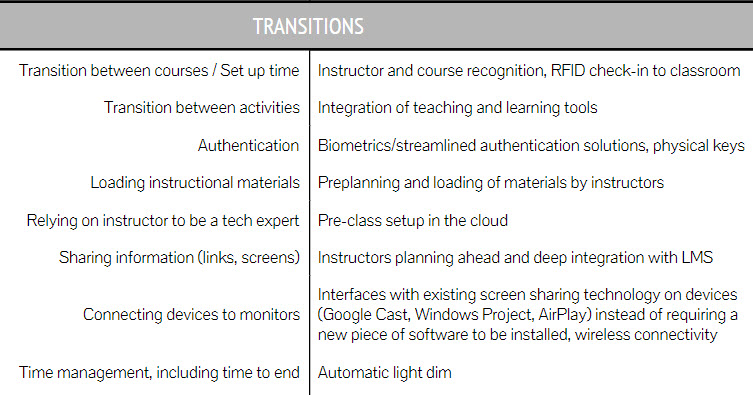
Reflections on “Are ‘smart’ classrooms the future?” [Johnston]

Are ‘smart’ classrooms the future? — from campustechnology.com by Julie Johnston
Indiana University explores that question by bringing together tech partners and university leaders to share ideas on how to design classrooms that make better use of faculty and student time.

Excerpt:

To achieve these goals, we are investigating smart solutions that will:

  • Untether instructors from the room’s podium, allowing them control from anywhere in the room;
  • Streamline the start of class, including biometric login to the room’s technology, behind-the-scenes routing of course content to room displays, control of lights and automatic attendance taking;
  • Offer whiteboards that can be captured, routed to different displays in the room and saved for future viewing and editing;
  • Provide small-group collaboration displays and the ability to easily route content to and from these displays; and
  • Deliver these features through a simple, user-friendly and reliable room/technology interface.

Activities included collaborative brainstorming focusing on these questions:

  • What else can we do to create the classroom of the future?
  • What current technology exists to solve these problems?
  • What could be developed that doesn’t yet exist?
  • What’s next?


From DSC:
Though many peoples’ — including faculty members’ — eyes gloss over when we start talking about learning spaces and smart classrooms, it’s still an important topic. Personally, I’d rather be learning in an engaging, exciting learning environment that’s outfitted with a variety of tools (physically as well as digitally and virtually-based) that make sense for that community of learners. Also, faculty members have very limited time to get across campus and into the classroom and get things setup…the more things that can be automated in those setup situations the better!

I’ve long posted items re: machine-to-machine communications, voice recognition/voice-enabled interfaces, artificial intelligence, bots, algorithms, a variety of vendors and their products including Amazon’s Alexa / Apple’s Siri / Microsoft’s Cortana / and Google’s Home or Google Assistant, learning spaces, and smart classrooms, as I do think those things are components of our future learning ecosystems.


logo.

Global installed base of smart speakers to surpass 200 million in 2020, says GlobalData

The global installed base for smart speakers will hit 100 million early next year, before surpassing the 200 million mark at some point in 2020, according to GlobalData, a leading data and analytics company.

The company’s latest report: ‘Smart Speakers – Thematic Research’ states that nearly every leading technology company is either already producing a smart speaker or developing one, with Facebook the latest to enter the fray (launching its Portal device this month). The appetite for smart speakers is also not limited by geography, with China in particular emerging as a major marketplace.

Ed Thomas, Principal Analyst for Technology Thematic Research at GlobalData, comments: “It is only four years since Amazon unveiled the Echo, the first wireless speaker to incorporate a voice-activated virtual assistant. Initial reactions were muted but the device, and the Alexa virtual assistant it contained, quickly became a phenomenon, with the level of demand catching even Amazon by surprise.”

Smart speakers give companies like Amazon, Google, Apple, and Alibaba access to a vast amount of highly valuable user data. They also allow users to get comfortable interacting with artificial intelligence (AI) tools in general, and virtual assistants in particular, increasing the likelihood that they will use them in other situations, and they lock customers into a broader ecosystem, making it more likely that they will buy complementary products or access other services, such as online stores.

Thomas continues: “Smart speakers, particularly lower-priced models, are gateway devices, in that they give consumers the opportunity to interact with a virtual assistant like Amazon’s Alexa or Google’s Assistant, in a “safe” environment. For tech companies serious about competing in the virtual assistant sector, a smart speaker is becoming a necessity, hence the recent entry of Apple and Facebook into the market and the expected arrival of Samsung and Microsoft over the next year or so.”

In terms of the competitive landscape for smart speakers, Amazon was the pioneer and is still a dominant force, although its first-mover advantage has been eroded over the last year or so. Its closest challenger is Google, but neither company is present in the fastest-growing geographic market, China. Alibaba is the leading player there, with Xiaomi also performing well.

Thomas concludes: “With big names like Samsung and Microsoft expected to launch smart speakers in the next year or so, the competitive landscape will continue to fluctuate. It is likely that we will see two distinct markets emerge: the cheap, impulse-buy end of the spectrum, used by vendors to boost their ecosystems; and the more expensive, luxury end, where greater focus is placed on sound quality and aesthetics. This is the area of the market at which Apple has aimed the HomePod and early indications are that this is where Samsung’s Galaxy Home will also look to make an impact.”

Information based on GlobalData’s report: Smart Speakers – Thematic Research


Reflections on “Inside Amazon’s artificial intelligence flywheel” [Levy]

Inside Amazon’s artificial intelligence flywheel — from wired.com by Steven Levy
How deep learning came to power Alexa, Amazon Web Services, and nearly every other division of the company.

Excerpt (emphasis DSC):

Amazon loves to use the word flywheel to describe how various parts of its massive business work as a single perpetual motion machine. It now has a powerful AI flywheel, where machine-learning innovations in one part of the company fuel the efforts of other teams, who in turn can build products or offer services to affect other groups, or even the company at large. Offering its machine-learning platforms to outsiders as a paid service makes the effort itself profitable—and in certain cases scoops up yet more data to level up the technology even more.

It took a lot of six-pagers to transform Amazon from a deep-learning wannabe into a formidable power. The results of this transformation can be seen throughout the company—including in a recommendations system that now runs on a totally new machine-learning infrastructure. Amazon is smarter in suggesting what you should read next, what items you should add to your shopping list, and what movie you might want to watch tonight. And this year Thirumalai started a new job, heading Amazon search, where he intends to use deep learning in every aspect of the service.

“If you asked me seven or eight years ago how big a force Amazon was in AI, I would have said, ‘They aren’t,’” says Pedro Domingos, a top computer science professor at the University of Washington. “But they have really come on aggressively. Now they are becoming a force.”

Maybe the force.


From DSC:
When will we begin to see more mainstream recommendation engines for learning-based materials? With the demand for people to reinvent themselves, such a next generation learning platform can’t come soon enough!

  • Turning over control to learners to create/enhance their own web-based learner profiles; and allowing people to say who can access their learning profiles.
  • AI-based recommendation engines to help people identify curated, effective digital playlists for what they want to learn about.
  • Voice-driven interfaces.
  • Matching employees to employers.
  • Matching one’s learning preferences (not styles) with the content being presented as one piece of a personalized learning experience.
  • From cradle to grave. Lifelong learning.
  • Multimedia-based, interactive content.
  • Asynchronously and synchronously connecting with others learning about the same content.
  • Online-based tutoring/assistance; remote assistance.
  • Reinvent. Staying relevant. Surviving.
  • Competency-based learning.


The Living [Class] Room -- by Daniel Christian -- July 2012 -- a second device used in conjunction with a Smart/Connected TV


We’re about to embark on a period in American history where career reinvention will be critical, perhaps more so than it’s ever been before. In the next decade, as many as 50 million American workers—a third of the total—will need to change careers, according to McKinsey Global Institute. Automation, in the form of AI (artificial intelligence) and RPA (robotic process automation), is the primary driver. McKinsey observes: “There are few precedents in which societies have successfully retrained such large numbers of people.”

Bill Triant and Ryan Craig


Also relevant/see:

Online education’s expansion continues in higher ed with a focus on tech skills — from educationdive.com by James Paterson

Dive Brief:

  • Online learning continues to expand in higher ed with the addition of several online master’s degrees and a new for-profit college that offers a hybrid of vocational training and liberal arts curriculum online.
  • Inside Higher Ed reported the nonprofit learning provider edX is offering nine master’s degrees through five U.S. universities — the Georgia Institute of Technology, the University of Texas at Austin, Indiana University, Arizona State University and the University of California, San Diego. The programs include cybersecurity, data science, analytics, computer science and marketing, and they cost from around $10,000 to $22,000. Most offer stackable certificates, helping students who change their educational trajectory.
  • Former Harvard University Dean of Social Science Stephen Kosslyn, meanwhile, will open Foundry College in January. The for-profit, two-year program targets adult learners who want to upskill, and it includes training in soft skills such as critical thinking and problem solving. Students will pay about $1,000 per course, though the college is waiving tuition for its first cohort.


MIT plans $1B computing college, AI research effort — from educationdive.com by James Paterson

Dive Brief (emphasis DSC):

  • The Massachusetts Institute of Technology is creating a College of Computing with the help of a $350 million gift from billionaire investor Stephen A. Schwarzman, who is the CEO and co-founder of the private equity firm Blackstone, in a move the university said is its “most significant reshaping” since 1950.
  • Featuring 50 new faculty positions and a new headquarters building, the $1 billion interdisciplinary initiative will bring together computer science, artificial intelligence (AI), data science and related programs across the institution. MIT will establish a new deanship for the college.
  • The new college…will explore and promote AI’s use in non-technology disciplines with a focus on ethical considerations, which are a growing concern as the technology becomes embedded in many fields.


Also see:

Alexa Sessions You Won’t Want to Miss at AWS re:Invent 2018 — from developer.amazon.com

Excerpts — with an eye towards where this might be leading in terms of learning spaces:

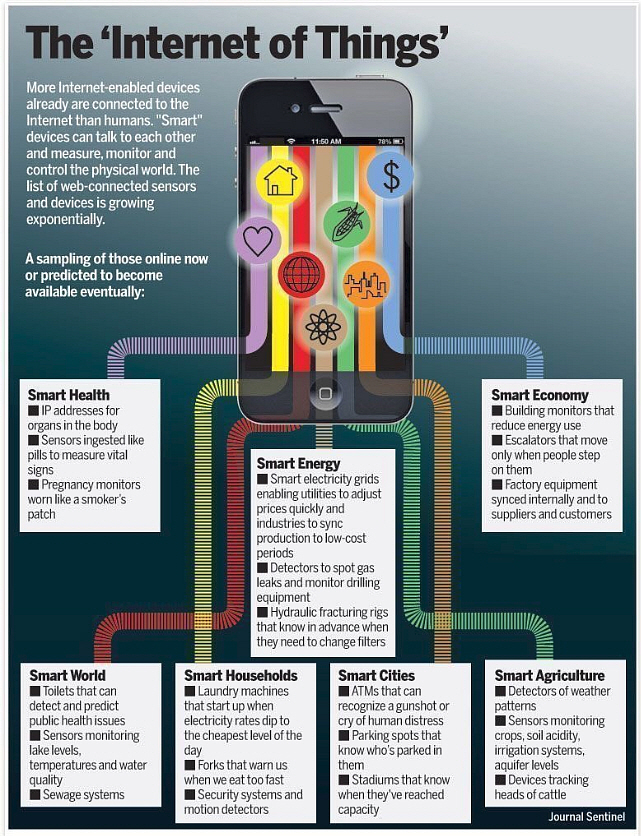
Alexa and AWS IoT — Voice is a natural interface to interact not just with the world around us, but also with physical assets and things, such as connected home devices, including lights, thermostats, or TVs. Learn how you can connect and control devices in your home using the AWS IoT platform and Alexa Skills Kit.

Connect Any Device to Alexa and Control Any Feature with the Updated Smart Home Skill API — Learn about the latest update to the Smart Home Skill API, featuring new capability interfaces you can use as building blocks to connect any device to Alexa, including those that fall outside of the traditional smart home categories of lighting, locks, thermostats, sensors, cameras, and audio/video gear. Start learning about how you can create a smarter home with Alexa.

Workshop: Build an Alexa Skill with Multiple Models — Learn how to build an Alexa skill that utilizes multiple interaction models and combines functionality into a single skill. Build an Alexa smart home skill from scratch that implements both custom interactions and smart home functionality within a single skill. Check out these resources to start learning:


An open letter to Microsoft and Google’s Partnership on AI — from wired.com by Gerd Leonhard
In a world where machines may have an IQ of 50,000, what will happen to the values and ethics that underpin privacy and free will?

Excerpt:

This open letter is my modest contribution to the unfolding of this new partnership. Data is the new oil – which now makes your companies the most powerful entities on the globe, way beyond oil companies and banks. The rise of ‘AI everywhere’ is certain to only accelerate this trend. Yet unlike the giants of the fossil-fuel era, there is little oversight on what exactly you can and will do with this new data-oil, and what rules you’ll need to follow once you have built that AI-in-the-sky. There appears to be very little public stewardship, while accepting responsibility for the consequences of your inventions is rather slow in surfacing.


In a world where machines may have an IQ of 50,000 and the Internet of Things may encompass 500 billion devices, what will happen with those important social contracts, values and ethics that underpin crucial issues such as privacy, anonymity and free will?


My book identifies what I call the “Megashifts”. They are changing society at warp speed, and your organisations are in the eye of the storm: digitization, mobilisation and screenification, automation, intelligisation, disintermediation, virtualisation and robotisation, to name the most prominent. Megashifts are not simply trends or paradigm shifts, they are complete game changers transforming multiple domains simultaneously.


If the question is no longer about if technology can do something, but why…who decides this?

Gerd Leonhard


From DSC:
Though this letter was written 2 years ago back in October of 2016, the messages, reflections, and questions that Gerd puts on the table are very much still relevant today.  The leaders of these powerful companies have enormous power — power to do good, or to do evil. Power to help or power to hurt. Power to be a positive force for societies throughout the globe and to help create dreams, or power to create dystopian societies while developing a future filled with nightmares. The state of the human heart is extremely key here — though many will hate me saying that. But it’s true. At the end of the day, we need to very much care about — and be extremely aware of — the characters and values of the leaders of these powerful companies. 


Also relevant/see:

Spray-on antennas will revolutionize the Internet of Things — from networkworld.com by Patrick Nelson
Researchers at Drexel University have developed a method to spray on antennas that outperform traditional metal antennas, opening the door to faster and easier IoT deployments.

 From DSC:
Again, it’s not too hard to imagine in this arena that technologies can be used for good or for ill.


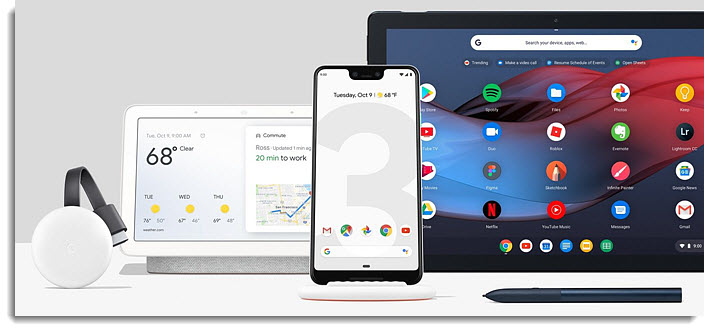
The 11 coolest announcements Google made at its biggest product event of the year — from businessinsider.com by Dave Smith

Excerpt:

On Tuesday (10/9), Google invited journalists to New York City to debut its newest smartphone, the Pixel 3, among several other hardware goodies.

Google made dozens of announcements in its 75-minute event, but a handful of “wow” moments stole the show.

Here are the 11 coolest announcements Google made at its big hardware event…


Google’s Pixel 3 event in 6 minutes — from businessinsider.com


Google unveiled its new Home Hub but it might be ‘late to the market’ — from barrons.com by Emily Bary

Excerpt:

Alphabet ’s Google has sold millions of voice-enabled speakers, but it inched toward the future at a Tuesday launch event when it introduced the Home Hub smart screen.

Google isn’t the first company to roll out a screen-enabled home device with voice-assistant technology— Amazon.com released its Echo Show in July 2017. Meanwhile, Lenovo has gotten good reviews for its Smart Display, and Facebook introduced the Portal on Monday.

For the most part, though, consumers have stuck to voice-only devices, and it will be up to Google and its rivals to convince them that an added screen is worth paying for. They’ll also have to reassure consumers that they can trust big tech to maintain their privacy, an admittedly harder task these days after recent security issues at Google and Facebook.


Amazon was right to realize early on that consumers aren’t always comfortable buying items they can’t even see pictures of, and that it’s hard to remember directions you’ve heard but not seen.


Google has announced its first smart speaker with a screen — from businessinsider.com by Brandt Ranj

  • Google has announced the Google Hub, its first smart home speaker with a screen. It’s available for pre-order at Best Buy, Target, and Walmart for $149. The Hub will be released on October 22.
  • The Hub has a 7″ touchscreen and sits on a base with a built-in speaker and microphones, which you can use to play music, watch videos, get directions, and control smart home accessories with your voice.
  • Its biggest advantage is its ability to hook into Google’s first-party services, like YouTube and Google Maps, which none of its competitors can use.
  • If you’re an Android or Chromecast user, trust Google more than Amazon, or want a smaller smart home speaker with a screen, the Google Hub is now your best bet.


Google is shutting down Google+ for consumers following security lapse — from theverge.com by Ashley Carman

Excerpt:

Google is going to shut down the consumer version of Google+ over the next 10 months, the company writes in a blog post today. The decision follows the revelation of a previously undisclosed security flaw that exposed users’ profile data that was remedied in March 2018.


Google shutters Google+ after users’ personal data exposed — from cbsnews.com


Google+ is shutting down, and the site’s few loyal users are mourning – from cnbc.com by Jillian D’Onfro

  • Even though Google had diverted resources away from Google+, there’s a small loyal base of users devastated to see it go away.
  • One fan said the company is using its recently revealed security breach as an excuse to shutter the site.
  • Google said it will be closing Google+ in the coming months.


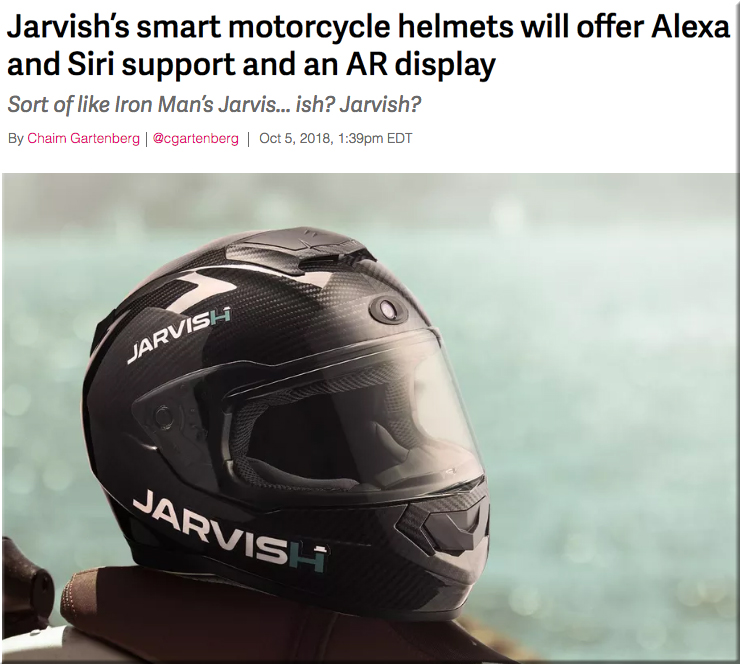
Jarvish’s smart motorcycle helmets will offer Alexa and Siri support and an AR display


Jarvish’s smart motorcycle helmets will offer Alexa and Siri support and an AR display — from the verge.com by Chaim Gartenberg

Excerpt:

The Jarvish X is the more basic of the two models. It offers integrated microphones and speakers for Siri, Google Assistant, and Alexa support so wearers have access things like directions, weather updates, and control music through voice control. There’s also a 2K, front-facing camera built into the helmet so you can record your ride. It’s set to cost $799 when it hits Kickstarter in January.


© 2025 | Daniel Christian