Is the virtual courtroom the future of the justice system? — from deseret.com by Zakary Sonntag
Video proceedings have increased court access but raised questions of rights amid case backlog

Excerpt:

The justice system in Utah is straining under the weight of an immense backlog of criminal cases, especially serious felony cases, leaving many defendants to languish in custody as additional filings continue to accumulate.

The buildup began in 2020 after the Utah Supreme Court ordered the shutdown of in-person proceedings in response to the coronavirus, which left attorneys and judges to hash out settlements through a remote, Webex court process.

The pandemic’s impact on the legal sector and what emerging lawyers need to know — from timesofindia.indiatimes.com by Roma Priya

Excerpt:

For aspiring lawyers and law school graduates who have commenced practice recently, one of the best ways to stay relevant is to upskill yourself. Apart from the legal industry-related skills as a lawyer, such as in-depth knowledge about clients, the law, and other subjects, communication skills, problem solving and analytical skills, and tech skills are crucial. 

Today, digitally-savvy lawyers are in high demand as technology continues to evolve and progress. And as the Indian Judiciary System gradually acquaints itself with cutting-edge technologies, emerging lawyers must do the same.

About one-fifth of lawyers and staffers considered suicide at some point in their careers, new survey says — from abajournal.com by Debra Cassens Weiss

A new survey of lawyers and staff members hailing mostly from BigLaw has found that anxiety, depression and isolation remain at concerning levels, despite a slight decrease in the percentages since the survey last year.

When is a legal department ready to transform? — from advisory.kpmg.us by Eric Gorman, Kimberly Majure, and Jeff Ikejiri
Explore the catalysts for change

…legal departments that identify and agree on a motive to change, and then are alert for opportunities to act, are legal departments that are ready to transform.


From DSC:
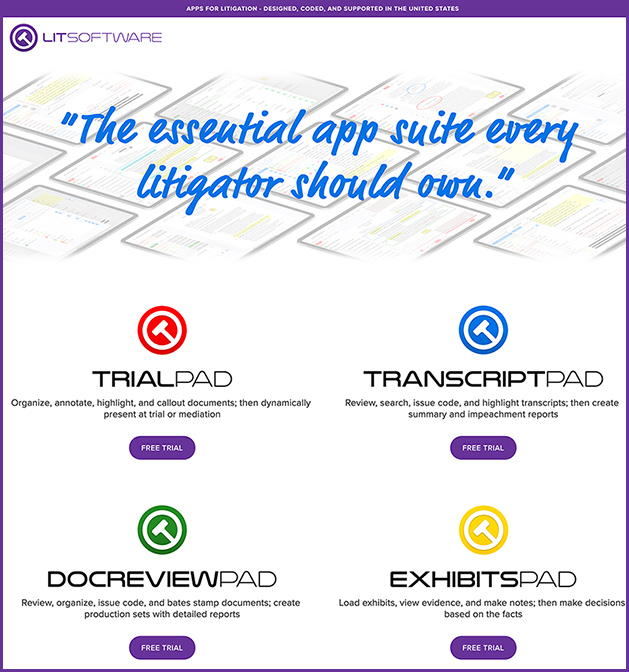
I saw the link to LitSoftware at the posting entitled, Three Lessons In Persuasive Trial Technology (from legaltechmonitor.com by Stephen Embry)..  I thought it offered some interesting software:


The Top 3 Legal Technology Trends of 2022 — from lexology.com by Sean Heck

Excerpts:

  1. Web-Based Contract Management Tools for Remote Legal Operations
  2. Online, Web-Based Document Editing
  3. Contract AI With Machine Learning for Intelligent CLM

Litera legal survey shows that technology is driving change in all aspects of M&A practice — from canadianlawyermag.com by Annabel Oromoni

Excerpt:

The global pandemic and the increasing reliance on technology to facilitate remote legal work and collaboration have accelerated the legal profession’s interest in technology-based solutions. A recent survey by Litera, a legal tech company, revealed that technology significantly impacts M&A practices in law firms.

Litera’s survey included insights from over 200 lawyers whose practices focus on M&A in the United States, the United Kingdom, and Canada.

David Curle, legal content and research lead at Litera, says the legal profession is fragmented, and Litera sought to receive responses about technology use, adoption, and spending from M&A lawyers specifically.

6 Types of Software for Your In-House Legal Team Needs — from jdsupra.com

Excerpt:

Most legal teams rely heavily on documents and communication for their work, and handling all the related operations may not be as simple as you would like it to be. Unless you change your approach to document management and start exploring tech solutions that improve team efficiency.

Automation software has helped many businesses and departments streamline all or most of their operations and improve their efficiency. The same can be done for a legal team.

In this article, let’s focus on the types of automation software for in-house counsel along with some of the top examples.


Addendum later on 5/11/22:

ANALYSIS: Lawyers’ Top Legal Tech Tools—And Biggest Blind Spots — from news.bloomberglaw.com by Racheal Pikulski, Princess Onyiri, and Lida Ouyang
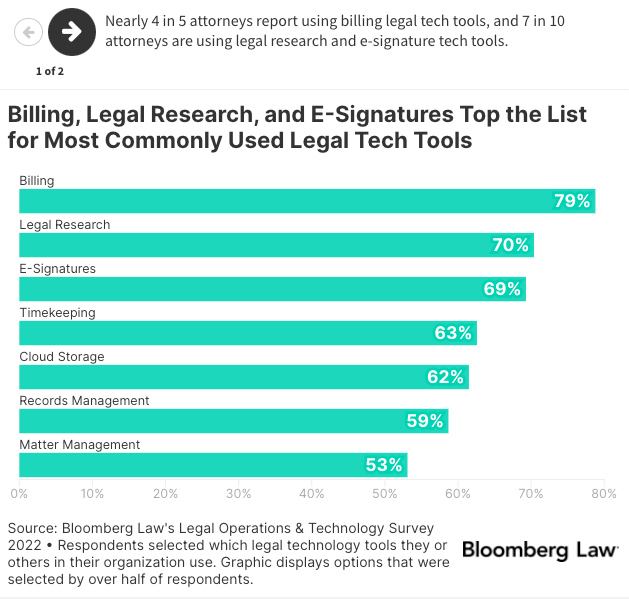

Addendum later on 5/11/22:


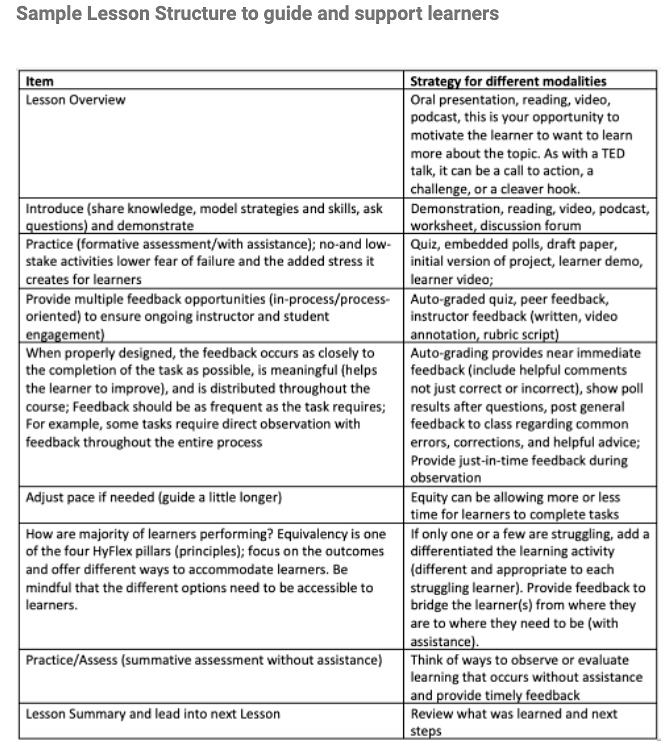
Technology for HyFlex Classrooms: Major Considerations — from hyflexlearning.org by Brian Beatty

Excerpts:

This post describes four aspects of classroom technology that are very important to address when developing a HyFlex approach that can be effective at scale.

The classroom technology needs can be organized into four areas:

  1. two-way audio stream (connection),
  2. incoming video presentation of remote learners
  3. outgoing video presentation of classroom and learners
  4. interactive technology to support interaction, engagement, and formative assessment

Also re: hyflex teaching — where some students are physically present and some are coming into the class remotely– see:

Part I – Motivating Learners by Building Efficacy (Confidence) through Scaffolding and Support— from hyflexlearning.org by Jeanne Samuel

Excerpts:

HyFlex delivery may be new to many learners. Therefore, it is important to provide them with the supports they need to be successful. Regardless of the delivery mode, learners are motivated by success and by instructor presence. In part one of this topic post, we will write about how instructor support and feedback (a form of guidance) can motivate learners and build learner confidence.

PART II- Feedback for Improving Student Success and Satisfaction — from hyflexlearning.org by Jeanne Samuel

Excerpt:

In part 1 of this post, we focused on how feedback and support promote learner confidence. Learner confidence can lead to improved learner retention, progression, and success regardless of the class delivery mode. In part 2, we focus on feedback strategies.


The rise of tech ethicists shows how the industry is changing — from protocol.com by Veronica Irwin
Though the job titles are new, the ways to attract new talent are virtually the same.

Excerpt:

In 2022, “responsible tech” is a career path. Job titles range from “trust and safety officer” to “policy lead.” And several organizations and academic institutions are engaged in ecosystem-mapping projects to define which academic programs best prepare students to work in the field, how the jobs are described and what companies are pursuing ethical tech in earnest.

“There’s a lot of appetite for this, especially as the public has become very aware of highly publicized problems with technology,” Tweed, now the program director for All Tech is Human, said. “I see that continuing to grow for the foreseeable future.”

Speaking of careers, here’s another item:


From DSC:
After seeing the item below, I thought, “Hmmm…traditional institutions of higher education better look out if alternatives continue to gain momentum.” Perhaps it’s wise to double down on efforts to gather feedback from students, families, parents, businesses, and other stakeholders in the workplace regarding what they want and need — vs. what the faculty members of institution ABC want to teach.


A Third of U.S. College Students Consider Withdrawing — from news.gallup.com by Stephanie Marken

Excerpt:

Editor’s Note: The research below was conducted in partnership between the Lumina Foundation and Gallup.

About a third (32%) of currently enrolled students pursuing a bachelor’s degree report they have considered withdrawing from their program for a semester or more in the past six months. A slightly higher percentage of students pursuing their associate degree, 41%, report they have considered stopping out in the past six months. These are similar to 2020 levels when 33% of bachelor’s degree students reported they had considered stopping out and 38% of associate degree students said the same.


12 examples of artificial intelligence in everyday life — from itproportal.com by Christopher Oldman

Excerpt:

4. Plagiarism
The college students’ (or is it professor’s?) nightmare. Whether you are a content manager or a teacher grading essays, you have the same problem – the internet makes plagiarism easier.

There is a nigh unlimited amount of information and data out there, and less-than-scrupulous students and employees will readily take advantage of that.

Indeed, no human could compare and contrast somebody’s essay with all the data out there. AIs are a whole different beast.

They can sift through an insane amount of information, compare it with the relevant text, and see if there is a match or not.

Furthermore, thanks to advancement and growth in this area, some tools can actually check sources in foreign languages, as well as images and audio.

Intel calls its AI that detects student emotions a teaching tool. Others call it ‘morally reprehensible.’ — from protocol.com by Kate Kaye
Virtual school software startup Classroom Technologies will test the controversial “emotion AI” technology.

Excerpts:

But Intel and Classroom Technologies, which sells virtual school software called Class, think there might be a better way. The companies have partnered to integrate an AI-based technology developed by Intel with Class, which runs on top of Zoom. Intel claims its system can detect whether students are bored, distracted or confused by assessing their facial expressions and how they’re interacting with educational content.

But critics argue that it is not possible to accurately determine whether someone is feeling bored, confused, happy or sad based on their facial expressions or other external signals.

The classroom is just one arena where controversial “emotion AI” is finding its way into everyday tech products and generating investor interest. It’s also seeping into delivery and passenger vehicles and virtual sales and customer service software.

MIT’s FutureMakers programs help kids get their minds around — and hands on — AI — from news.mit.edu by Kim Patch
The programs are designed to foster an understanding of how artificial intelligence technologies work, including their social implications.

Excerpt:

During one-week, themed FutureMakers Workshops organized around key topics related to AI, students learn how AI technologies work, including social implications, then build something that uses AI.

“AI is shaping our behaviors, it’s shaping the way we think, it’s shaping the way we learn, and a lot of people aren’t even aware of that,” says Breazeal. “People now need to be AI literate given how AI is rapidly changing digital literacy and digital citizenship.”

AI can now kill those annoying cookie pop-ups — from thenextweb.com by Thomas Macaulay
The notifications have been put on notice

Excerpt:

After years of suffering this digital torture, a new AI tool has finally offered hope of an escape.

Named CookieEnforcer, the system was created by researchers from Google and the University of Wisconsin-Madison.

The system was created to stop cookies from manipulating people into making website-friendly choices that put their privacy at risk. Yet it could also end the constant hassle of navigating the notices.

Using machine learning to improve student success in higher education — from mckinsey.com
Deploying machine learning and advanced analytics thoughtfully and to their full potential may support improvements in student access, success, and the overall student experience.

Excerpt:

Yet higher education is still in the early stages of data capability building. With universities facing many challenges (such as financial pressures, the demographic cliff, and an uptick in student mental-health issues) and a variety of opportunities (including reaching adult learners and scaling online learning), expanding use of advanced analytics and machine learning may prove beneficial.

Below, we share some of the most promising use cases for advanced analytics in higher education to show how universities are capitalizing on those opportunities to overcome current challenges, both enabling access for many more students and improving the student experience.

Artificial intelligence (AI): 7 roles to prioritize now — from enterprisersproject.com by Marc Lewis
Which artificial intelligence (AI) jobs are hottest now? Consider these seven AI/ML roles to prioritize in your organization

Excerpt:

Rather than a Great Resignation, this would suggest a Great Reallocation of the workforce. As a global search consultant, we are seeing this precipitous shift in positions, with great demand for skills in artificial intelligence and machine learning (AI/ML).

With that in mind, here are seven artificial intelligence (AI)-related roles to consider prioritizing right now as the workforce reallocates talent to new jobs that drive economic value for leading companies…

4 ways AI will be a great teaching assistant — from thetechedvocate.org by Matthew Lynch


This Week’s Awesome Tech Stories From Around the Web (Through April 30) — from singularityhub.com by Singularity Hub Staff

Topics include:

  • Computing
  • Robotics
  • Nanotechnology
  • Technology
  • Gadgets
  • Space
  • AI
  • AR


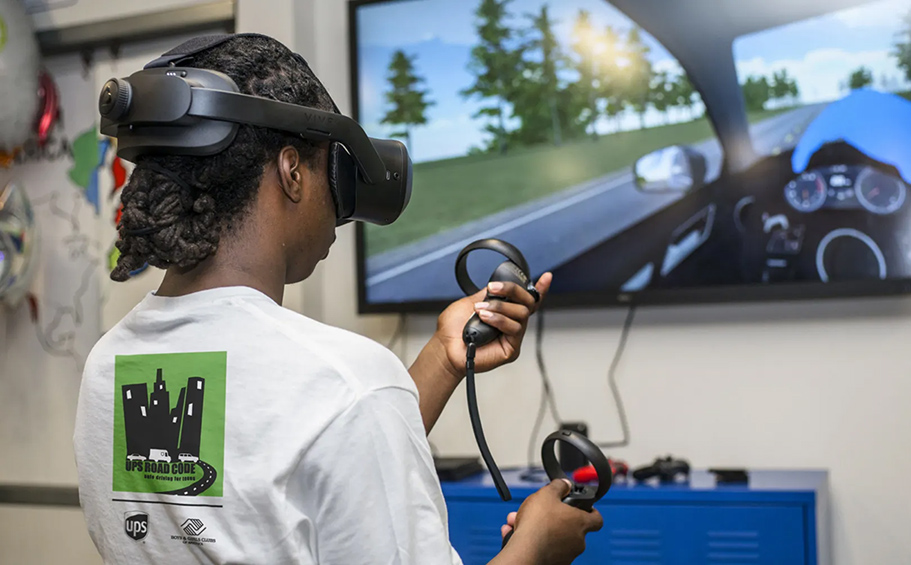
Grandpa Creates Hologram Twin For Future Grandkids Using VR — from vrscout.com by Kyle Melnick
Not even death will stop this tech-savvy grandfather from meeting his great-grandchildren.

“I think it is a wonderful way to preserve my family’s history for future generations,” said Jerry while speaking to Jam Press. “To see myself like that, is just mind-blowing — it feels like watching a movie. By not just reading the words as in my memoir but to actually get the chance to see and hear me recalling the stories is just magical.”

Also from Kyle Melnick:

How VR/AR Technology Is Being Used To Treat Autism
XRHealth brings its unique VR/AR therapy to the United States.

Excerpt:

Previously available in Australia, the technology has been used to treat the effects of autism, from anxiety and stress to attention, memory, mobility/coordination, and frustration tolerance. XRHealth’s healthcare platform offers a variety of professional services. This includes one-on-one meet-ups with XRHealth therapists as well as virtual group sessions, all of which accessible remotely using modern VR headsets.


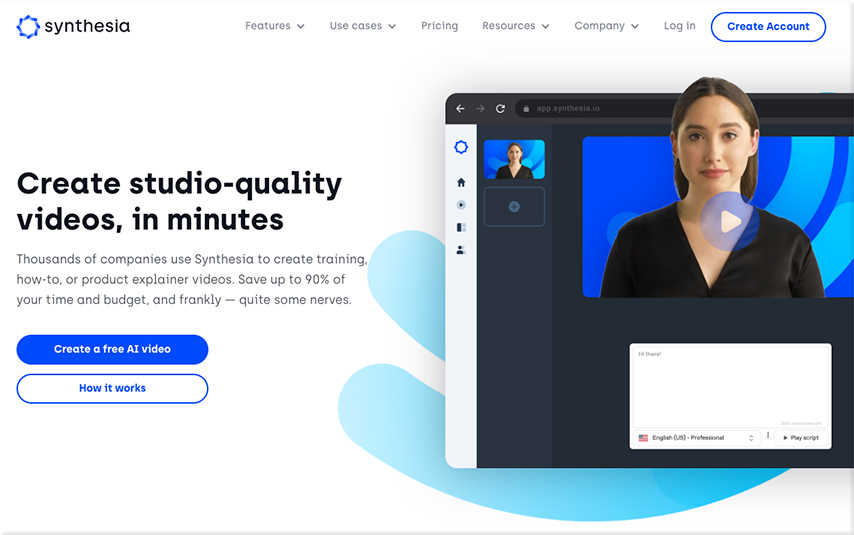
The Pros and Cons of Developing AI-Powered Corporate Training Videos with Synthesia — from blog.commlabindia.com by Saritha Esaboyuna
Synthesia is a game-changing invention that uses AI (Artificial Intelligence) to generate videos from text inputs. It enables designers to not only natively localise content but also to create and update existing films.

Excerpt:

You don’t need an editing studio, expensive equipment, or a high-end video editing program to design a video. All you need is Synthesia. Actors, cameras, and microphones are no longer required! You can produce high quality AI-enabled videos in over 50 languages just by adding text with Synthesia.


Also see:

From DSC:
Teachers and faculty members might want to try this out as well — especially if you have multiple languages being spoken in your classroom. And/or perhaps IT Departments and Help Desks could look at this as well.


Why One University Is Moving Toward a Subscription Model — a podcast from edsurge.com by Jeffrey R. Young

Excerpts:

One big theme in education-innovation circles is that the professional world is changing faster than ever, and so schools and colleges must adjust how they teach to meet those needs.

One college in St. Louis, Maryville University, is embracing that argument in a big way by revamping its curriculum and even changing its business model to include options like a subscription model—with the goal of helping its students get good jobs after graduation.

“By the end of this decade or before, students should pay for higher ed the way they pay for Netflix or their cell phone bill,” Lombardi says.

From DSC:
I thought this was an interesting conversation and I agreed with much of what Mark Lombardi, President of Maryville University, had to say. 

I appreciated Jeff’s attempts at trying to get Mark to hear that “learning styles” aren’t supported by the research. I wish Mark would have used the word “preferences” instead…as I do think learners have preferences when it comes to them learning about new topics.


We need to use more tools — that go beyond screen sharing — where we can collaborate regardless of where we’re at. [Christian]

From DSC:
Seeing the functionality in Freehand — it makes me once again think that we need to use more tools where faculty/staff/students can collaborate with each other REGARDLESS of where they’re coming in to partake in a learning experience (i.e., remotely or physically/locally). This is also true for trainers and employees, teachers and students, as well as in virtual tutoring types of situations. We need tools that offer functionalities that go beyond screen sharing in order to collaborate, design, present, discuss, and create things.  (more…)


From DSC:
Hmmm…many colleges and universities keep a close eye on their peers and often respond with similar strategies that their peers are pursuing. But who is an organization’s peer? The Chronicle of Higher Education‘s posting below — “How a College Decides Who Its Peers Are” — stated that “there is clearly no shared definition of what constitutes a peer institution.” 

Plus, I found this item especially interesting:

Harvard University selected only three peer institutions: Yale, Princeton, and Stanford. But 22 institutions, including Bowdoin, named Harvard as a peer. Bowdoin, a small, liberal-arts college with about 1,800 undergraduate students and no graduate programs, chose 98 “peers,” including the entire Ivy League and many large universities, some of which enroll more than 10,000 students. Bowdoin itself was picked by 35 institutions as a peer. All of them were small, liberal-arts colleges or universities that primarily serve undergraduates.

I have often thought that colleges and universities should care far less about what their peers are doing. Rather, they should move forward with their own solid visions, bold actions, and well-thought-through strategies — as there can be a great deal of danger and risk in the status quo.

Too many alternatives have been appearing — and will likely continue to appear — on the lifelong learning landscapes. Most likely, these new organizations will offer in-demand credentials/skills as well as the capabilities of helping people constantly reinvent themselves — with far less expensive price tags associated with these types of offerings.


How a College Decides Who Its Peers Are — from chronicle.com by Susan Poser
Questions of institutional identity are at the core of the process.

Excerpt (emphasis DSC):

The mismatch between whom an institution chose as peers, and the colleges that reciprocated, pervades the data set. It raises the question of how institutions designate peers, which is a mystery. In some cases it is likely to be decided by someone in the Office of Institutional Research or the provost’s office in response to the Ipeds survey, while in others perhaps some process leads to a consensus among administrators. Regardless, there is clearly no shared definition of what constitutes a peer institution.

Also relevant/see:


10 startups riding the wave of AI innovation — from venturebeat.com by Kolawole Samuel Adebayo

Excerpt:

Here are 10 AI startups that are demonstrating upward growth trajectories in a fast-paced market and whose CEOs have articulated to VentureBeat over the past few months a broader context to their key differentiators, strategies and traction.

Below are vital details on these 10 AI startups that are worth watching across diverse industries, including retail, finance, cybersecurity, devops and more. Each company is ranked by its total funding to date, with quotes and metrics supplied during interviews with VentureBeat.


Innovative and practical applications of the metaverse — from mckinsey.com

In this episode of the At the Edge podcast, McKinsey expert Richard Ward speaks with McKinsey’s Mina Alaghband.

Excerpts:

One of the things that we’ve learned during the pandemic is that if you put these metaverse design rooms up on the internet, your clients and other expert engineers can log in remotely, and the experience takes on the quality of Zoom in 3-D, which allows a new level of engineering to happen. The beauty of it is that people are able to do highly productive engineering design work without getting on an airplane. And that has a lot of rollover value for what we’re doing long term.

One of the great lessons we’ve had from the pandemic, as horrible as it’s been, is that things that people had said were impossible for decades are now possible. Like the idea that you can’t possibly have everybody not be in the office—it’s been proven wrong.

Also relevant/see:

 
© 2025 | Daniel Christian