


Cubo Design Architects celebrates traditional Japanese craft in Tokyo home — from dezeen.com by Jon Astbury

Cubo Design Architects celebrates traditional Japanese craft in Tokyo home — from dezeen.com by Jon Astbury
Accessibility Do’s and Don’ts for Website Navigation — from boia.org
Excerpt:
If people can’t navigate your website, they can’t use it — and you miss an opportunity to connect with your audience.
Navigation controls can present a significant barrier to people with disabilities, making it difficult for them to find and interact with the content they need.
The Web Content Accessibility Guidelines (WCAG) includes a list of success criteria to ensure that navigation controls are operable (they don’t require interactions that a user can’t perform). These criteria are put in place to assist users with a wide variety of abilities, including individuals who use assistive technologies (AT).
If you’re new to web accessibility, WCAG’s requirements may seem overwhelming. Fortunately, they’re based on simple principles — and by understanding a few basic concepts, you can avoid common mistakes.
Also relevant/see:
Assistive Technology: What’s an “Alternative Input Device?” — from boia.org
Examples:
Three-Dimensional Narratives Spring from Antique Books in Emma Taylor’s Meticulous Paper Sculptures — from thisiscolossal.com by Kate Mothes


Also see:
Barry Underwood Illuminates Human Presence in the Landscape in Geometric Light Sculptures — from thisiscolossal.com by Kate Mothes


10 unexpected prompts to try in ChatGPT — from classtechtips.com by Monica Burns
Excerpts:
In this episode, I share ChatGPT prompts for teachers you can use to save time and make the most of this free artificial intelligence tool. You’ll also hear tips for generating and refining prompts to optimize your workflow this school year, along with 10 prompts to try in ChatGPT that may surprise you!
Tips for Prompts to Try in ChatGPT
Dozens of Photographers Gather For ‘100 For the Ocean’ to Support Marine Research and Advocacy — from thisiscolossal.com by Kate Mothes


Work Shift: How AI Might Upend Pay — from bloomberg.com by Jo Constantz
Excerpt:
This all means that a time may be coming when companies need to compensate star employees for their input to AI tools rather than their just their output, which may not ultimately look much different from their AI-assisted colleagues.
“It wouldn’t be far-fetched for them to put even more of a premium on those people because now that kind of skill gets amplified and multiplied throughout the organization,” said Erik Brynjolfsson, a Stanford professor and one of the study’s authors. “Now that top worker could change the whole organization.”
Of course, there’s a risk that companies won’t heed that advice. If AI levels performance, some executives may flatten the pay scale accordingly. Businesses would then potentially save on costs — but they would also risk losing their top performers, who wouldn’t be properly compensated for the true value of their contributions under this system.
US Supreme Court rejects computer scientist’s lawsuit over AI-generated inventions — from reuters.com by Blake Brittain
Excerpt:
WASHINGTON, April 24 – The U.S. Supreme Court on Monday declined to hear a challenge by computer scientist Stephen Thaler to the U.S. Patent and Trademark Office’s refusal to issue patents for inventions his artificial intelligence system created.
The justices turned away Thaler’s appeal of a lower court’s ruling that patents can be issued only to human inventors and that his AI system could not be considered the legal creator of two inventions that he has said it generated.
Deep learning pioneer Geoffrey Hinton has quit Google — from technologyreview.com by Will Douglas Heaven
Hinton will be speaking at EmTech Digital on Wednesday.
Excerpt:
Geoffrey Hinton, a VP and engineering fellow at Google and a pioneer of deep learning who developed some of the most important techniques at the heart of modern AI, is leaving the company after 10 years, the New York Times reported today.
According to the Times, Hinton says he has new fears about the technology he helped usher in and wants to speak openly about them, and that a part of him now regrets his life’s work.
***
In the NYT today, Cade Metz implies that I left Google so that I could criticize Google. Actually, I left so that I could talk about the dangers of AI without considering how this impacts Google. Google has acted very responsibly.
— Geoffrey Hinton (@geoffreyhinton) May 1, 2023
What Is Agent Assist? — from blogs.nvidia.com
Agent assist technology uses AI and machine learning to provide facts and make real-time suggestions that help human agents across retail, telecom and other industries conduct conversations with customers.
Excerpt:
Agent assist technology uses AI and machine learning to provide facts and make real-time suggestions that help human agents across telecom, retail and other industries conduct conversations with customers.
It can integrate with contact centers’ existing applications, provide faster onboarding for agents, improve the accuracy and efficiency of their responses, and increase customer satisfaction and loyalty.
From DSC:
Is this type of thing going to provide a learning assistant/agent as well?
A chatbot that asks questions could help you spot when it makes no sense — from technologyreview.com by Melissa Heikkilä
Engaging our critical thinking is one way to stop getting fooled by lying AI.
Excerpt:
AI chatbots like ChatGPT, Bing, and Bard are excellent at crafting sentences that sound like human writing. But they often present falsehoods as facts and have inconsistent logic, and that can be hard to spot.
One way around this problem, a new study suggests, is to change the way the AI presents information. Getting users to engage more actively with the chatbot’s statements might help them think more critically about that content.
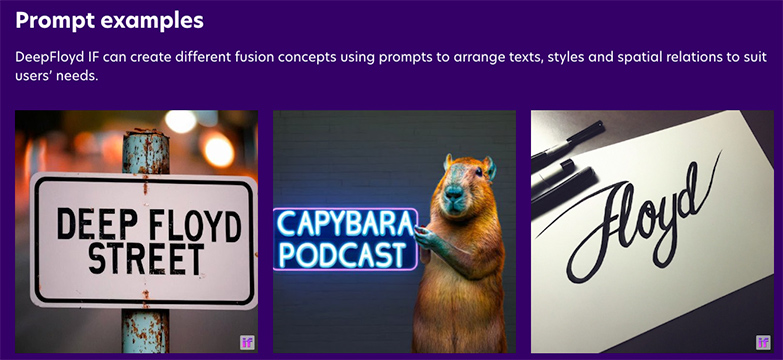
Stability AI releases DeepFloyd IF, a powerful text-to-image model that can smartly integrate text into images — from stability.ai
New AI Powered Denoise in PhotoShop — from jeadigitalmedia.org
In the most recent update, Adobe is now using AI to Denoise, Enhance and create Super Resolution or 2x the file size of the original photo. Click here to read Adobe’s post and below are photos of how I used the new AI Denoise on a photo. The big trick is that photos have to be shot in RAW.
From DSC:
Attention all school districts! Listen up! –> Top 10 Tips for Creating a Successful Onboarding Experience — from learningguild.com by Tara Roberson-Moore, PhD
Excerpts:
Did you know that 69% of employees say they are likely to stay with a company for a least three years after a great onboarding experience? (O.C.Tanner, 2018)
…
Did you know that new hires in companies with longer onboarding programs report being more proficient in their roles four months sooner than in companies with short onboarding programs? (O.C. Tanner, 2018)
Also relevant/see:
Analyze This — from learningguild.com by Tara Roberson-Moore
Excerpt:
Onboarding is a program. It is not one training event. It is also usually not one development event either—I have seen onboarding programs built in one full development phase and I have seen onboarding programs divided into several development phases (costs are one factor, but project fatigue is also a factor). Due to the sheer size of a long-term initiative like onboarding, getting everything in place before development begins is imperative to success.
Analysis results in a plan. As we have mentioned before, you get the blueprint of the house—not the house. Remember, not even paint colors are being picked yet!
If you are thinking about creating an onboarding program, whether on your own or working with a really cool and fun troupe of elves, start by asking questions…
Cognitive Load and Virtual Training — from learningguild.com by Pamela Wise
Excerpt:
As designers navigate the waters of building learning interventions that utilize virtual technology, they must keep the learner’s cognitive load low in order to increase learning retention. As with all instructional design, virtual training should utilize effective instructional methods. However, studies have shown that some virtual training strategies, such as immersion, may increase the cognitive load in one setting but decrease it in another.
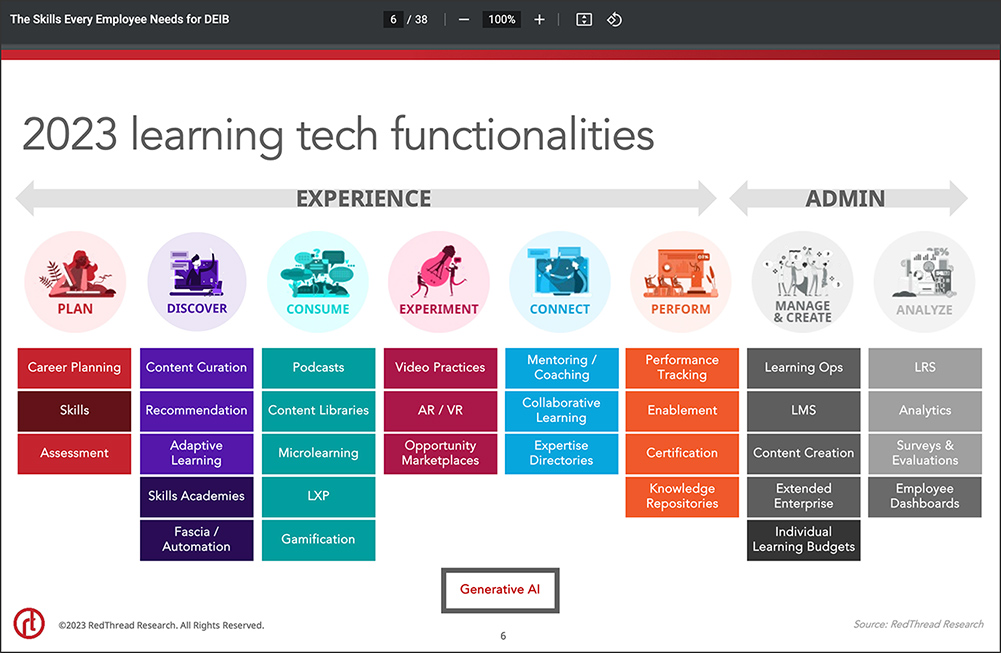
With thanks to Stephen Downes for this resource