Students can use AI on applications, Arizona State law school says — from reuters.com by Sara Merken

July 28 (Reuters) – A week after The University of Michigan Law School banned the use of popular artificial intelligence tools like ChatGPT on student applications, at least one school is going in the other direction.

The Sandra Day O’Connor College of Law at Arizona State University said on Thursday that prospective students are explicitly allowed to use generative artificial intelligence tools to help draft their applications.


Gen-AI Movie Trailer For Sci Fi Epic “Genesis” — from forbes.com by Charlie Fink

The movie trailer for “Genesis,” created with AI, is so convincing it caused a stir on Twitter [on July 27]. That’s how I found out about it. Created by Nicolas Neubert, a senior product designer who works for Elli by Volkswagen in Germany, the “Genesis” trailer promotes a dystopian sci-fi epic reminiscent of the Terminator. There is no movie, of course, only the trailer exists, but this is neither a gag nor a parody. It’s in a class of its own. Eerily made by man, but not.


Google’s water use is soaring. AI is only going to make it worse. — from businessinsider.com by Hugh Langley

Google just published its 2023 environmental report, and one thing is for certain: The company’s water use is soaring.

The internet giant said it consumed 5.6 billion gallons of water in 2022, the equivalent of 37 golf courses. Most of that — 5.2 billion gallons — was used for the company’s data centers, a 20% increase on the amount Google reported the year prior.


We think prompt engineering (learning to converse with an AI) is overrated. — from the Neuron

We think prompt engineering (learning to converse with an AI) is overrated. Yup, we said it. We think the future of chat interfaces will be a combination of preloading context and then allowing AI to guide you to the information you seek.

From DSC:
Agreed. I think we’ll see a lot more interface updates and changes to make things easier to use, find, develop.


Radar Trends to Watch: August 2023 — from oreilly.com by Mike Loukides
Developments in Programming, Web, Security, and More

Artificial Intelligence continues to dominate the news. In the past month, we’ve seen a number of major updates to language models: Claude 2, with its 100,000 token context limit; LLaMA 2, with (relatively) liberal restrictions on use; and Stable Diffusion XL, a significantly more capable version of Stable Diffusion. Does Claude 2’s huge context really change what the model can do? And what role will open access and open source language models have as commercial applications develop?


Try out Google ‘TextFX’ and its 10 creative AI tools for rappers, writers — from 9to5google.com by Abner Li; via Barsee – AI Valley 

Google Lab Sessions are collaborations between “visionaries from all realms of human endeavor” and the company’s latest AI technology. [On 8/2/23], Google released TextFX as an “experiment to demonstrate how generative language technologies can empower the creativity and workflows of artists and creators” with Lupe Fiasco.

Google’s TextFX includes 10 tools and is powered by the PaLM 2 large language model via the PALM API. Meant to aid in the creative process of rappers, writers, and other wordsmiths, it is part of Google Labs.


From DSC:
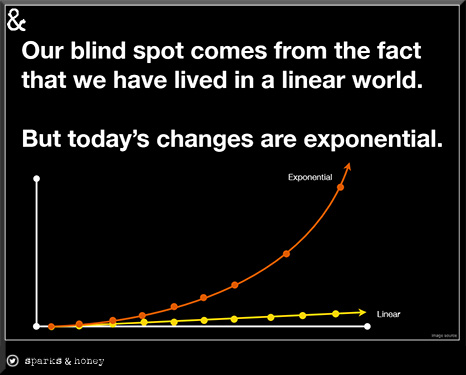
Which reminds me of some graphics:

The pace has changed -- don't come onto the track in a Model T


From DSC:
Time will tell.

Per Jeff Maggioncalda, Coursera CEO: “This system-wide industry micro-credential program sets an innovative blueprint for the future of higher education.”

***

University Of Texas, Coursera Launch Historic Micro-credential Partnership — from forbes.com by Michael T. Nietzel

The University of Texas and Coursera, the online learning platform and a pioneer of Massive Open Online Courses (MOOCS), are launching a large-scale, industry-recognized micro-credential program. The collaboration was announced today in a blogpost by Coursera.

Through the new partnership, every student, faculty, and staff (and even alumni) across all nine universities in the University of Texas (UT) System will gain access to Courser’s Career Academy for no additional cost to them.


The future of learning and skilling with AI in the picture — from chieflearningofficer.com by Janice Burns
Janice Burns, chief transformation officer at Degreed, looks at how AI is impacting the future of learning and skilling.

Sections include:

  • Saving L&D time
  • Recommending and personalizing
  • ‘As you need it’ learning 
  • A career coach for everyone?
  • More advances coming
  • Be mindful of the limitations
  • Remain open to the changes coming

Also relevant/see:


Who Will Train Digital (Legal) Talent At Scale? — from forbes.com by Mark A. Cohen

Excerpt (emphasis DSC):

The urgency to fill existing and prospective positions with digital talent and to upskill those already in the workforce are among the reasons why leading companies have boldly assessed and transformed their enterprise talent management strategies. Some key initiatives leading companies are undertaking include:

  • Direct involvement by the C-Suite in the formulation of the enterprise talent strategy and lifecycle;
  • A paradigmatic hiring shift from diplomas to skills;
  • Increased investment in upskilling and career advancement to promote retention and to identify high-performers early on;
  • Targeted collaboration with universities focused on training in areas of existing and projected talent supply demand
  • Promoting a learning-for-life mindset and encouraging creative thinking, cross-cultural collaboration, and forging a culture that values these and other humanistic values.
  • Collaborating with other companies to create joint solutions for fulfilling skill demand

Practical, powerful employee education: How interactivity supports greater learning online — from chieflearningofficer.com by Natasha Nicholson

Consider this comparison: In more passive online learning, a participant will learn primarily by listening, watching and observing. Conversely, in an interactive model, the participant will be expected to engage with a story or situation by being asked to make choices that will show potential consequences.

Here are some of the elements that, when combined, make interactive learning especially effective:


Skilled Trades School — from uei.edu with thanks to Noah Adam for this resource

Excerpt:

UEI College provides students with a wide range of career training opportunities for those who enjoy hands-on work and are interested in building, fixing, or designing things. UEI College’s programs range from HVAC Training to Automotive Technician Training. Our skilled trades programs are designed to equip you with the knowledge and skills needed to succeed in your chosen trade. With experienced instructors, hands-on training, and suitable facilities, we are able to provide you with a comprehensive education that prepares you for a successful career in the skilled trades.


Navigating the Future of Learning in a Digitally-Disrupted World — from thinklearningstudio.org by Russell Cailey

Are we on the frontier of unveiling an unseen revolution in education? The hypothesis is that this quiet upheaval’s importance is far more significant than we imagine. As our world adjusts, restructures, and emerges from a year which launched an era of mass AI, so too does a new academic year dawn for many – with hope and enthusiasm about new roles, titles, or simply just a new mindset. Concealed from sight, however, I believe a significant transformative wave has started and will begin to reshape our education systems and push us into a new stage of innovative teaching practice whether we desire it or not. The risk and hope is that the quiet revolution remains outside the regulator’s and ministries’ purview, which could risk a dangerous fragmentation of education policy and practice, divorced from the actualities of the world ‘in and outside school’.

“This goal can be achieved through continued support for introducing more new areas of study, such as ‘foresight and futures’, in the high school classroom.”


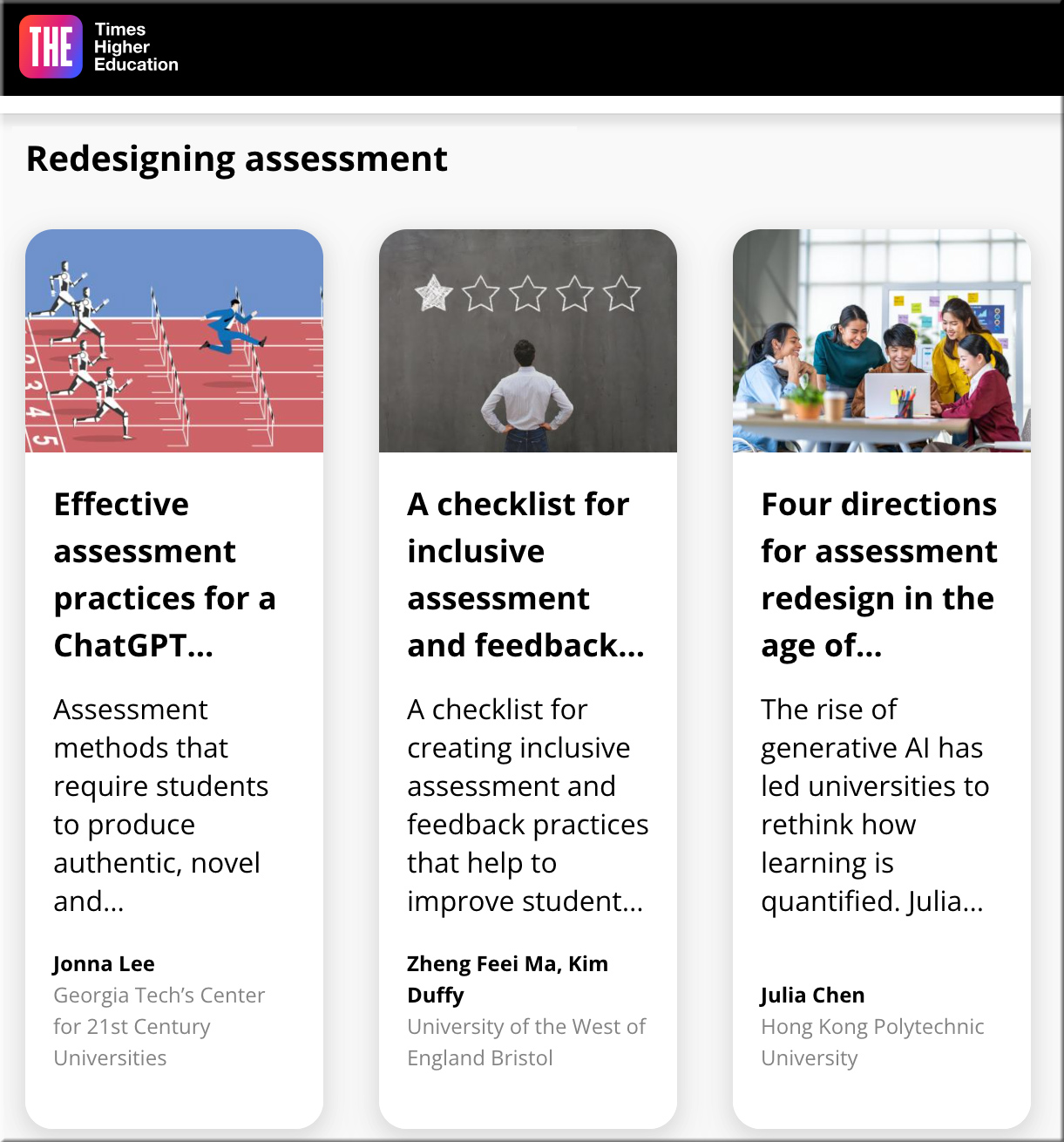
Four directions for assessment redesign in the age of generative AI— from timeshighereducation.com by Julia Chen
The rise of generative AI has led universities to rethink how learning is quantified. Julia Chen offers four options for assessment redesign that can be applied across disciplines

Direction 1: From written description to multimodal explanation and application

Direction 2: From literature review alone to referencing lectures

Direction 3: From presentation of ideas to defence of views

Direction 4: From working alone to student-staff partnership


15 Inspirational Voices in the Space Between AI and Education — from jeppestricker.substack.com by Jeppe Klitgaard Stricker
Get Inspired for AI and The Future of Education.

If you are just back from vacation and still not quite sure what to do about AI, let me assure you that you are not the only one. My advice for you today is this: fill your LinkedIn-feed and/or inbox with ideas, inspirational writing and commentary on AI. This will get you up to speed quickly and is a great way to stay informed on the newest movements you need to be aware of.

My personal recommendation for you is to check out these bright people who are all very active on LinkedIn and/or have a newsletter worth paying attention to. I have kept the list fairly short – only 15 people – in order to make it as easy as possible for you to begin exploring.


Universities say AI cheats can’t be beaten, moving away from attempts to block AI (Australia) — from abc.net.au by Jake Evans

Key points:

  • Universities have warned against banning AI technologies in academia
  • Several say AI cheating in tests will be too difficult to stop, and it is more practical to change assessment methods
  • The sector says the entire nature of teaching will have to change to ensure students continue to effectively learn

aieducator.tools


Navigating A World of Generative AI: Suggestions for Educators — from nextlevellab.gse.harvard.edu by Lydia Cao and Chris Dede

Understanding the nature of generative AI is crucial for educators to navigate the evolving landscape of teaching and learning. In a new report from the Next Level Lab, Lydia Cao and Chris Dede reflect on the role of generative AI in learning and how this pushes us to reconceptualize our visions of effective education. Though there are concerns of plagiarism and replacement of human jobs, Cao and Dede argue that a more productive way forward is for educators to focus on demystifying AI, emphasizing the learning process over the final product, honoring learner agency, orchestrating multiple sources of motivation, cultivating skills that AI cannot easily replicate, and fostering intelligence augmentation (IA) through building human-AI partnerships.

Navigating A World of Generative AI: Suggestions for Educators -- by Lydia Cao and Chris Dede


20 CHATGPT PROMPTS FOR ELA TEACHERS — from classtechtips.com by Dr. Monica Burns

Have you used chatbots to save time this school year? ChatGPT and generative artificial intelligence (AI) have changed the way I think about instructional planning. Today on the blog, I have a selection of ChatGPT prompts for ELA teachers.

You can use chatbots to tackle tedious tasks, gather ideas, and even support your work to meet the needs of every student. In my recent quick reference guide published by ISTE and ASCD, Using AI Chatbots to Enhance Planning and Instruction, I explore this topic. You can also find 50 more prompts for educators in this free ebook.


Professors Craft Courses on ChatGPT With ChatGPT — from insidehighered.com by Lauren Coffey
While some institutions are banning the use of the new AI tool, others are leaning into its use and offering courses dedicated solely to navigating the new technology.

Maynard, along with Jules White at Vanderbilt University, are among a small number of professors launching courses focused solely on teaching students across disciplines to better navigate AI and ChatGPT.

The offerings go beyond institutions flexing their innovation skills—the faculty behind these courses view them as imperative to ensure students are prepared for ever-changing workforce needs.


GPT-4 can already pass freshman year at Harvard | professors need to adapt to their students’ new reality — fast — from chronicle.com by Maya Bodnick (an undergraduate at Harvard University, studying government)

A. A. A-. B. B-. Pass.

That’s a solid report card for a freshman in college, a respectable 3.57 GPA. I recently finished my freshman year at Harvard, but those grades aren’t mine — they’re GPT-4’s.

Three weeks ago, I asked seven Harvard professors and teaching assistants to grade essays written by GPT-4 in response to a prompt assigned in their class. Most of these essays were major assignments which counted for about one-quarter to one-third of students’ grades in the class. (I’ve listed the professors or preceptors for all of these classes, but some of the essays were graded by TAs.)

Here are the prompts with links to the essays, the names of instructors, and the grades each essay received…

The impact that AI is having on liberal-arts homework is indicative of the AI threat to the career fields that liberal-arts majors tend to enter. So maybe what we should really be focused on isn’t, “How do we make liberal-arts homework better?” but rather, “What are jobs going to look like over the next 10–20 years, and how do we prepare students to succeed in that world?”


The great assessment rethink — from timeshighereducation.com by
How to measure learning and protect academic integrity in the age of ChatGPT

Items from Times Higher Education re: redesigning assessment


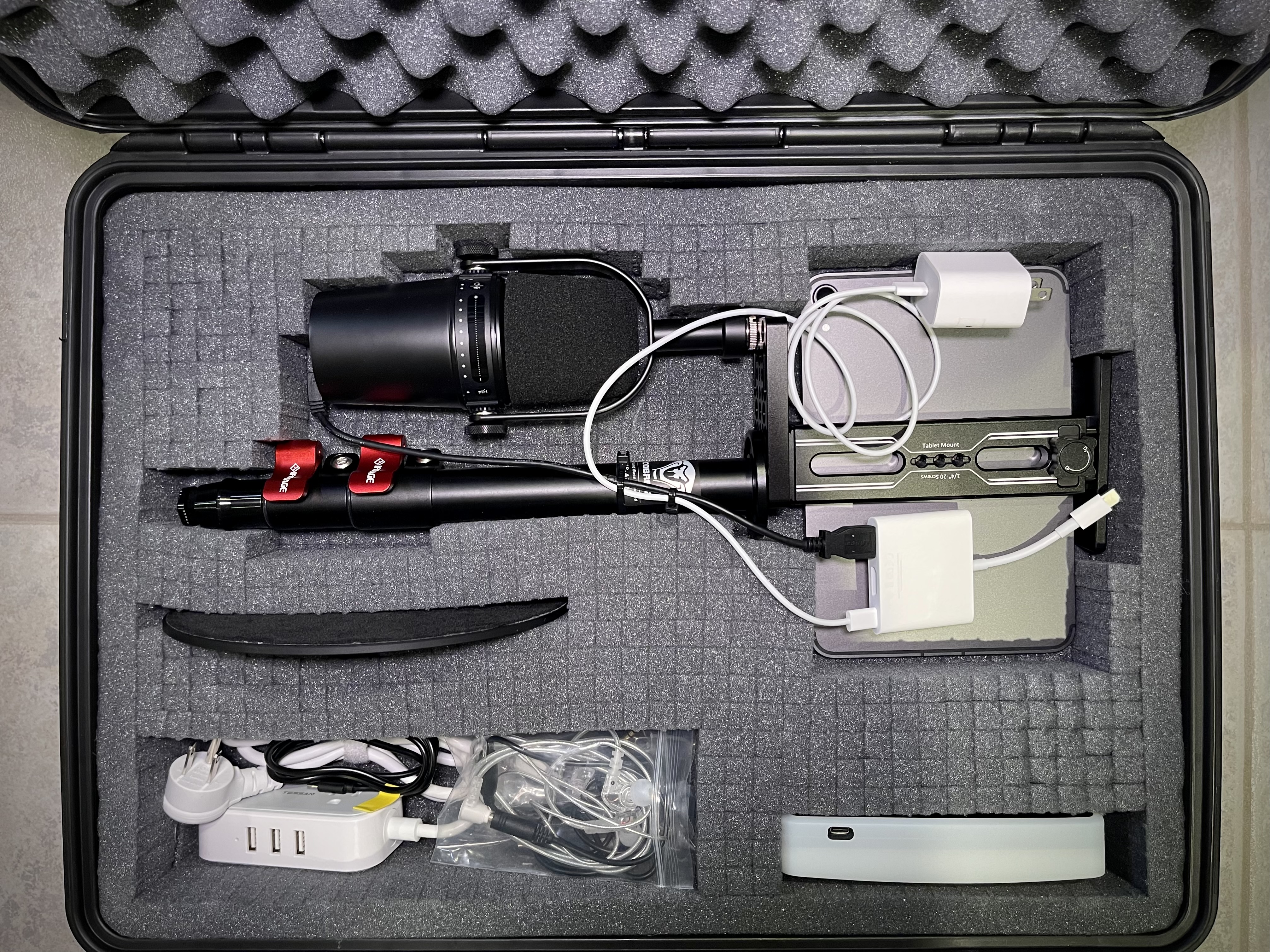
A cam/mic/light/teleprompter remote kit for non-tech-savvy guests, including Shure MV7 — from provideocoalition.com by Allan Tépper

Excerpt (emphasis DSC):

Inspired by my recent Review: Shure MV7 dynamic hybrid studio microphone – near, far and beyond, Beaker Films of Fairfield, Connecticut, US has developed and deployed a first batch of 10 kits to capture remote conversations from different locations worldwide. Beaker Films is frequently contracted to record remote interviews or testimonials from medical professionals. For this project, Beaker Films’ clients wanted consistent, high quality audio and video, but with 3 additional challenges: they preferred to have no visible microphone in the shot, they needed a teleprompter function and the whole kit needed to be as simple as possible for non-technical guests.


Speaking of A/V-related items, also see:

Seven worlds one planet at the BBC Earth Experience — from inavateonthenet.net by Paul Milligan

‘Holographic’ animal-free zoo opens in Australia — from inavateonthenet.net

XR Lab opens in UK college — from inavateonthenet.net

West Suffolk College in the UK has opened its Extended Reality Lab (XR Lab), the facilities comprise of four distinct areas: an Immersion Lab, a Collaboration Theatre, a Green Room, and a Conference Room. The project was designed by architects WindsorPatania for Eastern Colleges Group.

CJP to create virtual studio for Solent University — from inavateonthenet.net

Systems integrator CJP Broadcast Service Solutions, has won a tender to build a virtual production environment for Solent University in the UK.

The new facilities, converted from an existing studio space, will provide students on the film production courses with outstanding opportunities to develop their creative output.


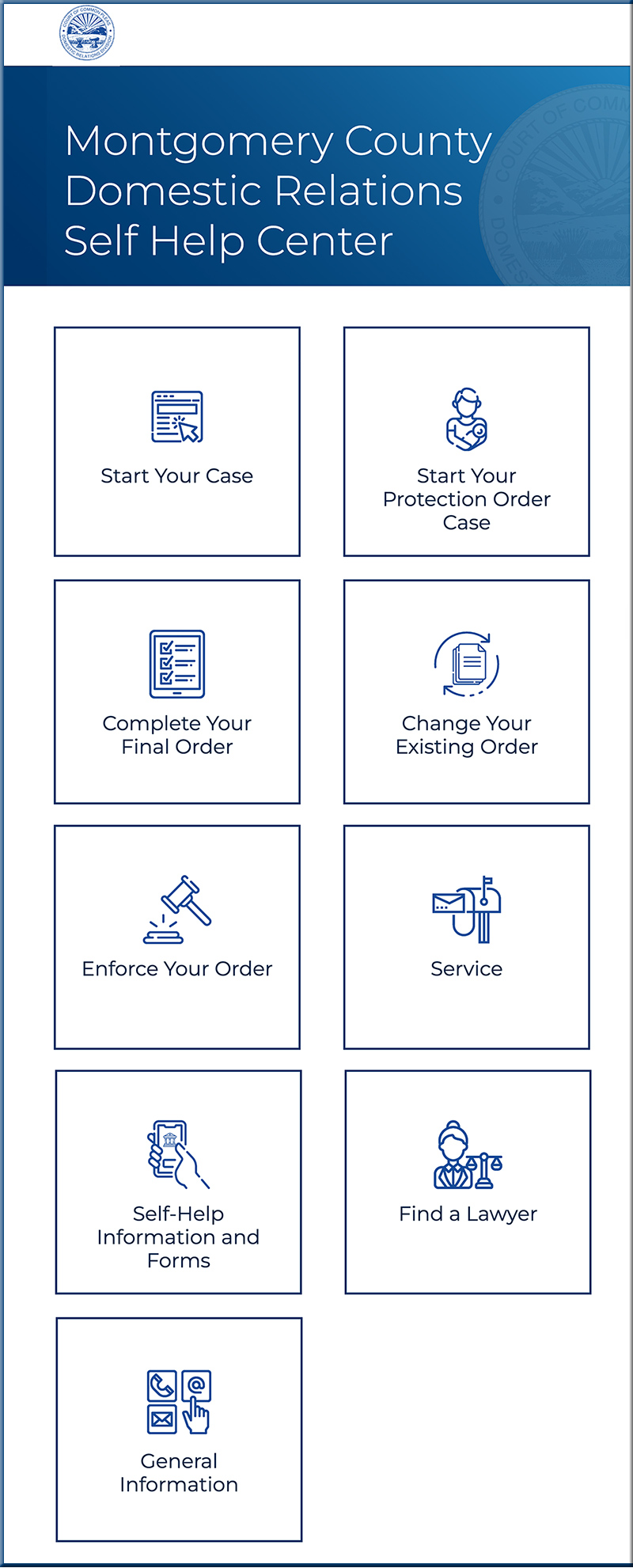
New virtual legal tool launching in Montgomery County to help people who can’t afford legal representation — from wdtn.com by Riley Phillips

DAYTON, Ohio (WDTN) — People living in Montgomery County now have access to a new legal tool.

Filing for divorce, changing custody of a child, or taking action in a domestic violence case is not easy, especially for people who cannot afford a lawyer. Susan Choe is the Executive Director of Ohio Legal Help.

“That’s a complex thing for folks who’ve never gone through the legal system, don’t know how to complete court forms,” Choe explained.

Seventeen percent of people in Montgomery County live below the federal poverty line. Ohio Legal Help teamed up with the Montgomery County Domestic Relations Court to create a virtual tool to make sure sure low income residents get the legal help they need. Choe said the website takes people through each part of the legal process. It also helps people fill out forms right there on the site.

Montgomery County Domestic Relations Self Help Center -- DC: We need more of these!!!


Post-prison job training — hechingerreport.org by Olivia Sanchez and Tara García Mathewson

We’ve known for a long time that higher education can play a huge role in helping people who serve time in prison get back on their feet. Research shows that higher-ed attainment is directly correlated with a lower likelihood of being reincarcerated, as is stable employment.

But people getting out of prison face many obstacles in finding jobs, and lack of educational opportunities is just part of the issue. A patchwork of more than 14,000 federal, state and local laws and regulations restricts individuals who have arrest and conviction histories from getting licensed in certain fields. Here’s some of what my reporting found about how pervasive this problem is and why it matters:


Disconnect grows between law firm service and client expectation, survey finds — from legaltechnology.com by Caroline Hill

Over 90% of in-house counsel and three quarters of private practice lawyers said that the legal sector is slow to embrace data, technology and new delivery models – a significant increase on the 64% who felt the same way last year.

In terms of the disconnect, 96% of in-house counsel agreed with the statement that what law firms provide is out of kilter with what clients expect. The majority (78%) of private practice lawyers also largely agreed.


ndaOK Unleashes Next-Level Efficiency in Legal Tech with GPT-4 Powered NDA Review — from legaldive.com by Christina Pennell
AI-driven legal tool promises to reduce NDA review times by over 90%

AUSTIN, Tex. —  ndaOK, an innovator in AI-powered legal technology, today announces the launch of its next-generation non-disclosure agreement (NDA) review system. This advanced solution leverages OpenAI’s GPT-4 large multimodal model, a first among legal technology companies, offering unprecedented performance and efficiency in reviewing NDAs.

Capitalizing on the computational power and versatility of GPT-4, ndaOK accurately reviews and edits documents based on a user’s pre-determined requirements without the need for human assistance or input. This unique capability makes ndaOK faster and easier to deploy than any other AI-based contract review solution.


And here are two relevant postings that I missed a while back:

ANALYSIS: Meet the Law Schools Leading the Way in Innovation — from news.bloomberglaw.com by Francis Boustany

As law firms, businesses, and their clients adapt to the new realities of the legal and business worlds, law schools must prepare students in new ways—beyond traditional law school curricula and teaching methods—to give students an experience and education that better prepares them for their post-graduation careers.

Bloomberg Law launched its inaugural Law School Innovation Program as a means of promoting, acknowledging, and connecting the law schools that are innovating in the legal education space and providing their students with new ways of learning the law.

In this reimagined version of law school, students are taught to have ‘an entrepreneur’s mind’ — from fastcompany.com by Grace Buono
The University of Richmond program asks students not only to think like lawyers, but as entrepreneurs.

The demand for good lawyers is nothing new and, each year, law schools churn out graduates equipped with virtually the same skills as decades of law students before them. But one school is trying to change that.

The University of Richmond’s Legal Business Design Hub has students focus on the strategy, design, and operations of legal services in addition to their regular coursework, applying what the program calls “an entrepreneur’s mind” to their studies.


Student loan debt: Averages and other statistics in 2023 — from usatoday.com by Rebecca Safier and Ashley Harrison; via GSV

Excerpt:

The cost of college has more than doubled over the past four decades — and student loan borrowing has risen along with it. The student loan debt balance in the U.S. has increased by 66% over the past decade, and it now totals more than $1.77 trillion, according to the Federal Reserve.

Here’s a closer look at student loan debt statistics in the U.S. today, broken down by age, race, gender and other demographics.

In the 2020-2021 academic year, 54% of bachelor’s degree students who attended public and private four-year schools graduated with student loans, according to the College Board. These students left school with an average balance of $29,100 in education debt.

From DSC:
With significant monthly payments, many graduates HAVE TO HAVE good jobs that pay decent salaries. This is an undercurrent flowing through the higher ed learning ecosystem — with ramifications for what students/families/guardians expect from their investments.


‘Pracademics,’ professors who work outside the academy, win new respect — from washingtonpost.com by Jon Marcus
What’s in a word? A way to help impatient college students better connect to jobs.

Excerpts (emphasis DSC):

Among its approaches, the university focuses on having students learn from people like Taylor, who work or have worked in the fields about which they teach. Sheffield Hallam even has a catchy word to describe these practical academics: “pracademics.”

American universities have pracademics, too, of course. They’re among the more than 710,000 part-time and non-tenure-track faculty members who now make up some 61 percent of all faculty, according to the American Association of University Professors. Other adjectives for them include “adjunct,” “casual,” “contingent,” “external” and “occasional.”

From DSC:
For several years now I’ve thought that adjuncts are the best bet for our current traditional institutions of higher education to remain relevant and have healthier enrollments (i.e., sales) as well as offer better ROI’s that the students are looking for. Why? Because adjuncts bring current, real-world expertise to the classroom.

But the problem here is that many of these same institutions have treated adjunct faculty members poorly. Adjunct faculty members are often viewed as second-class citizens in many colleges and universities — even though they provide the lion’s share of the teaching, grading, and assessing of students’ work. They don’t get benefits, they are paid far less than tenured faculty members, and they often don’t know if they will actually be teaching a course or not. Chances are they don’t get to vote or have a say within faculty senates and such. They are often without power…without a voice.

I’m not sure many adjunct faculty members in the U.S. will stay with these institutions if something better comes around in the way of other alternatives.


Colgate Adds Trade School to Higher Education Employee Benefit — from colgate.edu by Daniel DeVries; via Brandon Busteed on LinkedIn

Excerpt (emphasis DSC):

One of Colgate University’s most important employee benefits has been expanded to support employee children as they seek trade or vocational education. 

Colgate, like many leading universities, offers financial support for employee children who attend an accredited college or university in pursuit of an undergraduate degree. Now, at the University, this benefit has been expanded to include employee children who enroll in trade or vocational schools.


Coursera’s degree and certificate offerings help drive Q2 revenue growth — from highereddive.com by Natalie Schwartz
The MOOC platform’s CEO touted the company’s strategy of allowing students to stack short-term credentials into longer offerings.

Dive Brief:

  • Coursera’s revenue increased to $153.7 million in the second quarter of 2023, up 23% compared to the same period last year, according to the company’s latest financial results.
  • The increases were partly driven by strong demand for the MOOC platform’s entry-level professional certificates and rising enrollment in its degree programs.
  • During a call with analysts Thursday, Coursera CEO Jeff Maggioncalda attributed some of that enrollment growth to new offerings, which include a cybersecurity analyst certificate from Microsoft and artificial intelligence degree programs from universities in India and Colombia.

Are ‘quick wins’ possible in assessment and feedback? Yes, and here’s how — from timeshighereducation.com by Beverley Hawkins, Eleanor Hodgson, Oli Young
It takes coordination, communication, and credibility to implement quick improvements in assessment and feedback, as a team from the University of Exeter explain 

One way to establish this is to form an “assessment and feedback expert group”. Bringing together assessment expertise from educators and academic development specialists, and student participants across the institution establishes a community of practice beyond those in formal leadership roles, who can share their experience and bring opportunities for improvement back into their local networks.

Focusing the group on “quick wins” can encourage discussion to address specific tips and tricks that educators can use without changing their assessment briefs and without significant preparation.

Also re: providing feedback see:

Five common misconceptions on writing feedback — from timeshighereducation.com by Rolf Norgaard , Stephanie Foster
Misapprehensions about responding to and grading writing can prevent educators using writing as an effective pedagogical tool. Rolf Norgaard and Stephanie Foster set out to dispel them

Writing is essential for developing higher-order skills such as critical thinking, enquiry and metacognition. Common misconceptions about responding to and grading writing can get in the way of using writing as an effective pedagogical tool. Here, we attempt to dispel these myths and provide recommendations for effective teaching.


How generative AI like ChatGPT is pushing assessment reform — from timeshighereducation.com by Amir Ghapanchi
AI has brought assessment and academic integrity in higher education to the fore. Here, Amir Ghapanchi offers seven ways to evaluate student learning that mitigate the impact of AI writers

Recommended assessment types to mitigate AI use
These assessment types can help universities to minimise the adverse effects of GAI:

  • Staged assignments
  • In-class presentations followed by questions
  • Group projects
  • Personal reflection essays
  • Class discussion
  • In-class handwritten exams
  • Performance-based assessments

Instructors Rush to Do ‘Assignment Makeovers’ to Respond to ChatGPT — from edsurge.com by Jeffrey R. Young

(Referring to rubrics) But, Bruff says, “the more transparent I am in the assignment description, the easier it is to paste that description into ChatGPT to have it do the work for you. There’s a deep irony there.” 

Bruff, the teaching consultant, says his advice to any teacher is not to have an “us against them mentality” with students. Instead, he suggests, instructors should admit that they are still figuring out strategies and boundaries for new AI tools as well, and should work with students to develop ground rules for how much or how little tools like ChatGPT can be used to complete homework.


Nearly 90% of staff report major barriers between traditional and emerging academic programs — from universitybusiness.com by Alcino Donadel
Only 53% of respondents recognized an existing strategic initiative at their institution with regard to PCE units; 17% indicated none existed, and 30% were not sure.

In the American Association of Collegiate Registrars and Admissions Officers’ (AACRAO) new survey on how institutions are mediating PCE units’ coexistence with the academic registrar, they found that once-siloed PCE units that are now converging with the academic registrar are causing internal tension and confusion.

“Because the two units have been organically grown for years to be separate institutions and to offer different things, it is difficult to grow together without knowing the goals of each or having a relationship,” one anonymized respondent said in the report.


Generative AI and the future of work in America — from mckinsey.com by Kweilin Ellingrud, Saurabh Sanghvi, Gurneet Singh Dandona, Anu Madgavkar, Michael Chui, Olivia White, and Paige Hasebe

At a glance

  • During the pandemic (2019–22), the US labor market saw 8.6 million occupational shifts, 50 percent more than in the previous three-year period.
  • By 2030, activities that account for up to 30 percent of hours currently worked across the US economy could be automated—a trend accelerated by generative AI.
  • Federal investment to address climate and infrastructure, as well as structural shifts, will also alter labor demand.
  • An additional 12 million occupational transitions may be needed by 2030.
  • The United States will need workforce development on a far larger scale as well as more expansive hiring approaches from employers.

Employers will need to hire for skills and competencies rather than credentials, recruit from overlooked populations (such as rural workers and people with disabilities), and deliver training that keeps pace with their evolving needs.


The AI-Powered, Totally Autonomous Future of War Is Here — from wired.com by Will Knight
Ships without crews. Self-directed drone swarms. How a US Navy task force is using off-the-shelf robotics and artificial intelligence to prepare for the next age of conflict.

From DSC:
Hhhhmmmmm…..not good. Is anyone surprised by this? No, I didn’t think so either. That’s why the United States and China are so heated up about semiconductor chips.


AI puts glitch in graduates’ employment plans — from hrdive.com by Ginger Christ
Recent grads are worried how AI will affect their career prospects, a new survey found.

Excerpt:

  • The proliferation of new technologies like generative artificial intelligence is making recent graduates uneasy, a new study released Thursday found. A third of the 1,000 people who graduated in the past year said they are second-guessing their career choice, while roughly half reported questioning their workforce preparedness and feeling threatened by AI, according to the 2023 Employability Report by Cengage Group, a global education technology company.

“The workplace has changed rapidly in the last few years, and now we are witnessing a new shift as AI begins to reshape worker productivity, job requirements, hiring habits and even entire industries,” Michael Hansen, Cengage Group CEO, said in a news release. 

Along these lines, also see:

AI Boom Creates Concerns for Recent Graduates — from insidehighered.com by  Lauren Coffey

More than half of recent graduates question whether they are properly prepared for the workforce in light of the rise of artificial intelligence, a survey finds.

There is also more of a preference for skills training credentials. Among employers, nearly 40 percent said skills training credentials are most important, while only 19 percent ranked a college degree as most important.

However, recent graduates did cite an issue with most higher education institutions’ ability to teach employability skills. In 2023, 43 percent of students said their degree program taught them the necessary skills for their first job, down 20 percentage points from 2022.


Instructure, Khan Academy Announce Major Partnership On AI Tutoring, Teaching
— from forbes.com by Derek Newton

The news is that Instructure, one of the few public education companies and the market leader in learning management with their signature product Canvas, struck a partnership with Khan Academy to create an AI-powered tutoring and teaching assistant tool – merging Khan’s innovative instructional content and Instructure’s significant reach, scale, and data insights. The partnership and related tools will be known as Khanmigo, according to the announcement.

On brand names alone, this is a big deal. On potential impact, it could be even bigger.


How To Use AI to Write Scenarios — from christytuckerlearning.com by Christy Tucker
How can you use AI to write scenarios for learning? Read this example with prompts and results using ChatGPT and Bard.

Excerpts:

So far, I have found these tools helpful in generating ideas, writing first drafts, and summarizing. They work better for general knowledge tasks than really specific topics unless I provide more details to them, which makes sense.

This post isn’t going to give you “5 magical prompts to instantly write scenarios for you” or anything like that. Instead, this is a “working out loud” post where I’ll share some prompts I have used.

Christy’s posting includes:

  1. “The Meeting from Hell”
  2. “The Backstabbing Coworker”
  3. “The Boss from Hell”
  4. “The Office Romance Gone Wrong”
  5. “The New Hire with Attitude”

Some potential tools for you to check out:


The Rise of the Talent Economy — from drphilippahardman.substack.com by Dr. Philippa Hardman
How Education & Training Will Dictate the Future & Impact of AI

“Talent, more than capital, will represent the critical factor of production.”

In short, the demand for AI skills requires a significant transformation in training and education models. To bridge the global skills gap, educational institutions, online learning providers, and employers must design and deliver training programs that cater to the rapidly evolving AI-driven labor market. 


How ChatGPT killed my discussion boards and prompted new prompts — from timeshighereducation.com by Sara Cline; per Robert Gibson on LinkedIn
Advice on learning and discussion prompts that require students to think beyond the remit of AI responses

Excerpts:

To combat this problem, we modified some of our prompts this summer to try to prevent students from using AI to avoid learning. I’m sharing some of our strategies in the hope that they help you out as you adapt your course to a world of generative AI.

  1. Use prompts that force a personal opinion.
  2. Have students include their source(s) as an attachment.
  3. Use current or local events.
  4. Have them take and caption a photo.
  5. Draw a diagram or chart.
  6. Build and explain a 3D model.
  7. Include timestamps from lecture videos.
  8. Scrap the discussion boards.

Dark web ChatGPT is here… — from therundown.ai

The Rundown: A new cybercrime generative AI tool called FraudGPT is being advertised on the Dark web and Telegram channels, offering offensive capabilities like crafting spear-phishing emails and creating undetectable malware.

Why it matters: Scammers can now look more realistic than ever before and at a larger scale. The sad truth is that the emergence of cybercrime AI tools like FraudGPT is just beginning.


From DSC:
If true and if it could help build and/or contribute to cloud-based learner profiles,  this could be huge.


Wayfair’s AI tool can redraw your living room and sell you furniture — from theverge.com by Wes Davis
The home decoration company’s new Decorify AI remodeling tool is clumsy but could be effective for visualization while remodeling.

A living room -- Wayfair is experimenting with using AI technologies to help people envision interior design moves

 
© 2025 | Daniel Christian