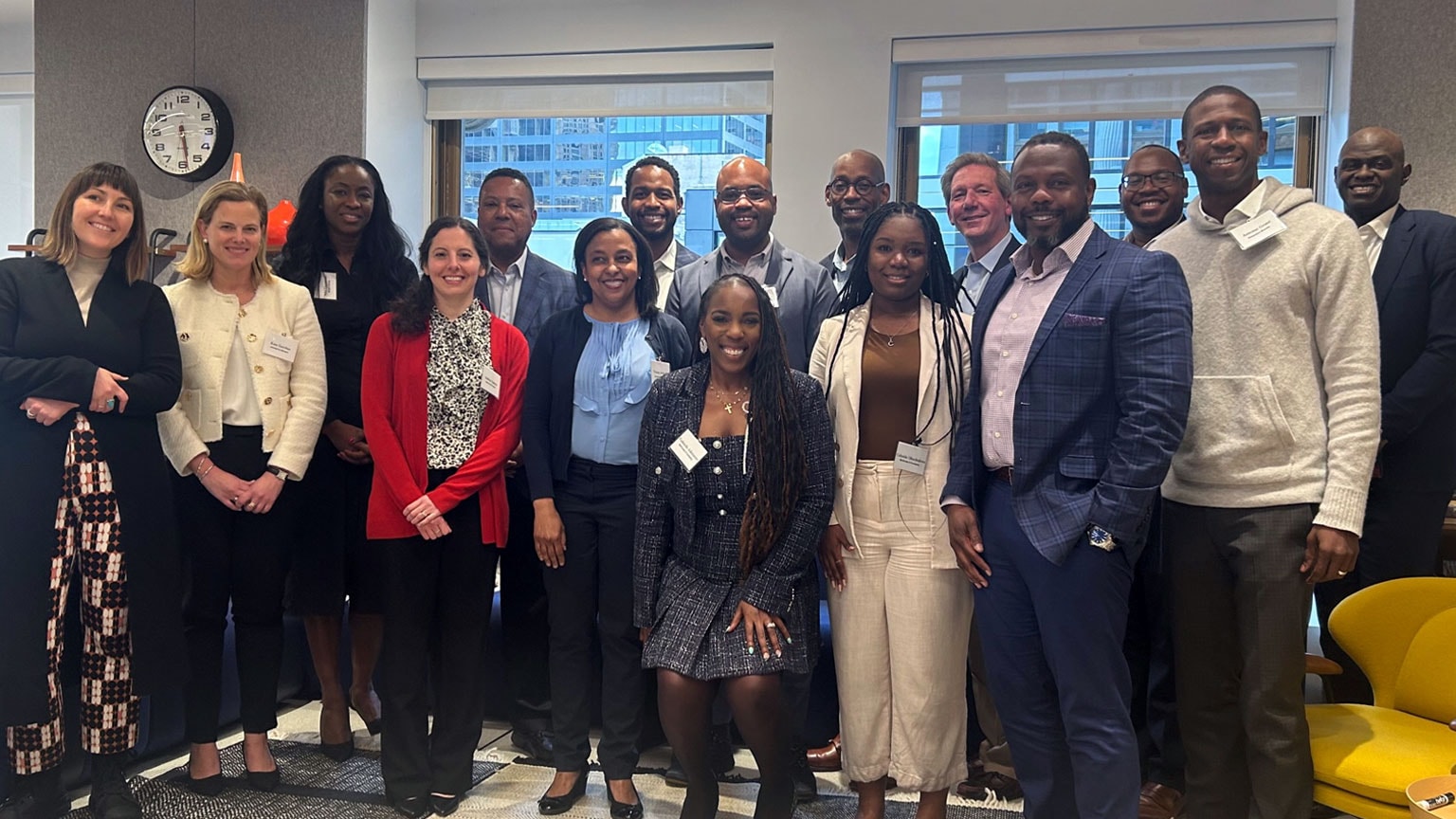
Creating an ‘ecosystem’ to close the Black talent gap in technology — from mckinsey.com (emphasis below from DSC)

Chris Perkins, associate partner, McKinsey: Promoting diversity in tech is more nuanced than driving traditional diversity initiatives. This is primarily because of the specialized hard and soft skills required to enter tech-oriented professions and succeed throughout their careers. Our research shows us that various actors, such as nonprofits, for-profits, government agencies, and educational institutions are approaching the problem in small pockets. Could we help catalyze an ecosystem with wraparound support across sectors?

To design this, we have to look at the full pipeline and its “leakage” points, from getting talent trained and in the door all the way up to the C-suite. These gaps are caused by lack of awareness and support in early childhood education through college, and lack of sponsorship and mentorship in early- and mid- career positions.


Thinking with Colleagues: AI in Education — from campustechnology.com by Mary Grush
A Q&A with Ellen Wagner

Wagner herself recently relied on the power of collegial conversations to probe the question: What’s on the minds of educators as they make ready for the growing influence of AI in higher education? CT asked her for some takeaways from the process.

We are in the very early days of seeing how AI is going to affect education. Some of us are going to need to stay focused on the basic research to test hypotheses. Others are going to dive into laboratory “sandboxes” to see if we can build some new applications and tools for ourselves. Still others will continue to scan newsletters like ProductHunt every day to see what kinds of things people are working on. It’s going to be hard to keep up, to filter out the noise on our own. That’s one reason why thinking with colleagues is so very important.

Mary and Ellen linked to “What Is Top of Mind for Higher Education Leaders about AI?” — from northcoasteduvisory.com. Below are some excerpts from those notes:

We are interested how K-12 education will change in terms of foundational learning. With in-class, active learning designs, will younger students do a lot more intensive building of foundational writing and critical thinking skills before they get to college?

  1. The Human in the Loop: AI is built using math: think of applied statistics on steroids. Humans will be needed more than ever to manage, review and evaluate the validity and reliability of results. Curation will be essential.
  2. We will need to generate ideas about how to address AI factors such as privacy, equity, bias, copyright, intellectual property, accessibility, and scalability.
  3. Have other institutions experimented with AI detection and/or have held off on emerging tools related to this? We have just recently adjusted guidance and paused some tools related to this given the massive inaccuracies in detection (and related downstream issues in faculty-elevated conduct cases)

Even though we learn repeatedly that innovation has a lot to do with effective project management and a solid message that helps people understand what they can do to implement change, people really need innovation to be more exciting and visionary than that.  This is the place where we all need to help each other stay the course of change. 


Along these lines, also see:


What people ask me most. Also, some answers. — from oneusefulthing.org by Ethan Mollick
A FAQ of sorts

I have been talking to a lot of people about Generative AI, from teachers to business executives to artists to people actually building LLMs. In these conversations, a few key questions and themes keep coming up over and over again. Many of those questions are more informed by viral news articles about AI than about the real thing, so I thought I would try to answer a few of the most common, to the best of my ability.

I can’t blame people for asking because, for whatever reason, the companies actually building and releasing Large Language Models often seem allergic to providing any sort of documentation or tutorial besides technical notes. I was given much better documentation for the generic garden hose I bought on Amazon than for the immensely powerful AI tools being released by the world’s largest companies. So, it is no surprise that rumor has been the way that people learn about AI capabilities.

Currently, there are only really three AIs to consider: (1) OpenAI’s GPT-4 (which you can get access to with a Plus subscription or via Microsoft Bing in creative mode, for free), (2) Google’s Bard (free), or (3) Anthropic’s Claude 2 (free, but paid mode gets you faster access). As of today, GPT-4 is the clear leader, Claude 2 is second best (but can handle longer documents), and Google trails, but that will likely change very soon when Google updates its model, which is rumored to be happening in the near future.


Next month Microsoft Corp. will start making its artificial intelligence features for Office widely available to corporate customers. Soon after, that will include the ability for it to read your emails, learn your writing style and compose messages on your behalf.

From DSC:
As readers of this blog know, I’m generally pro-technology. I see most technologies as tools — which can be used for good or for ill. So I will post items both pro and con concerning AI.

But outsourcing email communications to AI isn’t on my wish list or to-do list.


The Public Is Giving Up on Higher Ed — from chronicle.com by Michael D. Smith
Our current system isn’t working for society. Digital alternatives can change that.

Excerpts:

I fear that we in the academy are willfully ignoring this problem. Bring up student-loan debt and you’ll hear that it’s the government’s fault. Bring up online learning and you’ll hear that it is — and always will be — inferior to in-person education. Bring up exclusionary admissions practices and you’ll hear something close to, “Well, the poor can attend community colleges.”

On one hand, our defensiveness is natural. Change is hard, and technological change that risks making traditional parts of our sector obsolete is even harder. “A professor must have an incentive to adopt new technology,” a tenured colleague recently told me regarding online learning. “Innovation adoption will occur one funeral at a time.”

But while our defense of the status quo is understandable, maybe we should ask whether it’s ethical, given what we know about the injustice inherent in our current system. I believe a happier future for all involved — faculty, administrators, and students — is within reach, but requires we stop reflexively protecting our deeply flawed system. How can we do that? We could start by embracing three fundamental principles.

1. Digitization will change higher education.

2. We should want to embrace this change.

3. We have a way to embrace this change.

I fear that we in the academy are willfully ignoring this problem. Bring up student-loan debt and you’ll hear that it’s the government’s fault. Bring up online learning and you’ll hear that it is — and always will be — inferior to in-person education. Bring up exclusionary admissions practices and you’ll hear something close to, “Well, the poor can attend community colleges.”


Proverbs 4:23 

Above all else, guard your heart, for everything you do flows from it.

Psalms 115:1

Not to us, LORD, not to us but to your name be the glory, because of your love and faithfulness.

Psalms 117:1-2

Praise the LORD, all you nations; extol him, all you peoples. For great is his love toward us, and the faithfulness of the LORD endures forever.


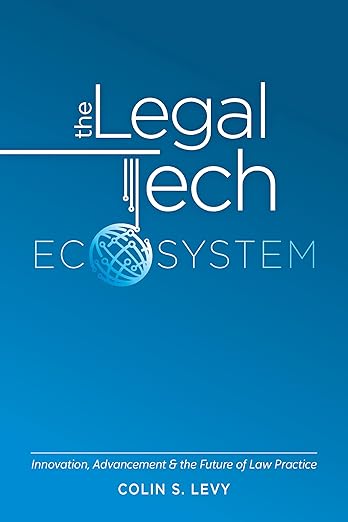
The Legal Tech Ecosystem: Innovation, Advancement & the Future of Law Practice — by Colin Levy (Author), Tatia Gordon-Troy (Editor), Bjarne Tellman (Foreword)

The Legal Tech Ecosystem: Innovation, Advancement & the Future of Law Practice

The legal landscape is evolving at an unprecedented pace, with the seismic shifts of recent years demanding a fresh perspective on the role of technology and innovation within the legal profession. The Legal Tech Ecosystem delves into this essential transformation, shedding light on the crucial interplay between law and technology in today’s complex world.

At its core, this book addresses the profound changes unfolding in the legal domain, driven by macro-economic forces. These changes have placed an ever-increasing burden on legal departments to accomplish more with fewer resources. A quartet of pillars—the explosive growth of regulations, the challenges posed by globalization, the convergence of risk dimensions, and the pressure on corporate profits—has created an environment where legal professionals must adapt swiftly to succeed.


Chatbot hallucinations are poisoning web search — from link.wired.com by Will Knight

The age of generative AI threatens to sprinkle epistemological sand into the gears of web search by fooling algorithms designed for a time when the web was mostly written by humans.


Meta Is Paying Creators Millions for AI Chatbots — from bensbites.beehiiv.com

Meta is shelling out millions to get celebrities to license their likenesses for AI characters in a bid to draw users to its platforms.

Why should I care?
Meta is still all-in on its vision for the metaverse and AI, despite its recent struggles. Meta seems willing to pay top dollar to partner with big names who can draw their massive audiences to use the AI avatars. If the celebrity avatars take off, they could be a blueprint for how creators monetize their brands in virtual worlds. There’s also a chance Meta pulls the plug on funding if user traction is low, just as it did with Facebook Watch originals.


The Post-AI Workplace — from drphilippahardman.substack.com by Dr. Philippa Hartman
SAP SuccessFactors’ new product offers the most comprehensive insight yet into the post-AI workplace & workforce

Skills Maps
AI will be used to categorise, track and analyse employee skills and competencies. This will enable orgs to build a clear idea of pockets of talent and areas in need of focus, providing HR, L&D professionals & managers with the opportunity to take a data-driven approach to talent development and capability building.

Roles Impacted: HR Analysts, Managers, Learning & Development Professionals


More than 40% of labor force to be affected by AI in 3 years, Morgan Stanley forecasts — from cnbc.com by Samantha Subin

Analyst Brian Nowak estimates that the AI technology will have a $4.1 trillion economic effect on the labor force — or affect about 44% of labor — over the next few years by changing input costs, automating tasks and shifting the ways companies obtain, process and analyze information. Today, Morgan Stanley pegs the AI effect at $2.1 trillion, affecting 25% of labor.

“We see generative AI expanding the scope of business processes that can be automated,” he wrote in a Sunday note. “At the same time, the input costs supporting GenAI functionality are rapidly falling, enabling a strongly expansionary impact to software production. As a result, Generative AI is set to impact the labor markets, expand the enterprise software TAM, and drive incremental spend for Public Cloud services.”

Speaking of the changes in the workplace, also see:


Sparking online joy: five ways to keep students engaged — from timeshighereducation.com by Andrés Ordorica, Marcello Crolla, and Lizzy Garner-Foy
Five guiding principles to use when designing and developing content for short online courses that will keep students engaged

Keeping students engaged is a big challenge and one that’s key to making a short online course successful. With a diverse audience, a variety of learning preferences and a multitude of distractions in the online space, how can you create a course that successfully retains students’ attention? Here, we explore five guiding principles for designing an online course that is engaging and enjoyable.

By offering bitesize learning, embracing variety and interactivity, infusing meaning into content, fostering a learning community and adhering to the “less is more” principle, you can create a course that captivates your audience and cultivates a lasting love for learning. 


Speaking of pedagogical-related items, also see:


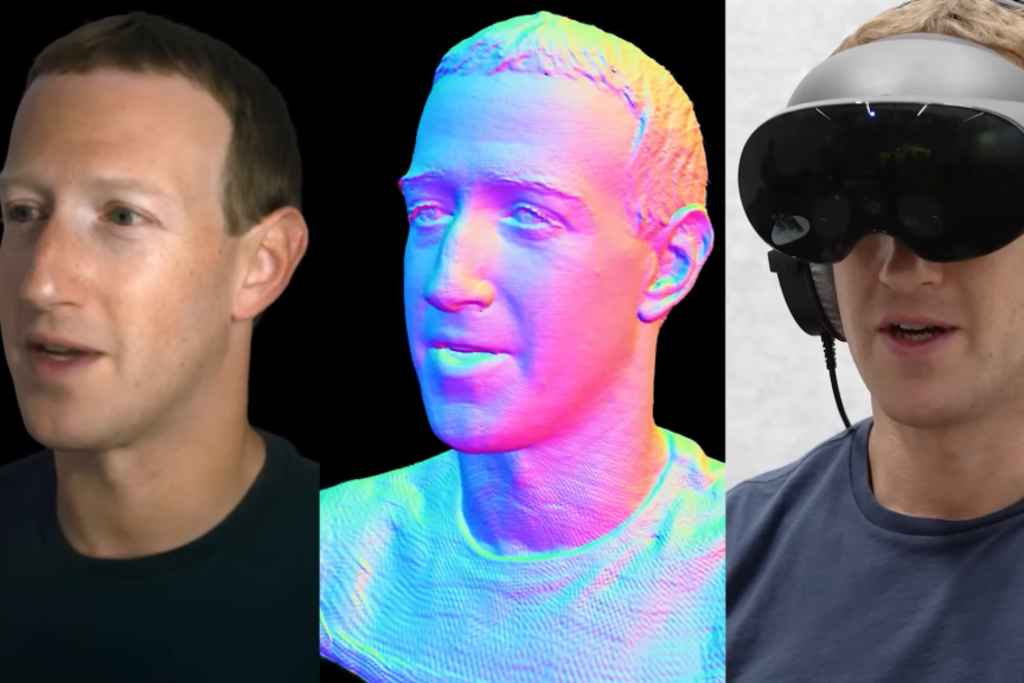
Mark Zuckerberg: First Interview in the Metaverse | Lex Fridman Podcast #398


Photo-realistic avatars show future of Metaverse communication — from inavateonthenet.net

Mark Zuckerberg, CEO, Meta, took part in the first-ever Metaverse interview using photo-realistic virtual avatars, demonstrating the Metaverse’s capability for virtual communication.

Zuckerberg appeared on the Lex Fridman podcast, using scans of both Fridman and Zuckerberg to create realistic avatars instead of using a live video feed. A computer model of the avatar’s faces and bodies are put into a Codec, using a headset to send an encoded version of the avatar.

The interview explored the future of AI in the metaverse, as well as the Quest 3 headset and the future of humanity.


Everyday Media Literacy: An Analog Guide for Your Digital Life — from routledge.com by Sue Ellen Christian

In this second edition, award-winning educator Sue Ellen Christian offers students an accessible and informed guide to how they can consume and create media intentionally and critically.

The textbook applies media literacy principles and critical thinking to the key issues facing young adults today, from analyzing and creating media messages to verifying information and understanding online privacy. Through discussion prompts, writing exercises, key terms, and links, readers are provided with a framework from which to critically consume and create media in their everyday lives. This new edition includes updates covering privacy aspects of AI, VR and the metaverse, and a new chapter on digital audiences, gaming, and the creative and often unpaid labor of social media and influencers. Chapters examine news literacy, online activism, digital inequality, social media and identity, and global media corporations, giving readers a nuanced understanding of the key concepts at the core of media literacy. Concise, creative, and curated, this book highlights the cultural, political, and economic dynamics of media in contemporary society, and how consumers can mindfully navigate their daily media use.

This textbook is perfect for students and educators of media literacy, journalism, and education looking to build their understanding in an engaging way.


US Higher Education Needs a Revolution. What’s Holding It Back? — from bloomberg.com by Tyler Cowen
Not only do professors need to change how they teach, but universities need to change how they evaluate them.

When the revolution in higher education finally arrives, how will we know? I have a simple metric: When universities change how they measure faculty work time. Using this yardstick, the US system remains very far from a fundamental transformation.

But today’s education system is dynamic, and needs to become even more so. There is already the internet, YouTube, and a flurry of potential innovations coming from AI. If professors really are a society’s best minds, shouldn’t they be working to improve the entire educational process, not just punching the equivalent of a time clock at a university?

Such a change would require giving them credit for innovations, which in turn would require a broader conception of their responsibilities. 


Citing Significant Budget Deficits, Several Colleges Face Cuts — from insidehighered.com by Doug Lederman
The affected institutions include Christian Brothers, Delta State, Lane Community College, Miami University, St. Norbert and Shepherd.

Numerous colleges and universities, public and private, announced in recent days that they face significant budget deficits that will require cuts to programs and employees.

Many of the institutions appear to have been motivated by fall enrollment numbers that did not meet their expectations, in most cases representing a failure to recover from record low enrollments during the pandemic. Others cited the lingering effects on enrollment and budgets from COVID-19, exacerbated by the end of federal relief funds.


How universities can adopt a lifelong learning mindset: Lifelong learning that will last — from timeshighereducation.com by various authors
How the traditional university degree can be reimagined as a lifelong educational journey, enabling students to upskill and reskill throughout their lives

The rapid evolution of the workplace and changing skills demands are driving calls for better lifelong learning provision. For universities, this means re-examining traditional teaching practices and course design to ensure that students can benefit from continuing education throughout their careers. It requires more flexible, accessible, bite-sized learning that can be completed in tandem with other professional and personal commitments. But how can this be offered in a coherent, joined-up way without sacrificing quality? From Moocs to microcredentials, these resources offer advice and insight into how lifelong learning opportunities can be developed and improved for future generations.


The College Backlash Is Going Too Far — from theatlantic.com by David Deming; via Matthew Tower who also expresses his concerns re: this article from The Chronicle
Getting a four-year degree is still a good investment. 

American higher education certainly has its problems. But the bad vibes around college threaten to obscure an important economic reality: Most young people are still far better off with a four-year college degree than without one.

Historically, analysis of higher education’s value tends to focus on the so-called college wage premium. That premium has always been massive—college graduates earn much more than people without a degree, on average—but it doesn’t take into account the cost of getting a degree. So the St. Louis Fed researchers devised a new metric, the college wealth premium, to try to get a more complete picture.

But the long-term value of a bachelor’s degree is much greater than it initially appears. If a college professor or pundit tries to convince you otherwise, ask them what they would choose for their own children.

From DSC:
David’s last quote here is powerful and likely true. But that doesn’t mean that we should disregard trying to get the cost of obtaining a degree down by 50% or more. There are still way too many people struggling with student loans — and they have been for DECADES. And others will be joining these same financial struggles — again, for DECADES to come.


Johns Hopkins aims to address teacher shortage with new master’s residency option — from hub.jhu.edu ; via Matthew Tower

The School of Education’s TeachingWell program will provide professional, financial support for applicants looking to start long-term careers in teaching

Students in TeachingWell will earn the Master of Education for Teaching Professionals in four semesters at Johns Hopkins and gain Maryland state teacher certification along with real-world teaching experience—all made stronger by ongoing mentoring, life design, and teacher wellness programs through the university.

“We will focus on teacher well-being and life-design skills that address burnout and mental health concerns that are forcing too many teachers out of the profession,” says Mary Ellen Beaty-O’Ferrall, associate professor at the School of Education and faculty director of TeachingWell. “We want teachers with staying power—effective and financially stable educators with strong personal well-being.”


How to Build Stackable Credentials — from insidehighered.com by Lindsay Daugherty , Peter Nguyen , Jonah Kushner and Peter Riley Bahr
Five actions states and colleges are taking.

Stackable credentials are a top priority for many states and colleges these days. The term can be used to mean different things, from college efforts to embed short-term credentials into their degree programs to larger-scale efforts to rethink the way credentialing is done through alternative approaches, like skills badges. The goals of these initiatives are twofold: (1) to ensure individuals can get credit for a range of different learning experiences and better integrate these different types of learning, and (2) to better align our education and training systems with workforce needs, which often require reskilling through training and credentials below the bachelor’s degree level.S


180 Degree Turn: NYC District Goes From Banning ChatGPT to Exploring AI’s Potential — from edweek.org by Alyson Klein (behind paywall)

New York City Public Schools will launch an Artificial Intelligence Policy Lab to guide the nation’s largest school district’s approach to this rapidly evolving technology.


The Leader’s Blindspot: How to Prepare for the Real Future — from preview.mailerlite.io by the AIEducator
The Commonly Held Belief: AI Will Automate Only Boring, Repetitive Tasks First

The Days of Task-Based Views on AI Are Numbered
The winds of change are sweeping across the educational landscape (emphasis DSC):

  1. Multifaceted AI: AI technologies are not one-trick ponies; they are evolving into complex systems that can handle a variety of tasks.
  2. Rising Expectations: As technology becomes integral to our lives, the expectations for personalised, efficient education are soaring.
  3. Skill Transformation: Future job markets will demand a different skill set, one that is symbiotic with AI capabilities.

Teaching: How to help students better understand generative AI — from chronicle.com by Beth McMurtrie
Beth describes ways professors have used ChatGPT to bolster critical thinking in writing-intensive courses

Kevin McCullen, an associate professor of computer science at the State University of New York at Plattsburgh, teaches a freshman seminar about AI and robotics. As part of the course, students read Machines of Loving Grace: The Quest for Common Ground Between Humans and Robots, by John Markoff. McCullen had the students work in groups to outline and summarize the first three chapters. Then he showed them what ChatGPT had produced in an outline.

“Their version and ChatGPT’s version seemed to be from two different books,” McCullen wrote. “ChatGPT’s version was essentially a ‘laundry list’ of events. Their version was narratives of what they found interesting. The students had focused on what the story was telling them, while ChatGPT focused on who did what in what year.” The chatbot also introduced false information, such as wrong chapter names.

The students, he wrote, found the writing “soulless.”


7 Questions with Dr. Cristi Ford, VP of Academic Affairs at D2L — from campustechnology.com by Rhea Kelly

In the Wild West of generative AI, educators and institutions are working out how best to use the technology for learning. How can institutions define AI guidelines that allow for experimentation while providing students with consistent guidance on appropriate use of AI tools?

To find out, we spoke with Dr. Cristi Ford, vice president of academic affairs at D2L. With more than two decades of educational experience in nonprofit, higher education, and K-12 institutions, Ford works with D2L’s institutional partners to elevate best practices in teaching, learning, and student support. Here, she shares her advice on setting and communicating AI policies that are consistent and future-ready.


AI Platform Built by Teachers, for Teachers, Class Companion Raises $4 Million to Tap Into the Power of Practice — from prweb.com

“If we want to use AI to improve education, we need more teachers at the table,” said Avery Pan, Class Companion co-founder and CEO. “Class Companion is designed by teachers, for teachers, to harness the most sophisticated AI and improve their classroom experience. Developing technologies specifically for teachers is imperative to supporting our next generation of students and education system.”


7 Questions on Generative AI in Learning Design — from campustechnology.com by Rhea Kelly
Open LMS Adoption and Education Specialist Michael Vaughn on the challenges and possibilities of using artificial intelligence to move teaching and learning forward.

The potential for artificial intelligence tools to speed up course design could be an attractive prospect for overworked faculty and spread-thin instructional designers. Generative AI can shine, for example, in tasks such as reworking assessment question sets, writing course outlines and learning objectives, and generating subtitles for audio and video clips. The key, says Michael Vaughn, adoption and education specialist at learning platform Open LMS, is treating AI like an intern who can be guided and molded along the way, and whose work is then vetted by a human expert.

We spoke with Vaughn about how best to utilize generative AI in learning design, ethical issues to consider, and how to formulate an institution-wide policy that can guide AI use today and in the future.


10 Ways Technology Leaders Can Step Up and Into the Generative AI Discussion in Higher Ed — from er.educause.edu by Lance Eaton and Stan Waddell

  1. Offer Short Primers on Generative AI
  2. Explain How to Get Started
  3. Suggest Best Practices for Engaging with Generative AI
  4. Give Recommendations for Different Groups
  5. Recommend Tools
  6. Explain the Closed vs. Open-Source Divide
  7. Avoid Pitfalls
  8. Conduct Workshops and Events
  9. Spot the Fake
  10. Provide Proper Guidance on the Limitations of AI Detectors


Canva’s new AI tools automate boring, labor-intensive design tasks — from theverge.com by Jess Weatherbed
Magic Studio features like Magic Switch automatically convert your designs into blogs, social media posts, emails, and more to save time on manually editing documents.


Canva launches Magic Studio, partners with Runway ML for video — from bensbites.beehiiv.com by Ben Tossell

Here are the highlights of launched features under the new Magic Studio:

  • Magic Design – Turn ideas into designs instantly with AI-generated templates.
  • Magic Switch – Transform content into different formats and languages with one click.
  • Magic Grab – Make images editable like Canva templates for easy editing.
  • Magic Expand – Use AI to expand images beyond the original frame.
  • Magic Morph – Transform text and shapes with creative effects and prompts.
  • Magic Edit – Make complex image edits using simple text prompts.
  • Magic Media – Generate professional photos, videos and artworks from text prompts.
  • Magic Animate – Add animated transitions and motion to designs instantly.
  • Magic Write – Generate draft text and summaries powered by AI.


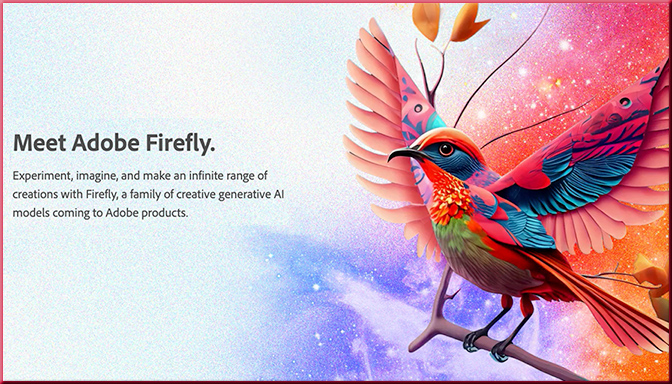
Adobe Firefly

Meet Adobe Firefly -- Adobe is going hard with the use of AI. This is a key product along those lines.


Addendums on 10/11/23:


Adobe Releases New AI Models Aimed at Improved Graphic Design — from bloomberg.com
New version of Firefly is bigger than initial tool, Adobe says Illustrator, Express programs each get own generative tools


Thandiwe Muriu Confronts Notions of Value in Her Vividly Disguised Portraits — from thisiscolossal.com by Grace Ebert

“A Cycle of Joy” (2023). All images © Thandiwe Muriu


“Santa Monica” by Photographer Francesca Forquet — from booooooom.com by Francesca Forquet


How to Create Your Own Career Strategy: A Simple Framework to Unlock New Possibilities — from linkedin.com by Abhijit Bhaduri; via Roberto Ferraro

Now that you know the three factors that shape career opportunities: work (changes in the way work gets done), worker (which skills will become valuable), and workplace (a workplace is an ecosystem in which the skills will get applied), how can you use this framework to create your own career strategy?

Here are three practical ways:


Also from Roberto Ferraro, see:

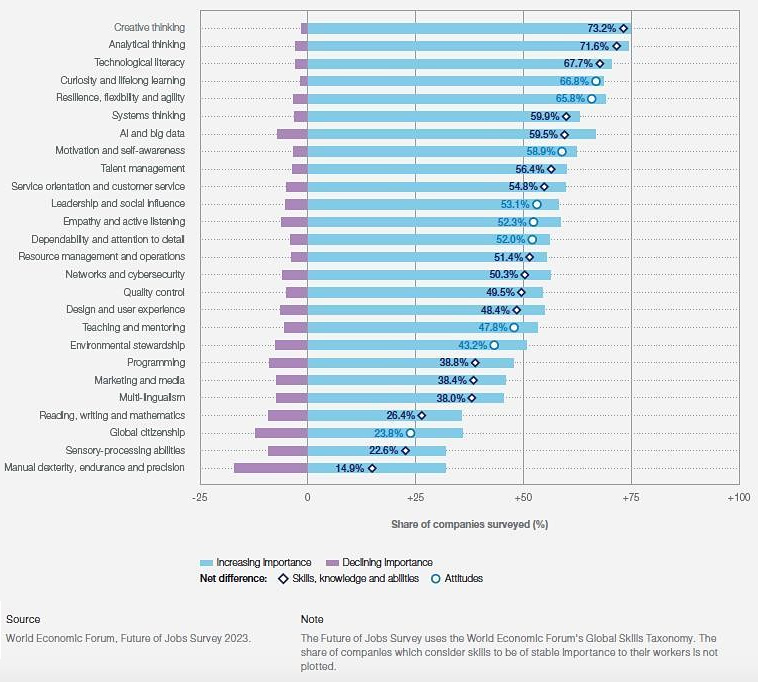
‘Skill inflation’: What is it and how to avoid becoming victim to it — from weforum.org

Highest to lowest growth rates in terms of skills

NOTES:
Technology literacy is the third-fastest growing core skill.
Curiosity and lifelong learning come in at #4.


Addendum on 10/9/23:

Data for the People — from the-job.beehiiv.com by Paul Fain (emphasis from DSC):

The Big Idea: Texas isn’t the only state where these data systems are starting to bear fruit for students and workers. Many states are now investing in digital tools to help residents connect to jobs, demonstrate their skills, and participate in training programs. A few, particularly Alabama, are close to offering fully functioning learning and employment records, or LERs, to millions of residents.

 
© 2025 | Daniel Christian