Teaching writing in the age of AI — from the Future of Learning (a Hechinger Report newsletter) by Javeria Salman

ChatGPT can produce a perfectly serviceable writing “product,” she said. But writing isn’t a product per se — it’s a tool for thinking, for organizing ideas, she said.

“ChatGPT and other text-based tools can’t think for us,” she said. “There’s still things to learn when it comes to writing because writing is a form of figuring out what you think.”

When students could contrast their own writing to ChatGPT’s more generic version, Levine said, they were able to “understand what their own voice is and what it does.”


Grammarly’s new generative AI feature learns your style — and applies it to any text — from techcrunch.com by Kyle Wiggers; via Tom Barrett

But what about text? Should — and if so, how should — writers be recognized and remunerated for AI-generated works that mimic their voices?

Those are questions that are likely to be raised by a feature in Grammarly, the cloud-based typing assistant, that’s scheduled to launch by the end of the year for subscribers to Grammarly’s business tier. Called “Personalized voice detection and application,” the feature automatically detects a person’s unique writing style and creates a “voice profile” that can rewrite any text in the person’s style.


Is AI Quietly Weaving the Fabric of a Global Classroom Renaissance? — from medium.com by Robert the Robot
In a world constantly buzzing with innovation, a silent revolution is unfolding within the sanctuaries of learning—our classrooms.

From bustling metropolises to serene hamlets, schools across the globe are greeting a new companion—Artificial Intelligence (AI). This companion promises to redefine the essence of education, making learning a journey tailored to each child’s unique abilities.

The advent of AI in education is akin to a gentle breeze, subtly transforming the academic landscape. Picture a classroom where each child, with their distinct capabilities and pace, embarks on a personalized learning path. AI morphs this vision into reality, crafting a personalized educational landscape that celebrates the unique potential harbored within every learner.


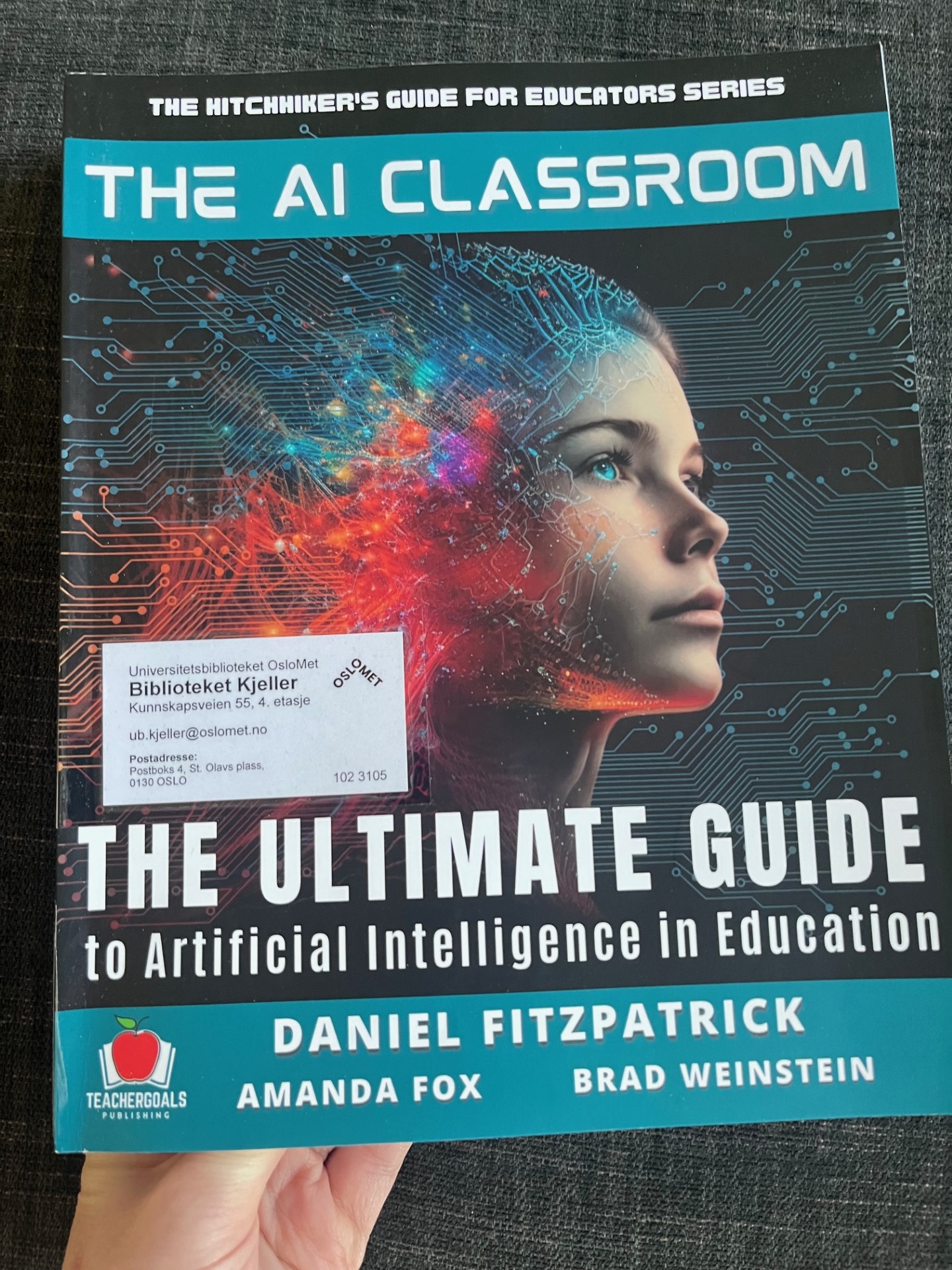
AI Books for Educators — from aiadvisoryboards.wordpress.com by Barbara Anna Zielonka

Books have always held a special place in my heart. As an avid reader and AI enthusiast, I have curated a list of books on artificial intelligence specifically tailored for educators. These books delve into the realms of AI, exploring its applications, ethical considerations, and its impact on education. Share your suggestions and let me know which books you would like to see included on this list.

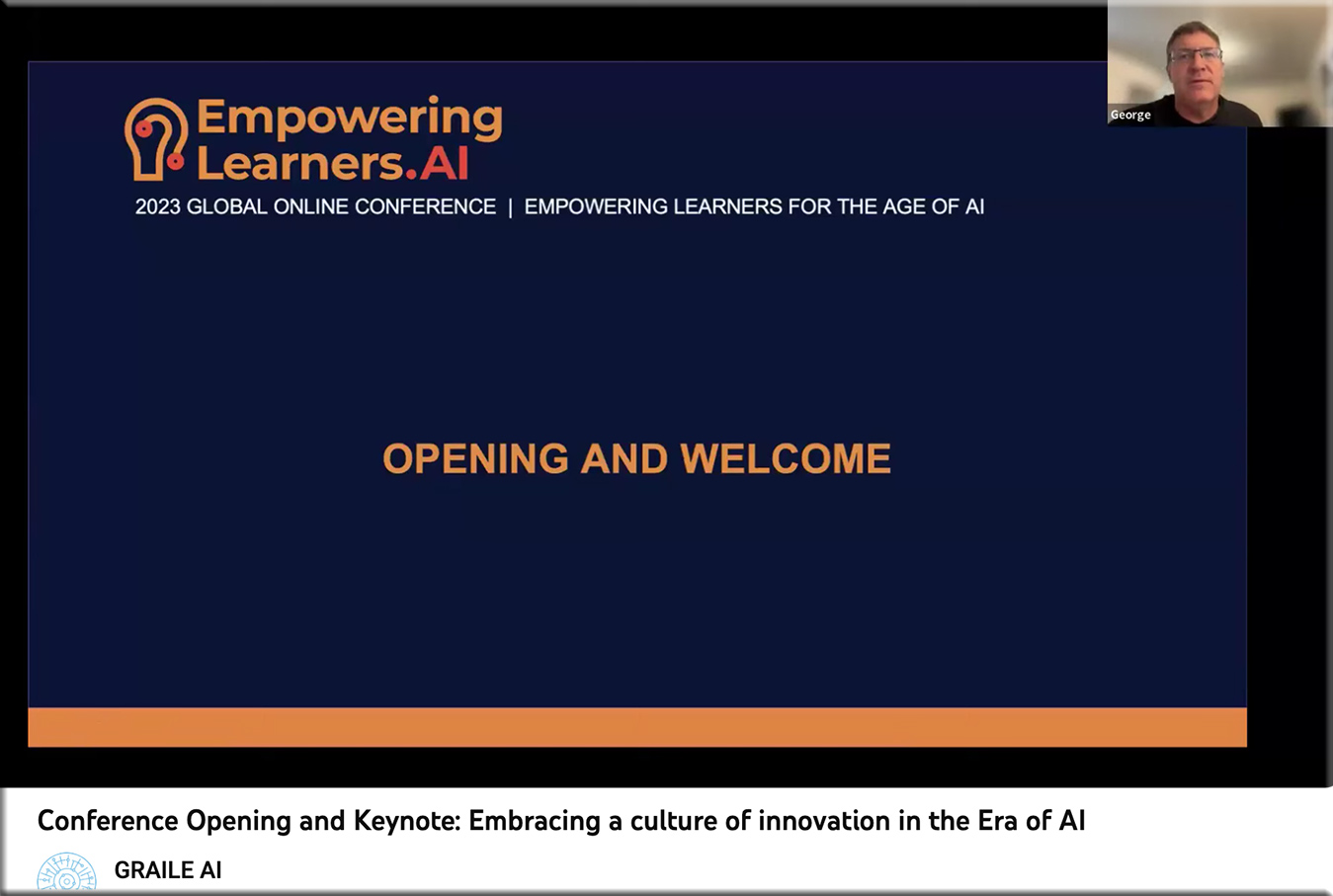
SAIL: ELAI recordings, AI Safety, Near term AI/learning — by George Siemens

We held our fourth online Empowering Learners for the Age of AI conference last week. We sold out at 1500 people (a Whova and budget limit). The recordings/playlist from the conference can now be accessed here.
 

Florida bar weighs whether lawyers using AI need client consent — from reuters.com by Karen Sloan; via Brainyacts

Oct 16 (Reuters) – Florida lawyers might soon be required to get their client’s consent before using artificial intelligence on their legal matters.

The Florida Bar is crafting a new advisory opinion focused on the use of AI and has asked Florida lawyers to weigh in. Florida bar leaders have tasked the Florida Board Review Committee on Professional Ethics with creating rules around the use of generative AI, such as OpenAI’s ChatGPT, Google Bard or Microsoft’s Bing.


On a somewhat related note, also see:


Your Teachers Need a Win — from cultofpedagogy.com by Jennifer Gonzalez

If you’re short on ideas, here are a few things you might compliment them on:

  • Relationships and rapport with students:
  • Decision-making:
  • Clarity and delivery:
  • Classroom management and logistics:
  • Lesson planning:
  • Design:

So this is my ask of you as an administrator: Choose 10 teachers on your staff and make it a goal to give each of them one piece of specific, positive feedback this week. For some, you might only need to think about what you’ve noticed during your past observations of them. For others, you might need to arrange a short classroom visit — make sure the teacher knows ahead of time that you will ONLY be looking for things to compliment them on. Even better would be to ask them to choose a time when they’re doing something they think you’d like to see. 


2 Samuel 7:22

“How great you are, Sovereign Lord! There is no one like you, and there is no God but you, as we have heard with our own ears.

1 Timothy 3:16

Beyond all question, the mystery from which true godliness springs is great: He appeared in the flesh, was vindicated by the Spirit, was seen by angels, was preached among the nations, was believed on in the world, was taken up in glory.

Proverbs 9:10

The fear (i.e., respecting/honoring) of the Lord is the beginning of wisdom,
and knowledge of the Holy One is understanding.

1 Timothy 4:8

For physical training is of some value, but godliness has value for all things, holding promise for both the present life and the life to come.

Psalms 119:64

The earth is filled with your love, LORD; teach me your decrees.


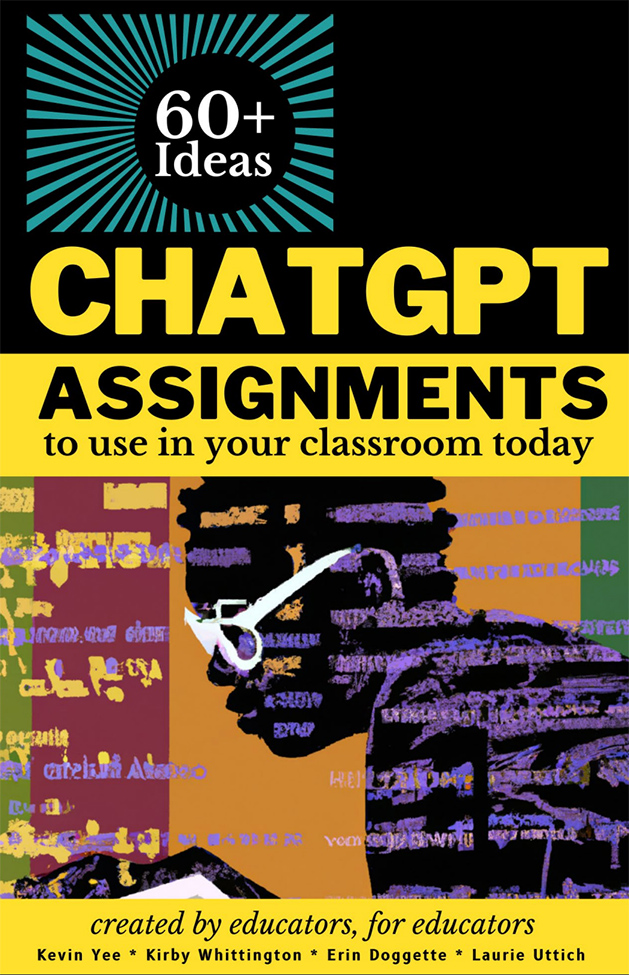
60+ Ideas for ChatGPT Assignments — from stars.library.ucf.edu by Kevin Yee, Kirby Whittington, Erin Doggette, and Laurie Uttich

60+ ideas for using ChatGPT in your assignments today


Artificial intelligence is disrupting higher education — from itweb.co.za by Rennie Naidoo; via GSV
Traditional contact universities need to adapt faster and find creative ways of exploring and exploiting AI, or lose their dominant position.

Higher education professionals have a responsibility to shape AI as a force for good.


Introducing Canva’s biggest education launch — from canva.com
We’re thrilled to unveil our biggest education product launch ever. Today, we’re introducing a whole new suite of products that turn Canva into the all-in-one classroom tool educators have been waiting for.

Also see Canva for Education.
Create and personalize lesson plans, infographics,
posters, video, and more. 
100% free for
teachers and students at eligible schools.


ChatGPT and generative AI: 25 applications to support student engagement — from timeshighereducation.com by Seb Dianati and Suman Laudari
In the fourth part of their series looking at 100 ways to use ChatGPT in higher education, Seb Dianati and Suman Laudari share 25 prompts for the AI tool to boost student engagement


There are two ways to use ChatGPT — from theneurondaily.com

  1. Type to it.
  2. Talk to it (new).


Since then, we’ve looked to it for a variety of real-world business advice. For example, Prof Ethan Mollick posted a great guide using ChatGPT-4 with voice as a negotiation instructor.

In a similar fashion, you can consult ChatGPT with voice for feedback on:

  • Job interviews.
  • Team meetings.
  • Business presentations.


Via The Rundown: Google is using AI to analyze the company’s Maps data and suggest adjustments to traffic light timing — aiming to cut driver waits, stops, and emissions.


Google Pixel’s face-altering photo tool sparks AI manipulation debate — from bbc.com by Darren Waters

The camera never lies. Except, of course, it does – and seemingly more often with each passing day.
In the age of the smartphone, digital edits on the fly to improve photos have become commonplace, from boosting colours to tweaking light levels.

Now, a new breed of smartphone tools powered by artificial intelligence (AI) are adding to the debate about what it means to photograph reality.

Google’s latest smartphones released last week, the Pixel 8 and Pixel 8 Pro, go a step further than devices from other companies. They are using AI to help alter people’s expressions in photographs.


From Digital Native to AI-Empowered: Learning in the Age of Artificial Intelligence — from campustechnology.com by Kim Round
The upcoming generation of learners will enter higher education empowered by AI. How can institutions best serve these learners and prepare them for the workplace of the future?

Dr. Chris Dede, of Harvard University and Co-PI of the National AI Institute for Adult Learning and Online Education, spoke about the differences between knowledge and wisdom in AI-human interactions in a keynote address at the 2022 Empowering Learners for the Age of AI conference. He drew a parallel between Star Trek: The Next Generation characters Data and Picard during complex problem-solving: While Data offers the knowledge and information, Captain Picard offers the wisdom and context from on a leadership mantle, and determines its relevance, timing, and application.


The Near-term Impact of Generative AI on Education, in One Sentence — from opencontent.org by David Wiley

This “decreasing obstacles” framing turned out to be helpful in thinking about generative AI. When the time came, my answer to the panel question, “how would you summarize the impact generative AI is going to have on education?” was this:

“Generative AI greatly reduces the degree to which access to expertise is an obstacle to education.”

We haven’t even started to unpack the implications of this notion yet, but hopefully just naming it will give the conversation focus, give people something to disagree with, and help the conversation progress more quickly.


How to Make an AI-Generated Film — from heatherbcooper.substack.com by Heather Cooper
Plus, Midjourney finally has a new upscale tool!


Eureka! NVIDIA Research Breakthrough Puts New Spin on Robot Learning — from blogs.nvidia.com by Angie Lee
AI agent uses LLMs to automatically generate reward algorithms to train robots to accomplish complex tasks.

From DSC:
I’m not excited about this, as I can’t help but wonder…how long before the militaries of the world introduce this into their warfare schemes and strategies?


The 93 Questions Schools Should Ask About AI — from edweek.org by Alyson Klein

The toolkit recommends schools consider:

  • Purpose: How can AI help achieve educational goals?
  • Compliance: How does AI fit with existing policies?
  • Knowledge: How can schools advance AI Literacy?
  • Balance: What are the benefits and risks of AI?
  • Integrity: How does AI fit into policies on things like cheating?
  • Agency: How can humans stay in the loop on AI?
  • Evaluation: How can schools regularly assess the impact of AI?
 

41 states sue Meta, claiming Instagram, Facebook are addictive, harm kids — from washingtonpost.com by Cristiano Lima and Naomi Nix
The action marks the most sprawling state challenge to date over social media’s impact on children’s mental health

Forty-one states and the District of Columbia are suing Meta, alleging that the tech giant harms children by building addictive features into Instagram and Facebook. Tuesday’s legal actions represent the most significant effort by state enforcers to rein in the impact of social media on children’s mental health.


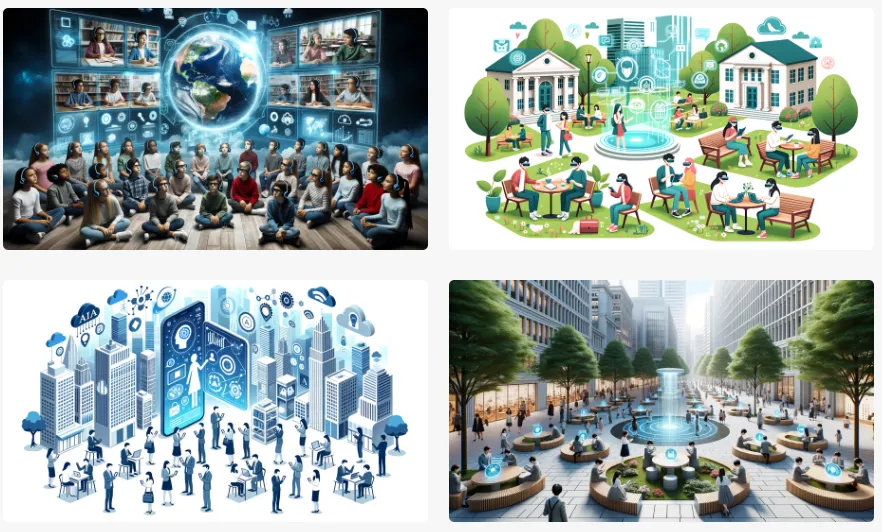
What does the future of education LOOK like? — from stefanbauschard.substack.com by Stefen Bauschard
Diverse students receive instruction from robots in an online classroom that mimics the current structure of education.


More colleges are resetting tuition. Does the strategy work? — from highereddive.com by Danielle McLean
Some institutions have seen short-term enrollment gains from slashing their sticker prices, but the strategy doesn’t guarantee a turnaround.

But as more colleges take the tuition reset plunge, questions around the effectiveness of strategy remain. Some colleges have seen immediate and long-term benefits from the practice, with surging enrollments and applications. However, for many colleges, that growth tapered off over the next few years. And the resets were not enough to turn around the financial fortunes of every college.

“For some schools, they did it and maybe they were too far gone,” said Lucie Lapovsky, an economist and higher education consultant who’s worked with colleges on tuition resets. “Most of our private colleges in this country are challenged right now. It’s not easy.”


Student loan repayments have resumed. Here’s 4 charts that break down American educational debt — from cnn.com by Alex Leeds

As student loan payments resume this month, more than 43 million Americans carrying that debt saw the end of more than three years of relief from monthly payments. But the financial landscape in which they resume payments has shifted.

Researchers are still working to understand the impact that the pause had on borrowers’ finances, said Jonathan Glater, a professor at Berkeley Law and co-founder of the Student Loan Law Initiative.

“People who are precarious at the outset…will also be financially more precarious when the payment obligations resume,” Glater said.

Since 2003, student debt has been the fastest-growing form of household debt, increasing more than 500% over the two decades, far more than increases in mortgage and auto debt that occurred over the same period, according to data from the New York Federal Reserve Bank.


Graphic Design Trends 2024 – The Great Reset — from graphicmama.com by Lyudmil Enchev
2024 will be a year of revolution in graphic design, and we are about to share with you why and how trends in graphic design will totally change 180 degrees.

Ways to use AI in 2023 in your designs:

  • Find inspiration for your designs
  • Give you ideas for concepts and compositions
  • Help you with choosing colors
  • Help you change backgrounds or retouch images
  • Help you with revisions and variations
  • Resize and recompose designs in different dimensions for different platforms
  • Create visuals for websites, marketing, and social media
 

IBM Commits to Train 2 Million AI Learners for Free by 2026 — from campustechnology.com by Kate Lucariello

As part of the 2023 78th General Assembly of the United Nations, IBM announced it will train, for free, 2 million learners in artificial intelligence worldwide within the next three years, building on its existing commitment to skill 30 million learners by 2030.

The free program, called IBM SkillsBuild, will use its career-building platforms to partner with universities around the world to develop and make available new generative AI courses, with a significant focus on adult learners in underrepresented communities.


Goldman Sachs CIO is ‘anxious to see results’ from GenAI, but moving carefully — from venturebeat.com by Sharon Goldman

Consider Marco Argenti, CIO at Goldman Sachs — who told me in a recent interview that the leading global investment banking, securities and investment management firm has, nearly a year after ChatGPT was released, put exactly zero generative AI use cases into production. Instead, the company is “deeply into experimentation” and has a “high bar” of expectation before deployment. Certainly this is a highly-regulated company, so careful deployment must always be the norm. But Goldman Sachs is also far from new to implementing AI-driven tools — but is still treading slowly and carefully.


Advice From More than A Decade of Career Pathway Innovation — from gettingsmart.com by Hilary Sontag and Kerri McDermid

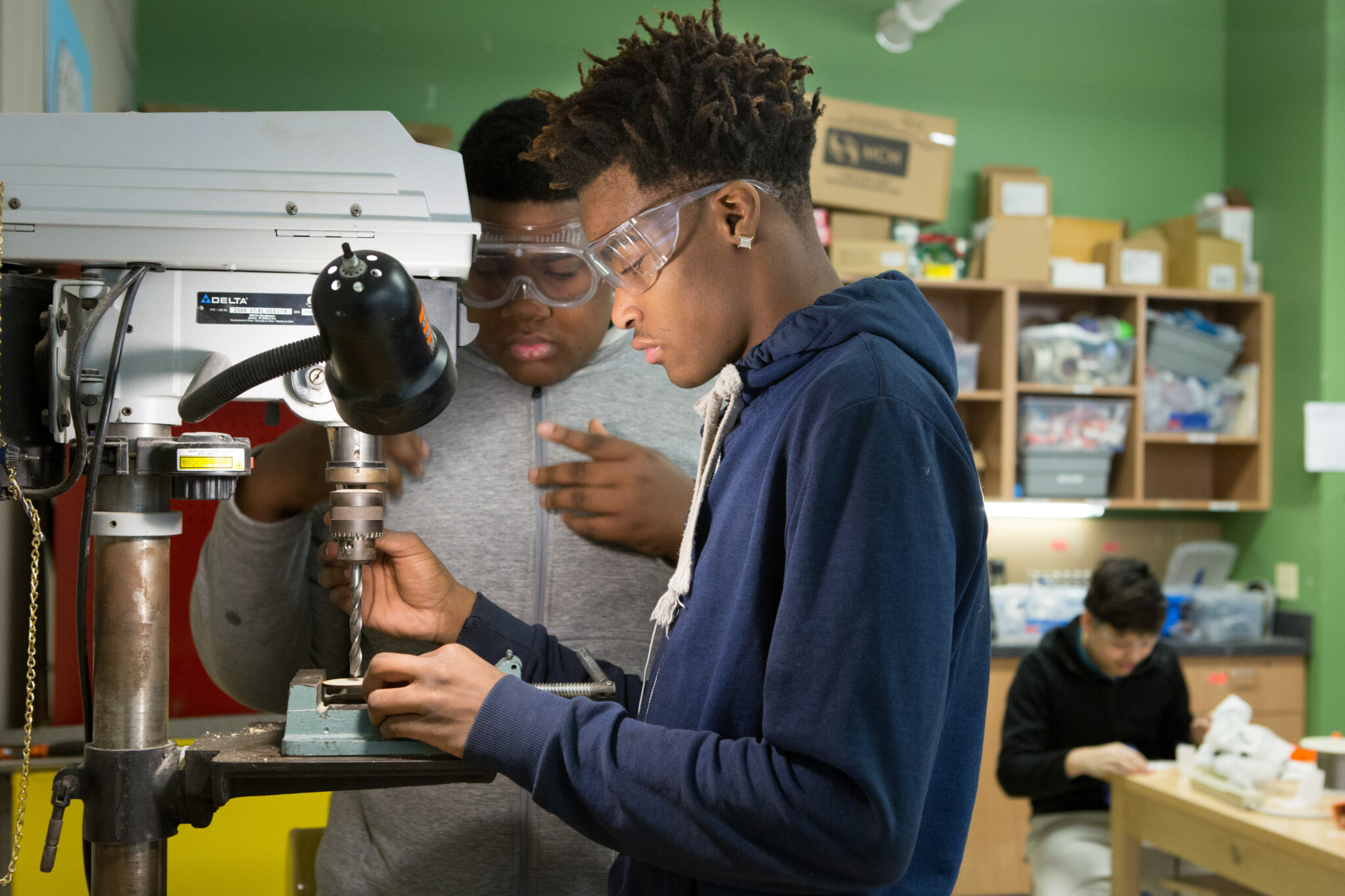
A student uses a drill press to work on an engineering project.

Excerpt:

With nearly 15 years of experience in building and leading career-connected learning initiatives, St. Vrain offers a roadmap for districts of all sizes who are beginning the journey to create their own pathways of opportunity for students.

Over the past decade, St. Vrain Valley Schools has launched more than two dozen career pathways and now has a goal to offer quality work-based learning experiences for every graduate. As staff have developed these opportunities, St. Vrain has seen significant increases in graduation rates – approximately 94 percent of St. Vrain students graduate high school in four years – and a significant decrease in dropout rates to less than one percent of students. Graduation rates among our Hispanic students have increased by 30 percentage points, almost completely eliminating graduation rate gaps between all students and students of color. St. Vrain’s post-pandemic achievement has also accelerated at a remarkable pace. Building career-connected programming, and offering it as early and broadly as possible, has demonstrated a compelling case for the effectiveness of career pathways in accelerating achievement and student success.


The value of hands-on learning in prison — from college-inside.beehiiv.com  by Charlotte West
Women in Washington reflect on their experience with a pre-apprenticeship that introduces them to the trades.

When I visited the prison in May, Brittany Wright had plans to go down to the Cement Masons & Plasterers Local Union 528 in Seattle when she got out a few days later. She’s now an apprentice working on a light rail expansion project for Sound Transit, making $31 an hour plus benefits. “I’m a little nervous, but more excited to get out there and actually start using the trades,” she told me at the time. “They seem like they’re willing to work with me. And that’s all that matters.”


Adobe revealed 4 new AI heavy hitters — from aivalley.com

  1. Project Stardust
  2. Project Primrose
  3. Project Poseable
  4. Project Dub Dub Dub


Adobe is working on generative AI video manipulation — from theverge.com by Umar Shakir
The company revealed Project Fast Fill, a new way to remove people, add objects, and replace colors in videos using generative AI and text-prompt interactions.

Adobe is showing off a new generative fill feature, Project Fast Fill, that can easily add or remove objects in videos with the power of AI. It’s one of several new, wild, experimental AI features announced today at the company’s MAX conference. Project Fast Fill has the ability to swap in clothing accessories on people in motion or remove tourists from the background of a landscape pan.


© 2025 | Daniel Christian