


A Photo Preservationist Saved a Trove of 4,000 Glass Plate Negatives That Nearly Went Into the Trash — from thisiscolossal.com by Kate Mothes and Terri Cappucci

A Photo Preservationist Saved a Trove of 4,000 Glass Plate Negatives That Nearly Went Into the Trash — from thisiscolossal.com by Kate Mothes and Terri Cappucci
What happens to teaching after Covid? — from chronicle.com by Beth McMurtrie
It’s an era many instructors would like to put behind them: black boxes on Zoom screens, muffled discussions behind masks, students struggling to stay engaged. But how much more challenging would teaching during the pandemic have been if colleges did not have experts on staff to help with the transition? On many campuses, teaching-center directors, instructional designers, educational technologists, and others worked alongside professors to explore learning-management systems, master video technology, and rethink what and how they teach.
A new book out this month, Higher Education Beyond Covid: New Teaching Paradigms and Promise, explores this period through the stories of campus teaching and learning centers. Their experiences reflect successes and failures, and what higher education could learn as it plans for the future.
Beth also mentioned/link to:
How to hold difficult discussions online — from chronicle.com by Beckie Supiano
As usual, our readers were full of suggestions. Kathryn Schild, the lead instructional designer in faculty development and instructional support at the University of Alaska at Anchorage, shared a guide she’s compiled on holding asynchronous discussions, which includes a section on difficult topics.
In an email, Schild also pulled out a few ideas she thought were particularly relevant to Le’s question, including:
Innovative growers: A view from the top — from mckinsey.com by Matt Banholzer, Rebecca Doherty, Alex Morris, and Scott Schwaitzberg
McKinsey research shows that a focus on aspiration, activation, and execution can help companies out-innovate and outgrow peers.
To find out, we identified and analyzed about 650 of the largest public companies that achieved profitable growth relative to their industry between 2016 and 2021 while also excelling in the essential capabilities associated with innovation.3 Some of these companies outgrew their peers, others were more innovative than competitors, but 53 companies managed to do both. The 50-plus “innovative growers,” as we call them, are a diverse group, spread across four continents and ten industries. They include renowned brands with a trillion-dollar market capitalization as well as smaller companies that are just starting to make a name for themselves, some as young as three years old (see sidebar, “Where do innovative growers come from?”).
For all their diversity, these companies consistently excel in both growth and innovation—and they share a number of best practices that other companies can learn from.
Do innovative growers perform better than others?
In a word, yes.
From DSC:
I’m adding higher ed to the categories of this posting, as we need to establish more CULTURES of innovation out there. But this is not easy to do, as those of us who have tried to swim upstream know.
Also see:
“Do not deny justice to your poor people in their lawsuits.
“Come now, let us settle the matter,” says the Lord. “Though your sins are like scarlet, they shall be as white as snow; though they are red as crimson, they shall be like wool.
Do you see a person wise in their own eyes? There is more hope for a fool than for them.
Accept, LORD, the willing praise of my mouth, and teach me your laws.
Your word is a lamp for my feet, a light on my path.
New models and developer products announced at DevDay — from openai.com
GPT-4 Turbo with 128K context and lower prices, the new Assistants API, GPT-4 Turbo with Vision, DALL·E 3 API, and more.
Today, we shared dozens of new additions and improvements, and reduced pricing across many parts of our platform. These include:
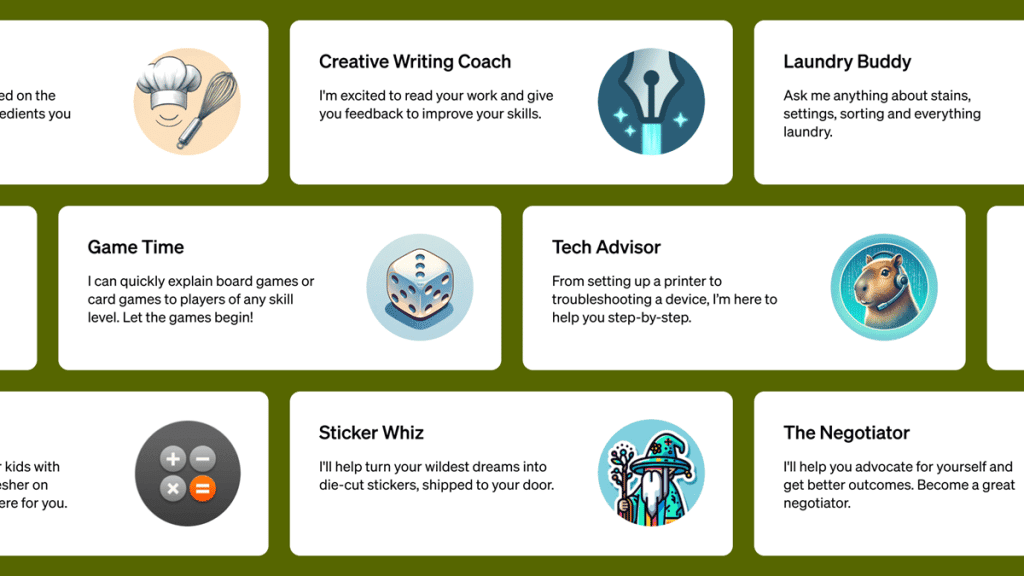
Introducing GPTs — from openai.com
You can now create custom versions of ChatGPT that combine instructions, extra knowledge, and any combination of skills.
I’m genuinely blown away by this.
The leap from text descriptions straight to 3D models? It’s next-level.
Think about the possibility: a stream of prompts turns into a treasure trove of 3D pieces. Gather them, and you’ve got a full scene ready to come to life.
The thought… pic.twitter.com/x79WEeY1iq
— Linus (???) (@LinusEkenstam) November 8, 2023
It’s only been 11 hours since OpenAI Dev Day
Here are 12 of the craziest things people have already built already
Including AI Sports narrator and website roaster.
? Thread below
— Linus (???) (@LinusEkenstam) November 7, 2023
OpenAI’s New Groundbreaking Update — from newsletter.thedailybite.co
Everything you need to know about OpenAI’s update, what people are building, and a prompt to skim long YouTube videos…
But among all this exciting news, the announcement of user-created “GPTs” took the cake.
That’s right, your very own personalized version of ChatGPT is coming, and it’s as groundbreaking as it sounds.
OpenAI’s groundbreaking announcement isn’t just a new feature – it’s a personal AI revolution.
The upcoming customizable “GPTs” transform ChatGPT from a one-size-fits-all to a one-of-a-kind digital sidekick that is attuned to your life’s rhythm.
Lore Issue #56: Biggest Week in AI This Year — from news.lore.com by Nathan Lands
First, Elon Musk announced “Grok,” a ChatGPT competitor inspired by “The Hitchhiker’s Guide to the Galaxy.” Surprisingly, in just a few months, xAI has managed to surpass the capabilities of GPT-3.5, signaling their impressive speed of execution and establishing them as a formidable long-term contender.
Then, OpenAI hosted their inaugural Dev Day, unveiling “GPT-4 Turbo,” which boasts a 128k context window, API costs slashed by threefold, text-to-speech capabilities, auto-model switching, agents, and even their version of an app store slated for launch next month.
The Day That Changed Everything — from joinsuperhuman.ai by Zain Kahn
ALSO: Everything you need to know about yesterday’s OpenAI announcements
OpenAI’s Big Reveal: Custom GPTs, GPT Store & More — from news.theaiexchange.com
What you should know about the new announcements; how to get started with building custom GPTs
Incredible pace of OpenAI — from theaivalley.com by Barsee
PLUS: Elon’s Gork
? OpenAI just dropped a HUGE update.
This is the biggest update since the launch of GPT-4.
Here are 9 things you need to know (with use cases): ? pic.twitter.com/Kc2nD6HNFm
— Barsee ? (@heyBarsee) November 7, 2023
Every NFL team’s stadium reimagined using AI… pic.twitter.com/FeYfccInnV
— NFL Memes (@NFL_Memes) October 24, 2023
Via Rex Woodbury
From DSC:
It will be interesting to see how AI and humans work together to create new kinds of things…art…architecture…other. Along these lines, here’s an item from Jeremy Caplan this morning.
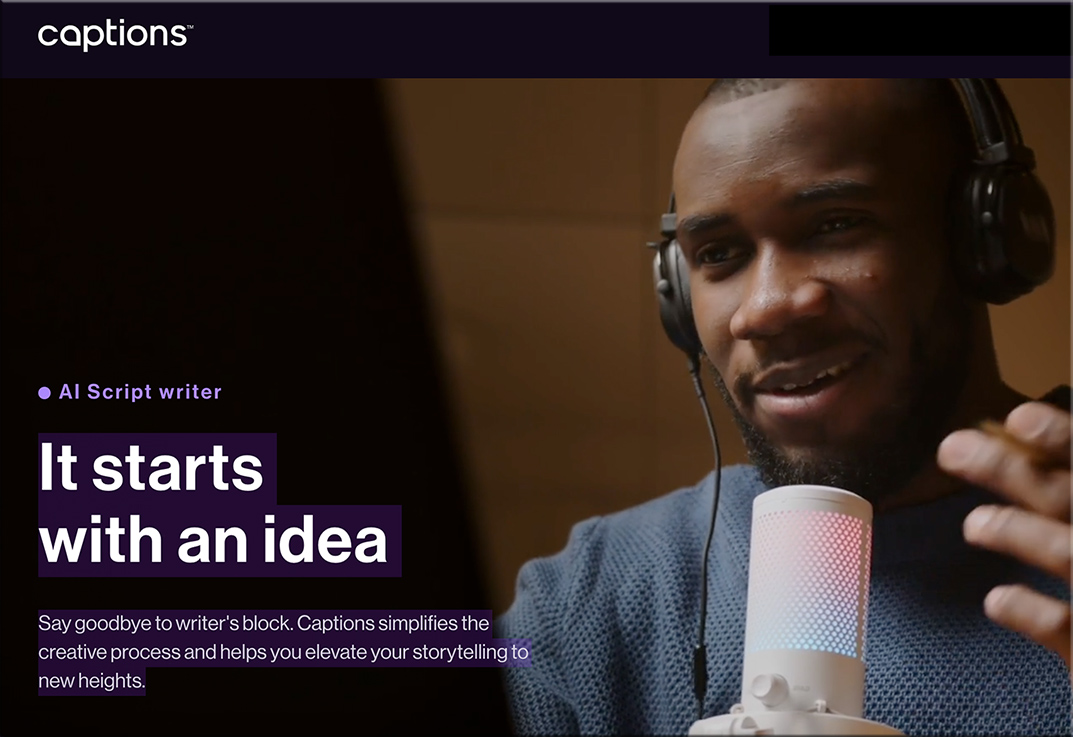
Or Dan Meyer points out that some people at Stanford were asking:
“How might the unique capabilities of teachers interact with the unique capabilities of generative AI?”
And as Phillippa Hardman states:
AI represents more than a new piece of technology: it’s an infrastructural development with fundamental implications for how humans live, work and learn (DSC: and create).
I’d like to propose that a more useful analogy for the rise of AI is the introduction of electricity – a foundational technology that gave new power (literally!) and potential to a huge range of tools, applications and, of course, people.
In Memphis, A New School Graduates Its First Class — from samchaltain.substack.com by Sam Chaltain
And a new documentary film captures it all…

Crosstown High: Rethink High School
Crosstown High is a learner-centered public charter school that engages students in meaningful, project-based work and authentic relationships that will prepare them to be self-directed, lifelong learners. We are located inside Crosstown Concourse, a landmark adaptive reuse development project in the heart of Memphis.
Also relevant/see:
Home schooling’s rise from fringe to fastest-growing form of education — from washingtonpost.com by Peter Jamison, Laura Meckler, Prayag Gordy, Clara Ence Morse and Chris Alcantara
A district-by-district look at home schooling’s explosive growth, which a Post analysis finds has far outpaced the rate at private and public schools
Growing Enrollment, Shrinking Future — from insidehighered.com by Liam Knox
Undergraduate enrollment rose for the first time since 2020, stoking hopes for a long-awaited recovery. But surprising areas of decline may dampen that optimism.
There is good news and bad news in the National Student Clearinghouse Research Center’s latest enrollment report.
First, the good news: undergraduate enrollment climbed by 2.1 percent this fall, its first total increase since 2020. Enrollment increases for Black, Latino and Asian students—by 2.2 percent, 4.4 percent and 4 percent, respectively—were especially notable after last year’s declines.
The bad news is that freshman enrollment declined by 3.6 percent, nearly undoing last year’s gain of 4.6 percent and leaving first-year enrollment less than a percentage point higher than it was in fall 2021, during the thick of the pandemic. Those declines were most pronounced for white students—and, perhaps most surprisingly, at four-year institutions with lower acceptance rates, reversing years of growth trends for the most selective colleges and universities.
An Army of Temps: AFT Contingent Faculty Quality of Work/Life Report 2022 — from aft.org (American Federation of Teachers) by Randi Weingarten, Fedrick C. Ingram, and Evelyn DeJesus
This recent survey adds to our understanding of how contingency plays out in the lives of millions of college and university faculty.
From DSC:
A college or university’s adjunct faculty members — if they are out there practicing what they are teaching about — are some of the most valuable people within higher education. They have real-life, current experience. They know which skills are necessary to thrive in their fields. They know their sections of the marketplace.
Some parts of rural America are changing fast. Can higher education keep up? — from usatoday.com by Nick Fouriezos (Open Campus)
More states have started directly tying academic programming to in-demand careers.
Across rural America, both income inequality and a lack of affordable housing are on the rise. Remote communities like the Tetons are facing not just an economic challenge, but also an educational one, as changing workforce needs meet a critical skills and training gap.
…
Earlier this month, Montana announced that 12 of its colleges would establish more than a dozen “micro-pathways” – stackable credential programs that can be completed in less than a year – to put people on a path to either earning an associate degree or immediately getting hired in industries such as health, construction, manufacturing and agriculture.
“Despite unemployment hitting record lows in Montana, rural communities continue to struggle economically, and many low-income families lack the time and resources to invest in full-time education and training,” the Montana University System announced in a statement with its partner on the project, the national nonprofit Education Design Lab.
Colleges Must Respond to America’s Skill-Based Economy — from edsurge.com by Mordecai I. Brownlee (Columnist)
To address our children’s hunger and our communities’ poverty, our educational system must be redesigned to remove the boundaries between high school, college and careers so that more Americans can train for and secure employment that will sustain them.
In 2021, Jobs for the Future outlined a pathway toward realizing such a revolution in The Big Blur report, which argues for a radical restructuring of education for grades 11 through 14 by erasing the arbitrary dividing line between high school and college. Ideas for accomplishing this include courses and work experiences for students designed for career preparation.
The New Arms Race in Higher Ed — from jeffselingo.com by Jeff Selingo
Bottom line: Given all the discussion about the value of a college education, if you’re looking for “amenities” on campuses these days be sure to find out how faculty are engaging students (both in person and with tools like AR/VR), whether they’re teaching students about using AI, and ways institutions are certifying learning with credentials that have currency in the job market.
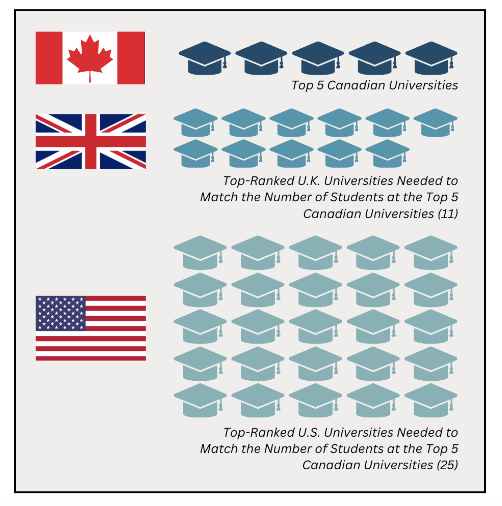
In that same newsletter, also see Jeff’s section entitled, “Where Canada leads the U.S. in higher ed.”
College Uncovered — from hechingerreport.org
Thinking of going to college? Sending your kid? You may already be caught up in the needless complexity of the admissions process, with its never-ending stress and that “you’ll-be-lucky-to-get-in” attitude from colleges that nonetheless pretend to have your interests at heart.
What aren’t they telling you? A lot, as it turns out — beginning with how much they actually cost, how long it will take to finish, the likelihood that graduates get jobs and the myriad advantages that wealthy applicants enjoy. They don’t want you to know that transfer credits often aren’t accepted, or that they pay testing companies for the names of prospects to recruit and sketchy advice websites for the contact information of unwitting students. And they don’t reveal tricks such as how to get admitted even if you’re turned down as a freshman.
But we will. In College Uncovered, from The Hechinger Report and GBH News, two experienced higher education journalists pull back the ivy on how colleges and universities really work, providing information students and their parents need to have before they make one of the most expensive decisions in their lives: whether and where to go to college. We expose the problems, pitfalls and risks, with inside information you won’t hear on other podcasts, including disconcerting facts that they’ve sometimes pried from unwilling universities.
.
Fall 2023 enrollment trends in 5 charts — from highereddive.com by Natalie Schwartz
We’re breaking down some of the biggest developments this term, based on preliminary figures from the National Student Clearinghouse Research Center.
Short-term credentials continued to prove popular among undergraduate and graduate students. In fall 2023, enrollment in undergraduate certificate programs shot up 9.9% compared to the year before, while graduate certificate enrollment rose 5.7%.
Degree programs didn’t fare as well. Master’s programs saw the smallest enrollment increase, of 0.2%, followed by bachelor’s degree programs, which saw headcounts rise 0.9%.
President Speaks: Colleges need an overhaul to meet the future head on — from highereddive.com by Beth Martin
Higher education faces an existential threat from forces like rapidly changing technology and generational shifts, one university leader argues.
Higher education must increasingly equip students with the skills and mindset to become lifelong learners — to learn how to learn, essentially — so that no matter what the future looks like, they will have the skills, mindset and wherewithal to learn whatever it is that they need and by whatever means. That spans from the commitment of a graduate program or something as quick as a microcredential.
Having survived the pandemic, university administrators, faculty, and staff no longer have their backs against the wall. Now is the time to take on these challenges and meet the future head on.
Nearly half of CEOs believe that AI not only could—but should—replace their own jobs — from finance.yahoo.com by Orianna Rosa Royle; via Harsh Makadia
Researchers from edX, an education platform for upskilling workers, conducted a survey involving over 1,500 executives and knowledge workers. The findings revealed that nearly half of CEOs believe AI could potentially replace “most” or even all aspects of their own positions.
What’s even more intriguing is that 47% of the surveyed executives not only see the possibility of AI taking over their roles but also view it as a desirable development.
Why? Because they anticipate that AI could rekindle the need for traditional leadership for those who remain.
“Success in the CEO role hinges on effective leadership, and AI can liberate time for this crucial aspect of their role,” Andy Morgan, Head of edX for Business comments on the findings.
“CEOs understand that time saved on routine tasks can stimulate innovation, nurture creativity, and facilitate essential upskilling for their teams, fostering both individual and organizational success,” he adds.
But CEOs already know this: EdX’s research echoed that 79% of executives fear that if they don’t learn how to use AI, they’ll be unprepared for the future of work.
From DSC:
By the way, my first knee-jerk reaction to this was:
WHAT?!?!?!? And this from people who earn WAAAAY more than the average employee, no doubt.
After a chance to calm down a bit, I see that the article does say that CEOs aren’t going anywhere. Ah…ok…got it.
Strange Ways AI Disrupts Business Models, What’s Next For Creativity & Marketing, Some Provocative Data — from .implications.com by Scott Belsky
In this edition, we explore some of the more peculiar ways that AI may change business models as well as recent releases for the world of creativity and marketing.
Time-based business models are liable for disruption via a value-based overhaul of compensation. Today, as most designers, lawyers, and many trades in between continue to charge by the hour, the AL-powered step-function improvements in workflows are liable to shake things up.
…
In such a world, time-based billing simply won’t work anymore unless the value derived from these services is also compressed by a multiple (unlikely). The classic time-based model of billing for lawyers, designers, consultants, freelancers etc is officially antiquated. So, how might the value be captured in a future where we no longer bill by the hour? …
The worlds of creativity and marketing are rapidly changing – and rapidly coming together.
#AI #businessmodels #lawyers #billablehour
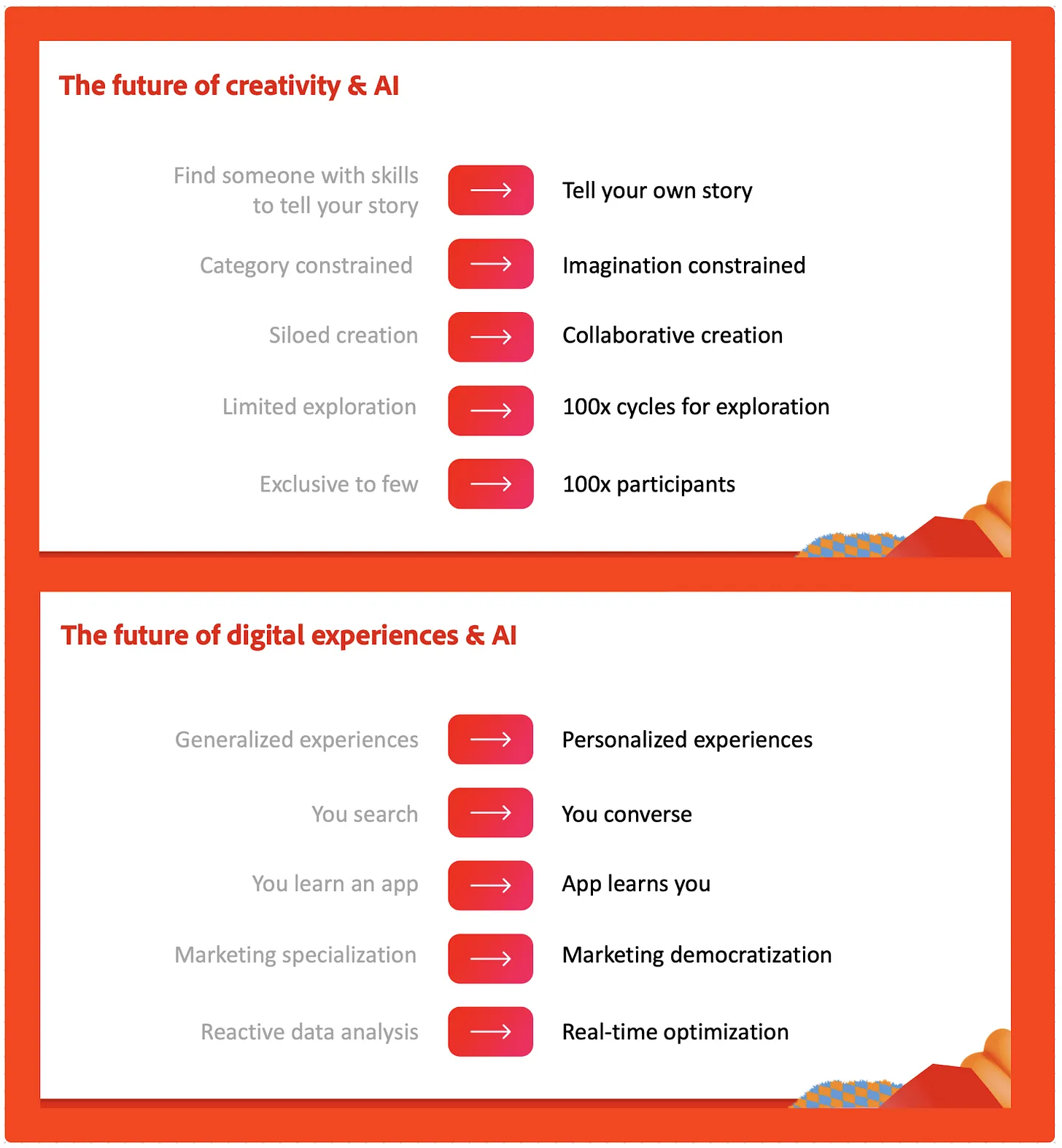
It becomes clear that just prompting to get images is a rather elementary use case of AI, compared to the ability to place and move objects, change perspective, adjust lighting, and many other actions using AI.
Huge new updates to ChatGPT / GPT-4.
1. Upload and chat with any PDF document
2. Use tools without switching chatsHere’s everything you need to know and my thoughts: pic.twitter.com/ESFt7bpGyy
— Rowan Cheung (@rowancheung) October 29, 2023
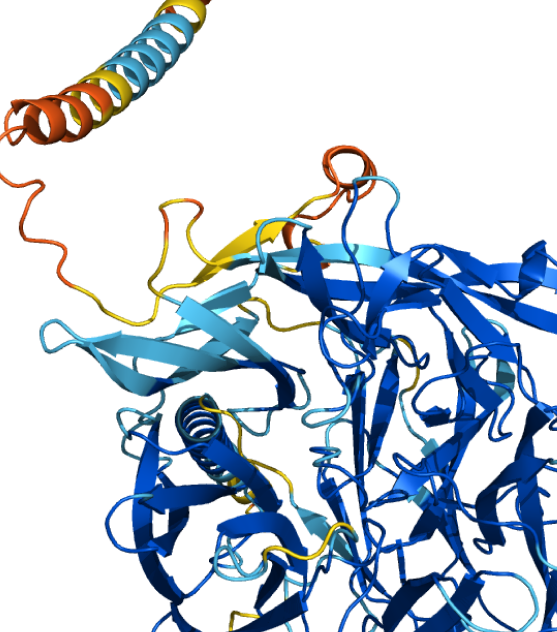
AlphaFold is an AI system developed by DeepMind that predicts a protein’s 3D structure from its amino acid sequence. It regularly achieves accuracy competitive with experiment.
After 25 years of growth for the $68 billion SEO industry, here’s how Google and other tech firms could render it extinct with AI — from fortune.com by Ravi Sen and The Conversation
But one other consequence is that I believe it may destroy the $68 billion search engine optimization industry that companies like Google helped create.
For the past 25 years or so, websites, news outlets, blogs and many others with a URL that wanted to get attention have used search engine optimization, or SEO, to “convince” search engines to share their content as high as possible in the results they provide to readers. This has helped drive traffic to their sites and has also spawned an industry of consultants and marketers who advise on how best to do that.
As an associate professor of information and operations management, I study the economics of e-commerce. I believe the growing use of generative AI will likely make all of that obsolete.
ChatGPT Plus members can upload and analyze files in the latest beta — from theverge.com by Wes Davis
ChatGPT Plus members can also use modes like Browse with Bing without manually switching, letting the chatbot decide when to use them.
OpenAI is rolling out new beta features for ChatGPT Plus members right now. Subscribers have reported that the update includes the ability to upload files and work with them, as well as multimodal support. Basically, users won’t have to select modes like Browse with Bing from the GPT-4 dropdown — it will instead guess what they want based on context.
Google agrees to invest up to $2 billion in OpenAI rival Anthropic — from reuters.com by Krystal Hu
Oct 27 (Reuters) – Alphabet’s (GOOGL.O) Google has agreed to invest up to $2 billion in the artificial intelligence company Anthropic, a spokesperson for the startup said on Friday.
The company has invested $500 million upfront into the OpenAI rival and agreed to add $1.5 billion more over time, the spokesperson said.
Google is already an investor in Anthropic, and the fresh investment would underscore a ramp-up in its efforts to better compete with Microsoft (MSFT.O), a major backer of ChatGPT creator OpenAI, as Big Tech companies race to infuse AI into their applications.