Eighty-seven percent of states lack enough speech language pathologists to reach all the infants and toddlers in need. Eighty-two percent suffer from physical therapist shortages. And among the service coordinators who organize critical therapies for America’s youngest children, the turnover rate is a stunning 42 percent, according to information compiled by the IDEA Infant and Toddler Coordinators Association from a survey that had 45 state respondents. (The K-12 teacher turnover rate, by contrast, only reached a mere 10 percent during the pandemic.)
With all the attention recently to the teacher and child care worker shortages in communities across America, the sector facing the most severe crisis has received comparatively little notice from policy makers, the media or the general public: those providing critical early intervention therapies for children under age 3 with developmental delays.
9 Tips for Using AI for Learning (and Fun!) — from edutopia.org by Daniel Leonard; via Donna Norton on X/Twitter These innovative, AI-driven activities will help you engage students across grade levels and subject areas.
Here are nine AI-based lesson ideas to try across different grade levels and subject areas.
ELEMENTARY SCHOOL
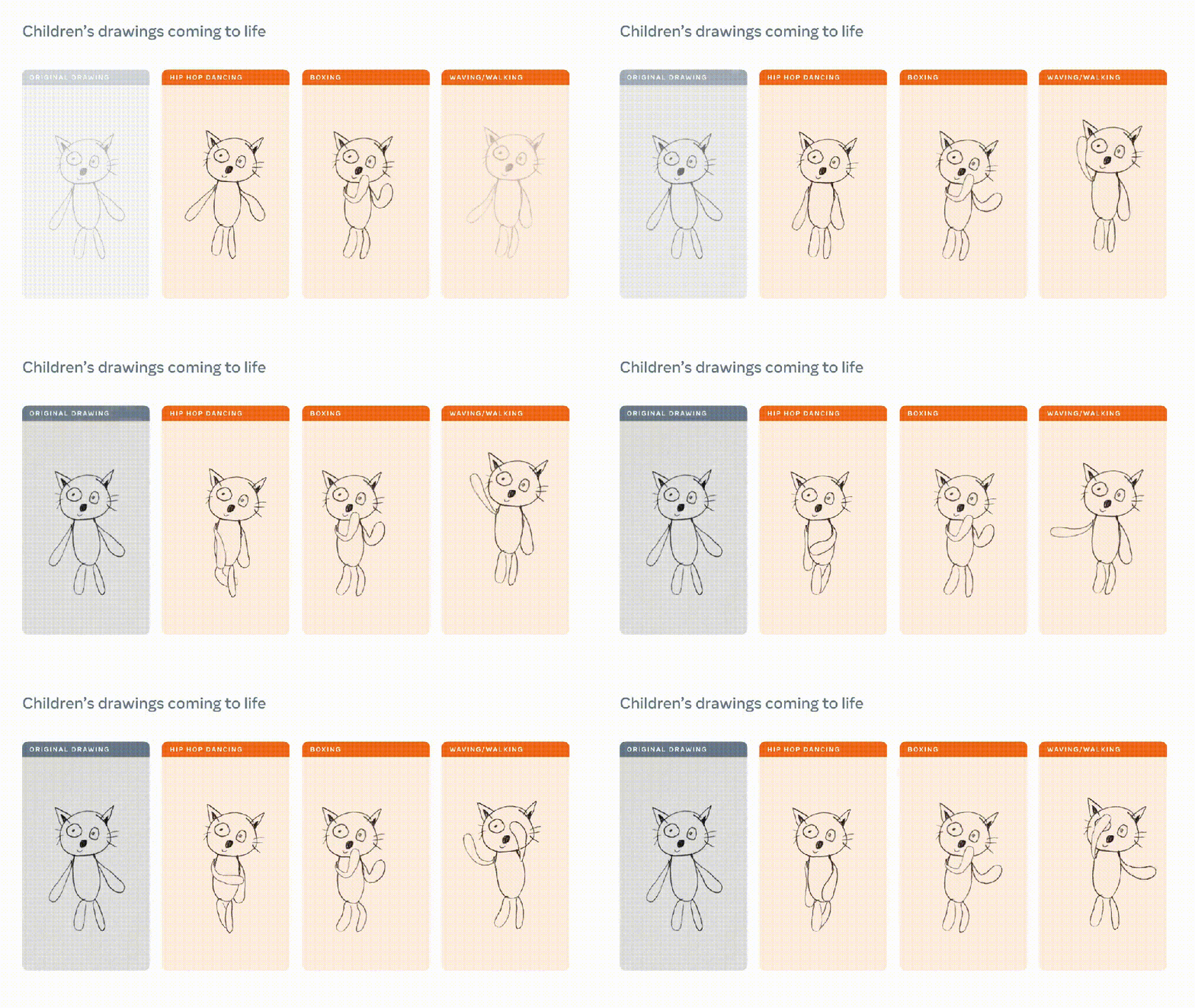
Courtesy of Meta AI Research
A child’s drawing (left) and animations created with Animated Drawings.
.
1. Bring Student Drawings to Life: Young kids love to sketch, and AI can animate their sketches—and introduce them to the power of the technology in the process.
HIGH SCHOOL
8. Speak With AI in a Foreign Language: When learning a new language, students might feel self-conscious about making mistakes and avoid practicing as much as they should.
Though not necessarily about education, also see:
How I Use AI for Productivity — from wondertools.substack.com by Jeremy Caplan In this Wonder Tools audio post I share a dozen of my favorite AI tools
From DSC: I like Jeremy’s mentioning the various tools that he used in making this audio post:
Adobe podcast for recording and removing background noise from the opening supplemental audio clip, and Adobe Mic check to gauge microphone positioning
From DSC: As I’ve long stated on the Learning from the Living [Class]Room vision, we are heading toward a new AI-empowered learning platform — where humans play a critically important role in making this new learning ecosystem work.
Along these lines, I ran into this site out on X/Twitter. We’ll see how this unfolds, but it will be an interesting space to watch.
From DSC: This future learning platform will also focus on developing skills and competencies. Along those lines, see:
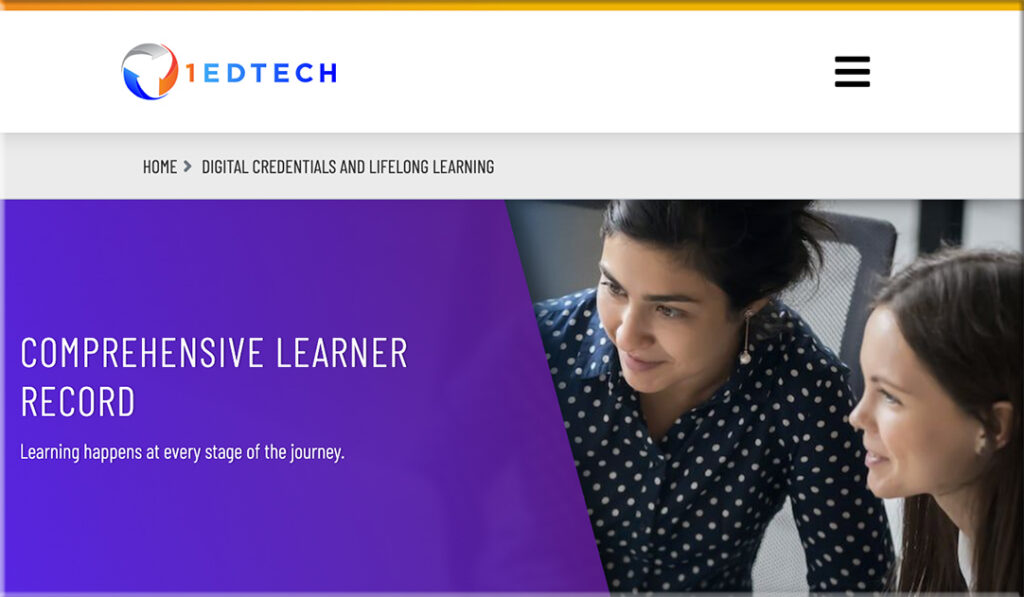
Scale for Skills-First— from the-job.beehiiv.com by Paul Fain An ed-tech giant’s ambitious moves into digital credentialing and learner records.
A Digital Canvas for Skills
Instructure was a player in the skills and credentials space before its recent acquisition of Parchment, a digital transcript company. But that $800M move made many observers wonder if Instructure can develop digital records of skills that learners, colleges, and employers might actually use broadly.
…
Ultimately, he says, the CLR approach will allow students to bring these various learning types into a coherent format for employers.
Instructure seeks a leadership role in working with other organizations to establish common standards for credentials and learner records, to help create consistency. The company collaborates closely with 1EdTech. And last month it helped launch the 1EdTech TrustEd Microcredential Coalition, which aims to increase quality and trust in digital credentials.
“We need more high-impact learning practices in prison” — from college-inside.beehiiv.com by Charlotte West Internships, apprenticeships, and work learning opportunities allow incarcerated students to keep learning after they graduate.
Maine and other states like Colorado are trying to tackle this issue through internships and employment opportunities that allow incarcerated students and graduates to put their professional knowledge and skills into practice — and in some cases, earn a living wage while doing so.
Employment and professional training opportunities inside were a major theme at the 2023 National Conference for Higher Education in Prison, where 800 educators, administrators, students and alumni from dozens of prison education programs gathered in Atlanta, Georgia last week.
The new apprenticeships — from jordanfurlong.substack.com by Jordan Furlong Several American states are rewriting the rules of lawyer licensure and bringing the US into line with a key element of lawyer formation worldwide: supervised practice.
Change comes so gradually and fitfully to the legal sector that when something truly revolutionary happens — an actual turning point with an identifiable real-world impact — we have to mark the occasion. One such revolution broke out in the United States last week, opening up fantastic new possibilities for Americans who want to become lawyers.
The Oregon Supreme Court approved a new licensure program that does not require passage of a traditional written bar exam. After graduating from law school, aspiring Oregon lawyers can complete 675 hours of paid legal work under the supervision of an experienced attorney, assembling a portfolio of legal work to be assessed by bar admission officials. Candidates must submit eight samples of legal writing, take the lead in at least two initial client interviews or client counseling sessions, and oversee two negotiations, among other requirements.
Jordan mentions what’s going on in several other states including:
Utah
Washington
Minnesota
Nevada
California
Massachusetts
South Dakota
From DSC: The Bar Exam doesn’t have a good reputation for actually helping get someone ready to practice law. So this is huge news indeed! The U.S. needs more people/specialists at the legal table moving forward. The items Jordan relays in this posting are a huge step forward in making that a reality.
For other innovations within the legal realm, see:
We are excited to announce the launch of our @lawschoolai YouTube channel!
Our “Law Student Edition” series is specifically crafted to enhance your learning experience.
Picture this: A world where anyone can unlock the doors to legal expertise, no matter their background or resources. Introducing Law School AI – the game-changing platform turning this vision into reality. Our mission? To make legal education accessible, affordable, and tailored to every learner’s unique style, by leveraging the power of artificial intelligence.
As a trailblazing edtech company, Law School AI fuses cutting-edge AI technology with modern pedagogical techniques to craft a personalized, immersive, and transformative learning experience. Our platform shatters boundaries, opening up equal opportunities for individuals from all walks of life to master the intricacies of law.
Embrace a new era of legal education with Law School AI, where the age-old law school experience is reimagined as a thrilling, engaging, and interactive odyssey. Welcome to the future of legal learning.
What is assistive technology?— from understood.org by Andrew M.I. Lee, JD; expert reviewed by Shelley Haven Assistive technology (AT) are tools that let people with differences work around challenges. They make tasks and activities accessible at school, work, and home. Learn how AT apps and software can help with reading, writing, math, and more.
These could help with the creation of interactive learning assistants, aligned with curricula.
They can be easily created with natural language programming.
Important to note users must have a ChatGPT Plus paid account
Custom GPT Store:
Marketplace for sharing and accessing educational GPT tools created by other teachers.
A store could offer access to specialised tools for diverse learning needs.
A store could enhance teaching strategies when accessing proven, effective GPT applications.
From DSC: I appreciate Dan’s potential menu of options for a child’s education:
Monday AM: Sports club
Monday PM: Synthesis Online School AI Tutor
Tuesday AM: Music Lesson
Tuesday PM: Synthesis Online School Group Work
Wednesday AM: Drama Rehearsal
Wednesday PM: Synthesis Online School AI Tutor
Thursday AM: Volunteer work
Thursday PM: Private study
Friday AM: Work experience
Friday PM: Work experience
Our daughter has special learning needs and this is very similar to what she is doing.
The future of generative AI in higher ed? How to be critical, pragmatic, and playful at once? Nothing like having someone you admire ask you hard questions in a friendly way. This Q&A with Leon Furze got me to take a stab at articulating some responses.https://t.co/IxreZYwWmv
— Anna Mills, annamillsoer.bsky.social, she/her (@EnglishOER) November 13, 2023
Two boxes. In my May Cottesmore presentation, I put up two boxes:
(a) Box 1 — How educators can use AI to do what they do now (lesson plans, quizzes, tests, vocabulary lists, etc.)
(b) Box 2 — How the education system needs to change because, in the near future (sort of already), everyone is going to have multiple AIs working with them all day, and the premium on intelligence, especially “knowledge-based” intelligence, is going to decline rapidly. It’s hard to think that significant changes in the education system won’t be needed to accommodate that change.
There is a lot of focus on preparing educators to work in Box 1, which is important, if for no other reason than that they can see the power of even the current but limited technologies, but the hard questions are starting to be about Box 2. I encourage you to start those conversations, as the “ed tech” companies already are, and they’ll be happy to provide the answers and the services if you don’t want to.
Practical suggestions: Two AI teams in your institution. Team 1 works on Box A and Team 2 works on Box B.
The Beatles’ final song is now streaming thanks to AI— from theverge.com by Chris Welch Machine learning helped Paul McCartney and Ringo Starr turn an old John Lennon demo into what’s likely the band’s last collaborative effort.
Artificial intelligence is nearly twice as good at grading the aggressiveness of a rare form of cancer from scans as the current method, a study suggests.
By recognising details invisible to the naked eye, AI was 82% accurate, compared with 44% for lab analysis.
Researchers from the Royal Marsden Hospital and Institute of Cancer Research say it could improve treatment and benefit thousands every year.
They are also excited by its potential for spotting other cancers early.
Researchers from Microsoft Research Asia, Peking University, and Xi’an Jiaotong University have developed a new technique to improve large language models’ (LLMs) ability to solve math problems by having them learn from their mistakes, akin to how humans learn.
The researchers have revealed a pioneering strategy, Learning from Mistakes (LeMa), which trains AI to correct its own mistakes, leading to enhanced reasoning abilities, according to a research paper published this week.
You could think of the recent history of A.I. chatbots as having two distinct phases.
The first, which kicked off last year with the release of ChatGPT and continues to this day, consists mainly of chatbots capable of talking about things. Greek mythology, vegan recipes, Python scripts — you name the topic and ChatGPT and its ilk can generate some convincing (if occasionally generic or inaccurate) text about it.
That ability is impressive, and frequently useful, but it is really just a prelude to the second phase: artificial intelligence that can actually do things. Very soon, tech companies tell us, A.I. “agents” will be able to send emails and schedule meetings for us, book restaurant reservations and plane tickets, and handle complex tasks like “negotiate a raise with my boss” or “buy Christmas presents for all my family members.”
From DSC: Very cool!
Introducing, Motion Brush.
A new way to add controlled movement to your generations.
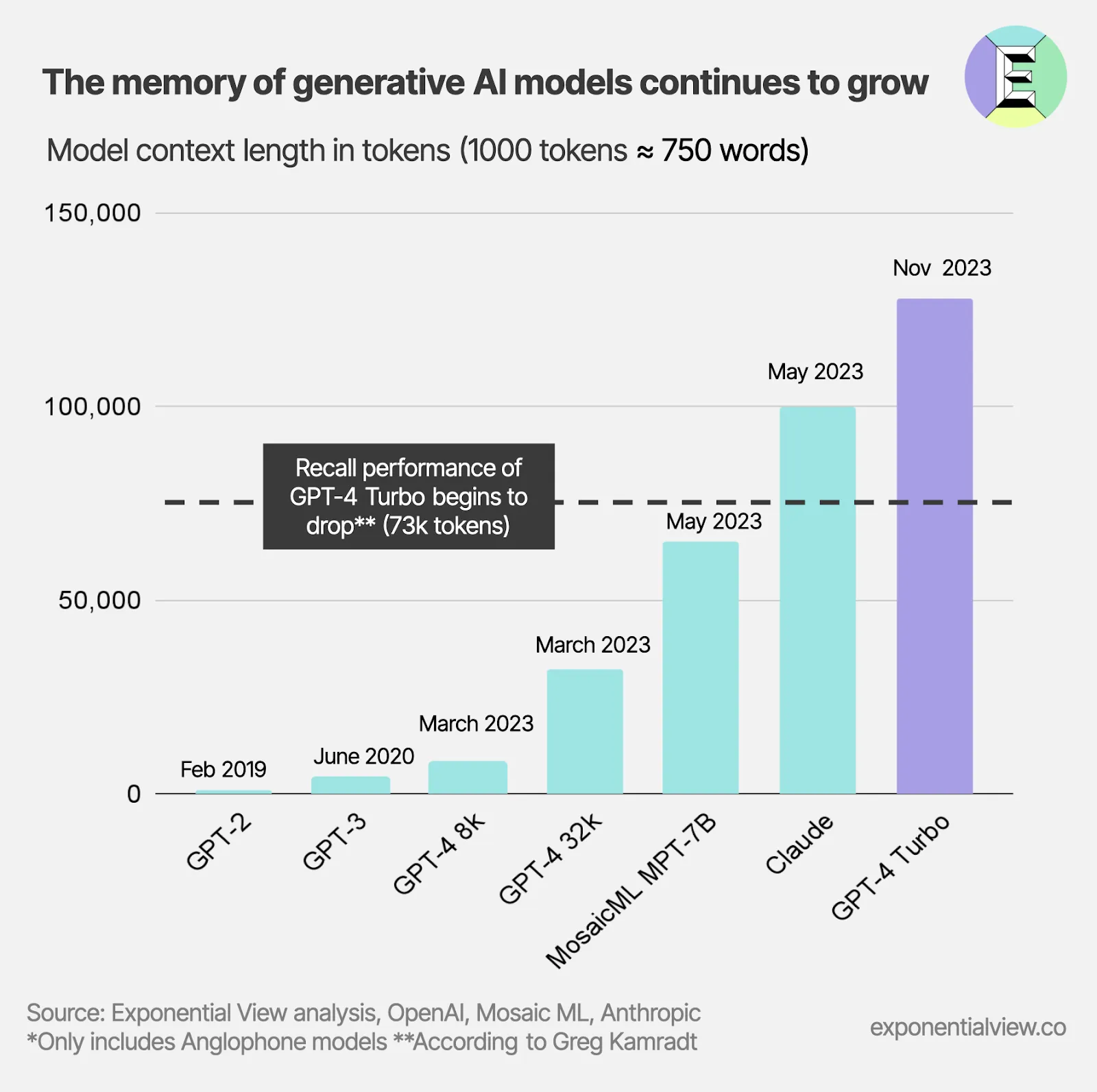
On Monday, Nvidia (ticker: NVDA) announced its new H200 Tensor Core GPU. The chip incorporates 141 gigabytes of memory and offers up to 60% to 90% performance improvements versus its current H100 model when used for inference, or generating answers from popular AI models.
From DSC: The exponential curve seems to be continuing — 60% to 90% performance improvements is a huge boost in performance.
Technology is all about solving big thorny problems. Yet one of the hardest things about solving hard problems is knowing where to focus our efforts. There are so many urgent issues facing the world. Where should we even begin? So we asked dozens of people to identify what problem at the intersection of technology and society that they think we should focus more of our energy on. We queried scientists, journalists, politicians, entrepreneurs, activists, and CEOs.
Some broad themes emerged: the climate crisis, global health, creating a just and equitable society, and AI all came up frequently. There were plenty of outliers, too, ranging from regulating social media to fighting corruption.
For this reason he had to be made like them, fully human in every way, in order that he might become a merciful and faithful high priest in service to God, and that he might make atonement for the sins of the people. Because he himself suffered when he was tempted, he is able to help those who are being tempted.
31 “The days are coming,” declares the Lord, “when I will make a new covenant with the people of Israel and with the people of Judah. 32 It will not be like the covenant I made with their ancestors when I took them by the hand to lead them out of Egypt, because they broke my covenant, though I was a husband to them,” declares the Lord. 33 “This is the covenant I will make with the people of Israel after that time,” declares the Lord. “I will put my law in their minds and write it on their hearts. I will be their God, and they will be my people. 34 No longer will they teach their neighbor, or say to one another, ‘Know the Lord,’ because they will all know me, from the least of them to the greatest,” declares the Lord. “For I will forgive their wickedness and will remember their sins no more.”
From the military to the workforce: How to leverage veterans’ skills — from mckinsey.com Traditional ways of hiring make it harder for many service members to land civilian jobs. A new approach could help veterans transition to the workforce—and add $15 billion to the US economy.
This is where military veterans can make a difference. Veterans represent a source of labor potential that is untapped relative to the breadth of experience and depth of skills that they acquire and develop during their service. Members of the military receive technical training, operate under pressure in austere environments, and develop strong interpersonal skills throughout their service, making them well qualified for numerous civilian occupations. While not every military role is directly transferrable to a civilian job, most skills are—including those that correspond to US industries experiencing labor shortages, such as infrastructure and manufacturing.
The legal world in 10 years (if we’re really lucky) — from jordanfurlong.substack.com by Jordan Furlong Here are eight predictions for how the legal sector will be different and mostly better in 2033. If you have an alternative vision, there’s one sure way to prove me wrong.
What part are you going to play in determining the future? This isn’t a spectator sport or a video game. “The future” will be what you (and everyone else) make it by your decisions, commitments, sacrifices, and leadership — or, equally, by your inaction on all these fronts.
There’s a meme making the rounds that says, “People in time-travel movies are always afraid of committing one tiny action in the past, because it might completely change the present. But people in the present don’t seem to believe that committing one tiny action in the present could completely change the future.” I think that has it exactly right. The future we get is the future that you and I start making in the present, meaning today, right now.
Shadow AI: A Thorny Problem For Law Firms — from abovethelaw.com by Sharon D. Nelson, John W. Simek, and Michael C. Maschke Its use is often unknown to a law firm’s IT or security group.
Two initial high-level takeaways from the convening include:
Every state effort is different for a reason. There are many factors that leaders must consider when determining which model(s) of regulatory reform to pursue and how. Some examples of factors to consider include whether the state is a mandatory or voluntary bar state, whether the supreme court justices in the state are appointed or elected, and whether the model(s) to be pursued is market-based or free to consumers. The answers to these questions will likely dictate which stakeholders will likely be allies, which stakeholders will likely be opposed, and which strategy and approach to pursue. .
We need to better engage the public in regulatory reform efforts. While some organizations and efforts have included public engagement from the outset, (shout-outs to Innovation for Justice and Arizona more generally, as well as Alaska Legal Services Corporation and Frontline Justice), most have not, and this has likely hindered efforts to some degree. The data we have thus far indicates the public is interested in obtaining legal services from alternative service providers such as allied legal professionals and community justice workers, as well as through alternative business models. The more we can engage the public in this conversation, the better chance we have of creating regulatory reform that is aligned with their needs and the better chance leaders have of getting their respective efforts over the finish line.
Because this is an area within the regulatory reform space that is ripe for further development and impact, IAALS will soon be launching a project on consumer engagement. Stay tuned for more updates!
IAALS will share a more comprehensive list of lessons learned and recommendations for building and sustaining regulatory reform in its post-convening report, currently set to be released in early 2024.
Thanks for dropping by my Learning Ecosystems blog!
My name is Daniel Christian and this blog seeks to cover the teaching and learning environments within the K-12 (including homeschooling, learning pods/micro-schools), collegiate, and corporate training spaces -- whether those environments be face-to-face, blended, hyflex, or 100% online.
Just as the organizations that we work for have their own learning ecosystems, each of us has our own learning ecosystem. We need to be very intentional about enhancing those learning ecosystems -- as we all need to be lifelong learners in order to remain marketable and employed. It's no longer about running sprints (i.e., getting a 4-year degree or going to a vocational school and then calling it quits), but rather, we are all running marathons now (i.e., we are into lifelong learning these days).