Before The Year Ends, Audit Your Own Choices as a Teacher — from thebrokencopier.substack.com/ by Marcus Luther
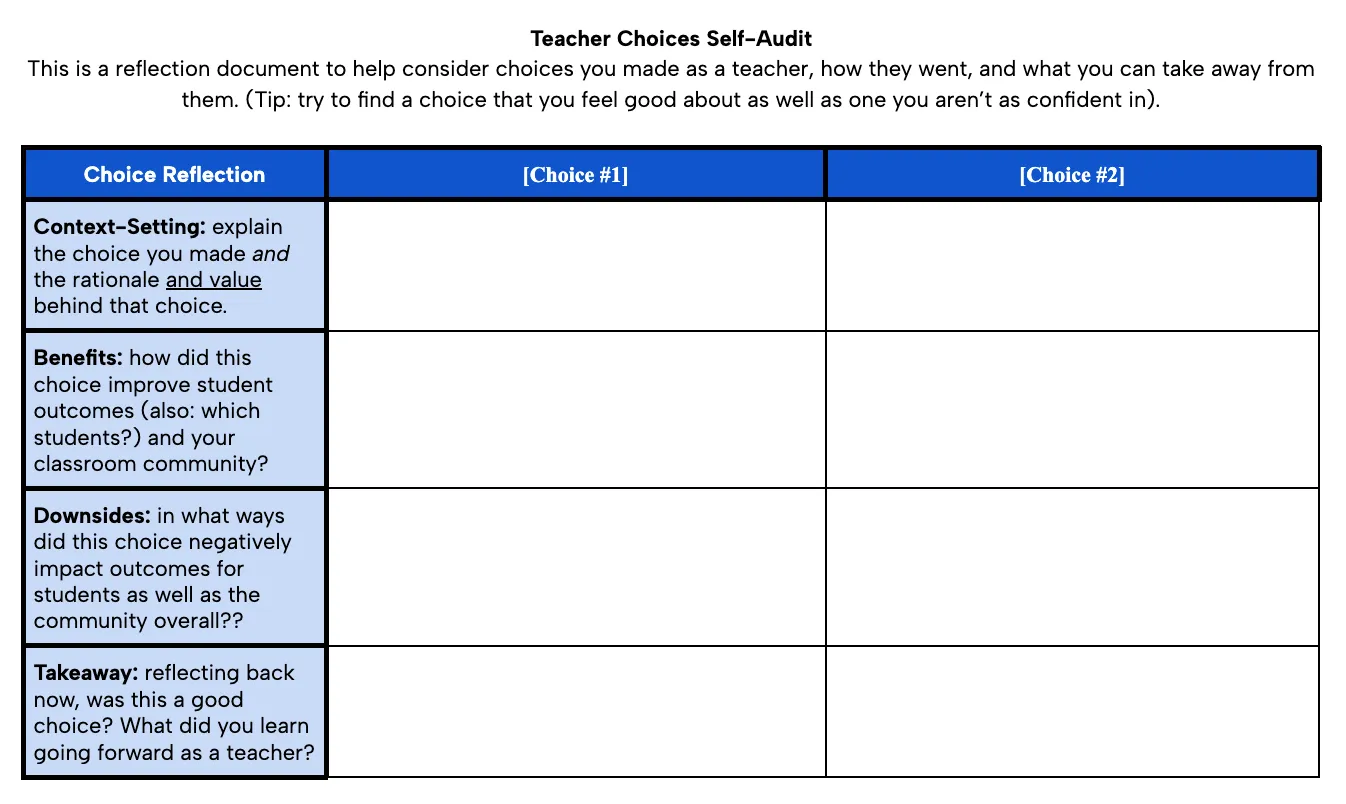
Included: a reflection form you can use, if you want!

However, in my experience, far too often there is too little time actually spent considering and reflecting upon the choices we make as teachers.

So that’s what I wanted to write about today—along with a tool that I’m using refocus my own reflections around the choices I’ve made in my classroom this year.
.


A couple other items re: teaching:


Positive behavior strategies: A guide for teachers — from understood.org by Amanda Morin

What you’ll learn

  • Why use positive behavior strategies?
  • What do positive behavior strategies look like?
  • How do I put positive behavior strategies into practice?
  • How can families support this at home?
  • Additional resources and research

Empathetic sentence starters for teachers — from understood.org by Amanda Morin
Learn how sentence starters can help you respond to your students with empathy. Get a one-page printable of empathetic sentence starters to help you get started.

Before jumping into fix-it mode, ask some open-ended questions and give kids time to answer. Try not to make assumptions or impose your viewpoint. Use sentence starters like these:

  • Could you tell me a little more?
  • Can you tell me what you need right now?
  • Is there anything else you’d like to share?
  • Would you like my help in figuring this out?

Average Teacher Pay Passes $70K. How Much Is It in Your State? — from edweek.org by Mark Lieberman

For the first time ever, the average teacher salary in America has topped $70,000 this school year.

Teacher salaries are growing faster than at any previous point since the Great Recession—but with inflation factored in, teachers still take home less on average than they did a decade ago, according to the nation’s largest teachers’ union.

The nationwide average teacher salary during the 2023-24 school year is $71,699, the National Education Association estimates in its annual report that ranks and analyzes teacher pay by state.


Microsoft’s new ChatGPT competitor… — from The Rundown AI

The Rundown: Microsoft is reportedly developing a massive 500B parameter in-house LLM called MAI-1, aiming to compete with top AI models from OpenAI, Anthropic, and Google.


2024 | The AI Founder Report | Business Impact, Use cases, & Tools — from Hampton; via The Neuron

Hampton runs a private community for high-growth tech founders and CEOs. We asked our community of founders and owners how AI has impacted their business and what tools they use

Here’s a sneak peek of what’s inside:

  • The budgets they set aside for AI research and development
  • The most common (and obscure) tools founders are using
  • Measurable business impacts founders have seen through using AI
  • Where they are purposefully not using AI and much more

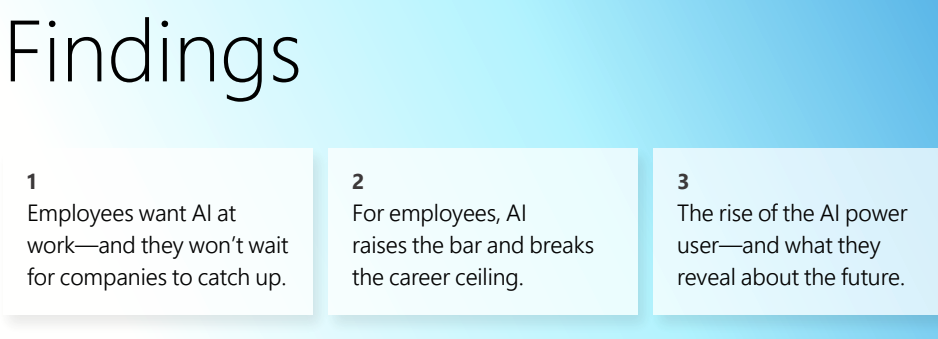
2024 Work Trend Index Annual Report from Microsoft and LinkedIn
AI at Work Is Here. Now Comes the Hard Part Employees want AI, leaders are looking for a path forward.

Also relevant, see Microsoft’s web page on this effort:

To help leaders and organizations overcome AI inertia, Microsoft and LinkedIn looked at how AI will reshape work and the labor market broadly, surveying 31,000 people across 31 countries, identifying labor and hiring trends from LinkedIn, and analyzing trillions of Microsoft 365 productivity signals as well as research with Fortune 500 customers. The data points to insights every leader and professional needs to know—and actions they can take—when it comes to AI’s implications for work.


Information Age vs Generation Age Technologies for Learning — from opencontent.org by David Wiley

Remember (emphasis DSC)

  • the internet eliminated time and place as barriers to education, and
  • generative AI eliminates access to expertise as a barrier to education.

Just as instructional designs had to be updated to account for all the changes in affordances of online learning, they will need to be dramatically updated again to account for the new affordances of generative AI.


The Curious Educator’s Guide to AI | Strategies and Exercises for Meaningful Use in Higher Ed  — from ecampusontario.pressbooks.pub by Kyle Mackie and Erin Aspenlieder; via Stephen Downes

This guide is designed to help educators and researchers better understand the evolving role of Artificial Intelligence (AI) in higher education. This openly-licensed resource contains strategies and exercises to help foster an understanding of AI’s potential benefits and challenges. We start with a foundational approach, providing you with prompts on aligning AI with your curiosities and goals.

The middle section of this guide encourages you to explore AI tools and offers some insights into potential applications in teaching and research. Along with exposure to the tools, we’ll discuss when and how to effectively build AI into your practice.

The final section of this guide includes strategies for evaluating and reflecting on your use of AI. Throughout, we aim to promote use that is effective, responsible, and aligned with your educational objectives. We hope this resource will be a helpful guide in making informed and strategic decisions about using AI-powered tools to enhance teaching and learning and research.


Annual Provosts’ Survey Shows Need for AI Policies, Worries Over Campus Speech — from insidehighered.com by Ryan Quinn
Many institutions are not yet prepared to help their faculty members and students navigate artificial intelligence. That’s just one of multiple findings from Inside Higher Ed’s annual survey of chief academic officers.

Only about one in seven provosts said their colleges or universities had reviewed the curriculum to ensure it will prepare students for AI in their careers. Thuswaldner said that number needs to rise. “AI is here to stay, and we cannot put our heads in the sand,” he said. “Our world will be completely dominated by AI and, at this point, we ain’t seen nothing yet.”


Is GenAI in education more of a Blackberry or iPhone? — from futureofbeinghuman.com by Andrew Maynard
There’s been a rush to incorporate generative AI into every aspect of education, from K-12 to university courses. But is the technology mature enough to support the tools that rely on it?

In other words, it’s going to mean investing in concepts, not products.

This, to me, is at the heart of an “iPhone mindset” as opposed to a “Blackberry mindset” when it comes to AI in education — an approach that avoids hard wiring in constantly changing technologies, and that builds experimentation and innovation into the very DNA of learning.

For all my concerns here though, maybe there is something to being inspired by the Blackberry/iPhone analogy — not as a playbook for developing and using AI in education, but as a mindset that embraces innovation while avoiding becoming locked in to apps that are detrimentally unreliable and that ultimately lead to dead ends.


Do teachers spot AI? Evaluating the detectability of AI-generated texts among student essays — from sciencedirect.com by Johanna Fleckenstein, Jennifer Meyer, Thorben Jansen, Stefan D. Keller, Olaf Köller, and Jens Möller

Highlights

  • Randomized-controlled experiments investigating novice and experienced teachers’ ability to identify AI-generated texts.
  • Generative AI can simulate student essay writing in a way that is undetectable for teachers.
  • Teachers are overconfident in their source identification.
  • AI-generated essays tend to be assessed more positively than student-written texts.

Can Using a Grammar Checker Set Off AI-Detection Software? — from edsurge.com by Jeffrey R. Young
A college student says she was falsely accused of cheating, and her story has gone viral. Where is the line between acceptable help and cheating with AI?


Use artificial intelligence to get your students thinking critically — from timeshighereducation.com by Urbi Ghosh
When crafting online courses, teaching critical thinking skills is crucial. Urbi Ghosh shows how generative AI can shape how educators can approach this


ChatGPT shaming is a thing – and it shouldn’t be — from futureofbeinghuman.com by Andrew Maynard
There’s a growing tension between early and creative adopters of text based generative AI and those who equate its use with cheating. And when this leads to shaming, it’s a problem.

Excerpt (emphasis DSC):

This will sound familiar to anyone who’s incorporating generative AI into their professional workflows. But there are still many people who haven’t used apps like ChatGPT, are largely unaware of what they do, and are suspicious of them. And yet they’ve nevertheless developed strong opinions around how they should and should not be used.

From DSC:
Yes…that sounds like how many faculty members viewed online learning, even though they had never taught online before.


Romans 12:12 (New International Version)

Be joyful in hope, patient in affliction, faithful in prayer.

14 if my people, who are called by my name, will humble themselves and pray and seek my face and turn from their wicked ways, then I will hear from heaven, and I will forgive their sin and will heal their land.

32 Be kind and compassionate to one another, forgiving each other, just as in Christ God forgave you.


Are Colleges Ready For an Online-Education World Without OPMs? — from edsurge.com by Robert Ubell (Columnist)
Online Program Management companies have helped hundreds of colleges build online degree programs, but the sector is showing signs of strain.

For more than 15 years, a group of companies known as Online Program Management providers, or OPMs, have been helping colleges build online degree programs. And most of them have relied on an unusual arrangement — where the companies put up the financial backing to help colleges launch programs in exchange for a large portion of tuition revenue.

As a longtime administrator of online programs at colleges, I have mixed feelings about the idea of shutting down the model. And the question boils down to this: Are colleges ready for a world without OPMs?


Guy Raz on Podcasts and Passion: Audio’s Ability to Spark Learning — from michaelbhorn.substack.com by Michael B. Horn

This conversation went in a bunch of unexpected directions. And that’s what’s so fun about it. After all, podcasting is all about bringing audio back and turning learning into leisure. And the question Guy and his partner Mindy Thomas asked a while back was: Why not bring kids in on the fun? Guy shared how his studio, Tinkercast, is leveraging the medium to inspire and educate the next generation of problem solvers.

We discussed the power of audio to capture curiosities and foster imagination, how Tinkercast is doing that in and out of the classroom, and how it can help re-engage students in building needed skills at a critical time. Enjoy!


April 2024 Job Cuts Announced by US-Based Companies Fall; More Cuts Attributed to TX DEI Law, AI in April — from challengergray.com

Excerpt (emphasis DSC):

Education
Companies in the Education industry, which includes schools and universities, cut the second-most jobs last month with 8,092 for a total of 17,892. That is a 635% increase from the 2,435 cuts announced during the first four months of 2023.

“April is typically the time school districts are hiring and setting budgets for the next fiscal year. Certainly, there are budgetary constraints, as labor costs rise, but school systems also have a retention and recruitment issue,” said Challenger.


Lifetime college returns differ significantly by major, research finds — from highereddive.com by Lilah Burke
Engineering and computer science showed the best return out of 10 fields of study that were examined.

Dive Brief:

  • The lifetime rate of return for a college education differs significantly by major, but it also varies by a student’s gender and race or ethnicity, according to new peer-reviewed research published in the American Educational Research Journal.
  • A bachelor’s degree in general provides a roughly 9% rate of return for men, and nearly 10% for women, researchers concluded. The majors with the best returns were computer science and engineering.
  • Black, Hispanic and Asian college graduates had slightly higher rates of return than their White counterparts, the study found.
 

The Making of the Access to Justice (A2J) Crisis — from by Nora Freeman Engstrom & David Freeman Engstrom

After decades of neglect, access to justice has roared onto legal and political radars, fueled by a growing realization—first among lawyers but increasingly among the wider American public—that the civil justice system is in crisis. In roughly three-quarters of the 20 million civil cases filed in state courts each year, one side lacks a lawyer—a dynamic that poses a direct challenge to the system’s adversarial core.1  And these are the cases and litigants we can see. Beneath them lies a larger but hidden crisis. It consists of tens of millions more Americans who face genuine legal problems but take no formal legal action to protect their interests.2  As this double-layered calamity has come into focus, state supreme courts, bar associations, and even the crusty American Law Institute are taking note.3

These institutional plaintiffs have built business models around high-volume litigation practices, in large part by leveraging “legal tech,” from e-filing to AI. Yet the legal tech that serves individual Americans on the other side of the “v” remains clunky and limited. The result is a lopsided litigation landscape that’s wreaking havoc on litigants and courts alike.


Educators help children and teens learn how to identify fake news — from WMUK.org by Kalloli Bhatt and Sue Ellen Christian

Last year at the Kalamazoo Valley Museum, kids could learn about how misinformation is made and how to avoid it. Now the media scholar behind the exhibit is adapting it for libraries.

A new exhibit for libraries

That concern also drove the “Wonder Media” exhibit that ran through last year at the Kalamazoo Valley Museum. Sue Ellen Christian is a communications professor at Western Michigan University. The exhibit was her idea. Full disclosure: I’m a former student of Christian’s. We met in her office on campus.

“It’s really important for our entire society to think about the importance of facts and truth to a democracy,” said Christian. “And without an informed citizenry, we cannot have a healthy democracy.”

Christian recently received a grant from the Institute of Museum and Library Services, based in Washington D.C., to adapt the Wonder Media exhibit for public libraries. It’s designed to reach middle-school-age children.

Mainly, with her grant, Christian wants to develop something for students whose schools do not have librarians anymore. The website associated with the exhibit has resources for students, teachers, and libraries.


ChatGPT remembers who you are — from thebrainyacts.beehiiv.com |Brainyacts #191

OpenAI rolls out Memory feature for ChatGPT
OpenAI has introduced a cool update for ChatGPT (rolling out to paid and free users – but not in the EU or Korea), enabling the AI to remember user-specific details across sessions. This memory feature enhances personalization and efficiency, making your interactions with ChatGPT more relevant and engaging.

.

Key Features

  1. Automatic Memory Tracking
    • ChatGPT now automatically records information from your interactions such as preferences, interests, and plans. This allows the AI to refine its responses over time, making each conversation increasingly tailored to you.
  2. Enhanced Personalization
    • The more you interact with ChatGPT, the better it understands your needs and adapts its responses accordingly. This personalization improves the relevance and efficiency of your interactions, whether you’re asking for daily tasks or discussing complex topics.
  3. Memory Management Options
    • You have full control over this feature. You can view what information is stored, toggle the memory on or off, and delete specific data or all memory entries, ensuring your privacy and preferences are respected.


From DSC:
The ability of AI-based applications to remember things about us will have major and positive ramifications for us when we think about learning-related applications of AI.


AI Film Festival | AI comes to filmmaking — from Bloomberg
This week Runway AI Inc., which makes AI video generating and editing tools, held its second annual AI Film Festival in Los Angeles — its first stop before heading to New York next week. To give a sense for how much the event has grown since last year, Runway co-founder CristóbalValenzuela said last year people submitted 300 videos for festival consideration. This year they sent in 3,000.

A crowd of hundreds of filmmakers, techies, artists, venture capitalists and at least one well-known actor (Poker Face star Natasha Lyonne) gathered at the Orpheum Theatre in downtown LA Wednesday night to view the 10 finalists chosen by the festival’s judges.


Are two teachers better than one? More schools say yes to team teaching — from hechingerreport.org by Neal Morton
Early research shows it cuts turnover and improves teachers’ job satisfaction

The model, known as team teaching, isn’t new. It dates back to the 1960s. But Arizona State University resurrected the approach, in which teachers share large groups of students, as a way to rebrand the teaching profession and make it more appealing to prospective educators.

In Mesa, teachers working on a team leave their profession at lower rates, receive higher evaluations and are more likely to recommend teaching to a friend.

Early research also indicates students assigned to educator teams made more growth in reading and passed Algebra I at higher rates than their peers.


Question: What Early Advice Had a Lasting Impact on Your Teaching? — from edutopia.org
Share the pivotal advice that shaped your teaching and learn from others in our community.


What Districts With the Worst Attendance Have in Common — from edweek.org by Sarah D. Sparks

It is tough to bring students back to the classroom once chronic absenteeism rates begin to climb. As more districts struggle with historically high absenteeism, new research suggests they may need a more systemic approach to reengaging students.

A new working paper on Michigan schools released by the Annenberg Center found most school districts with severe attendance problems did not directly address absenteeism when planning school improvement strategies. Among those that did focus on improving attendance, few coordinated their interventions across schools and aligned interventions to combat the specific barriers keeping students from school.

“If you think about the reasons that families are missing school, informing families about their children’s attendance is certainly important, but it’s not like the primary driver of absenteeism,” Singer said, “so there’s a disconnect.”


3 Strategies for Successfully Starting Your Career as a School Leader — from edutopia.org by Alexandra Auriemma
An assistant principal near the end of her second year in the job shares her advice for those moving into leadership roles.

However, I’ve learned that effective leadership isn’t about having all of the answers; it’s about knowing which questions to ask. Effective leaders listen deeply and ask questions that shape people’s thinking, moving the organization from where it is to where it needs to go. 


Building Better Schools: The art of leading change in education — from gettingsmart.com by Tyler Thigpen

Today’s K12 students are spending the vast majority of their time in classrooms listening to answers to questions they did not ask and following rules they did not have a hand in making. Given that this dynamic goes on for years, what is it doing to students’ minds and spirits? To their agency and empowerment? Are we unintentionally graduating dependent young adults?

But what if the opposite were true? What if schools empowered children to flourish? What if schools were the places where they could explore, identify, express, and develop their thoughts, feelings, and goals? There’s power in the uniqueness of every child. It’s time that school designs honor students’ unique calling, preferences, and goals, and encourage them to pursue those. It’s time to move fully into a new era for learning where learners can develop greater self-leadership than ever before.


Shares of two big online education stocks tank more than 10% as students use ChatGPT — from cnbc.com by Michelle Fox; via Robert Gibson on LinkedIn

The rapid rise of artificial intelligence appears to be taking a toll on the shares of online education companies Chegg and Coursera.

Both stocks sank by more than 10% on Tuesday after issuing disappointing guidance in part because of students using AI tools such as ChatGPT from OpenAI.


Synthetic Video & AI Professors — from drphilippahardman.substack.com by Dr. Philippa Hardman
Are we witnessing the emergence of a new, post-AI model of async online learning?

TLDR: by effectively tailoring the learning experience to the learner’s comprehension levels and preferred learning modes, AI can enhance the overall learning experience, leading to increased “stickiness” and higher rates of performance in assessments.

TLDR: AI enables us to scale responsive, personalised “always on” feedback and support in a way that might help to solve one of the most wicked problems of online async learning – isolation and, as a result, disengagement.

In the last year we have also seen the rise of an unprecedented number of “always on” AI tutors, built to provide coaching and feedback how and when learners need it.

Perhaps the most well-known example is Khan Academy’s Khanmigo and its GPT sidekick Tutor Me. We’re also seeing similar tools emerge in K12 and Higher Ed where AI is being used to extend the support and feedback provided for students beyond the physical classroom.


Our Guidance on School AI Guidance document has been updated — from stefanbauschard.substack.com by Stefan Bauschard

We’ve updated the free 72-page document we wrote to help schools design their own AI guidance policies.

There are a few key updates.

  1. Inclusion of Oklahoma and significant updates from North Carolina and Washington.
  2. More specifics on implementation — thanks NC and WA!
  3. A bit more on instructional redesign. Thanks to NC for getting this party started!

Creating a Culture Around AI: Thoughts and Decision-Making — from er.educause.edu by Courtney Plotts and Lorna Gonzalez

Given the potential ramifications of artificial intelligence (AI) diffusion on matters of diversity, equity, inclusion, and accessibility, now is the time for higher education institutions to adopt culturally aware, analytical decision-making processes, policies, and practices around AI tools selection and use.


The Digital Transformation Journey: Lessons For Lawyers Embracing AI — from abovethelaw.com by Olga V. Mack
The journey from the days of leather-bound law books to the digital age — and now toward an AI-driven future — offers valuable lessons for embracing change.

No One Will Miss The ‘Good Old Days’
I have yet to meet a lawyer nostalgic for the days of manually updating law reports or sifting through stacks of books for a single precedent. The convenience, speed, and breadth of digital research tools have made the practice of law more efficient and effective. As we move further into the AI era, the enhancements in predictive analytics, document automation, and legal research will make the “good old days” of even the early digital age seem quaint. The efficiencies and capabilities AI brings to the table are likely to become just as indispensable as online databases are today.

The Way We ‘Law’ Will Change For The Better
The ultimate goal of integrating AI into legal practice isn’t just to replace old methods with new ones; it’s to enhance our ability to serve justice, increase access to legal services, and improve the quality of our work. AI promises to automate mundane tasks, predict legal outcomes with greater accuracy, and unearth insights from vast data. These advancements will free us to focus more on the nuanced, human aspects of law — strategy, empathy, and ethical judgment.


AI to Help Double Legal Tech Market Over Five Years, Gartner Says — from news.bloomberglaw.com by Isabel Gottlieb (behind a paywall)

  • Tech to take up a bigger share of in-house legal spend
  • Generative AI boom has much longer to run

The legal tech market will expand to $50 billion by 2027, driven by the generative artificial intelligence boom, according to an analysis by market research firm Gartner Inc.

That growth, up from about $23 billion in 2022, will be driven by continued law firm spending on AI legal tech, as well as in-house departments allocating more of their overall budgets to technology, said Chris Audet, chief of research in Gartner’s legal, risk and compliance leaders practice. The market size prediction, released publicly on Thursday, comes from a late-2023 analysis for Gartner clients, and the 2022 market size comes from …


Legal Tech Market To See Huge Lift Off Thanks to GenAI — from digit.fyi by Elizabeth Greenberg

The global legal technology market has grown significantly in recent years and generative AI (GenAI) will accelerate this growth, meaning the market will reach $50 billion in value by 2027, according to Gartner.

“GenAI has huge potential for bringing more automation to the legal space,” said Chris Audet, chief of research in the Gartner for legal, risk & compliance leaders practice.

“Rapid GenAI developments, and the widespread availability of consumer tools such as OpenAI’s ChatGPT and Google’s Bard, will quickly increase the number of established legal technology use cases, in turn creating growing market conditions for an increasing number of legal-focused tools.”

“New technologies can fundamentally change the way legal organizations do business, and GenAI has enormous potential to do this,” an analyst at Gartner said.


Revolutionizing Legal Tech in 48 Hours — from law.stanford.edu by Monica Schreiber
At CodeX Hackathon, SLS Students Help Create Award-Winning AI Tools to Help Veterans and Streamline M&A

Disabled veterans seeking to file claims with the Veterans Administration are faced with multiple hurdles and reams of paperwork. Many vets resort to paying third-party companies thousands of dollars to help them with the process.

What if there were a way to streamline the claims process—to condense burdensome information gathering and data inputting into a linear, simplified set of tasks guided by a chatbot? How long would it take to roll out a tool that could accomplish that?

The answer: about 48 hours—at least for an interdisciplinary team of students from Stanford University’s schools of Law, Business, and Computer Science collaborating feverishly during Codex’s Large Language Model (LLM) Hackathon held recently on campus.


What If Your Law Firm Had A Blank Page For Legal Tech? — from artificiallawyer.com

f law firms had a blank page for legal technology and innovation, what would they do?

While organisations across all sectors are getting to grips with the opportunities and risks posed by genAI, forward-thinking law firm leaders are considering what it means for their businesses – today, tomorrow, and the day after tomorrow.

But some firms remain constrained by yesterday, due to legacy processes, ways of working and mindsets. To create the conditions for change, firms need to adopt a ‘blank page’ approach and review all areas of their businesses by asking: if we were starting afresh, how would we design the organisation to future-proof it to achieve transformative growth with genAI at the core?

From DSC:
This sentence reminds me of the power of culture:

But some firms remain constrained by yesterday, due to legacy processes, ways of working and mindsets.


Fresh Voices on Legal Tech with Sarah Glassmeyer — from legaltalknetwork.com by Dennis Kennedy, Tom Mighell, and Sarah Glassmeyer

What if, instead of tech competence being this scary, overwhelming thing, we showed lawyers how to engage with technology in a more lighthearted, even playful, way? The reality is—tech competency doesn’t have an endpoint, but the process of continuous learning shouldn’t be dull and confusing. Sarah Glassmeyer joins Dennis and Tom to talk about her perspectives on technology education for attorneys, the latest trends in the legal tech world and new AI developments, and growing your knowledge of technology by building on small skills, one at a time.
.



How Legal Technology Can Add Value to an M&A Practice — from lexology.com

Following is a primer on some of the A.I.-driven legal technologies, from contract review and automated due-diligence solutions to deal collaboration and closing-management tools, that can drive productivity and efficiency during the four phases of an M&A transaction, as well as enhance market insight and client service.


Romans 14:11

It is written: “‘As surely as I live,’ says the Lord, ‘every knee will bow before me; every tongue will acknowledge God.’”

Job 19:25

I know that my redeemer lives, and that in the end he will stand on the earth.

Psalm 5:1-3

For the director of music. For pipes. A psalm of David.

Listen to my words, Lord,
    consider my lament.
Hear my cry for help,
    my King and my God,
    for to you I pray.
In the morning, Lord, you hear my voice;
    in the morning I lay my requests before you
    and wait expectantly.


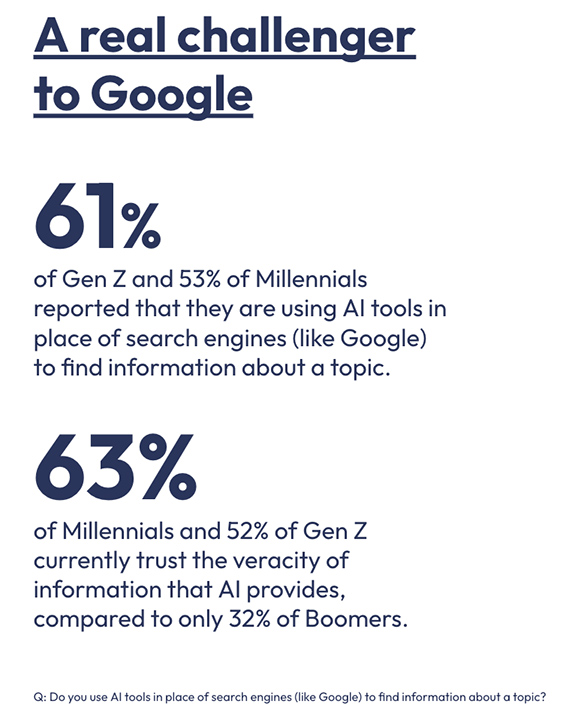
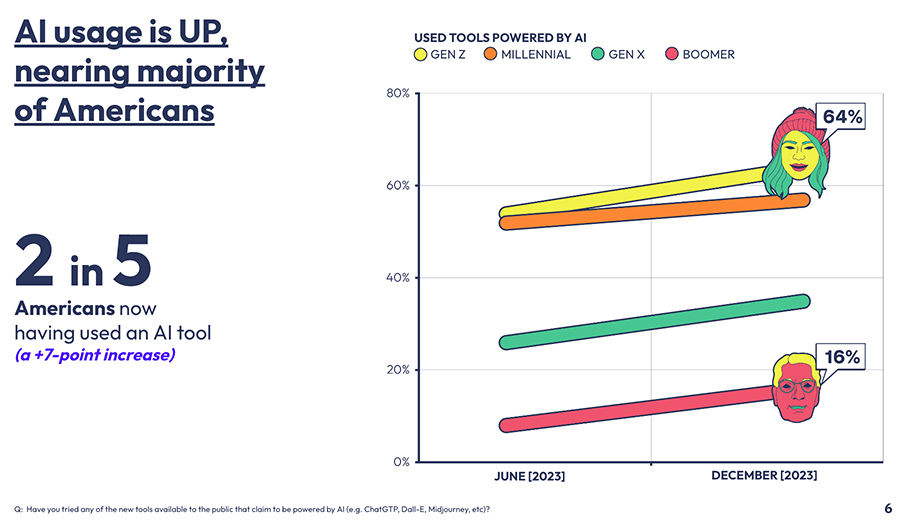
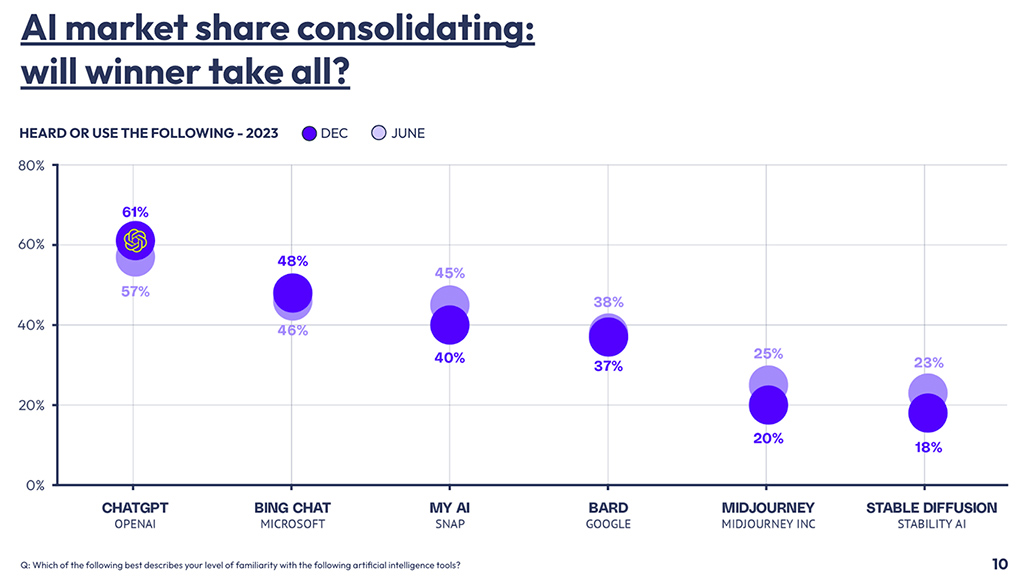
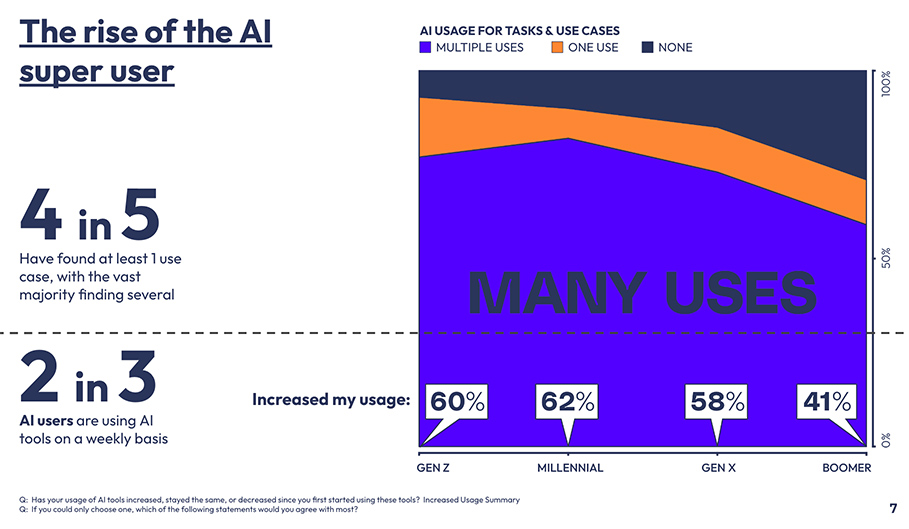
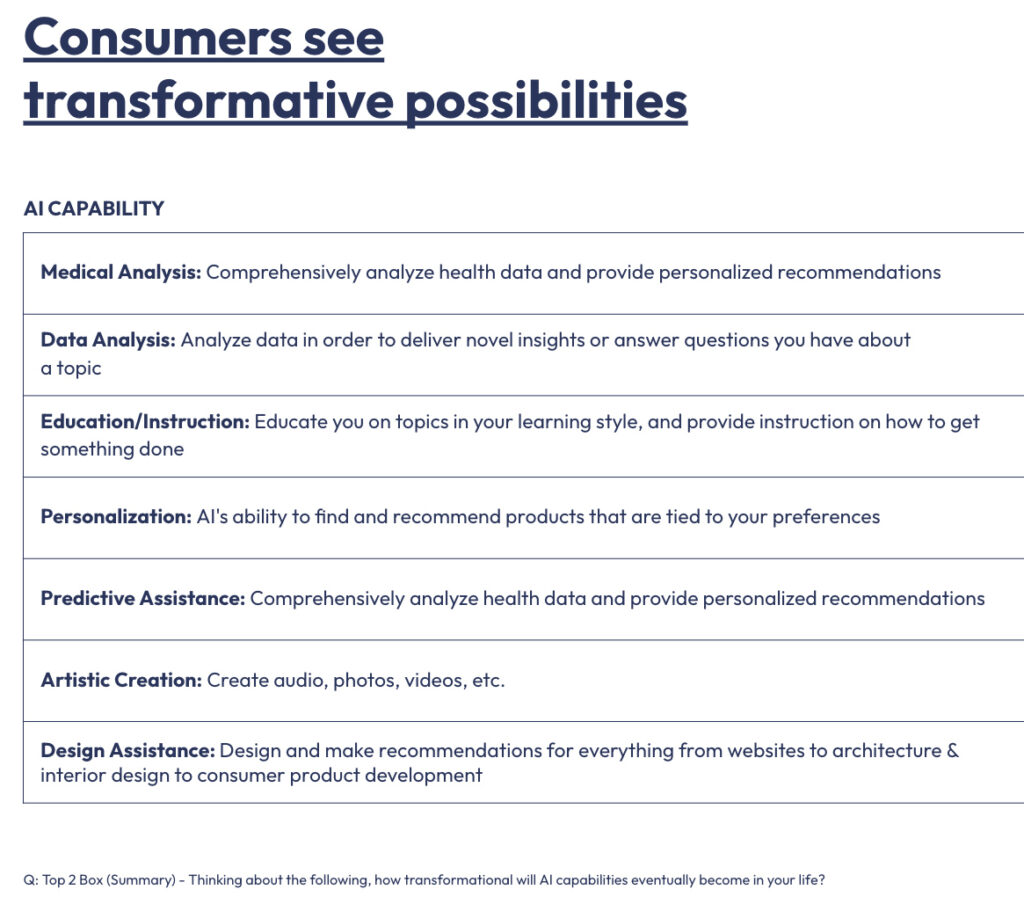
The Verge | What’s Next With AI | February 2024 | Consumer Survey


Microsoft AI creates talking deepfakes from single photo — from inavateonthenet.net


The Great Hall – where now with AI? It is not ‘Human Connection V Innovative Technology’ but ‘Human Connection + Innovative Technology’ — from donaldclarkplanb.blogspot.com by Donald Clark

The theme of the day was Human Connection V Innovative Technology. I see this a lot at conferences, setting up the human connection (social) against the machine (AI). I think this is ALL wrong. It is, and has always been a dialectic, human connection (social) PLUS the machine. Everyone had a smartphone, most use it for work, comms and social media. The binary between human and tech has long disappeared. 


Techno-Social Engineering: Why the Future May Not Be Human, TikTok’s Powerful ForYou Algorithm, & More — from by Misha Da Vinci

Things to consider as you dive into this edition:

  • As we increasingly depend on technology, how is it changing us?
  • In the interaction between humans and technology, who is adapting to whom?
  • Is the technology being built for humans, or are we being changed to fit into tech systems?
  • As time passes, will we become more like robots or the AI models we use?
  • Over the next 30 years, as we increasingly interact with technology, who or what will we become?

 
© 2025 | Daniel Christian