


7 ways to use ChatGPT’s new image AI — from wondertools.substack.com by Jeremy Caplan
Transform your ideas into strong visuals
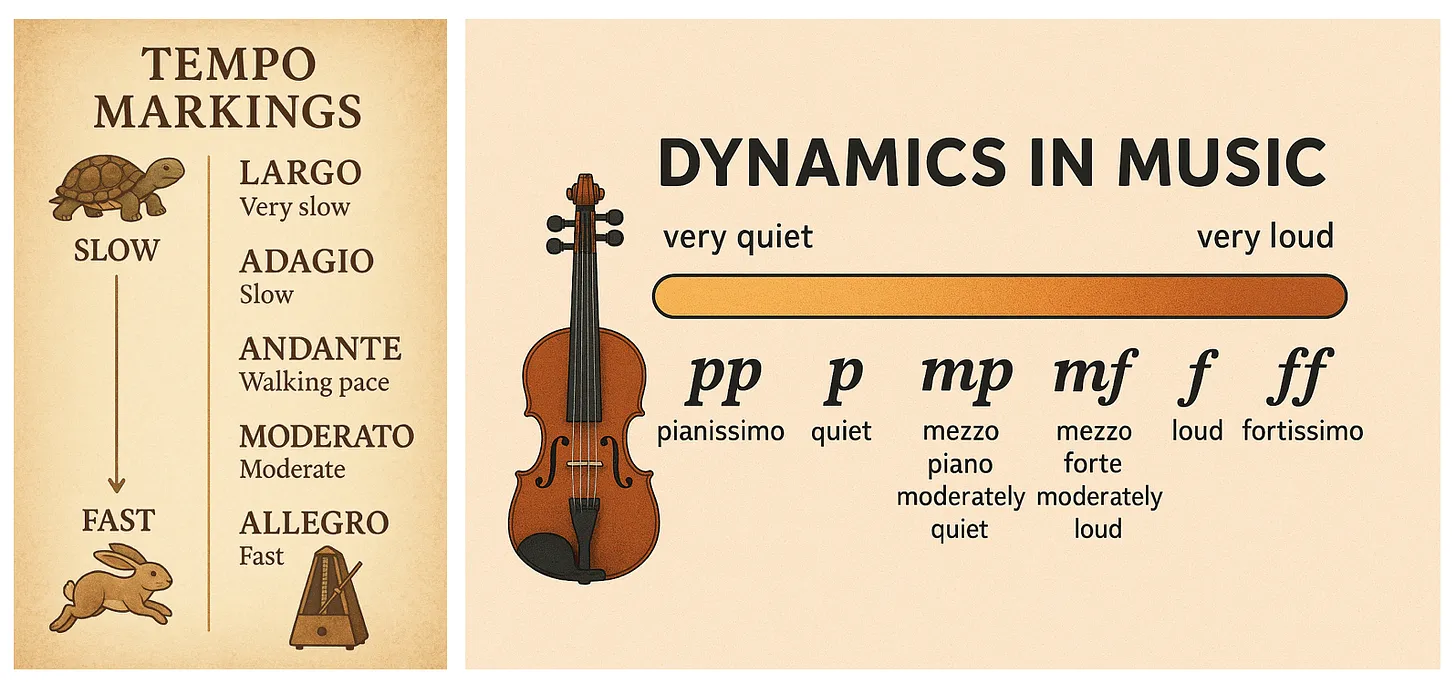
7 ways to use ChatGPT’s new image AI
- Cartoons
- Infographics
- Posters
- …plus several more
7 ways to use ChatGPT’s new image AI — from wondertools.substack.com by Jeremy Caplan
Transform your ideas into strong visuals
7 ways to use ChatGPT’s new image AI
Feral Pigeons and a Feisty Fox Take Top Honors in the 2025 British Wildlife Photography Awards — from thisiscolossal.com

.

Lord, you are my God; I will exalt you and praise your name, for in perfect faithfulness you have done wonderful things, things planned long ago.
23 Search me, God, and know my heart; test me and know my anxious thoughts. 24 See if there is any offensive way in me, and lead me in the way everlasting.
But the fruit of the Spirit is love, joy, peace, forbearance, kindness, goodness, faithfulness, gentleness and self-control. Against such things there is no law.
Psalm 29:1-2
A psalm of David.
1 Ascribe to the Lord, you heavenly beings,
ascribe to the Lord glory and strength.
2 Ascribe to the Lord the glory due his name;
worship the Lord in the splendor of his holiness.
.

.


Students and folks looking for work may want to check out:
Also relevant/see:
From DSC:
This is unbelievable to me! I’m posting this item from Will Richardson because I agree with him 100%. I’m embarrassed to be an American right now. Again, this is unbelievable. Our nation is in an extremely dangerous situation. Donald Trump and his Republican Administration have made a mockery of justice and Donald has now put his thumb to his face and doesn’t even listen to the orders from the Justice Department anymore*.
To the Republican Leadership in our nation, may you be held accountable for your actions — and may they be remembered in the future.
And for our neighbors in Canada — as well as in other nations: Please forgive us. We are one messed-up country these days. This is NOT how many of us want our nation to be and to act.
The following posting is here on linkedin.com and here is the article that Will links out to at The Guardian.
It was surreal listening to my friends recount everything they had done to get me out: working with lawyers, reaching out to the media, making endless calls to detention centers, desperately trying to get through to Ice or anyone who could help. They said the entire system felt rigged, designed to make it nearly impossible for anyone to get out.
The reality became clear: Ice detention isn’t just a bureaucratic nightmare. It’s a business. These facilities are privately owned and run for profit.
Companies like CoreCivic and GEO Group receive government funding based on the number of people they detain, which is why they lobby for stricter immigration policies. It’s a lucrative business: CoreCivic made over $560m from Ice contracts in a single year. In 2024, GEO Group made more than $763m from Ice contracts.
— Jasmine Mooney
Also see (below excerpted from this list of articles/items):
Canadian Who Was in an ‘American Pie’ Video Says ICE Held Her for 12 Days — from nytimes.com by Neil Vigdor
Jasmine Mooney, 35, said she was put “in chains” after immigration enforcement officers flagged her visa application paperwork. The former actress was finally allowed to return to Vancouver.
Jasmine Mooney’s Immigration Lawyer Sounds US Alarm— from newsweek.com by Billal Rahman
U.S. immigration lawyer Jim Hacking says Mooney’s case is part of a rising number of incidents in the past 10 days where individuals with different immigration statuses— including one with a permanent resident card—have been detained or deported in unprecedented ways.
Hacking says he has been advising non-citizens to avoid leaving the United States, as he believes there is a growing risk they may not be allowed to return.
This warning also applies to Canadians with current or past work visas or other forms of immigration status, he adds.
* Here are but a few articles re: Trump attacking or outright disregarding the Justice Department:
Defiance and Threats in Deportation Case Renew Fear of Constitutional Crisis — from nytimes.com by Adam Liptak (DSC: This is a GIFTED article)
Legal scholars say that the nation has reached a tipping point and that the right question is not whether there is a crisis, but rather how much damage it will cause.
Over the weekend, the Trump administration ignored a federal judge’s order not to deport a group of Venezuelan men, violating an instruction that could not have been plainer or more direct.
…
The line between arguments in support of a claimed right to disobey court orders and outright defiance has become gossamer thin, they said, again raising the question of whether the latest clash between President Trump and the judiciary amounts to a constitutional crisis.
Legal scholars say that is no longer the right inquiry. Mr. Trump is already undercutting the separation of powers at the heart of the constitutional system, they say, and the right question now is how it will transform the nation.
Judge Grants the Government Another Day to Share Details on Deportation Flights — from nytimes.com by Alan Feuer (DSC: This is a GIFTED article)
Judge James Boasberg has asked the government to tell him what time two planes took off from U.S. soil and from where, what time they left U.S. airspace and what time they landed in El Salvador.
Earlier this week, department lawyers sought to cancel a hearing where they were supposed to talk about the flights in open court and then, in a highly unusual move, tried to have Judge Boasberg removed from the case altogether.
When they filed their emergency request asking for a stay on Wednesday morning, the court papers used bombastic language attacking Judge Boasberg, who has already faced calls for impeachment by President Trump and some of his congressional allies.
It’s Trump vs. the Courts, and It Won’t End Well for Trump — (DSC: This is a GIFTED article) — it is an opinion piece out at The New York Times by J. Michael Luttig (Judge Luttig was appointed by President George H.W. Bush and served on the U.S. Court of Appeals for the Fourth Circuit from 1991 to 2006.)
President Trump has wasted no time in his second term in declaring war on the nation’s federal judiciary, the country’s legal profession and the rule of law. He has provoked a constitutional crisis with his stunning frontal assault on the third branch of government and the American system of justice. The casualty could well be the constitutional democracy Americans fought for in the Revolutionary War against the British monarchy 250 years ago.
…
The bill of particulars against Mr. Trump is long and foreboding. For years Mr. Trump has viciously attacked judges and threatened their safety. Recently he called for the impeachment of a federal judge who has ruled against his administration. He has issued patently unconstitutional orders targeting law firms and lawyers who represent clients he views as enemies. He has vowed to weaponize the Department of Justice against his political opponents. He has blithely ignored judicial orders that he is bound by the Constitution to follow and enforce.
Art isn’t made for approval; it’s made to provoke and heal. pic.twitter.com/bicapfQ86E
— QRC (@QamarRiaz1) March 16, 2025
Share your latest art pic.twitter.com/rkNwtnlISh
— QRC (@QamarRiaz1) March 21, 2025
Share your latest Art (No Words) pic.twitter.com/OEefCMOOFZ
— QRC (@QamarRiaz1) March 20, 2025
The Third Horizon of Learning Shifting beyond the Industrial Model — from gettingsmart.com by Sujata Bhatt & Mason Pashia
Over 24 blog posts, we have sketched a bold vision of what this next horizon of education looks like in action and highlighted the many innovators working to bring it to life. These pioneers are building new models that prioritize human development, relationships, and real-world relevance as most valuable. They are forging partnerships, designing and adopting transformative technologies, developing new assessment methods, and more. These shifts transform the lived experiences of young people and serve the needs of families and communities. In short, they are delivering authentic learning experiences that better address the demands of today’s economy, society, and learners.
We’ve aggregated our findings from this blog series and turned it into an H3 Publication. Inside, you’ll find our key transformation takeaways for school designers and system leaders, as well as a full list of the contributing authors. Thank you to all of the contributors, including LearnerStudio for sponsoring the series and Sujata Bhatt at Incubate Learning for authorship, editing and curation support throughout the entirety of the series and publication.
.

Cultivating Speaking and Listening Skills in the Primary Grades — from edutopia.org by Rachel Scheer
Early elementary teachers can use these strategies to help students improve their oral communication skills.
The good news? There are many engaging and effective strategies to develop these interpersonal skills, and most are easy to incorporate into daily classroom routines. I use the strategies below to directly teach, model, and practice these essential communication skills at a developmentally appropriate level: turn-taking, small group speaking and listening, whole group speaking and listening, and accountable talk.
From DSC:
I love the parts about practicing how to LISTEN. We need more of that in our communications with one another…as well as when we are praying to God.
Teaching Students About Corporate Influences in a Curriculum — from edutopia.org by Elaine Alvey
By uncovering any hidden interests in a curriculum, teachers can open important discussions about media literacy with students.
These instances underscore the need for educators to be vigilant in vetting materials, recognizing that even seemingly reputable sources can harbor hidden agendas, necessitating a robust approach to media and information literacy both for ourselves and for students.
How to Spot Corporate Influences in Your Curriculum
So, how do we, as educators, navigate this minefield? Media literacy strategies offer important tools to equip ourselves and our students to analyze information landscapes intentionally, including the curricular resources we evaluate for use in our classrooms.
.
From DSC:
I would encourage you to take a look at the work my sister Sue Ellen Christian has been doing re: media literacy, news literacy, and more. She created the Wonder Media website to discuss those topics. Plus she collaborated with several other people and organizations to develop a large, professionally-done exhibit re: these important topics.
.

Boosting Engagement in World Language Classes With Games — from edutopia.org by Rachelle Dené Poth
Middle school teachers can use a variety of tech and no-tech games to help students build skills in the target language.
As a world language educator, I’ve always sought innovative ways to engage my students through meaningful learning experiences as they build their language skills. One way we do this is through gameplay. The benefits of games go far beyond simply learning and increased retention of vocabulary or grammar. Games can also foster collaboration, critical thinking, creativity, and problem-solving skills, making learning fun for students.
How Administrators Can Respond—Instead of React—in Tough Situations — from edutopia.org by Jessica Cabeen
These strategies can help school leaders stay self-regulated in the middle of frustrating and stressful moments.
Conversations That Might Be Better Left for Later
Not every conversation needs to happen in the heat of the moment. Some of the most productive conversations happen after we’ve given ourselves time to regulate. Here are a few categories of conversations that might benefit from a pause:
So the next time frustration creeps in, take a breath. Pause before you speak, type, or react. Because more often than not, the best response isn’t the fastest one—it’s the one that comes from a place of clarity, patience, and purpose.
In ‘Flying High,’ Tyler D. Ballon’s Portraits Parallel Sports, History, Identity, and Patriotism — from thisiscolossal.com by Tyle Ballon and Kate Mothes
