Canvas Certified Educator program for higher education

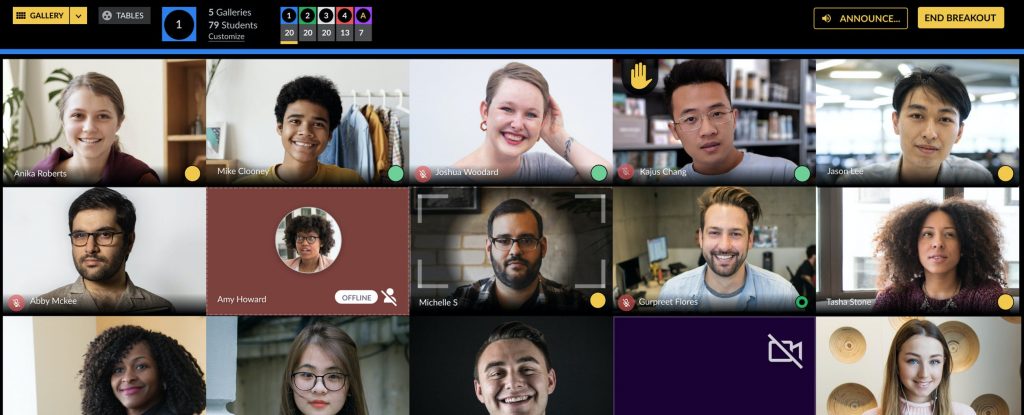
Per “Instructure Launches Canvas Certified Educator Program” out at The Journal by Dian Schaffhauser:

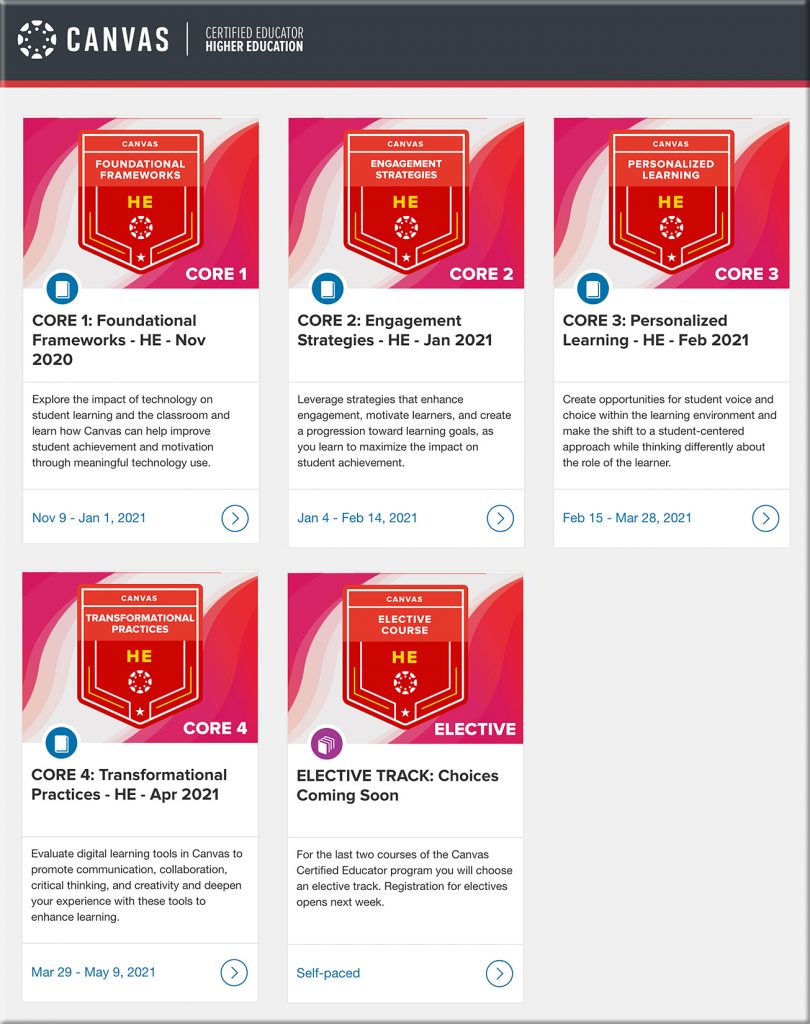
Each course is expected to take about four weeks to finish. They include:

  • Core 1: Foundational frameworks, which explores the impact of technology on student learning and the classroom and how Canvas can be used to help educators boost student achievement, motivation and engagement;
  • Core 2: Engagement strategies, to examine how Canvas can help enrich teaching practices and maximize student achievement;
  • Core 3: Personalized learning, to dive into personalized learning and learn how to create opportunities for student voice and choice within the learning environment;
  • Core 4: Transformational practices, to help participants learn how to evaluate open standard digital learning tools that can enhance learning through Canvas; and
  • Electives, described as a series of optional courses that can be selected by educators based on interests and needs.
 

10 Create in me a pure heart, O God,
    and renew a steadfast spirit within me.
11 Do not cast me from your presence
    or take your Holy Spirit from me.
12 Restore to me the joy of your salvation
    and grant me a willing spirit, to sustain me.


Richard Mayer Has Spent Decades On Educational Research. Here are His Pandemic Teaching Tips. — from edsurge.com by Jeff Young

Excerpt:

EdSurge recently reached out to Mayer, who is a professor of psychology at the University of California at Santa Barbara, to get his thoughts on the lessons his research reveals that can guide teachers and professors.

One finding is that students learn better if they see a video of the professor actually working out a math problem or concept on a whiteboard, than if they see a video of the same professor standing next to a whiteboard where the problem has already been worked out.


New benchmarking tool for higher ed seeks to address workplace soft skills gap — from chieflearningofficer.com by Elizabeth Loutfi
Quality Assurance Commons’ new Employability Self-Assessment will support higher education programs as they develop proficiency in teaching eight 21st century soft skills critical to today’s employers.

Excerpt:

A new assessment tool created for higher education institutions to track and measure the career success of their graduates was launched this week by nonprofit organization Quality Assurance Commons. The tool, which is called the Employability Self-Assessment, helps institutions identify the key skills employers want in candidates in the current and post-pandemic workplace.

The ESA has already been piloted at 20 colleges and universities and is being implemented at eight higher education institutions in the Connecticut State Colleges & Universities System, according to a company press release.

According to the report, the top three missing soft skills reported by employers were problem solving, critical thinking, innovation and creativity; ability to deal with complexity and ambiguity; and communication.

From DSC:
Hmmm…do our current ways of doing things get students to that point? Are the ways in which we structure our educational systems facilitating the development of those skills? Apparently not. What needs to change? For me, it’s offering “More choice. More control.” to the students. And watch the energy, curiosity, and enjoyment of learning greatly increase.


Financial aid officials share how they’re advising college students now — from educationdive.com by Jeremy Bauer-Wolf
We asked administrators how they are guiding students and families through a process made more complex by COVID-19.

Excerpt:

This uncertainty among students and families has compounded an already complex process. Education Dive contacted several financial aid experts and asked them one question: What changes in the financial aid process should colleges account for during the pandemic, and how should they communicate those changes to students, families and the public?


Connectivity gap persists for at least 300K California students — from educationdive.com by Shawna De La Rosa

Dive Brief:

  • California school districts are required to provide both devices and high-speed internet connection to any student learning from home, but between 300,000 and 1 million remain disconnected, EdSource reports. A backlog of computer orders and weak broadband infrastructure in remote areas are contributing factors.
  • At a state assembly education committee hearing Wednesday, California education leaders, teachers and lawmakers discussed how to close the digital divide. Though most households have enough broadband to handle some video calls, many family networks don’t have the strength for multiple students to be connected at once.
  • Nationwide, approximately one-third of households with annual incomes under $30,000 and with children under 18 don’t have high-speed internet connection at home, impacting roughly 9.7 million students, according to a Pew Research Center report. A quarter of teens within that socio-economic bracket lack access to a computer at home.


From DSC:
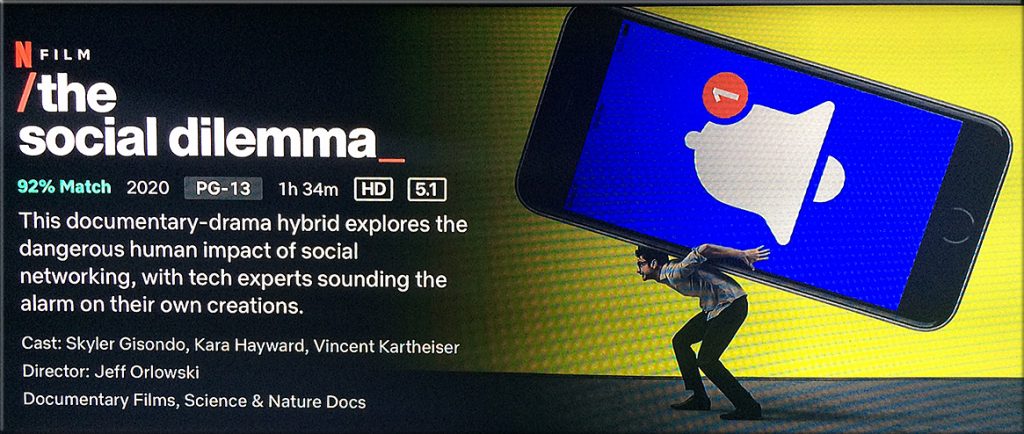
Who needs to be discussing/debating “The Social Dilemma” movie? Whether one agrees with the perspectives put forth therein or not, the discussion boards out there should be lighting up in the undergraduate areas of Computer Science (especially Programming), Engineering, Business, Economics, Mathematics, Statistics, Philosophy, Religion, Political Science, Sociology, and perhaps other disciplines as well. 

To those starting out the relevant careers here…just because we can, doesn’t mean we should. Ask yourself not whether something CAN be developed, but *whether it SHOULD be developed* and what the potential implications of a technology/invention/etc. might be. I’m not aiming to take a position here. Rather, I’m trying to promote some serious reflection for those developing our new, emerging technologies and our new products/services out there.

Who needs to be discussing/debating The Social Dilemna movie?


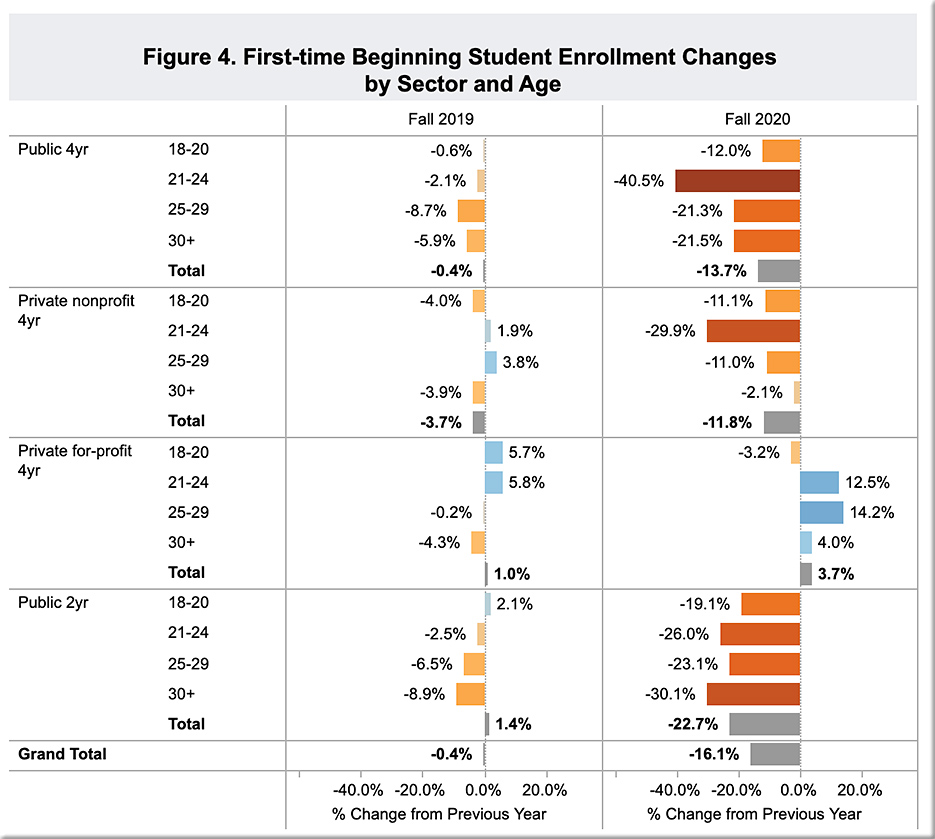
National Student Clearinghouse Research Center’s Monthly Update on Higher Education Enrollment — as of October 15, 2020 and as referenced late last week by The Chronicle of Higher Education

National Student Clearinghouse Research Center’s Monthly Update on Higher Education Enrollment

From DSC:
The window of opportunity for traditional institutions of higher education to reinvent themselves, become cheaper, and offer more value is beginning to close. The window is still there…but it’s beginning to close.


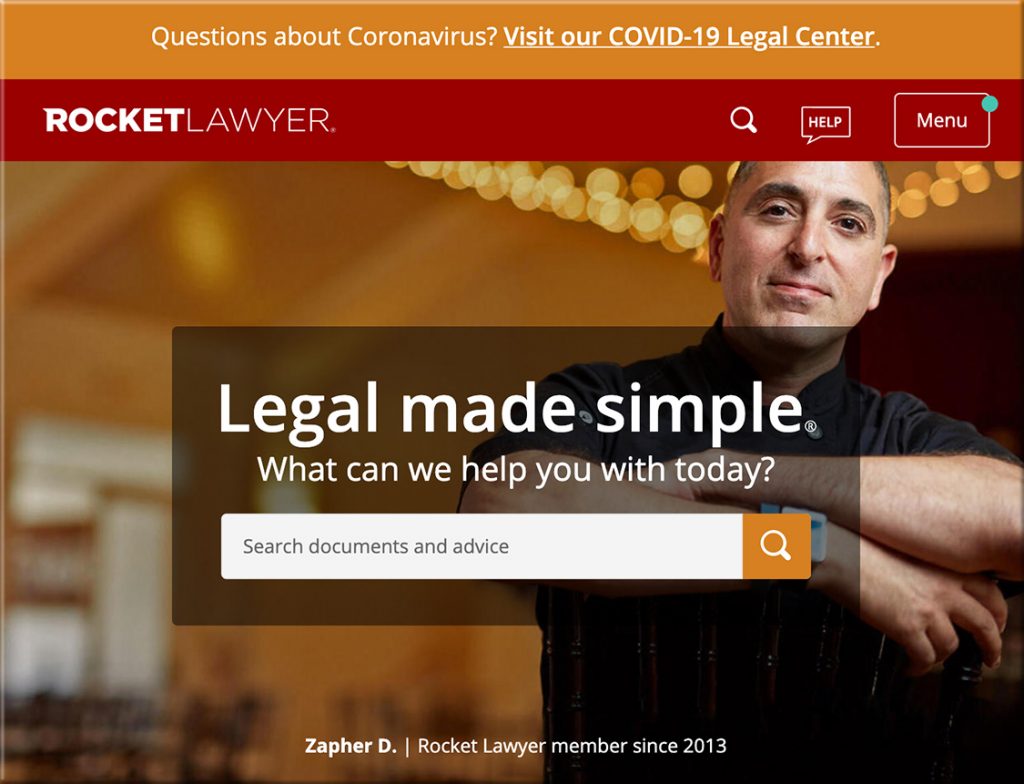
On LawNext: Rocket Lawyer Founder Charley Moore — from lawsitesblog.com by Bob Ambrogi; with thanks to Gabe Teninbaum for this resource from his Lawtomatic Newsletter

Excerpt

In September, Rocket Lawyer became the first national company approved to participate in Utah’s regulatory sandbox, a pilot program for licensing new and alternative forms of legal providers and services. For Charley Moore, who founded Rocket Lawyer in 2008, it was yet another step in his quest to deliver high-value legal services at an affordable price.

In this episode of LawNext, Moore recounts the founding and development of Rocket Lawyer and its expansion into Europe starting in 2012. He also explains why he wanted the company to participate in the Utah sandbox and what he expects to happen there. Finally, as one of the few Black CEOs in legal tech, Moore discusses his thoughts on expanding diversity in the industry.

Also see:

Manage all of your legal needs online. Create legal documents and legal forms instantly with safe & secure storage, e-signatures and lawyer review.

Also from Gabe, see:

Justice-as-a-Service — from Henrik Zillmer

Excerpts:

There’s a new wave of customer empowerment coming. It’s called Justice-as-a-Service (JaaS), and you need to know about it because it benefits you – you just don’t know it yet.

Justice-as-a-Service is an on-demand service, powered by tech, that challenges private and public companies by representing the consumer in their fight for justice/compensation based on laws, consumers’ rights, and contract of carriage.

Why is there a need for JaaS?

  • You don’t know your consumer rights.
  • You don’t know how to claim and neither does the service provider.
  • You don’t have the time to fight for your rights.
  • Success is very unlikely.
 

Apple announces 5G-capable iPhone 12 Pro with LiDAR-enhanced AR — from uploadvr.com by Ian Hamilton

Excerpt:

The new feature on the iPhone 12 Pro promises much improved AR features, like what’s pitched as helping improve photo quality as well as instantaneous placement of virtual content into your environment. It also may make 3D scanning of objects or places in the real world a more common practice.


5 things that show students aren’t the only ones learning during the pandemic — from mlive.com by Melissa Frick

Excerpts:

“Never in my 33 years of teaching did I ever think it would be like this,” the Muskegon High School teacher said of virtual learning, which the district is using this semester to mitigate the spread of the coronavirus.

“It’s a huge learning curve.”

With Michigan K-12 schools back in session for the fall – some virtually, some in-person, and some a mix of both – students aren’t the only ones doing the learning this year. Amid this unprecedented school year, teachers are learning some new things along the way, too.


3. Virtual learning has exposed the depth of Michigan’s digital divide
Systemic gaps in technology access among school districts around the state left thousands of students at a disadvantage this year, despite efforts by educators to fulfill short-term connectivity needs during virtual learning.

From DSC:
These are just a couple of reasons that I say that Rome wasn’t built overnight. But it’s great to see that tools are being added to teaching toolboxes and learners’ toolboxes as well:

“It’s easy for them to get onto Zoom now, they can go onto Google Classroom and go into the lesson right along with us,” she said. “I’m surprised at how smooth it’s running now.”


Technologies that enable legal and compliance leaders to spot innovations — from helpnetsecurity.com
COVID-19 has accelerated the push toward digital business transformation for most businesses, and legal and compliance leaders are under pressure to anticipate both the potential improvements and possible risks that come with new legal technology innovations, according to Gartner.

Excerpt:

To address this challenge, Gartner lists the 31 must-watch legal technologies to allow legal and compliance leaders to identify innovations that will allow them to act faster. They can use this information for internal planning and prioritization of emerging innovations.

Also see:
(with a shoutout to Nicola Shaver for this resource)

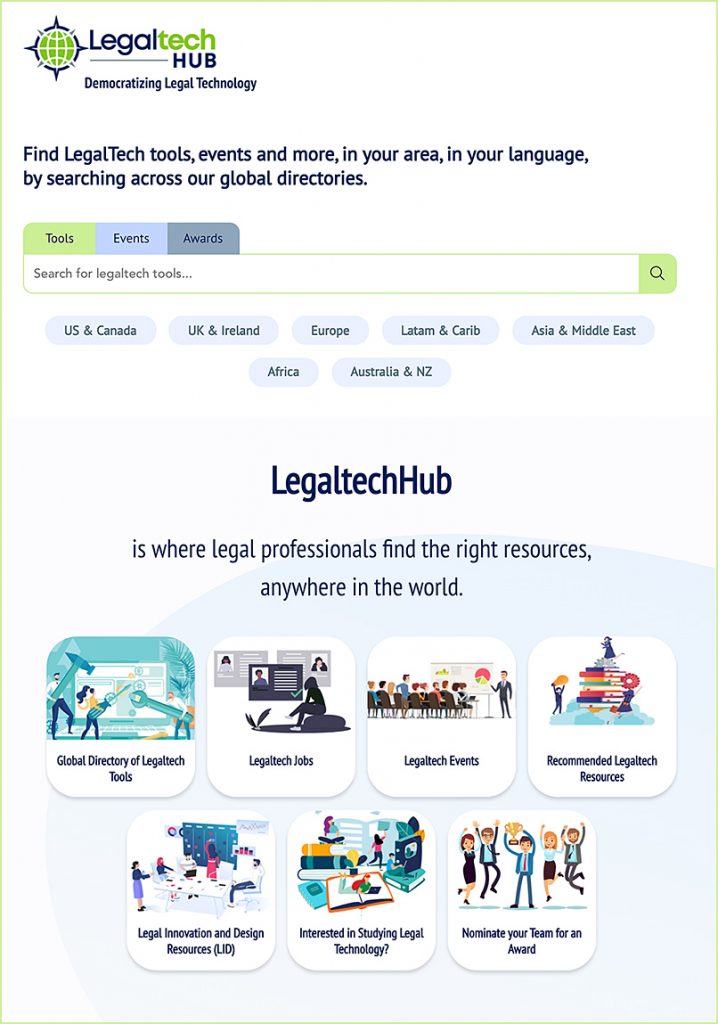
legaltechnology hub dot com

Also see:

Envisioning the future of law — from abovethelaw.com by Ken Crutchfield
We’ve seen a transformation underway within the legal industry for some time now, and the pandemic is continuing to accelerate these changes.

Excerpt:

We’ve seen a transformation underway within the legal industry for some time now, and the pandemic is continuing to accelerate these changes. From what we have observed in recent months, many of the technologies that were reshaping the practice of law have now become necessary, and resistance to digital workflows is no longer a viable option for many legal professionals. In the midst of this transformation, we can draw some observations about how the industry can cope with what’s next. 


10 Ways You Can Use Podcasts in Your Course to Engage Students — from barbihoneycutt.com by Barbi Honeycutt, Ph.D.

Excerpts:

Have you used podcasts in your courses yet? If not, you might want to consider it! Podcasts can be an excellent tool to add to your lesson to enhance a message, present more in-depth perspectives, and offer a different medium for students to engage with the course content.

10 Ways You Can Use Podcasts in a Course or Lesson:

1) Compare and contrast two podcast episodes where the same topic is discussed by different guests.
2) Use an episode as a supplement or additional resource for a reading assignment.

 
© 2025 | Daniel Christian