



On 11/18/2020,
in adjunct faculty, colleges, community colleges, Daniel S. Christian, distance education, education technology, engagement / engaging students, experimentation, faculty/staff, higher education, homeschooling/homeschoolers, human-computer interaction (HCI), ideas, K-12 related, law schools, learning, music, online learning, pedagogy, platforms, productivity / tips and tricks, teachers, teaching & learning, teaching online, tools, universities, vendors, web-based collaboration,
by Daniel Christian

On 11/18/2020,
in analytics, Artificial Intelligence/Agents/LLMs/and Related, Blockchain, law schools, Legal operations, legal technologies, legislatures / government / legal, productivity / tips and tricks, research, telelegal, tools, vendors,
by Daniel Christian
The Observatory — from orrick.com with thanks to Gabe Teninbaum for mentioning this resource in his Lawtomatic Newsletter (Issue #112, 11/18/20)
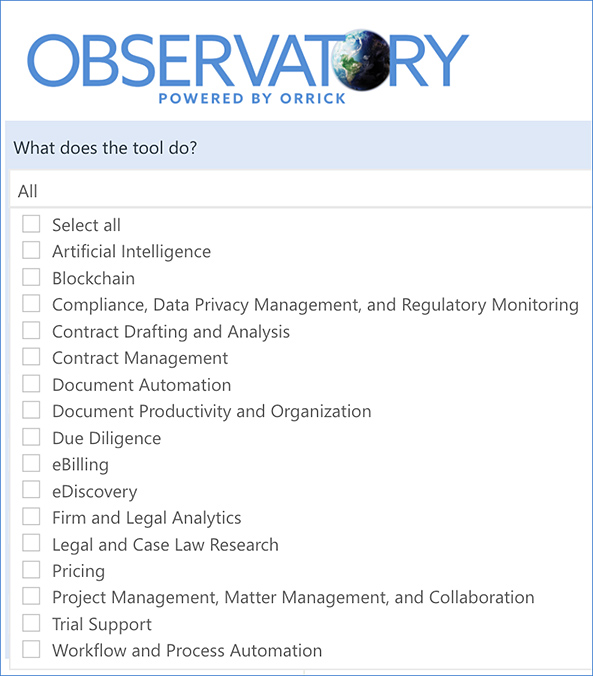
The Observatory is an interactive platform that allows you to do a preliminary analysis of 600+ legal technologies in the market today (including some developed by Orrick):
- Gain insight into features of legal tools
- View leading categories of legal tech, from artificial intelligence to workflow automation
- Understand tech use-cases for litigation, transactional and general solutions
- Identify legal tech companies with diverse leadership
Excerpt from Gabe’s newsletter:
- The Observatory: the tech-savvy biglaw firm, Orrick, has a new interactive platform offering data on 600+ legal technologies currently on the market. A user can click on the type of tool they’d like to learn more about (e.g. document automation or contract management), click on various filters, then get a summary of what it does. It also includes a narrative box for what makes the tool unique. It’s easy to use, free, and also gives a nice preview for clients on the type of value the firm might offer them beyond run-of-the-mill representation.
On 11/18/2020,
in 21st century, career development, change, changing business models, future, game-changing environment, ideas, innovation, law schools, Legal operations, legal reform, legal technologies, legislatures / government / legal, workplace,
by Daniel Christian
Bloomberg Law 2021 — from pro.bloomberglaw.com
Excerpt:
Our Bloomberg Law 2021 series sets the stage for a new year, previewing the themes and topics that our experts will be watching closely, so you can effectively navigate the dynamic legal landscape. Our team of experienced legal analysts leverages the latest data and technology to deliver expert perspectives on the legal market to the legal market.

On 11/18/2020,
in game-changing environment, health, higher education, homeschooling/homeschoolers, ideas, K-12 related, law schools, learning, Michigan, productivity / tips and tricks, strategy, student-related, surviving, universities,
by Daniel Christian
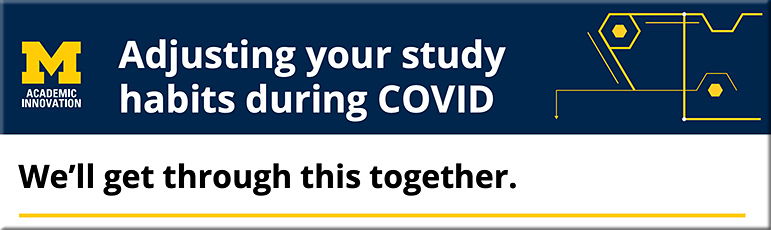
Best Practices 7 Ways Students Can Maintain Good Study Habits During COVID-19 — from fierceeducation.com by Peggy Bresnick
Excerpts:
- Stay organized.
- Don’t multitask.
- Make the most of video lectures.
- Set a schedule.
- Swap out study strategies.
- Collaborate remotely.
- Stay connected to others.
The guide being referenced from the University of Michigan:
On 11/17/2020,
in 21st century, 24x7x365 access, Blockchain, engineering, health, machine-to-machine communications, robotics, social learning / networks, society, technologies for your home, telecommunications, telemedicine / telehealth / virtual health,
by Daniel Christian
From DSC:
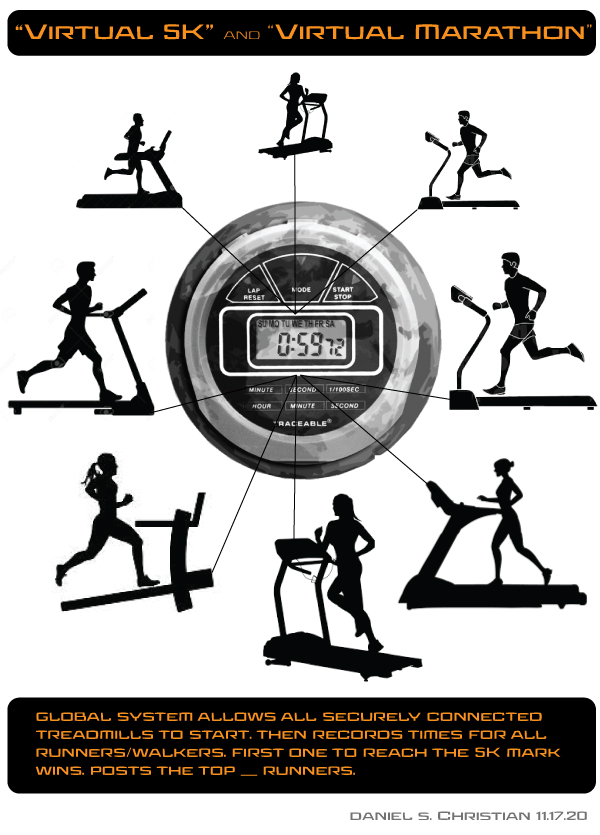
In the future (or is it already here!?), I wonder…will we see more 5K runs/races/walks, as well as marathons and half-marathons be done virtually?
If a secured network/solution could be leveraged, such machine-to-machine communications would be interesting. Each time a runner/walker gets to the 5K mark, their machine submits their time to a Global Time Keeping System. Who knows, maybe this will run on a blockchain-type of environment.
From DSC:
Now I just need to get *some type of exercise!* Geez.
And speaking of emerging technologies, also see:
- MODI: Create Anything You Want with Robotics of Things
MODI is a modular device for DIY IoT, and robotic creations. Just Connect and Build with MODI module.
Addendum on 12/19/20:
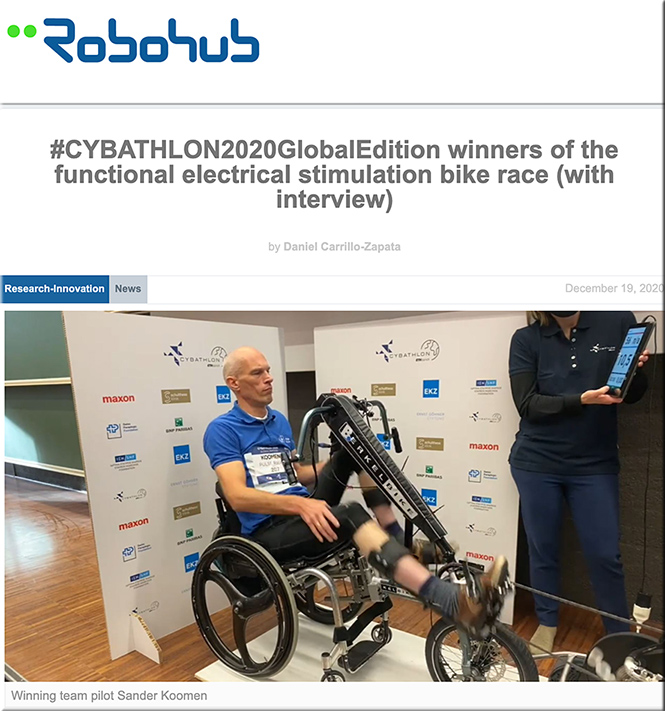
#CYBATHLON2020GlobalEdition winners of the functional electrical stimulation bike race (with interview) — from robohub.org by Daniel Carrillo-Zapata
Addendum on 1/15/21:
- Social connections are key for fitness apps — from adigaskell.org by
On 11/17/2020,
in active learning, Amazon, career development, cloud-based computing / apps / other cloud-related, corporate / business world, corporate universities / corporate training, platforms, workplace,
by Daniel Christian
Amazon Expands AWS Cloud Training Program — from campustechnology.com by Dian Schaffhauser
Excerpt:
Each tuition-free program is intended to help unemployed and underemployed people — especially those in underrepresented demographics — gain new skills in cloud computing to help them get entry-level jobs in a high-demand field. Students work through scenario-based learning, hands-on labs and coursework.
The training is provided by three organizations: Year Up in San Jose and San Francisco; New College Institute in Martinsville; and Per Scholas in Boston, Washington, DC, New York and Newark.
From DSC:
Very interesting…
On 11/16/2020,
in 24x7x365 access, A/V -- audio/visual, Augmented Reality (AR), career development, education technology, emerging technologies, engagement / engaging students, platforms, Virtual Reality (VR) / worlds / learning, web-based collaboration, workplace, XR - extended reality,
by Daniel Christian
Purdue Project Tackles AR/VR for Workforce Ed — from campustechnology.com by Dian Schaffhauser
Excerpt:
Purdue University has received a $3 million grant from the National Science Foundation to continue development of a prototype that will facilitate workforce education being done through augmented reality and virtual reality.
On 11/16/2020,
in Alternatives, career development, computer science, education, lifelong learning, programming, society, sociology, youth,
by Daniel Christian
Eric Schmidt’s Youth Talent Competition, Part of $1B Effort, Kicks Off With Unusual App — from edsurge.com by Jeffrey R. Young
Excerpts:
Former Google CEO Eric Schmidt has committed $1 billion to finding exceptional young people aged 15 to 17 and offering them financial support and mentorship throughout their lives.
…
The first questions that the contest asks applicants to address with a short video response is: “In what ways do you consider yourself privileged? In what ways do you consider yourself underprivileged?” The second question: “What’s one problem that you are going to use your life to solve? Why? Show us what steps you’ve taken to solve it already.”
On 11/15/2020,
in collaboration, colleges, community colleges, health, ideas, innovation, instructional design, K-12 related, learning, learning ecosystem, Learning Experience Design, Learning from the Living [Class] Room, liberal arts, music, online tutoring, society, student-related, teachers, teaching & learning, teaching online, United States, vendors, videoconferencing, web-based collaboration, youth,
by Daniel Christian
Musical Mentors collaborative mobilizes and expands in response to pandemic — with thanks to Bristol Jones for this resource/information
Organization connects musicians in need of work with students lacking access to music instruction
(Emphasis below from DSC)
New York, NY — November 12, 2020 — Musical Mentors Collaborative (“MMC”), which provides free private music instruction and instruments to students who would not otherwise have access, announced today its Winter Gala to benefit the 1:1 Music Fund which will enable the organization to provide 10,000 more lessons in the years to come.
MMC was founded in 2009 as a partnership between Columbia University students and PS 145, a neighboring elementary school in Morningside Heights, and incorporated as a 501(c)(3) non-profit in New York State in 2011. Since 2009, MMC’s university chapters have provided over 7,500 lessons to more than 450 students in the United States.
The onset of the COVID-19 pandemic in early 2020 caused dramatic and painful changes in the musical community. Many performing arts institutions were forced to close indefinitely, and many talented musicians found themselves out of work.
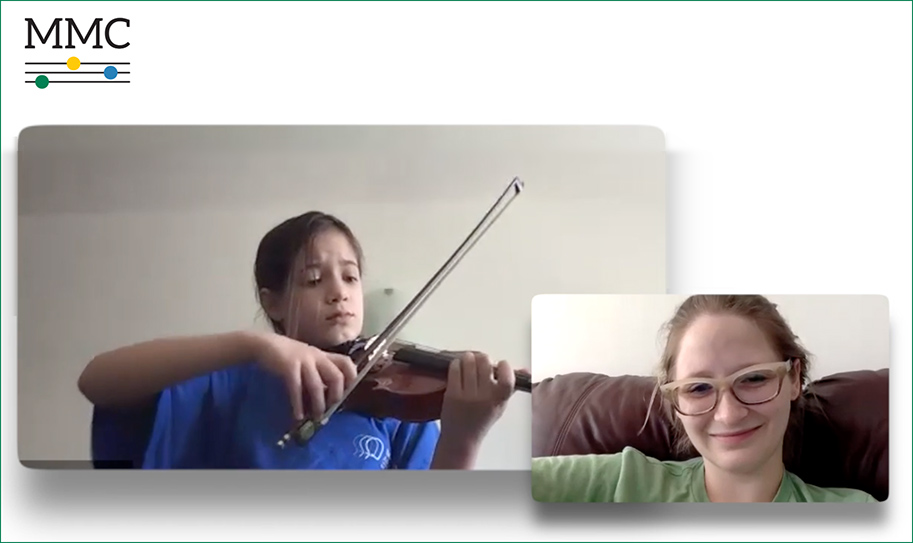
In response, MMC launched a teaching fellowship in early April to pay professional musicians to teach one-on-one virtual lessons to students without access to private instruction. Teachers include members of the Metropolitan Opera Orchestra, the New York Philharmonic Orchestra, as well as collaborators of Herbie Hancock, Lauryn Hill, and others. The organization has since onboarded over 35 teaching artists and nearly 200 students. Since the onset of the pandemic, MMC has paid more than $150,000 to its Teaching Fellows and shipped over $30,000 worth of instruments to students, collectively in support of over 1,300 virtual lessons.
“We are inspired by the response from the musical community, and immensely grateful for the support musicians have shown MMC students. These students represent our musical future and would otherwise lack access to the instruction and mentorship they deserve,” said Zack Susel, Co-Founder and Executive Director of MMC. “We are excited to announce our Winter Gala in support of our 1:1 Music Fund, through which we aim to provide 10,000 more private lessons in the coming years.”
In support of its growth and response to the pandemic, MMC has recruited 12 Grandmentors to lead pedagogical development, including GRAMMY® award winning pianist Emmanuel Ax, and Tony® award winning composer Jeanine Tesori, social work experts, and faculty from The Juilliard School and Curtis Institute of Music.
About Musical Mentors Collaborative
Musical Mentors Collaborative connects musicians with underserved students around the country. Since launching in 2009, MMC has taught over 8,800 free private lessons across instruments and genres, furthering their goal to support young musicians through one-on-one instruction. MMC operates chapters at universities across the United States, and mobilizes professional musicians through their selective Teaching Fellowship.
For more information, visit www.musical–mentors.org. | Instagram | Twitter
Also see:
MMC is thrilled to announce our newest campaign, the 1:1 Music Fund, which brings free, one-on-one lessons and instruments to kids who wouldn’t otherwise have access.
To learn more about the campaign and to donate, visit the link: https://t.co/A0eDNwJI3Q#1to1music pic.twitter.com/oc7TJqJFEX
— MMC (@musicalmentors_) November 12, 2020