Chrome now instantly captions audio and video on the web — from theverge.com by Ian Carlos Campbell
The accessibility feature was previously exclusive to some Pixel and Samsung Galaxy phones

Excerpt:

Google is expanding its real-time caption feature, Live Captions, from Pixel phones to anyone using a Chrome browser, as first spotted by XDA Developers. Live Captions uses machine learning to spontaneously create captions for videos or audio where none existed before, and making the web that much more accessible for anyone who’s deaf or hard of hearing.

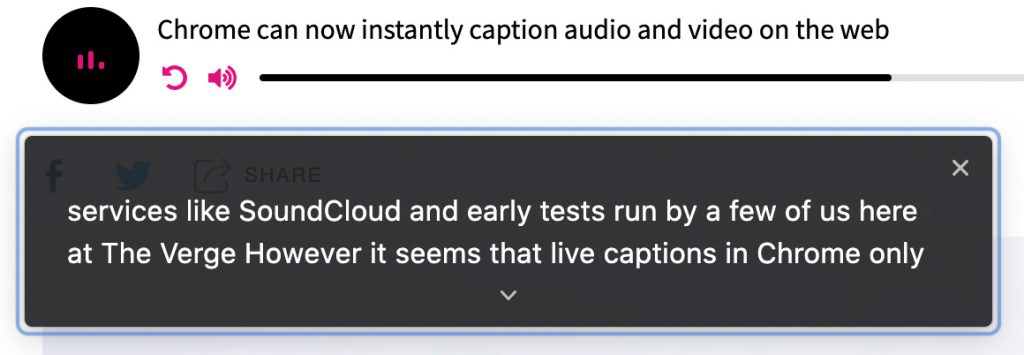
Chrome’s Live Captions worked on YouTube videos, Twitch streams, podcast players, and even music streaming services like SoundCloud in early tests run by a few of us here at The Verge. Google also says Live Captions will work with audio and video files stored on your hard drive if they’re opened in Chrome. However, Live Captions in Chrome only work in English, which is also the case on mobile.


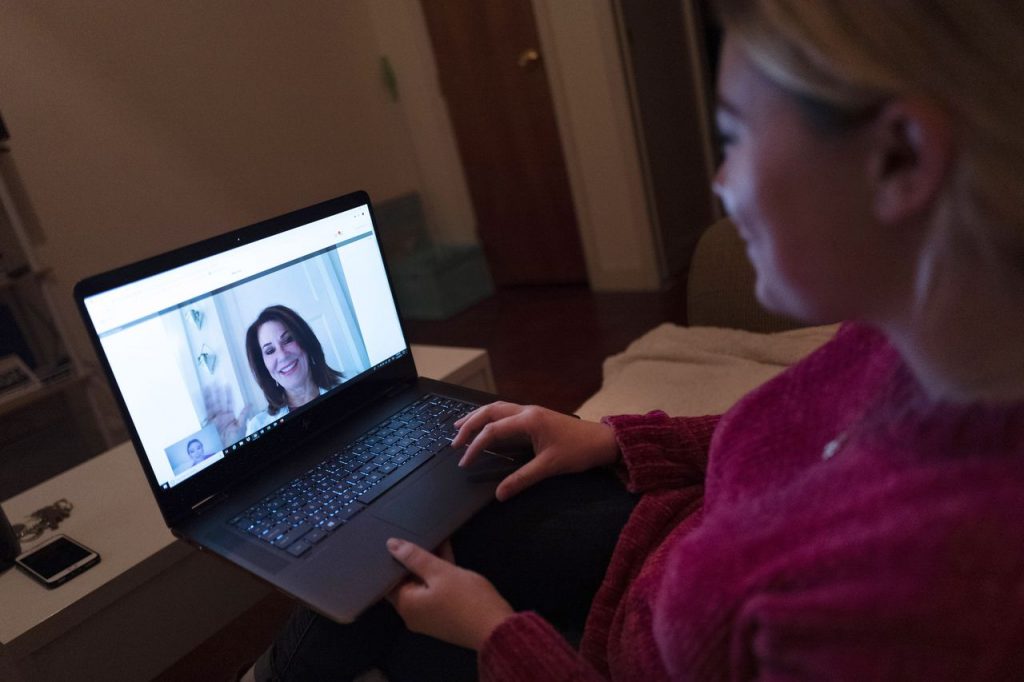
Chrome now instantly captions audio and video on the web -- this is a screen capture showing the words being said in a digital audio-based file


Clicking this image will take you to the 2021 Tech Trends Report -- from the Future Today Institute

14th Annual Edition | 2021 Tech Trends Report — from the Future Today Institute

Our 2021 Tech Trends Report is designed to help you confront deep uncertainty, adapt and thrive. For this year’s edition, the magnitude of new signals required us to create 12 separate volumes, and each report focuses on a cluster of related trends. In total, we’ve analyzed  nearly 500 technology and science trends across multiple industry sectors. In each volume, we discuss the disruptive forces, opportunities and strategies that will drive your organization in the near future.

Now, more than ever, your organization should examine the potential near and long-term impact of tech trends. You must factor the trends in this report into your strategic thinking for the coming year, and adjust your planning, operations and business models accordingly. But we hope you will make time for creative exploration. From chaos, a new world will come.

Some example items noted in this report:

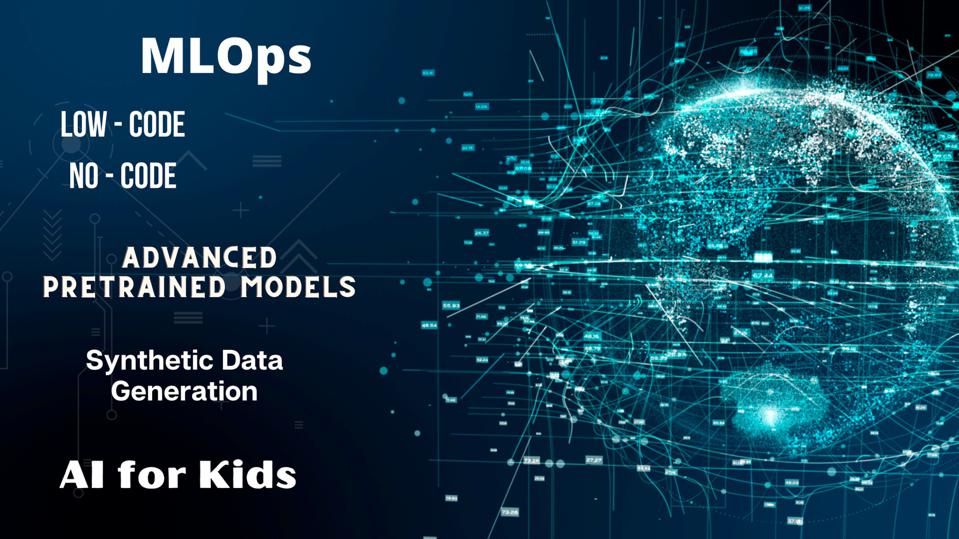
  • Natural language processing is an area experiencing high interest, investment, and growth.
  • + No-code or low-code systems are unlocking new use cases for businesses.
  • Amazon Web Services, Azure, and Google Cloud’s low-code and no-code offerings will trickle down to everyday people, allowing them to create their own artificial intelligence applications and deploy them as easily as they could a website.
  • The race is on to capture AI cloudshare—and to become the most trusted provider of AI on remote servers.
  • COVID-19 accelerated the use of AI in drug discovery last year. The first trial of an AI-discovered drug is underway in Japan.
 

From DSC:
The items below are from Sam DeBrule’s Machine Learnings e-Newsletter.


By clicking this image, you will go to Sam DeBrule's Machine Learning e-Newsletter -- which deals with all topics regarding Artificial Intelligence

#Awesome

“Sonoma County is adding artificial intelligence to its wildfire-fighting arsenal. The county has entered into an agreement with the South Korean firm Alchera to outfit its network of fire-spotting cameras with software that detects wildfire activity and then alerts authorities. The technology sifts through past and current images of terrain and searches for certain changes, such as flames burning in darkness, or a smoky haze obscuring a tree-lined hillside, according to Chris Godley, the county’s director of emergency management…The software will use feedback from humans to refine its algorithm and will eventually be able to detect fires on its own — or at least that’s what county officials hope.” – Alex Wigglesworth Learn More from Los Angeles Times >

#Not Awesome

Hacked Surveillance Camera Firm Shows Staggering Scale of Facial Recognition — from
A hacked customer list shows that facial recognition company Verkada is deployed in tens of thousands of schools, bars, stores, jails, and other businesses around the country.

Excerpt:

Hackers have broken into Verkada, a popular surveillance and facial recognition camera company, and managed to access live feeds of thousands of cameras across the world, as well as siphon a Verkada customer list. The breach shows the astonishing reach of facial recognition-enabled cameras in ordinary workplaces, bars, parking lots, schools, stores, and more.

The staggering list includes K-12 schools, seemingly private residences marked as “condos,” shopping malls, credit unions, multiple universities across America and Canada, pharmaceutical companies, marketing agencies, pubs and bars, breweries, a Salvation Army center, churches, the Professional Golfers Association, museums, a newspaper’s office, airports, and more.


Private Schools Have Become Truly Obscene — from theatlantic.com by Caitlin Flanagan and was published online on March 11, 2021; with thanks to Ryan Craig for this resource.
Elite schools breed entitlement, entrench inequality—and then pretend to be engines of social change.
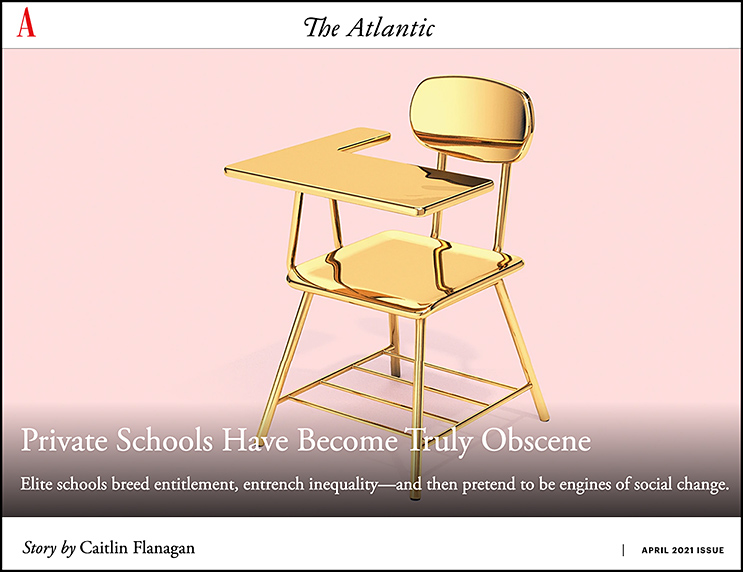
Picture of a golden chair. Links to an article entitled, Private Schools Have Become Truly Obscene -- from theatlantic.com and was published online on March 11, 2021.

Excerpts:

These schools surround kids who have every possible advantage with a literal embarrassment of riches—and then their graduates hoover up spots in the best colleges. Less than 2 percent of the nation’s students attend so-called independent schools. But 24 percent of Yale’s class of 2024 attended an independent school. At Princeton, that figure is 25 percent. At Brown and Dartmouth, it is higher still: 29 percent.

The numbers are even more astonishing when you consider that they’re not distributed evenly across the country’s more than 1,600 independent schools but are concentrated in the most exclusive ones—and these are our focus here. In the past five years, Dalton has sent about a third of its graduates to the Ivy League. Ditto the Spence School. Harvard-Westlake, in Los Angeles, sent 45 kids to Harvard alone. Noble and Greenough School, in Massachusetts, did even better: 50 kids went on to Harvard.

However unintentionally, these schools pass on the values of our ruling class—chiefly, that a certain cutthroat approach to life is rewarded. 

But what makes these schools truly ludicrous is their recent insistence that they are engines of equity and even “inclusivity.” A $50,000-a-year school can’t be anything but a very expensive consumer product for the rich. If these schools really care about equity, all they need to do is get a chain and a padlock and close up shop.

“In practice, however, meritocracy now excludes everyone outside of a narrow elite.” This is a system that screws the poor, hollows out the middle class, and turns rich kids into exhausted, anxious, and maximally stressed-out adolescents who believe their future depends on getting into one of a very small group of colleges that routinely reject upwards of 90 percent of their applicants.

This is why wealthy parents think it’s life-and-death to get their kids into the right prep school—because they know that the winners keep winning.

From DSC:
Reading this article that was mainly about private secondary schools, I still can’t help but say that I feel this way about my alma mater — Northwestern University in Evanston, IL (even though it’s a university). They have lost their footing over the years. They’ve become unanchored from their motto — Philippians 4:8 — and they’ve long ago left the original faith-based intent of its founders when it was founded in 1851. 

As a Christian, I’m not happy at all with their direction. I notice that they pay lip service to equity and will sprinkle in an article or two here and there (in their alumni magazine for example) about how they are helping inner-city Chicago youth or some such topic.

But when the retail price that NU charges for ***one*** year of undergraduate work will cost you $79,342 (and thus $317,368+ for a degree), you’ve got to be kidding me!
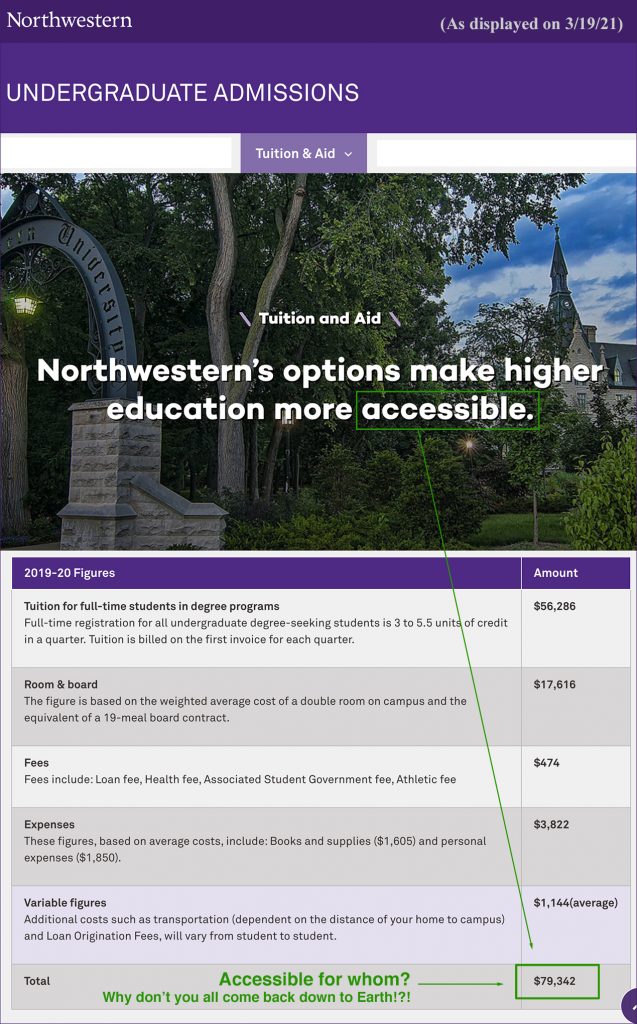
The retail price of ONE YEAR at Northwestern University will cost you $79,342. Who is this accessible for other than the very wealthy these days!?!


And based upon my experience when I went there many years ago, courses were taught by:

  • Professors who had never been taught how to teach before
  • Professors who were not rewarded for their teaching, but rather they were awarded based upon their research
  • …and/or by graduate students who hadn’t been taught how to teach either

It must be all about the brand I guess. But I don’t think it’s worth it anymore — not at this kind of pricing!

Words are easy to say — but much harder to back up.


Addendums on 3/23/21:


Old Boys’ Clubs and Upward Mobility Among the Educational Elite — from nber.org by Valerie Michelman, Joseph Price & Seth D. Zimmerman; with thanks to Megan Zahneis at the Chronicle for this resource


Addendum on 4/11/21:


Calling all rich parents — from chronicle.com — which points to “We, the Privileged Parents That Matter, Applaud the Netflix College-Admissions Scandal Doc” — from chronicle.com by Eric Hoover


45 Hand-picked Disability Scholarships for 2021 — from hyetis.com by Hicham Benali
Regularly updated (listed by deadline) disability scholarships that you can apply for, to reduce your fees.


How Facebook got addicted to spreading misinformation — from technologyreview.com by Karen Hao

Excerpt (emphasis DSC):

By the time thousands of rioters stormed the US Capitol in January, organized in part on Facebook and fueled by the lies about a stolen election that had fanned out across the platform, it was clear from my conversations that the Responsible AI team had failed to make headway against misinformation and hate speech because it had never made those problems its main focus. More important, I realized, if it tried to, it would be set up for failure.

The reason is simple. Everything the company does and chooses not to do flows from a single motivation: Zuckerberg’s relentless desire for growth. Quiñonero’s AI expertise supercharged that growth. His team got pigeonholed into targeting AI bias, as I learned in my reporting, because preventing such bias helps the company avoid proposed regulation that might, if passed, hamper that growth. Facebook leadership has also repeatedly weakened or halted many initiatives meant to clean up misinformation on the platform because doing so would undermine that growth.

In other words, the Responsible AI team’s work—whatever its merits on the specific problem of tackling AI bias—is essentially irrelevant to fixing the bigger problems of misinformation, extremism, and political polarization. And it’s all of us who pay the price.

Artificial Intelligence In 2021: Five Trends You May (or May Not) Expect — from forbes.com by Nisha Talagala

5 trends for AI in 2021


Video Captions Benefit Everyone — from ncbi.nlm.nih.gov by Morton Ann Gernsbacher

Excerpts:

Video captions, also known as same-language subtitles, benefit everyone who watches videos (children, adolescents, college students, and adults). More than 100 empirical studies document that captioning a video improves comprehension of, attention to, and memory for the video. Captions are particularly beneficial for persons watching videos in their non-native language, for children and adults learning to read, and for persons who are D/deaf or hard of hearing. However, despite U.S. laws, which require captioning in most workplace and educational contexts, many video audiences and video creators are naïve about the legal mandate to caption, much less the empirical benefit of captions.

More than 100 empirical studies, listed in the appendix, document the benefits of captions.

With so many studies documenting the benefits of captions, why does everyone not always turn on the captions every time they watch a video? Regrettably, the benefits of captions are not widely known. Some researchers are unaware of the wide-ranging benefits of captions because the empirical evidence is published across separate literatures (deaf education, second-language learning, adult literacy, and reading acquisition). Bringing together these separate literatures is the primary purpose of this article.


ARHT Media Inc.
Access The Power Of HoloPresence | Hologram Technology | Holographic Displays | Hologram Events

Excerpt:

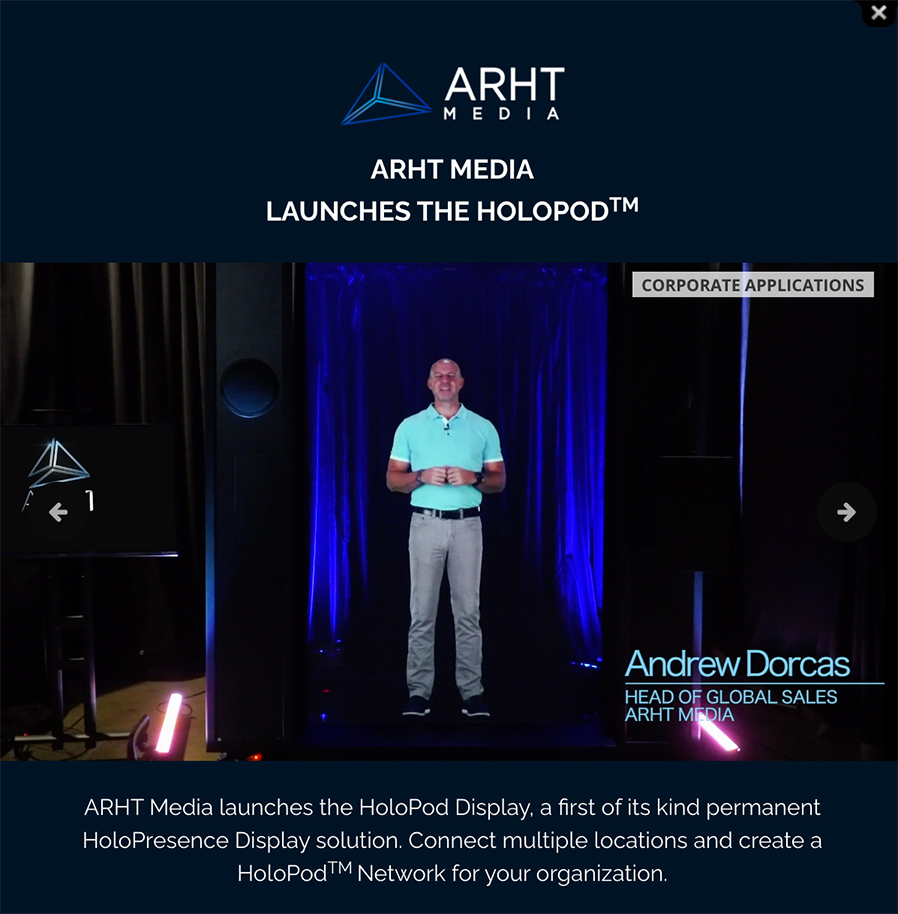
ARHT Media mounted a holographic display at the event in Vancouver and had Sunlife’s executive captured and transmitted live as a hologram to the event from our Toronto studio. He was able to see the audience and interact with them in realtime as if he was attending the event and present in the room.

ARHT Media Inc. launches the Holopod | A holograph of the head of global sales appears on stage. Access The Power Of HoloPresence | Hologram Technology | Holographic Displays | Hologram Events

From DSC:

  • Will holographic displays change what we mean by web-based collaboration?
  • Will this be a part of the future learning ecosystems inside of higher education? Inside of the corporate training world? Inside the world of events and webinars?
  • How will this type of emerging technology impact our communications? Levels of engagement?
  • Will this type of thing impact telehealth? Telelegal?
  • How will this impact storytelling? Media? Drama/acting? Games?
  • Will the price come down to where online and blended learning will use this type of thing?
  • Will streams of content be offered by holographic displays?


Moving Online Learning from Challenge to Opportunity — from campustechnology.com by Dr. Mark Lombardi
The future of higher education means breaking down classroom walls, embracing digital tools and engaging students with creativity and innovation.

Excerpt (emphasis DSC):

Similarly, Maryville criminology professor Geri Brandt, working in concert with our learning designers and on-site production studio, used 360-degree camera technology to stage a virtual, explorable, interactive crime scene. Extending this online experience further, the criminology department created a “choose your own adventure” virtual experience, where each student response or choice in an investigation leads to a different outcome.

Creativity and innovation on this scale are only possible when faculty work with a talented team of learning design professionals who can translate a vision of interactive and immersive learning into a new student experience. Designing and delivering this active learning ecosystem integrated in online and on-ground learning takes a team of committed professionals and the courage to make it happen.

What if students could choose to learn in environments that are fully immersive, deeply enriching and profoundly meaningful to their courses of study? We encourage our students to explore the world beyond the campus, but what happens when the world is your campus?


Telemedicine likely to change how we receive health care post-pandemic — from mlive.com by Justin Hicks

A patient sits in the living room of her apartment in New York City during a telemedicine video conference with a doctor. (Mark Lennihan/AP)AP

A patient sits in the living room of her apartment in New York City during a telemedicine video conference with a doctor. (Mark Lennihan/AP)AP

Excerpt:

As we look to the post-pandemic future, medical experts believe telemedicine will be here to stay as another option to increase access to care, reduce costs, and free up doctors to spend more time with patients who need in-person care.

“When I think about the pandemic, one thing that didn’t change about our lifestyles is people are busy,” Lopez said. “I think we’ll still see growth in overall visits because of the fact that people want access to care and when you lower the cost, it should go up.”

From DSC:
A friend of mine said that he is doing most of his practice now via the telehealth route (and has been for many months now). Then, recently, when I was at the lab, the knowledgeable woman who assisted me said that she thought virtual health was definitely going to stick. Many doctors and nurses will be using virtual means vs. physical visits she said.

Expectations get involved here — for education, for the legal field, and for other arenas.


The excerpt below is from The 7 best online whiteboards in 2021 — from zapier.com by Maria Myre

  • Miro for turning ideas into tasks
  • Stormboard for creating multiple whiteboards in a single brainstorming session
  • MURAL for remote, multi-member team meetings
  • Limnu for teaching students remotely
  • InVision Freehand for annotating design files with a team
  • Conceptboard for turning a brainstorming session into a formal presentation
  • Explain Everything for creating whiteboard videos

From DSC:
Other potentially-relevant tools/vendors here include:

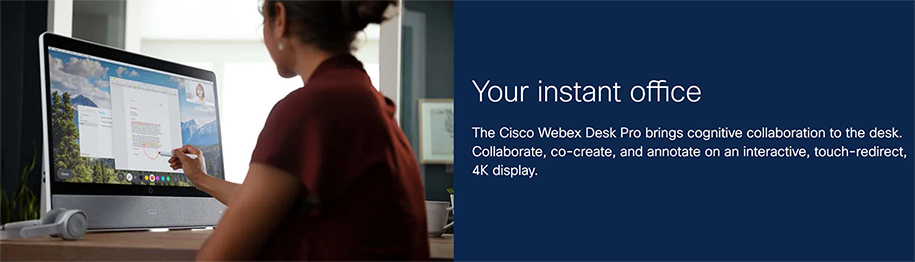
Woman using the Cisco Webex Desk Pro


Navigating website ADA compliance: ‘If you have videos that are not captioned, you’re a sitting duck’ — from abajournal.com by Matt Reynolds

Excerpts:

“If you have videos that are not captioned, you’re a sitting duck,” Goren said. “If you’re not encoding your pictures so that the blind person using a screen reader can understand what the picture is describing, that is a problem.”

Drop-down boxes on websites are “horrible for accessibility,” the attorney added, and it can be difficult for people with disabilities to navigate CAPTCHA (Completely Automated Public Turing test) technology to verify they are human.

“Trying to get people with voice dictation or even screen readers to figure out how to certify that they’re not a robot can be very complicated,” Goren said.

Also see:

Relevant Laws

Information re: Lawsuits


From DSC:
More changes to the learning ecosystems in the U.S.


Microschools Can Lead to Macro Change — from gettingsmart.com by Tom Vander Ark and Rebecca Midles

Excerpts:

However, around the edges, the growth of pods and microschools has benefited thousands of learners. New tools and strategies have made it easier to create microschools of 15 to 150 students as a short-term pilot or long-term learning option.

Given their small size, microschools can be opened quickly in alternative spaces. Microschools quickly create new community-connected learning options (themes, careers, and experiences) for students. They can also be used to quickly address underserved student populations (preschool, dropout recovery, and career education).

Microschools make learning personal. With unique themes, links to community, and porous walls, they can ignite learning for students and innovation for districts.

Also see:

The Highly Competitive, Hypocritical, and Altogether Essential World of Pandemic Pods — from by Julia Beck
During the most stressful school year on record, learning bubbles are the one thing saving working parents’ sanity—so long as no one dares to break the rules.

Still, pod life isn’t all good grades and living by the golden rule. Pods have also been the source of criticism and conflict in the Boston area. They have been at the root of strained relationships in some suburban communities, and criticized for accelerating achievement gaps between the podded and the podless. 


Technology and Access to Justice: How Does It Work? — from lawdroid.com by Robin Bull

Picture of a keyboard with the word Justice on one of the keys - clicking on this image will take you to an article called Technology and Access to Justice: How Does It Work?

Excerpt (emphasis DSC):

At its most basic level, the term “access to justice” means the ability that a person has in accessing the legal system. This includes, and is not limited to, the ability to afford an attorney and file a lawsuit. There is only a legal right to an attorney if a person faces a criminal charge. There is no right to an attorney if someone is involved in a civil matter.

In the civil system, there is no constitutional right to an attorney. If a person can afford an attorney, great. Sure, there are legal aid organizations set up to provide access to justice. However, many do not have the funds, enough employees, or enough volunteers to help every person who seeks them out. Many Americans cannot afford to pay an hourly rate to have an attorney handle a civil matter. Even if they manage to come up with a retainer, they may not be able to see the matter through to completion or finish paying their attorney.

Here are a few ways that technology and access to justice work together.  


Also see:

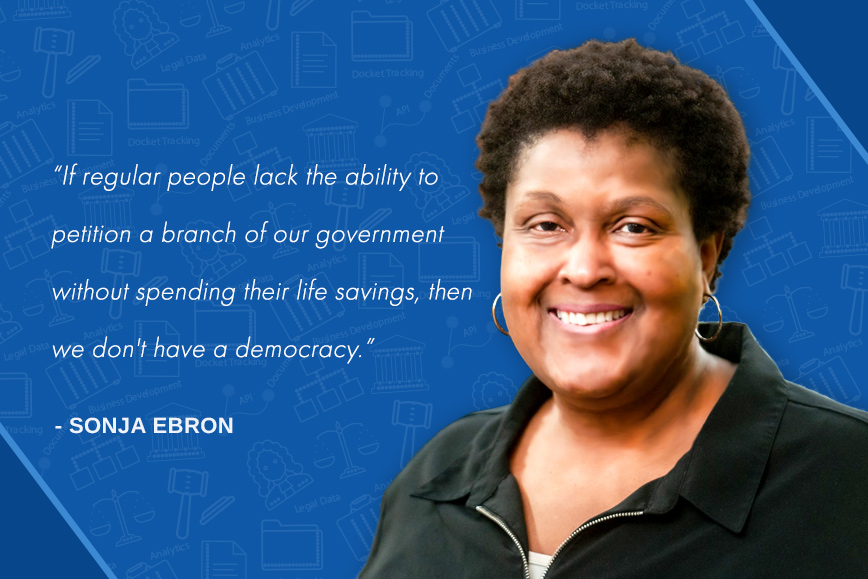
If regular people lack the abilty to petition a branch of our government without spending their life savings, then we don't have a democracy. Sonja Ebron of Courtroom 5


Improving Accessibility for Students and Faculty with Disabilities — from edtechmagazine.com by Alexander Huls
Here’s a look at different approaches higher ed IT teams can take to improve accessibility.

Excerpt:

While it may not always be possible to achieve 100 percent accessibility, here are some approaches higher education IT teams can take — even with limited resources — to improve learning experiences for students with disabilities.

 
© 2025 | Daniel Christian