Doubling down on accessibility: Microsoft’s next steps to expand accessibility in technology, the workforce and workplace — from Brad Smith, President of Microsoft

Excerpt:

Accessibility by design
Today, we are announcing a variety of new “accessible by design” features and advances in Microsoft 365, enabling more than 200 million people to build, edit and share documents. Using artificial intelligence (AI) and other advanced technologies, we aim to make more content accessible and as simple and automatic as spell check is today. For example:

  • A new background accessibility checker will provide a prompt to fix accessibility issues in content across the core Office apps and Outlook will nudge users to correct accessibility issues.
  • AI in Microsoft Word will detect and convert to heading styles crucial for blind and low-vision readers.
  • A new Excel navigation pane designed for screen readers will help people easily discover and navigate objects in a spreadsheet.
  • We’re expanding Immersive Reader, used by 35 million people every month, to help with the comprehension of PowerPoint slides and notes.
  • In Teams, high-contrast mode can be used to access shared content using PowerPoint Live  which will reduce eye strain and accommodate light sensitivity with Dark Mode in Word.
  • New LinkedIn features that include auto-captioning for LinkedIn Live broadcasts, captions for enterprise content and dark mode later this year.

More than 1 billion people around the world live with a disability, and at some point, most of us likely will face some type of temporary, situational or permanent disability. The practical impacts are huge. 

Addendum on 5/6/21:

 

A lack of devices but a heroic effort by teachers — from global-edtech.com by Dorothy Lepkowska
EDUCATE webinar hears how countries coped with the Covid school shutdown

Excerpts:

As in many countries, including the UK, schools and students in Portugal were hindered by a lack of devices, Huge Fonseca, an EdTech innovator, told the webinar.  He said teachers were “superheroes” and did what they could to connect with pupils, including distributing work on bicycles.

He said: “In Portugal there is a lack of devices and a lack of teacher training. The profession is among the oldest in Europe, and half of teachers are more than 50 years old. There is no government support to develop them, and if you leave teachers without learning new skills for 20 years or more then it is hard for them to adapt. We need more young people to go into teaching.”

In Uruguay, more coherence was needed between the distribution of technology and teacher training.

Meanwhile, in Brazil, there was a roll-out of technology but little training for teachers.

In Zambia, however, the pandemic offered an opportunity for project-based learning to address some of the problems faced by communities.

She said the pandemic had shone a light on the heroic work of teachers and there was a “shift in perceptions about teachers, and the importance of face-to-face teaching as a valued part of civil society”.

Also see:


25 I know that my redeemer[a] lives,
    and that in the end he will stand on the earth.

.

Picture of an empty tomb.


Virtual IEPs should stay — from crpe.org by Katy Bateman and Lanya McKittrick

Excerpt:

When the pandemic hit last spring, schools across the country shifted out of sheer necessity to virtual meetings to discuss students’ Individual Education Plans (IEP). But the move has had some unanticipated benefits, with some educators and parents praising them for their convenience and for empowering family members to be more active participants in discussing their educational needs.

The virtual IEP meetings should stay—at least as an option—even after the pandemic abates.

Virtual IEP meetings can make scheduling and attendance easier for parents and teachers alike. One parent noted the benefits to her as a busy working mom:

“I think one thing [my family] is seeing is there’s a lot of things we could just do that didn’t require us to have to go in [the school building]. . . . I don’t mind coming in, but [virtual is] easier.”


2021 EDUCAUSE Horizon Report® | Teaching and Learning Edition

2021 EDUCAUSE Horizon Report® | Teaching and Learning Edition

 
This report profiles key trends and emerging technologies and practices shaping the future of teaching and learning and envisions a number of scenarios and implications for that future. It is based on the perspectives and expertise of a global panel of leaders from across the higher education landscape.


From DSC:
One of my sisters sent this to me and it cracked me up!

Also see:


Four creative methods for engagement in training — from trainingjournal.com by Susan Tomlinson Schmidt

Excerpt:

Educational courses are one of the most often sought-after and impactful professional development opportunities that people can engage with, so it’s vital that you keep your audience engaged even once they’ve started coursework. Here are our four tips for success.

  1. Leverage several media strategies.
  2. Keep learning modules short.
  3. Provide relevant examples for educational concepts.
  4. Communicate the purpose of knowledge checks.

Although we’re specifically discussing online educational opportunities in this guide, the ideas behind these concepts speak to other training opportunities you provide as well.


AirTags Are the Perfectly Boring, Functional Future of AR — from wired.com by Lauren Goode
Apple’s new location-aware widgets point to the company’s possible larger ambitions for augmented reality.

Excerpts:

APPLE’S AIRTAGS HAVE found their way to market. The long-rumored competitor to Tile—a tiny Bluetooth tag you attach to frequently lost items—was unveiled today during Apple’s spring hardware announcement.

This latter feature points to another emerging platform for Apple: augmented reality. While the company didn’t explicitly say AirTags will be used in AR apps, immersive computing experts point out that the AirTags technology is using ARKit, Apple’s software framework for AR, and that tying digital information to nearby physical objects is an important step in the evolution of this tech.

Instead of seeing a flat, 2D image on your iPhone of where the keys are buried in the couch, a virtual arrow would be layered on top of the view through your phone’s camera, guiding you to the exact location of your keys as you move closer.


 7 Things You Didn’t Know PowerPoint Could Do That Will Make Your Next Presentation POP! — from Dr. Echo Rivera; posted 4/20/21

Excerpt:

I’m going to show you more than 7 Powerpoint features, but I’ve broken them down into 7 categories.

Here are those seven categories:

  1. Accessibility
  2. Photo Editing
  3. Interactivity
  4. Animations
  5. Custom Visuals
  6. Data Visualization
  7. Saving Time
 

3 Tech Trends Shaping the Future of Post-Pandemic Teaching and Learning — from campustechnology.com by Rhea Kelly
The landscape of higher education has been transformed by COVID-19, and that impact is a major factor in the 2021 Educause Horizon Report. Here are three key technology trends to watch as the lasting effects of the pandemic play out.

Excerpt:

What’s in store for higher education’s post-pandemic future? The latest Educause Horizon Report has identified the trends, technologies and practices shaping teaching and learning in the wake of COVID-19. The potential lasting effects of the pandemic “loomed large” in the trend selection this year, the report stated, emphasizing that although it remains to be seen whether the transformations of the past year will persist into the future, “it isn’t hard to imagine that higher education may never be the same in some important ways (good or bad).”

In the realm of technology in particular, it’s clear that the pandemic-induced shift to remote learning has dominated the trend landscape. The top three technological trends identified by the report are…

From 2021 EDUCAUSE Horizon Report® | Teaching and Learning Edition

This image relays some of the key technologies and practices such as AI, blended learning, learning analystics, OER, and others

Also see:

Jessica Rowland Williams, director of Every Learner Everywhere, agreed. “The pandemic has given us the unique opportunity to pause and listen to each other, and we are beginning to discover all the ways our experiences overlap,” she said.


The Pandemic May Have Permanently Altered Campuses. Here’s How. — from chronicle.com by Francie Diep
Trends accelerated by Covid-19 may make more sense than ever in the future, experts say.

Excerpt (emphasis DSC):

Although they were not required to meet in person, students liked to do so anyway. They organized meet-ups in cities including San Francisco, Austin, and Bangalore. They formed groups like Nerdy Bones, for women, who made up 19 percent of the students in the fall of 2020. Administrators found that as many as 80 percent of the U.S.-based students in each cohort lived within a two-hour drive of one of 10 major population centers. That gave the administrators an idea: Build co-working spaces in those cities, where online students could work and meet one another. Each space, called an atrium, would have career and advising services too.

From DSC:
I haven’t heard that term used like this before — atrium. I’ve been thinking about this in terms of learning hubs…but the idea is the same. Nontraditional learning spaces.


Unbundled law firms find success offering virtual legal services — from abajournal.com by Lyle Moran; with thanks to Gabe Teninbaum for this resource

Excerpt (emphasis DSC):

The Law Shop by Skogerson McGinn in Van Meter, Iowa, provides unbundled legal services, which means it helps clients with specific legal tasks rather than assisting them with their entire cases or matters.

In the family law realm, its unbundled offerings include coaching self-represented litigants on filling out divorce forms and preparing child support worksheets.

By emphasizing this nontraditional approach, also known as limited-scope representation, The Law Shop has attracted inquiries from consumers across the state seeking affordable legal assistance.


How Work Changed for Good in 2020, According to Employers — from stradaeducation.org by Patty Reinert Mason
Recruiting, hiring, and training improvements are here to stay, employer survey says

Excerpt:

Sparks and several other employers who shared their 2020 experiences in the webinar said the pandemic and a nationwide reckoning on racial inequities, while devastating, also expedited significant improvements in the workplace. Changes in recruiting, hiring, and training employees, efforts to upskill existing workers, and improvements in coaching executives are building a more diverse, inclusive, supportive workplace, they said, and most of those changes will be permanent.

The employers were among more than 300 in health care, food service, manufacturing, and retail surveyed by UpSkill America to understand how businesses were learning and adapting. The research was funded by Strada Education Network and Walmart.org.


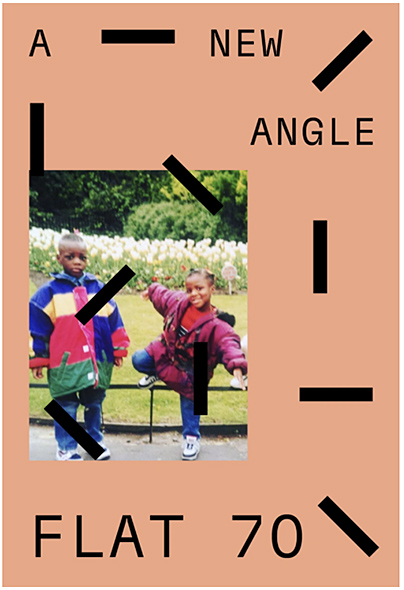
“Endurance is essential” – Flat 70’s fight to support Black visual artists — from itsnicethat.com by Jenny Brewer
Siblings Anthony and Senam Badu founded the non-profit after they lost their home to the regeneration of the Aylesbury Estate, wanting to support and save space for its community.

A New Angle is an editorial series that aims to give a platform to creative industry changemakers who make it their mission to disrupt the status quo. Each week we’ll chat to a person or team doing important work in the sector, making it a fairer place, championing vital causes, supporting underrepresented groups and tackling pertinent issues facing creatives everywhere.

This week we hear from siblings Senam and Anthony Badu, who in February 2020 saw their Aylesbury Estate home demolished and, that very same month, set up non-profit arts organisation Flat 70. They saved the door number from the flat and attached it to the front of their new arts space, symbolic of a phoenix rising from the ashes, and a constant reminder of their mission to support and save their community from being repeatedly “devalued, erased or co-opted”.

A picture of two black children dressed up in colorful clothes


Panopto Acquires Ensemble Video — from businesswire.com
Panopto acquires Ensemble Video to meet increasing demand for video intelligence

SEATTLE–(BUSINESS WIRE)–Panopto, the leading video management system provider, today announced that it has completed its acquisition of Ensemble Video, makers of video management software for K-12, higher education, and enterprises. This investment will enable hundreds of new customers to use Panopto, expanding the company’s ability to meet the demands of K-12 educators and strengthening its world class engineering team.

Also see:

 
© 2025 | Daniel Christian