Earning a Living and College Credit at the Same Time — from insidehighered.com by Susan H. Greenberg
IBM software engineering apprentices can now translate their training into three semesters of college credit at participating institutions.

Excerpt:

IBM is the latest company to win recognition from the American Council on Education’s College Credit Recommendation Service as part of its recently launched Apprenticeship Pathways project, which allows apprentices at selected companies to earn digital credentials that they can apply to six participating institutions:

  • Bismark State College
  • Excelsior College
  • Ivy Tech Community College
  • Rowan University
  • Tidewater Community College
  • California State University, San Bernardino
 

This 12-year-old coder is set to earn over $400,000 after about 2 months selling NFTs — from cnbc.com by Taylor Locke

Excerpt:

But lately, non-fungible tokens, or NFTs, and the smart contracts, or collections of code, that power them, have caught Ahmed’s attention.

“I first learned about NFTs earlier this year,” Ahmed, who is based in London, tells CNBC Make It. “I got fascinated with NFTs because you can easily transfer the ownership of an NFT by the blockchain.”

This 12-year-old coder is set to earn over $400,000 after about 2 months selling NFTs

From DSC:
Law professors who teach property and contracts might be interested in this as well.  🙂 

And speaking of emerging technologies and the law, also see:


How Will Blockchain Technology Affect Law Firms? — from legalreader.com by Aleksandra Arsic
Blockchain and cryptocurrencies are here to stay. The technology might yet still be new when compared to the Internet as a whole, but it has already proved it’s ready for wider usage.

Excerpt:

With the dawn of the 21st century, many new and exciting technologies arrived, promising to take off the workload, streamline day-to-day operations, and improve finances. One of the hottest innovations in recent years has been the invention of blockchain.

While it may have started as a way to keep a ledger of Bitcoin transactions, blockchain has grown way beyond that. It has been adopted by many industries, including the legal. But, what is it, and how can it be implemented in a law firm environment? Let’s find out.

Also see:

You’re pretty familiar with artificial intelligence and machine learning in your everyday life. When you use a navigation app to see the fastest route to your destination – AI. When you ask your smart home device what time your favorite store opens – AI. And when your streaming device suggests shows you might like – yes, that’s AI, too.

While AI is becoming more and more mainstream in our homes, it’s also making its way into our jobs. You may be wondering what AI-enhanced legal technology can do for you and your law firm. Here are a few ways AI can (or already has) further advance your firm’s reputation and success.

So, what does AI look like for law firms?


New Study Reveals the Full Extent of the Access to Justice Crisis in America — from iaals.du.edu by Kelsey Montague

Excerpt (emphasis DSC):

“The findings of this survey,” says Dr. Martin Gramatikov, Measuring Justice Director at HiiL, “indicate what our research has historically shown—that oftentimes the more developed a nation is, the more justice needs exist in the population, and the greater the challenge of access to justice for all. While it is widely understood that there is an access to justice problem in the United States, the full extent of the justice crisis has been less clear, until now. With the results of this survey, and IAALS’ focus on evidence-based reform, we can begin to truly understand the scope of the problem, and work towards the changes needed to address this justice gap.”

On an annual basis, that translates to 55 million Americans who experience 260 million legal problems. A considerable proportion of these problems—120 million—are not resolved or are concluded in a manner which is perceived as unfair. This study shows that access to justice challenges are significant and pervasive.


10 Ways You Can Use Podcasts in Your Course to Engage Students — from barbihoneycutt.com by Barbi Honeycutt, Ph.D.

Excerpt:

Have you used podcasts in your courses yet? If not, you might want to consider it! Podcasts can be an excellent tool to add to your lesson to enhance a message, present more in-depth perspectives, and offer a different medium for students to engage with the course content.

And, podcasts are popular! There are more than 630,000 podcasts representing a variety of topics: current issues, education, writing, research, science, leadership, politics, management, business, skill development, hobbies, etc. The list just goes on and on.

I’m almost positive there is at least one episode in one podcast somewhere you could integrate into your course. And if there isn’t, then you and your students could create one!


Psalm 115:1  — from biblegateway.com

Not to us, Lord, not to us
but to your name be the glory,
because of your love and faithfulness.

Psalm 117:1-2 — from biblegateway.com

Praise the Lord, all you nations;
    extol him, all you peoples.
For great is his love toward us,
    and the faithfulness of the Lord endures forever.

Praise the Lord.[a]


College Was Supposed to Close the Wealth Gap for Black Americans. The Opposite Happened. — from wsj.com by Rachel Louise Ensign and Shane Shifflett
Black college graduates in their 30s have lost ground over three decades, the result of student debt and sluggish income growth

Excerpt:

The drop is driven by skyrocketing student debt and sluggish income growth, which combine to make it difficult to build savings or buy a home. Now, the generation that hoped to close the racial wealth gap is finding it is only growing wider.

More than 84% of college-educated Black households in their 30s have student debt, up from 35% three decades ago, when many baby boomers were at the same age. The younger generation owes a median of $44,000, up from less than $6,000. By comparison, 53% of white college-educated households in their 30s have debt, up from 27% three decades earlier. The median amount rose to $35,000 from $8,000. All figures are adjusted for inflation.

Also see:

American Talent Initiative 2021 | Third Annual Progress Report — from sr.ithaka.org by Martin Kurzweil, Tania LaViolet, Elizabeth Davidson Pisacreta, Adam Rabinowitz, Emily Schwartz, Joshua Wyner; with thanks to Goldie Blumenstyk at The Chronicle of Higher Education for this resource

Excerpt:

The progress report includes new enrollment data from the 2019-20 academic year as well as Fall 2020. The pre-COVID and COVID era data reveal four key findings:

  1. Before the pandemicbetween 2015-16 and 2019-20, ATI members (130 during this data collection period) collectively increased Pell enrollment by 10,417
  2. In the years leading up to the pandemic, 2018-19 and 2019-20, ATI’s progress leveled off and began to reverse, with an enrollment decline of 3,873 Pell students, attributable to two main factors: (1) substantial declines at a set of ATI member institutions that enroll very high shares of Pell students, and (2) insufficient progress at a set of institutions with lower Pell
  3. Fall 2020 enrollment data for 115 ATI members show a single-year drop of 7,166 Pell students (compared to Fall 2019). Driven in large part by declines in first-time and transfer Pell student enrollment at public institutions, and decreased Pell student retention rates at private
  4. COVID-era declines have nearly returned Pell enrollment levels among ATI members to 2015-16
 

Best Restorative Justice Practices and Sites for Educators — from techlearning.com by Diana Restifo
Best practices, resources, guides, sites, and more for implementing restorative justice in schools

Excerpt:

In recent years, the conversation around school discipline has shifted from the punitive-based approach to an admittedly more complex, holistic approach known as restorative justice (RJ) or restorative practices (RP). Using carefully facilitated conversations, students, teachers, and administrators work together to solve behavior problems in schools. There may still be suspensions or expulsions—but as a last resort, not first.

The following articles, videos, guides, professional development opportunities, and research are a great starting point for educators and administrators to learn what it takes to institute restorative practices in their schools—and why it matters.


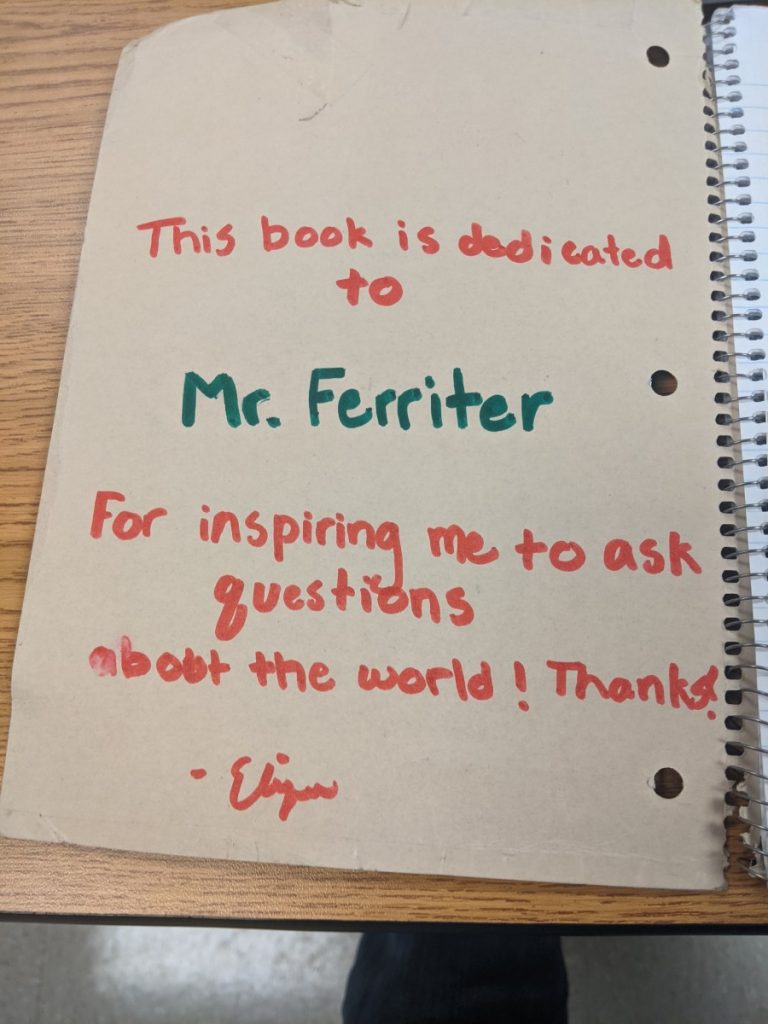
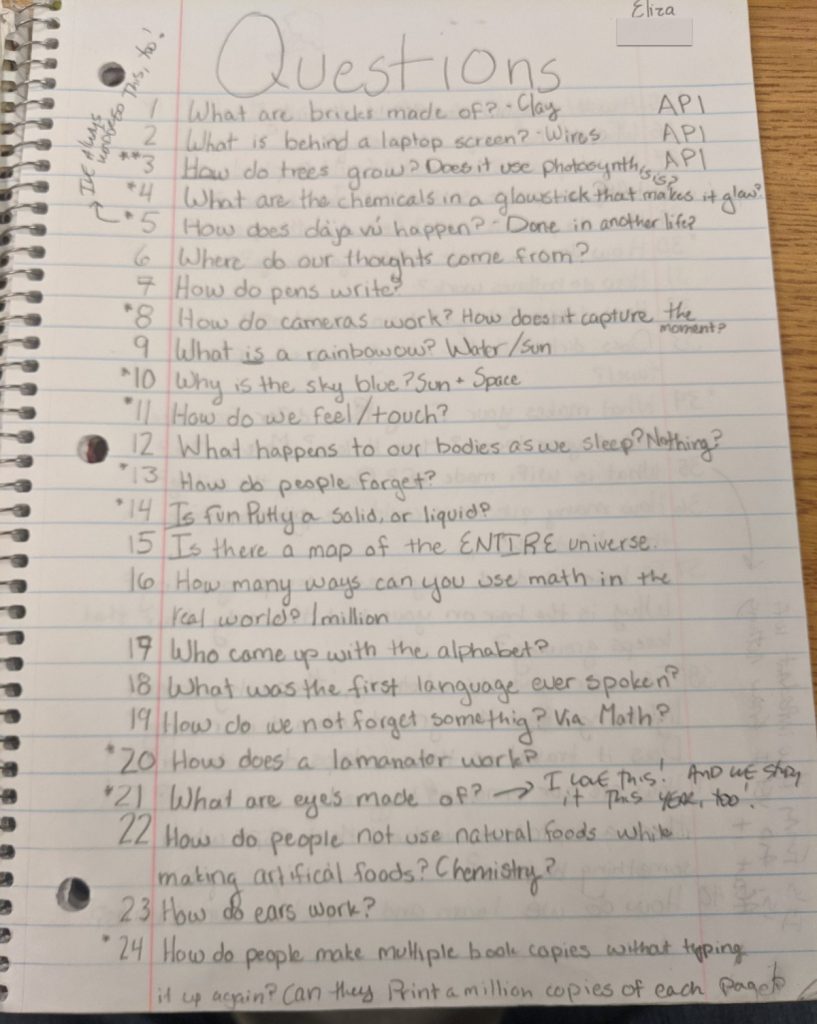
Building Confident Learners Means Valuing Student Questions — from buildingconfidentlearners.com by Bill Ferriter

This book is dedicated to Mr. Ferriter -- for inspiring me to ask questions about the world!

A great list of questions!


Dreamscape Learn Pod Unveiled at ASU+GSV Summit — from gettingsmart.com by Rachelle Dene Poth

Excerpt:

At the ASU+GSV Summit, a leading digital learning summit held in San Diego, California, virtual reality (VR) enthusiasts had an opportunity to experience Dreamscape Learn pod, a first-of-its-kind, full-body tracking, immersive VR experience. Created in partnership with Steven Spielberg, Dreamscape Immersive and Arizona State University (ASU) unveiled the pod for the first time during the event.

ASU President Michael M. Crow and Dreamscape Immersive founder/president and former DreamWorks Pictures studio head Walter Parkes, worked together to create Dreamscape Learn. President Crow and Parkes together merged the ideas of creating Hollywood storytelling with the innovation from ASU. ASU has been a leader in innovation and cutting-edge technology and has been ranked number one in innovation for the sixth year by the US News and World Report.


© 2025 | Daniel Christian