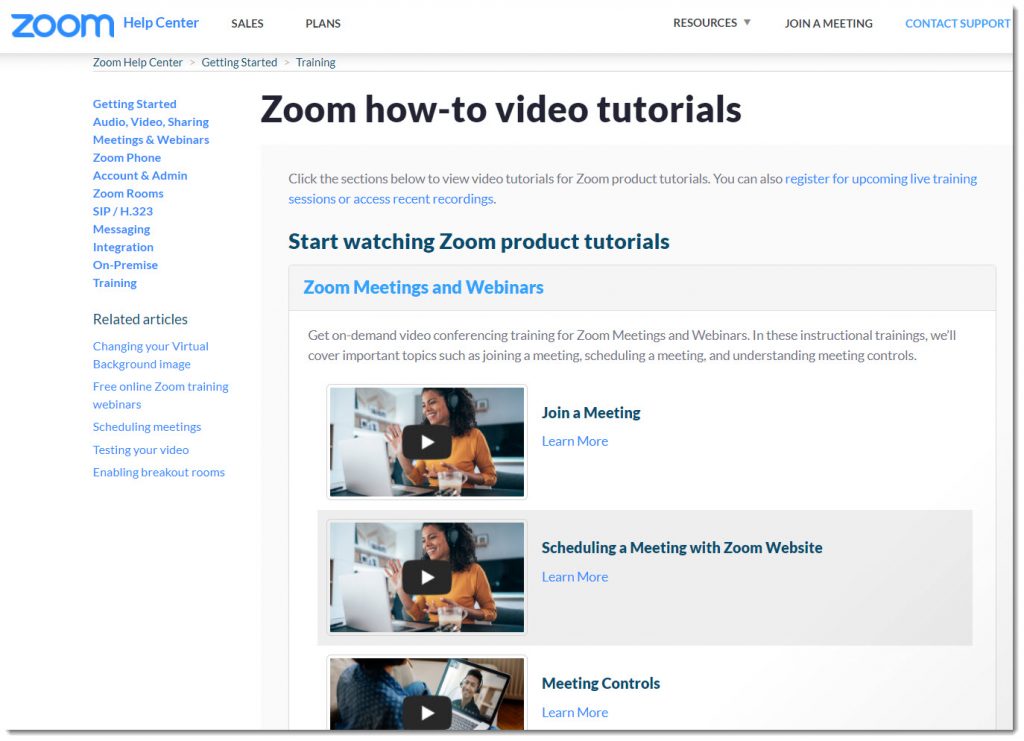
Teacher Tips: Starting the Year with Station Rotation — from catlintucker.com by Caitlin Tucker

Excerpt:

In an effort to reimagine the first weeks of school, I decided to use the station rotation model to encourage my new students to interact with one another and learn about our class. I designed a collection of stations to encourage them to explore expectations for conduct, course requirements, goal setting, what it means to collaborate, etc. The results were incredible! I was able to breathe and enjoy the relaxing, student-centered atmosphere I had created. Instead of standing at the front of the room talking at them, students worked independently and collaboratively on the tasks at various stations. I was freed to circulate, facilitate, and connect with my students.

 

Antidote Health to Set Up Nation’s First Virtual HMO — from innotechtoday.com by Corey Noles

Excerpt:

Antidote Health, a telehealth provider, announced it has raised $12 million in seed funding to build an AI-based virtual Health maintenance organization (HMO). The round was led by iAngels, Well-Tech Ventures, and Flint Capital, along with other angel investors.

Antidote Health is a B2C company that launched in January, providing uninsured and underinsured Americans with a virtual HMO via Artificial Intelligence that connects users to doctors with a smart chatbot and through video calls.


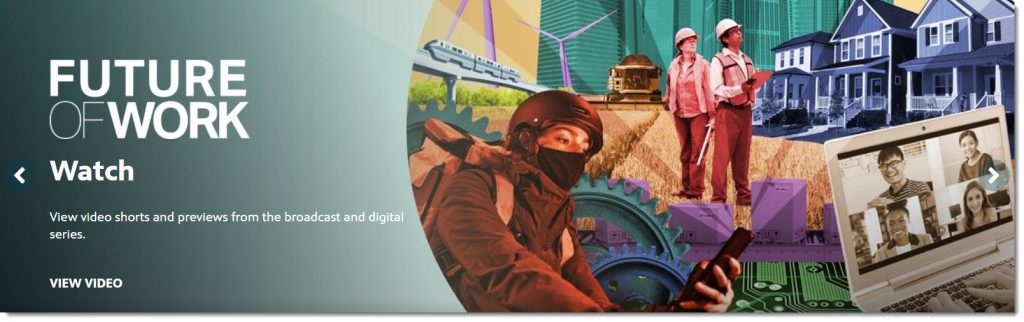
The Future of Work series from PBS can be seen here online

DIGITAL SERIES – FUTURE OF WORK: THE NEXT GENERATION

Excerpt:

The working landscape in the United States has rapidly changed in the last 30 years. The one job-for-life model is vanishing and younger workers are trading in stability and security for flexibility and autonomy. GBH and PBS Digital Studios present the Future of Work digital series, a six-part docuseries chronicling six mid-career adults as they navigate the rapidly changing work landscape covering topics such as debt, the gig economy, remote working, career identity, and more.


5 Ideas to Soothe IT Staff Burnout — from campustechnology.com by David Raths
The COVID-19 pandemic has taken its toll on the mental health of students, faculty and staff alike. But IT in particular has borne the brunt of keeping institutions’ technology infrastructure afloat through relentless change, often in the face of budget cuts and staffing shortages. Here are ways to help mitigate stress and better support IT teams during this challenging time.

Excerpt:

Faced with an increasingly stressed-out IT workforce, CIOs are trying to find innovative ways to boost morale, maintain work/life balance and enhance communication among teams. We spoke to three IT leaders who offered the following five suggestions, based on their own experiences over the past year and a half.


black and white photo of a stairway

Vision — from 500px.com by Markus Studtmann

Artist Spotlight: Yoora Lee — from booooooom.com


Light and shadow -- by Bruce

Light and Shadow — from 500px.com by Bruce


5 Ways Higher Ed Will Be Upended — from chronicle.com by Arthur Levine and Scott Van Pelt
Colleges will lose power, prices will go down, and credentials will multiply — among other jarring shifts.

Excerpt:

The dominance of degrees and “just in case” education will diminish; nondegree certifications and “just in time” education will increase in status and value.

In contrast, “just in time” education teaches students the skills and knowledge they need right now. They may need to learn a foreign language for an coming trip or business deal. They may need to learn an emerging technology. “Just in time” education comes in all shapes and sizes, but diverges from traditional academic time standards, uniform course lengths, and common credit measures. Only a small portion of such programs award degrees; most grant certificates, microcredentials, or badges.

From DSC:
Long-time readers of this blog and my old blog at Calvin (then College) will see no surprises here:

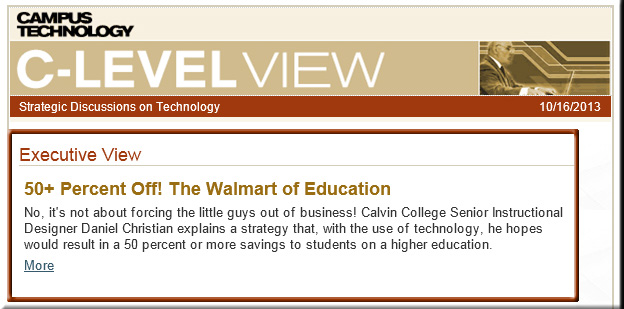
I published the idea of 50% off and more back in 2008

I discussed The Walmart of Education with Mary Grush back in 2013

Learning from the living class room


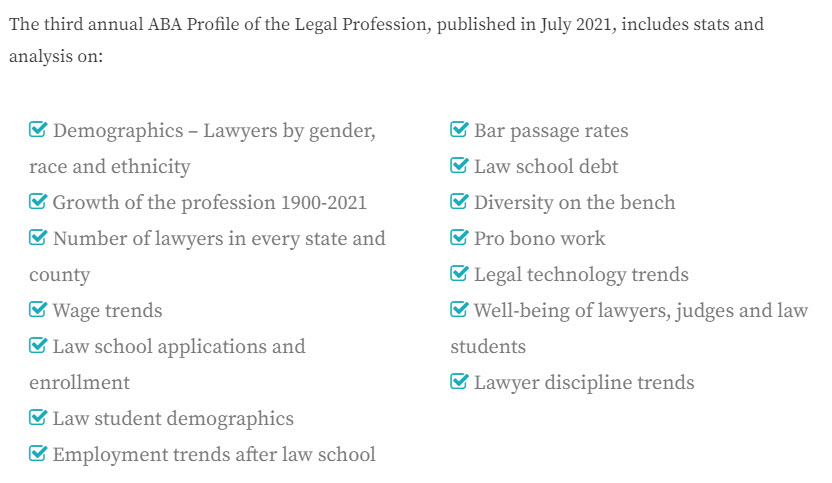
The 2021 ABA Profile of the Legal Profession
The American Bar Association’s annual compilation of statistics and trends in the U.S. legal profession.

https://www.abalegalprofile.com/

Also see:


Earning a Living and College Credit at the Same Time — from insidehighered.com by Susan H. Greenberg
IBM software engineering apprentices can now translate their training into three semesters of college credit at participating institutions.

Excerpt:

IBM is the latest company to win recognition from the American Council on Education’s College Credit Recommendation Service as part of its recently launched Apprenticeship Pathways project, which allows apprentices at selected companies to earn digital credentials that they can apply to six participating institutions:

  • Bismark State College
  • Excelsior College
  • Ivy Tech Community College
  • Rowan University
  • Tidewater Community College
  • California State University, San Bernardino
 

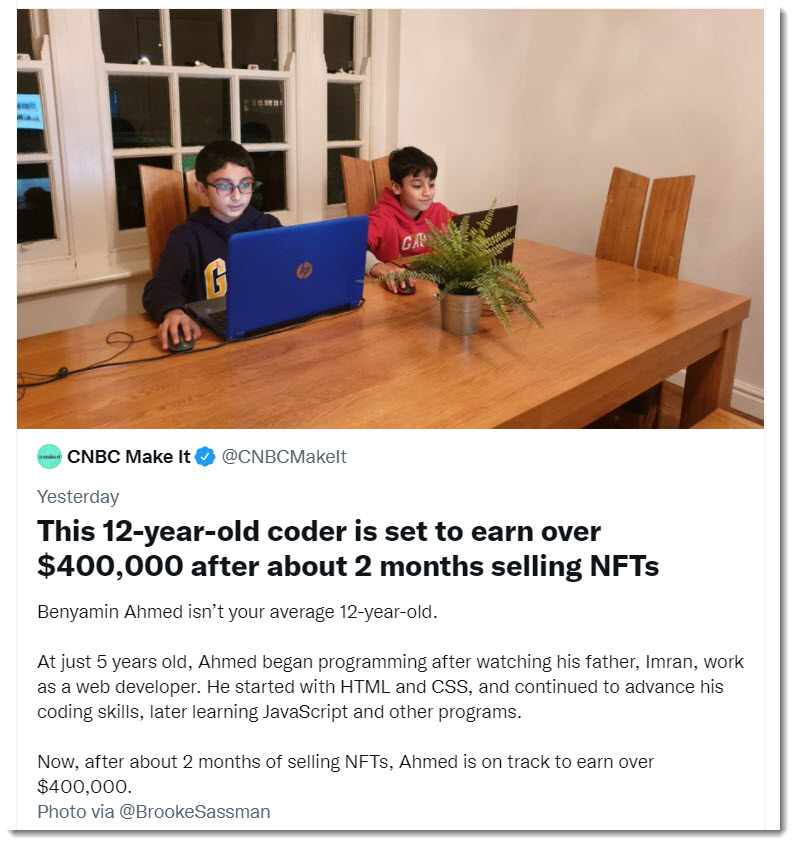
This 12-year-old coder is set to earn over $400,000 after about 2 months selling NFTs — from cnbc.com by Taylor Locke

Excerpt:

But lately, non-fungible tokens, or NFTs, and the smart contracts, or collections of code, that power them, have caught Ahmed’s attention.

“I first learned about NFTs earlier this year,” Ahmed, who is based in London, tells CNBC Make It. “I got fascinated with NFTs because you can easily transfer the ownership of an NFT by the blockchain.”

This 12-year-old coder is set to earn over $400,000 after about 2 months selling NFTs

From DSC:
Law professors who teach property and contracts might be interested in this as well.  🙂 

And speaking of emerging technologies and the law, also see:


How Will Blockchain Technology Affect Law Firms? — from legalreader.com by Aleksandra Arsic
Blockchain and cryptocurrencies are here to stay. The technology might yet still be new when compared to the Internet as a whole, but it has already proved it’s ready for wider usage.

Excerpt:

With the dawn of the 21st century, many new and exciting technologies arrived, promising to take off the workload, streamline day-to-day operations, and improve finances. One of the hottest innovations in recent years has been the invention of blockchain.

While it may have started as a way to keep a ledger of Bitcoin transactions, blockchain has grown way beyond that. It has been adopted by many industries, including the legal. But, what is it, and how can it be implemented in a law firm environment? Let’s find out.

Also see:

You’re pretty familiar with artificial intelligence and machine learning in your everyday life. When you use a navigation app to see the fastest route to your destination – AI. When you ask your smart home device what time your favorite store opens – AI. And when your streaming device suggests shows you might like – yes, that’s AI, too.

While AI is becoming more and more mainstream in our homes, it’s also making its way into our jobs. You may be wondering what AI-enhanced legal technology can do for you and your law firm. Here are a few ways AI can (or already has) further advance your firm’s reputation and success.

So, what does AI look like for law firms?


New Study Reveals the Full Extent of the Access to Justice Crisis in America — from iaals.du.edu by Kelsey Montague

Excerpt (emphasis DSC):

“The findings of this survey,” says Dr. Martin Gramatikov, Measuring Justice Director at HiiL, “indicate what our research has historically shown—that oftentimes the more developed a nation is, the more justice needs exist in the population, and the greater the challenge of access to justice for all. While it is widely understood that there is an access to justice problem in the United States, the full extent of the justice crisis has been less clear, until now. With the results of this survey, and IAALS’ focus on evidence-based reform, we can begin to truly understand the scope of the problem, and work towards the changes needed to address this justice gap.”

On an annual basis, that translates to 55 million Americans who experience 260 million legal problems. A considerable proportion of these problems—120 million—are not resolved or are concluded in a manner which is perceived as unfair. This study shows that access to justice challenges are significant and pervasive.


10 Ways You Can Use Podcasts in Your Course to Engage Students — from barbihoneycutt.com by Barbi Honeycutt, Ph.D.

Excerpt:

Have you used podcasts in your courses yet? If not, you might want to consider it! Podcasts can be an excellent tool to add to your lesson to enhance a message, present more in-depth perspectives, and offer a different medium for students to engage with the course content.

And, podcasts are popular! There are more than 630,000 podcasts representing a variety of topics: current issues, education, writing, research, science, leadership, politics, management, business, skill development, hobbies, etc. The list just goes on and on.

I’m almost positive there is at least one episode in one podcast somewhere you could integrate into your course. And if there isn’t, then you and your students could create one!


Psalm 115:1  — from biblegateway.com

Not to us, Lord, not to us
but to your name be the glory,
because of your love and faithfulness.

Psalm 117:1-2 — from biblegateway.com

Praise the Lord, all you nations;
    extol him, all you peoples.
For great is his love toward us,
    and the faithfulness of the Lord endures forever.

Praise the Lord.[a]

 
© 2025 | Daniel Christian