Amazon offers to pay college tuition for most US workers — from cnn.com by Nathaniel Meyersohn

Excerpt:

New York (CNN Business)Amazon is offering to cover four-year college tuition for most of its approximately 750,000 hourly workers in the United States, the latest major employer to offer the perk to attract and retain hourly employees in a tight job market.

Starting in January, Amazon for the first time will pay for tuition, fees and books for warehouse, transportation and other hourly employees who want to pursue bachelor’s degrees. It will also begin covering high school diploma programs, GED’s and English as a Second Language (ESL) certifications for employees.

Amazon (AMZN) has not finalized a list of colleges workers will be eligible to attend using the benefit.


A Judge Rules Apple Must Make It Easier To Shop Outside The App Store — from npr.org by Bobby Allyn
Judge Rules Apple Must Change Its Tightly Controlled App Store | The ruling follows a three-week trial in which Epic, the maker of the hit video game Fortnite, argued Apple’s App Store policies are an abuse of power and hurt developers.

Excerpt:

A federal judge ordered Apple on Friday to crack open the tightly controlled App Store and “steer” people using apps to payment methods other than Apple’s own processor, which usually collects a 30% commission on app purchases.

The decision by U.S. District Judge Yvonne Gonzalez Rogers is the most significant strike yet against Apple’s commission, something critics call “the Apple tax.” It could force the tech giant to revamp its entire business model for apps on iPhones and iPads.

Also see:

Factbox-Apple vs Epic case: heated arguments, dramatic calls — from reuters.com
A U.S. judge on Friday issued a ruling in Fortnite creator Epic Games’ antitrust lawsuit against Apple Inc’s App Store, striking down some of Apple’s restrictions on how developers can collect payments in apps.

Apple can no longer force developers to use in-app purchasing, judge rules — from cnbc.com by Kif Leswing
The trial took place in Oakland, California, in May, and included both company CEOs testifying in open court.

  • Federal Judge Yvonne Gonzalez Rogers on Friday handed down a decision in a closely watched trial between Apple and Epic Games.
  • Rogers issued an injunction that said Apple will no longer be allowed to prohibit developers from providing links or other communications that direct users away from Apple in-app purchasing.
  • Rogers said Apple was not a monopolist and “success is not illegal.”

Tech Stocks Are Jumping as Judge Forces Changes to Apple’s App Store — from
A slew of tech stocks are rallying after a Northern California judge ruled that Apple must allow developers who distribute their apps via its store to bypass the company’s payment systems—a move that could alter which companies collect billions of dollars now paid to Apple. The decision arrives after a legal fight that began roughly a year ago.  


Why “Challenging” Isn’t The Right Goal — from byrdseed.com by Ian Byrd

Excerpt:

If I asked you to alphabetize the US state capitals in under 90 seconds, you’d certainly be “challenged”! But you’d also feel stressed out and frustrated.

I wish I had realized this years ago. Something can be “challenging” and also be at the very bottom of Bloom’s Taxonomy. Something can be “challenging” and even impede learning.

So here’s the word I use now when I’m planning lessons for Byrdseed.TV: interesting.

I want to “interest” students. A student who is interested will work over the weekend simply because they want to know more. An interested student will stay in from recess by choice to keep at it. An interested student is intrinsically motivated.

From DSC:
This reminds me yet again of this graphic that readers of this blog will recognize:

In the future, learning channels will offer us more choice and more control


McKinsey for Kids: I, Robot? What technology shifts mean for tomorrow’s jobs — from mckinsey.com

Tomorrow’s jobs will look different from today’s—and not just because you might be working alongside robots. In this edition of McKinsey for Kids, peer into the future of work and what it may hold for you, whether you’re thinking about becoming a doctor, an influencer—or a garbage designer.


Graphic of digital audio for the article entitled An Edtech User’s Glossary to Speech Recognition and AI in the Classroom

An Edtech User’s Glossary to Speech Recognition and AI in the Classroom — from edsurge.com by Thomas C. Murray

Per Thomas Murray:

Recently, I collaborated with SoapBox Labs’ Amelia Kelly, the vice president of speech technology there, to create a glossary to help educators and edtech developers better familiarize themselves with speech recognition and make informed decisions about its use in educational settings. Below are some of the key terms that are particularly important, along with an explanation for why those terms matter.


Let the morning bring me word of your unfailing love,
    for I have put my trust in you.
Show me the way I should go,
    for to you I entrust my life.


Personalized Learning Using AI — from datafloq.com by Dmitry Baraishuk

Excerpt:

Process of Implementing Personalized Learning Using AI

  • The system tested every learner using short quizzes and games. Then AI adapted the learning path to each learner’s knowledge of a topic based on the test results.
  • If a pilot struggled with a certain topic, the AI LMS repeated it by presenting the information in a new way.
  • After completing a section, every pilot was retested and progressed to the next module.

Personalized learning with AI encompasses all the core aspects of online training:

  • personalized learning path;
  • relevant content based on knowledge level, skills, interests, and goals;
  • automated knowledge checks;
  • prediction of knowledge gaps;
  • proactive learners’ support;
  • tutoring, etc.


Some psychological benefits of remote learning in k-12 sector — from by Tony Bates

Excerpt:

There have been many criticisms of the move to remote learning during the pandemic for students in schools, but there also appear to have been some unexpected benefits. This article looks at these from a psychological point of view, and how some of these benefits could be continued post-pandemic. The article lists the following benefits…


Companies Need More Workers. Why Do They Reject Millions of Résumés? — from wsj.com by Kathryn Dill
Automated-hiring systems are excluding many people from job discussions at a time when additional employees are desperately needed

Excerpt:

Companies are desperate to hire, and yet some workers still can’t seem to find jobs. Here may be one reason why: The software that sorts through applicants deletes millions of people from consideration.

Employers today rely on increasing levels of automation to fill vacancies efficiently, deploying software to do everything from sourcing candidates and managing the application process to scheduling interviews and performing background checks. These systems do the job they are supposed to do. They also exclude more than 10…


The Story is in the Structure: A Multi-Case Study of Instructional Design Teams — from the Online Learning Consortium by Jason Drysdale (other articles here)

Excerpt:

Given the results of this study, it is recommended that institutions that are restructuring or building new instructional design teams implement centralized structures with academic reporting lines for their teams. The benefits of both centralization and academic reporting lines are clear: better advocacy and empowerment, better alignment with the pedagogical work of both designers and faculty, and less role misperception for instructional designers. Structuring these teams toward empowerment and better definitions of their roles as pedagogy experts may help them sustain their leadership on the initiatives they led, to great effect, during the COVID-19 pandemic. This study also revealed the importance of three additional structural elements: appropriate instructional design staffing for the size and scale of the institution, leadership experience with instructional design, and positional parity with faculty.

Also see:

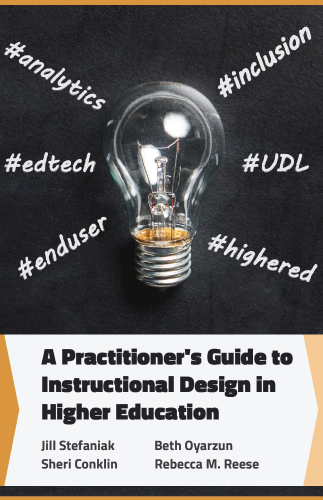
A Practitioner's Guide to Instructional Design in Higher Education


More Companies Are Looking to Hire Accessibility Specialists — from wsj.com by Ann-Marie Alcántara
Effects of the Covid-19 pandemic, lawsuits, and diversity and inclusion efforts explain the increase in accessibility job postings, advocates and executives say

Excerpt:

Accessibility jobs, ranging from “head of accessibility” to “accessibility analyst,” are increasing at a rapid pace across industries as companies strive to make their products and services more tailored to people with disabilities.

The number of job listings with “accessibility” in the title grew 78% in the year ended in July from the previous 12 months, LinkedIn said in response to a data request from The Wall Street Journal. Such listings had risen 38% in the year between August 2019 and July 2020 compared with the previous year, according to the professional networking site owned by Microsoft Corp.


© 2025 | Daniel Christian