As Its Conference Kicks Off, Clio Announces Its ‘Most Important Product Release Ever’ (and More) — from lawsitesblog.com by Bob Ambrogi

Excerpt (emphasis DSC):

The Clio Cloud Conference is always the occasion for the law practice management company to announce new and enhanced products, and today’s kick-off of this year’s event was no different, with CEO Jack Newton unveiling what he described to me as the most important product release since Clio’s debut 13 years ago.

That product is Clio Payments, a native e-payments technology built into the Clio Manage law practice management platform, allowing lawyers to offer clients secure and compliant credit card, debit card and e-check payments.

More on Clio Payments below, but, in addition, Clio today also announced…
 

Why we need some humility about online learning – and about face-to-face teaching — from tonybates.ca by Tony Bates

Excerpt:

Those of us who have been fighting to get online learning accepted over the last 20-25 years have argued strongly the merits of online learning. We have argued that not only can it increase access, especially for older, working and lifelong learners, but it can also teach as well, and under certain circumstances, even better than face-to-face teaching. Covid-19 in particular showed the value of online learning, allowing students to continue their learning, even during a pandemic.

The limits of online learning
However, Covid-19 also taught us that online learning has its limits. When there was no access to face-to-face learning, we found that online learning was not able to help certain students. We also found that there are important aspects of face-to-face or campus based learning that cannot easily be replaced by online learning. Let’s look at some of these limitations.

We need to not only accept that both online learning and face-to-face teaching have equal value, but also to strive to understand what each does best. This will vary by subject matter, by types of students, and by instructors’ training and experience. We all have a lot to learn.

Also from Tony, see:

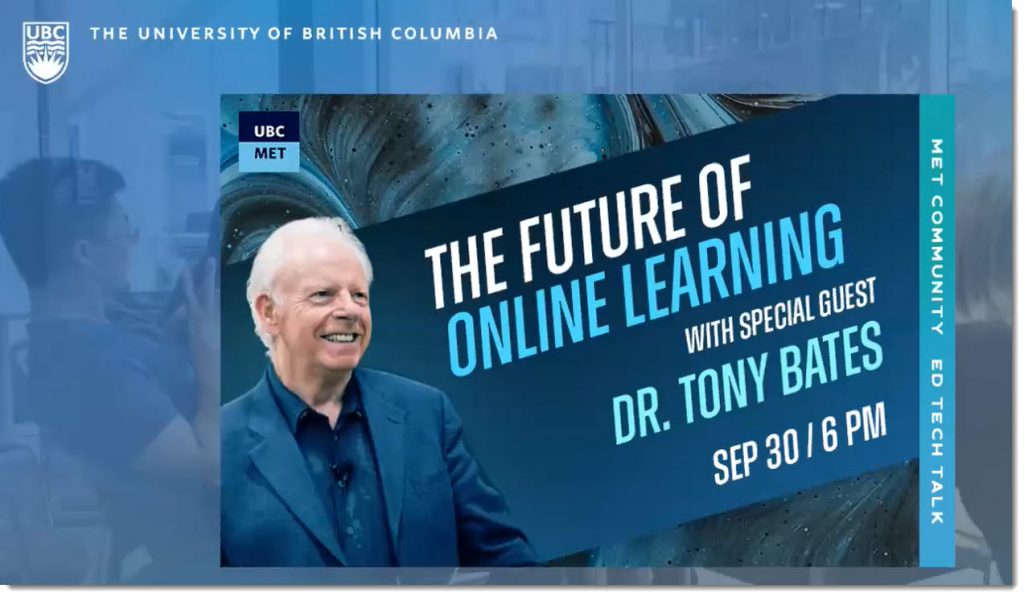
The future of online learning with Dr. Tony Bates


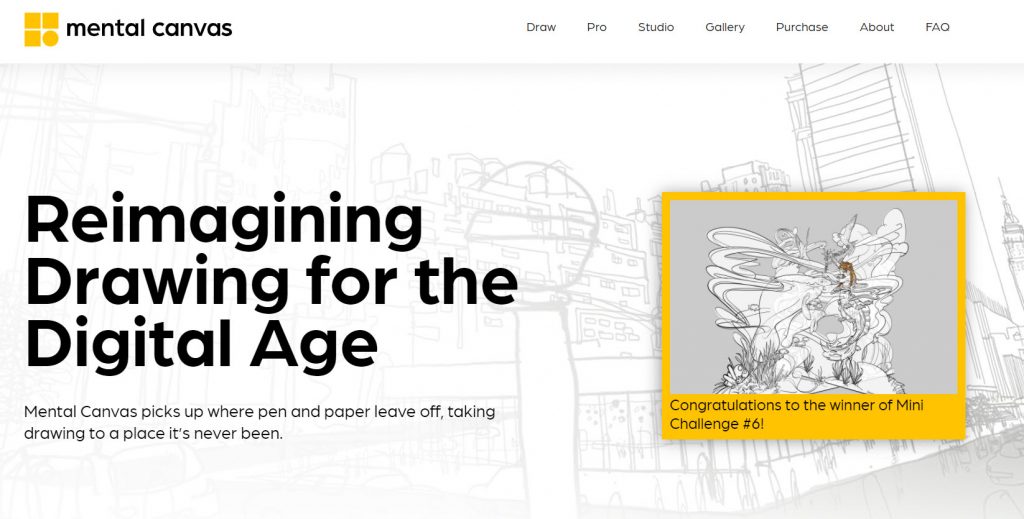
Mental Canvas will unleash some serious creativity!

Cehck out what you can do with Mental Canvas! The app seamlessly combines 2D and 3D!


Also see:

Mental Canvas: App for drawing in 3D  — from microsoft.com in Germany; Google translated the excerpt below:

When I first saw Mental Canvas in action, I was instantly impressed. Drawings are created in 3D in the app. You can even fly through your own sketches and comics. Mental Canvas offers teachers completely new possibilities to design blackboard pictures, to illustrate content and to try out creative things. The tutorials and examples immediately make you want to draw in three dimensions. Mental Canvas is currently available as a free download. In this blog article you will get to know the app.


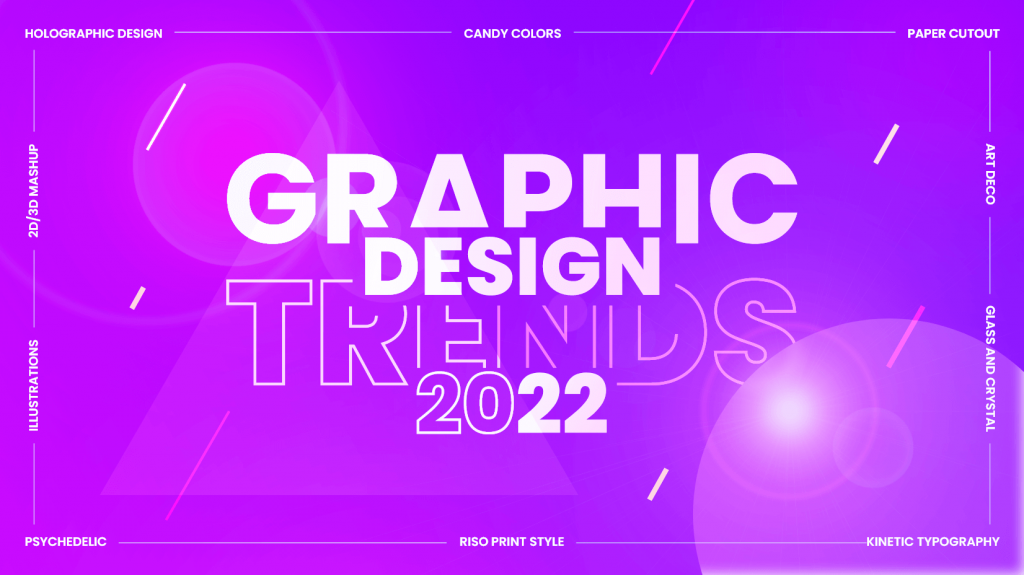
Top Graphic Design Trends 2022: Raising the Game — from graphicmama.com by Lyudmil Enchev

Graphic design trends for 2022

Excerpt:

The coming 2022 is just around the corner and it’s already breaking all the rules for graphic design. Everything is permitted and it’s going to be glorious. If we can summarize the Graphic Design Trends 2022 in one sentence, it’s time to raise the game because the floodgates are open, bringing a mix of the unmixable, nostalgia, movement, and open-mindedness.


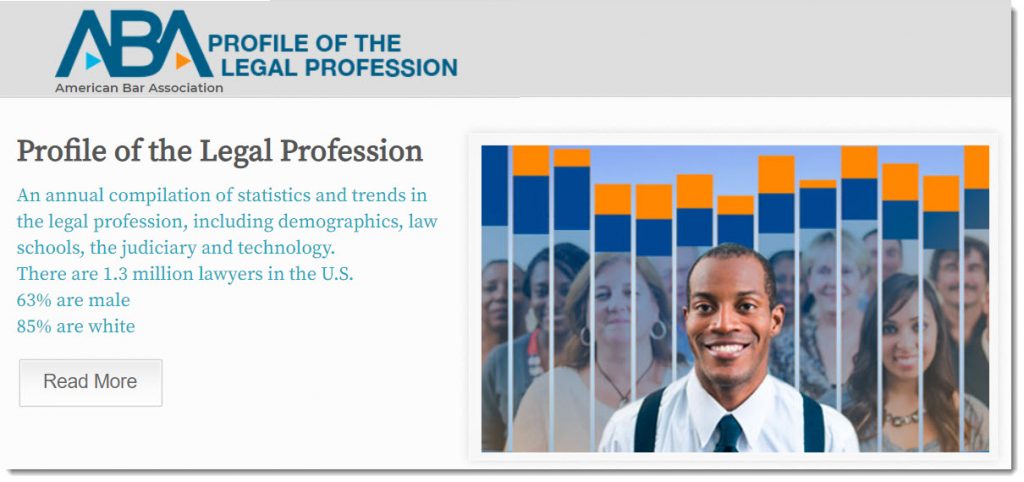
Profile of the Legal Profession — from the American Bar Association (ABA)

Profile of the legal profession -- from the American Bar Association

Excerpt from the Legal Education section:

After several years of declining enrollment in legal education, the number of students enrolled at law schools accredited by the American Bar Association increased in 2018, 2019 and 2020.

In 2020, the number of students pursuing a juris doctor degree hit 114,520 – the highest number since 2014. This represented an increase of 1,638 students (or 1.5%) over the previous year. Still, it was far below the high of 147,525 enrolled law school students in 2010.

Enrollment is growing faster for students in non-JD legal programs in law schools – for example, those seeking master of law degrees and certificates. In 2020, there were 21,292 students in these non-JD programs – a 78% increase from 11,973 non-JD students in 2014.

For 2020, there were 63,384 law school applicants, 44,115 of whom were accepted to at least one school, according to the Law School Admission Council.


The Damaging Myth of the Natural Teacher — from chronicle.com by Beth McMurtrie

Excerpt:

The mistaken ideas about teaching that Sathy had early in her career are widespread — and not only among new instructors. Good teaching is often seen as a natural talent when really it’s a skill, one that can be learned and refined.

Thinking back to those early days, though, Sathy sees how that first stumble could have led her in a different direction. If it weren’t for a “big lightbulb moment” that enabled her to quickly understand her mistakes, a fierce determination to become a better teacher, and an openness to seeing her role not as the expert who commands a room, but as a partner in students’ learning, she could have been yet another hapless instructor wondering how to get through the semester without too many punishing evaluations.

“I’m glad I had the courage to keep getting back into the ring,” she says.


Americans Need a Bill of Rights for an AI-Powered World — from wired.com by Eric Lander & Alondra Nelson
The White House Office of Science and Technology Policy is developing principles to guard against powerful technologies—with input from the public.

Excerpt (emphasis DSC):

Soon after ratifying our Constitution, Americans adopted a Bill of Rights to guard against the powerful government we had just created—enumerating guarantees such as freedom of expression and assembly, rights to due process and fair trials, and protection against unreasonable search and seizure. Throughout our history we have had to reinterpret, reaffirm, and periodically expand these rights. In the 21st century, we need a “bill of rights” to guard against the powerful technologies we have created.

Our country should clarify the rights and freedoms we expect data-driven technologies to respect. What exactly those are will require discussion, but here are some possibilities: your right to know when and how AI is influencing a decision that affects your civil rights and civil liberties; your freedom from being subjected to AI that hasn’t been carefully audited to ensure that it’s accurate, unbiased, and has been trained on sufficiently representative data sets; your freedom from pervasive or discriminatory surveillance and monitoring in your home, community, and workplace; and your right to meaningful recourse if the use of an algorithm harms you. 

In the coming months, the White House Office of Science and Technology Policy (which we lead) will be developing such a bill of rights, working with partners and experts across the federal government, in academia, civil society, the private sector, and communities all over the country.

Technology can only work for everyone if everyone is included, so we want to hear from and engage with everyone. You can email us directly at ai-equity@ostp.eop.gov


The Great Education Unbundling and How Learning Will be Rebundled — from gettingsmart.com by Nate McClennen, Tom Vander Ark

Key Points

  • The pandemic accelerated the great unbundling of learning – at least for those with access, agency, and advocates.
  • While unbundling will expand, how learning is rebundled will emerge as the next innovation — accessible, personalized, accountable and massive.

Excerpts:

By removing the barrier of full credit/school offered, schools become more robust in terms of richness of offerings as well as more personalized to meet the needs of students and communities.

The majority of unbundled experiences still fall back on the course level as the smallest granular level of choice. Following the lead of industry, unbundling in schools should mean a reduction in grain size so that skills are the level of unbundling rather than courses.


Top 5 Language Learning Apps in 2021 — per Sinisa Sambolic DMM, 42matters, Zürich

  1. Duolingo: language lessons by Duolingo
    Downloads Over the Last 30 Days: 6,924,751
  2. Learn 33 Languages Free – Mondly by ATi Studios
    Downloads Over the Last 30 Days: 777,312
  3. ELSA Speak: Online English Speaking App for mobile by ELSA
    Downloads Over the Last 30 Days: 537,654
  4. Lingokids – kids playlearning™ by Lingokids – English Learning For Kids
    Downloads Over the Last 30 Days: 533,291
  5. Cake: Free expressions updated daily! by Cake Corp
    Downloads Over the Last 30 Days: 186,041

42matters is a leading provider of mobile app data and app store insights. 42matters facilitates a holistic overview of the mobile app market by leveraging its unique arsenal of machine learning algorithms to research every app and developer on the major app stores and connected TV channel stores. These include the Apple App Store, Google Play, Amazon App Store, Tencent Appstore, AppleTV App Store, Amazon Fire TV, and Roku Channel Store.


50 Sites & Apps for K-12 Education Games — from techlearning.com by Diana Restifo and David Kapuler
Game-based learning is a great way to integrate technology into the classroom while engaging kids with real learning.

Excerpt:

Game-based learning turns potentially tedious study time into an adventurous knowledge quest, complete with catchy soundtracks and digital rewards. It helps keep kids engaged with the subject matter and motivated to pursue greater expertise. Best of all, web- or app-based gameplay integrates easily into both online and in-person classes.

With the demise of Flash at the end of 2020, many favorite educational game sites went under. That’s why we decided to update our popular list below to include the latest and best sites and apps for K-12 education games. Many are free (or offer free basic accounts) and some provide progress tracking and analysis tools for teachers. All will help kids enjoy learning.

Also relevant/see the following resource and excerpt from Goldie Blumenstyk’s The Edge (from the Chronicle of Higher Education)

Creative Acts for Curious People: How to Think, Create, and Lead in Unconventional Ways — by Sarah Stein Greenberg

Excerpt:

Greenberg also makes a compelling case for the “playful and joyous” approaches the d.school has been championing, like the secret handshake or building several prototypes of an ideal chair using tools like cardboard, pipe cleaners, and chewing gum and toothpicks. After so many months of loss and social deprivation, she told me last week, “those elements are more important than ever.”


From DSC:
Perhaps folks might want to experiment with the teaching strategy as mentioned below from Dr. Barbi Honeycutt’s Lecture Breakers Weekly e-newsletter.


From The Scholarly Teacher blog — who just added a new section on the blog which includes teaching tip infographics.

This week, they shared variations of Think, Pair, Share. In this teaching strategy, you give the students a problem or question. Then, you ask them to think about the question, pair up with a partner to discuss it, and then share it with the rest of the class (hence the name “think, pair, share”).

In this adaption, you do the same process, but instead of asking them to share with the class, you ask them to post a tweet using a class hashtag. Then you can read the tweets aloud, integrate them into your lecture, and/or facilitate a class discussion. This teaching strategy works well for blended, in-person, and online course formats, so it’s very adaptable to any topic or lesson.


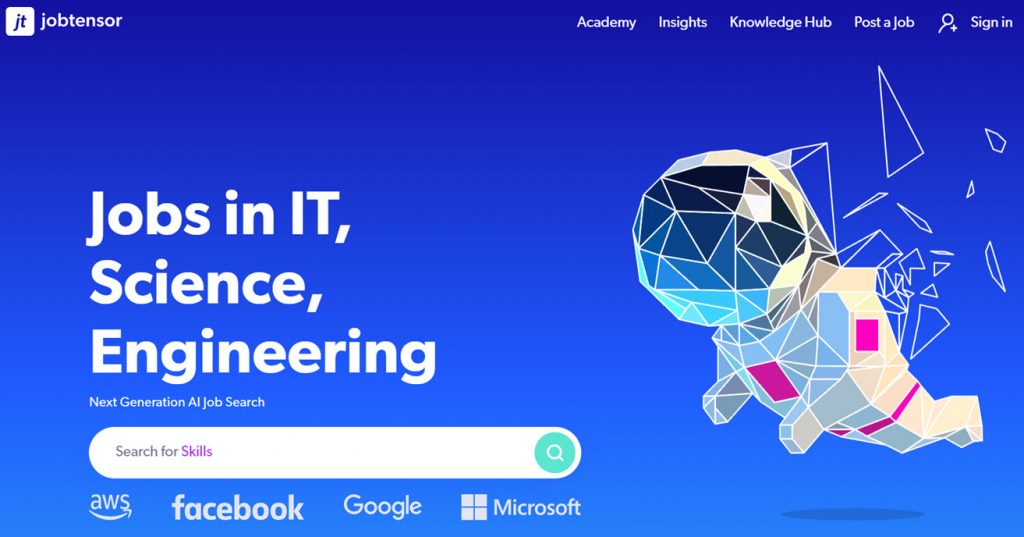
jobtensor.com/uk <– an AI job board from the UK — with thanks to Dr. Jakob Sidoruk for this resource.

From DSC:
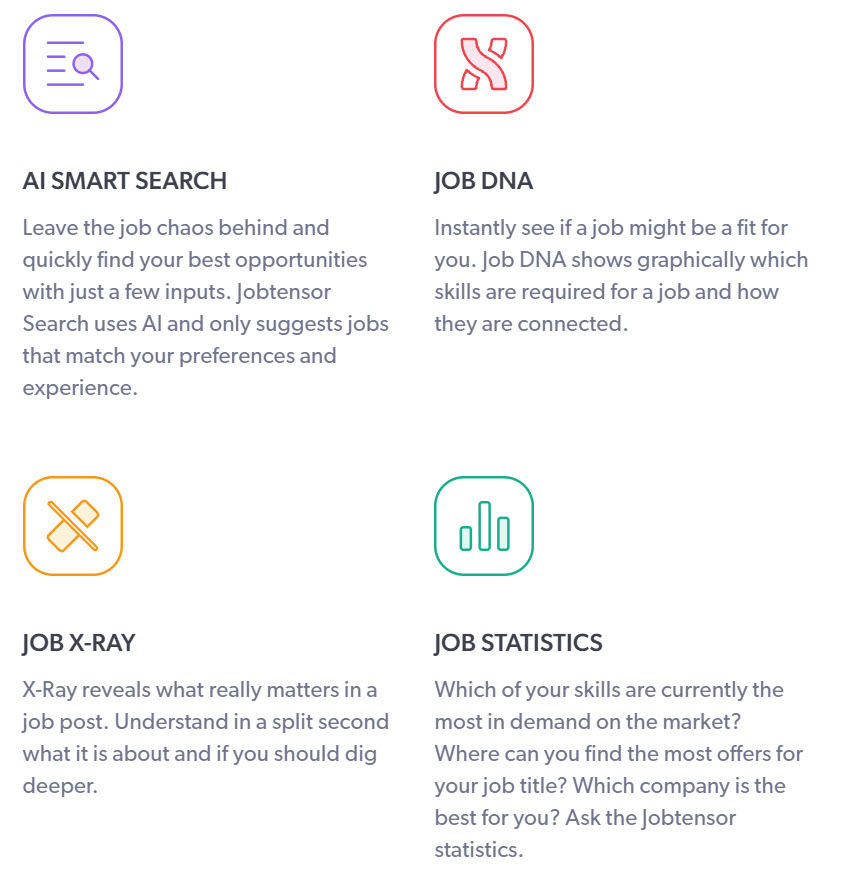
Jakob mentioned that Jobtensor has built a tool for jobs in tech, science and engineering and that the goal of this tool is to make job searches more fun and efficient for job seekers. I’m glad to see this from the other side of the table. That is, there have been plenty Applicant Tracking Systems (ATSs) out there that have essentially weeded people out time and again — while making many job searches long, expensive, and emotionally draining. 

jobtensor.com/uk -- an AI job board from the UK

jobtensor.com/uk -- an AI job board from the UK


From DSC:
It is exactly this kind of tool that could — and should — be integrated into a next-generation learning platform. Have an AI-enabled system of identifying the most current needs out in the workplace. Provide a mechanism/listing of those needs along with the existing courses, streams of content, podcasts, and more that could help someone learn those skills.

Learning from the living class room

streams of content are ever flowing by -- we need to tap into them and contribute to them


© 2025 | Daniel Christian