From DSC:
I was reading about a Ph.D. who was currently doing some research into the science of learning. This person had been teaching in a School of Education for years, but just (relatively) recently embarked on a Ph.D. During this person’s research, they came across a lot more information regarding the science of learning.

If this was true with someone who had been in education for years (and I can relate to that as well), it made me wonder:

  • How can we better get the word out to our learners re: how they can maximize their Return On Investment (ROI) from their studying time and efforts…?

Then I thought, why couldn’t we put these tips directly into our banners on our CMS’s and LMS’s and/or link our banners to some other web pages/resources that provide such best practices and tips for our learners!?!  This could occur within the corporate training world as well.

Examples:

Let's put best practices on studying directly within our LMSs banners!

Or we could link to resources regarding best practices in studying!

Along these lines, we should have 11×17 (or larger) posters like this plastered in every hallway of every learning space out there:
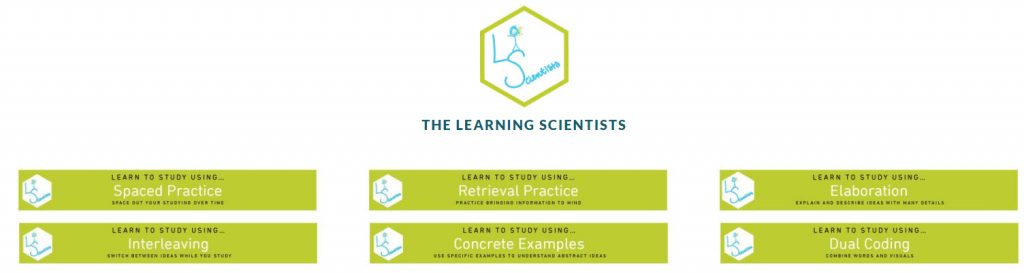

 

We should plaster these types of posters throughout our learning spaces!!!


Winners Named for 2021 American Legal Technology Awards — from lawsitesblog.com by Bob Ambrogi

Excerpt:

Winners have been named for the second annual American Legal Technology Awards, a competition launched last year to honor exceptional achievements in legal technology.

This year, the competition added the announcement of a runner up and honorable mention in each category. A series of videos showcasing the winners in each category will be posted to the ALTA site between now and Nov. 10.

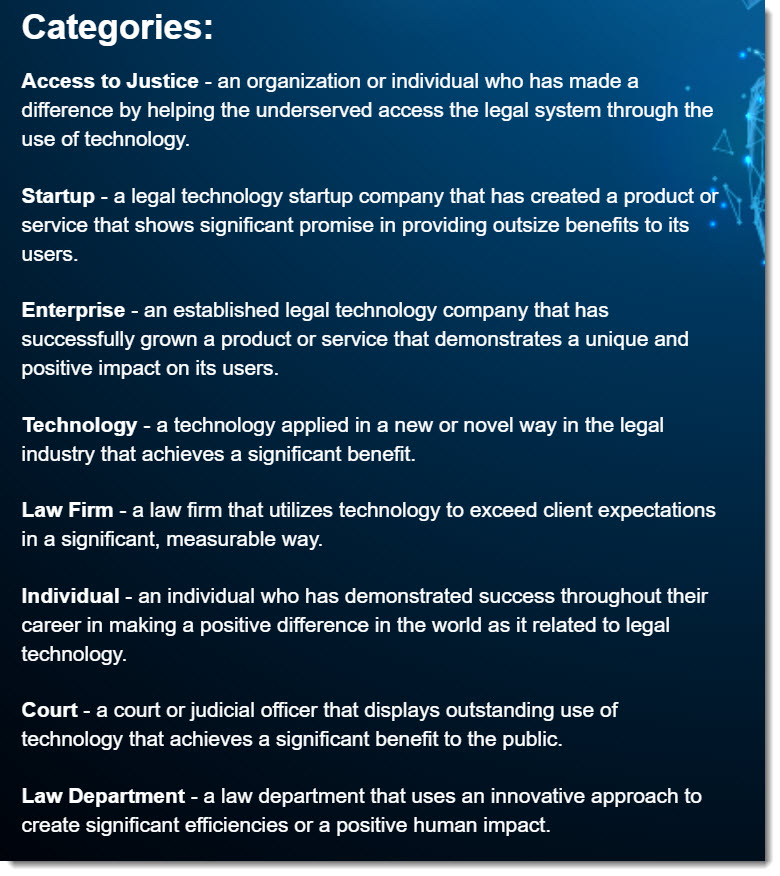
2021 American Legal Technology Awards


10 great Chrome tips for teachers and educators — from educatorstechnology.com


LinkedIn rolls out its freelance services marketplace globally after picking up 2M users in smaller US beta — from techcrunch.com by Ingrid Lunden

Excerpt:

LinkedIn, the Microsoft-owned platform for those connecting with others in their fields of work and those looking for work, has been known best in recruitment for sourcing candidates and advertising job openings for permanent work. Now, to complement that, LinkedIn is opening up a new front in the job market for freelancers.

Today it is taking the wraps off its Service Marketplace, a new feature that will let people advertise themselves for short-term engagements to those looking to hire people for such roles, competing against the likes of Fiverr and Upwork for sourcing skilled knowledge workers.


A Crusade to End Grading in High Schools — from washingtonpost.com by Thomas Toch and Alina Tugend; with thanks to Ryan Craig for this resource
One educator is leading an effort to evaluate students differently. Can it catch on?

Excerpt:

He envisioned schools where students learned math, history and science not as isolated subjects in classroom-bound courses but while working together to address real-world issues like soil conservation, homelessness and illegal immigration. Such learning would make schooling more meaningful for students and thus more engaging, Looney believed. It would let students demonstrate more talents to colleges, holding out the prospect of a wider, more diverse range of students entering higher education’s top ranks.

The existing high school transcript, however, with its simple summary of courses and grades, wouldn’t do justice to the interdisciplinary, project-based learning he wanted. It wouldn’t capture students’ creativity, persistence and other qualities. Looney needed a radically different way to portray students’ high school experiences, one that replaced grades with a richer picture. But he didn’t know what it was.

Today, 275 private high schools and 125 public schools are part of the nonprofit Mastery Transcript Consortium (MTC). They are in various stages of designing and launching the transcript — and working to make Looney’s radical vision a reality. Started in 2017, the organization is expanding rapidly.


All aboard: Bitcoin’s rise inspires even big banks to staff up on crypto talent — from linkedin.com by George Anders

Excerpt:

That’s according to a new analysis by LinkedIn’s Economic Graph team, which finds that major financial services firms will add more than three times as many staff steeped in digital-asset experience this year than in 2015. That pace jumped 40% in the first half of 2021 alone, compared with the same period last year.

“The opportunities in digital assets are plentiful,” BNY Mellon’s Roman Regelman, the bank’s CEO of asset servicing and head of digital, told LinkedIn News. “We can now attract talent in a very different way.”

Also relevant, see:

  • Wharton’s New Crypto Course to Take Crypto for Tuition Fees — from insidehighered.com by Suzanne Smalley
    Excerpt:
    The Wharton School of the University of Pennsylvania last week announced it would become the first Ivy League school and the first American business school to accept enrollment payments in cryptocurrency via Coinbase. The announcement came alongside news that the prestigious business school also has launched an online certificate program focused on the economics of blockchain and digital assets.
 

What is NaNoWriMo and How Can It Be Used to Teach Writing? — from techlearning.com by Erik Ofgang
November is National Novel Writing Month (NaNoWriMo) and there are plenty of ways to have your class participate and learn in the process.

Excerpt:

National Novel Writing Month (NaNoWriMo) aims to help aspiring writers of all ages and levels, including students, get their novels written. Every year, tens of thousands of participating writers commit to writing a first draft of their novel within the month of November.

The NaNoWriMo program is designed to help writers silence their inner critic and get their thoughts down on the page, which it accomplishes by encouraging participants to wait until the end of the month to go back and edit, by helping them establish a deadline, and by using technology to help them connect and inspire one another.

Educators can facilitate their students’ participation in NaNoWrMo in order to teach storytelling, grammar, written communication, creativity, and more, all while helping encourage young novelists.


travel through time -- a creative photograph out at 500px.com

Also see:

The Ocean Photographer of The Year — from fubiz.net


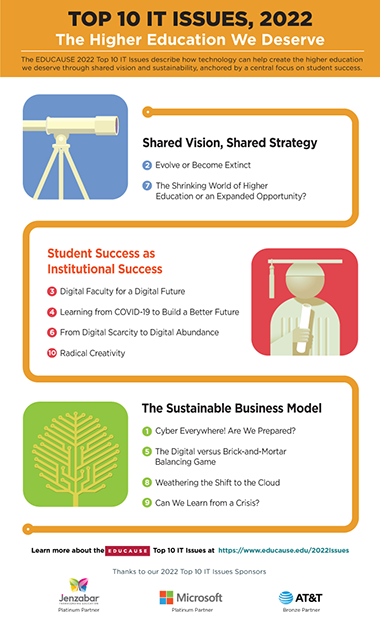
2022 Top 10 IT Issues -- from Educause

2022 Top 10 IT Issues


From DSC:
Time will tell which institutions have the prerequisite culture of innovation that will help reinvent themselves, stay relevant, and survive. 

And for people (who have worked in higher education for years) who don’t like to see learners as customers…well…when those learners are often paying $100,000-$250,000 or more for a four-year degree, those folks don’t have much say or credibility any longer. The price increases that they never stepped in to stop from occurring have forever changed the learning ecosystems within higher education. The idea of supporting  the perspective that says:

Well, we’re proud (and content) that our institution will have the lowest price increase in X (where X is a city, state,  or geographic region)
or
We’re proud that our institution will have the lowest price increase within our group of similar/comparative institutions.

…well, that type of perspective hasn’t cut it for years now. But the danger of that status quo perspective is only becoming apparent to many now that one’s very survival is at stake.


Addendum/also see:


Surveillance in Schools Associated With Negative Student Outcomes — from techlearning.com by Erik Ofgang
Surveillance at schools is meant to keep students safe but sometimes it can make them feel like suspects instead.

Excerpt:

“We found that schools that rely heavily on metal detectors, random book bag searches, school resource officers, and other methods of surveillance had a negative impact relative to those schools who relied on those technologies least,” says Odis Johnson Jr., the lead author of the study and the Bloomberg Distinguished Professor of Social Policy & STEM Equity at Johns Hopkins.

The researchers also found that Black students are four times more likely to attend a high- versus low-surveillance school, and students who attend high-surveillance schools are more likely to be poor.


Microsoft announces plan to cut cybersecurity workforce shortage in half by 2025 — from cnbc.com by Lauren Feiner

Excerpt:

  • Microsoft will partner with community colleges across the U.S. and provide free resources in an attempt to help end a shortage in cybersecurity workers, the company announced Thursday.
  • The company believes it can help train and recruit 250,000 people into the cybersecurity workforce by 2025.
  • Microsoft also believes the effort will help diversify the cybersecurity workforce.
 

Three Steps to Building a Learning Culture That Delivers Innovation — from sloanreview.mit.edu by Ori Mor
To create technological solutions for grand challenges, companies must foster cultures that support continuous learning and team optimism.

Excerpt:

Now that we’re on the other side, with our system up and running in retail outlets, helping to reduce e-waste (such as cords and batteries), we’re able to look back and see what it took to get here. While the skills of our team were essential, the biggest reason we ultimately succeeded was our culture of continuous learning. Three steps in particular allowed that culture to thrive.

Also relevant — especially to those working in higher education — see:

 
© 2025 | Daniel Christian