


Run… by Miguel Martins https://t.co/VbKSHQ8ozp #Photography pic.twitter.com/d0dwUyxNji
— #LuxuryTravel (@ZaibatsuPlanet) December 12, 2021
Run… by Miguel Martins https://t.co/VbKSHQ8ozp #Photography pic.twitter.com/d0dwUyxNji
— #LuxuryTravel (@ZaibatsuPlanet) December 12, 2021
The 35 Best Apple and Google Apps of 2021 — from wonderoftech.com by Carolyn Nicander Mohr
Excerpt:
As 2021 draws to a close, Apple and Google have been busy creating their lists of the best apps of the year. These lists may include apps you already have or are familiar with. You may also discover your new favorite must-have app you’ll be eager to share with your friends.
Bavarian Church — from 500px by Stefan Thaler

ELC 070: Conversation Design for the Voice User Interface — from theelearningcoach.com (ELC) by Connie Malamed
A Conversation with Myra Roldan
Excerpt (emphasis DSC):
Do you wonder what learning experience designers will be doing in the future? I think one area where we will need to upskill is in conversation design. Think of the possibilities that chatbots and voice interfaces will provide for accessing information for learning and for support in the flow of work. In this episode, I speak with Myra Roldan about conversation design for the voice user interface (VUI). We discuss what makes an effective conversation and the technologies for getting started with voice user interface design.
The next age of the internet could suck power away from Big Tech while living on the same backbone as cryptocurrencies. Here’s what to know about Web3. — from businessinsider.com by Katie Canales
Excerpts (emphasis DSC):
…
One aspect of the metaverse is that users will hopefully be able to go virtually from platform to platform with one single account — just like we will in Web3.
And NFTs, one-of-a-kind tokens representing your ownership of a virtual good, could be more easily bought and sold with cryptocurrencies within a space like Web3.
From DSC:
How might “Web3” translate into the future of lifelong learning? Here’s one vision/possibility:
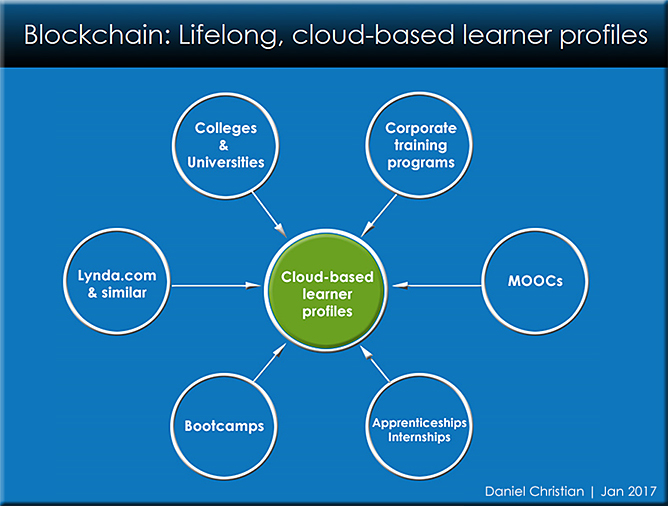
Each person would have a learner profile/account that could seamlessly log into multiple education/training providers’ platforms and services. The results of that learning could be stored in one’s cloud-based learner profile. This type of next-generation learning platform would still need subject matter experts, instructional designers, programmers, and other team members. But the focus would be on building skills — skills that an artificial intelligence-backed interface would demonstrate are currently being requested by the modern workplace. This constantly-being-updated list of skills could then link to the learning-related experiences and resources that people could choose from in order to develop those skills.
The following vision/graphic also comes to my mind:
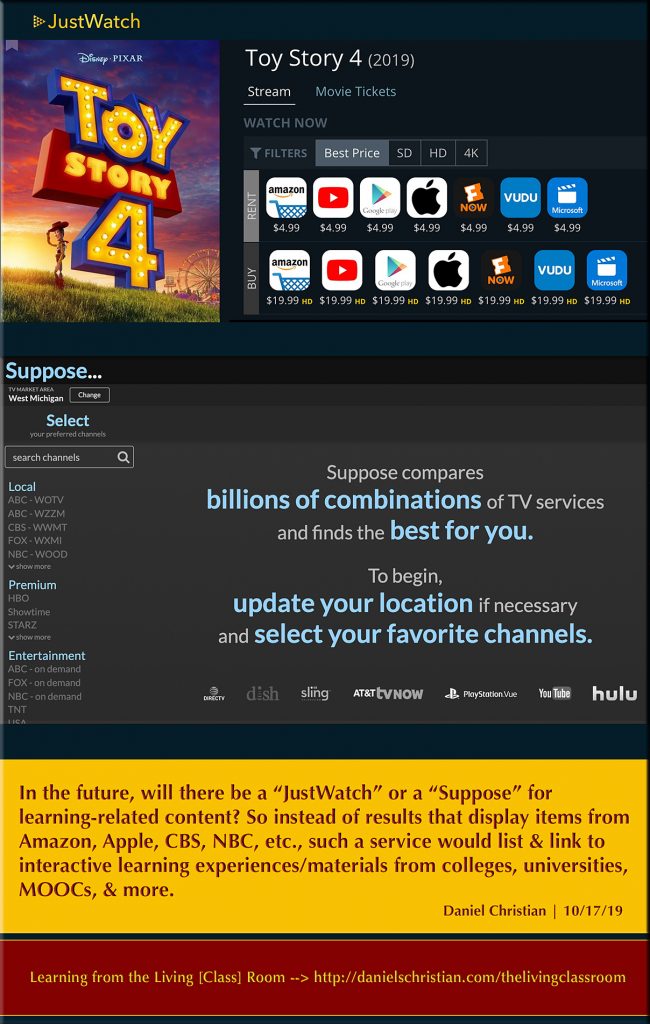
BLOCKCHAIN INNOVATION CHALLENGE — from the American Council on Education (ACE)
About the Challenge
The challenge sought technology-enabled solutions that reoriented the education and employment ecosystem around the individuals that they aim to serve. It invited teams to articulate a vision and design pilots that addressed an ecosystem-first designed approach driving interoperability, social mobility, and learner control expanding on these essential themes:
The four winners of the Blockchain Innovation Challenge were…
From Tom Barrett’s Dialogic Learning Weekly, Issue #246 (Dec 2021) #learningecosystems #education #complexity pic.twitter.com/mrW6vXYZAX
— Daniel Christian (he/him/his) (@dchristian5) December 13, 2021
The Humanities May Be Declining at Universities — But They’re Thriving on Zoom — from edsurge.com by Rebecca Koenig
Excerpt:
Throughout the pandemic, versions of this close-reading conversation have taken place week after week. Organized through new nonprofits and small startups including the Catherine Project, Night School Bar and Premise, they bring together adults who want to spend their free time talking to strangers about literature and philosophy.
It sounds at first like an ambitious book club—except for the fact that many of these seminars are organized and led by college professors, some so eager to participate that they do it for free.
“Mostly it’s a way for them to do a kind of teaching they can’t do at their regular jobs,” explains Zena Hitz, founder of the Catherine Project and a tutor (faculty member) at St. John’s College in Annapolis, Maryland.
From DSC:
I’ve often thought that online-based learning may be the thing that saves the liberal arts (i.e., available throughout one’s lifetime and would be far less expensive). It would be ironic though, as many liberal arts institutions have not been proponents of online-based learning.
Antonio Sacre on the Power of Storytelling in Education — from spencerauthor.com by John Spencer
Per John:
I had the honor of interviewing celebrated author Antonio Sacre on the power of storytelling in education. Check out the podcast below.
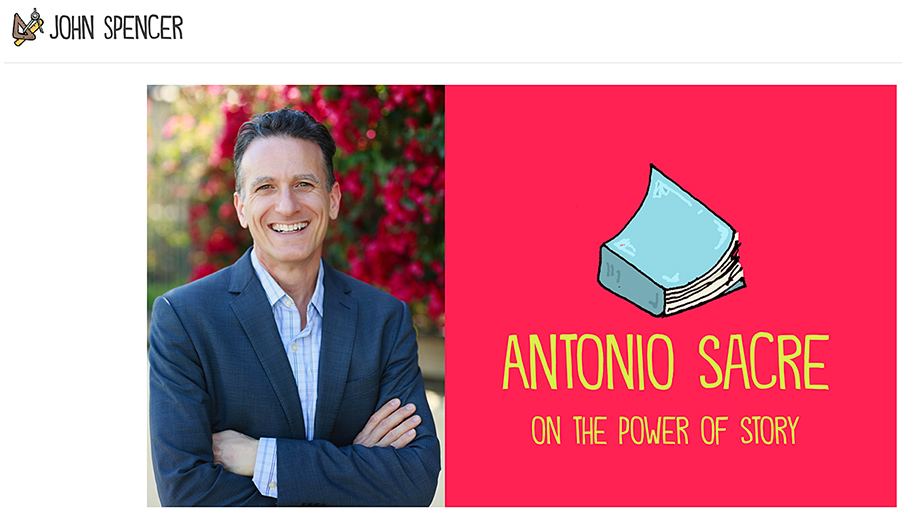
Born in Boston to a Cuban father and Irish-American mother, Sacre is an internationally touring storyteller, author, and solo performance artist, based in Los Angeles. He has performed at the National Book Festival at the Library of Congress, the Kennedy Center, the National Storytelling Festival, as well as museums, schools, libraries, and festivals. Deemed “a charismatic, empathetic presence” by the Chicago Tribune, his stories have appeared in numerous magazines, journals, and on National Public Radio.
What motivates students to learn? — from edte.ch by Tom Barrett
In this article, we explore the key factors that influence and predict student academic motivation.
Excerpt:
Here are the top three ranked, according to this meta-analysis, from l’Université Laval, Monash University and Curtin University.
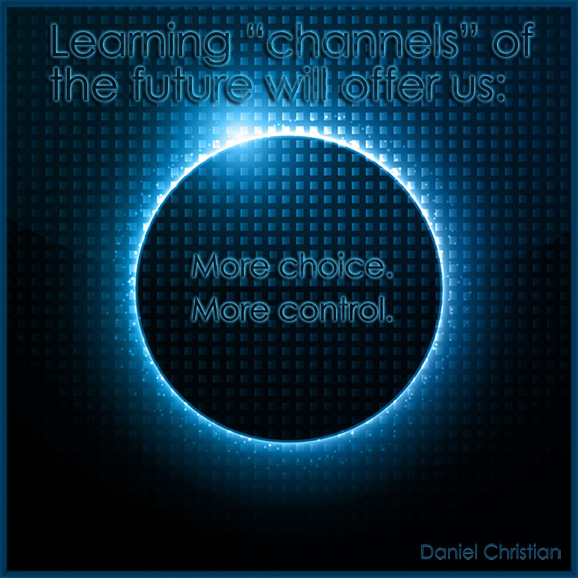
1 — Competence (I can do this!)
2 — Autonomy (I get to choose)
3 — Belonging (I am not alone)
From DSC:
I’m once again reminded of the following graphic:
Tom’s posting also reminds me of the power of storytelling, as Tom makes a solid point:
A notable missing piece of the student motivation paper is the role of emotion in learning. When I search the document for reference to ‘emotion’, the only returns I get are from citations and other works.
Along these lines, see/listen to: